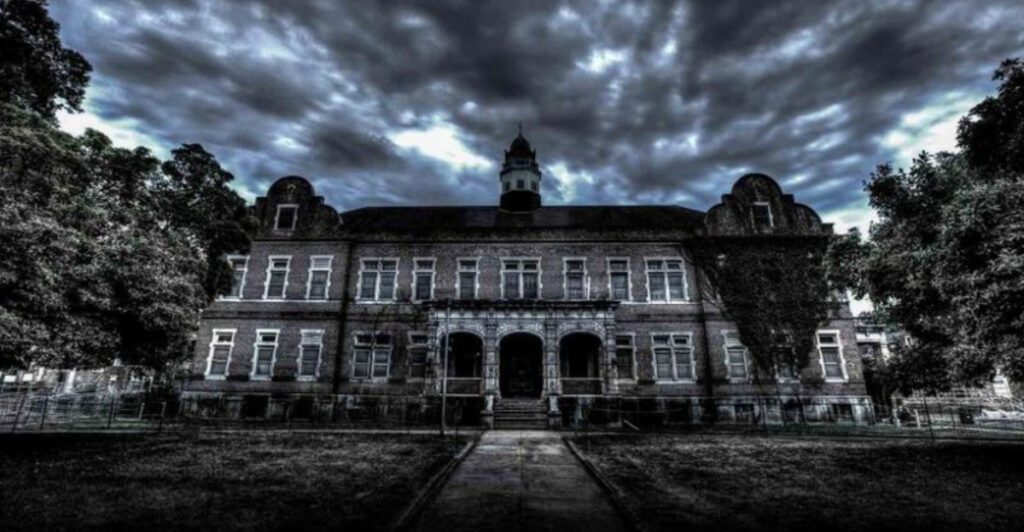
Pennhurst Asylum looks like a ghost that never learned how to sleep, and it refuses to let your thoughts rest either. You arrive expecting jump scares, actors in the dark, and the usual adrenaline rush, but it doesn’t take long before the experience shifts into something deeper and harder to shake, as the buildings themselves start to feel like part of the performance. Weathered brick, hollow corridors, and maze-like tunnels create a setting that feels less like a stage and more like something that has been waiting a long time to be seen again.
Reviews often praise the intensity of the actors and the detail of the sets, but it’s the atmosphere of the campus that stays with people longest, lingering in the quiet moments between scares and long after you’ve left. You go in for entertainment, but you walk out with a lingering sense that the place holds onto attention in a way that doesn’t fully release it when the night is over.
1. Origins And Dark History
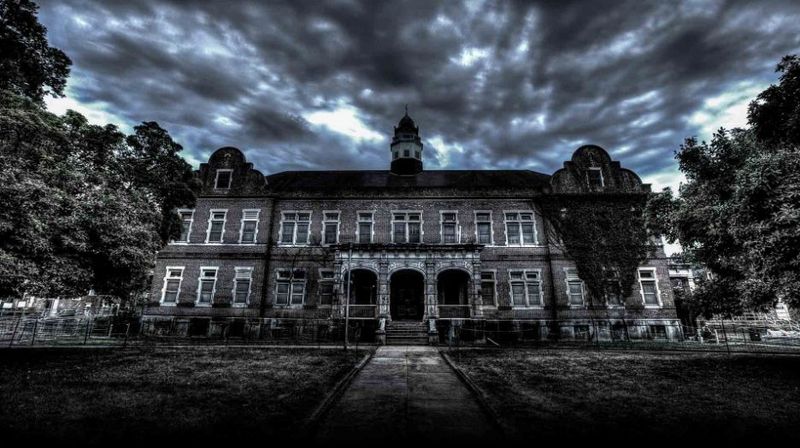
Pennhurst Asylum began in 1908 as the Eastern Pennsylvania State Institution for the Feeble-Minded and Epileptic, a sprawling campus above Spring City.
Its mission promised care, training, and safety for vulnerable people, but overcrowding crept in almost immediately.
Buildings filled beyond capacity, and understaffed wards cut corners that should never be cut.
By midcentury, investigative journalists exposed abuse, neglect, and a chilling regime of restraint.
Lawsuits and shifting standards followed, culminating in the landmark Halderman v.
Pennhurst case that forced deinstitutionalization and closure in 1987.
When you walk the grounds today, peeling paint and rusted beds whisper that progress came painfully late.
You feel the vastness of the place, the echo of routine turned punishment, and the bureaucratic cold that let suffering spread.
That history matters because the haunt rests on truth, and truth lingers.
Standing at 601 North Church Street, the address itself feels like a verdict.
2. The Mayflower Building
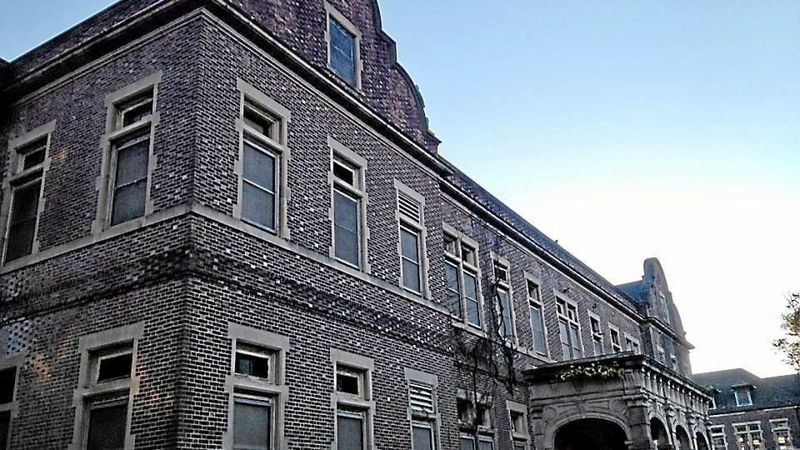
The Mayflower looms like a ship run aground, long corridors steering you into darkness.
Windows gape, and you swear something watches from the stairwells as dust floats like spores.
Guides talk about residual energy, but you notice the little things, like clawed paint near door latches.
Several reviewers call it their favorite, and I get why when the silence tightens.
Animatronics and actors add jump scares, yet it is the architecture that needles your nerves.
You pass day rooms, a nurse station, and an attic space that creaks like a metronome.
Bring steady shoes, respect the rules, and let your eyes adjust.
If you are open to it, the Mayflower tells its story without a single word.
You might catch a cold pocket near the stair landing, a subtle drop that feels intentional.
It is theatrical, yes, but the building still owns the stage and sets the rhythm.
3. The Tunnels
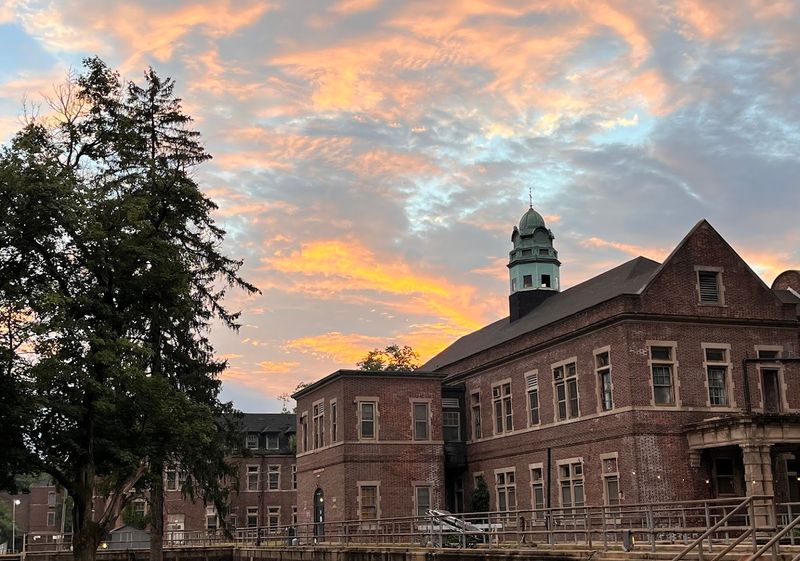
Beneath the campus, utility tunnels knit buildings together like arteries.
You move through brick passages where pipes sweat and footsteps multiply ahead of you.
Reviewers rave about the tunnel haunt, and that makes sense, because confinement tugs at ancient fears.
Down here, the lights dim to near black, and actors brush past just enough to scramble your map.
Breathing feels louder, and your group tightens naturally, a physics lesson written in nerves.
Take your time, keep one hand grazing the wall, and do not rush the turns.
The history of patient transfers and supply runs lingers in each curve.
When you finally surface, night air tastes earned, like you passed a private trial.
Some swear the Rockwell tunnel hums on its own, a low note under the generators.
You might not hear it, but you will feel it in your shins and jaw.
It shadows every step.
4. The Morgue Attraction
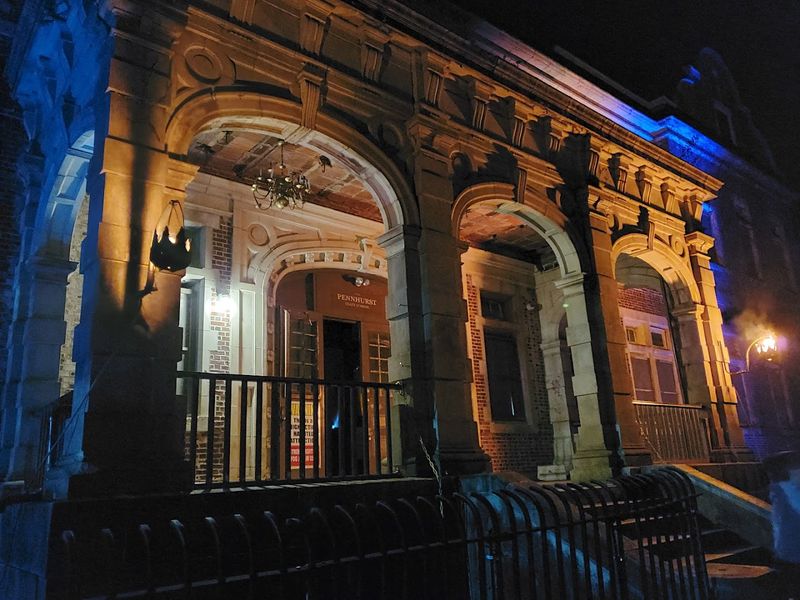
The morgue sequence blends performance and memory, because death hovered over institutional life.
Gurneys rattle, drawers slam, and a chill seems to seep from tile to bone.
You know it is a production, yet the setting borrows weight from the real morgue once on site.
Actors here work on timing, letting silence bloom between bursts of noise so you anticipate the blow.
Smells, temperature shifts, and that metallic tang trick your brain, priming a startle you do not control.
If you dislike physical contact, mention it to staff, then keep your hands visible and move calmly.
Remember the reviews about respectful touches and well-run security.
When you exit, breathe deep, find the stars, and remind yourself that the worst history lives as a warning, not a destiny.
Grab cocoa at the food court, let your pulse settle, and choose your next path.
You earned that quiet minute.
5. The Quaker Building
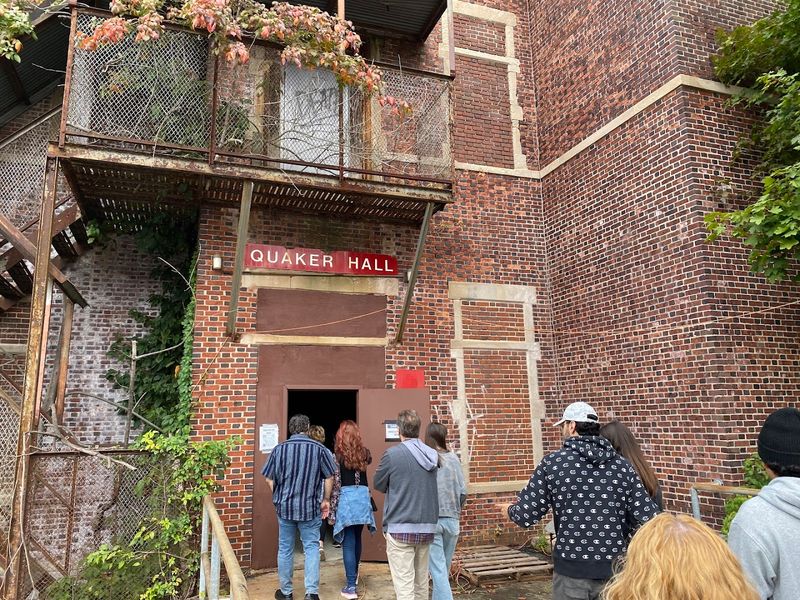
The Quaker Building carries a weight different from the Mayflower, as if discipline soaked into brick.
Long wards stretch like test tracks for patience, and your footsteps answer back in polite echoes.
Several paranormal teams favor this spot, especially after midnight when traffic drops.
You will find peeling blue paint, buckled floors, and window views that frame the Schuylkill valley.
Documentation boards now share history beside merchandise, a pairing that invites both curiosity and care.
Walk slowly, imagine routines of beds, charts, and inspections, then consider what reform finally required.
If a guide mentions Halderman, listen closely, because rights were contested in rooms like these.
The building may be quiet, but it is not empty, and it asks for your respect with every careful step.
There is a humanitarian lesson here, carried by chipped plaster and careful signage.
You will feel it more than you can quote it.
6. Haunted Experience Logistics
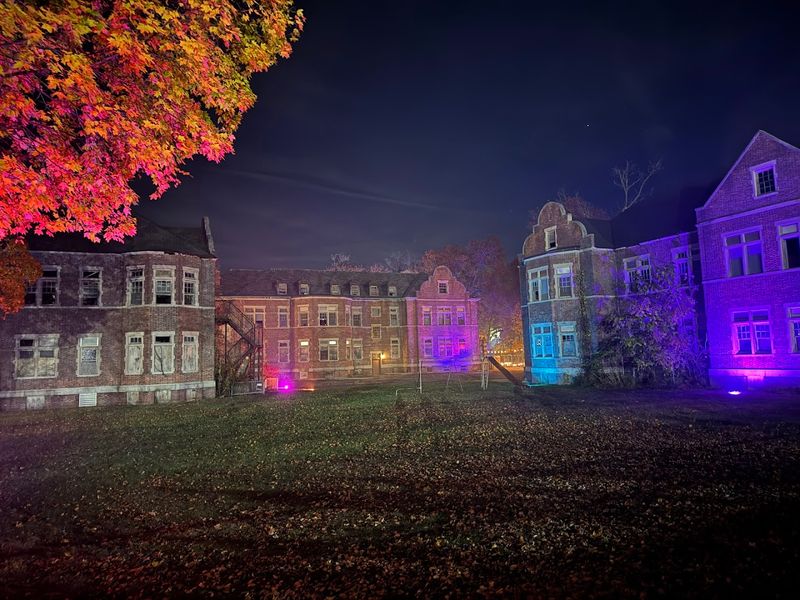
Pennhurst Asylum runs as a seasonal haunted house with four attractions, often opening Friday and Saturday evenings.
The posted hours say 5:30 to 10 on Saturdays and 5:30 to 9:30 on Fridays, with weekdays closed.
Lines can be long, so buy tickets online and consider VIP if crowds drain your patience.
Parking is organized off Church Street, and staff help if you forget where you left the car.
Security is visible, actors may touch lightly, and there is food, beer, and a large gift shop after the maze.
Plan for 60 to 90 minutes with VIP, longer for general admission on peak weekends.
Wear layers, good shoes, and bring water for the ride home.
If you are sensitive to energy or easily overwhelmed, listen to your body and take breaks between houses.
Check the website for weather updates and last call times before you drive.
It saves frustration.
7. Paranormal Investigations
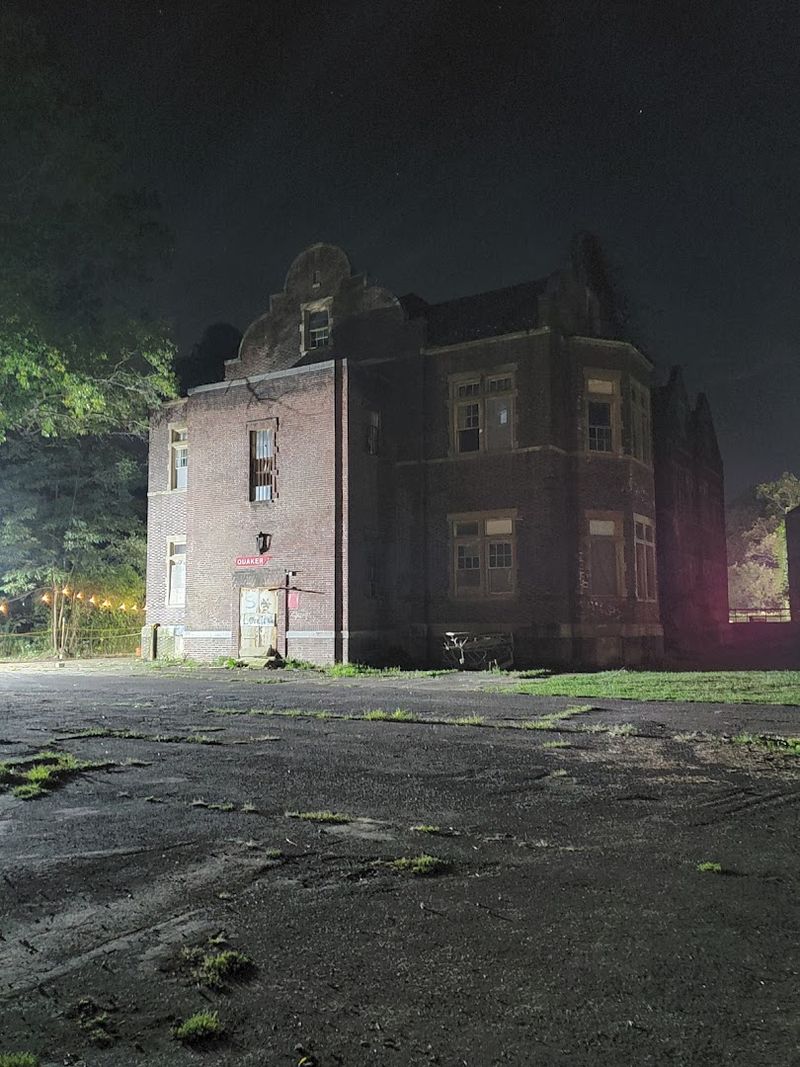
Outside of haunt season, guided paranormal investigations open select buildings and equipment to curious minds.
You learn baseline sweeps, watch for false positives, and practice respectful questioning.
The Mayflower basement and Rockwell tunnel get frequent mentions for interactive moments, especially near 2 am.
Go in with healthy skepticism and compassion, because this history involves real suffering.
Control for drafts, stray radios, and reflections before declaring a voice or shadow.
If something emotional surfaces, step out, breathe, and ground yourself on the lawn under those towering oaks.
Some nights give nothing at all, which is honest, and worth the quiet time.
Other nights give knocks, footsteps, or names you did not say, and you will carry that home.
Devon or another guide will help you tag timestamps and review anomalies later.
Borrow a recorder, EMF meter, and flashlight, then log every environment change.
Documentation beats drama every time.
8. Tales, Myths, And Truths
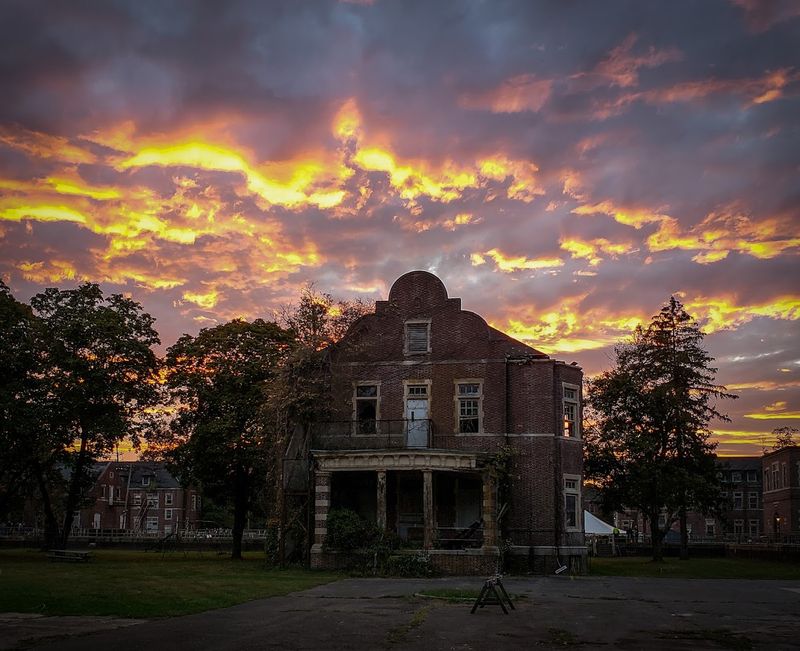
Stories swirl at Pennhurst, blending patient tragedies with invented horrors from movies and TV.
You will hear about nameless children, sadistic doctors, and secret experiments that never happened.
The real record is harrowing enough, with overcrowding, restraint, and a broken system that mislabeled disability as danger.
When guides anchor the haunt to documented cases, you feel the difference immediately.
Dates, lawsuits, and testimony change the air, replacing simple fright with something weightier.
You can hold both truths at once, enjoying a world-class haunt while honoring people who lived here.
Ask questions, read the history displays, and leave with more nuance than you arrived with.
That is the haunting that matters most, the kind that keeps you thoughtful long after the adrenaline fades.
Separate legend from legacy, and you will walk out steadier, not smaller.
The building deserves that balance from every guest who takes its tour.
9. Planning Your Visit
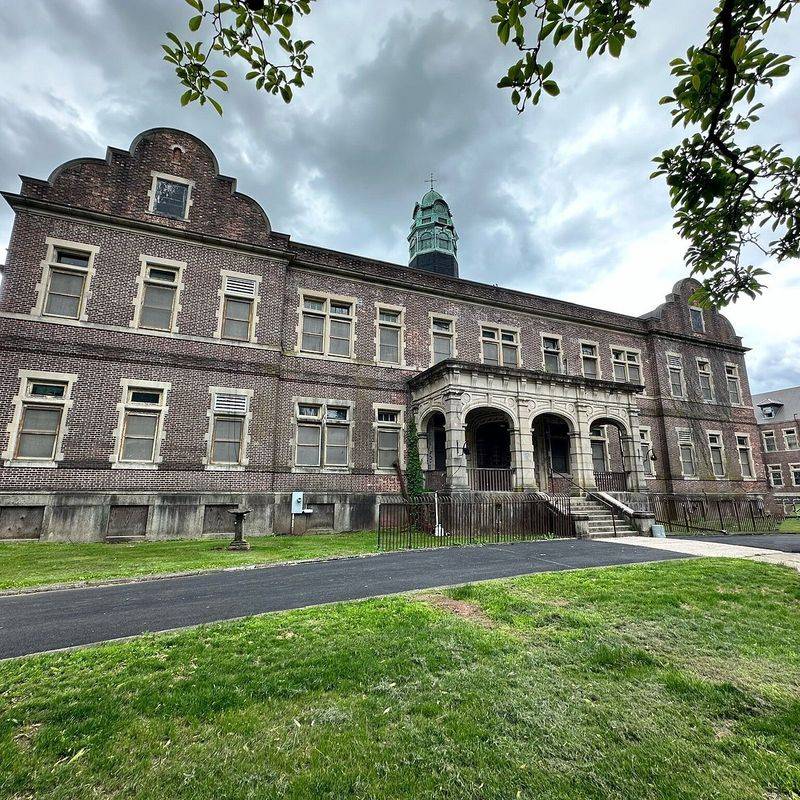
Set your GPS to 601 North Church Street, Spring City, and watch the hills rise around you.
Arrive early, especially in late October, because lots can fill and lines snake quickly.
Bring cash and card, a portable charger, and patience for security checkpoints.
If you want fewer crowds, pick a Friday opener or a post-Halloween weekend if offered.
VIP can cut total time to about an hour, while general admission may run double on peak nights.
Check the weather, wear closed-toe shoes, and keep your group size manageable for tighter corridors.
After the haunts, explore the merch building with historic displays, then debrief over snacks.
Drive safely, and remember that Spring City gets dark fast after closing, so keep a flashlight handy.
Screenshot tickets and directions in case cell service drops near the property.
Little backups keep the scares where they belong.
You will thank yourself later.
10. Why It Stays With You
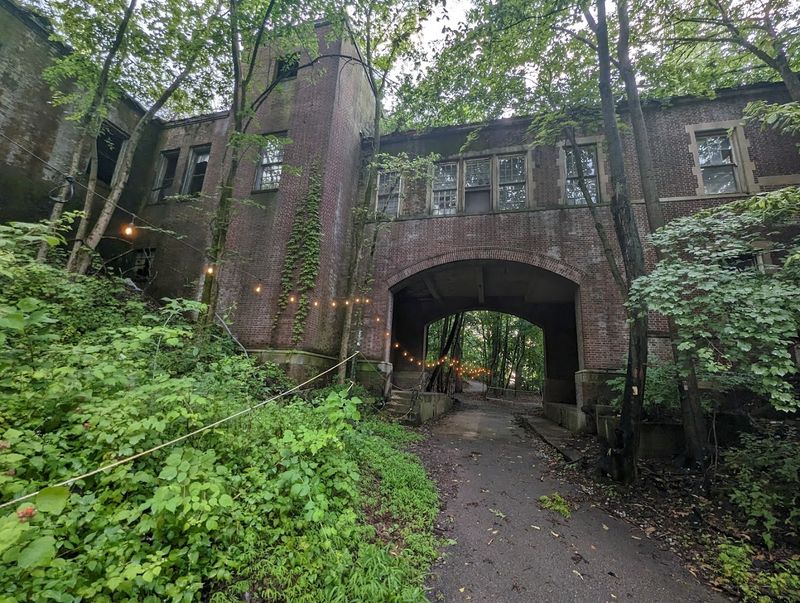
Pennhurst lingers because it stacks sensations with history until they fuse.
You get jump scares, sure, but you also get architecture, lawsuits, and testimonies that changed American care.
In that mix, entertainment turns reflective, and adrenaline partners with accountability.
You walk out under tall trees, hear the traffic fade, and feel the night settle.
Maybe you buy a shirt, laugh at your own scream, then fall quiet without knowing why.
The truth is, places like this are rare, where spectacle pays rent to memory.
Treat the staff kindly, follow the rules, and give the campus a nod as you leave.
If you carry anything home, let it be empathy riding beside the thrill, because that is the strongest spell here.
Its coordinates fix on any map, but its weight lives in your senses.
Long after the last scream, your memory reconstructs corridors, paint, and the hush between beats.
Share this story