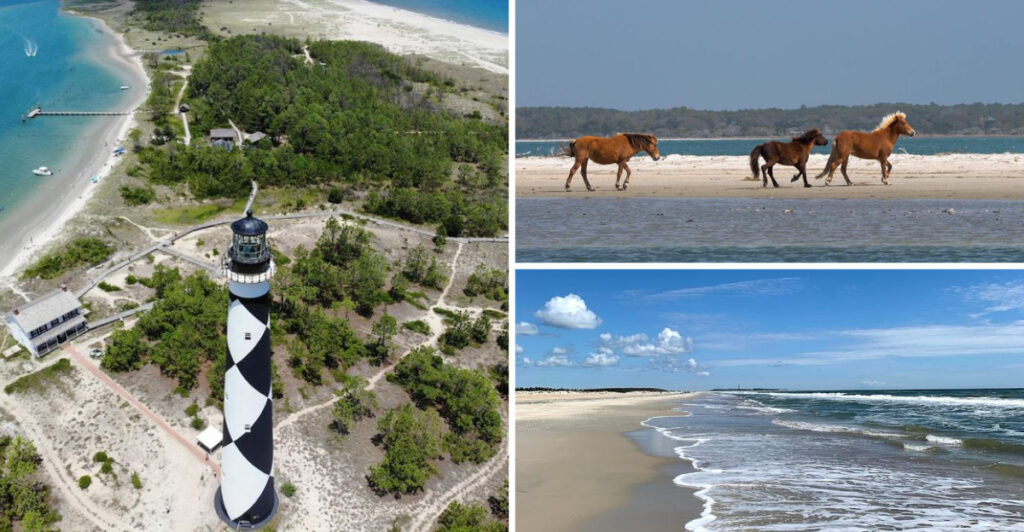
Cape Lookout rewards every bit of effort it takes to reach it with expansive skies, crashing waves, and stretches of sand that feel beautifully untamed. The journey begins with a ferry ride to an island where roads disappear and life moves to the rhythm of the tides.
Nearby, wild horses roam freely on Shackleford Banks, while the iconic 1859 lighthouse stands tall with its striking diamond pattern. It’s a place where nature takes center stage and crowds feel far away. If you’re craving salt air, open space, and a true sense of escape, this coastal treasure delivers.
How You Get There: Ferries From Harkers Island
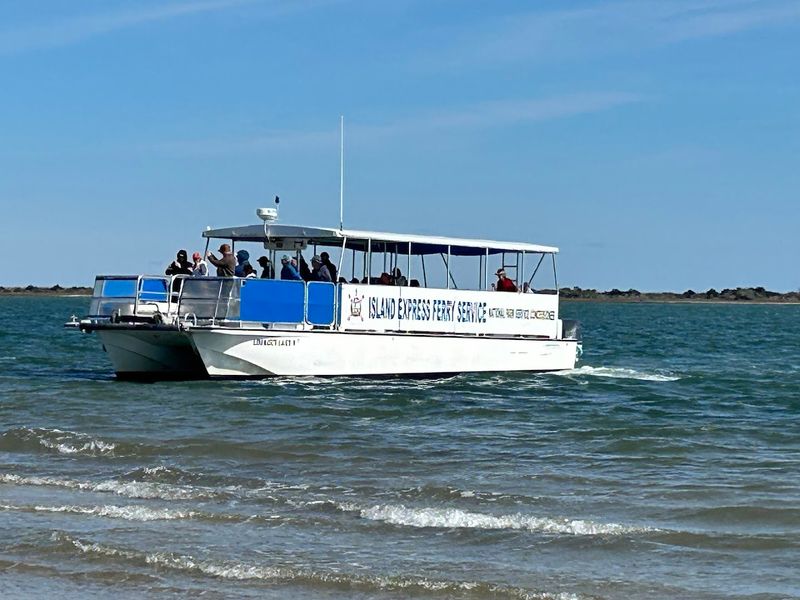
Getting to Cape Lookout starts with an easy choice: boat or no trip at all. Most visitors hop passenger ferries from Harkers Island, where parking is straightforward and the docks feel neighborly. The ride is short, salty, and scenic, with pelicans drafting along and the lighthouse sliding closer.
Book your ferry time, then arrive early enough to avoid last-minute scrambles. Crews load coolers, chairs, and beach umbrellas with practiced calm, so you can relax and enjoy the crossing. Bring cash or cards for tickets, and keep small items in a zip pouch because spray happens.
There are no bridges and no paved roads waiting on the other side, which is exactly the point. You step onto sand, not a parking lot, and the sound of engines fades. Shuttle trucks sometimes run along the beach, but walking the short distances is half the fun.
Return schedules matter more than you think on islands with wide tides and big skies. Snag a photo of the board at check-in, set an alarm, and build in buffer. If weather shifts, captains make the call with safety first, and that kind of prudence is why you get home with good stories.
Cape Lookout Lighthouse: The 1859 Beacon
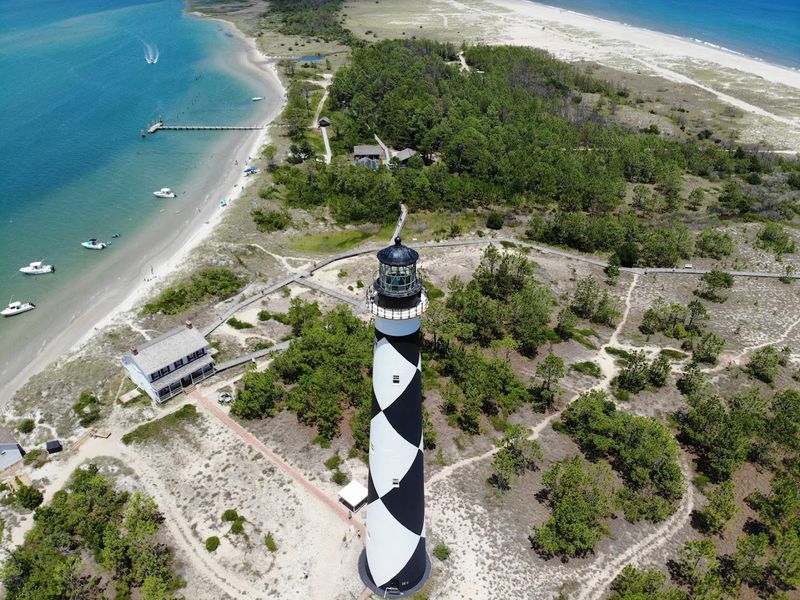
The lighthouse is the icon you will spot first, its black and white diamonds crisp even on hazy mornings. You cannot miss how it anchors the horizon, steady while everything else moves with wind and tide. Standing here, you feel both tiny and completely awake, like the shore just decided to let you in.
Approach from the ferry drop-off and listen for the hollow hum of wind around the tower’s base. Plaques share bite-size history and keep the story grounded without turning it into homework. The light’s 1859 lineage feels present, not dusty, and the keepers’ quarters nearby add welcome context.
Climbing access varies by season and safety rules, so check onsite guidance rather than guessing. Even when the stairs are closed, the grounds deliver the sense of arrival you came for. The geometry against the sky, the shadow that slides across sand, the gulls looping by, it all lands.
Bring water, a brimmed hat, and patience for coastal weather doing coastal things. Shade is limited, and the sun bounces hard off pale sand. If you time your visit near golden hour, the tower softens in color and the beach glows, turning photos from fine to unforgettable without fancy editing.
Wild Horses On Shackleford Banks
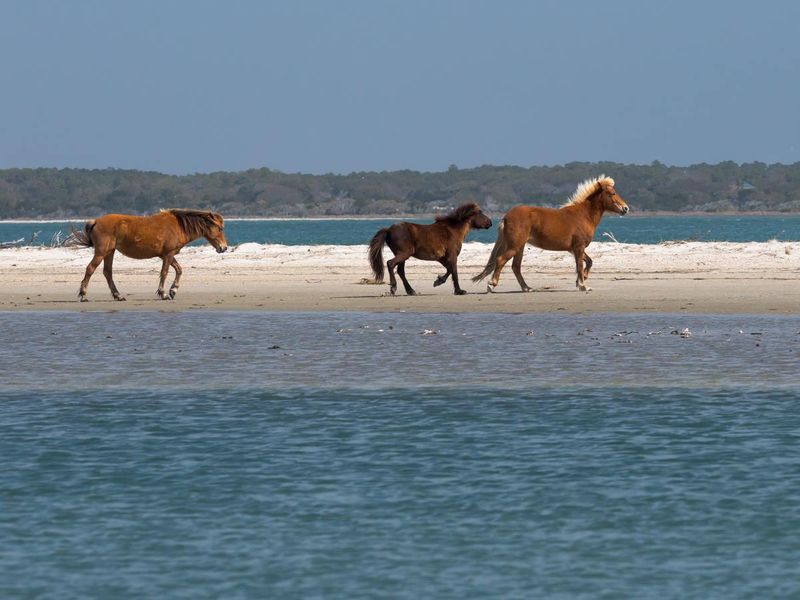
Glide across the water from Cape Lookout and you’ll land on Shackleford Banks, where the island’s famous wild horses move with a calm, unbothered presence that feels worlds away from the mainland. There’s no staging here, no fences, no set viewing points—just horses living as they have for generations, navigating dunes, salt-tough grasses, and shifting terrain with quiet confidence.
Watching them from afar feels less like ticking off a sight and more like slipping into a slower, more natural rhythm. Distance matters, and it’s taken seriously for good reason. Think at least a bus-length away and rely on your zoom instead of your feet.
Rangers and guides repeat the same advice: admire, don’t approach, and never feed. Part of the experience is letting the moment unfold on its own terms, scanning the landscape for subtle clues—hoofprints in the sand, a flick of movement, or a shape appearing along a dune ridge.
Timing helps, but patience matters more. Early mornings and late afternoons often bring better light and a bit more activity, while midday heat can send the horses into quieter pockets. Come prepared with water, sun protection, and shoes that handle sand well, because you’ll likely wander more than planned. Leave carefully, and you’ll carry that quiet sense of the place with you.
Shelling the South Core Banks
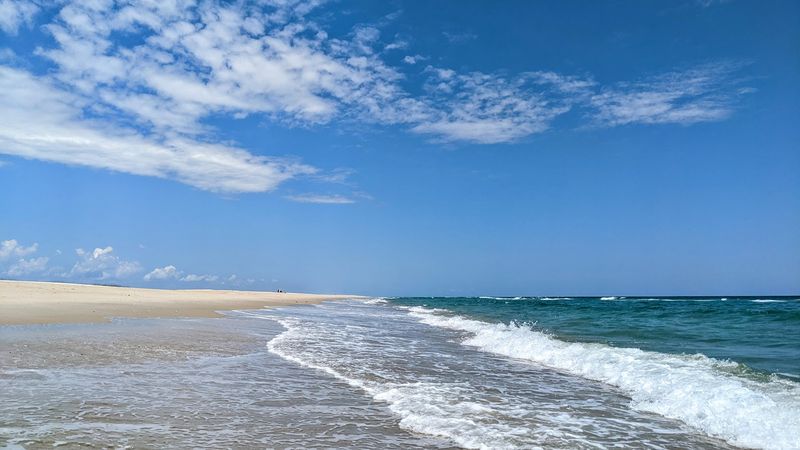
Out here, shelling isn’t a side activity—it’s the main event, especially along the long, quiet stretches of the South Core Banks. After a storm or a stretch of strong winds, the shoreline transforms into a natural scatter of spirals, scallops, and oddly perfect shapes that seem placed just to catch your eye.
It doesn’t take long before you’re crouched low, sifting through sand with the kind of focus that makes time slip away. Tides play a big role in what you’ll find, and low tide is when the beach gives up its best treasures. Look along wrack lines where shells and fragments gather, then slow your pace and scan carefully—some of the best finds blend right into the sand until you spot that clean, intact edge.
Whether you bring a bucket or a mesh bag is up to you, but a quick rinse in the water helps keep things manageable. There’s an unspoken rhythm to doing it right. If a shell still has a living occupant, it stays put, and sand dollars should only be collected once they’ve naturally finished their life cycle.
A little awareness goes a long way in keeping the beach as it should be. Dress smart, too—sun reflecting off pale sand can sneak up fast. And before you call it a day, take one last slow pass along the high line. That’s often when the best piece shows up.
Primitive Beach Camping Under Big Skies
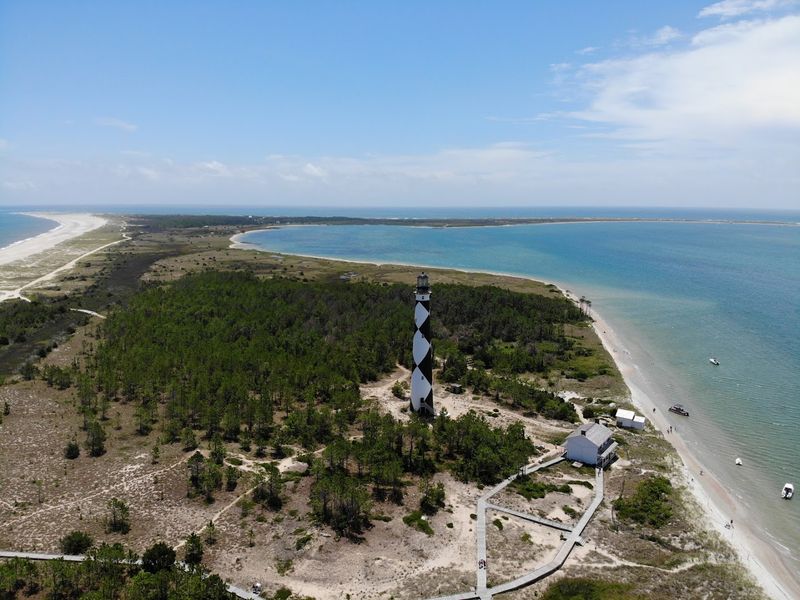
Set up camp here and the idea of roughing it starts to feel more like a quiet luxury. On Cape Lookout’s remote shoreline, you pick a spot just behind the low dunes, pitch your tent, and let the natural rhythm take over—waves rolling in, wind brushing through grasses, and a night sky that actually goes fully dark.
There’s no background hum of generators or crowded campsites, just a steady, calming hush that makes it easy to settle in. Coming prepared is part of the deal, because the island won’t provide anything once you arrive. Bring plenty of water, food, a cooking setup, and a clear plan to pack out everything you bring.
That extra effort pays off the next morning when you wake up steps from the water, coffee in hand, watching pelicans glide low along the shoreline like clockwork. Before heading out, check permits and park guidelines so you’re set up for a smooth stay.
Seasonal closures protect nesting shorebirds and sea turtles, and posted signs make it easy to stay within the right zones. Keeping things low-impact helps preserve the landscape for the next visitor. If the forecast looks clear, it’s worth packing a tripod. The night sky can open up in a way that feels rare, and once everything is zipped and secured, the quiet carries you straight into sleep.
Driving the Beach: ORV Basics and Permits
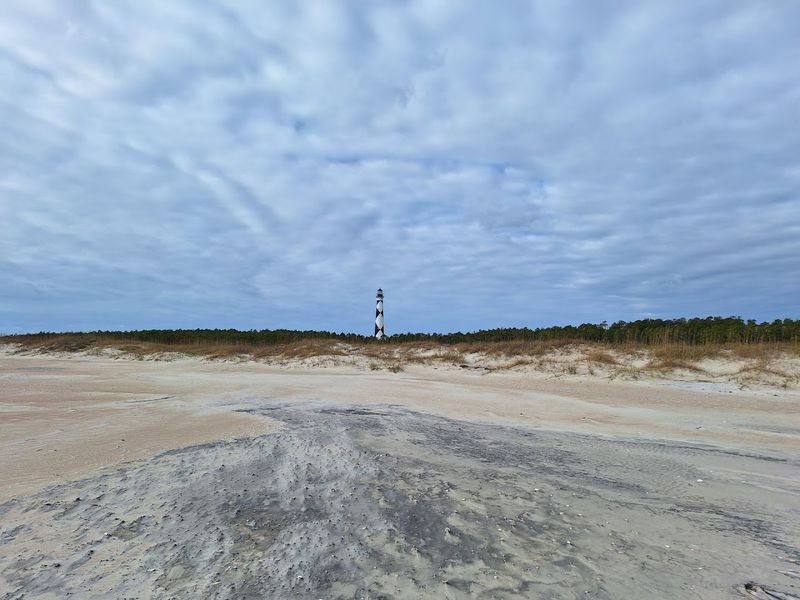
Some folks bring a permitted four wheel drive and treat the shoreline like a slow, sandy road. It is not a shortcut; it is a privilege that asks for finesse and restraint. If you plan to drive, read the rules twice and air down your tires before you touch soft sand.
Permits are required, speed limits are modest, and the upper beach typically serves as the travel lane. Keep clear of the wrack line, steer wide of anglers, and give wildlife the right of way. The dunes are off limits, period, because their roots hold the island together during storms.
Carry recovery gear you know how to use, not just the gear you bought yesterday. A shovel, traction boards, tow strap, and a working jack turn hiccups into solvable puzzles. When in doubt, stop, breathe, and adjust rather than burying the axles to the frame.
Tide charts deserve a spot on your dash, with enough margin to avoid becoming a viral video. Park facing the water, windows down, and soak in that rolling Atlantic soundtrack while you lunch. Leave only tire lines that the next high tide will wash smooth, and the beach remains the star.
Surf Fishing Without Overthinking It
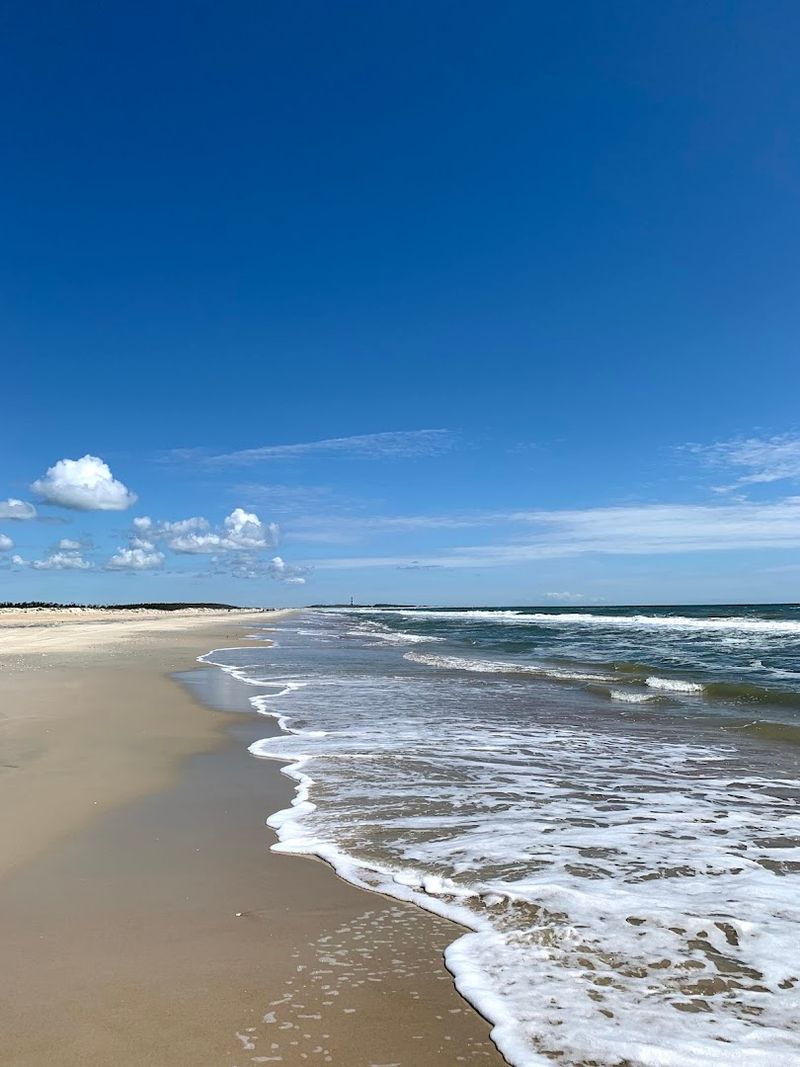
Set your line in the sand at Cape Lookout and you’ll notice right away this isn’t about overcomplicating things—it’s about reading the water and settling into the rhythm. A sturdy surf rod, a sand spike, and a handful of reliable rigs are more than enough for most days.
What matters more is where you cast, not how much you carry. Watch how the waves break, look for uneven lines, and aim just beyond the outer bar where fish tend to move through those deeper cuts and troughs.
There’s a quiet strategy to it that builds with time. Bait changes with the seasons, but fresh options almost always outperform anything flashy. If you’re unsure, a quick conversation at the ferry dock or with a nearby angler can point you in the right direction without overthinking it. People here tend to share just enough to get you started.
Before you begin, make sure your fishing license is squared away, and keep an eye on your surroundings. Give other anglers space, walk your line if someone hooks up, and keep coolers closed unless you want gulls joining your setup.
A small tape measure helps you quickly check your catch and release anything undersized the right way. Tides shift everything, and sunrise remains a favorite for a reason. Bring a headlamp, a thermos, and a little patience. When the rod finally bends, it all clicks.
Weather, Safety, and Best Times To Go
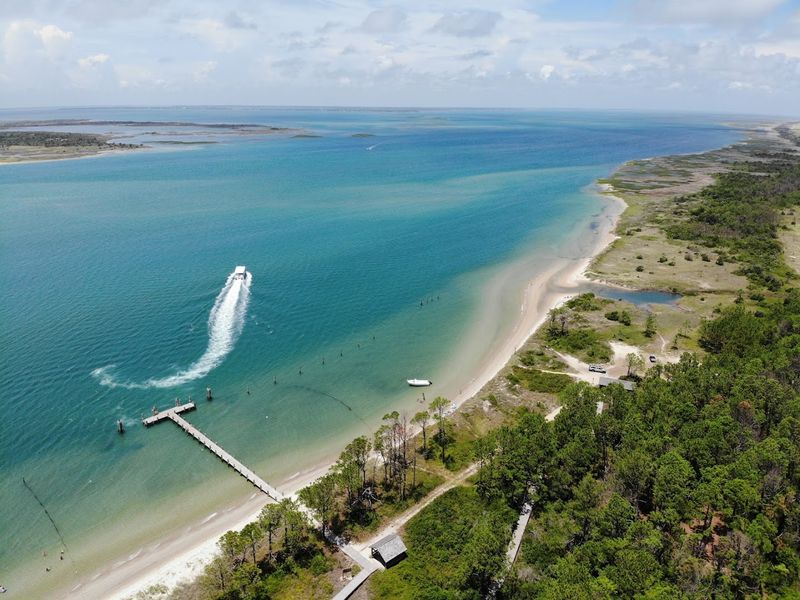
Pick your moment carefully and Cape Lookout rewards you with a day that feels almost perfectly dialed in. Spring and fall tend to hit that sweet spot, with cool, comfortable mornings easing into bright afternoons that are easy to enjoy without fighting the elements.
Summer stretches the daylight and warms the water, which has its appeal, but the sun comes in strong and expects you to come prepared. Conditions here shift quickly, so paying attention matters. Rip current awareness isn’t optional, and checking the daily forecast before you go is part of the routine.
If anything feels uncertain, rangers are a reliable source of guidance, or you can stick to calmer, shallower areas where the water feels more predictable. Footwear helps more than you’d think, especially on hot sand or shell-heavy stretches, and lightweight long sleeves go a long way toward keeping the sun in check.
Weather can turn fast, sometimes faster than you expect, so having a loose plan makes a difference. Set a rough exit time, keep an eye on the sky, and protect essentials like your phone from sudden wind or rain. A spare layer tucked away doesn’t hurt either.
With a little preparation, the day opens up in the best way. You move at your own pace, take in the lighthouse standing steady in the distance, and let the sound of the coast guide you until it’s time to head back.
Share this story