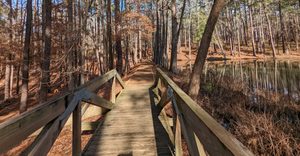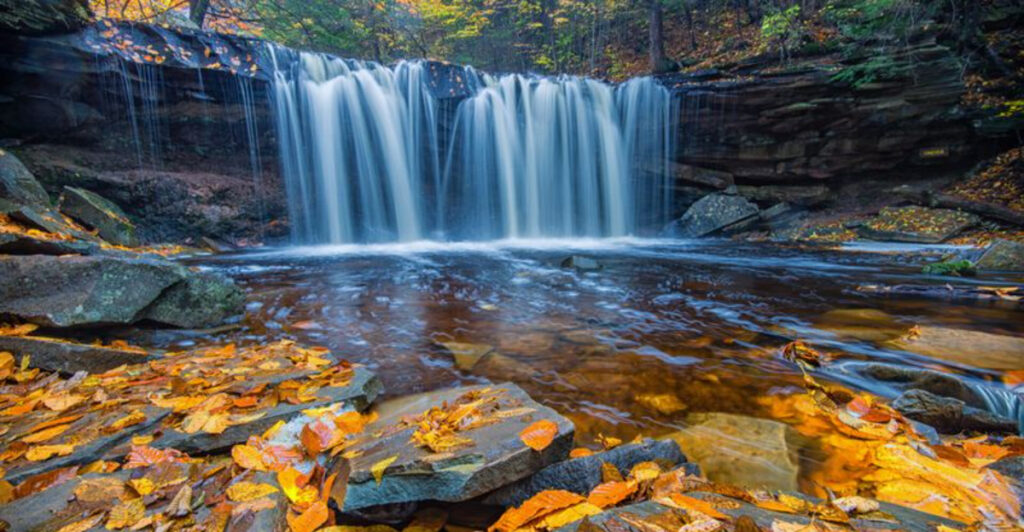
If you crave a day where every turn reveals another waterfall, the Falls Trail at Ricketts Glen is your ticket. Twenty-plus cascades roar, whisper, and glow as you climb through two stunning glens that feel carved for adventure. Mossy rocks, cool mist, and the steady sound of rushing water create an atmosphere that feels both peaceful and exhilarating.
Go early, wear real boots, and bring your sense of wonder, because this route is beautiful and demanding in the best way. Photographers, hikers, and families all find their moment here, and you will too—especially if you take your time and let the scenery fully sink in.
1. Ganoga Falls: The Crown Jewel
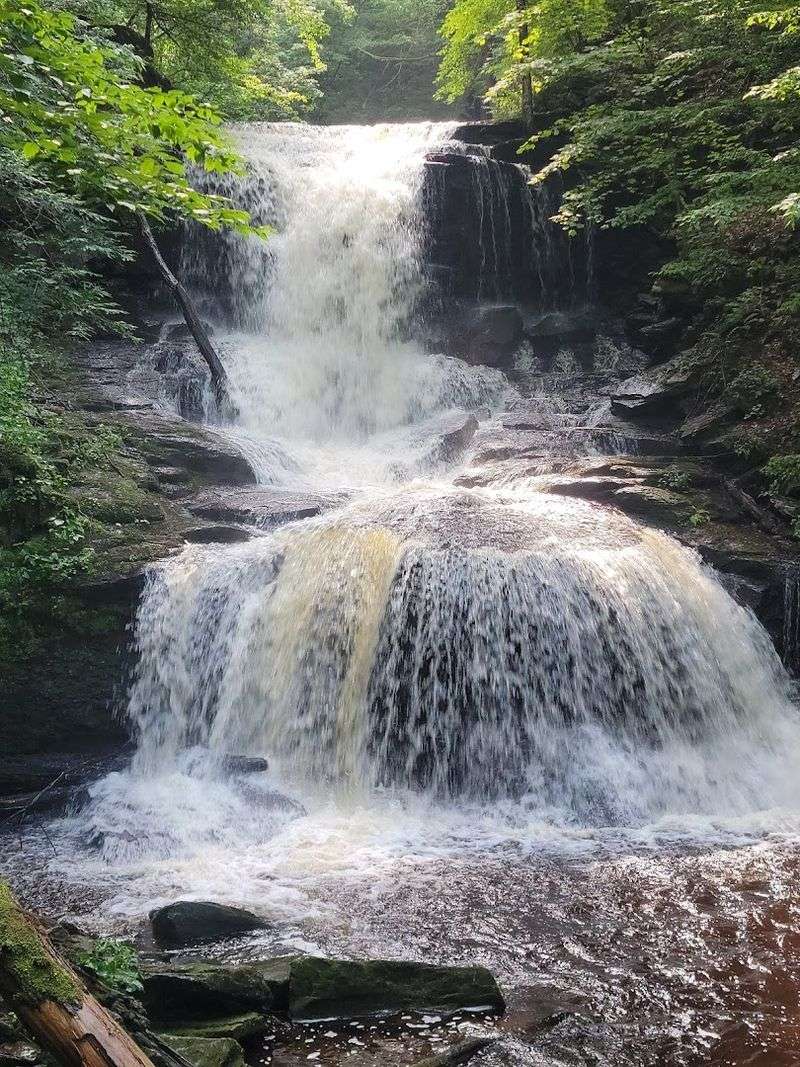
Ganoga Falls is the showstopper on the Falls Trail, roaring 94 feet through a rocky amphitheater.
When you round the bend and hear that steady thunder, your pace quickens without thinking.
The stone steps are steep and often wet, so you grip the rail, look up, and feel mist cooling your face.
Photographers love the layered ledges and the way the plume splits during high flow.
Visit early to avoid tripods in the main vantage, or pause patiently and you will still get an open view.
In low water, subtle veils reveal intricate textures, and in early October, flaming leaves frame the chute perfectly.
Stand back for scale, then move closer to feel the ground rumble beneath your boots.
Take the spur viewpoints, protect fragile vegetation, and keep dogs leashed.
The climb out taxes legs, but that ringing in your ears is the sound of a memory settling in today.
2. Waters Meet: Heart of the Loop
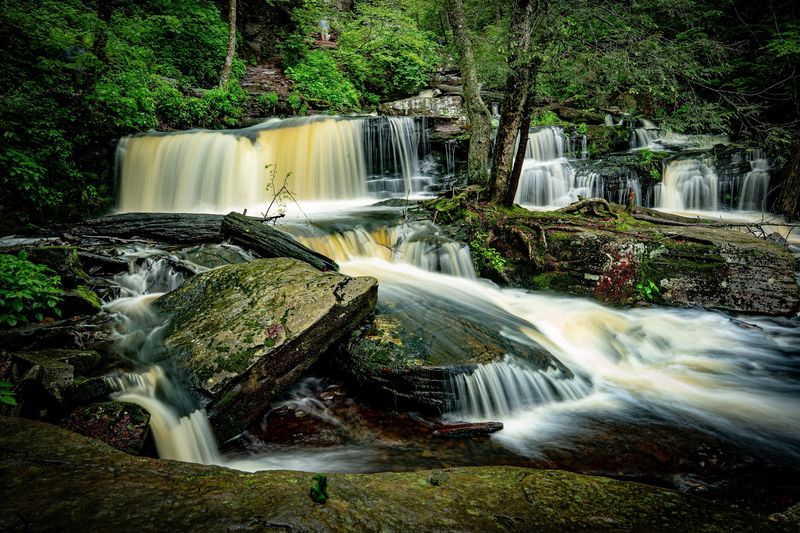
Waters Meet is where Glen Leigh and Ganoga Glen join forces in a frothy handshake.
The junction hums, a natural amphitheater filled with spray, echoes, and cool shade.
It is the perfect reset point, a place to sip water, snack, and decide which glen to climb first.
Go clockwise and the big drops hit fast, then the grade eases.
Go counterclockwise and you warm up gradually before the giants.
Either way, the rushing confluence reminds you to respect footing, because the polished rock can feel like glass after rain.
Take a minute to breathe, listen, and watch leaves twirl by on the current.
If crowds gather, wait kindly, trade photo turns, and everyone gets their moment.
When you leave Waters Meet, you feel oriented, confident, and ready for the next staircase of stone.
It is the trail’s heartbeat, steady, welcoming, and unforgettable on first and tenth visits.
3. Glen Leigh Section: A Stairway of Cascades
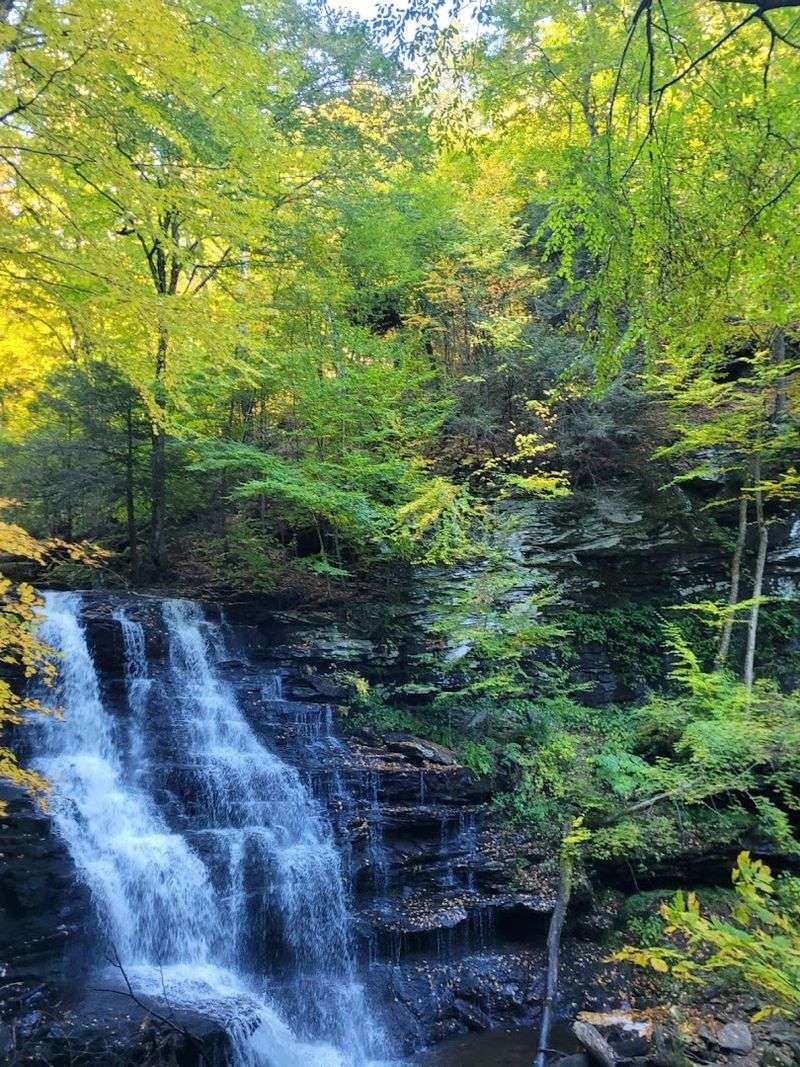
Glen Leigh rises gracefully, a ladder of falls that pulls you upstream with promise.
Each turn reveals another curtain, from delicate Ozone to the punchy R.B.
Ricketts.
The grade is steady, the footing mixed, and the constant chorus of water keeps distractions away.
When the sun threads through hemlocks, mist glows like a stage light on stone.
Pausing at each drop, you feel time slow, breath deepen, and your shoulders soften.
Families do fine here with care, taking smaller steps on the damp staircases.
Benches appear at good intervals, and there are flat rocks that make perfect picnic seats.
Keep right at junctions, follow orange blazes, and you will stay oriented.
By the top, your camera roll is overflowing, and your legs feel warmed rather than wiped.
The sequence feels musical, rising in volume until the final note lands with a grin.
You will want to linger.
4. Ganoga Glen Section: Rugged Beauty
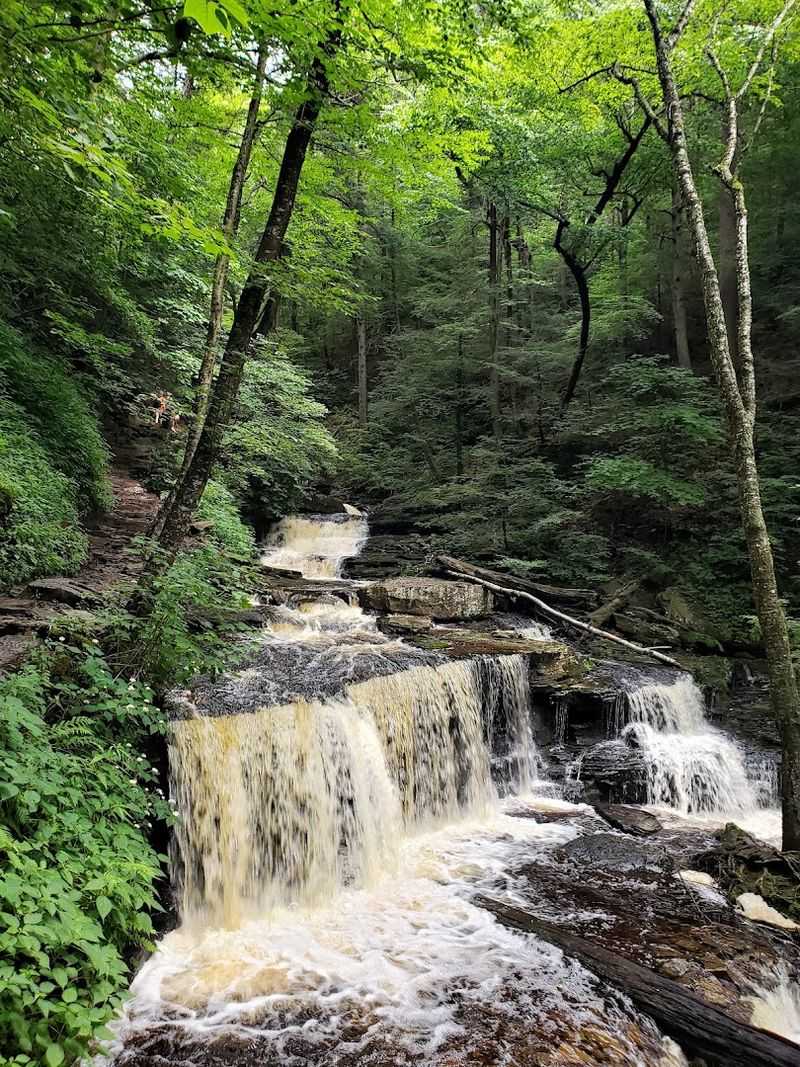
Ganoga Glen is the wilder sibling, steeper, louder, and full of dramatic ledges.
Here, the creek punches through tight chutes, then fans into sculpted steps.
You feel the grade immediately, lungs opening as you climb beside relentless whitewater.
The names read like a history class, each honoring explorers and advocates who protected this place.
You will notice big staircase segments with handrails, plus slick bedrock that demands concentration.
Poles help here, especially when drizzle turns mossy corners into surprise ice rinks.
Pay attention at overlooks and keep children close, because drops and narrow tread appear quickly.
The payoff is enormous, with thunder in your chest and spray on your cheeks.
By the top you are buzzing, proud, and ready to meet Ganoga Falls.
Take short breaks, hydrate, and let the roar set your cadence so steps feel rhythmic rather than punishing.
Cloudy days are perfect here.
5. Adams Falls: A Short Side Stop
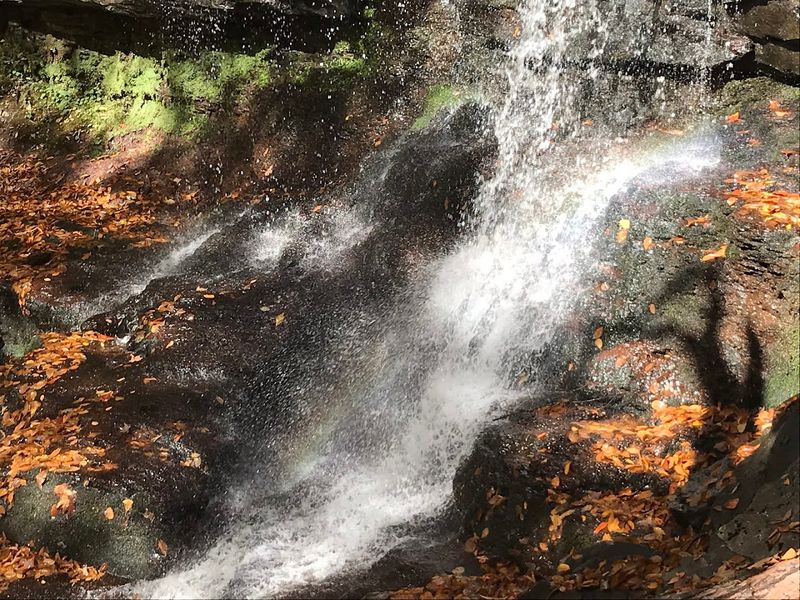
Adams Falls sits just off Route 118, a quick detour that rewards minimal effort.
If time is tight or knees are tired, this is the easiest wow on the map.
The water twists through a narrow slot, then pours into a photogenic pool.
Barriers protect the edge, so stay back and mind wet stone that gleams like polished marble.
Arrive early or late to dodge crowds from the roadside lot.
Autumn color lights the gorge, while winter forms glassy shelves that look unreal but demand extra caution.
Pair this stop with the full loop if your legs allow, or save it for a gentle encore.
Either way, you leave with a keeper photo and a grin.
It is the perfect introduction for friends who think waterfalls require epic drives.
Here, you get drama within minutes, proof that Ricketts Glen hides magic around every bend nearby.
6. Trail Difficulty and Safety Tips
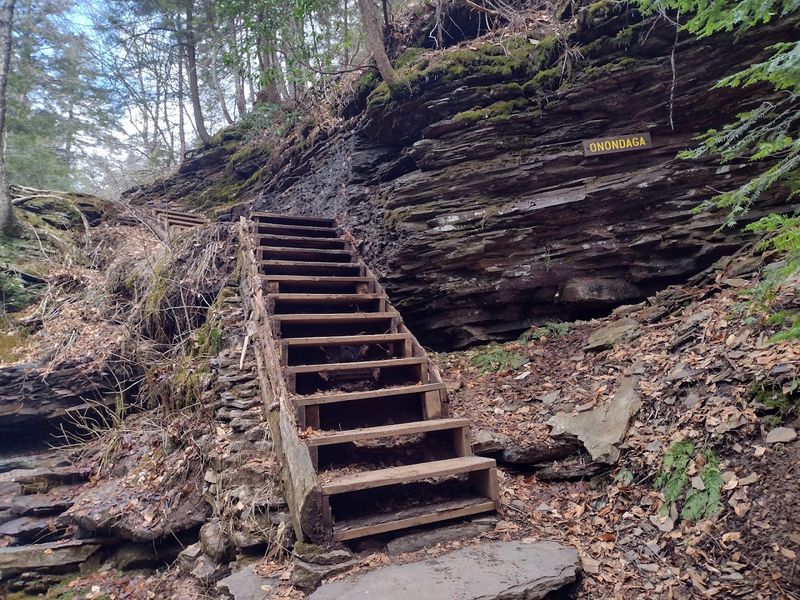
People call it moderate, but that depends on the weather, fitness, and comfort with heights.
Expect long rock staircases, slick ledges, and creekside tread that can feel narrow.
If the forecast hints at storms, rethink plans, because rising water and soaked stone change everything.
Wear real hiking boots, bring plenty of water, and pack a snack for decision points.
Trekking poles help on descents, especially when knees complain.
Keep dogs leashed and under control, give uphill hikers room, and never climb railings for a closer look.
Start early to beat crowds and heat, carry a map, and follow blazes.
In winter, consider traction, and in shoulder seasons, watch for ice hiding under leaves.
Respect closures, because crews maintain this treasure carefully and they deserve our patience.
A little caution keeps adventure fun, and it ensures you finish smiling beside the last cascade.
That is the goal.
7. Best Seasons and Timing
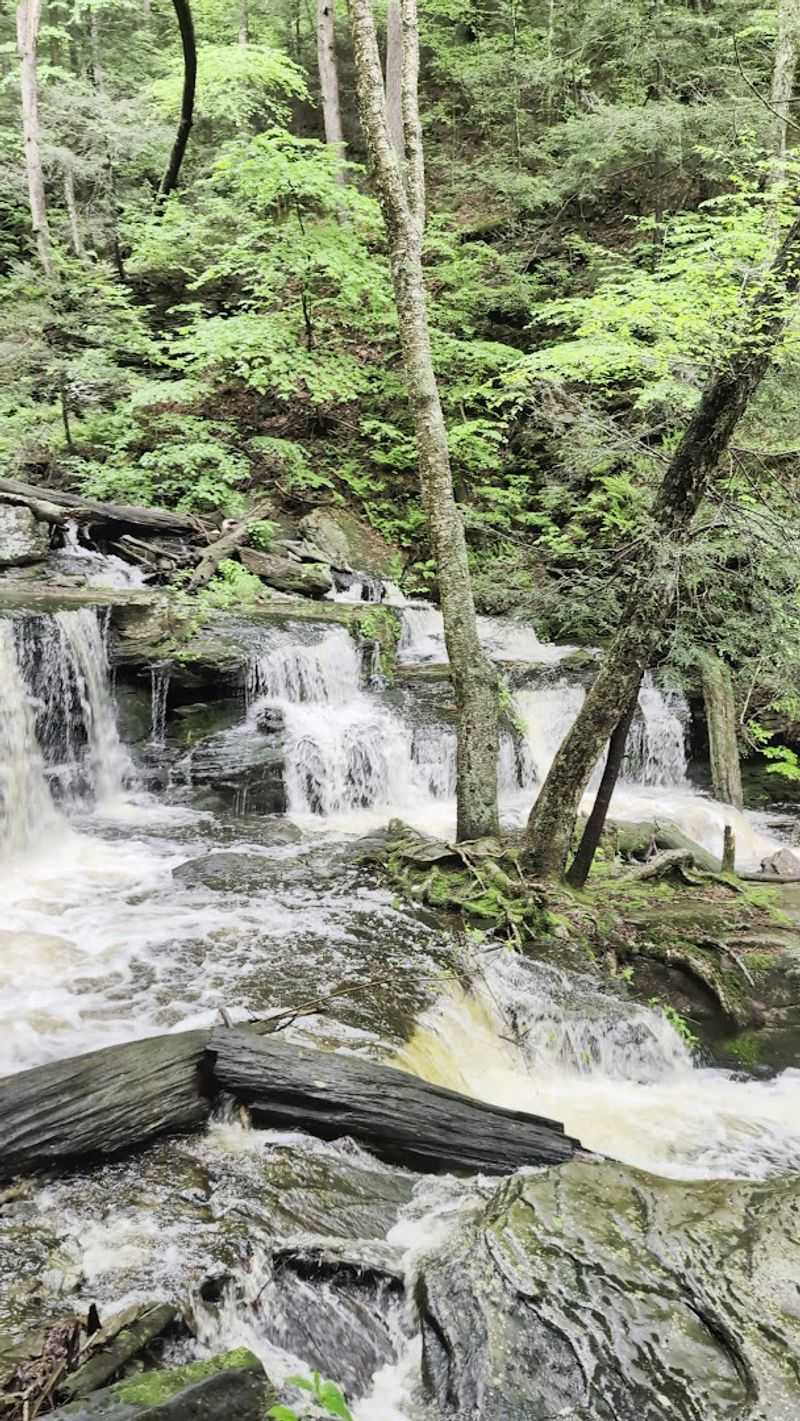
Every season changes the Falls Trail, and you can pick your mood by month.
Spring roars with snowmelt and rain, bursting the creek into white ribbons.
Summer softens the flow, but shade, cool air, and swimming holes nearby keep the hike dreamy.
Autumn is peak theatre, with crimson maples and golden beech spotlighting each drop.
Weekends pack up, so visit early on weekdays, especially during leaf peeping.
Winter brings silent cathedrals of ice, but only go with proper traction and shorter daylight in mind.
No matter when you go, start early for open views and calmer steps.
Midday brings glare and bigger crowds, while late light paints mist like fire.
Pick your window, pack layers, and the trail rewards you with a show every time.
Locals swear by misty mornings, and I agree, because the forest smells like rain and applause.
You will feel lucky.
8. Photography Tips Along the Trail
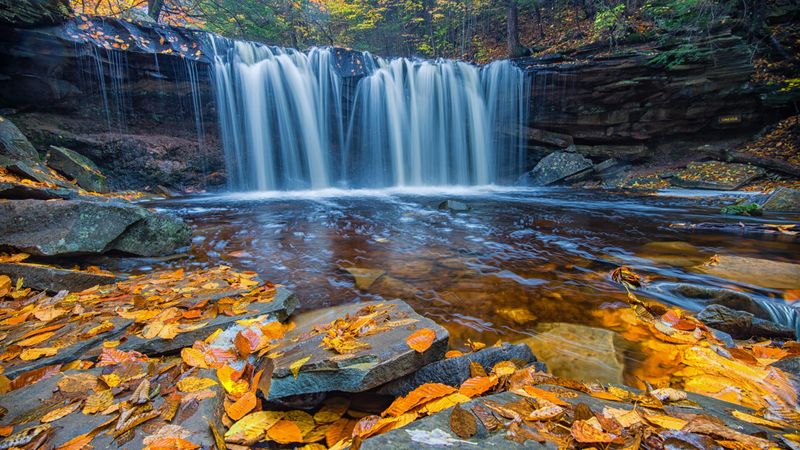
This trail spoils photographers, whether you shoot phones or full frames.
Pack a microfiber cloth, because mist and drizzle speckle lenses constantly.
A small travel tripod helps, but step aside quickly, share space, and never block a narrow stair for a long exposure.
Use wide angles near the base and mid telephoto to compress tiered cascades.
Polarizers tame glare on wet rock and deepen greens, especially after storms.
On sunny days, wait for clouds, or frame tighter details like seams in the shale and dancing foam.
Early or late, you get soft light that flatters the falls and the forest.
Keep gear minimal so you can move safely, and stash valuables in a dry bag.
Most important, put the camera down sometimes and just listen.
Those pauses make better photos because you notice patterns, timing, and stories waiting in the spray.
Trust your slower pace.
9. Wildlife, Flora, and Geology
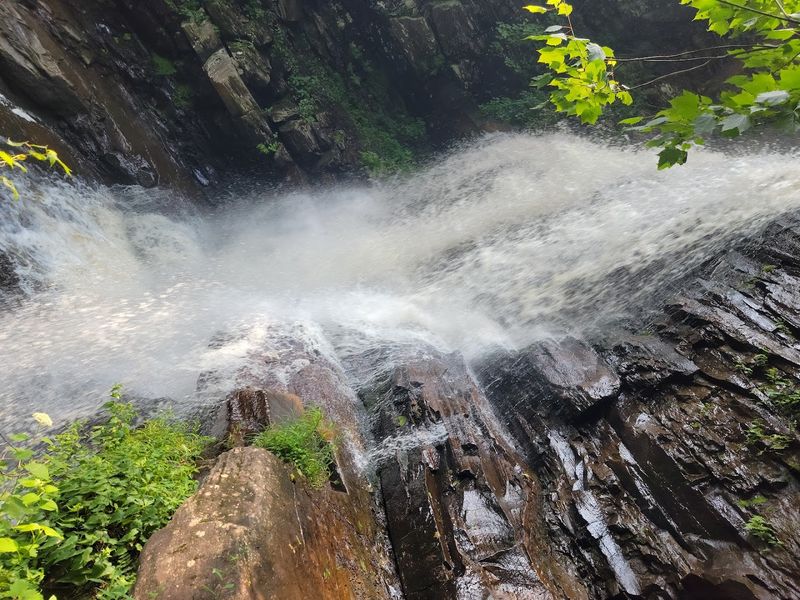
Hemlocks, rhododendron, and moss paint the glens in deep greens that glow on cloudy days.
Trillium, foamflower, and violets dot the banks in spring if you look closely.
You may hear a hermit thrush song, see salamanders under stones, and spot a waterthrush working riffles.
The bedrock is Catskill sandstone and shale, sculpted by water into shelves, chutes, and potholes.
Learning that story makes each drop feel like a page.
Please leave logs, rocks, and plants as you find them, because countless creatures rely on small shelter.
Bears roam the wider park, so store food properly and stay aware without worry.
Deer browse quietly near dawn, and chipmunks zip like living exclamation points.
With patience, you start reading the forest as if it is guiding you upstream.
That attention makes the miles lighter and the waterfalls feel like part of a larger conversation.
Listen, look, smile.
10. Parking, Routes, and Logistics
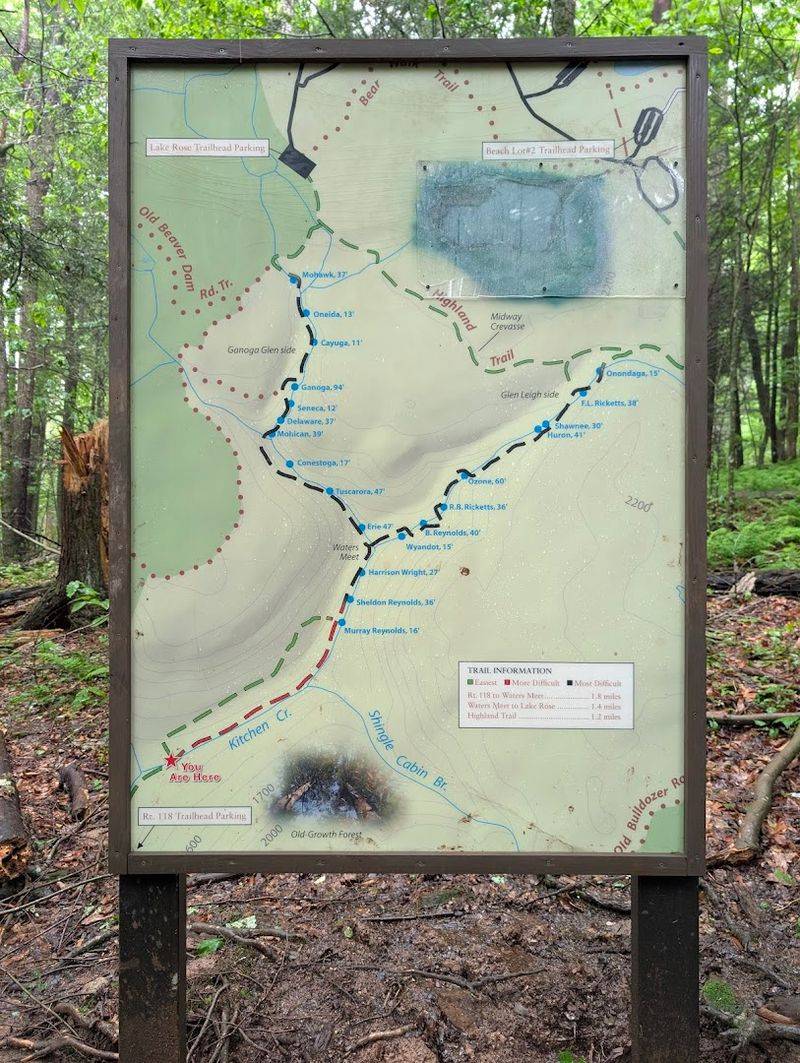
Most hikers start at the Route 118 lot, reach Waters Meet, then complete the loop.
That approach tackles the steepest stretch early while legs are fresh.
You can also begin at Lake Rose, but check seasonal access hours and any advisory notices.
The full circuit runs roughly seven miles with about one thousand feet of gain.
Wayfinding is simple, with blazes and signs at key nodes.
Restrooms and a visitor center support the experience, though there is no food service, so pack what you need.
Cell service is spotty, cash is useful for maps, and extra water never hurts.
Arrive early on weekends because parking fills quickly.
With small planning moves, the day flows smoothly and you end by the last falls smiling.
If it is hunting season, wear orange, and always pack out trash so the glens stay pristine for everyone.
Little habits matter.
Share this story