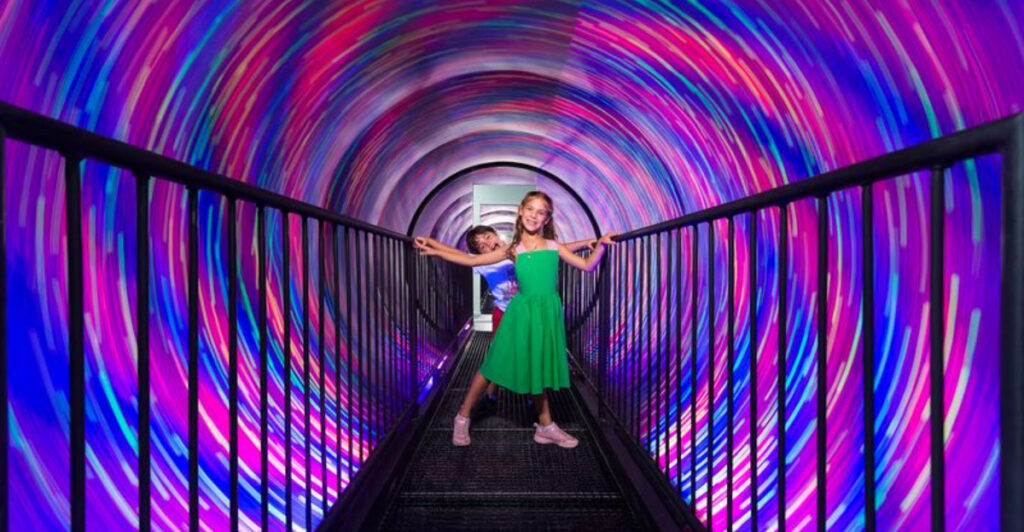
Tucked into Old City at 401 Market Street, the Museum of Illusions Philadelphia flips everything you think you know about seeing. Rooms sway, floors shift, and familiar faces seem to watch as you move, pulling you into a space where nothing quite behaves the way your brain expects. It all becomes a playful lesson in how perception is constantly constructed and reconstructed in real time.
You’ll find yourself second-guessing angles, distance, and even your own balance as you move through each exhibit. If you love interactive fun that doubles as a brain workout, you are in for something delightfully disorienting—and surprisingly memorable long after you leave.
1. Ames Room: Giant And Tiny In One Shot
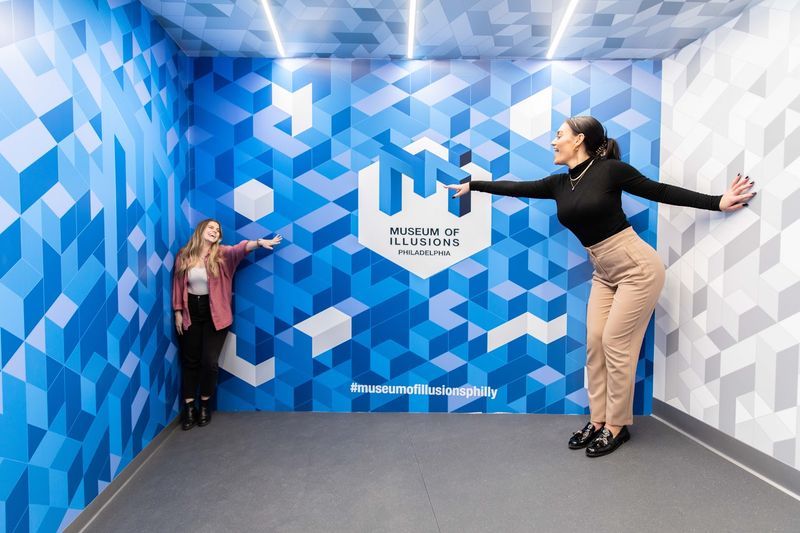
The Ames Room is where you grow and shrink without taking a step.
It looks like a simple corner, yet perspective lines secretly warp depth so one side magnifies you while the other side miniaturizes you.
Step to the left, and suddenly you are towering.
Slide to the right, and you are pint-sized.
The staff will point out floor markers, so you can nail that before-and-after photo.
What you feel here is not trickery but the brain’s honest guesswork about size and distance.
Your eyes crave parallel lines and right angles, so they accept the room as normal and misjudge scale.
Try switching places quickly with a friend for a hilarious video loop.
It is one of the fastest exhibits to understand, yet you will keep replaying the footage, amazed that a tilted ceiling and slanted floor can rewrite reality.
2. Vortex Tunnel: Walking On Wobbly Reality
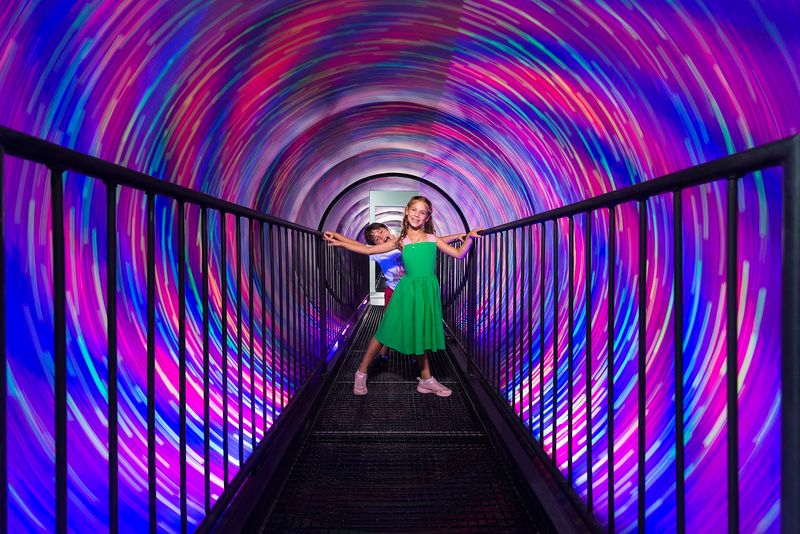
The Vortex Tunnel looks like a simple bridge through a spinning cylinder, but your body writes a different story.
As lights swirl, your inner ear screams that the floor is tilting, even while your feet confirm it is stable.
That conflict is the fun part.
Grip the rail, breathe, and give yourself permission to wobble.
You will step off laughing and slightly stunned that solid ground felt like a rolling deck.
This is vestibular drama with a friendly safety net.
Take a slow first pass, then try again for a confident video.
If someone in your group gets dizzy easily, have them stand just outside and watch the reactions.
Photos are best from the entrance, framing the walkway and spiral.
The tunnel is short, yet it delivers a full-body illusion that proves balance is not only about muscles but about expectations your brain refuses to abandon.
3. Infinity Room: Mirrors Without End
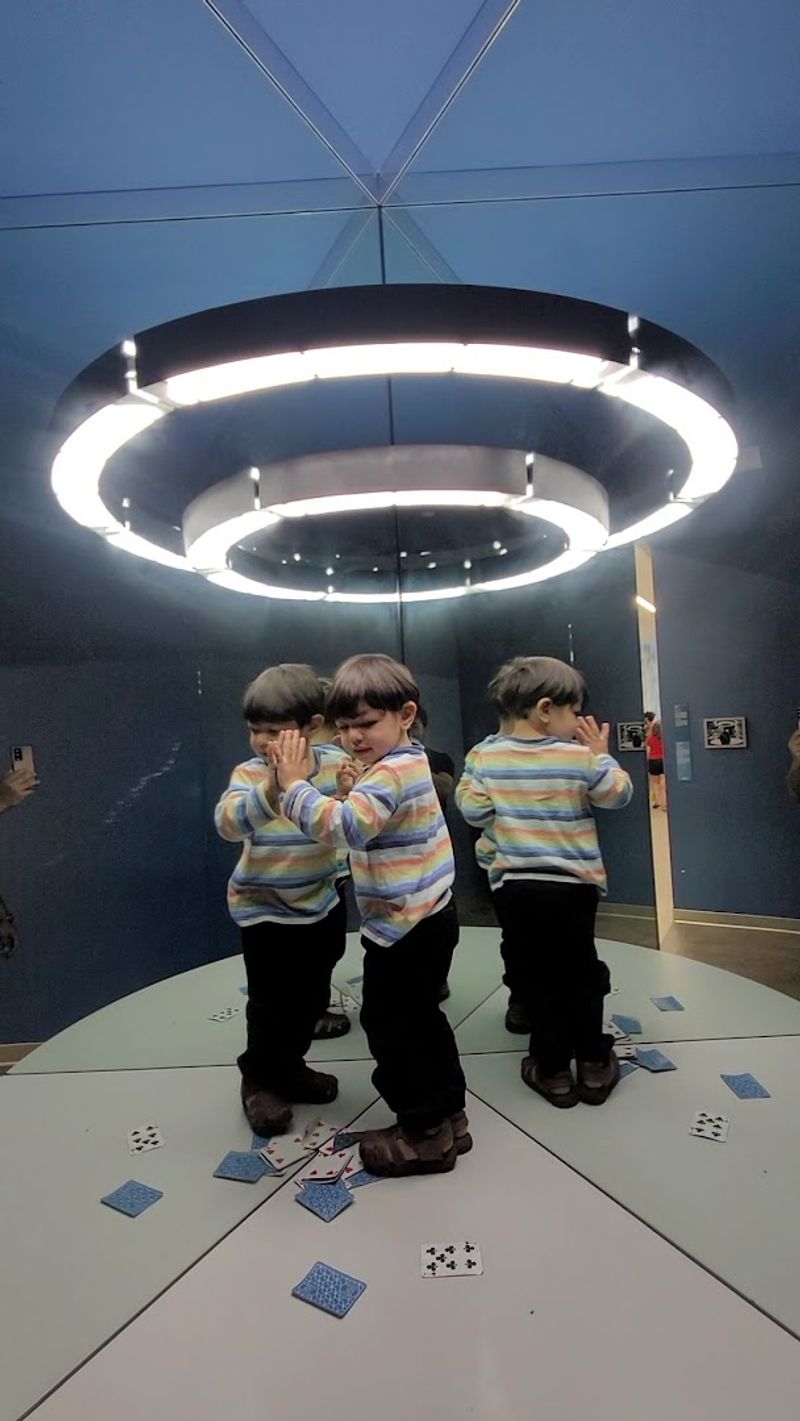
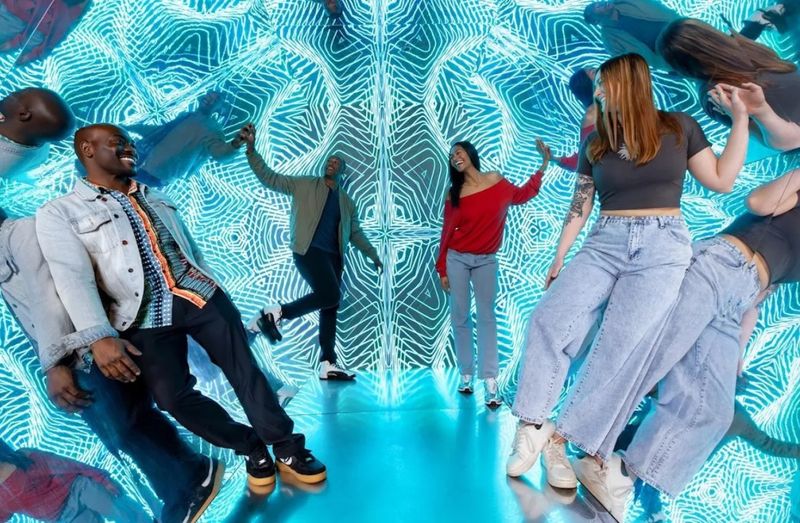
Step into the Infinity Room and watch reflections replicate into forever.
Mirrors face mirrors, and the glow feels cosmic, like standing inside a repeating universe.
The trick is simple and glorious.
Your eyes accept the repeated boundaries as distant space, so the recursion reads as depth.
Stand slightly off center for layered portraits.
You will capture that perfect shot where you appear to walk into your own horizon.
Try a still moment first, then experiment with motion.
Turn your body slowly and see reflections chase you in every direction.
The staff can show angles that reduce lens glare and keep the lights balanced.
If you wear contrasting colors, your silhouette separates beautifully from the luminous grid.
It is contemplative and playful at once, a pocket of quiet wonder in a lively museum.
The room invites you to consider how mirrors build a convincing world with nothing but light and symmetry.
4. Upside Down Diner: Philly Pop-Culture Flip
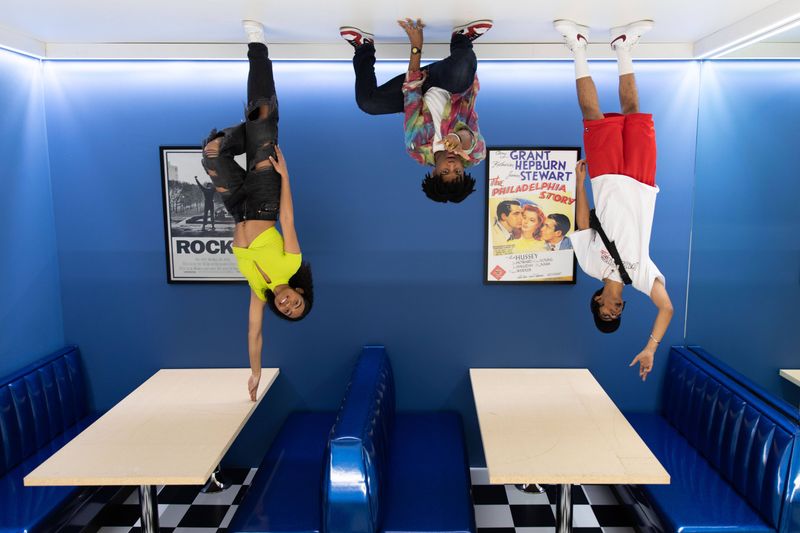
Welcome to the Upside Down Diner, where gravity politely takes a coffee break.
Booths, condiments, and retro decor perch overhead, and your camera does the rest.
Rotate your phone ninety degrees, pose like you are bracing yourself against the table, and suddenly you are walking on the ceiling.
Local nods, like Rocky and The Philadelphia Story posters, make the scene feel Philly through and through.
It is a quick setup with big payoff for families and friend groups.
The secret is perspective plus a gentle willingness to look silly.
Markers on the floor help you stage the perfect stance, and staff can snap it if you want everyone in the frame.
Take a safety pause to check pockets and shoelaces before posing.
Then commit to the bit.
When the camera orientation flips, you will swear your coffee could pour upward, and your grin will sell the impossible.
5. Ben Franklin’s Eyes: Philly History Stares Back
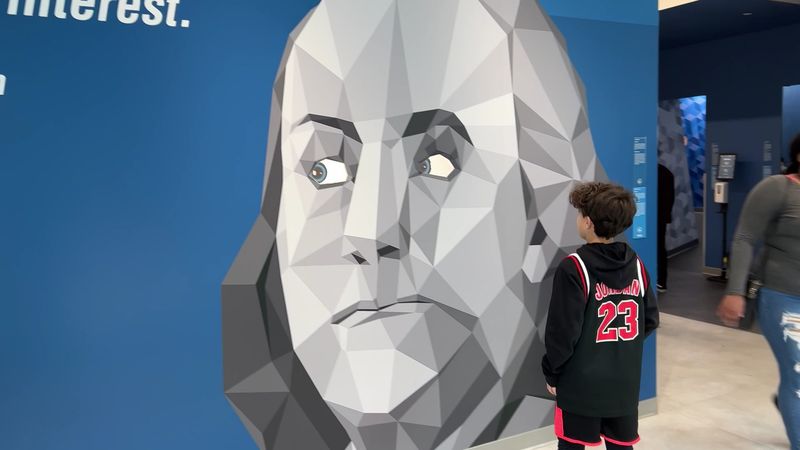
Only in Philadelphia would Benjamin Franklin follow you with a wink of science.
This lenticular-style mural turns slight head movements into shifting lines, so the eyes seem to track you across the room.
It is subtle, playful, and anchored in local pride.
Move side to side and watch the gaze glide.
It is a clever bridge between street art energy and classroom optics.
Take a short video, panning slowly so the effect reads clearly.
The display also works as a micro-lesson in parallax and moire patterns, showing how layered images can bend attention.
You will leave feeling like Philly’s favorite polymath just approved your curiosity.
It is not the flashiest spot, yet it becomes a favorite because it rewards patience.
In a museum full of big moments, this one whispers.
You are seen, it says, by history and by the playful physics that let ink behave like eyes.
6. Anti-Gravity Room: Floors That Disagree
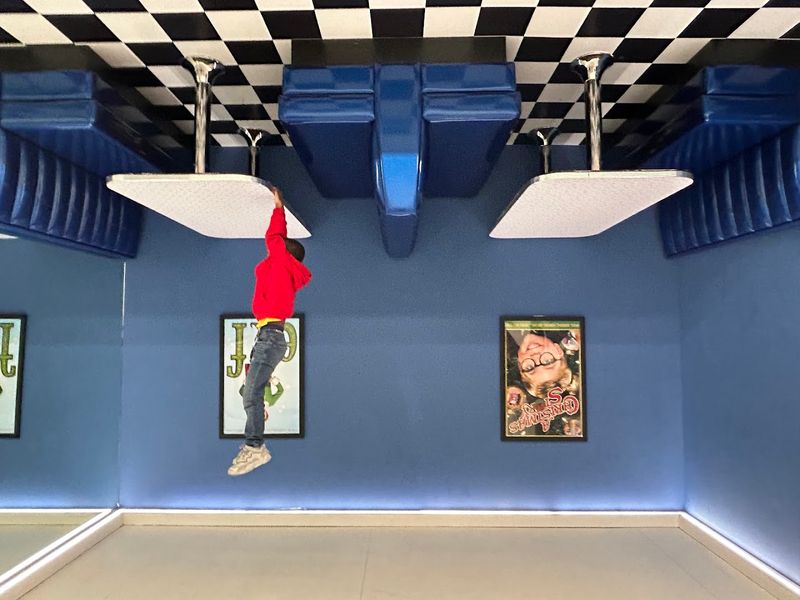
In the Anti-Gravity Room, your inner level gets confused fast.
The room is built on an intentional tilt, so bodies, furniture, and water seem to defy basic rules.
Pose like you are leaning way too far, then freeze the frame.
The camera loves it.
Your brain tries to re-straighten the world using the walls, so the image looks like magic even though your shoes never move.
Spend a minute practicing stances.
Bend knees, extend one arm, and pretend to fight the slope.
Staff can suggest angles that amplify the effect without straining your back.
If you are sensitive to motion tricks, take breaks between attempts, then come back for the winning shot.
The science is charmingly low-tech, reminding you that our sense of level is a negotiated guess.
When architecture disagrees with gravity, the result is a photo your group will replay with delighted disbelief.
7. Holograms And Impossible Portraits
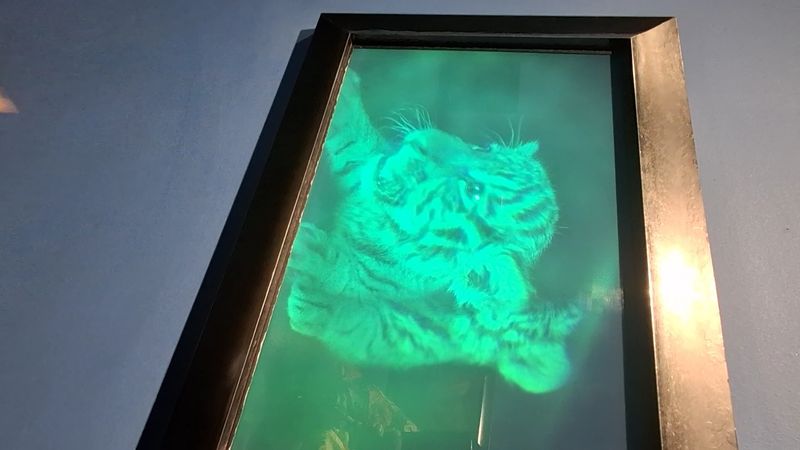
The hologram wall rewards slow looking.
Tilt your head, step left, step right, and watch portraits blossom into layered depth.
Some images seem to float ahead of the frame.
Others invert strangely, as if space folds backward.
It is art, tech, and perception training in one tidy gallery.
You notice how tiny shifts in viewpoint deliver big reveals, like the picture is breathing with your movement.
Phones struggle to capture the full effect, so take short clips rather than stills.
The labels explain diffraction and interference in simple language without spoiling the mood.
It is easy to breeze past, but lingering here changes how you see the rest of the museum.
Suddenly every reflection and shadow reads like a hint.
When you catch that final glimmer across a holographic smile, you will feel the childish thrill of discovering a secret panel that was hiding in plain sight all along.
8. Puzzles Corner: Hands-On Brain Teasers
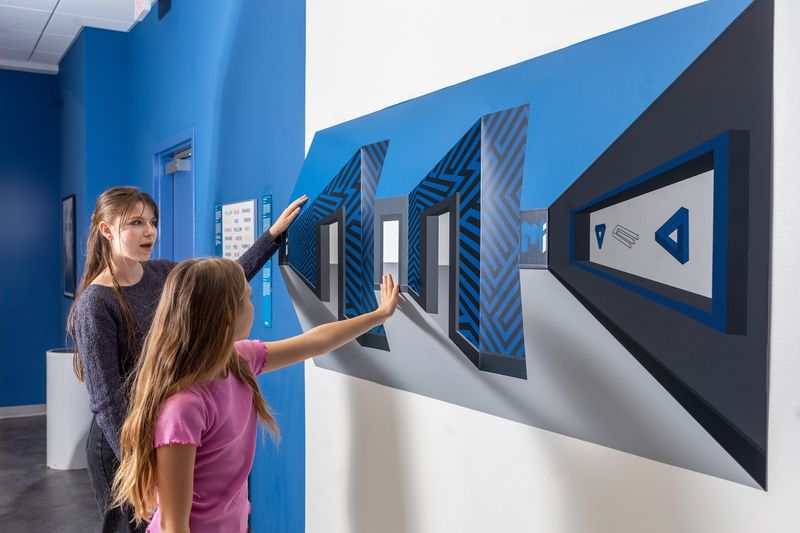
Between the flashy rooms, the puzzle tables offer a quieter challenge.
Wooden disentanglement sets, tangrams, and logic boards invite you to sit, breathe, and outsmart a knot that seems impossible.
It is collaborative by design.
Share strategies, swap pieces, and cheer when a stubborn shape finally clicks.
Kids feel like heroes, and adults rediscover patient play that feels oddly luxurious in a rushed day.
The staff often floats by with hints just subtle enough to keep the win yours.
Time here varies wildly.
Some groups sprint through in minutes, while others linger for half an hour and forget the clock.
If you love escape rooms, this corner scratches the same itch without a timer.
Snap a victory photo with the solved layout before resetting it for the next challenger.
You leave realizing the museum is not only about what you see, but how you think with your hands.
9. Photo Ops And Pro Tips
You will notice small footprints and camera icons on the floor.
They are your allies.
Stand where the lens marker sits, and everything snaps into place.
Angles matter more than gear here, so a charged phone beats a fancy camera without alignment.
Ask staff to shoot for you.
They are practiced at composing illusions and will coach micro-adjustments that transform okay into perfect.
Try burst mode for action shots in the Vortex Tunnel and a timer for the Upside Down Diner.
Turn off harsh flash to avoid mirror glare, and tilt slightly to dodge reflections.
If the space feels crowded, step back, wait a beat, and claim your moment.
The museum is designed for quick rotations, so patience is rewarded.
You will leave with a camera roll that looks expensive, captured with nothing but clever staging and a willingness to play along with physics.
10. Plan Your Visit: Hours, Tickets, Timing
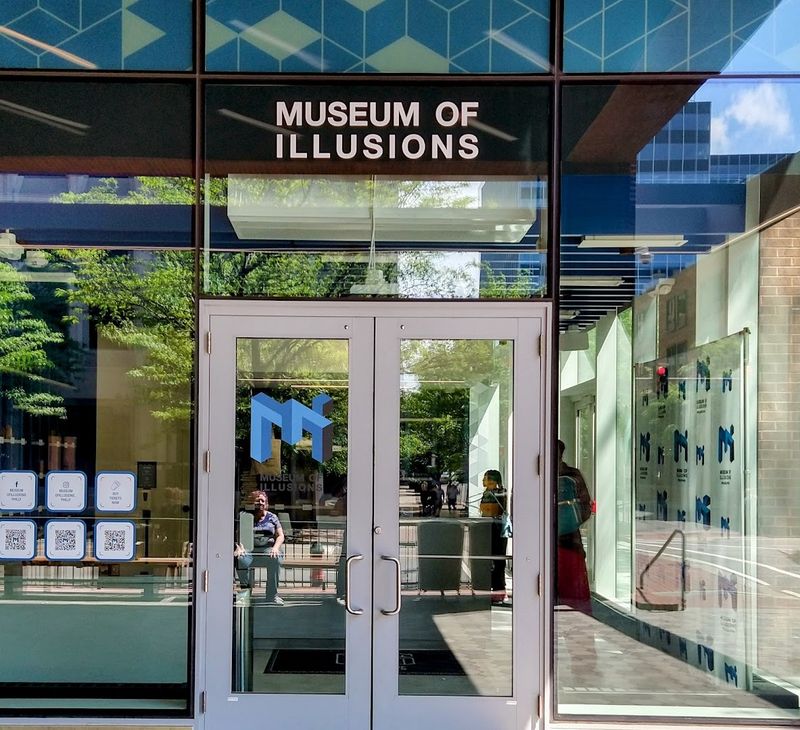
The Museum of Illusions Philadelphia sits at 401 Market St in Old City, near Independence National Historical Park and SEPTA’s 5th Street stop.
Hours generally run 10 AM to 8 PM Monday through Thursday and Sunday, with extended hours until 9 PM on Fridays and Saturdays.
Tickets are timed and often sell out on weekends.
Booking ahead is smart, especially for groups or families visiting during peak travel seasons.
Expect about 45 to 60 minutes if you take photos, try puzzles, and read placards.
Arrive a few minutes early, charge your phone, and travel light since there is no food or drink inside.
Weekday mornings feel roomier.
If you are sensitive to crowds, choose earlier slots.
The museum’s website lists pricing, seasonal updates, and accessibility details, and staff can be reached at +1 216-350-5987 for questions.
A little planning turns wobbly reality into a smooth, memorable outing.
11. Neighborhood Perks: Make A Day Of It
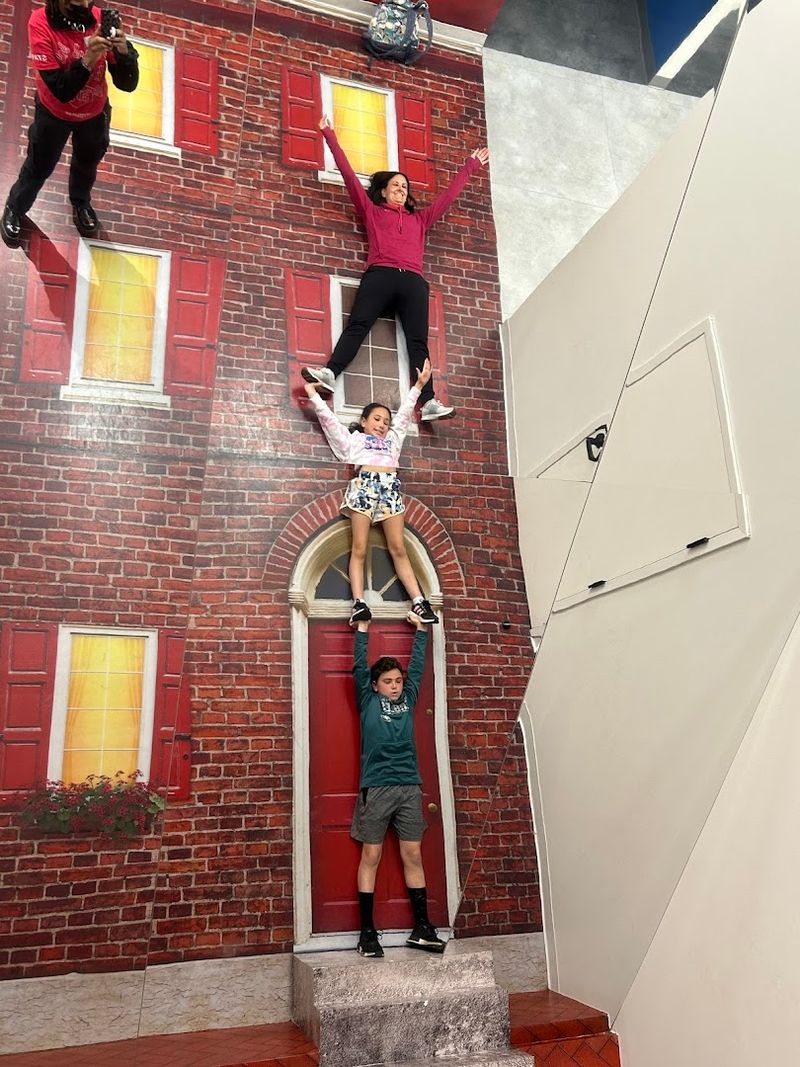
Part of the fun is how easily you can pair the museum with the rest of Old City.
Independence National Historical Park is a short stroll, so you can mix mind games with American history.
Cafes and quick eats cluster along Market Street, letting you refuel between illusions and landmarks.
If you are parking, arrive early for garages nearby, then wander at your own pace.
The museum experience is intentionally compact, which makes it a flexible anchor for a day trip.
Families can slot it between morning sightseeing and an afternoon snack.
Couples can chase the Infinity Room with golden-hour photos outside.
Even locals find it handy when guests visit and time is tight.
You leave with a surprising combo on your itinerary: science play, iconic architecture, and a walkable neighborhood that keeps delivering fun within a few easy blocks.