Texas stretches across nearly 270,000 square miles, and tucked into all that space are some of the most jaw-dropping roads you’ll ever cruise. From desert canyons that glow orange at sunset to wildflower-lined highways that look like paintings, these drives show off the state’s wild variety. Whether you’re chasing bluebonnets in spring or exploring mountain passes under wide-open skies, 2026 is the perfect year to pack up the car and see what Texas roads have to offer.
1. FM 170 River Road (Presidio to Study Butte)
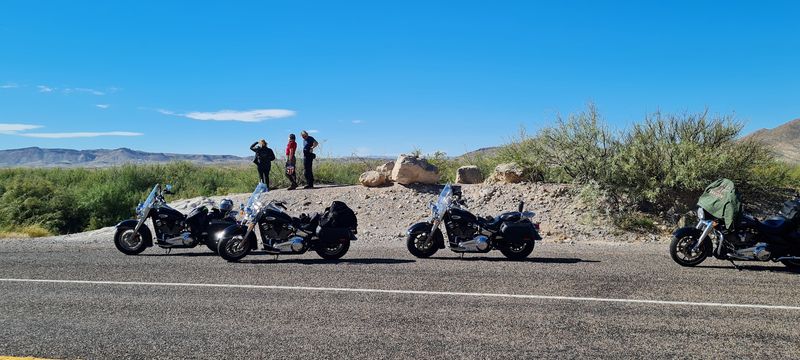
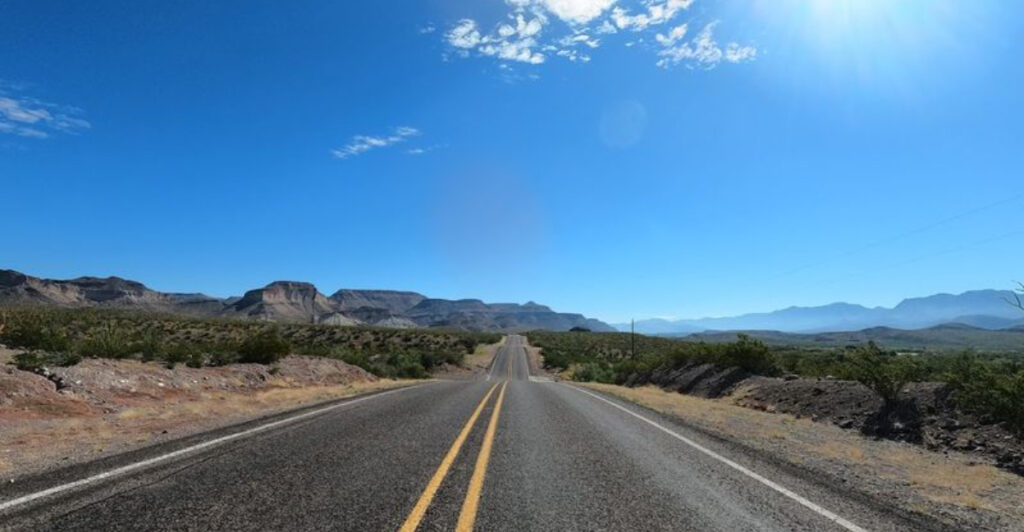
Buckle up for one of the most remote and rugged stretches of pavement in the entire state. FM 170 hugs the Rio Grande for about 50 miles, threading between the river and towering canyon walls that change color with the light. This isn’t a drive you rush through—it’s all about soaking in the raw beauty of the Chihuahuan Desert and feeling like you’ve left civilization behind.
The road twists and dips constantly, so keep your eyes on the pavement but pull over often at the roadside overlooks. You’ll see the river cutting through ancient rock, with Mexico just across the water. Bighorn sheep sometimes appear on the cliffs, and the silence out here is almost surreal.
Bring plenty of water and gas up beforehand—services are scarce.
Spring and fall offer the most comfortable temperatures, though summer sunsets paint the canyon walls in shades of amber and crimson that are hard to beat. Winter can be surprisingly chilly, especially in the mornings. The drive connects the tiny border town of Presidio with the ghost town vibes of Terlingua and Study Butte, making it a perfect add-on to a Big Bend adventure.
Plan for at least two hours of driving time, but give yourself three or four if you want to stop and explore. The Colorado Canyon overlook is a must-see, and there are a few primitive camping spots if you want to spend the night under some of the darkest skies in the country. Pack snacks, charge your camera, and prepare to feel very small in the best possible way.
2. Ross Maxwell Scenic Drive (Big Bend National Park)
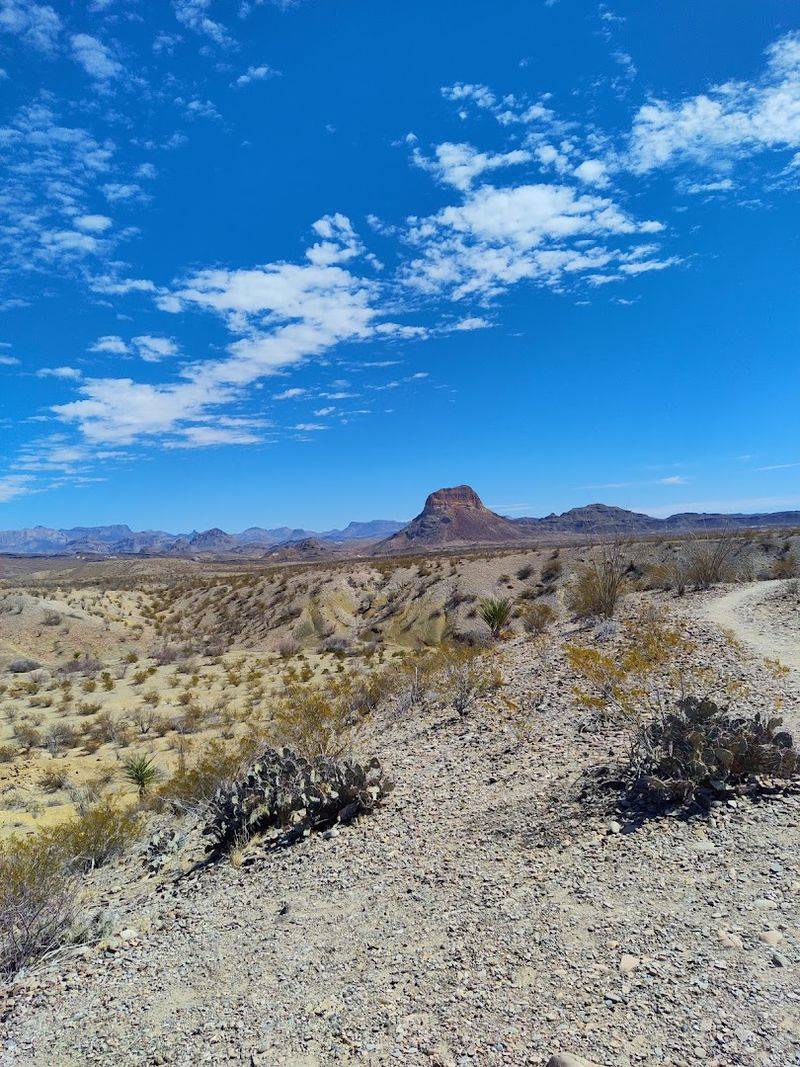
Wind through volcanic landscapes and desert valleys on this 30-mile paved route that dead-ends at the Rio Grande. Ross Maxwell Scenic Drive cuts right through the heart of Big Bend National Park, passing ancient lava flows, colorful rock formations, and enough pull-offs to keep you busy for hours. It’s one of those drives where every turn reveals something new.
Start near the park’s west entrance and head south toward Santa Elena Canyon. Along the way, you’ll pass the Sotol Vista overlook, which gives you a sweeping view of the surrounding mountains and Mexico beyond. The Mule Ears Peaks viewpoint is another highlight—two giant rock spires that look like they were dropped from the sky.
Each stop has interpretive signs that explain the geology and history, so you’re learning while you’re gawking.
The road ends at Santa Elena Canyon, where the Rio Grande slices through 1,500-foot limestone walls. A short trail leads into the canyon itself, and it’s worth the walk. The temperature drops noticeably once you’re between those towering cliffs, and the echo of the river bouncing off the rock is something you won’t forget.
Timing matters here. Early morning light makes the desert glow, and late afternoon brings out the rich reds and purples in the rock layers. Summer heat can be brutal, so spring and fall are ideal.
Bring binoculars—you might spot roadrunners, javelinas, or even a black bear if you’re lucky. Fill up your tank before entering the park, pack plenty of water, and give yourself at least half a day to explore this route properly.
3. Davis Mountains Scenic Loop
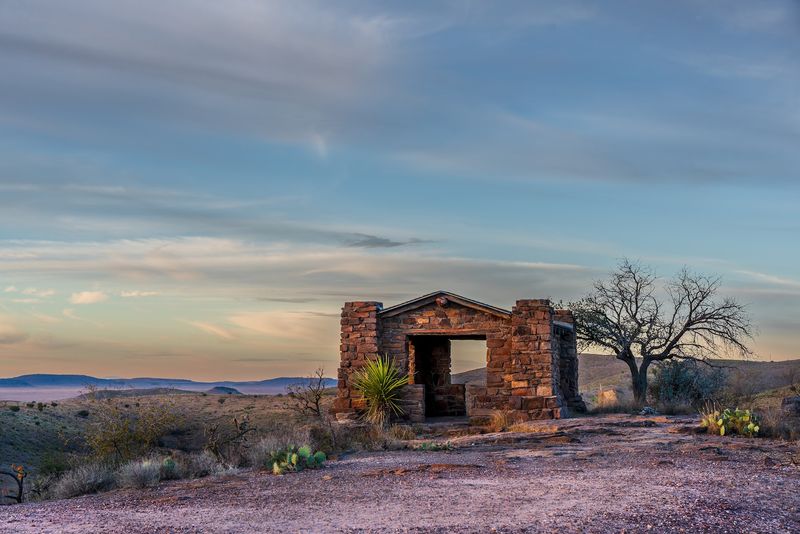
Out in far West Texas, where the desert suddenly sprouts pine trees and the air smells different, the Davis Mountains Scenic Loop offers a refreshing break from the flatlands. This 74-mile loop climbs through the second-highest mountain range in Texas, topping out at nearly 7,000 feet. It’s a world apart from what most people picture when they think of Texas.
The loop connects Fort Davis, a charming little town with Old West history, to the McDonald Observatory, one of the best stargazing spots in North America. Along the way, you’ll pass through valleys dotted with prickly pear and yucca, then climb into cooler zones where ponderosa pines and junipers grow. The temperature can drop 15 degrees as you gain elevation, which feels amazing on a hot summer day.
Stop at the Fort Davis National Historic Site to explore the old frontier fort, then continue up to the observatory for a daytime solar viewing or an evening star party. The views from the mountaintops stretch for miles in every direction, and on clear days, you can see all the way into Mexico. The road itself is smooth and well-maintained, with plenty of scenic overlooks and picnic spots.
Wildlife is abundant—mule deer, antelope, and roadrunners are common sights. If you’re visiting in late summer, monsoon thunderstorms roll through in the afternoons, creating dramatic skies and brief downpours. Spring wildflowers add splashes of color to the hillsides.
Budget at least three hours for the full loop, or make it a full-day trip with stops at local shops, the Chihuahuan Desert Nature Center, and a meal in Fort Davis.
4. The Twisted Sisters (RR 335, 336, 337)
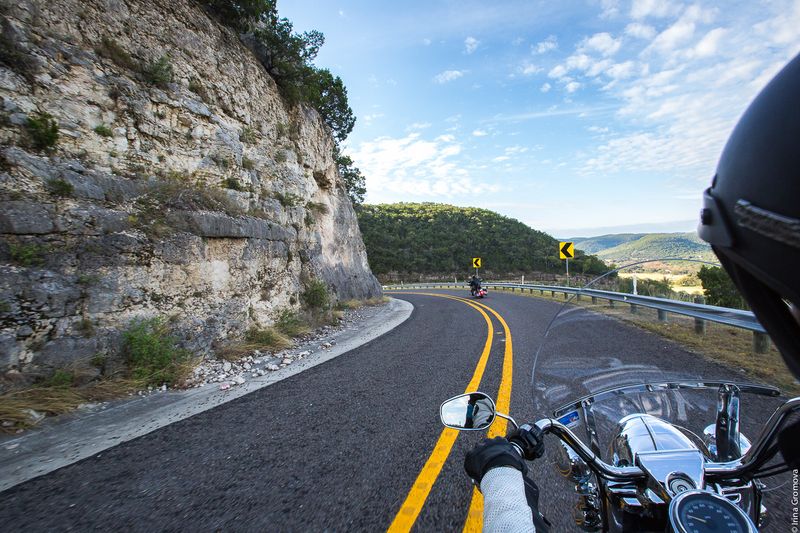
Motorcyclists dream about these roads, but they’re just as thrilling in a car if you like curves. The Twisted Sisters—Ranch Roads 335, 336, and 337—form a trio of twisting, turning Hill Country routes that challenge your driving skills and reward you with stunning scenery. These aren’t highways; they’re narrow, winding ribbons of asphalt that demand your full attention.
Each of the three roads has its own personality. RR 335 is the shortest but packs in tight switchbacks and steep grades. RR 336 is the longest and most remote, cutting through ranchland and crossing the Frio River.
RR 337 is the most popular, with dramatic elevation changes and sweeping views of the surrounding hills. Together, they create a roughly 100-mile loop that starts and ends near Leakey.
The best time to tackle the Sisters is spring, when wildflowers blanket the roadsides and the weather is perfect for top-down driving. Summer can be scorching, and winter occasionally brings ice to the shaded sections. Weekdays are quieter than weekends, when motorcycle groups and sports car clubs descend on the area.
Pull over if faster traffic catches up—there are plenty of scenic spots to let them pass.
Fuel up in Leakey or Medina before you start, as gas stations are few and far between. Pack snacks and water, and don’t rely on your phone for navigation—cell service is spotty. The surrounding area offers camping along the Frio River, swimming holes, and small-town cafes serving chicken-fried steak.
If you’re into driving for the pure joy of it, this loop delivers.
5. Willow City Loop
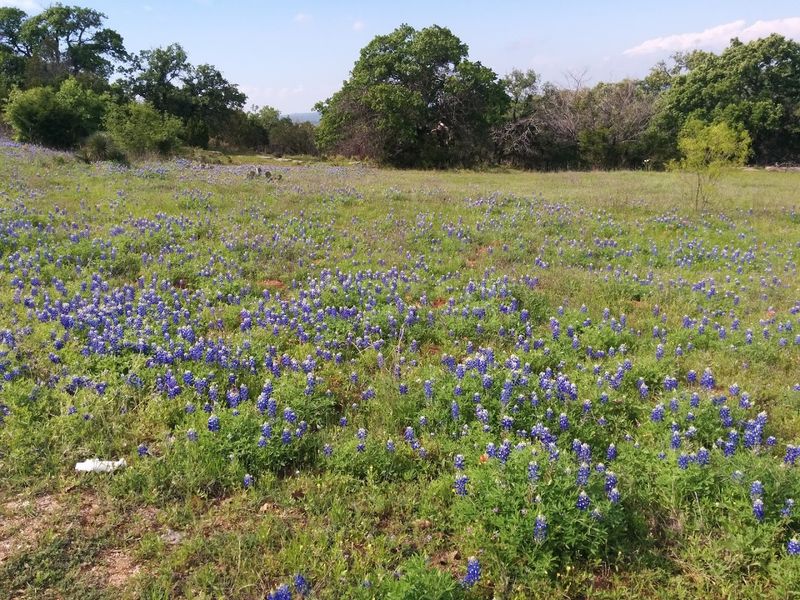
When bluebonnet season hits, Texans flood to Willow City Loop like it’s a pilgrimage. This 13-mile gravel and paved road northeast of Fredericksburg becomes a wildflower wonderland every spring, typically peaking in late March or early April. It’s a short drive, but you’ll want to take it slow and stop often because the views are that good.
The loop cuts through private ranchland, so respect the property and stay on the road or in designated parking areas. Rolling hills covered in bluebonnets, Indian paintbrush, and phlox stretch as far as you can see. Old barns and weathered fences add to the charm, and the whole scene feels like a postcard come to life.
Bring your camera—this is Instagram gold.
Timing is everything. Check wildflower reports before you go, because the blooms can be early or late depending on winter rains. Weekends during peak season bring crowds, so early morning or late afternoon visits offer better light and fewer cars.
The road can get dusty when it’s dry and muddy after rain, so plan accordingly.
The loop is family-friendly and easy to navigate, though the gravel sections can be rough if you’re in a low-clearance car. Go slow and watch for oncoming traffic on the narrow stretches. Nearby Fredericksburg offers wineries, German bakeries, and quirky shops if you want to make a full day of it.
Enchanted Rock State Natural Area is also close by, perfect for a hike after your drive. Pack a picnic, wear sunscreen, and don’t forget to check your car for ticks afterward—they love wildflower season as much as we do.
6. FM 32 (Blanco to Wimberley – Devil’s Backbone)
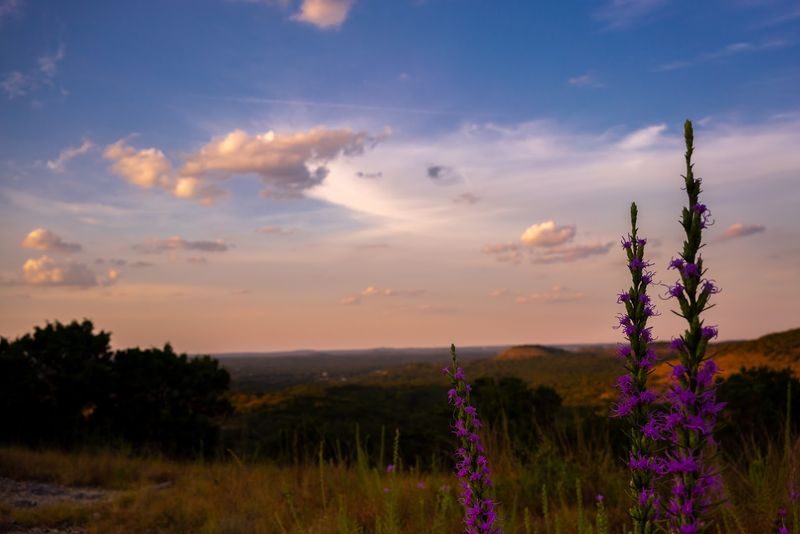
Perched on a limestone ridge with valleys dropping away on both sides, Devil’s Backbone offers some of the most dramatic views in the Hill Country. FM 32 between Blanco and Wimberley runs along this natural ridge for about 24 miles, giving you the feeling of driving on top of the world. On clear days, you can see for miles in every direction.
The road earned its name from early settlers who thought the rocky spine looked like a devil’s backbone rising from the earth. Today, it’s a favorite Sunday drive for locals and a must-do for visitors. The elevation gives you sweeping panoramas of rolling hills, cedar-covered slopes, and distant ridgelines that fade into blue haze.
Several pull-offs let you stop and soak it all in without blocking traffic.
Spring brings wildflowers to the roadside meadows, while fall colors—subtle but pretty—appear in late November. Summer sunsets from the Backbone are legendary, painting the sky in shades of pink and orange. Winter mornings sometimes bring fog that fills the valleys below, creating an otherworldly scene where only the ridge tops poke through.
The drive connects two charming towns worth exploring. Blanco has a historic courthouse square and great barbecue, while Wimberley offers art galleries, swimming holes, and a Saturday market that draws crowds year-round. The road itself is smooth and well-maintained, with gentle curves that make it enjoyable without being challenging.
Plan for about 30 minutes of driving time, but budget extra for photo stops. Bring binoculars if you’re into bird-watching—hawks and vultures ride the thermals along the ridge, and you might spot deer grazing in the valleys below.
7. Ennis Bluebonnet Trails
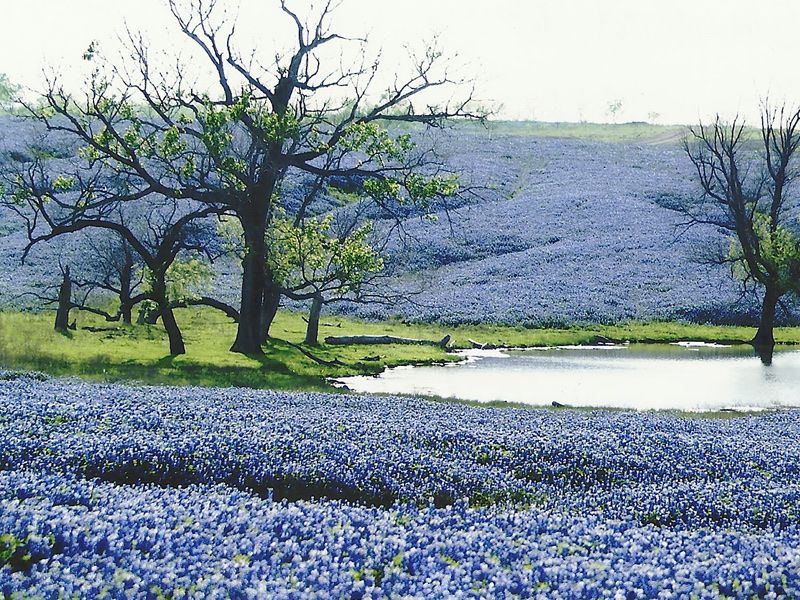
About 40 miles south of Dallas, the small town of Ennis goes all-in on bluebonnet season every spring. The Ennis Bluebonnet Trails consist of multiple mapped routes totaling over 40 miles, winding through farmland and pastures that explode with color when the wildflowers peak. It’s less about dramatic scenery and more about pure flower power—field after field of blue stretching to the horizon.
The Chamber of Commerce publishes trail maps showing the best routes and bloom conditions, which change year to year depending on weather. Some roads are paved, others are gravel, and a few can get muddy after rain. The trails are well-marked with signs, so you won’t get lost.
Each route offers different views, from wide-open prairies to more intimate country lanes bordered by old barns and farmhouses.
Peak bloom usually happens in mid-April, and the town celebrates with the Ennis Bluebonnet Festival, featuring live music, food vendors, and arts and crafts. The trails themselves are free to drive anytime, though. Early morning and late afternoon provide the best light for photos, and weekdays are quieter than weekends when families pile into minivans for flower-viewing adventures.
Bring a blanket and have a picnic among the blooms—just ask permission if you’re on private property, and always leave gates as you found them. The flat terrain makes this drive easy for all vehicles, including RVs. Nearby Waxahachie offers historic architecture and antique shopping if you want to extend your trip.
Don’t forget to check your shoes and clothes for seeds afterward, and resist the urge to pick the flowers—they’re protected, and you want them to come back next year.
8. Surfside Beach to San Luis Pass (Bluewater Highway)
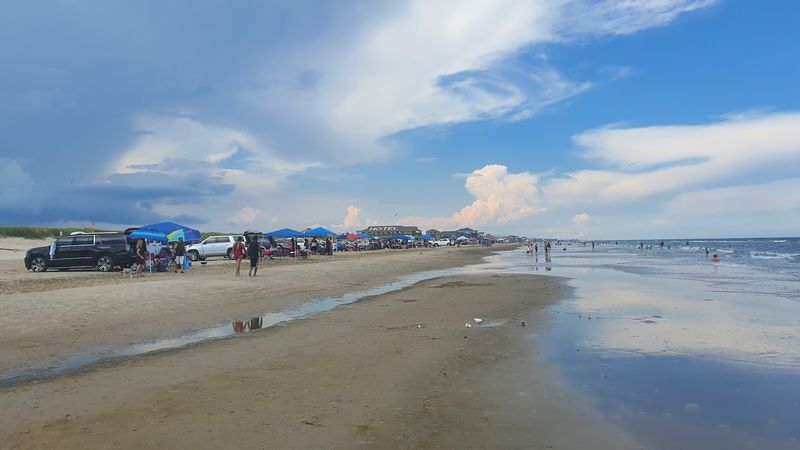
Trade Hill Country curves for flat coastal straightaways on this breezy Gulf Coast drive. The stretch from Surfside Beach to San Luis Pass, locally known as the Bluewater Highway, hugs the coastline for about 20 miles, offering constant views of sand, surf, and seabirds. It’s the perfect antidote to inland heat, with salt air and the sound of waves just steps from your car.
The road runs along narrow Follett’s Island, with the Gulf of Mexico on one side and the Intracoastal Waterway on the other. Pull-offs and beach access points dot the route, so you can stop whenever the urge to dip your toes in the water strikes. The beaches here are less crowded than those closer to Galveston, and the vibe is laid-back and local.
Fishing is huge along this stretch—you’ll see anglers casting from the surf, piers, and jetties. San Luis Pass itself is a narrow channel where the Gulf meets the bay, creating strong currents that attract fish and dolphins. The San Luis Pass bridge offers great views if you park safely and walk out.
Watch for pelicans diving and stingrays gliding through the shallows.
Summer brings warm water and plenty of sunshine, but also crowds and higher prices. Spring and fall offer milder weather and fewer people, making them ideal for a quiet beach day. Winter can be surprisingly pleasant, with temperatures often in the 60s and 70s.
Bring sunscreen, beach chairs, and a cooler full of snacks. Surfside Beach has restaurants and shops if you need supplies, and the nearby Brazosport area offers additional dining options. Watch for speed traps in the small beach communities, and always keep an eye out for beach traffic and pedestrians.
9. Big Thicket Loop
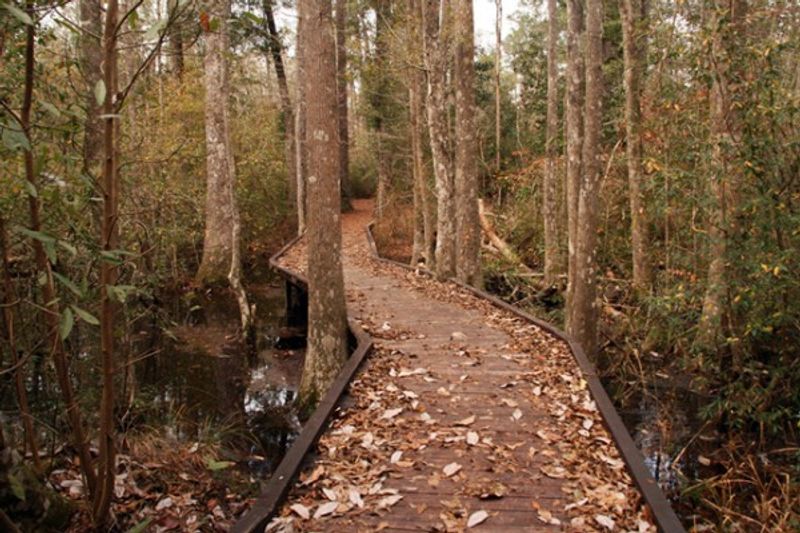
East Texas doesn’t get enough credit for its natural beauty, but the Big Thicket National Preserve proves there’s more to the state than deserts and prairies. The Big Thicket Loop—a loose collection of roads through the preserve—takes you through a biological crossroads where swamps, forests, and prairies all meet. It’s green, humid, and completely different from the rest of Texas.
The preserve protects over 100,000 acres of diverse ecosystems, from cypress sloughs to longleaf pine forests, creating a landscape that feels almost tropical compared to the rest of the state. As you wind along the quiet roads that make up the loop, the scenery shifts constantly—one moment you’re driving through dense woods with sunlight filtering through tall pines, and the next you’re passing wetlands filled with still, reflective water and the sounds of birds echoing in the distance.
This region is often called one of the most biologically diverse areas in North America, and it’s easy to see why. Wildflowers bloom along the roadside in spring, while towering hardwoods turn shades of gold and amber in the fall. Keep an eye out for wildlife, too.
Deer are common, but you might also spot alligators basking near the water, armadillos crossing the road, or rare bird species hidden among the trees.
Unlike some of Texas’ more dramatic landscapes, the beauty here is quieter and more subtle. It’s not about sweeping canyon views or mountain peaks—it’s about the details. The stillness of a swamp at sunrise, the texture of moss hanging from tree branches, and the way the light changes as you move through different environments all add to the experience.
There are plenty of opportunities to stop along the way, whether it’s for a short hike on trails like the Kirby Nature Trail or a peaceful walk through one of the preserve’s boardwalks. Take your time, roll the windows down, and let the slower pace of East Texas sink in. The Big Thicket Loop rewards those who are willing to look a little closer.
10. Palo Duro Canyon State Park Scenic Drive
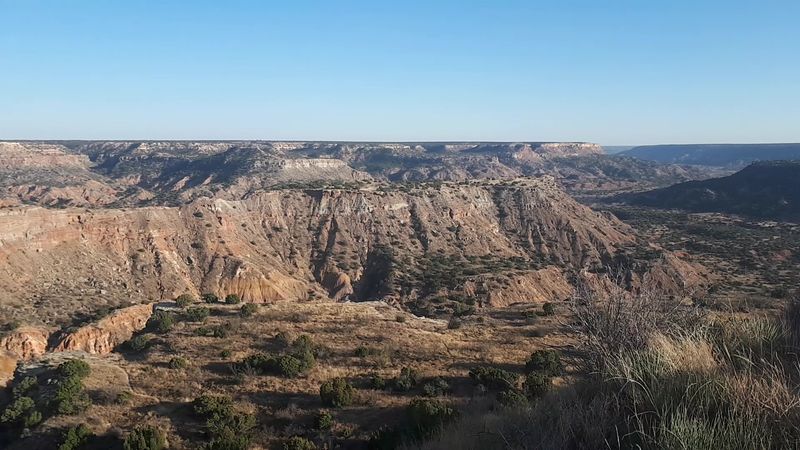
Texas hides a canyon so massive and colorful that first-time visitors often can’t believe it’s real. Palo Duro Canyon, known as the “Grand Canyon of Texas,” delivers one of the most dramatic scenic drives in the state, taking you from wide-open plains down into a world of towering red rock formations.
The drive begins at the rim, where the landscape suddenly drops away, revealing layers of rust, orange, and deep red stretching as far as the eye can see. As you descend along the winding road, every turn opens up a new perspective. Cliffs rise on either side, and the scale of the canyon becomes more impressive with each passing mile.
Unlike many scenic routes that keep you at a distance, this one pulls you right into the heart of the landscape. You’ll pass iconic formations like the Lighthouse rock, one of the park’s most recognizable landmarks, and have plenty of opportunities to pull over and take it all in. The contrast between the rugged canyon walls and the wide Texas sky creates views that feel almost cinematic.
Timing makes a big difference here. Early morning and sunset bring out the canyon’s richest colors, with shifting light turning the rock into glowing shades of red and gold. In the summer, starting early is also the best way to beat the heat, especially if you plan to stop and explore.
There’s more than just the drive, too. Trails branch off from multiple points, giving you the chance to hike deeper into the canyon or simply stretch your legs and enjoy the quiet.
Palo Duro Canyon isn’t just a scenic drive—it’s an experience that completely reshapes how you see T
11. Hill Country Scenic Loop (Austin to Fredericksburg)
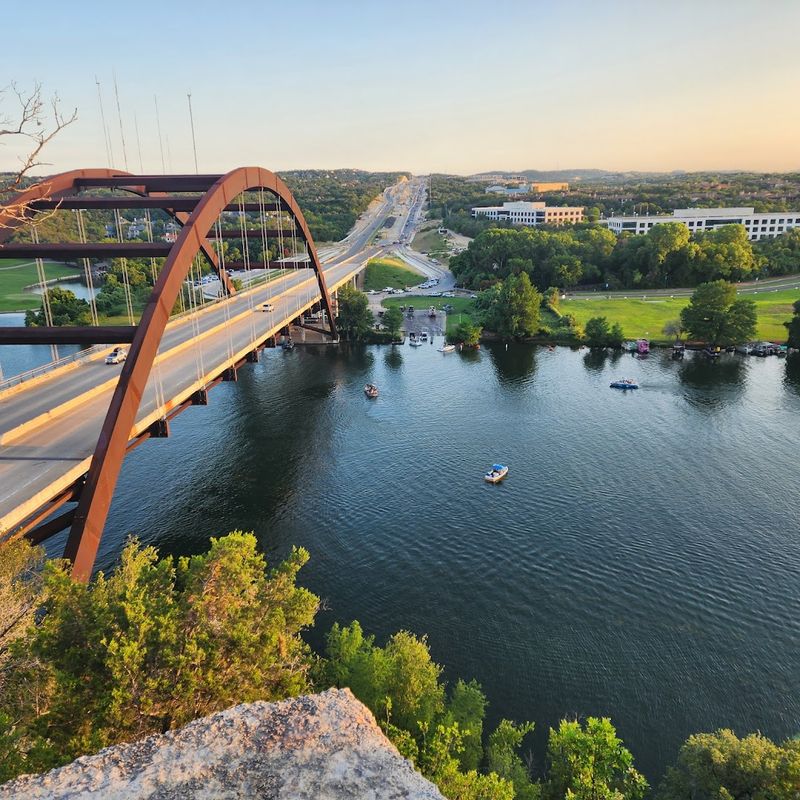
Rolling hills, winding roads, and endless stretches of Texas sky define one of the most classic drives in the state. The Hill Country Scenic Loop from Austin to Fredericksburg offers a relaxed yet visually stunning journey through some of Texas’ most beloved landscapes.
As you leave Austin behind, the scenery quickly shifts from city streets to open countryside dotted with oak trees, limestone outcrops, and charming rural views. The route winds through small towns and quiet backroads where the pace naturally slows down, inviting you to take your time and enjoy the ride. It’s not just about the destination—it’s about everything you discover along the way.
Fredericksburg anchors the drive with its unique blend of German heritage and Texas hospitality. But the real magic happens between the two points. Vineyards and wineries line sections of the route, offering scenic stops where you can sip local wine while overlooking rolling hills.
In spring, wildflowers like bluebonnets blanket the fields in vibrant color, turning the drive into something straight out of a postcard.
Fall brings a different kind of beauty, with warm tones spreading across the landscape and cooler temperatures making it perfect for long, unhurried drives. Along the way, you’ll find roadside markets, antique shops, and local eateries that add personality and charm to the journey.
There’s no need to rush this route. Pull over at scenic overlooks, explore hidden side roads, or simply roll the windows down and take it all in. The Hill Country Scenic Loop is less about dramatic landmarks and more about the feeling it creates—a peaceful, easygoing experience that captures the heart of Texas road travel.
Share this story