Texas is full of forgotten places where crumbling walls, abandoned buildings, and mysterious ruins tell stories from the past. From deserted military forts to old Spanish missions and remote mining towns, these historic sites offer a fascinating glimpse into a different side of the Lone Star State.
Some of these ruins have survived for more than a century, while others have slowly disappeared into the surrounding landscape. Behind their weathered stone walls are stories of frontier battles, dangerous working conditions, abandoned settlements, and mysteries that still capture people’s imaginations.
What makes these places especially fascinating is that many can still be explored today. Visitors can walk through historic fort grounds, admire preserved structures, and discover the stories of people who once lived and worked there. Some locations have museums and guided tours, while others have restricted access to protect their fragile remains.
We’ve rounded up 10 eerie Texas ruins with histories that are just as intriguing as their appearances. Whether you’re fascinated by abandoned places, unusual historical sites, or forgotten chapters of Texas history, these destinations offer plenty to discover.
1. Historic Fort Phantom Hill
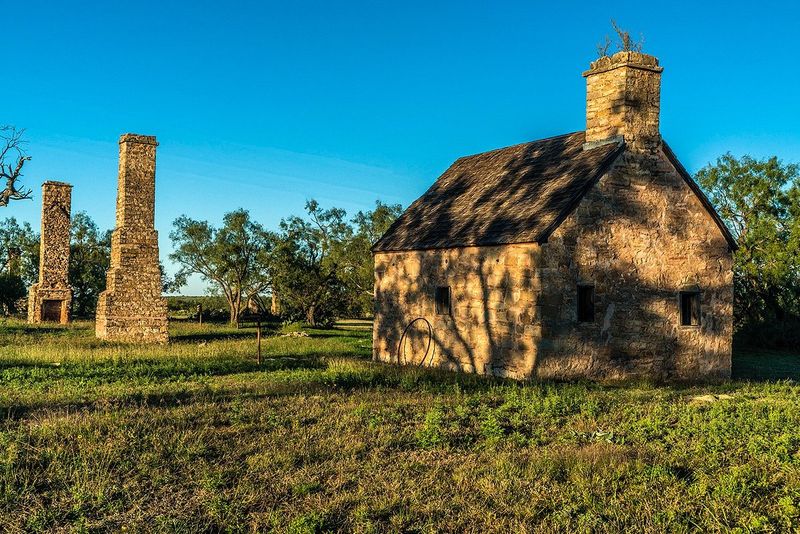
Any place with the word phantom in its name already has your attention. North of Abilene, this frontier fort earns that name with a field of lonely chimneys pointing at the Texas sky.
Soldiers built the post in the early 1850s to guard the frontier. Life out here was rough, with scarce water and harsh weather testing the troops.
The Army pulled out after only a few years. Soon after, much of the fort burned, and the cause has stayed a mystery ever since.
That fire is why the place looks so eerie today. Stone chimneys stand alone where wooden buildings once surrounded them, like a skeleton left behind.
Three original stone buildings also survive on the grounds. You can step close to them and picture the soldiers who once hurried between them.
Where did the spooky name come from? Stories differ, but one popular tale says a nervous sentry fired at a figure on the hill that simply vanished.
Nobody can prove that legend, which makes it even more fun to think about. Stand among the ruins near dusk, and you might catch yourself glancing toward the hill.
The good news is that visiting is easy and free. A self-guided tour walks you through the site, and a map at the entrance helps you find your way.
Old wooden signs match the rustic look of the ruins. They explain what each building once was, so you never feel lost in the history.
A walking trail loops through the grounds, and the paths are easy for families. Kids can explore while you read up on frontier life.
The site is open daily from dawn until dusk, making it a great place for an early morning or late afternoon visit. Weekday afternoons tend to be quieter if you want the chimneys mostly to yourself.
Bring a camera and a little imagination. The rest of the mood shows up on its own.
Address: 10818 FM600, Abilene, TX 79601
2. Fort Lancaster and Battlefield State Historic Site
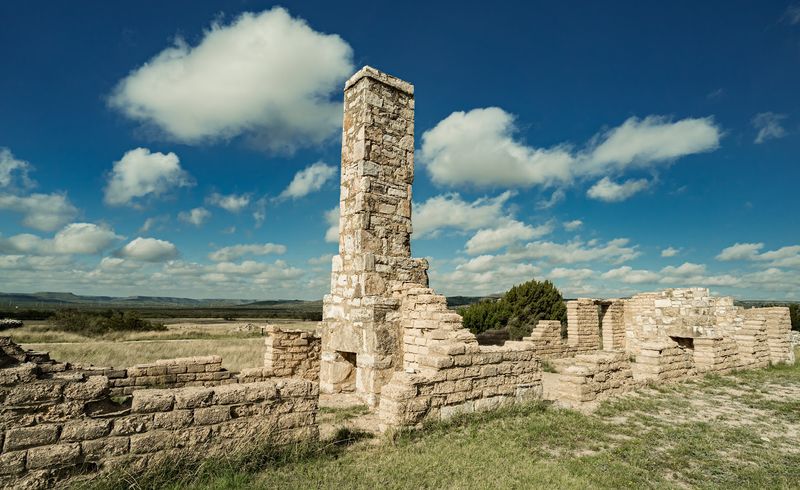
Out in the rugged country near Sheffield, a pile of old stones once held one of the most important posts in West Texas. Today it’s mostly foundations, and that emptiness is what makes it feel so haunting.
The fort guarded the road between San Antonio and El Paso back in the 1800s. Wagon trains, mail coaches, and travelers counted on soldiers here for safety.
That job came with real danger. The word battlefield in the site’s name points to a fierce fight that broke out right on these grounds.
Walking where soldiers once braced for an attack gives you chills in broad daylight. The quiet canyon makes the old struggle feel strangely close.
So what’s left to see? Original foundations stretch across the site, along with some rebuilt structures that show how the fort once looked.
Archaeologists value this spot as an important dig site. Each wall outline helps tell the story of frontier life in Texas and the American West.
Here’s a fun surprise for tired legs. Golf carts help you cover the ruins, which is handy when the West Texas sun starts showing off.
Prefer to walk? Easy trails wind among the stones, so you can take your time reading the history as you go.
Start at the small museum before you head out. A short video sets the scene, and it makes the empty foundations far easier to picture.
Friendly staff and knowledgeable guides lead talks that bring the past to life. Families with kids will find plenty to keep young explorers busy.
Plan your trip carefully, since the site is open Tuesday through Saturday only. Restrooms are on hand, but you’ll want to pack your own snacks.
Address: 629 Lancaster Rd, Sheffield, TX 79781
3. Ruins of St Dominic Catholic Church
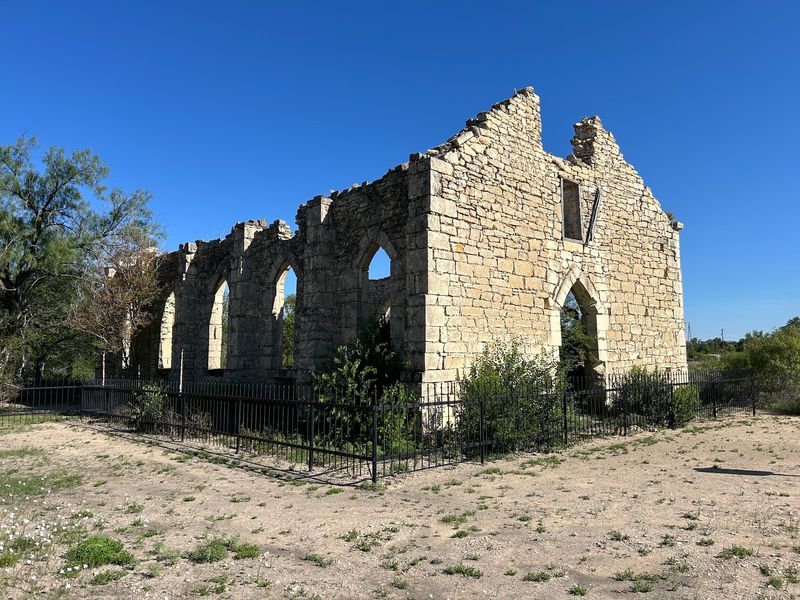
Few sights stop you cold like a church with the sky for a roof. Out in Old D’Hanis near Hondo, that’s exactly what waits for you.
Settlers from the Alsace region of Europe helped build this community in the 1800s. Their small stone church became the center of life in a rugged new home.
Over time, the town shifted toward the railroad, and the old church was left behind. Wind, rain, and years did the rest of the work.
Much of the original building has collapsed. What remains are crumbling walls that frame empty windows and open air.
Right next door sits the old cemetery. Some of the people resting there were born back in the 1700s, which is a wild thing to think about.
Standing between broken church walls and weathered headstones feels peaceful and spooky at the same time. It’s the kind of place that makes you lower your voice without meaning to.
Photographers love the way light pours through the gaps in the stone. Early morning or late afternoon brings long shadows that add to the drama.
Please treat the grounds with care. These walls are fragile, and the cemetery is still a resting place for families with deep local roots.
Visiting is simple, since the site is open around the clock. A free parking area makes it an easy stop on a country drive.
Quiet times are common here, especially on weekday mornings. You may get the ruins entirely to yourself, which only boosts the eerie mood.
Pair it with a drive through the surrounding countryside. The rolling land helps you imagine how lonely life felt for those early settlers.
Address: 440 Co Rd 5226, Hondo, TX 78861
4. Presidio de San Saba
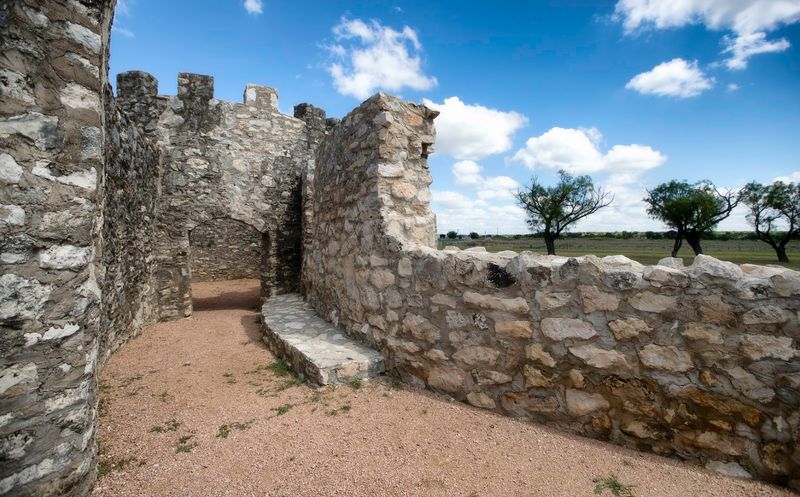
Spain sent soldiers deep into Texas in the 1750s, and the stone walls near Menard are what they left behind.
The presidio was built to protect a nearby mission along the San Saba River. Spanish leaders hoped the outpost would help them settle the region.
Things went badly fast. In 1758, a large force attacked and burned the mission, a shocking blow that echoed across the frontier.
The presidio held on for several more years in a tense, isolated spot. Eventually, Spain gave up the post, and the walls slowly fell to ruin.
Today the site looks surprisingly calm. Restored walls rise from neat grounds, with informative markers explaining what happened here.
That calm is part of the chill. Reading about the fear and danger while birds chirp nearby feels a little strange in the best way.
Archaeologists have studied the grounds closely. Their work helps visitors understand how the Spanish colonial fort was laid out.
Walking paths lead you around the stone ruins at an easy pace. Kids can stretch their legs while you soak up the history.
Planning a lunch break? Picnic tables and a gazebo sit near the San Saba River, making it a lovely spot to rest.
Clean, modern restrooms are another nice bonus on a road trip. Free on-site parking keeps things simple, too.
The site stays open around the clock. Visit at sunset, and the old walls glow in a way that feels both beautiful and haunting.
It’s a thought-provoking stop in the Texas Hill Country. You’ll leave with a new respect for how risky colonial life truly was.
Address: 191 Presidio Rd, Menard, TX 76859
5. Mariscal Mine
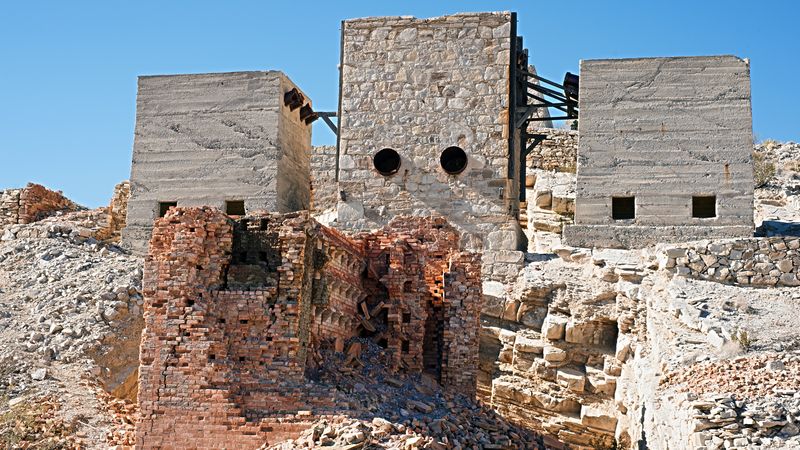
Shiny silver liquid sounds like treasure, but the mercury pulled from this hillside came with a nasty catch. Mariscal Mine sits in a remote corner of Big Bend National Park, and its story is harder than the rocks around it.
Miners dug red cinnabar ore here starting before World War I. Workers then heated the ore in furnaces to release mercury, also called quicksilver.
That process gave off toxic vapors. Mercury was dangerous to breathe, and workers faced serious health risks to earn a living in this harsh desert.
The mine shut down by the 1940s. What stayed behind looks like a set from a spooky Western movie.
Stone ruins, old equipment, and even an abandoned car dot the site. Vent shafts and gated mine openings add an extra shiver to the scene.
Please keep your distance from those openings and don’t touch the old equipment. The gates are there for good reasons.
Getting here takes effort, which is part of the adventure. A high-clearance four-wheel-drive vehicle is required for the rough backcountry road, and visitors should check current conditions with park rangers before setting out.
Give yourself plenty of time once you arrive. Climbing around the hillside and reading the setting takes longer than you might expect.
Sunset here is a showstopper. The desert turns gold while the old buildings fade into dark outlines.
Some visitors even spot fossils in the area. Look, snap a photo, and leave them in place for the next curious explorer.
Pack water, snacks, and a full tank before heading out. Big Bend is huge, and help can be far away.
The site is reachable any time, but daylight driving is wiser on those remote roads. Plan smart, and the reward is unforgettable.
Address: Big Bend National Park, TX 79834
6. Mission Nuestra Senora del Rosario
Cars zip along US-59 just below a hilltop where Spanish missionaries once rang bells. Most drivers have no idea a vanished mission sits right above them.
Spanish leaders founded this mission near Goliad in 1754. It was meant to serve the Karankawa people of the Texas coast.
The effort struggled from the start. Life at the mission swung between hope and hardship, and the site was eventually abandoned.
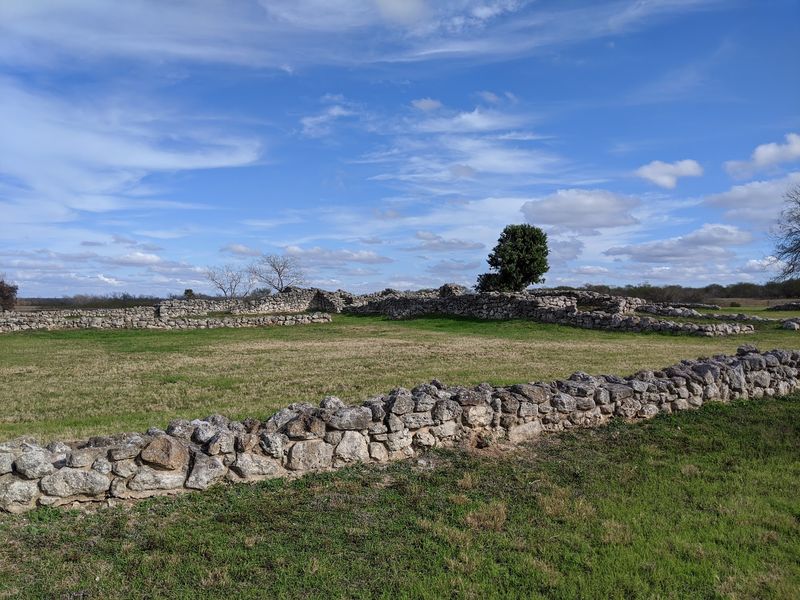
Over the centuries, the buildings slowly disappeared. Today, only low stone foundation walls remain on the hill.
Those walls stand about two feet high. They trace the outlines of rooms and buildings like a ghostly floor plan.
That’s what makes this stop so eerie. You’re looking at the shadow of a place rather than the place itself.
The whole area is fenced, so you’ll view the ruins from outside. Bring binoculars or a camera with good zoom if you want a closer look.
Historians link this spot to El Camino Real, the old royal road through South Texas. Travelers, soldiers, and priests once passed through this very landscape.
Pairing your stop with other Goliad history makes the visit even richer. The area is packed with Spanish colonial and Texas Revolution sites.
Visitors can view the ruins from outside the fenced archaeological area, while closer access requires arranging a visit with Goliad State Park staff. Turn it into a game of guessing what each space was used for.
The mission ruins are not open for unrestricted visits, and access inside the fenced archaeological area requires an appointment with Goliad State Park staff. Those low walls are hard to see once the sun goes down.
It’s a quick stop with a long story. Stand on that desolate hill, and the traffic below starts to feel very far away.
Address: 1958-5802 US-59, Goliad, TX 77963
7. Fort Chadbourne
Soldiers in the 1850s didn’t exactly sign up for a vacation when they arrived near Bronte. Fort Chadbourne guarded a lonely stretch of West-Central Texas, where danger and isolation came with the job.
The Army founded the fort in 1852 to protect settlers moving west. Later, it also served as a stop on the Butterfield Overland Mail route.
Picture stagecoaches rattling in after long, dusty days on the trail. Passengers and drivers counted on this outpost for a short break from the wild road.
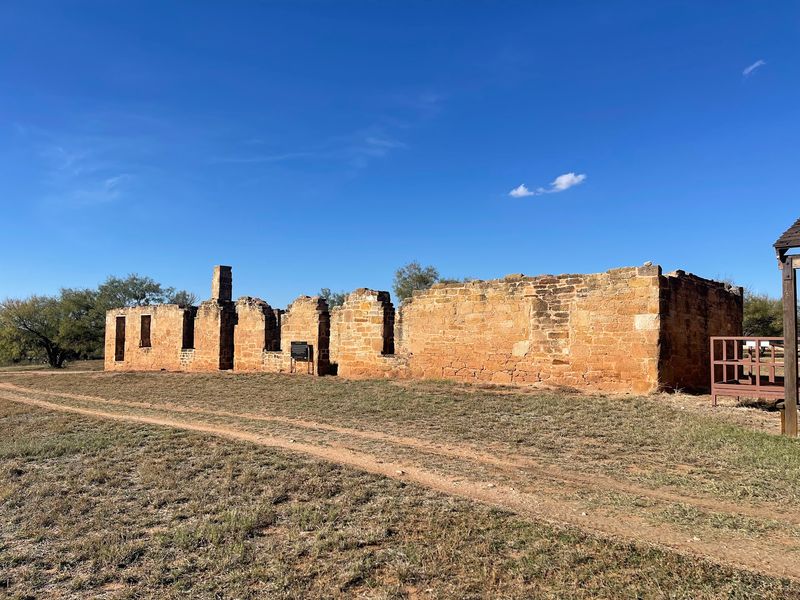
Life here was tough, and the fort was eventually left behind. Stone walls weathered, roofs fell in, and the site slipped into quiet ruin.
Today, preserved military ruins share the grounds with restored buildings. The mix shows you both how the fort crumbled and how it once looked.
The real showstopper is the museum. It holds an extensive collection of frontier artifacts, including an impressive set of historic firearms.
History buffs can easily lose track of time in there. Each display adds another layer to the stories behind those old stone walls.
A short movie in the theater helps set the scene before you explore. It’s a smart first stop if you want the ruins to make sense.
Friendly, knowledgeable guides offer tours of the site. They’re a great resource if your kids fire off a hundred questions.
A gift shop lets you grab a souvenir on the way out. Restrooms and on-site parking make the visit easy.
Check your calendar before you go. The fort opens Tuesday through Saturday and closes earlier than many attractions.
Address: 651 Fort Chadbourne Rd, Bronte, TX 76933
8. Fort Davis National Historic Site
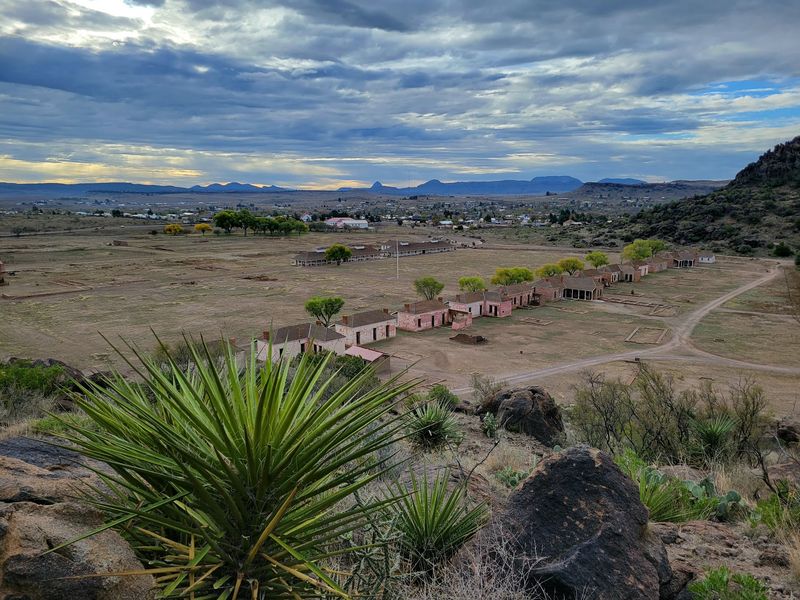
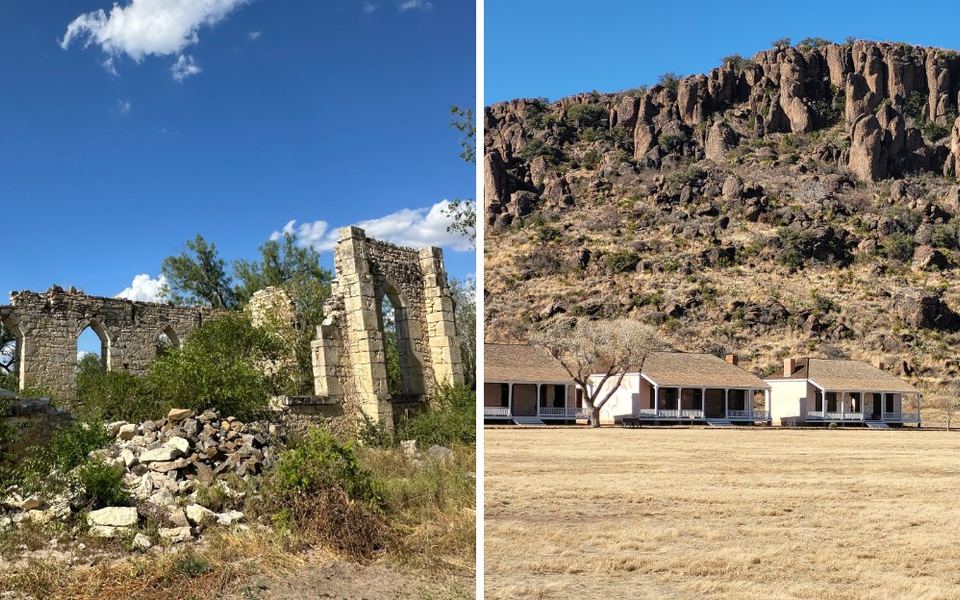
Tucked below towering rock cliffs, the old fort at Fort Davis looks like a movie set that got left out in the wind. Some buildings stand proud, while others have melted into crumbling adobe.
The Army ran this post from 1854 to 1891. Its job was guarding the San Antonio to El Paso road through the Trans-Pecos.
Buffalo Soldiers, the Black regiments of the U.S. Army, served here after the Civil War. Their tough frontier service is a big part of the site’s story.
The street address honors Lt. Henry O. Flipper.
He was the first Black graduate of West Point and served at this very fort.
His time here ended in a court-martial that many later saw as deeply unfair. He received a presidential pardon in 1999, more than a century later.
That long wait for justice may be the most chilling part of the story. The quiet parade ground suddenly feels a lot heavier.
Today, the site counts as one of the best-preserved frontier forts in the country. Restored buildings sit beside collapsed ones and others still under repair.
Several rooms are furnished the way they looked in the 1800s. It’s like peeking into a soldier’s world frozen in time.
Start at the visitor center and mini museum. Interactive exhibits and informative displays explain how each building was used.
A gravel trail loops around the ruins for an easy stroll. About four miles of hiking trails also wind into the surrounding hills.
The site generally opens from 8 AM to 5 PM, but closes on Thanksgiving, Christmas, New Year’s Day, and Martin Luther King Jr. Day. Weekday afternoons usually bring smaller crowds.
Address: 101 Lt Henry Flipper Dr, Fort Davis, TX 79734
9. Fort McKavett State Historic Site
General William T. Sherman reportedly called this hilltop outpost the prettiest post in Texas. Pretty, sure, but its empty stone shells tell a lonelier tale.
The Army first set up the fort in 1852 near the San Saba River. Troops left a few years later, and the post sat abandoned for a while.
Soldiers returned in 1868 and rebuilt it into a large fort. Buffalo Soldiers were among the troops stationed here during the busy years.
By the 1880s, the Army moved on for good. Some buildings became homes for local families, while others slowly crumbled.
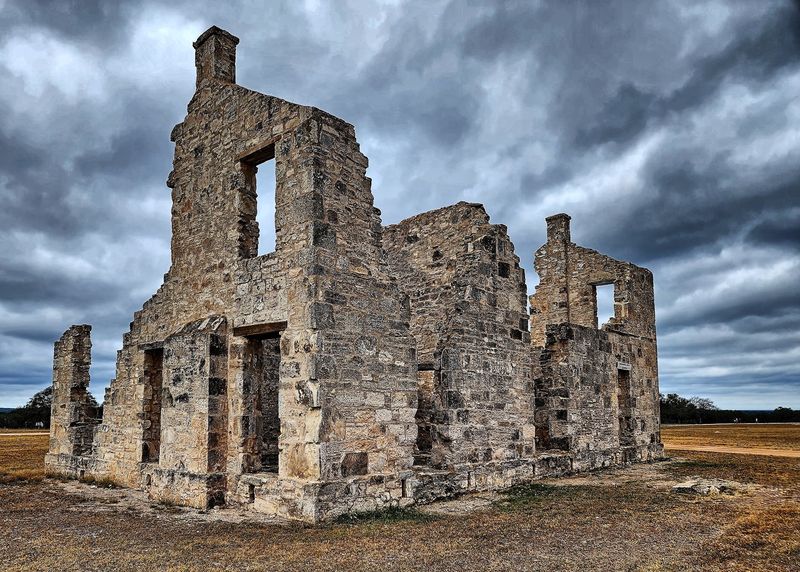
That mix is what you’ll find today. Restored limestone buildings stand beside roofless ruins with empty window frames.
Wandering from a fixed-up barracks to a hollow shell feels a bit eerie. It’s like watching the fort’s life story in fast forward.
A self-guided tour lets you set your own pace. The museum fills in details about the soldiers who lived and worked here.
Kids have their own mission, too. A scavenger hunt and suggested tour route keep young explorers busy and curious.
Well-kept trails wind through the hilltop grounds and scenic countryside. The remote setting makes the place feel far from modern life.
That same remoteness creates dark skies. The site has hosted star parties, and the night views from up here can be stunning.
A gift shop, restrooms, and free Wi-Fi add a few modern comforts. Active military visitors can also ask about discounts.
The fort opens daily from 8 AM to 5 PM. Plan for the drive, since this secluded hill sits far off the main highways.
Address: 7066 Farm to Market Rd 864, Fort McKavett, TX 76841
10. Welcome to Terlingua ghost town sign
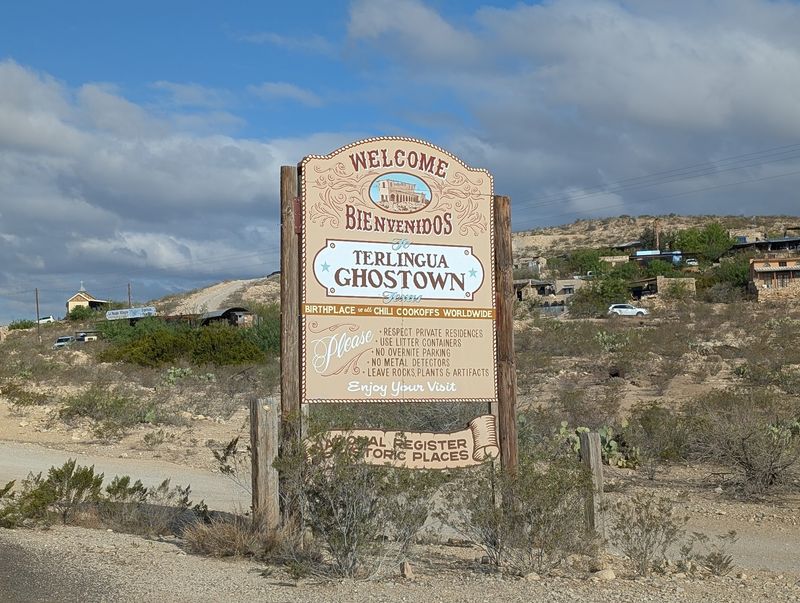
A town built on quicksilver turned into a ghost town once the shine wore off. The Welcome to Terlingua sign marks the spot where that story begins.
Terlingua grew into a famous mercury mining hub in the early 1900s. The Chisos Mining Company ran operations here and drew workers from far and wide.
Mining mercury was hard, risky work in brutal desert heat. When the industry faded and the company closed in the 1940s, most people packed up and left.
They left behind stone houses without roofs and walls slowly sinking into the sand. Those rugged ruins now give the area its ghost town nickname.
The old cemetery may be the most haunting sight of the bunch. Weathered wooden crosses and rock-covered graves sit under the wide Texas sky.
Please visit the cemetery with respect. It’s a sacred place for families, not just a photo backdrop.
Here’s the twist, though. Terlingua isn’t totally empty, and a small community lives among the ruins today.
Restored and rustic buildings mix with the crumbling ones. A few little shops and a couple of restaurants sit within walking distance of the ruins.
That means you can explore abandoned mining buildings and then grab a bite nearby. Not many ghost towns offer lunch.
The sign itself makes a fun photo stop to kick off your visit. Kids will enjoy posing with it before wandering the old stone walls.
The area is reachable any time of day. Sunset paints the desert in glowing colors that make the ruins look even spookier.
Bring water, sunscreen, and sturdy shoes for the rocky ground. Big Bend country is beautiful, but it rarely goes easy on unprepared visitors.
Address: 65 Ken Barnes Rd, Terlingua, TX 79852
Share this story