One of the Old West’s most famous gunslingers rests on a hillside above a Colorado mountain town, and nobody knows exactly where. The path to his memorial is short, steep and right off a quiet residential street. Most Coloradans have zipped past this town on I-70 heading for somewhere else.
That’s a shame, because a climb of well under a mile delivers pioneer graves, a second outlaw, a curious tree covered in bandanas and wide views over the valley below. It costs nothing to walk, opens early every day and works for a quick morning outing or a full afternoon on the mountain. The story behind the plain memorial up top is a mystery worth hearing.
Here is what to know before lacing up and heading uphill to meet a legend.
1. A Trailhead Tucked Into a Neighborhood
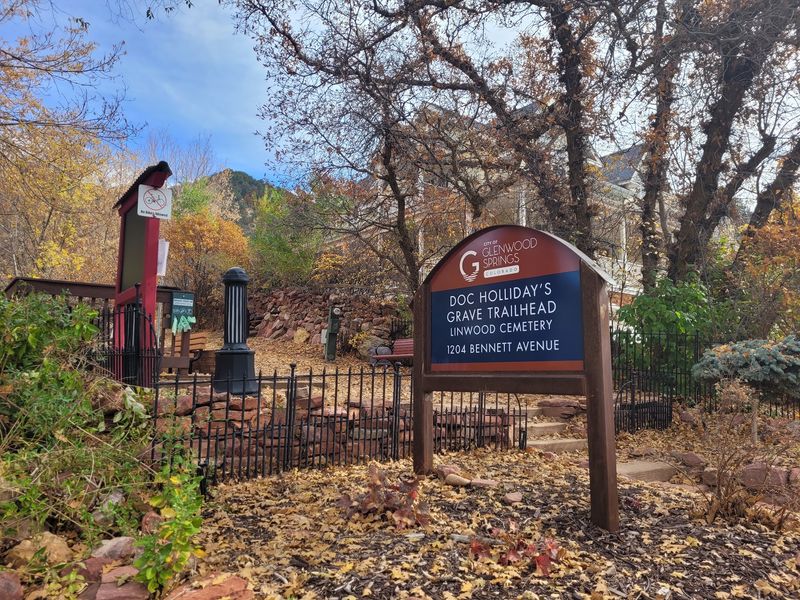
The start of this adventure looks more like someone’s block than the gateway to Western lore. Doc Holliday’s Grave Trailhead sits at Bennett Ave and 12th St Ditch, Glenwood Springs, CO 81601, in the Roaring Fork country of western Colorado.
It is listed as a hiking area, and the trail climbs to historic Linwood Cemetery. That is where the famous dentist turned gunslinger was laid to rest.
The path begins just off a residential street, which surprises plenty of first-timers. There’s no grand visitor complex or ticket booth waiting at the bottom.
Hours run from 6 am to 7 pm every day of the week, Monday through Sunday. That gives early risers and after-work hikers a generous window.
No entry fee appears anywhere in the trail details, which makes this a budget-friendly outing. For Front Range residents already in Glenwood for the weekend, it slips easily into a free morning.
The place has earned a 4.6-star average from roughly 1,800 people who have weighed in. That is a strong showing for a short walk up a hill.
The bottom of the trail is only the opening chapter, though, and the real story waits higher up.
2. The Dentist Who Became a Legend
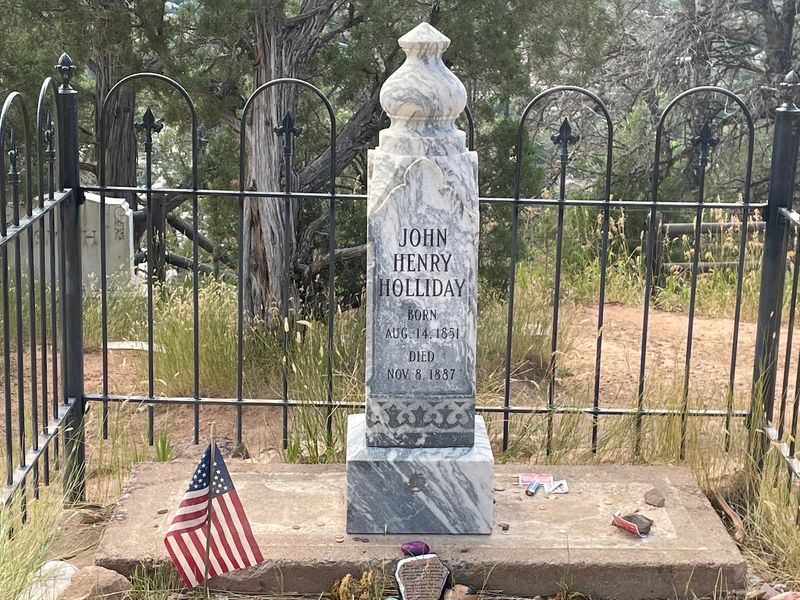
Few careers have taken a stranger turn than John Henry Holliday’s. He trained as a dentist and became one of the most recognized gunslingers in Old West history.
His story ended in Glenwood Springs, and the hillside cemetery above town became his final stop. Signs at the top explain his background and his connection to the area.
He was buried as a pauper, according to the information shared about the site. That detail is a big part of why his exact resting spot remains unknown today.
Many people remember him for his loyalty to his friend, a trait that still fuels his legend. Western fans tend to arrive with that reputation already in mind.
The cemetery signs also help fill in the gaps for anyone less familiar with the tale. A few minutes of reading turns a simple hike into a history lesson.
Western history comes up again and again among the most mentioned themes here. The hill has become a quiet classroom for anyone curious about frontier life.
Of course, knowing who rests up there only raises a bigger question about where.
3. A Memorial Without a Marked Spot
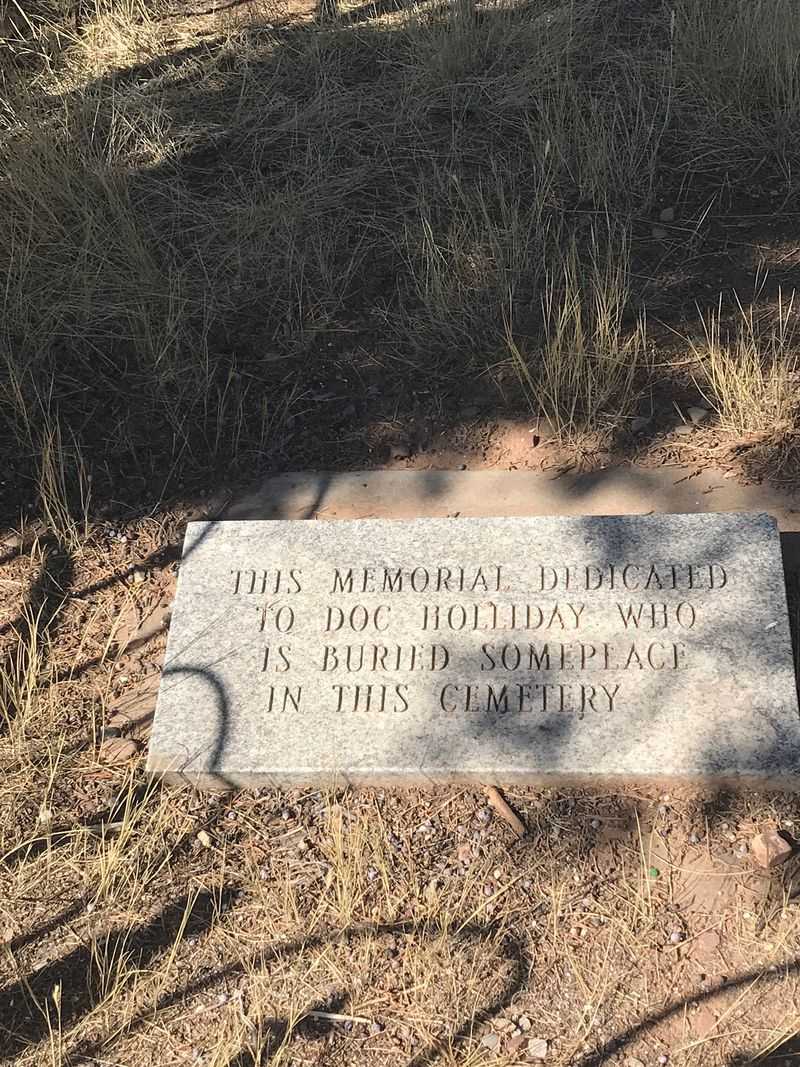
Here’s the twist that catches people off guard. Doc Holliday is in Linwood Cemetery, but nobody knows precisely where.
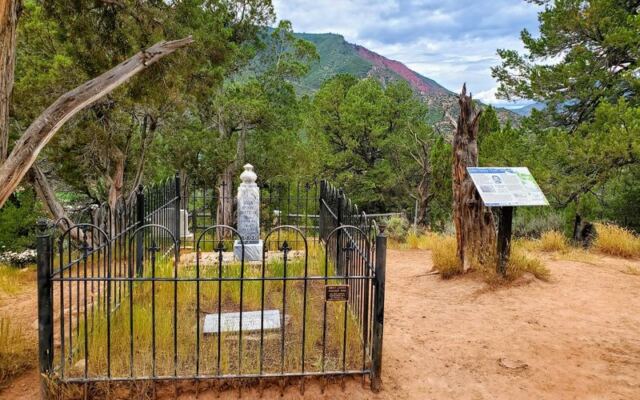
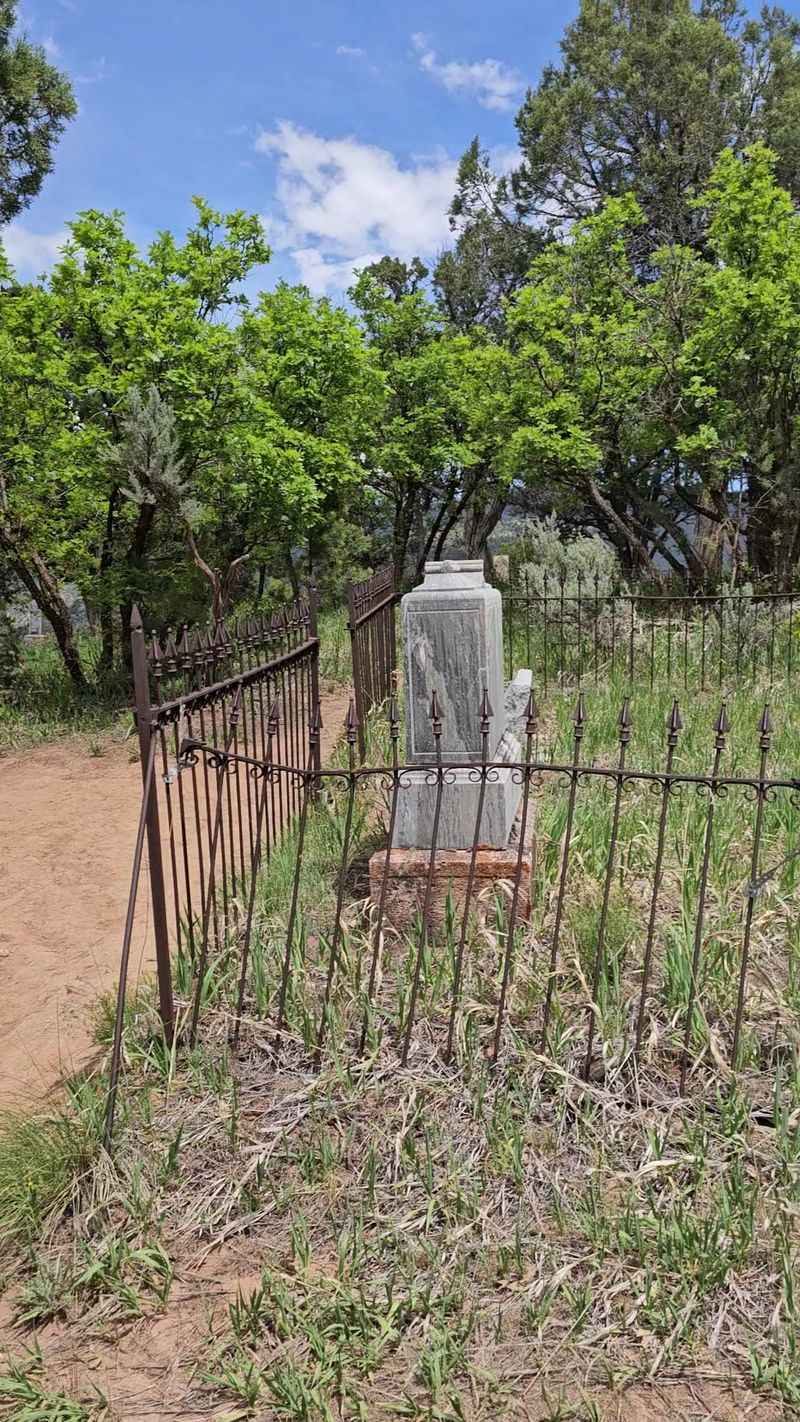
The headstone that most people photograph is a memorial rather than a true grave marker. A large US flag marks the area, serving more as a suggestion than an exact location.
Talk on the hill points to the Potter’s Field section at the top as his likely resting area. Paupers were often buried there, and he may share ground with others.
Some accounts even raise the possibility that his remains were moved at some point. A small plaque describes the uncertainty plainly.
For some hikers, that mystery adds charm to the visit. Standing on the same hill where he lies still carries real meaning.
Others feel a little let down after the climb, since the exact spot is unknown. Going in with clear expectations helps avoid that letdown.
The memorial is simple yet carefully done. Fans of Doc often call it a must for any stop in Glenwood Springs.
One legend with no marked grave might be enough for most hills, but this one holds a second outlaw.
4. Kid Curry Shares the Hill
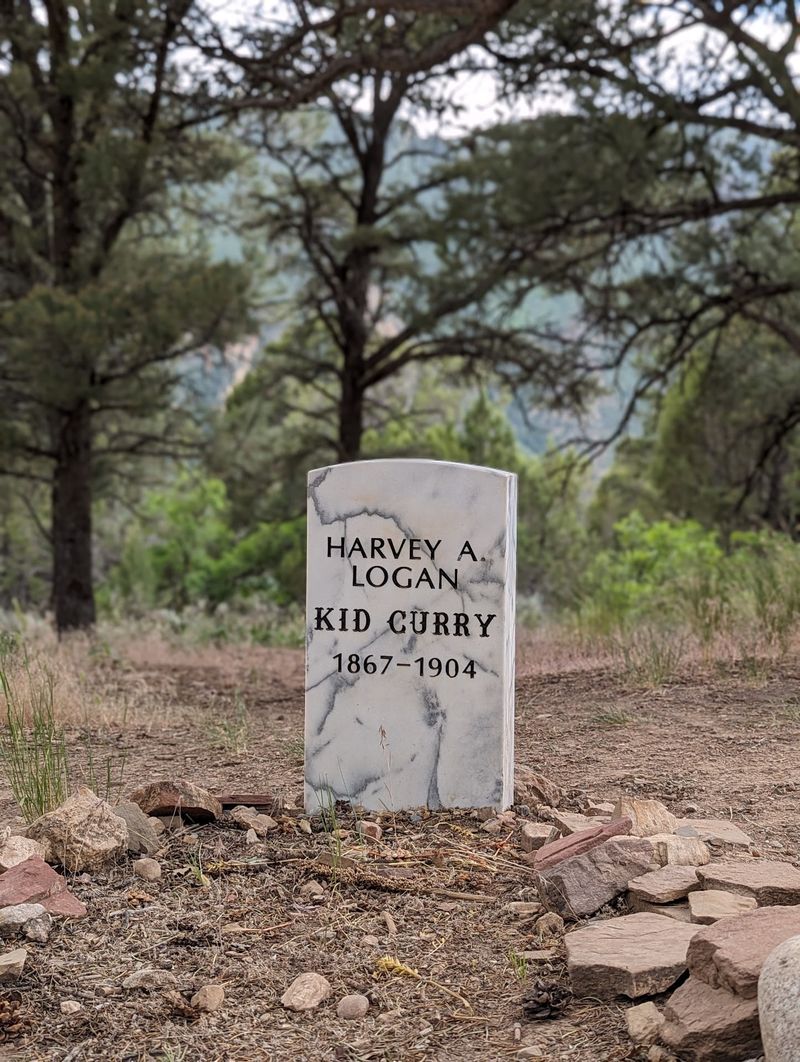
Two outlaws for the price of one free hike is a pretty good deal. Kid Curry, another notorious figure of the Old West, is also buried in Linwood Cemetery.
Kid Curry rode with the Wild Bunch, the gang tied to Butch Cassidy. His presence gives history buffs a second reason to make the climb.
Signs in the graveyard cover both men, so the background is easy to pick up on site. Many hikers make a point of visiting Kid Curry before finishing at Doc’s memorial.
That route works nicely as a natural loop through the cemetery grounds. It turns the stop into a small outlaw tour rather than a single photo.
For anyone who felt a twinge of disappointment about Doc’s unmarked grave, Kid Curry helps balance things out. Having two well-known gunslingers on one hillside is rare.
The pairing also reminds people how rough and lively this corner of Colorado once was. Glenwood Springs had its share of colorful characters.
Outlaws grab the headlines, yet the quieter graves around them tell a story of their own.
5. Pioneer Graves on Linwood Hill
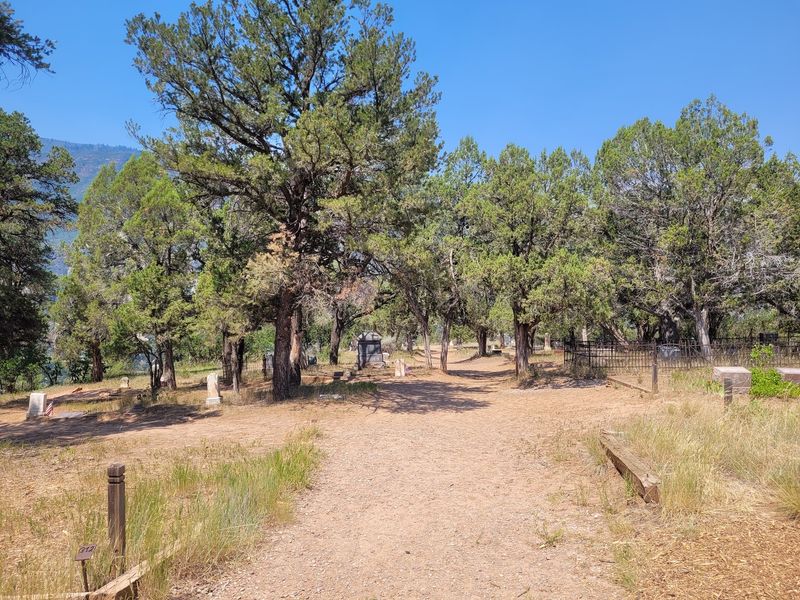
Long before anyone hiked up for selfies, Glenwood’s early settlers were laid to rest on this slope. Linwood Cemetery is a true pioneer burial ground.
Old headstones dot the hillside, and many people wander among them after visiting the famous names. There are several sections spread across the top.
The grounds are well kept, and hikers often mention how carefully maintained the site feels. It is a place that invites respect for those who came before.
Here’s a detail that surprises many: the cemetery is still in use today. It is not just a museum piece frozen in time.
Annual events are held on the hill to teach people about the cemetery and its history. Those gatherings help keep local heritage alive for new generations.
For Coloradans who love small-town history, these graves may be the real highlight. They reflect the people who helped build Glenwood Springs into what it became.
A calm, reflective mood settles over the grounds for many who linger. Before reaching any of it, though, there’s a climb to conquer.
6. The Climb Itself
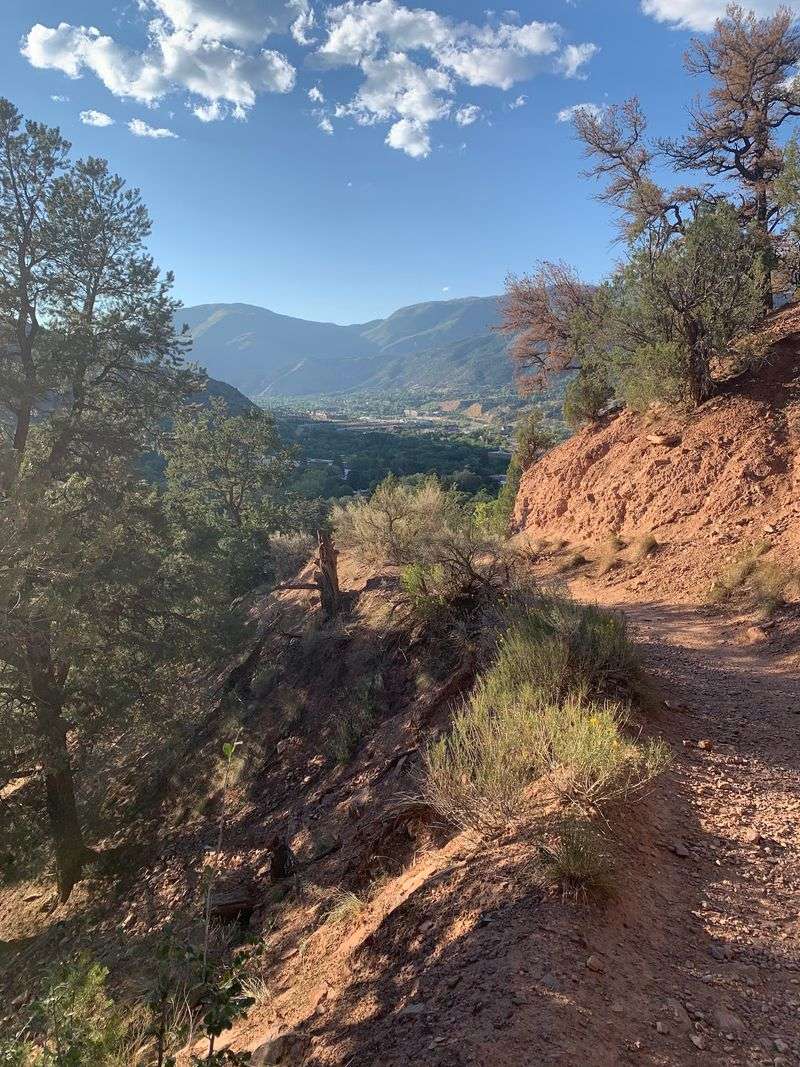
Short does not mean easy on this one. The route covers roughly 0.7 miles round trip, though the sign at the start lists it at about half a mile one way.
Most of the climb is a steady uphill grade, with some estimates putting it around 20 percent. Expect to get winded, especially at altitude.
The trail is wide and mostly gravel, so it is simple to follow. Some stretches are rocky, while others are fairly smooth.
Many hikers reach the cemetery in about 20 minutes. Lowlanders and those who don’t exercise often may need more time and a few breaks.
People who struggle with walking may find the grade too demanding. Fit hikers, on the other hand, can turn the hill into a solid workout by picking up the pace.
Coming down is quicker, but loose gravel makes footing tricky. Sturdy shoes are a smart choice over sandals.
Leashed dogs handle it well too, including older pups. Once the huffing and puffing settles, the payoff becomes clear.
7. Valley Views Worth the Effort
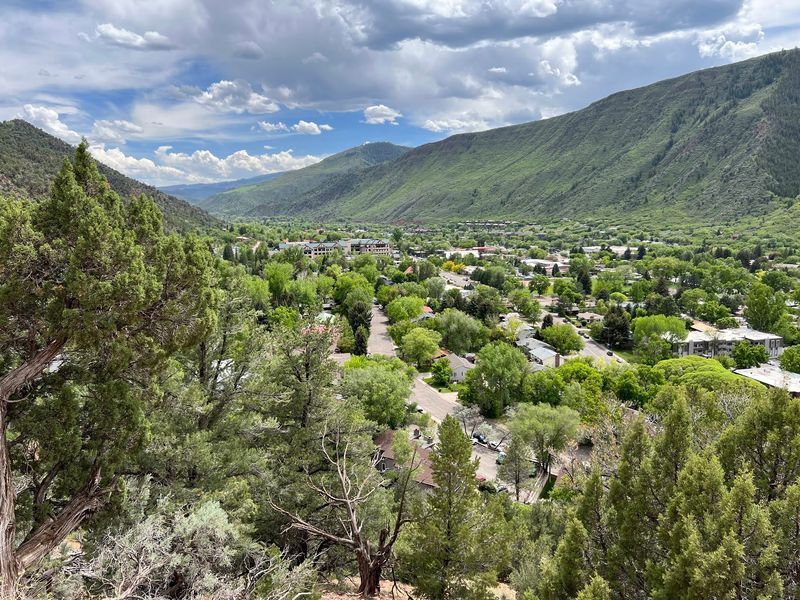
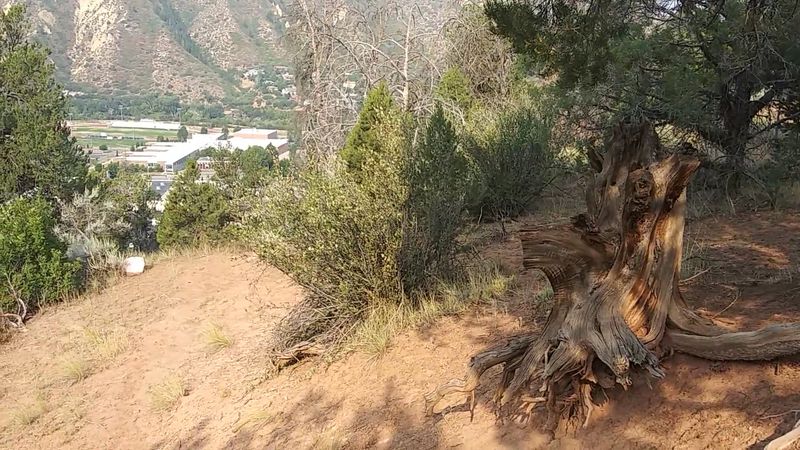
Every few switchbacks deliver a fresh excuse to stop and catch your breath. The views open up over the valley for much of the climb.
From the cemetery, Glenwood Springs spreads out below with the surrounding mountains all around. City views rank among the most common highlights mentioned about this trail.
Greenery lines much of the route in the warmer months. Flowers appear along the way too, adding color to the hillside.
The overlook makes the cemetery a natural place to pause before heading back down. Photographers tend to spend extra time at the top.
Even people who come mainly for history often leave talking about the scenery. That mix of past and panorama is a big part of the appeal.
For those who want even bigger views, the hill keeps going. The trail continues above the cemetery.
Climbing higher can turn a quick stop into a multi-hour trek with wider perspectives. It’s a handy option for anyone with energy left in the tank.
Just past the cemetery gate, though, one small tree carries a story of its own.
8. Annie’s Wishing Tree
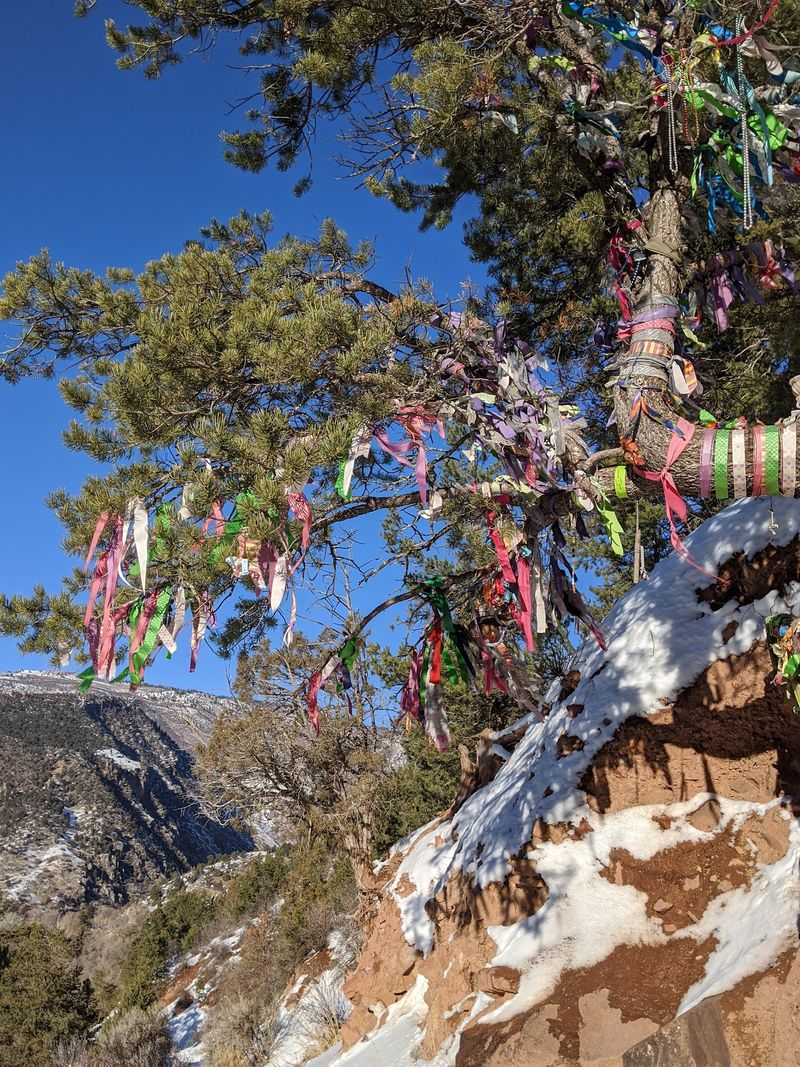
Not every landmark on this hike is carved in stone. Along the way sits Annie’s Wishing Tree, its branches tied with bandanas.
Many hikers pass it right before reaching the top of Linwood Cemetery. It tends to spark questions from first-timers who aren’t sure what the bandanas mean.
The tree adds a personal, community-made touch to a hillside known for gunslingers. It shows how locals and travelers continue to leave their mark here.
Families often find it a fun spot to pause on the way up. It breaks up the climb with something unexpected to discuss.
Photographers like the splash of color against the trail. It makes a memorable shot that differs from the usual headstone pictures.
Respect goes a long way here, as it does throughout the cemetery grounds. Leaving things as they are helps keep the tradition intact.
Small details like this give the trail personality beyond its famous names. Timing your visit, meanwhile, can shape the whole experience.
9. Picking the Right Season and Hour
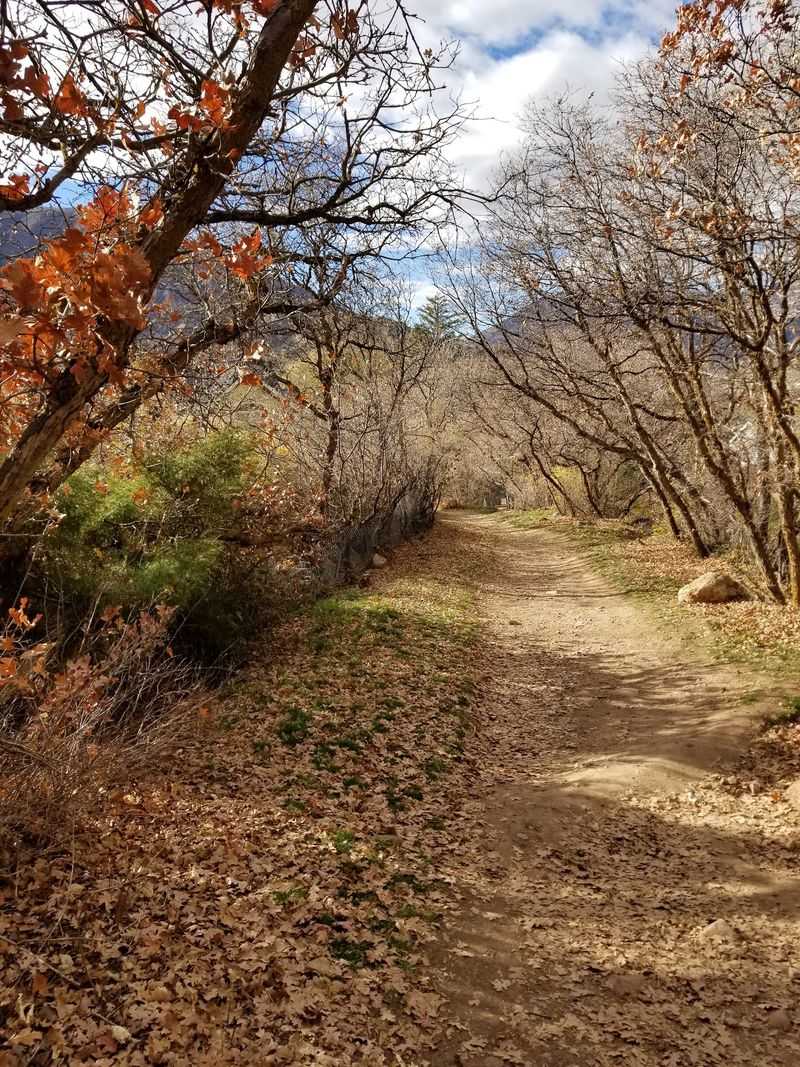
Fall, winter and early mornings may give this hill its best moods. The trail is open daily from 6 am to 7 pm, so there’s room to plan around crowds and heat.
A September climb around 10 am offers plenty of shade along the route. Even on a cooler day, hikers still tend to warm up by the time they reach the top.
Midsummer afternoons can be tougher, so water becomes essential. Starting early is a simple fix.
November hikes make for a pleasant outing, with the trail easy to follow. Even older dogs handle it comfortably that time of year.
Winter brings its own reward. A January visit after fresh snow can leave the cemetery feeling peaceful and quiet.
Snow and loose gravel both call for good footwear, especially on the descent. Traction matters more than style here.
Shoulder seasons also line up nicely with lighter traffic in Glenwood. For Front Range residents, that may mean an easier drive and fewer people at the top.
Getting there is the next puzzle to solve.
10. Parking, Water and Practical Notes
A little planning saves a lot of grumbling on this outing. The trailhead is easy to locate, but it sits in a residential area.
Parking is usually manageable, especially in the morning. Plenty of spaces tend to be available for early arrivals.
Peak summer can be a different story, with spots harder to find. Being considerate of neighbors keeps the trail welcoming for everyone.
Walking from downtown Glenwood is possible, though it adds distance. The route to the trailhead is all uphill, so some prefer to drive closer.
Water is the number one item to bring. The steady grade and altitude can catch people off guard.
Sturdy shoes come next on the list. Loose gravel on the way down rewards a good grip.
The Visit Glenwood Springs website offers a trail guide for anyone who wants extra details. It’s a helpful resource before the trip.
Glenwood also works as a budget base for travelers heading to Aspen. Lodging savings there can cover gas and a meal or two.
With logistics handled, the only question left is whether the climb fits you.
11. Worth the Climb for History Lovers
Some outings deliver more than their mileage suggests, and this hill is one of them. A short, steep walk leads to a frontier legend, a second outlaw and a pioneer cemetery still in use.
Western fans tend to get the most out of the trip. The signs, the graves and the backstory make the effort feel meaningful.
Hikers who mainly want a scenic workout will find plenty to like as well. The valley views and the option to keep climbing add real value.
Those with limited mobility may want to weigh the steep grade carefully. The climb asks for steady legs and patience.
Expectations matter too. Knowing ahead of time that Doc’s exact grave is unknown keeps the visit satisfying.
No admission, generous daily hours and a quiet setting make it an easy addition to any Glenwood weekend. It rewards curiosity without straining the budget.
For Coloradans who love local history, this hill offers a simple way to stand where the Old West truly ended. That’s a story worth carrying back down the mountain.
Share this story