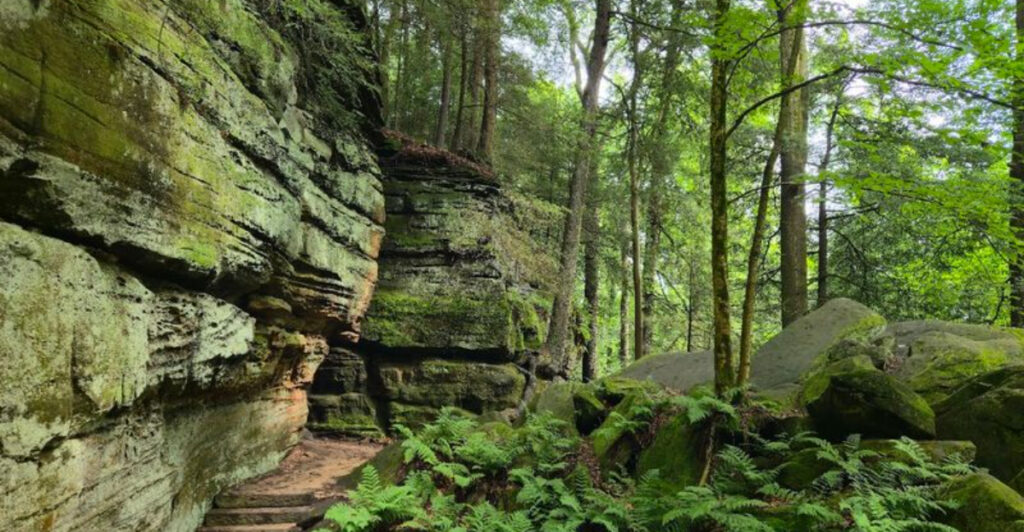
Ohio hides wild beauty in plain sight, where ancient stone, rushing water, and quiet forests create moments that stop you in your tracks. From deep gorges carved by Ice Age melt to caves lit like underground cathedrals, the Buckeye State proves you do not need to cross oceans for wonder.
As you explore, you will find trails that feel cinematic, islands etched by glaciers, and landmarks shaped by hands both natural and human. Ready to see a side of Ohio that will change how you think about the Midwest forever?
1. Conkles Hollow State Nature Preserve (Rockbridge)
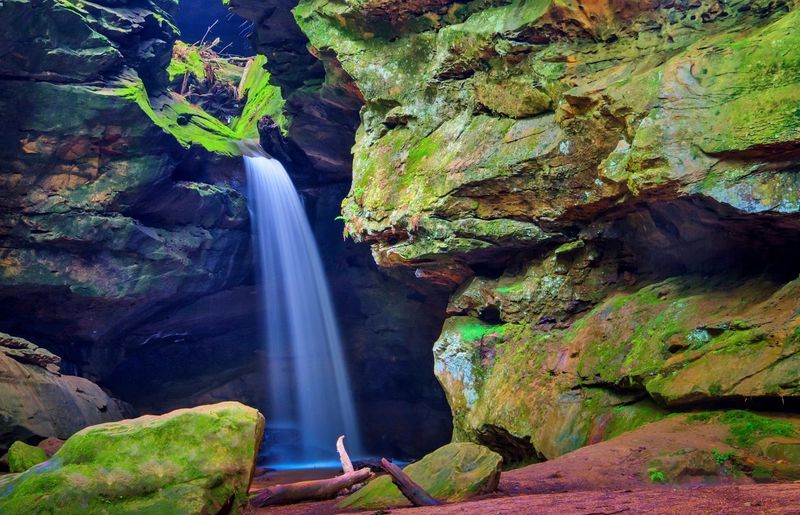
You step beneath towering sandstone walls and instantly feel smaller in the best way. The gorge narrows until sky becomes a ribbon, and every footbridge leads you deeper into quiet.
Hemlock and birch lean over the path, their roots braiding into earth that remembers glaciers and ancient seas. Water threads along the canyon floor, whispering past mossy boulders as if guiding you toward something sacred.
On the gorge trail, cliffs rise like cathedral pillars, etched by eons of wind, rain, and freeze. Look closely and you will spot tiny ferns anchored in sandstone ledges, thriving where strength and fragility meet.
Birdsong echoes from above, bouncing between stone walls so the sound feels close enough to touch. Around a bend, a thin waterfall veils a dark overhang, painting silver lines on rock and air.
If you crave a higher vantage, the rim trail delivers sweeping views that stretch across Hocking Hills forest. Edges here demand respect, and sturdy shoes make the difference on slick or leaf covered sections.
Take your time and let your breath sync with the trees. The preserve protects rare plants and delicate habitats, so staying on trail is more than a rule, it is a promise.
Bring water, a camera, and an open schedule. Morning light drops golden coins on the canyon, while late afternoon turns sandstone warm and glowing.
In any season, Conkles Hollow feels like a secret passed from traveler to traveler. You will leave with legs pleasantly tired and a calm that lasts long after the trailhead disappears behind you.
2. Rock House (Laurelville)
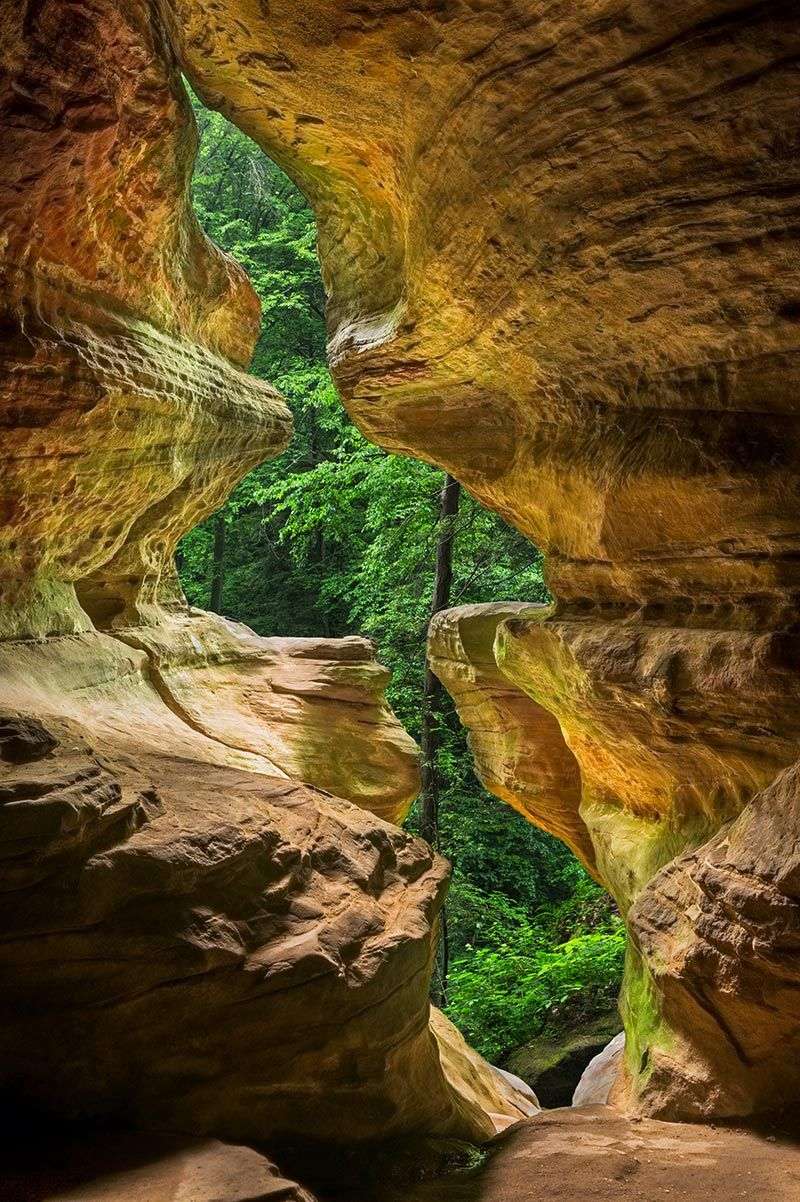
Imagine walking through a stone castle carved by water and time. Long corridors, arched openings, and windows cut straight through sandstone create rooms where light and shadow spar all day.
Inside, the air feels cool and a little mysterious, like a story is happening just out of sight. Steps are uneven, walls ripple with texture, and every turn frames the forest in a new way.
Locals call it Rock House for good reason. Ancient peoples sheltered here, and you can still find chiseled niches and tall natural windows that look out over green hills.
When sunbeams angle through, dust motes dance like tiny lanterns, and the red and gold stone glows. It is easy to see why artists, photographers, and day hikers drift back over and over.
The approach trail is a delight on its own, winding past towering trees and lichen painted boulders. After rain, the cave mouth drips, and small rivulets trace delicate lines down the interior walls.
Watch your footing, especially on slick rock and the old stone steps. Bring a headlamp if you want to explore every recess, but let your eyes adjust first and the cave reveals herself slowly.
Outside, birds nest in nearby ledges, and the forest wraps the formation like a protective cloak. Pause at the openings and listen for wind threading through leaves, a sound that pairs perfectly with the cave’s heartbeat stillness.
This is not an in and out attraction. Give it time, and Rock House rewards you with a layered experience that sticks long after you return to the car.
3. Ohio Caverns (West Liberty)
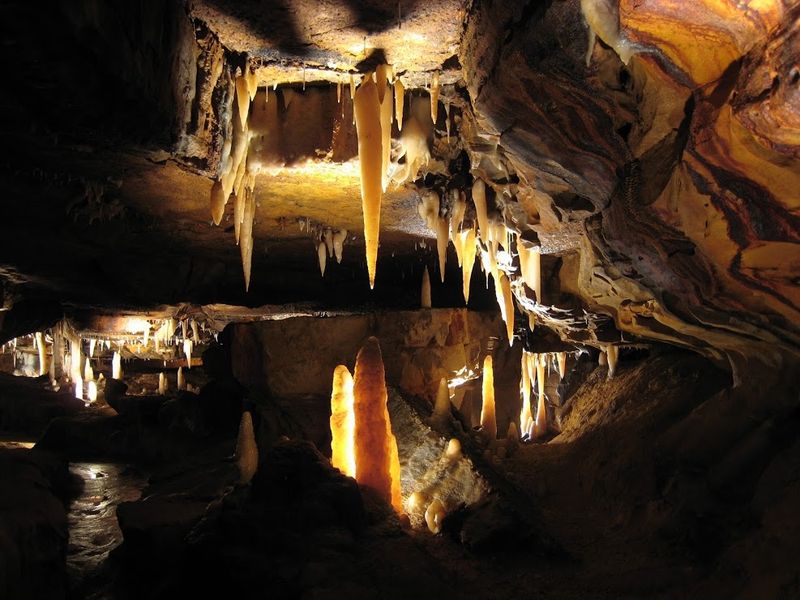
Above ground, farms roll by in gentle waves. Below, a jeweled world waits where mineral rich water has written poetry in stone for ages.
Tours lead you through cool galleries where every drip is a sculptor and every decade adds a delicate flourish. The first glimpse of a crystallized ceiling can make you whisper without thinking.
Known as America’s Most Colorful Caverns, this underground maze dazzles with stalactites, stalagmites, and rare formations that sparkle under subtle lighting. Some rooms hold snow white flowstone, others shimmer honey, amber, and faint lavender.
Guides share stories about discovery, preservation, and how slow chemistry builds cathedrals grain by grain. You learn to look up, down, and sideways because wonder hides in every crease.
Temperature stays steady year round, so a light jacket keeps you comfortable even in midsummer. Paths are well maintained, but traction matters where water films the rock.
Photography is welcome, and reflections in still pools double the magic if you crouch low and steady your hands. Respect the rules by not touching formations, since oils from skin can stop growth that took centuries.
When you emerge, the sky feels bigger and brighter, like your senses got recalibrated. The visitor center offers geology exhibits and a shop with minerals that sparkle like souvenirs from another planet.
If you are traveling with kids, their questions become part of the soundtrack underground. Ohio Caverns turns science into theater, and by the time you leave West Liberty, you will carry a pocket of quiet glow inside you.
4. Glacial Grooves (Kelleys Island)
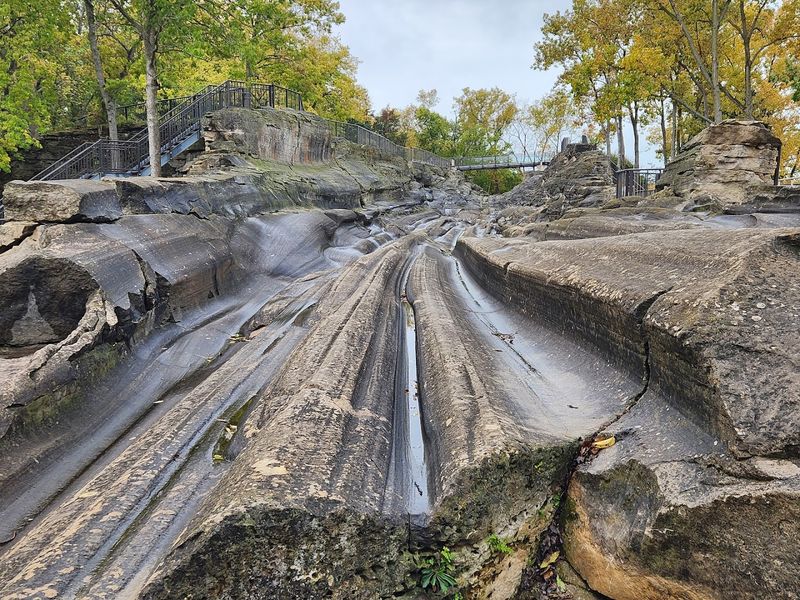
Stand beside a stone canvas carved by an ice sheet that once covered much of this region. Parallel furrows run like tiger stripes across limestone, each groove a record of unimaginable weight sliding south.
It is both art and evidence, a story you can trace with your fingertips without turning a page. Lake Erie shimmers nearby, reminding you that water still writes Ohio’s story.
Fences protect the formation, but the view is open and sweeping. Interpretive signs translate the language of scratches, striations, and chatter marks into human time.
You picture boulders caught in the ice like chisels, dragging across bedrock as the glacier crept along. The result is the largest easily accessible glacial grooves in the world, and they look almost unreal under blue sky.
Getting here is half the fun because Kelleys Island requires a ferry ride that sets the mood for exploration. Bring a bike or good walking shoes to wander the island’s quiet roads and shoreline parks.
On clear days, sunlight rakes across the grooves and deepens every shadow, turning geology into sculpture. Cloudy days reveal softer textures and cooler tones that feel just as mesmerizing.
Pack water, sunscreen, and patience for island time. The grooves ask you to slow down, squint, and imagine cold grinding over centuries that stretch beyond memory.
Nearby quarries and trails add context if you want to expand the lesson from one site to a whole landscape. By the time you head back across the lake, you will carry a fresh respect for forces large enough to move mountains and patient enough to shape a single rock line by line.
5. Ledges Trailhead (Peninsula)
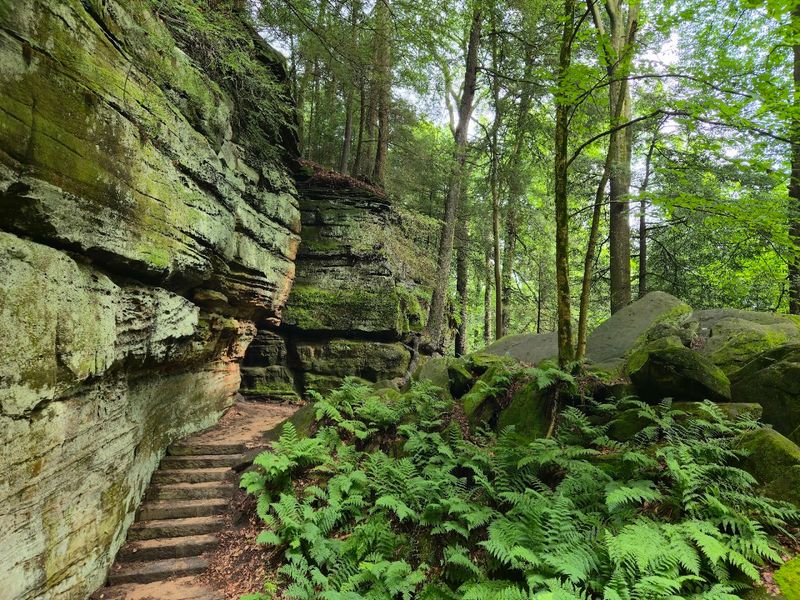
Arrive at dusk if you can and catch the sandstone cliffs glowing like warm embers beneath the trees. The trail loops past ledges that stack like giant books, their pages cracked by frost and time.
You can slip into narrow passageways where cool air breathes from the rock even on summer days. Every corner feels newly minted, though the stone has seen more seasons than any of us will.
This is Cuyahoga Valley National Park at its most cinematic. Roots braid across the path, chipmunks sprint through leaf litter, and lichens paint the ledges in mint and slate.
After rain, little seeps stitch silver beads down the walls. Follow the side spur to the overlook and the valley opens like a stage set, a perfect place to pause with a thermos and share quiet.
Traction matters here, especially in fall when leaves slick the rock and hide edges. A headlamp helps if sunset sneaks up on you while exploring crevices and corridors.
Listen for distant trains and owls, sounds that layer the forest with gentle rhythm. The loop is accessible enough for casual hikers but varied enough to reward return visits in every season.
Photographers will love the long exposures possible in the blue hour, when ambient light softens and colors deepen. Families can turn it into a short adventure with snacks at the overlook.
Solo hikers will find space to breathe, think, and let the day rinse off. Leave no trace, stay on trail, and the Ledges repay your respect with moments that feel like secrets, kept and shared in the same breath.
6. Ash Cave (South Bloomingville)
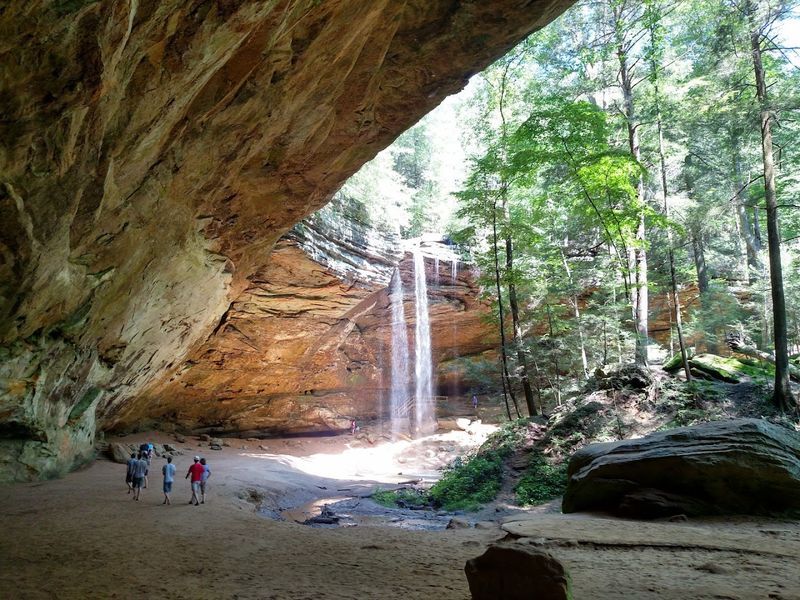
You round a bend and the world opens into a natural amphitheater so grand it hushes everyone at once. A waterfall pours from the rim in spring and after storms, threading the air like liquid silk.
The sandy floor invites slow steps, while the rock ceiling swoops overhead with elegant curves. Sound carries softly, so even whispers feel like part of the place.
The trail in is mostly gentle and accessible, making this a wonder you can share with nearly anyone. Ferns line the path, and the smell of wet stone lifts after rain.
Sunlight slips between leaves and arcs of the rim, painting shifting patterns across the cave’s enormous mouth. You look up and realize the scale is not a trick of perspective, it is simply that big.
After dry spells, the waterfall thins to a veil or disappears, revealing cliff textures stitched with mineral stains. In winter, ice builds chandeliers that glitter like a temporary kingdom.
Whatever the season, the echo of your footsteps reminds you to tread lightly. Stay behind fences, respect closures, and let this fragile beauty keep its quiet strength.
Bring patience, because this is popular for good reason. Early morning or late day gives you softer light and fewer voices.
Pack water, stand back for perspective, and then step closer to watch droplets sparkle on moss. When you finally walk away, the shape of Ash Cave lingers in your mind like a favorite song, replaying with every breath of forest air.
7. Serpent Mound State Memorial (Peebles)
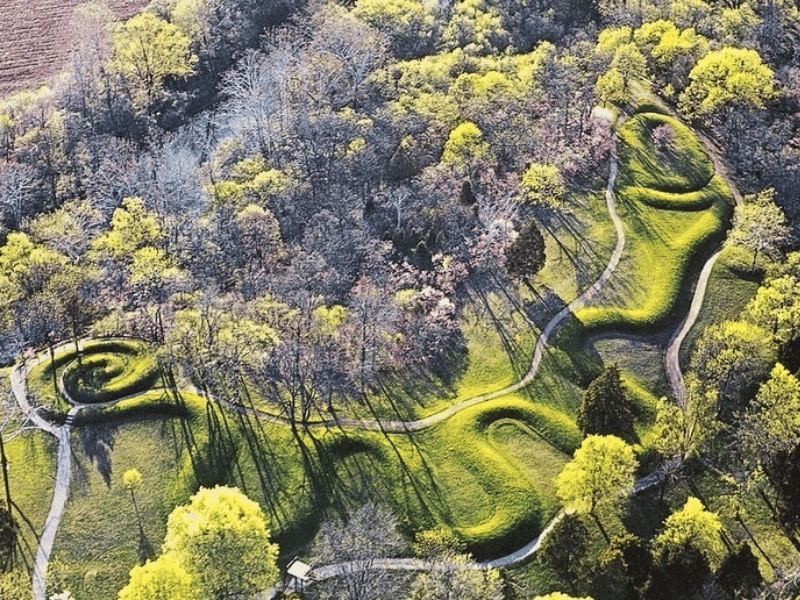
From above, a coiled figure stretches across the landscape, an earthen serpent whose curves align with celestial events. On the ground, the mound rises modestly, but the idea behind it towers.
You walk the path around the effigy and feel the hum of deep time, of hands shaping earth to speak with sky. It is a meeting point of nature and human intention, set amid rolling Ohio hills.
Archaeologists debate origins and meaning, yet the site’s power is undimmed. The head points toward sunsets and solstices, inviting you to consider seasons as part of a grander clock.
Trees border the clearing, birds spiral overhead, and the breeze seems to carry old songs. Signage helps you read the site carefully without disturbing a single line.
Climb the observation tower for the full sweep of the serpent’s body, a perspective that flips the experience from intimate to cosmic. The view reveals how the effigy nests within the terrain, as if it surfaced from the earth rather than being built upon it.
Bring binoculars if you enjoy birding, because the surrounding habitat buzzes with life. Quiet respect fits here naturally, and conversations tend to soften.
Plan extra time to absorb the museum displays and trace regional history. This is not just a stop, it is a reflection point, and you leave with more questions than you arrived with.
Pack water, tread lightly, and remember you are a guest in a very old place. By sunset, when shadows draw dark lines along the coils, Serpent Mound feels both utterly specific and strangely universal.
8. Cedar Falls (Logan)
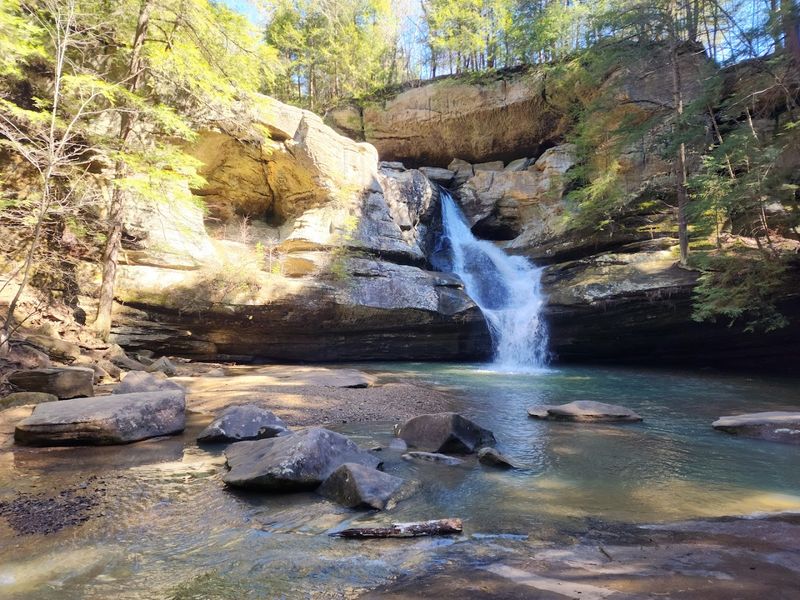
The sound reaches you first, a steady rush that tugs at your pace until you round the bend and see it. Water fans over layered sandstone, pooling in a basin that reflects greens, golds, and sky.
Even in low flow, the falls keep their presence, a curtain that breathes in rhythm with the gorge. The air smells like rain and leaf, a mix that feels like a reset button.
Trails approach through hemlock shade and over stone steps that call for simple focus. After storms, the volume swells and the voice of Cedar Falls deepens, carrying through the trees like distant thunder.
In summer, dragonflies patrol the edges while kids count skipping stones. Winter braids ice across ledges, turning the scene into a crystal theater.
Photographers love the long exposure opportunities here. A tripod and polarizer help tame glare and smooth the water into silky ribbons.
If you prefer to sit and listen, flat rocks to the side make perfect perches. Stay smart near wet edges, because the sandstone can surprise you with slick patches and sudden drops.
Pair this stop with nearby trails to build a full Hocking Hills day, or make it a single destination and let yourself linger. Arrive early for solitude, or embrace the shared awe that gathers when light breaks through clouds and the falls glow.
Pack water, carry out everything, and step lightly on stones and roots. When you hike back to the car, the rush follows you, a soundtrack that keeps playing long after the trees thin and the parking lot appears.