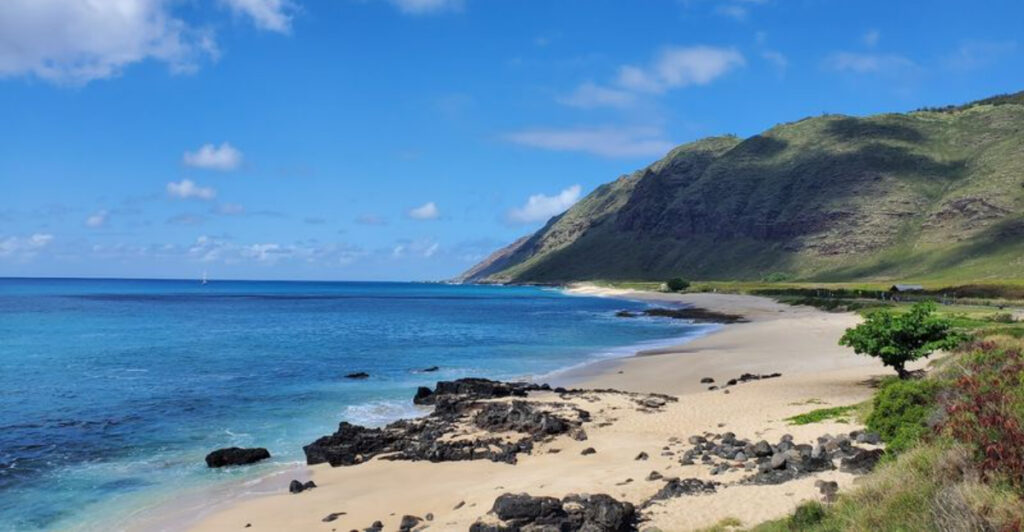
Kaʻena Point State Park is the kind of Oahu escape you picture when the city noise fades and nature takes over. Rugged mountains press against the shoreline while the Pacific crashes against ancient lava rock, creating a raw, untamed landscape.
Coastal trails lead you toward the island’s edge, where seabirds soar, tide pools shimmer, and the sky stretches endlessly. The experience feels quiet, powerful, and deeply grounding from start to finish. There are no distractions here, just wind, waves, and wide-open space. Bring plenty of water, a hat, and curiosity, because everything else falls away in this unforgettable place.
Mokulēia Trail Approach: North Shore To The Sanctuary
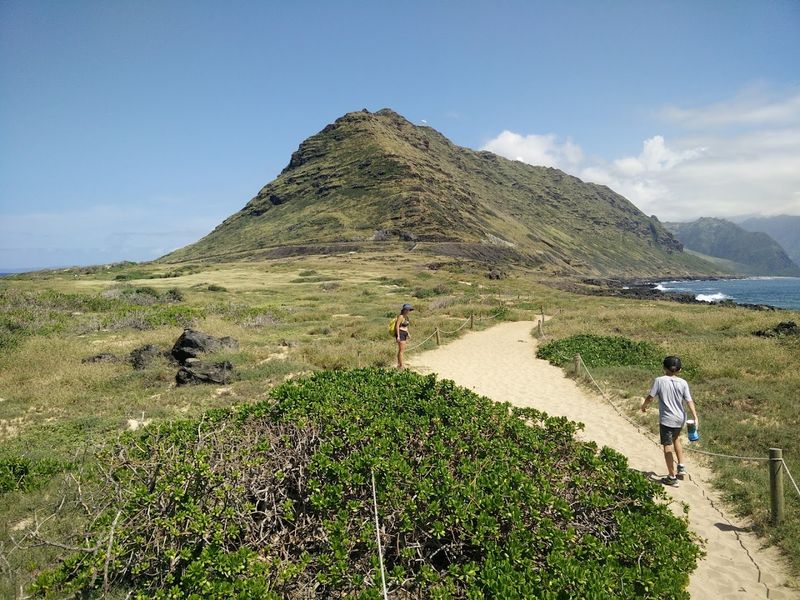
Starting from the Mokulēia side feels like slipping quietly into a different version of Oʻahu, one where the pace softens and the horizon stretches without interruption. The trail begins as a sandy, almost road-like path that hugs the coastline, with the ocean rolling steadily to your left and rugged cliffs rising on your right.
It’s approachable in the best way—no steep climbs or technical sections—but don’t let that fool you into underestimating the sun. Shade is rare, and the brightness reflects off both water and pale sand, so preparation matters before you even take your first steps along this exposed coastal stretch.
What draws you in quickly isn’t just the view, but the layered soundtrack. Waves slap rhythmically against lava shelves, wind threads through coastal plants, and seabirds drift overhead like they own the sky. There’s a steady, calming repetition to it all, broken only occasionally by fishermen perched along the rocks, casting quietly into the surf.
The human presence feels minimal, almost respectful, like everyone understands this place runs on a different rhythm. The full walk to the point sits around 2.5 miles one way, though it rarely feels like a straight shot.
You’ll stop—often—to look into tide pools, photograph shifting light, or just take in how the mountains seem to lean closer with every step along this stretch. Footing varies enough to keep things interesting, from firm dirt to loose coral fragments and patches of sand that slow your stride.
Near the protected sanctuary, the predator-proof fence signals a shift in tone. Wildlife takes priority here, and moving thoughtfully becomes part of the experience rather than a rule to follow.
Wai‘anae Side: Rugged, Windy, And Wildly Beautiful
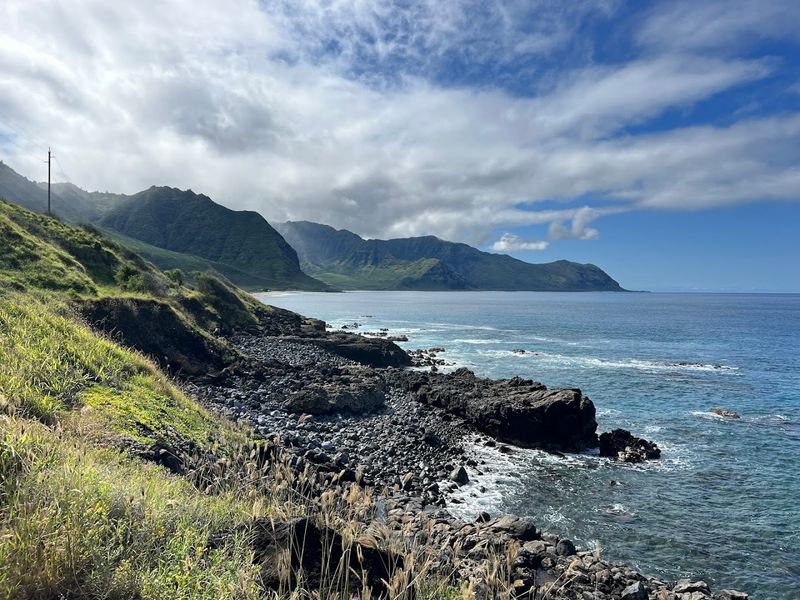
Approaching from the Wai‘anae side tells a different story entirely, one that feels a little more rugged and untamed from the very beginning. The trail here doesn’t ease you in as gently—it introduces itself with wind, texture, and a sense that nature has the upper hand.
Cliffs rise more dramatically, the terrain feels less forgiving, and the ocean sounds louder, like it’s pushing harder against the land. It’s not difficult in terms of elevation, but the uneven ground and shifting conditions demand a bit more attention with every step.
The path can feel baked and firm on dry days, almost cracked from constant sun exposure, but after rain, it changes personality completely. Puddles form in shallow dips, and patches of mud cling stubbornly to your shoes, slowing your progress just enough to remind you to watch your footing.
Along the way, small coves reveal themselves between jagged black rock formations, offering quick glimpses of calmer water tucked between the chaos. Blowholes occasionally hiss with bursts of spray, and the shoreline glitters with fragments of shells that catch the light.
What stands out most is the sense of scale. Mountains press close enough to feel almost tangible, while the ocean stretches endlessly in the opposite direction. It creates a visual contrast that’s hard to ignore, grounding you in the moment while simultaneously making everything feel expansive.
Timing matters here, too. Early light softens the edges and keeps temperatures manageable, while late afternoon turns the entire landscape into something cinematic, with shadows deepening and colors warming across the terrain. It’s a side of Kaʻena that feels raw, but that’s exactly the appeal.
Wildlife Encounters: Albatross and Monk Seals Up Close
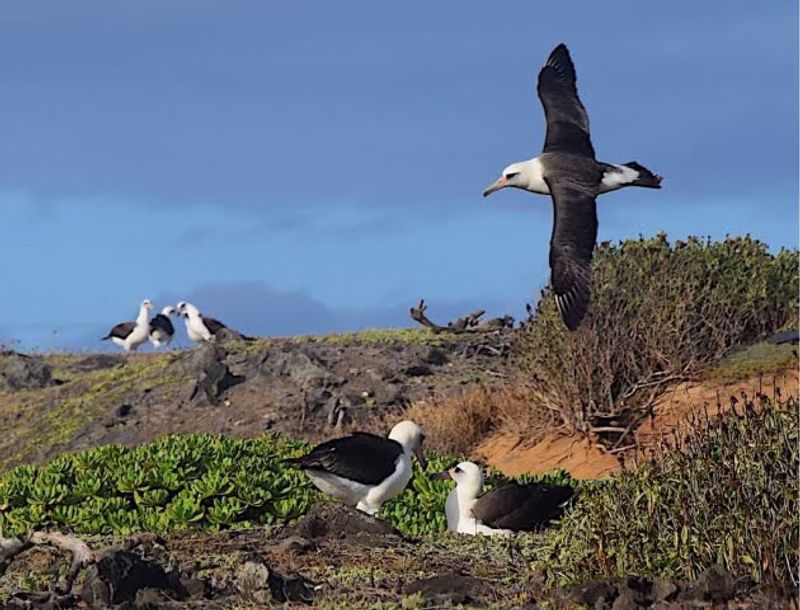
It doesn’t take long before the wildlife begins to shift your focus from the scenery to the life moving within it. Spotting an albatross gliding overhead is often the turning point. Their wings stretch wide in a way that feels almost exaggerated, catching the wind effortlessly as they circle above the dunes.
Sometimes they travel in pairs, sometimes alone, but always with a kind of calm precision that makes you stop walking just to watch. On the ground, they rest near low vegetation, completely at ease as long as visitors respect their space.
The protected sanctuary exists for a reason, and it’s one of the few places where you can observe these birds in an environment designed to keep them safe. Staying on the trail and keeping a comfortable distance isn’t just a guideline—it’s part of what makes the experience meaningful.
If you’re lucky, you might catch moments of interaction, subtle displays that hint at courtship rituals or quiet communication between birds. Binoculars help you appreciate those details without stepping too close, letting you stay immersed without disrupting anything.
Monk seals bring a different kind of encounter, one that feels quieter but just as significant. Seeing one resting along the shoreline is a reminder of how rare they are, and how important it is to keep your distance.
They often lie motionless, blending into the sand or tucked between lava formations, so spotting one can feel like discovering a hidden detail in the landscape. The key is to observe without interfering—no crowding, no noise, just patience. These moments aren’t about getting closer; they’re about recognizing that you’re sharing space with something extraordinary.
Tide Pools, Dunes, and The Textures of the Shoreline
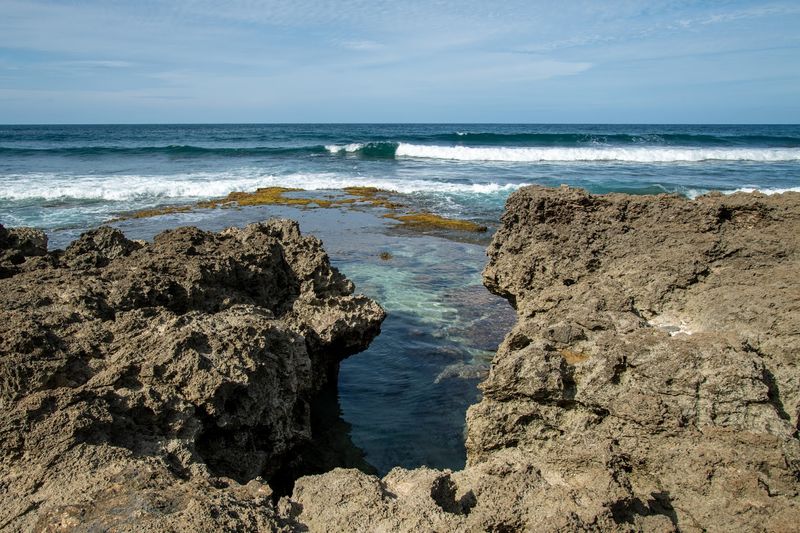
Look a little closer along the shoreline, and Kaʻena Point starts to reveal a completely different personality—one built on texture, movement, and small, fascinating details. The coast unfolds in layers, almost like a natural blueprint of how land and ocean constantly reshape each other.
Lava shelves stretch outward in uneven, jagged steps, creating platforms where waves crash, retreat, and return again in a steady rhythm. Tucked between those formations, tide pools gather like quiet mirrors, reflecting the sky while holding entire miniature ecosystems just beneath the surface, alive with subtle, constant motion.
When the tide pulls back, these pools become even more captivating. Tiny fish flicker in and out of shadow, hermit crabs shuffle across the rock with surprising determination, and strands of seaweed add bursts of color against dark volcanic stone.
It’s the kind of scene that pulls you in without effort, making it easy to crouch down and lose track of time watching the smallest movements. Still, it’s worth staying aware of your footing and resisting the urge to wander too far off path, since these delicate spaces depend on minimal disruption to stay intact.
Step slightly inland, and the terrain softens into low dunes held together by hardy coastal plants that quietly do essential work. They anchor the sand, protect against erosion, and help maintain the balance of the entire area, even if they don’t immediately demand attention.
Over the course of a day, the colors shift dramatically—from cool, silvery blues in the morning to warm, golden tones by late afternoon—making the same stretch of coastline feel entirely new each time you pass through it.
Timing, Light, and Knowing When to Go
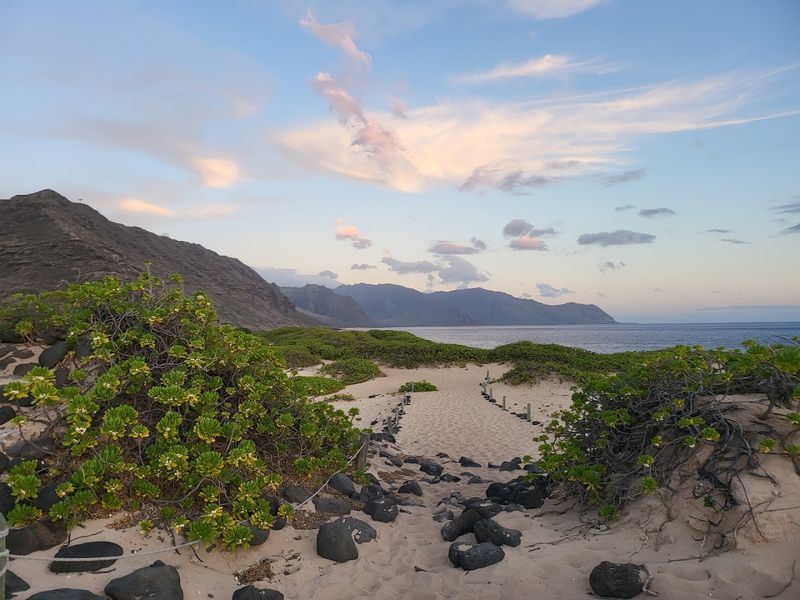
Catching Kaʻena Point at the right time can completely reshape how the entire place feels, and early morning easily sets the tone for something special. The air carries a lightness that disappears later in the day, the trail feels calm and open, and the first stretch of sunlight rolls gently across the coastline without that harsh midday glare.
It’s the kind of start where everything feels unhurried, even if a few other early walkers share the path. Colors come through cleaner, details stand out more naturally, and the cooler temperatures make it easier to settle into a steady rhythm without constantly thinking about the heat.
As the day moves forward, the mood shifts in a way you can’t really ignore. By midday, the sun is fully in charge, reflecting sharply off both the ocean and the dark lava rock, creating a brightness that feels amplified from every angle.
Shade is nearly nonexistent, and even a short stretch can start to feel more demanding if you’re not prepared. That doesn’t mean it’s the wrong time to visit, but it does mean slowing things down, hydrating often, and pacing yourself more intentionally. The landscape is still striking—it just asks a bit more from you in return.
Then everything softens again as golden hour approaches, and the entire coastline seems to exhale. Warm light wraps around the mountains, shadows stretch longer across the trail, and the ocean shifts into deeper, richer tones that almost look metallic from a distance.
It’s easily the most atmospheric window of the day, but it comes with a bit of strategy. Planning your return matters, especially if you’re not staying late, yet the payoff is a version of Kaʻena Point that feels quietly cinematic from start to finish.
What To Bring and How To Respect The Place
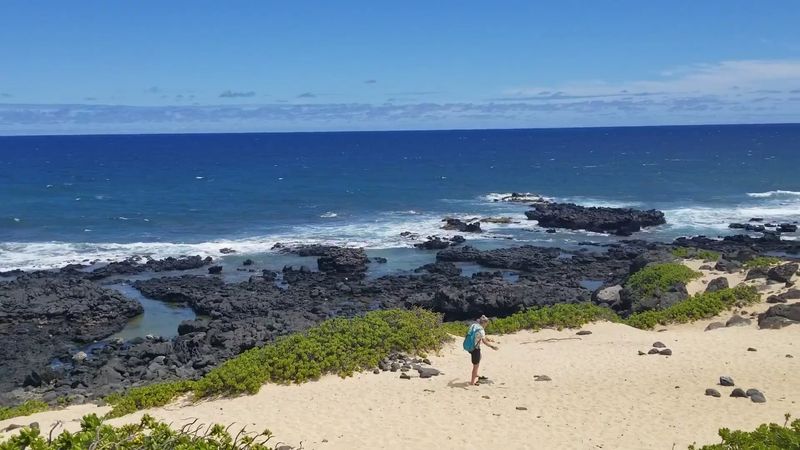
Heading out to Kaʻena Point means thinking ahead in a way that feels more intentional than your average park visit. There are no snack stands, no shaded rest stops, and no last-minute convenience options once you’re on the trail, so what you carry in shapes the entire experience.
Water is non-negotiable, and bringing more than you expect to drink is usually the smarter move, especially under that steady coastal sun and constant exposure along the open, rugged shoreline. A hat, sunglasses, and reef-safe sunscreen aren’t extras here—they’re part of what keeps the day enjoyable instead of draining before you even reach the point.
Food is best kept simple and durable, the kind of snacks that won’t melt, crush, or turn into a mess halfway through your walk. Nuts, fruit, and easy-to-pack bites keep your energy steady without weighing you down. Footwear deserves real attention, too, since the terrain constantly shifts between sand, loose rock, and uneven lava.
Shoes with solid grip make a noticeable difference, turning careful steps into something more confident and fluid. A small first aid kit and offline map can quietly save the day if things don’t go exactly as planned.
Then there’s the part that goes beyond packing—the mindset you bring with you. Kaʻena Point isn’t just visually striking; it carries cultural depth and ecological importance that shapes how it should be experienced.
Staying on marked paths protects fragile habitats, keeping noise low preserves the calm, and skipping drones helps wildlife remain undisturbed. Leaving everything exactly as you found it isn’t just a guideline—it’s how this place keeps its raw, untouched feeling for everyone who arrives after you.