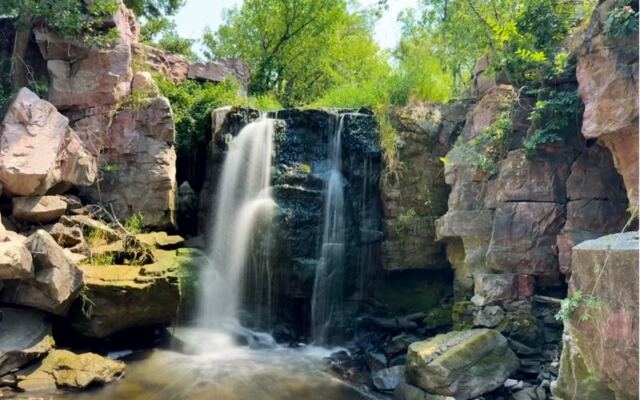
Out on the prairie of southwest Minnesota, people still dig red stone by hand, the same way it has been done for thousands of years. A short walk from the parking lot, a waterfall drops over rock cliffs that few people in the Twin Cities even know exist.
Entry costs nothing, the trails stay open around the clock, and inside the visitor center, artists carve that red stone right in front of you. For crafters who love handmade work, this stop delivers a rare chance to watch a living art form up close.
Keep reading to learn where it is, what makes the stone sacred, and how to plan an easy day trip.
A Sacred Quarry on the Southwest Minnesota Prairie
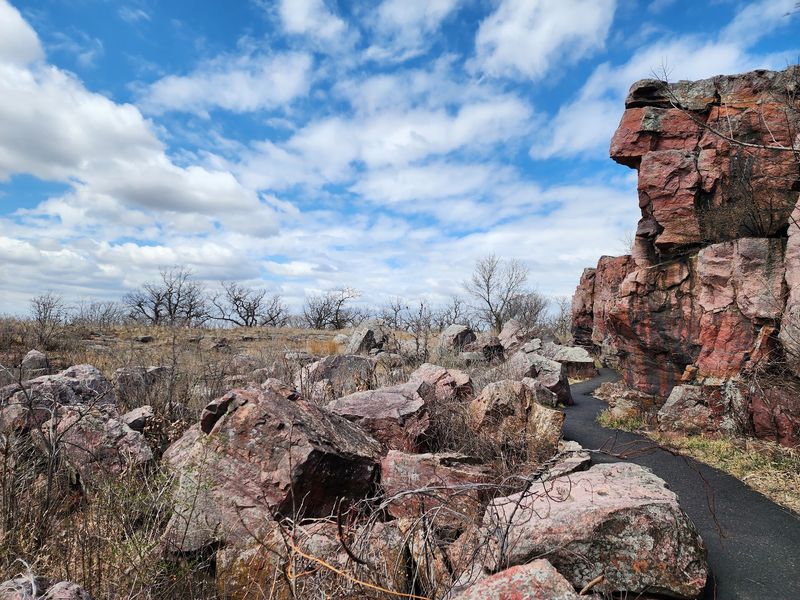
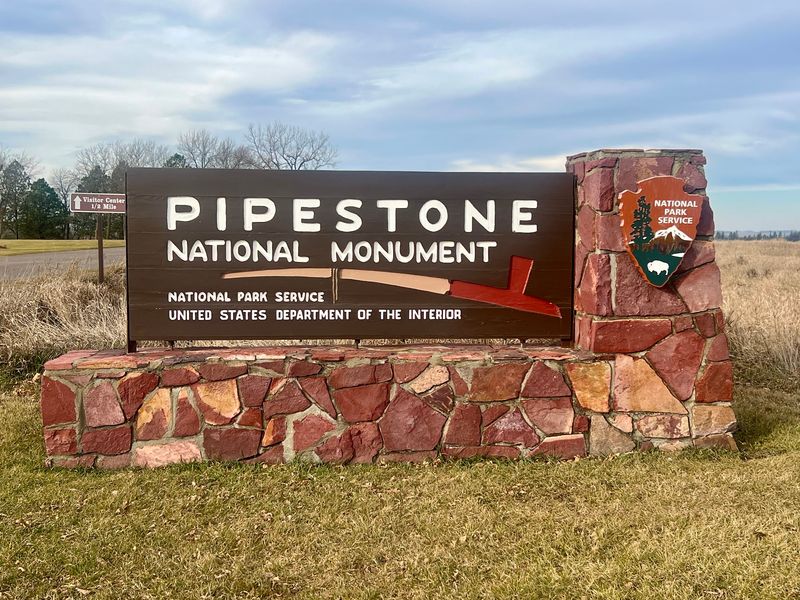
Some of the most meaningful ground in the Midwest sits just outside a small town near the South Dakota line. Pipestone National Monument is found at 36 Reservation Ave, Pipestone, MN 56164, in the far southwest corner of Minnesota, United States.
The monument protects pipestone quarries that are sacred to many American Indian people. It is run by the National Park Service and includes a visitor center plus a walking trail that loops through prairie, rock and water.
Getting here takes a little effort. The site sits roughly 30 miles off the interstate, and some travelers admit they almost skipped it before deciding the detour was worth every mile.
Size is not the selling point. The monument is not huge, yet it packs a deep slice of American history into a compact, well-kept space.
Plan on about an hour to see the main highlights at a relaxed pace. Many people find there is quite a bit more here than they first expected, which tends to turn a quick stop into a longer one.
The real story, though, begins with the red stone itself.
Red Stone With Thousands of Years of Meaning
Thousands of years of history are layered into the quarries here. Indigenous people have harvested pipestone from these pits for centuries, and that tradition has never stopped.
The red stone is used to create pipes and other culturally significant items. Those pieces carry deep spiritual meaning, which is why the quarries are treated as a sacred site rather than a simple dig spot.
Quarrying is still active today. On a given day, workers may be spotted digging by hand in the pits along the trail.
That detail changes the feel of a visit. This is not a museum frozen in time but a working place where centuries-old practices continue.
Offerings tied to trees along the path serve as a quiet reminder of that. Guests are asked to leave them untouched and treat the area with respect.
Signs and exhibits explain the historic importance of the stone without overloading anyone. A little reading before heading out makes the quarries far more meaningful once they come into view.
Carvers at Work Inside the Visitor Center
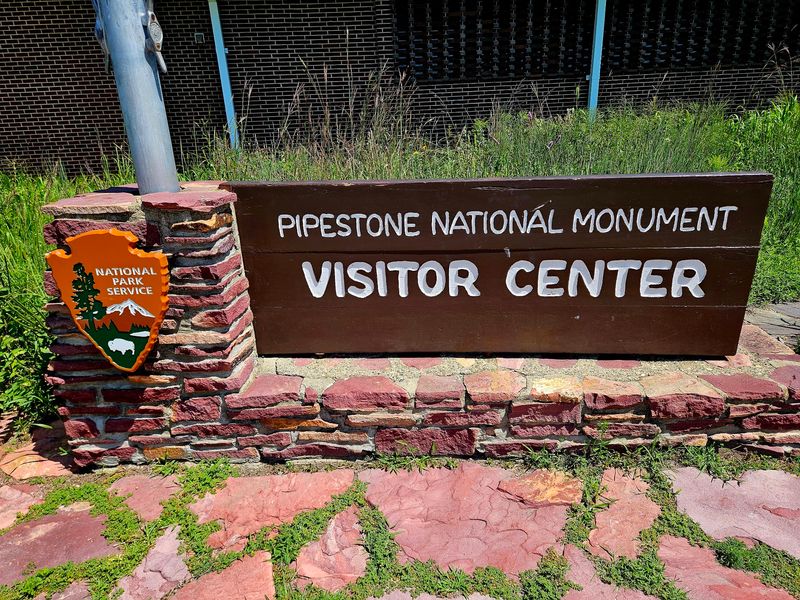
Crafters, this is your section. Inside the visitor center, local artists sit at work stations carving pipestone that was quarried right on site.
Watching the process is a highlight for many guests. The carvers are friendly and happy to chat about their methods, their history and the meaning behind each piece.
Some even share practical tips. One returning guest who had owned a raw block of pipestone for years got advice on how to finally start working it.
The demonstrations turn a museum stop into a conversation. Questions are welcome, and the artists seem to enjoy explaining how the craft is passed along.
Exhibits nearby add context about Native cultures and traditions. Short videos and displays help connect the carving table to the quarry outside.
For anyone who loves handmade work, few places in Minnesota offer this kind of front-row seat to a living art form. It is hard to leave without a new respect for every chisel mark.
Handmade Goods in the Gift Shop
Souvenir shopping gets a meaningful upgrade here. The small gift shop stocks handmade goods, including pieces carved from pipestone by the artists working inside.
Each item comes with information about the person who made it. That small touch helps shoppers understand who they are supporting and where the work comes from.
The connection is direct. The stone is quarried on site, carved in the building, and sold a few steps away.
Carvers shape the stone into a range of smaller items as well as more traditional pieces. Browsing the shelves after watching a demonstration makes the finished work easier to appreciate.
Collectors who enjoy one-of-a-kind finds will want to set aside extra time. The selection is modest in size, yet the story behind each piece adds plenty of value.
Many guests leave with a keepsake that ties back to the history they just learned. Not a bad trade for a short detour off the highway.
The Circle Trail and Its Rock Walls
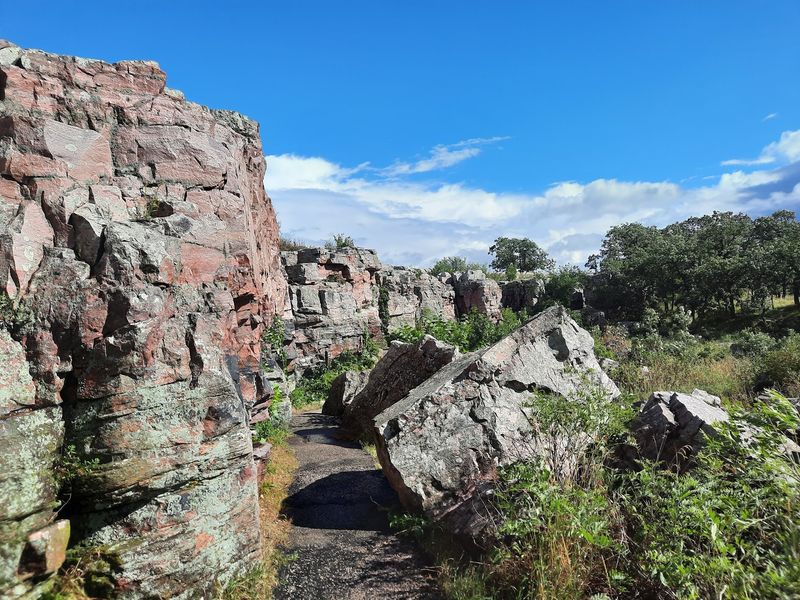
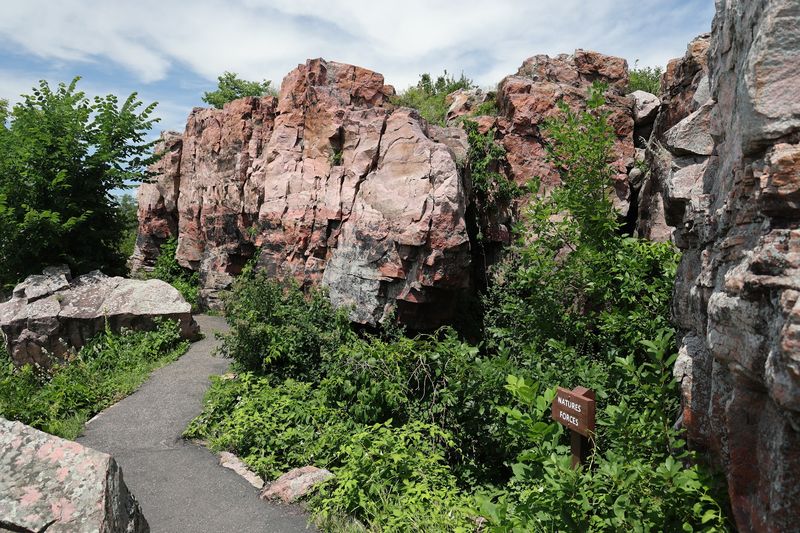
Right outside the visitor center door, the Circle Trail begins. It loops through prairie, past quarries and along tall rock cliffs.
The path is paved, mostly flat and easy to follow. Estimates put the full loop between about one and one and a half miles, so it suits families with energetic kids as well as casual walkers.
Rock formations line much of the route. Keen eyes can hunt for faces that seem to appear in the rock wall, a fun game for younger hikers.
Side spurs with rock stairs climb up to more views and carved features. Those with mobility concerns can skip the climbing sections and still enjoy the main loop.
The trail is not fully wheelchair accessible, and some spots can get slippery. Sturdy hiking shoes are a smart choice.
Interpretive signs with photos appear along the way. They turn an easy stroll into a lesson in history, one rock at a time.
Winnewissa Falls, the Waterfall Nobody Expects
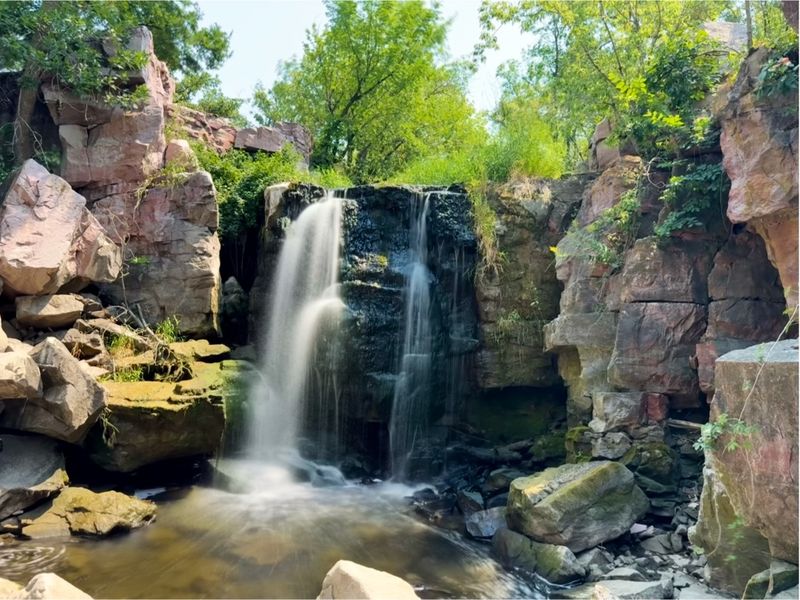
Here is the twist most people never see coming. About halfway around the loop, a waterfall pours over the rocks, tucked into the landscape near the quarries.
The falls are the single most talked-about feature at the monument. Plenty of first-timers arrive for the history and leave buzzing about the water.
A stream runs along the trail and leads right to it. The setting, with cliffs rising nearby, makes for a striking photo stop.
Rock stairs near the falls allow a closer look from above. These steps are optional, so anyone who prefers level ground can still enjoy the view from the main path.
One practical note: the water is not for drinking. Bring your own bottle.
Many guests call this spot peaceful and calm. It is easy to linger longer than planned, so build a little extra time into the schedule for the falls.
Prairie Wildlife and a Turtle-Filled Lake
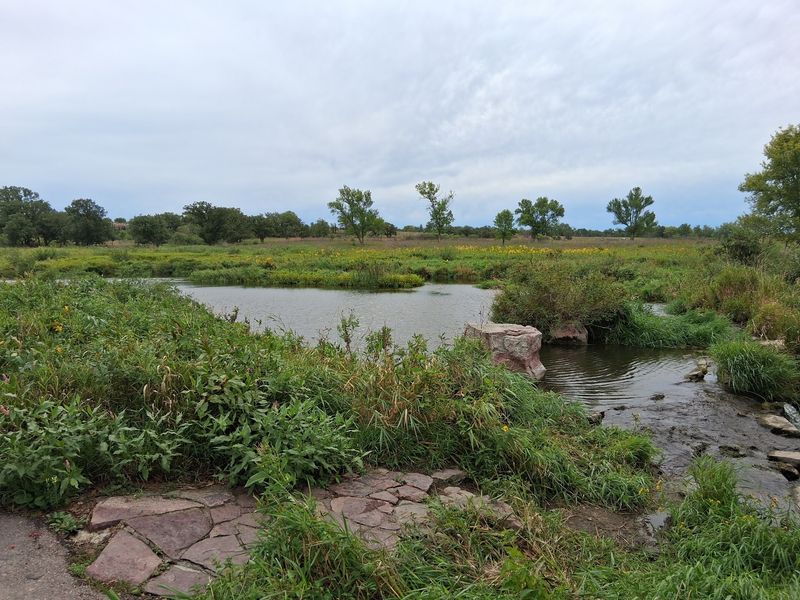
Bring binoculars. The prairie around the monument supports a surprising amount of wildlife, and patient watchers are often rewarded.
Pheasant, wild turkey, deer, ground squirrels, ducks and hawks have all been spotted here. Plant life stands out too, looking quite different from the surrounding farmland.
A small lake near the picnic area is home to turtles. Kids especially enjoy counting them.
The picnic spot makes a nice place to pause before or after the loop. Some guests simply park, sit on the tailgate and watch the prairie come to life in the morning.
Shaded stretches along the trail offer relief, though one long sunny section can feel warm. A hat and water bottle help on hotter days.
Sunset on the trail earns high praise as well. For a quieter visit, a weekday afternoon tends to be less busy, leaving more room for spotting critters.
Hours, Free Entry and Smart Planning
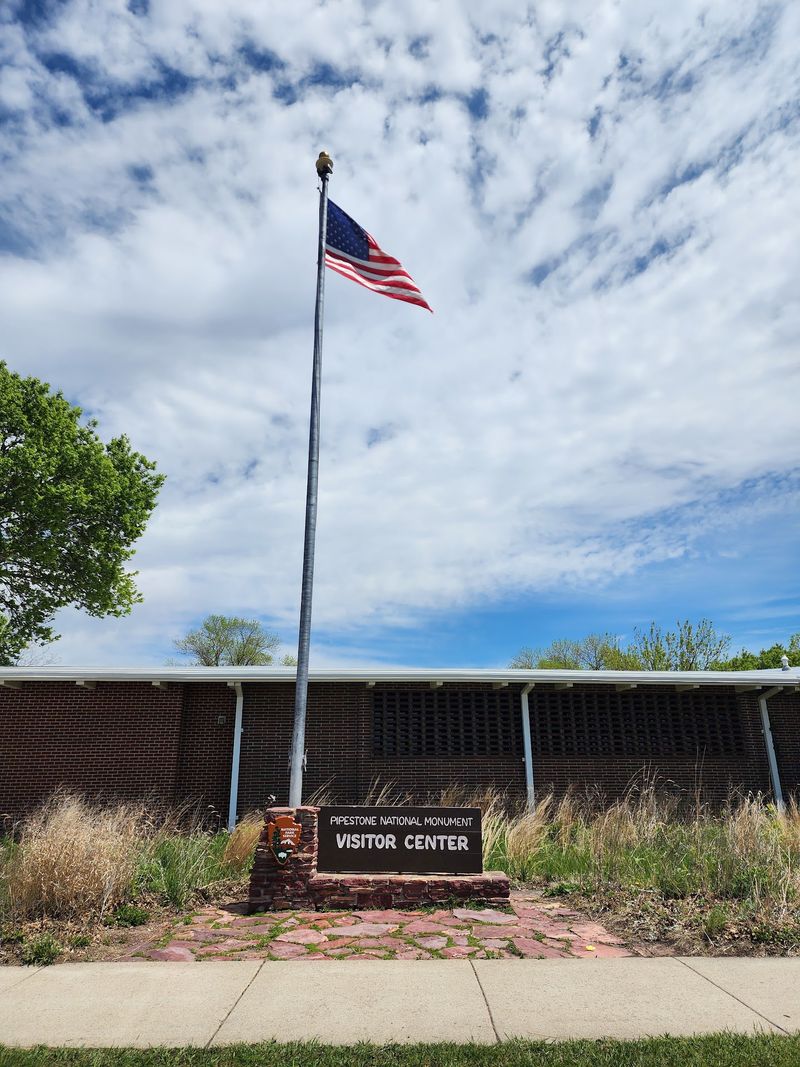
Good news for budget travelers: there is no charge for park entry or parking. The visitor center is free too, and it is air conditioned on hot days.
Visitor center hours run from 8:30 am to 4:30 pm, seven days a week. The trails and restrooms are open around the clock, so late arrivals can still walk the loop.
National park passport collectors, take note. The cancellation stamp sits in a case outside the building, available even after closing.
Families can grab Junior Ranger booklets, which work for several age levels. Friendly rangers are happy to talk with kids about their progress.
Leashed pets who follow the rules may even earn a small collar charm. Parking is plentiful, and restrooms are kept clean.
For the full picture, check the official site at nps.gov/pipe before heading out.
The verdict is simple. With sacred history, working carvers and a hidden waterfall, this quiet corner of Minnesota rewards anyone willing to drive a few extra miles.
Share this story