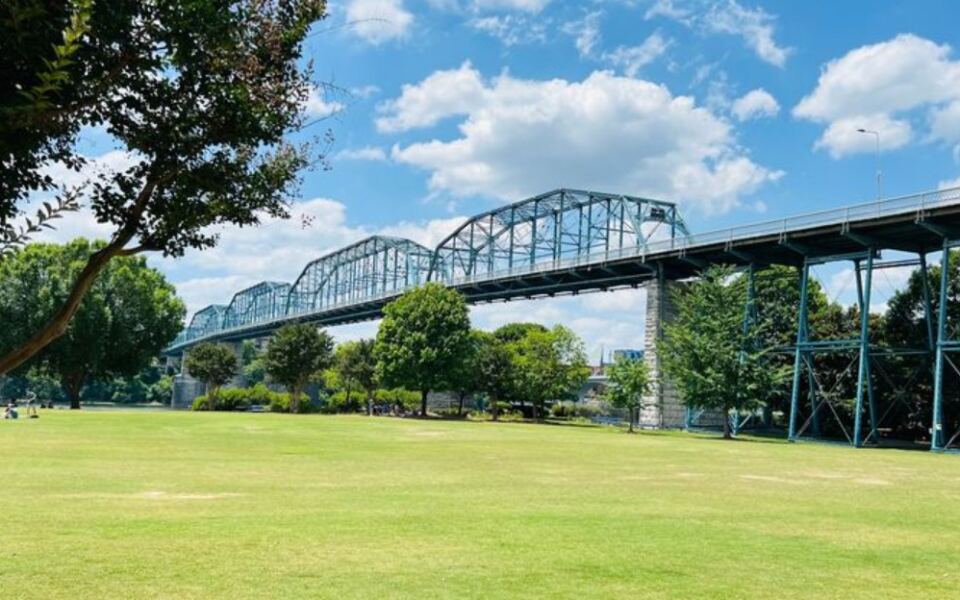
A steel bridge from 1891 stretches nearly half a mile over a river, and cars aren’t allowed on it at all. Pedestrians, strollers, dogs, and cyclists can all use the bridge.
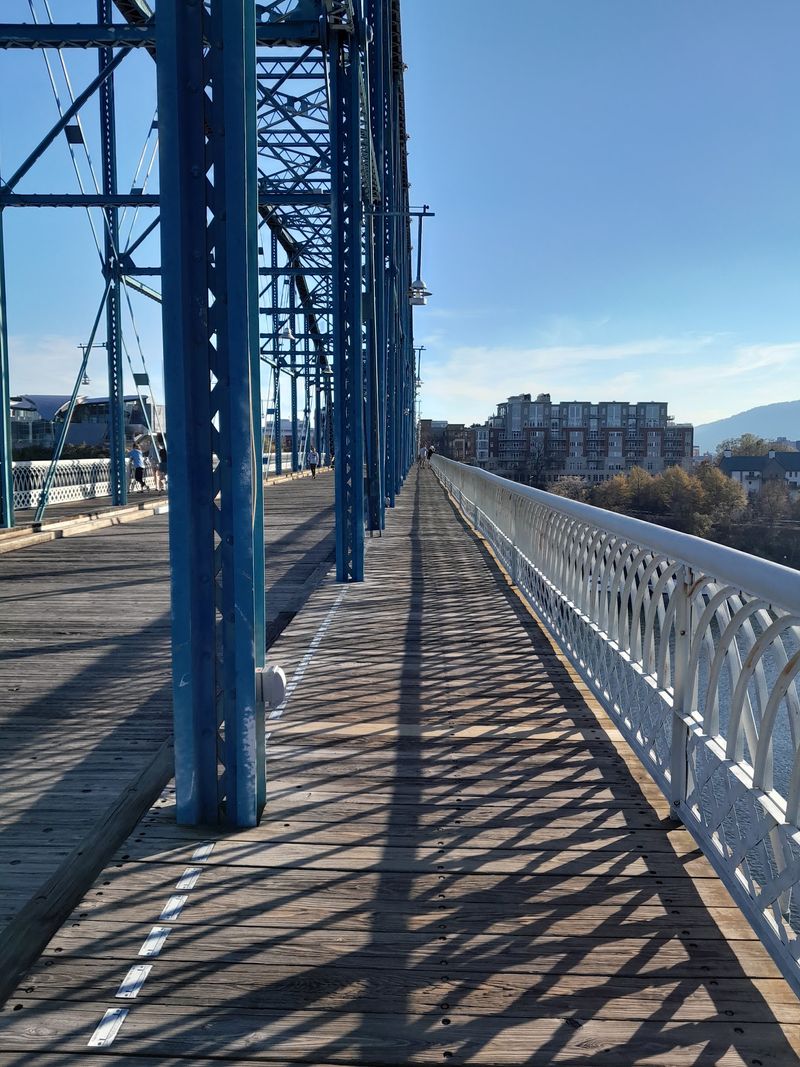
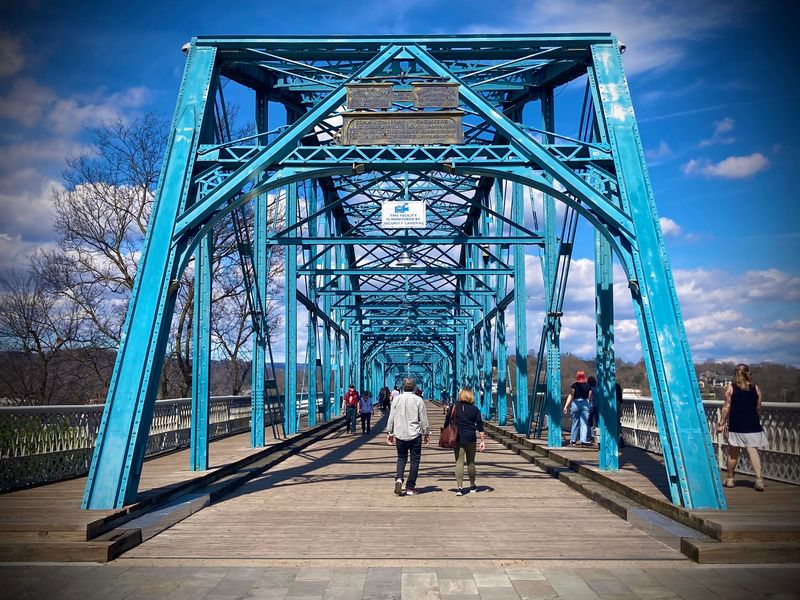
The bright blue trusses rise in curved humps that look almost playful. Wooden planks run underfoot, and the river glides far below. I like how a structure built for horse-drawn wagons now serves pedestrians and cyclists.
This Tennessee icon recently spent time closed for major repair work. That long pause made people realize how much they missed it. Now the planks are back in business, and the city feels whole again.
I can’t imagine a better free outing than a slow stroll across this span.
The Planks Are Back and the Whole City Seems to Exhale
Good news travels fast in a river town. The Walnut Street Bridge in Chattanooga, Tennessee, has reopened after a lengthy repair closure.
Crews spent that time on serious rehabilitation work. Old bridges need care, and this one has been standing since 1891.
The reopening matters because the bridge acts like a front porch for the whole city. It links downtown with the North Shore in one easy walk.
During the closure, people had to take the long way around. That small hassle showed just how central this crossing really is.
Now you can stroll it again without detours or orange barriers. The views, the breeze, and the sense of space are all back on the menu.
A smart move is to plan a round trip. The bridge looks different heading north than it does heading south.
Morning walks feel calm and fresh along the water. Evening walks give you a softer light on the city skyline. Either way, there’s no ticket booth and no entry fee.
That might be the friendliest price tag in all of Tennessee.
Bring comfortable shoes and a little patience for photo stops. You’ll probably make a few of your own.
Nearly Half a Mile of Car-Free Walking Waits for You
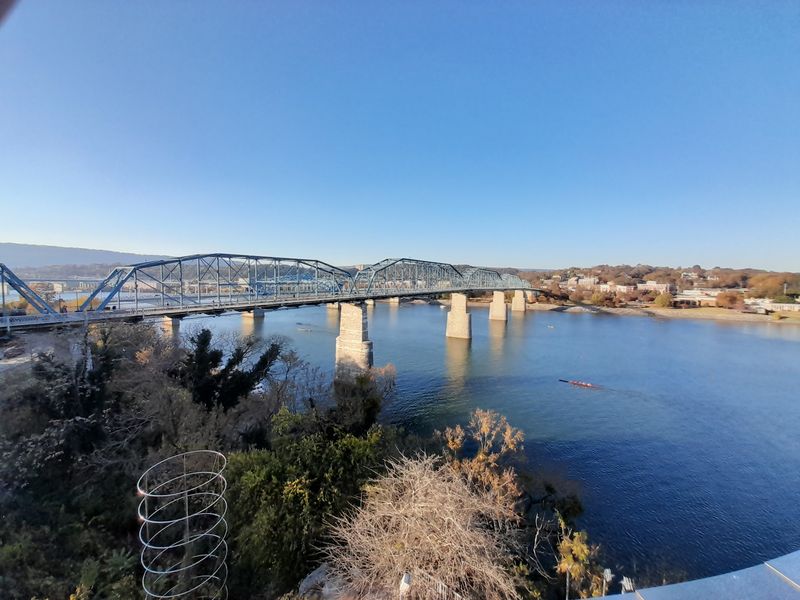
Here’s a number that surprises plenty of first-timers. The bridge stretches 2,376 feet across the Tennessee River.
That length places it among the longest pedestrian bridges in the world. Not bad for something that started out carrying wagons and streetcars.
Cars once rumbled across the deck for decades. After the bridge closed to vehicles in 1978, its future looked shaky for a while.
Community support helped save it from removal. The restored span reopened in 1993 as a walking bridge, and the city never looked back.
You’ll notice right away how quiet the crossing feels without engines. Conversations carry easily, and kids can wander a little without worried parents shouting.
The walk takes most people around ten to fifteen minutes at an easy pace. Add more time if you stop for every pretty angle.
Stroller pushers and runners share the space too. A little awareness keeps everyone moving smoothly.
Wear shoes with decent grip, since wood planks can feel slick after rain. Sneakers beat sandals here every time.
Then simply enjoy the luxury of a long, flat walk in the middle of a river. It rarely gets easier than that.
Those Bright Blue Humps Are Built to Last
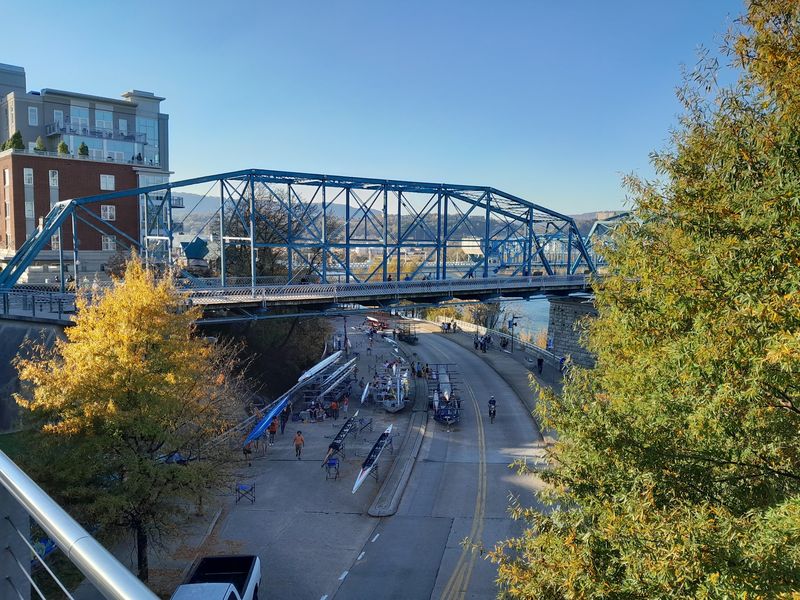
Engineers in the 1890s didn’t build for looks alone, yet they nailed it anyway. The bridge uses camelback trusses, named for their curved, humped tops.
Those arches repeat across the river in a steady rhythm. From a distance, they almost resemble a row of blue waves.
The paint color gives the bridge a cheerful personality. It stands out against green hills and brown water in any season.
Look up as you walk, and you’ll spot rivets and crisscrossing beams everywhere. Every piece once had to be hauled and fitted by hand.
The bridge earned a spot on the National Register of Historic Places in 1990. That honor recognizes both its age and its engineering.
History fans will appreciate how much original character survives. Restoration work aimed to keep the old structure while making it safe.
Photographers love framing shots through the trusses. The steel creates natural lines that guide the eye toward the skyline.
Try standing at one end and shooting straight down the deck. The repeating arches make even a phone picture look planned.
Bring Your Camera, Because the River Steals the Show
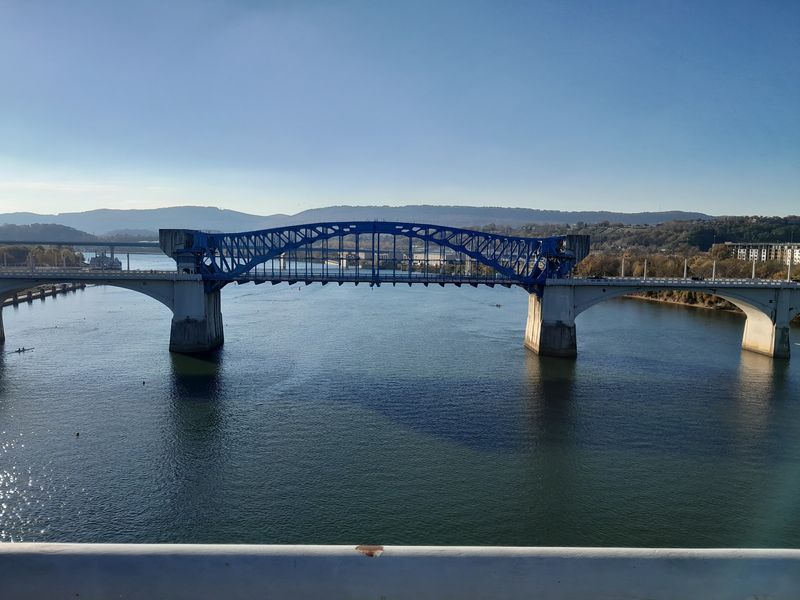
Standing in the middle of a wide river does something to a person. Suddenly everyone slows down and starts pointing at things.
The Tennessee River spreads out beneath you in both directions. Boats, birds, and ripples keep the scene moving.
Downtown buildings rise on the south bank. The North Shore neighborhood sits across the water with its parks and shops.
You can also spot the Market Street Bridge just downstream. It makes a handsome partner in wide photos.
Sunset is a favorite time for this walk, and it’s easy to see why. The sky colors reflect off the water and the blue steel at once.
Hills and ridges surround the city too. They give the view a layered, outdoorsy feel that flat cities can’t match.
Pack a light jacket on cooler days. Breezes over open water can feel stronger than they do on land.
Bring a fully charged phone as well. You’ll likely shoot more pictures than you planned. And if you just want to lean on the rail and watch the river roll, go for it.
Nobody’s timing you.
Your Walk Ends at One of the City’s Liveliest Parks
Step off the north end, and grass replaces planks almost instantly. Coolidge Park sits right beside the Walnut Street Bridge on the North Shore.
The park offers open lawns along the riverbank. It’s a natural spot for a picnic, a nap, or a game of catch.
Kids usually zero in on the carousel first. Its hand-carved animals make the ride feel old-fashioned in the best way.
Warm days bring the interactive fountains into play. Little ones can splash around while grown-ups grab a shady seat.
The park also gives one of the best views of the bridge itself. From the lawn, you can see the full blue span stretching across the water.
Families often plan their walk around this stop. Crossing the bridge, then playing in the park, makes an easy half-day outing.
Bring a blanket and some snacks if you’d like to linger. The riverside setting makes slow afternoons feel well earned.
Check the carousel schedule before promising rides. Hours can change with the season. After that, the bridge waits patiently for your return trip.
Few parks come with a cooler front door.
Art Lovers Get a Bonus Prize on the South Side
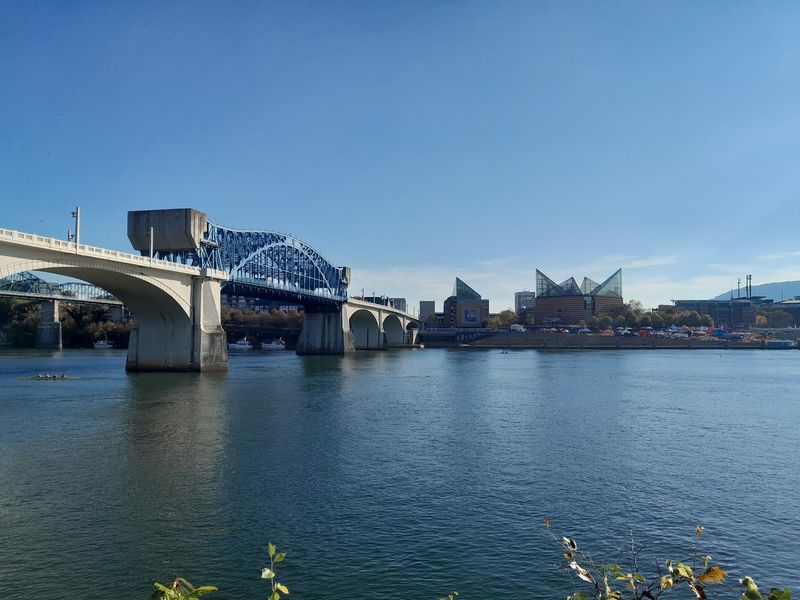
Turn around at the downtown end, and culture shows up fast. The Bluff View Art District sits just a short walk from the bridge.
This neighborhood perches high above the river. Its galleries, gardens, and small eateries make for an easy wander.
Nearby, the Hunter Museum of American Art rests on a dramatic bluff. Its building mixes a historic mansion with bold modern additions.
The museum’s outdoor areas offer sweeping views of the river and the bridge. That angle shows off the blue trusses beautifully.
Pairing the bridge with an art stop makes the day feel balanced. You get fresh air first, then a cool indoor break.
Hours vary, so check the museum schedule before heading over. Planning ahead saves a disappointing walk up the hill.
Comfortable shoes help here, since the bluff area includes some slopes and stairs. Your legs will notice, but your eyes will thank you.
Many people think of the Walnut Street Bridge as just a crossing. Really, it’s a link between two very different neighborhoods.
One side brings parks and playful energy. The other brings art and quiet overlooks, and you can enjoy both in a single afternoon.
Some Stories Here Deserve a Quiet Moment
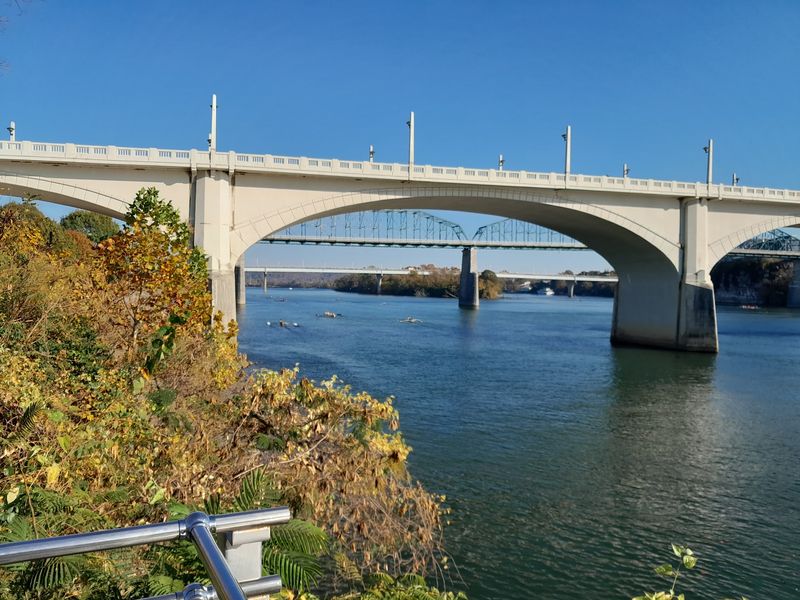
Not every chapter of this bridge’s past is cheerful. Near the south end, the Ed Johnson Memorial honors a painful part of local history.
In 1906, Ed Johnson, a young Black man, was taken from jail by a mob and lynched on this bridge. His case had been under review by the U.S. Supreme Court.
That case became an important moment in American legal history. It involved one of the first times the Supreme Court acted against contempt of its orders.
The memorial was created to remember Johnson and his story honestly. It also invites visitors to think about justice and fairness.
Taking a few minutes here adds real depth to your walk. Landmarks carry heavy memories as well as happy ones.
Families with older kids may find it a meaningful teaching moment. Reading the panels together can spark thoughtful conversations.
The setting encourages a calm pace and respectful voices. It’s a place to pause rather than rush.
Including this stop makes a visit to the Walnut Street Bridge more complete. Beauty and history sit side by side here.
That honesty is part of what makes the bridge matter. It belongs to everyone’s story.
Finding the Bridge Is Easier Than Picking a Photo Spot
Getting there takes almost no detective work. The south entrance sits along Walnut Street in downtown Chattanooga, Tennessee 37403.
On the other side, the bridge lands near Frazier Avenue and Coolidge Park. Either end works as a starting point.
Downtown has a mix of street parking and paid lots. Weekends can get busier, so arriving a bit early helps.
Staying downtown already? Then you can probably walk right over without touching your car keys.
The Tennessee Aquarium sits a short stroll from the south end. Many people combine both stops in the same day.
Restaurants and coffee shops line the streets on both banks. Grabbing a snack before or after your walk is simple.
Once you’re set, just start walking. The trickiest choice you’ll face is which end gets the first photo.
Save Room in Your Day for a Second Crossing
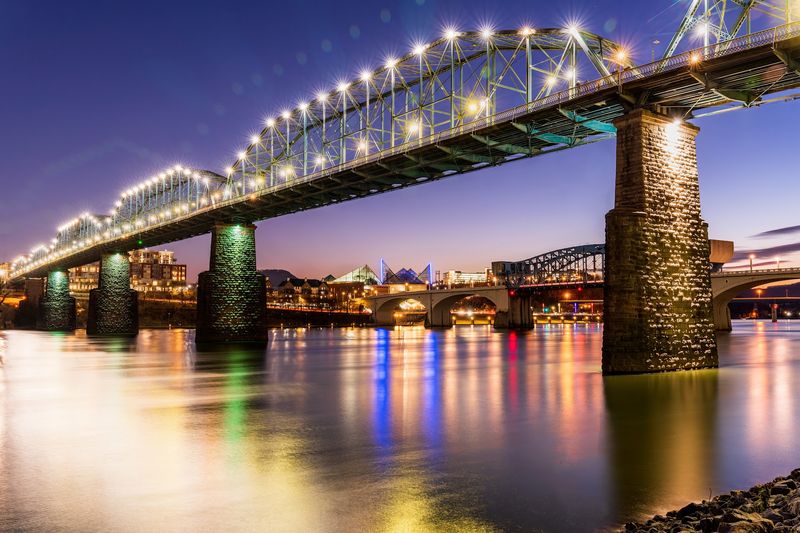
One trip across rarely feels like enough. After dark, the Walnut Street Bridge shows a whole new side.
Lights along the span glow against the night sky. City lights shimmer on the water and stretch the scene in every direction.
The air often feels cooler in the evening too. That makes summer nights especially pleasant for a slow return walk.
Couples tend to love this timing. A nighttime stroll over the river feels like something out of a movie.
Families can turn it into a fun bookend for the day. Start with a morning crossing, then finish with an evening one.
Stick with a buddy and stay aware, as you would anywhere downtown. Good habits keep the night relaxed.
The reopening gave the city back more than a path. It brought back a favorite ritual for both residents and travelers.
People across Tennessee know this bridge as a symbol of Chattanooga. Seeing it busy again feels like a small celebration.
So go once in daylight and once under the lights. Your camera roll will make a pretty strong case for both.
Share this story