Imagine getting into an art museum for free just because your name is Isabella. I think that’s such a fun little perk, especially at a place that also has one of the most fascinating unsolved art mysteries around.
Those empty frames alone would make me curious enough to visit.
But Massachusetts has plenty more surprises where that came from. There’s a castle with an enormous pipe organ, a mansion with beautiful garden steps, and even a memorial tower perched on a mountain.
And somehow, these places can make an ordinary weekend feel a little more special without costing a fortune.
I love the idea of spending a day exploring somewhere that looks like it belongs on an expensive vacation itinerary, then heading home to sleep in my own bed. No fancy hotel or big travel budget needed.
Just pick a place, pack a few snacks, and see what you’ve been missing practically in your own backyard.
1. Isabella Stewart Gardner Museum
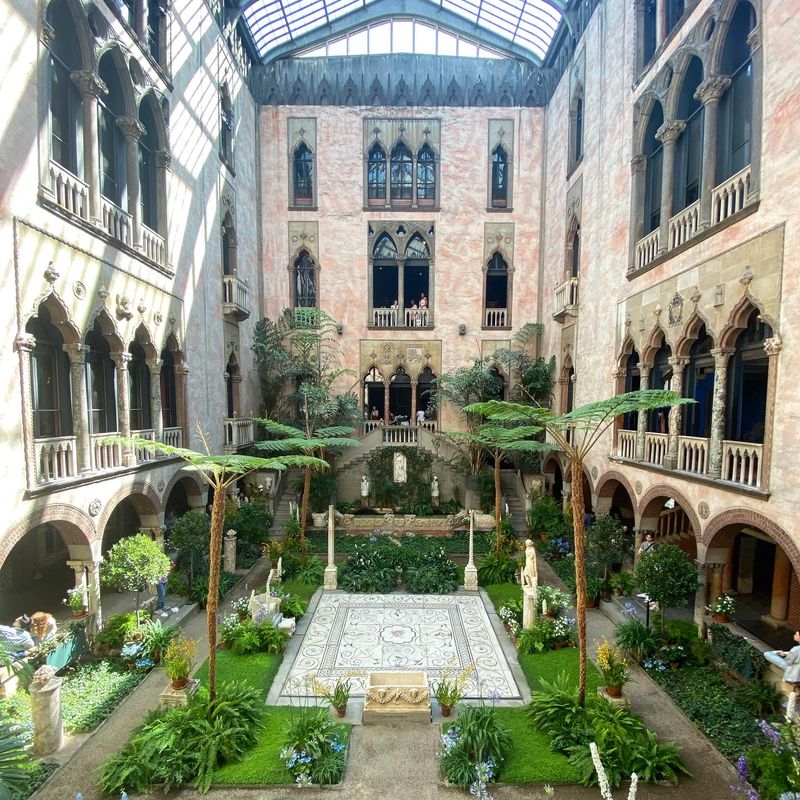
Your first name could save you money here, and that’s not a joke. Anyone named Isabella gets free admission, a perk tied to founder Isabella Stewart Gardner.
Gardner opened her museum in 1903. She designed it to look like a Venetian palace, with a flower-filled courtyard at its center.
The courtyard alone feels like a trip to Italy. Plants change with the seasons, so a spring visit looks different from a fall one.
Then there’s the mystery. In 1990, thieves stole 13 works of art, and the case remains unsolved today.
Empty frames still hang where some of those paintings once did. It’s a strange, quiet reminder that art history isn’t always neat and finished.
Gardner left firm rules in her will about how the galleries should stay arranged. That’s why the rooms feel personal, almost like you’re touring a collector’s home instead of a museum.
You’ll spot works by famous names like Titian, Rembrandt, and John Singer Sargent. Sargent actually painted Gardner herself, and that portrait is part of the collection.
Kids and teens under 18 get in free too. That makes it a smart pick for families who want culture without a painful bill.
The museum also has a newer wing designed by architect Renzo Piano. It holds a café, a music hall, and space for rotating exhibits.
Plan to slow down instead of racing through. The rooms are packed with details, and rushing means missing the fun stuff tucked on side tables and walls.
Check the museum’s schedule before you go, since hours and timed tickets can vary. A little planning helps the day feel smooth and relaxed.
Address: 25 Evans Way, Boston, MA 02115
2. Hammond Castle Museum
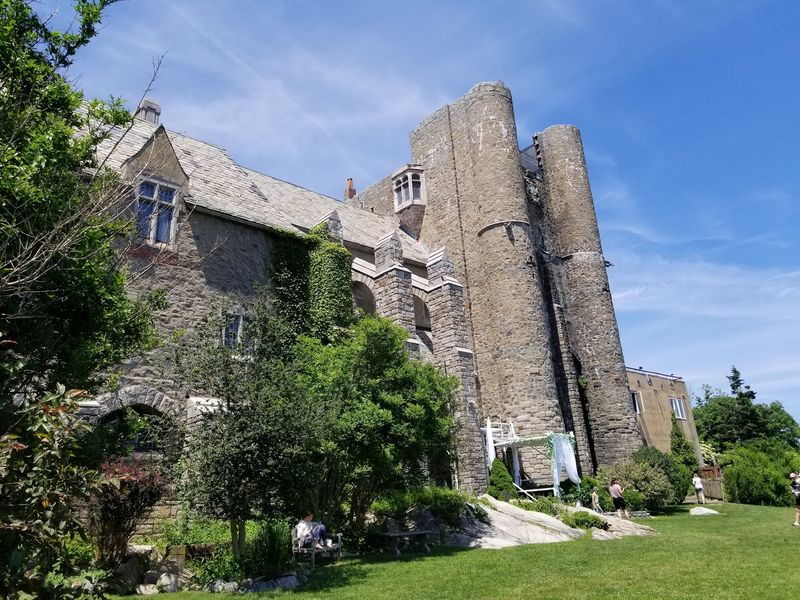
An inventor built himself a castle on the ocean, and honestly, who wouldn’t if they could? John Hays Hammond Jr. constructed it between 1926 and 1929.
Hammond held hundreds of patents, many tied to radio control technology. People often call him the father of remote control, which is a pretty cool title to have.
His home looks like it came straight out of a medieval storybook. Stone walls, towers, and a drawbridge-style feel give it serious drama.
Inside, the Great Hall is the showstopper. It holds a massive pipe organ that Hammond worked on for years.
The castle also includes an indoor courtyard designed to look like an old European village street. It’s an unusual sight, especially sitting on the Massachusetts coast.
Hammond collected Roman, medieval, and Renaissance pieces. He worked many of them right into the building itself.
That means you’re not just looking at displays behind glass. You’re walking through rooms where old architecture and objects are part of the walls.
The views help too. The castle sits above the water near Gloucester Harbor, so step outside and take in the rocky shoreline.
Spooky season fans should keep an eye on special events. The castle often hosts themed programs that fit its mysterious look.
Hours change by season, so check before making the drive. Pair your visit with a stroll around Gloucester, one of the oldest fishing ports in the country.
For a castle tour, this one stays surprisingly easy on the wallet. No plane ticket to Europe required, just a scenic drive up the North Shore.
Address: 80 Hesperus Ave, Gloucester, MA 01930
3. Castle Hill on the Crane Estate
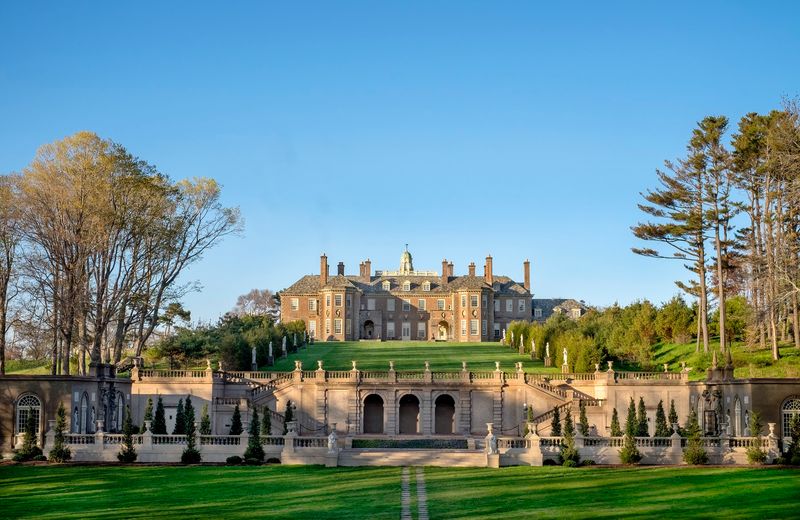
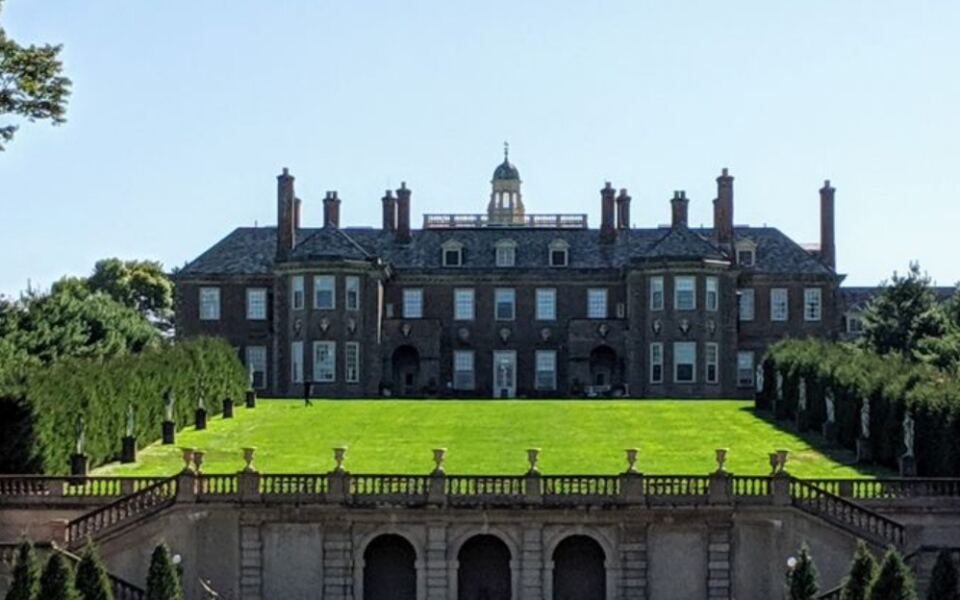
Plumbing money built one of the fanciest summer homes on the North Shore. Richard T. Crane Jr., heir to a plumbing fortune, created this estate in Ipswich.
The Great House you see today was finished in 1928. It’s a 59-room Stuart-style mansion sitting high on a hill above the sea.
Its most famous feature might be outdoors, though. The Grand Allée is a long, rolling lawn that stretches about half a mile toward Ipswich Bay.
Walking that green ribbon feels like a scene from a period movie. Bring a camera, because the view looks great in nearly any season.
The Trustees, a Massachusetts conservation group, care for the property now. They offer house tours that peek into the mansion’s grand rooms.
Crane Beach sits right next door as part of the same larger estate. It’s known for its long sandy shoreline and big dunes.
So you can pair a mansion visit with a beach afternoon. That’s a lot of fancy for a single day trip.
The grounds also include gardens and walking paths. You can wander without needing a strict plan.
Tickets and parking work differently depending on the season. Checking ahead keeps you from getting surprised at the gate.
Members of The Trustees often get perks across many properties. If you love this kind of outing, a membership could stretch your fun budget a long way.
Picnics on the lawn make it even more affordable. Pack sandwiches, grab a blanket, and act like you own the place for an afternoon.
Address: 290 Argilla Rd, Ipswich, MA 01938
4. Naumkeag
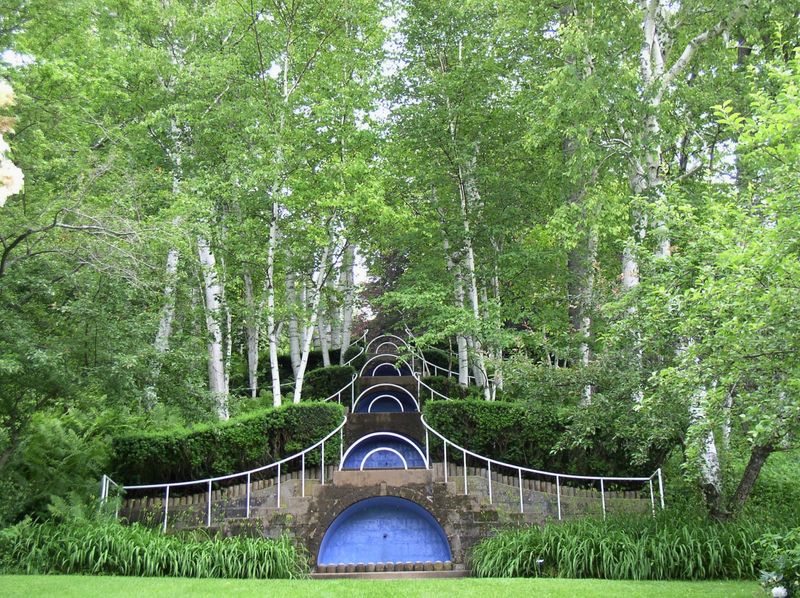
Blue stairs and white birch trees made one Berkshires garden famous among design lovers. They’re called the Blue Steps, and they look like art you can climb.
Landscape architect Fletcher Steele designed them in the 1930s. He worked with owner Mabel Choate on the gardens for about three decades.
The house came first, though. Naumkeag was built in 1885 as a summer home for New York lawyer Joseph Hodges Choate and his family.
Famed architect Stanford White designed it in the Shingle Style. Inside, you’ll find many of the family’s original furnishings.
Outside, the gardens steal the show. Besides the Blue Steps, there are terraces, a Chinese-inspired garden, and sweeping mountain views.
The Trustees restored the gardens in a major project completed in recent years. That work brought Steele’s original ideas back to life.
Visiting feels like stepping into a fancy magazine spread. Yet a garden pass costs far less than a night at a luxury resort.
Seasonal events add extra fun. The property has hosted popular fall and holiday light displays in past years.
Check the current calendar before you go, since the season usually runs on a set schedule. Some months the property closes or offers limited access.
Stockbridge itself is a lovely add-on. The Norman Rockwell Museum is nearby if you want a second stop.
Wear good shoes, because the gardens sit on a hillside. Your legs will notice those steps, but your camera roll will be thankful.
Address: 5 Prospect Hill Rd, Stockbridge, MA 01262
5. The Mount
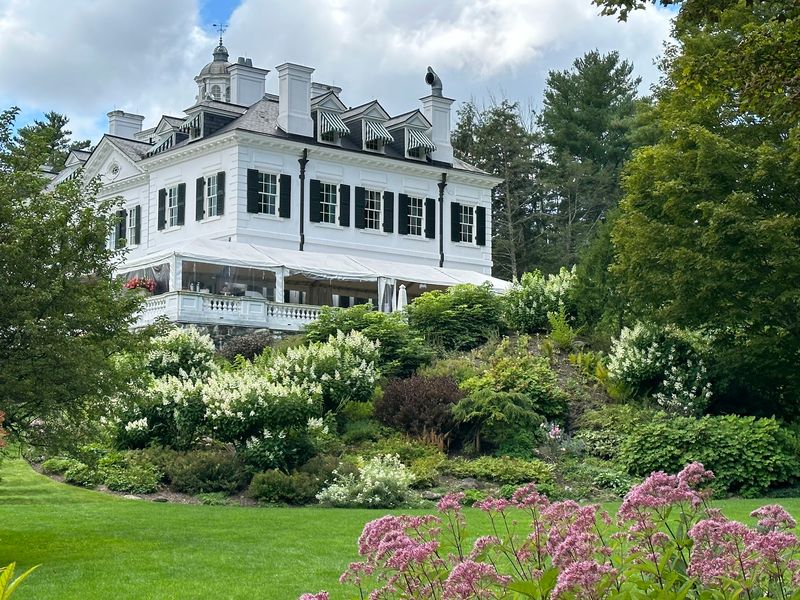
A famous author designed her own dream house, then wrote about how houses should be designed. Edith Wharton built The Mount in Lenox in 1902.
Before that, she co-wrote a book called The Decoration of Houses. The Mount became her chance to put those ideas into real life.
Wharton later won the Pulitzer Prize for The Age of Innocence. She was the first woman to win that prize for fiction.
The home has a classic, elegant look inspired by European design. Formal gardens, a lime walk, and woodland paths surround it.
Walking the grounds feels very old-money. Still, you get the experience without owning a single acre of Berkshires real estate.
Inside, rooms show the kind of balance and order Wharton loved. Book fans can spot her personal library, which the organization brought back to the house.
The Mount offers more than tours. It hosts author talks, outdoor sculpture shows, and seasonal programs throughout the year.
Spooky tours have also been a fall tradition there. Wharton wrote ghost stories too, so it fits.
Hours and admission vary by season. Look at the schedule online before heading over.
Lenox is a great town to explore afterward. Its walkable downtown has small shops and plenty of places to grab a bite.
Bring a book and find a quiet bench in the gardens. It’s hard to imagine a better spot to read a few pages of Wharton herself.
Address: 2 Plunkett St, Lenox, MA 01240
6. Mount Greylock State Reservation
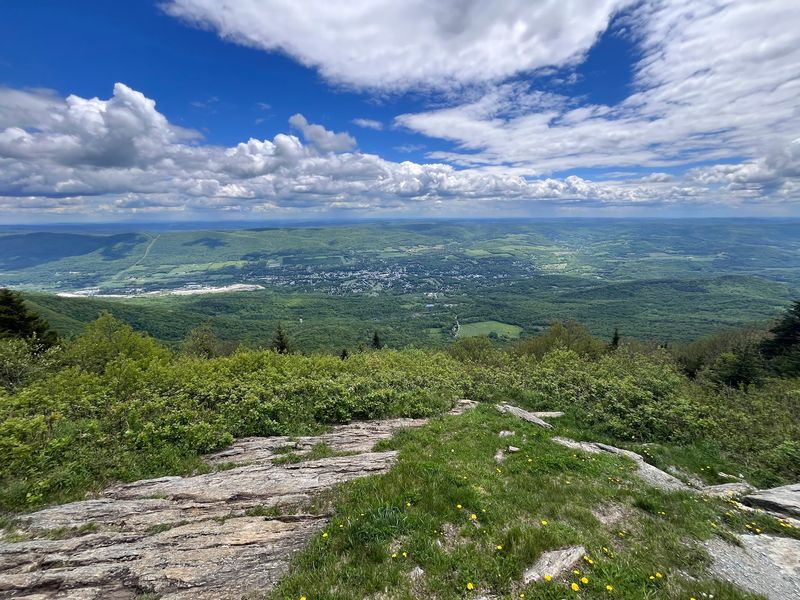
From the highest point in Massachusetts, you can see into several states on a clear day. Mount Greylock rises 3,491 feet above sea level.
At the summit stands the Veterans War Memorial Tower. It honors Massachusetts residents who served in the military.
You can drive most of the way up during the warmer months. That means big views without a brutal climb, unless you want one.
Hikers have plenty of choices too. The Appalachian Trail actually crosses right over the summit.
Bascom Lodge sits near the top. It was built in the 1930s by the Civilian Conservation Corps using local stone and wood.
The lodge has offered meals and rooms in season. A mountaintop overnight sounds pricey, but it’s simpler than a fancy resort.
Herman Melville could see Greylock from his home in Pittsfield. Some say the mountain’s shape inspired ideas in Moby-Dick.
The reservation covers more than 12,000 acres of forest. You’ll find trails, waterfalls, and picnic spots spread across it.
Fall is especially popular for leaf peeping. The colors spread out below you like a giant patchwork quilt.
Roads to the summit close in winter. Always check the state park website for current seasonal access.
Bring a jacket even in summer, since the top can feel much cooler. Snacks and water are smart too, because mountains make people hungry.
Address: 30 Rockwell Rd, Lanesborough, MA 01237
7. Mass MoCA
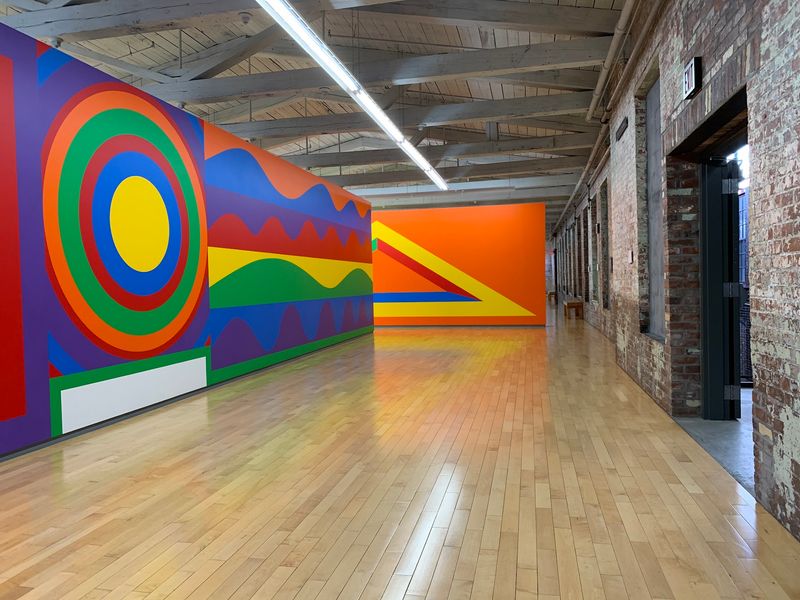
Old factory buildings rarely become one of the largest contemporary art museums in the country. In North Adams, that’s exactly what happened.
Mass MoCA opened in 1999 inside a former mill complex. The site was once home to Sprague Electric Company.
The campus covers dozens of brick buildings connected by bridges and courtyards. It feels like a small city made for art.
Because the galleries are huge, artists can go big. Some installations fill rooms the size of gymnasiums.
Long-term exhibits stick around for years. Large sections have featured works by Sol LeWitt, Laurie Anderson, and James Turrell.
The LeWitt wall drawings are a major highlight. They cover multiple floors in bright colors and bold shapes.
Mass MoCA also hosts concerts, comedy, and festivals. Music fans may know it for summer events on its outdoor grounds.
There’s a kids’ area called Kidspace too. It gives younger visitors hands-on ways to connect with art.
Plan for a full day if you can. The museum is massive, and your feet will feel it by closing time.
North Adams sits in the northern Berkshires near Williamstown. You can easily combine this with a mountain or college-town visit.
Big-city art experiences usually come with big-city costs. Here, you get that scale in a small Massachusetts mill town, which feels like a pretty sweet deal.
Address: 1040 Mass MoCA Way, North Adams, MA 01247
8. Clark Art Institute
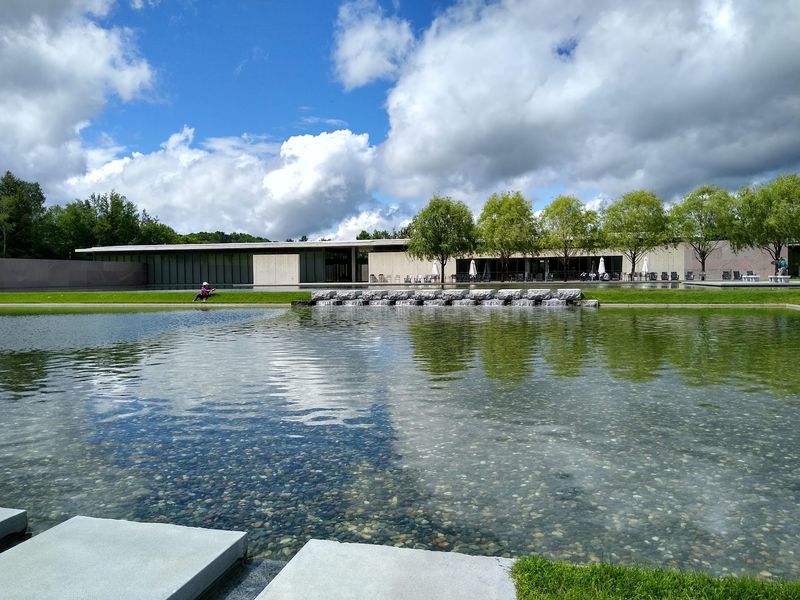
A sewing machine fortune helped bring Renoir paintings to a small New England college town. Sterling and Francine Clark founded the museum in Williamstown.
Sterling Clark was an heir to the Singer sewing machine company. The couple collected art for decades before opening the institute in 1955.
Their collection is famous for French Impressionist works. You’ll find many paintings by Pierre-Auguste Renoir, plus pieces by Monet and Degas.
American artists show up too. Works by Winslow Homer and John Singer Sargent are part of the collection.
The building itself is worth a look. A newer section by architect Tadao Ando features calm reflecting pools.
Outside, the campus spreads across about 140 acres. Walking trails lead through meadows and up toward views of the hills.
That mix of art and nature makes the day feel luxurious. You can admire a masterpiece, then stretch your legs on a quiet path.
The Clark also runs special exhibitions throughout the year. These bring in art from other museums around the world.
Kids and students can often visit for free. Check current admission rules before you go, since policies can change.
Williamstown is home to Williams College. The town is small, easy to stroll, and pretty in any season.
Pack a light picnic for the grounds if the weather cooperates. Fine art and a sandwich on a hillside might be the classiest cheap lunch around.
Address: 225 South St, Williamstown, MA 01267
9. Walden Pond State Reservation
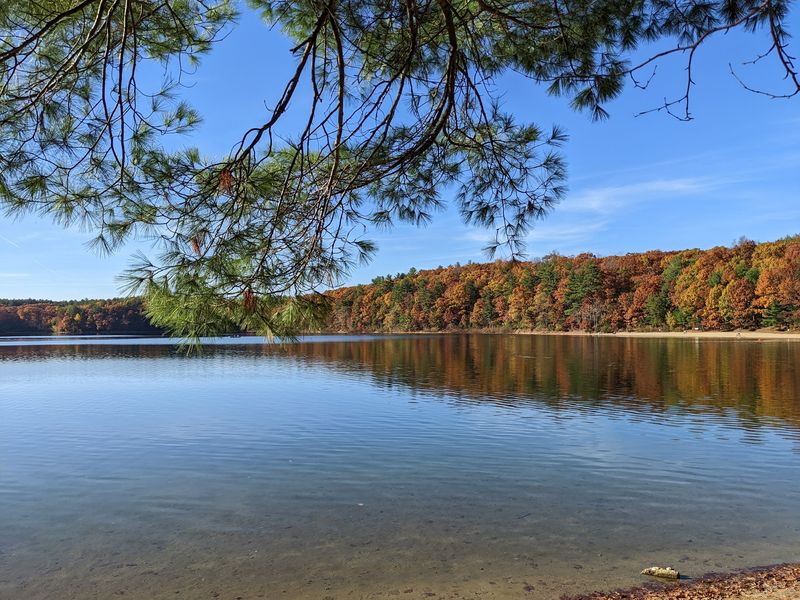
Henry David Thoreau moved into a tiny cabin to live simply, and people still visit to see why. He lived at Walden Pond from 1845 to 1847.
He later wrote about it in his famous book Walden. That book helped shape how Americans think about nature.
The pond is a kettle pond, formed by melting glaciers long ago. It’s deep, clear, and surrounded by forest.
A trail loops around the water. It’s an easy walk that takes most people under an hour.
Near the parking area, you’ll find a replica of Thoreau’s cabin. It shows just how small his home really was.
The original cabin site is marked too. Visitors often leave stones on a pile nearby as a tribute.
Summer brings swimmers to the beach area. Fall turns the trees around the pond into a postcard.
A visitor center offers exhibits about Thoreau and the land. There’s also a shop with books and gifts.
Parking is limited, and the lot can fill on nice days. Arriving early or checking the state’s updates can save you a headache.
Concord itself is full of history. The Old North Bridge and Louisa May Alcott’s Orchard House are close by.
Simple living rarely feels this fancy. You get literary history, a lovely Massachusetts pond, and a peaceful walk for very little cash.
Address: 915 Walden St, Concord, MA 01742
10. Cape Cod National Seashore
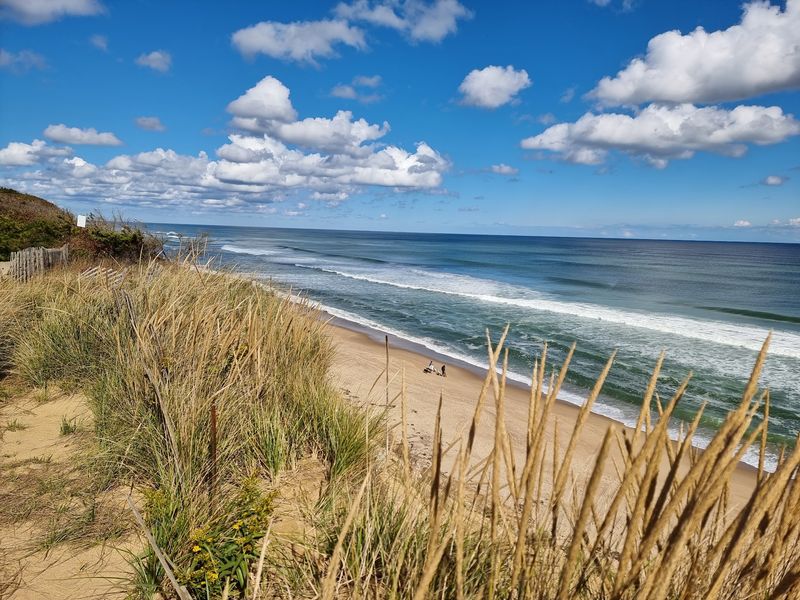
President John F. Kennedy signed a law in 1961 that protected miles of Cape Cod shoreline.
That’s how this national seashore came to be.
It stretches about 40 miles along the Outer Cape. You’ll find beaches, dunes, marshes, and lighthouses along the way.
Rich vacationers pay big money for Cape Cod rentals. But the beaches here belong to the public.
Coast Guard Beach and Nauset Light Beach are popular picks. Both are located in Eastham.
The Salt Pond Visitor Center in Eastham makes a great first stop. It has exhibits, a short film, and trail maps.
Several walking and biking trails start nearby. The Nauset Marsh Trail offers views of salt marshes and the ocean.
Lighthouses add extra charm. Nauset Light, with its red and white tower, is one of the most photographed on the Cape.
Wildlife watching is another bonus. Seals are often spotted along parts of the shoreline.
Beaches may charge for parking in summer. A season pass can make repeat visits more affordable.
Sunscreen and water are musts. The sun reflecting off sand and water can surprise you.
Stay until sunset if you can. Watching the sky change over the dunes feels like a luxury, even if dinner is a gas station snack.
Address: 50 Nauset Rd, Eastham, MA 02642
11. Nickerson State Park
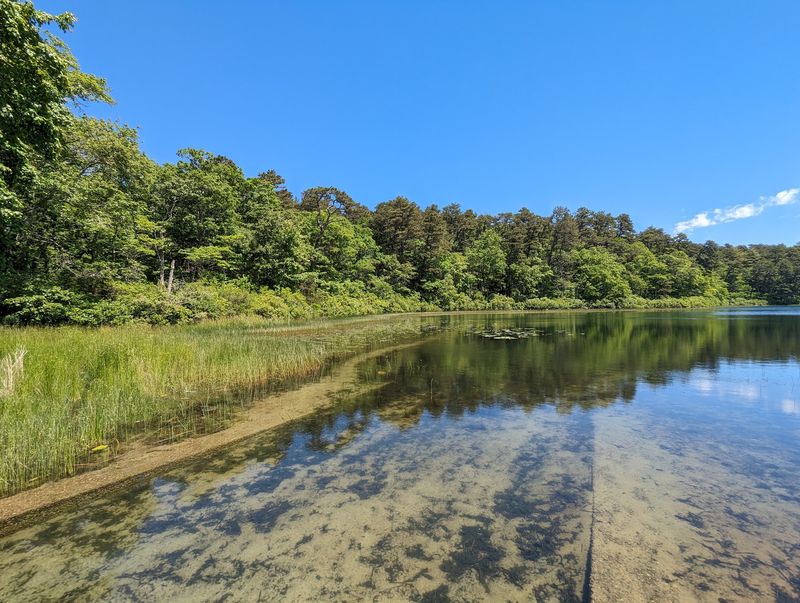
Cape Cod vacation rentals can cost a fortune, but a campsite in the woods is a different story. Nickerson State Park in Brewster offers that cheaper path.
The park covers more than 1,900 acres. It was once part of an estate owned by the Nickerson family.
Roland Nickerson’s widow, Addie, donated the land to the state in 1934. It became the first state park in Massachusetts.
Kettle ponds are the park’s big draw. These glacier-made ponds are great for swimming, kayaking, and fishing.
Flax Pond and Cliff Pond are two of the best known. Their clear water feels a world away from crowded ocean beaches.
Camping is a major attraction here. The park has hundreds of campsites, and some yurts have been offered too.
Reservations go fast in summer. Booking early is the smartest move for peak season.
The Cape Cod Rail Trail connects to the park. That means you can bike to nearby towns without fighting traffic.
Hiking trails wind through pine and oak forest. Birdwatchers can spot plenty of species throughout the year.
Brewster also has bay beaches with wide tidal flats. At low tide, the water pulls way back and you can wander far out.
Bring bug spray, because the woods can get buggy. A little prep keeps your camping trip happy instead of itchy.
Address: 3488 Main St, Brewster, MA 02631
12. Halibut Point State Park
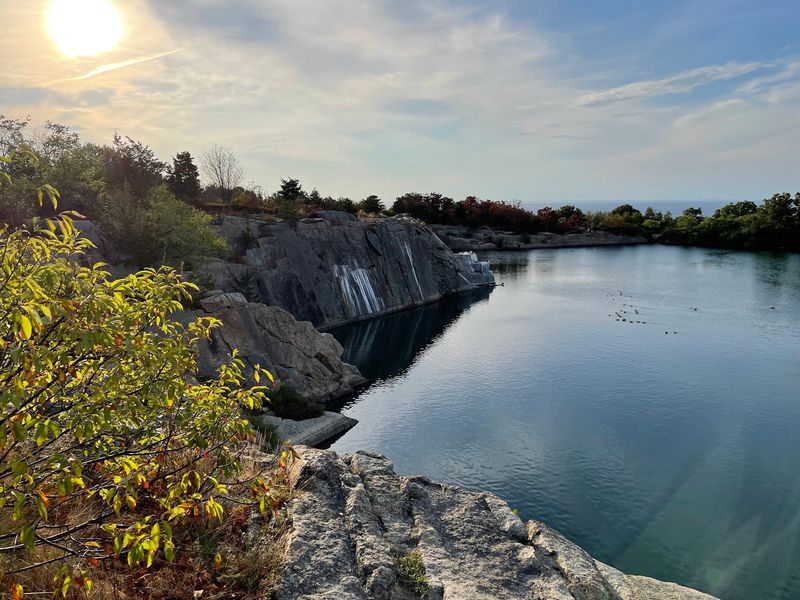
A flooded granite quarry next to the open ocean sounds like a spot only billionaires get to see. Halibut Point in Rockport is open to the public.
The park sits at the tip of Cape Ann. On clear days, views can stretch to Maine and New Hampshire.
Granite quarrying was a big business here long ago. The Babson Farm Quarry is now filled with water and surrounded by trails.
The rocky shore below is wild and dramatic. Huge slabs of granite meet crashing waves.
A tall tower near the entrance has an interesting story. It was built during World War II as a fire control tower for coastal defense.
Today the tower area houses the visitor center. You can learn about the quarry history and the area’s natural life.
Tide pools along the shore are fun to explore. Look closely and you might spot snails, crabs, or seaweed.
Be careful on wet rocks, though. They can get slippery fast.
The Trustees manage land right next to the state park. Together, they create a larger area for walking and exploring.
Downtown Rockport is just a short drive away. Bearskin Neck has small shops and harbor views worth checking out.
Bring binoculars if you have them. Between seabirds, boats, and far-off coastlines, there’s plenty to see without spending much at all.
Address: 4 Gott Ave, Rockport, MA 01966
Share this story