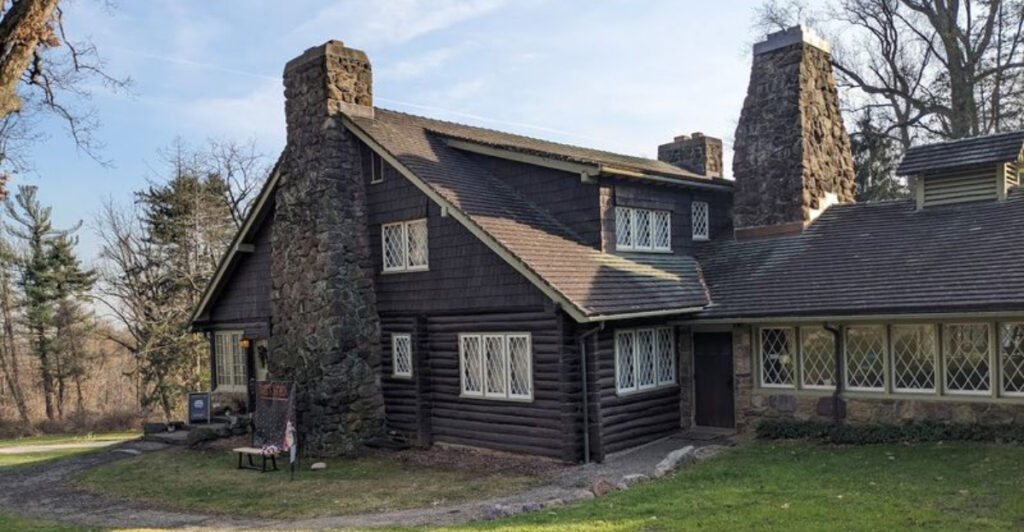
Just off Route 10 in Morris County, behind the kind of everyday New Jersey traffic that makes nobody feel poetic, there is a log house built from chestnut trees cut right from the property. Not a replica.
Not a themed restaurant trying too hard. The real thing.
Gustav Stickley, the furniture maker whose name still makes antique dealers sit up straighter, built Craftsman Farms as a place where design was supposed to fix more than bad taste. He wanted better homes, better work, better habits, and maybe even better people.
Ambitious? Absolutely. Very New Jersey? Also yes, in the best possible way.
Today, the Stickley Museum at Craftsman Farms sits in Parsippany on a 30-acre National Historic Landmark, and the house still feels like someone’s big idea waiting in the woods.
The New Jersey Estate Where Gustav Stickley Tried to Redesign Everyday Life
Gustav Stickley did not come to Morris County just to build a nice weekend place with a porch and a view. By the time he began buying land here in 1908, he had already moved his business headquarters from Syracuse to New York City and had become one of the loudest voices of the American Arts and Crafts movement.
He was a designer, manufacturer, publisher, philosopher, and social critic, which is a very long way of saying he was not content to simply make chairs. He wanted to rethink the whole house around them.
Craftsman Farms was his attempt to give those ideas a physical address. The original property covered about 650 acres on what is now the western edge of Parsippany-Troy Hills, in an area once associated with Morris Plains.
Stickley imagined a working rural community, including a farm school for boys, where craft, labor, nature, and daily life would all fit together with a little more dignity than he thought modern industrial life allowed. That sounds lofty, but the setting keeps it grounded.
This is not Newport mansion energy. There is no marble staircase demanding compliments.
The centerpiece was a big, muscular Log House made from round, hewn chestnut logs cut from the property’s own woods, along with local stone found on-site. Stickley called the place his “Garden of Eden,” which is bold, but once you understand what he was trying to do, the phrase makes sense.
He wanted a home that did not hide its bones, fake its materials, or separate beauty from usefulness. In a state packed with Revolutionary War houses, Victorian mansions, and Shore cottages, Craftsman Farms stands out because it was built around an argument.
The argument was simple enough: the way people live is shaped by the things they live with.
Why Craftsman Farms Was More Than Just a Beautiful Old House
The funny thing about Craftsman Farms is that the house everyone comes to see was not originally supposed to be the family home. Stickley first designed the main building as a kind of clubhouse, a gathering place for workers, students, and guests.
Its kitchen was planned on a serious scale, with the ability to prepare meals for 100 people, which tells you right away that he was thinking beyond Sunday dinner. The family house was supposed to be built farther up the hill.
Then the bigger plan slowed down. The school was delayed, the vision shifted, and Stickley modified the upstairs of the Log House so his family could live there instead.
His household included his wife, Eda, five daughters, and a son, so this was not some lone genius brooding among perfect oak tables. It was a real family home, adapted from a building that had started out as a social experiment.
That twist gives the place its charm. Craftsman Farms was grand in theory, but practical in the way New Jersey places often have to be.
Plans changed. Money mattered. The house had to work. Stickley and his family lived there until 1915, when financial trouble caught up with him and he filed for bankruptcy.
By then, public taste was moving away from the clean, heavy lines of Craftsman furniture and toward revival styles. The American design world had a short attention span even then, apparently.
After Stickley left, the property entered another chapter. In 1917, Major George and Sylvia Wurlitzer Farny bought it at the bankruptcy sale, and their family owned or lived on the property until 1989.
Later, when the core of the estate was threatened by a proposed development of 52 townhouses, Parsippany-Troy Hills stepped in and acquired the property through eminent domain. That is part of why visitors can still walk into this very specific idea of American living today.
How the Log House Turned Simple Living Into a Design Statement
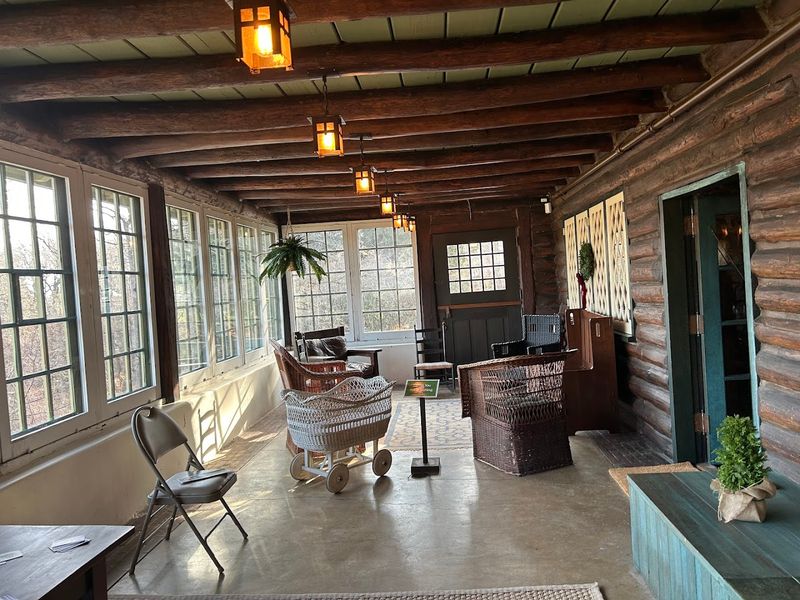
Walk up to the Log House and the first thing you notice is that it does not try to look delicate. It sits low and solid, with heavy logs, broad rooflines, and a porch that looks like it was made for actual sitting, not just historical interpretation.
This is simplicity with shoulders. Stickley believed that natural materials had their own beauty and that a house should not need layers of decoration to feel complete.
Craftsman Farms put that belief right out in the open. The logs were not covered up.
Structural features were not disguised under plaster and ornament. The point was to let the construction speak for itself, which sounds very modern until you remember he was saying it more than a century ago.
The Stickley Museum describes Craftsman Farms as the most complete expression of Stickley’s “Craftsman” style, a campus where architecture, design, and landscape all worked together as part of his idea of a meaningful life. That is the key to understanding the place.
The house was never just a container for furniture. The building, the furniture, the fields, the workshops, and the idea of useful work were all part of the same philosophy.
There is also something quietly rebellious about it. At a time when Victorian interiors could be stuffed with carved ornament, heavy drapery, and rooms that seemed allergic to empty space, Stickley’s approach said: calm down.
Use good wood. Show the joinery.
Let the room breathe. Make the chair sturdy enough for a human being, not just a parlor pose.
That is why the Log House still feels fresh. It is rustic, but not sloppy.
Simple, but not plain. And if you have ever stood in a room full of furniture that looked expensive but felt useless, Stickley’s whole argument starts to feel very reasonable.
The Arts and Crafts Vision Hidden Just Off Route 10
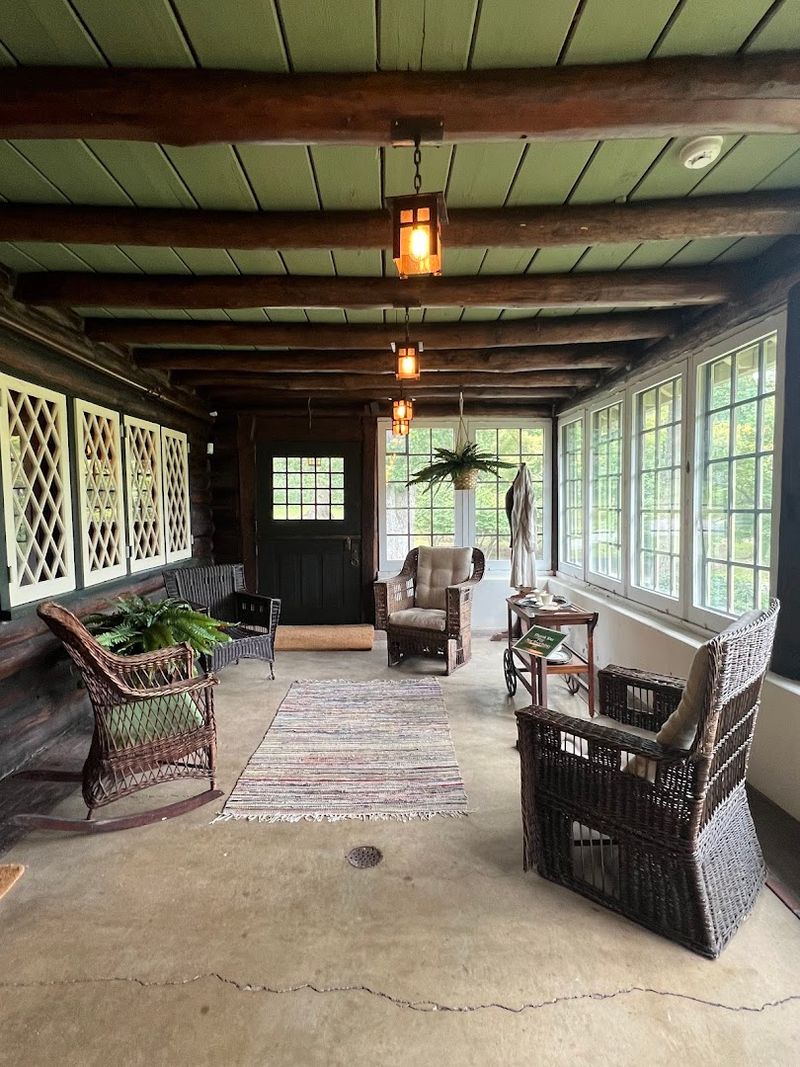
There may be no more New Jersey way to encounter a design landmark than by turning off a busy commercial road and suddenly finding yourself somewhere quieter. Craftsman Farms is located at 2352 State Route 10 in Morris Plains, on the Parsippany campus of the Stickley Museum, which is both convenient and slightly funny.
One minute you are in regular Route 10 mode. The next, you are dealing with one of the most important sites in the American Arts and Crafts movement.
The museum is open year-round, but the Log House is not a wander-in-whenever-you-feel-like-it situation. Introductory tours are held on Fridays, Saturdays, and Sundays, with specialty tours on select Fridays, and the museum notes that access to the historic house is through guided tours.
The Craftsman Shop is open Friday through Sunday from 11 a.m. to 4 p.m., and visitors park near the campus entrance before continuing on foot to the Visitor Pavilion where tours begin. That guided-tour setup actually suits the place.
Craftsman Farms is not the kind of historic site where you just peek at old rooms and nod politely. The story needs a little unpacking.
Why the logs matter. Why the furniture looks so sturdy.
Why Stickley’s ideas about handcraft were wrapped up in worries about factory labor, urban life, and the loss of honest work. There is room to enjoy the grounds, too.
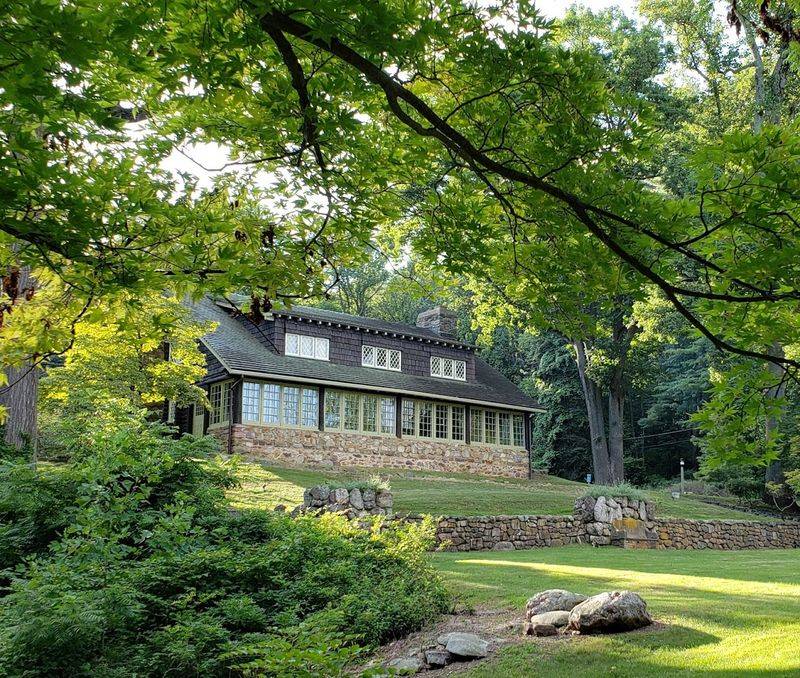
The site includes meadows, wooded areas, walking trails, a pond, a stream, picnic tables, and remaining farm structures, which makes it feel less like a sealed museum and more like a surviving piece of a much larger plan. That is the surprise of Craftsman Farms.
It is easy to reach, but it does not feel obvious. It is hiding in plain sight, which is practically a New Jersey specialty.
What Stickley’s Furniture Reveals About the Way He Thought People Should Live
A Stickley chair does not flirt. It does not twirl into the room looking for applause.
It stands there, square and honest, as if it has a mortgage and strong opinions about doing things correctly. That was not accidental.
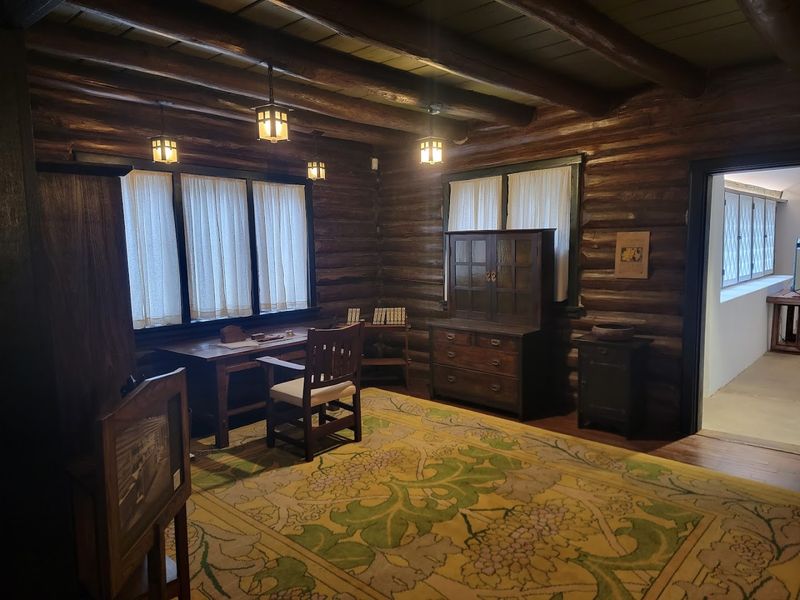
Stickley’s furniture, often called “mission” or “Craftsman” furniture, became known for straightforward forms, strong lines, and visible construction. His work pushed back against the fussiness of the Victorian era with pieces that emphasized simplicity, honest materials, and solid joinery.
The museum’s history notes that his early Arts and Crafts designs were a radical departure from Victorian furniture, with exposed mortise-and-tenon joinery and plain surfaces that allowed the grain of the wood to remain important. In other words, the furniture was making a moral point without giving a lecture.
A table should be useful. A chair should be well built.
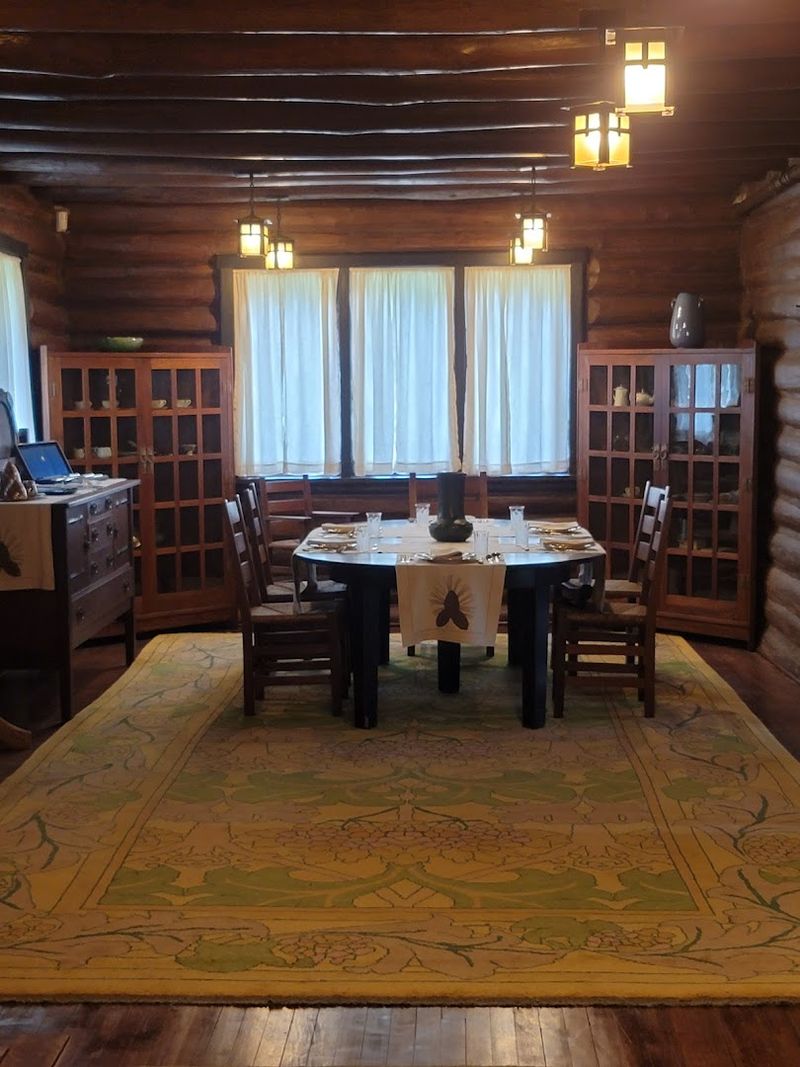
Beauty should come from proportion, material, and craftsmanship, not from decoration pasted on top. At Craftsman Farms, that idea becomes easier to understand because the furniture is not isolated in a showroom.
The Log House has been restored to its 1911 appearance and includes collections of Stickley furnishings, many original to the house, along with textiles, pottery, metalwork, and archival materials. Seeing those pieces in the kind of rooms they were meant to inhabit makes the whole thing click.
Stickley was not just selling oak sideboards. He was selling a way of living that prized usefulness, restraint, and connection to craft.
Whether every American family wanted that much philosophy with their dining room set is another question. But his influence lasted because the pieces still make sense.
They do not feel fragile or fashionable. They feel like they were built by someone who expected daily life to be taken seriously.
Why This Morris County Landmark Still Feels Surprisingly Modern
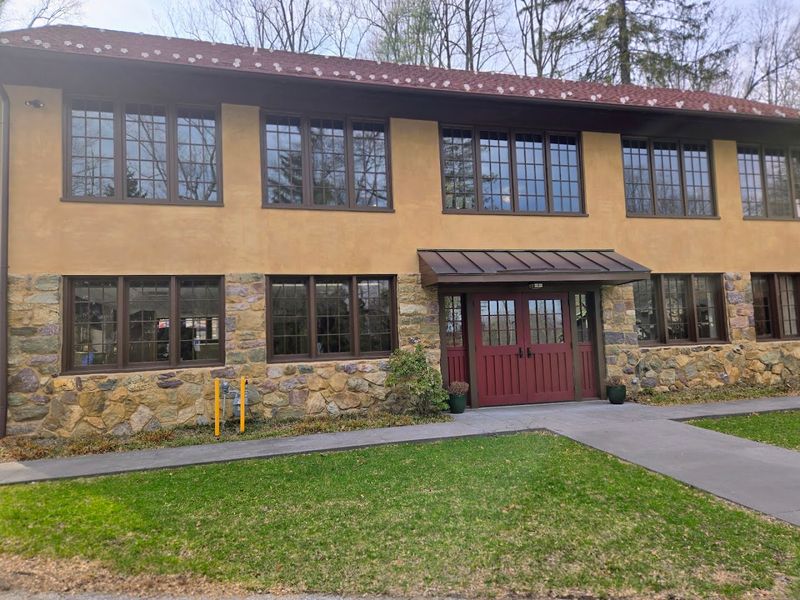
The most modern thing about Craftsman Farms may be that it does not feel obsessed with being modern. It is not sleek.
It is not shiny. It does not need a touch screen in the corner to explain itself.
Yet the ideas running through the place feel strangely current: use natural materials, build with intention, buy fewer but better things, connect home life to the landscape, and maybe stop filling rooms with objects that have no purpose except to prove you bought them. That is a pretty contemporary conversation for a house built in 1911.
Craftsman Farms also feels modern because its survival was not guaranteed. After Stickley’s bankruptcy and the Farny family’s long ownership, the property could easily have become another “you should have seen what used to be here” story.
Instead, when development threatened the estate in the late 1980s, Parsippany-Troy Hills preserved the core property, and the Stickley Museum now operates the site for the public. Today it consists of 30 acres and is recognized as a National Historic Landmark.
That preservation matters because Craftsman Farms is not only about old furniture. It is about a question people are still asking, especially in a state where space is expensive and life moves fast: what should a home actually do for the people inside it?
Stickley’s answer was not perfect, and his grandest plans did not fully work out. The farm school never became what he imagined.
The finances collapsed. Public taste moved on.
But the house remained, and that somehow makes the place more interesting, not less. It is not a monument to a flawless dream.
It is a landmark built by someone who believed everyday life could be improved through better design, better work, and a more honest relationship with the things around us. For a quiet estate off Route 10, that is still a pretty big idea to leave standing in Morris County.
Share this story