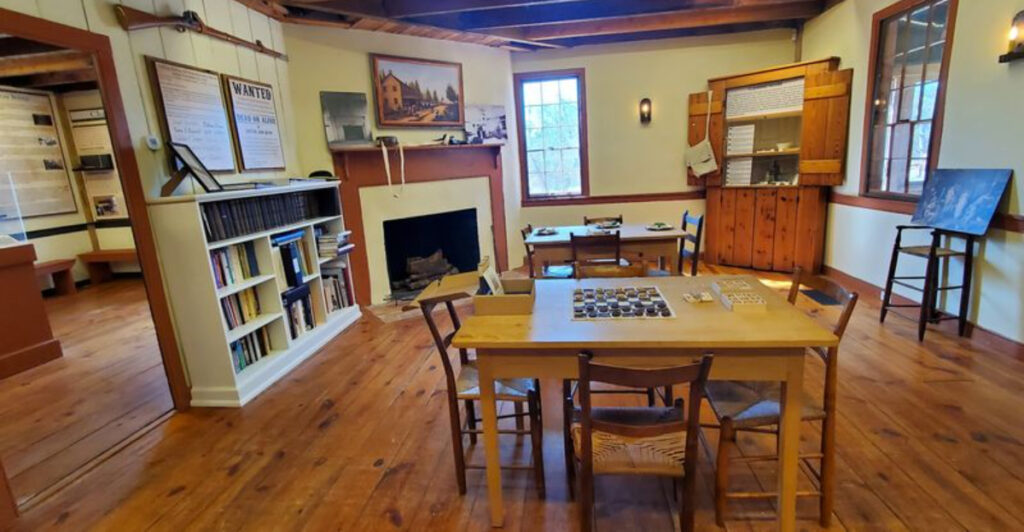
The road in doesn’t exactly announce itself. One minute you’re near Route 72 and Route 539, with the usual Jersey traffic doing its thing, and the next you’re bumping toward 200 Old Halfway Road, where the pines close in and a restored white tavern appears like it has been waiting patiently for two centuries.
Cedar Bridge Tavern is not the kind of “old bar” where you slide onto a stool and order a pint. That is the twist.
The bar survives, but the tavern now operates as a historic site and museum, preserving one of the oldest standing tavern bars in New Jersey inside a building tied to one of the final land engagements of the American Revolution.
It is quiet, a little out of the way, and very New Jersey in the best possible sense: history hiding in the woods, pretending not to be a big deal.
A Pine Barrens Landmark Hiding Down a Quiet Dirt Road
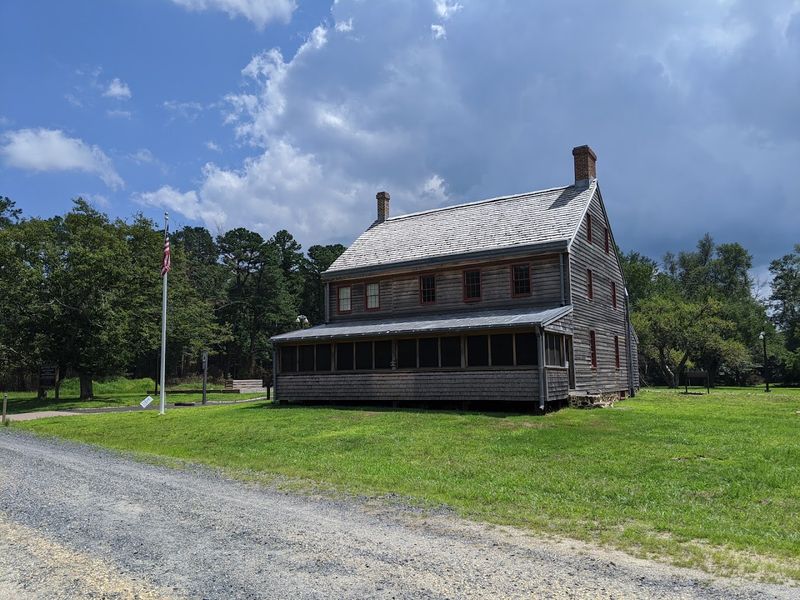
Cedar Bridge Tavern sits in Barnegat Township, but it does not feel like the Barnegat most Shore-bound drivers know. There are no boardwalk fries, no packed beach lots, no neon clam-shack energy.
The address is 200 Old Halfway Road, and the name fits. It feels halfway between the modern world and a much older New Jersey, the one of stagecoach routes, sandy roads, pitch pine, cedar water, and taverns that doubled as rest stops, gossip centers, and survival stations.
That setting is a huge part of the charm. The tavern is tucked into the Pinelands, about a mile south of Route 72 near Route 539, on land that once mattered because roads met there.
Long before GPS made every back road feel obvious, this was a useful place to stop. Travelers moving between inland New Jersey and the Shore needed somewhere to rest, eat, trade news, and probably complain about the road, because some Jersey traditions are eternal.
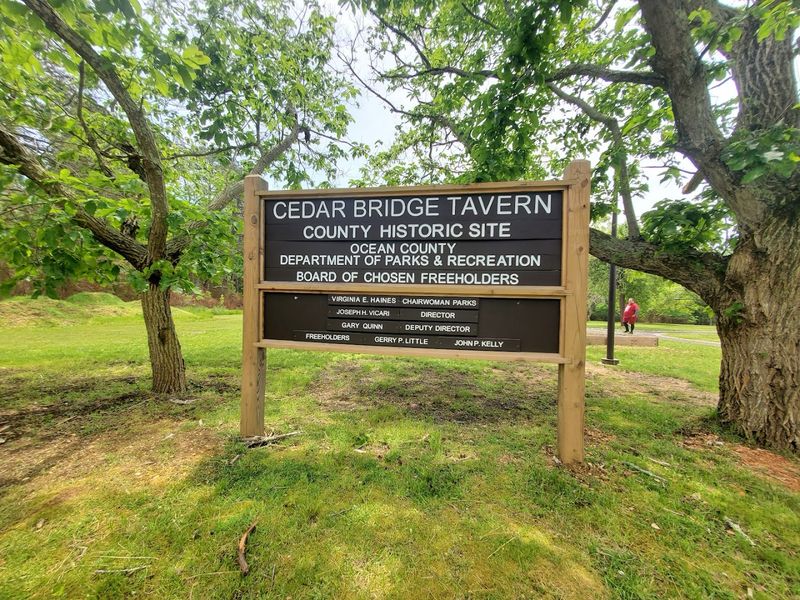
Today, Ocean County preserves the property as the Cedar Bridge Tavern Historic Site. The grounds cover 291 acres, which means the visit is not just a quick peek at an old building.
There are interpretive signs, exhibits, open space, and a 3.5-mile walking trail for anyone who wants a little Pine Barrens wandering with their history. The surrounding woods make the tavern feel wonderfully misplaced, as if someone picked up a colonial-era roadside stop and set it down where the noise could not follow.
The best part is how understated it is. Cedar Bridge does not try to bowl you over.
It just stands there, white siding and porch facing the trees, quietly daring you to realize that one of New Jersey’s most fascinating landmarks has been hiding in plain sight.
How Cedar Bridge Tavern Became One of New Jersey’s Oldest Survivors
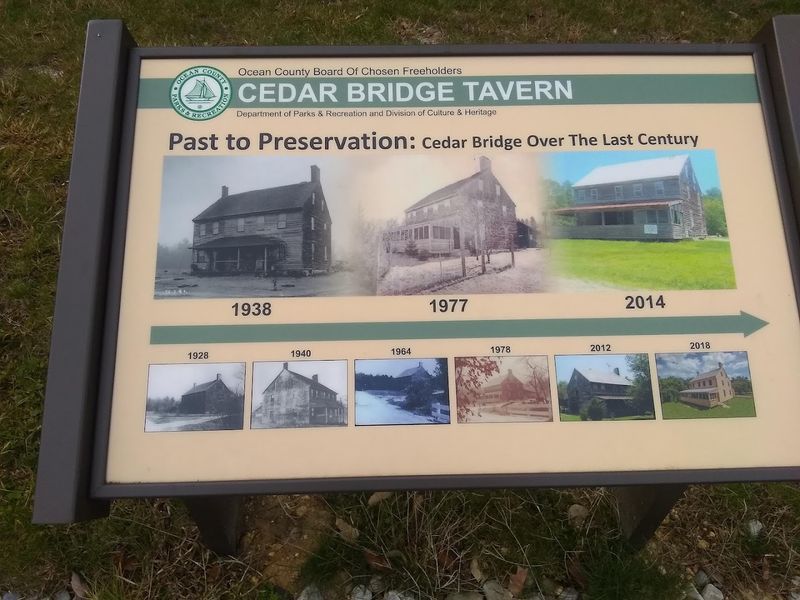
The building visitors see today is generally dated to around 1816, though the tavern site reaches deeper into the 18th century. Some historic accounts connect the original tavern site to the 1770s, while other descriptions identify the existing restored structure as an early 19th-century building.
That slight timeline wrinkle is not unusual with old properties that were altered, rebuilt, repaired, and documented across different eras. What matters for visitors is easier to grasp: this place is very old, and it still has the goods to prove it.
The real showpiece is the bar. Cedar Bridge Tavern retains a rare early 19th-century bar from its working tavern days, and it is often described as one of the oldest standing bars in New Jersey.
That is the detail that gives the site its little jolt. You are not looking at a reproduction slapped together for atmosphere.
You are looking at a surviving piece of everyday life from the era when taverns were essential infrastructure. Part of the reason Cedar Bridge survived is almost funny in a very practical Jersey way: the road moved on.
The tavern sat along an old stagecoach route that was eventually bypassed by later roads, and that lack of constant reinvention may have helped spare the building. In other words, progress ignored it, and that may have saved it.
Ocean County purchased the tavern in 2007 and later restored the site, removing non-historic additions and bringing the building back into public use as a historic landmark. The tavern was listed on the National Register of Historic Places in 2013, and the restored site has since become part of Ocean County’s park system.
So no, you cannot order a beer there now. But the bar itself is still standing, which is rarer, stranger, and honestly more interesting.
The Revolutionary War Story Behind This Forgotten Tavern
Here is where Cedar Bridge stops being merely old and starts getting dramatic. On December 27, 1782, the area around the tavern became the scene of the Affair at Cedar Bridge, often described as one of the last land engagements of the American Revolution.
That date matters. Cornwallis had already surrendered at Yorktown in 1781, but the war did not simply shut off like a lamp.
In parts of New Jersey, especially the Pine Barrens, violence between Patriots and Loyalists dragged on in messy, personal, local ways. The central figure was John Bacon, a Loyalist raider with the kind of reputation that makes you understand why people kept muskets close.
Bacon and his men were part of the violent Loyalist activity that continued in the region even after the major battles had passed. Patriot militia forces led by Captains Richard Shreve and Edward Thomas came looking for him, and the confrontation at Cedar Bridge turned into a sharp skirmish.
Accounts differ slightly in wording, but the bones of the story are clear. Bacon’s party clashed with the militia near the tavern.
Casualties were recorded on both sides, and Bacon, though wounded, escaped with help from local Loyalist supporters. That last part feels very Pine Barrens: the woods, the old roads, the divided loyalties, the sense that the Revolution here was not just redcoats versus rebels but neighbor versus neighbor.
This is why Cedar Bridge has such a different texture from bigger Revolutionary War stops. It is not grand in the Princeton Battlefield way.
It is not polished into a national monument with a sweeping view. It is smaller, stranger, and more intimate.
You can picture the confusion, the gunfire, the winter air, and the tavern nearby as both witness and backdrop. Each December, the site commemorates the Affair at Cedar Bridge, keeping that local story from disappearing into the pines.
Why This Bar Is More Than Just an Old Building
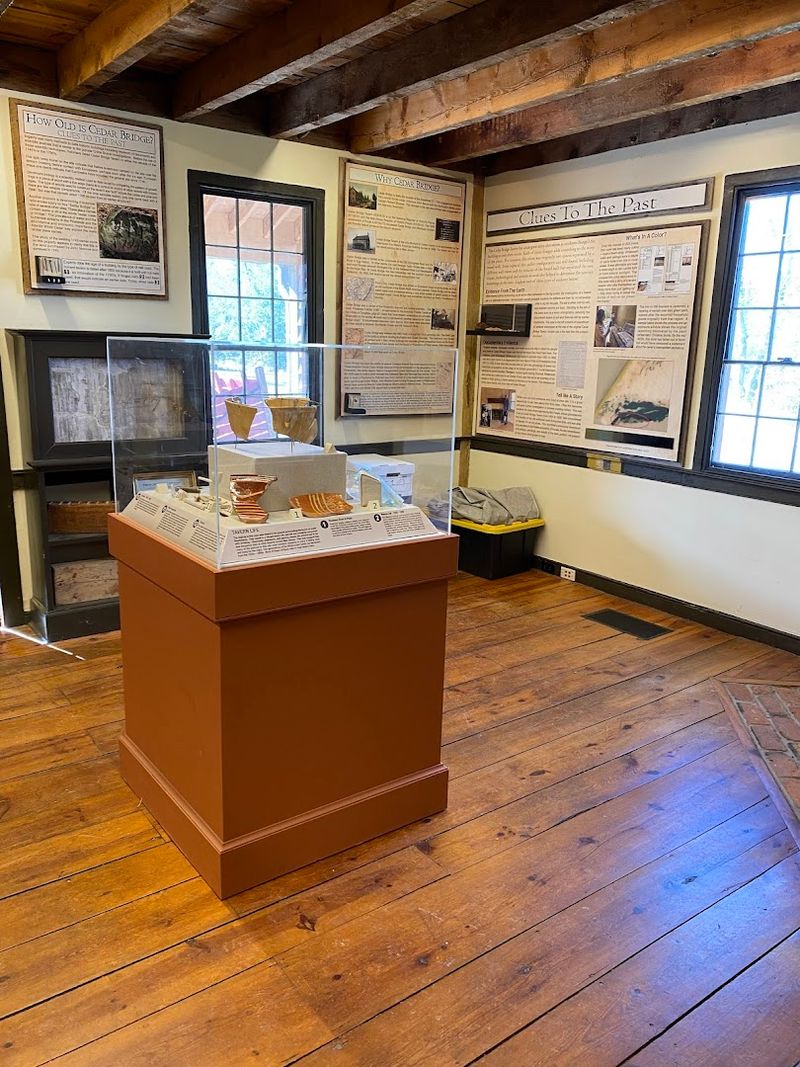
It is tempting to treat the surviving bar as the whole headline, because admittedly, “one of New Jersey’s oldest standing bars” is a pretty good hook. But Cedar Bridge Tavern works because the bar is only the doorway into a larger story.
It tells you how people moved through the Pine Barrens, how taverns functioned before highways and diners, and how rural New Jersey was connected to both commerce and conflict. A tavern like Cedar Bridge was never just a place to drink.
It was a landmark in the literal sense. Travelers used taverns as reference points.
Local residents used them for news. Deals were made there, arguments got started there, meals were served there, and tired people probably walked in with mud on their boots and no patience left for the road.
That is why the preserved bar matters. It is a piece of social history, not just a handsome relic.
The site also opens a door into the broader history of the Pine Barrens: 19th-century farmsteads, roadside commerce, local foodways, forest industries, and the everyday habits of people whose names rarely make it into school textbooks. The Revolution may be the flashiest chapter, but the quieter stories are just as good.
The preservation work adds another layer. Ocean County’s restoration involved architectural and historical research, and the site’s rehabilitation helped turn a fragile old tavern into a public historic destination.
The county did not simply dust off an old structure and call it history. It removed later changes, repaired original materials where possible, and gave the property a second life.
That is why Cedar Bridge feels different from an antique-looking restaurant with old beams and a colonial font on the menu. The tavern is not pretending.
It has survived the road changing, the county changing, the state changing, and the entire concept of a “bar” changing around it.
What Makes Cedar Bridge Tavern Feel Frozen in Time
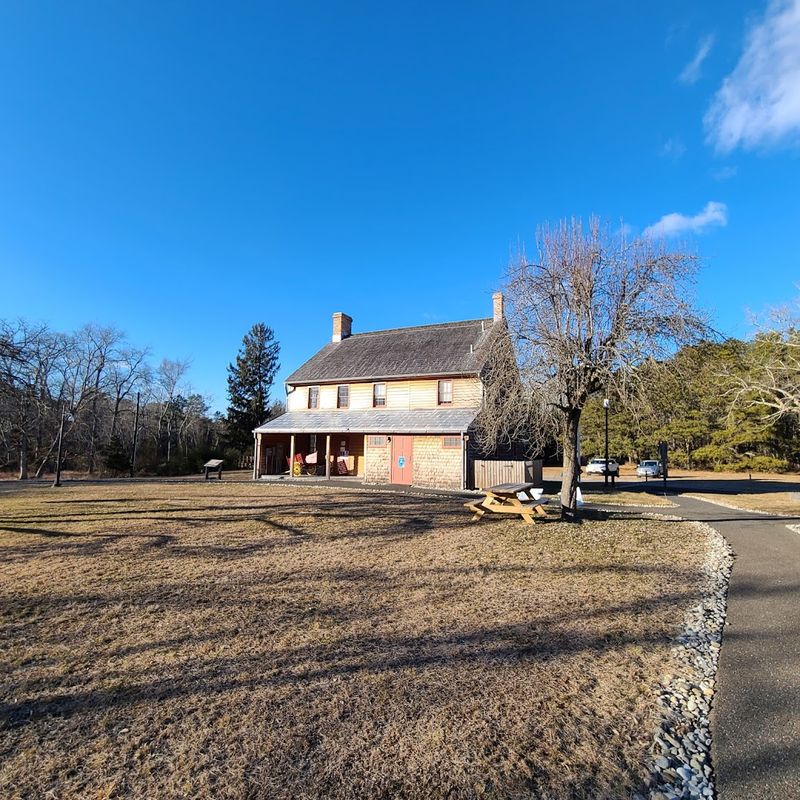
The odd magic of Cedar Bridge is that it has not been over-scrubbed into something slick. The restored tavern is clean, preserved, and visitor-ready, but it still feels rooted in its lonely Pine Barrens setting.
You get the porch, the old tavern form, the surrounding trees, and that sense of distance that makes even a short drive off the highway feel like a small departure from the present. Inside, the site functions as a museum, with exhibits that explain the tavern’s history, the preserved bar, and the Affair at Cedar Bridge.
The building gives you enough structure to understand what you are seeing without flattening everything into a theme-park version of history. That matters because the tavern is not just a look-from-the-outside landmark.
Visitors can actually learn their way through it rather than simply admiring the siding and heading home. The grounds help, too.
Cedar Bridge has interpretive signs for self-guided visits, public programming, group and school tours by appointment, and enough open space to make the historic site feel like a destination rather than a single preserved building. The 3.5-mile walking trail is a nice bonus if you like your history with pine needles underfoot.
Nothing about the place screams. That is its strength.
A lot of New Jersey history has to compete with traffic, development, and whatever is happening in the nearest strip mall. Cedar Bridge does not.
It sits back from all that, letting the woods do half the storytelling. And because it is not a functioning tavern anymore, the preserved bar has a different kind of pull.
You are not distracted by taps, televisions, or someone asking who ordered the mozzarella sticks. You can actually notice the thing itself: a rare survivor from a time when a roadside tavern was one of the most important buildings around.
How to Visit This Historic New Jersey Treasure Today
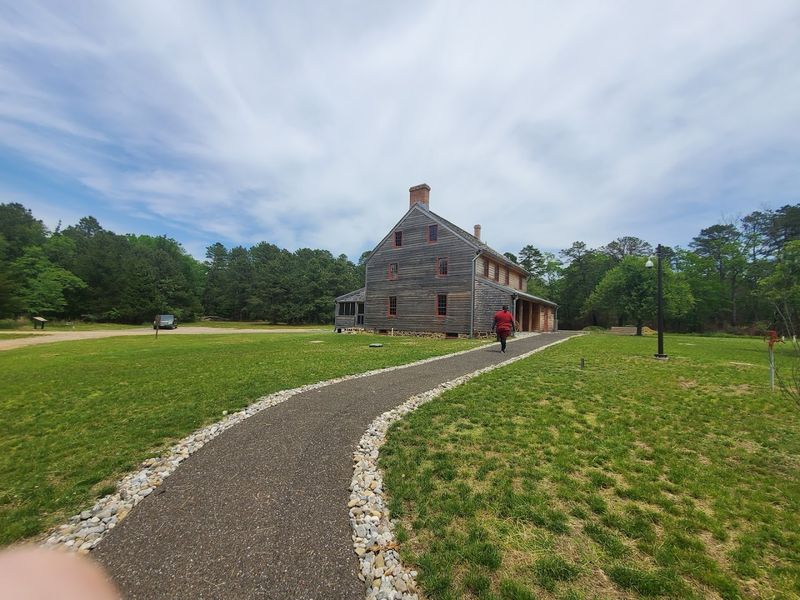
Planning a Cedar Bridge visit is refreshingly simple, as long as you remember one key fact: this is a historic site, not a restaurant or operating bar. The address is 200 Old Halfway Road in Barnegat, NJ 08005, tucked in the Pine Barrens not far from Route 72 and Route 539.
Current Ocean County Parks information lists the site as open on select weekdays and weekends, with hours commonly running from morning through late afternoon, though it is smart to check the county’s schedule before heading out because historic-site hours can shift around holidays, staffing, and special programs.
Admission has typically been free, and the site includes on-site parking, restrooms, outdoor grounds, permanent exhibits, and interpretive signage.
Group and school tours can be arranged by appointment, which makes sense for a place where the best stories are easy to miss if you only wander through for five minutes. The annual Affair at Cedar Bridge commemoration is the big calendar item.
That is the day to go if you want the Revolutionary War story brought to life with a little more noise and movement than a quiet museum visit. For a regular visit, give yourself more time than you think you need.
The tavern itself is not enormous, but the site rewards slow looking. Read the signs.
Walk a little. Notice how tucked-away it feels even though major roads are nearby.
Think about stagecoach travelers, militia riders, Loyalist raiders, county preservationists, and the strange luck of a building spared partly because the world rerouted itself around it. Cedar Bridge Tavern is not flashy, and that is exactly why it lingers.
Share this story