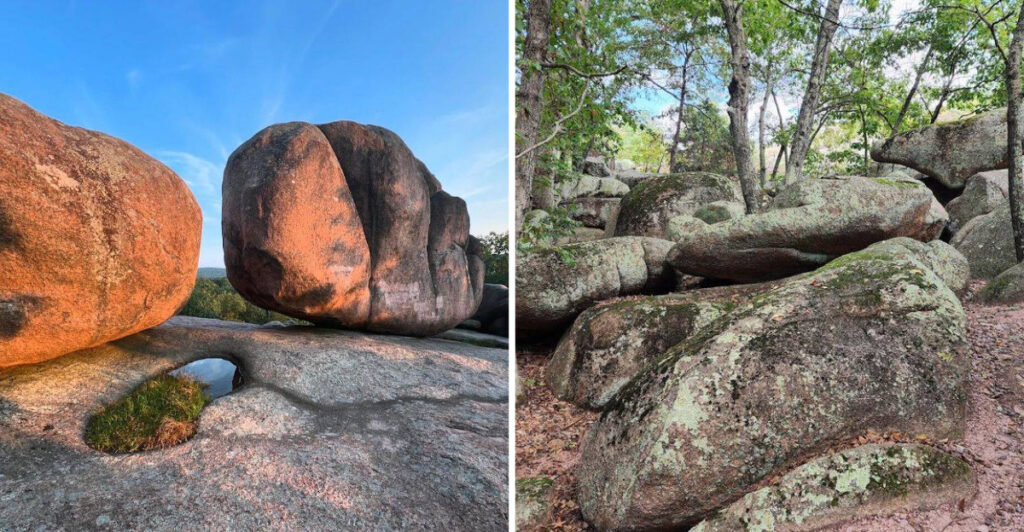
If you think Missouri is all rolling hills and rivers, wait until you see a parade of billion-year-old granite that looks like elephants mid-march. Elephant Rocks State Park feels unexpectedly cinematic, like a hidden set tucked into the Ozarks.
What starts as a quick stop quickly turns into hours of climbing, exploring, and taking it all in from every angle. The massive boulders invite curiosity and a little adventure, no matter your pace. It’s playful, memorable, and unlike anywhere else nearby. Ready to discover the rock-filled playground locals love and keep coming back to?
March of the Granite Giants
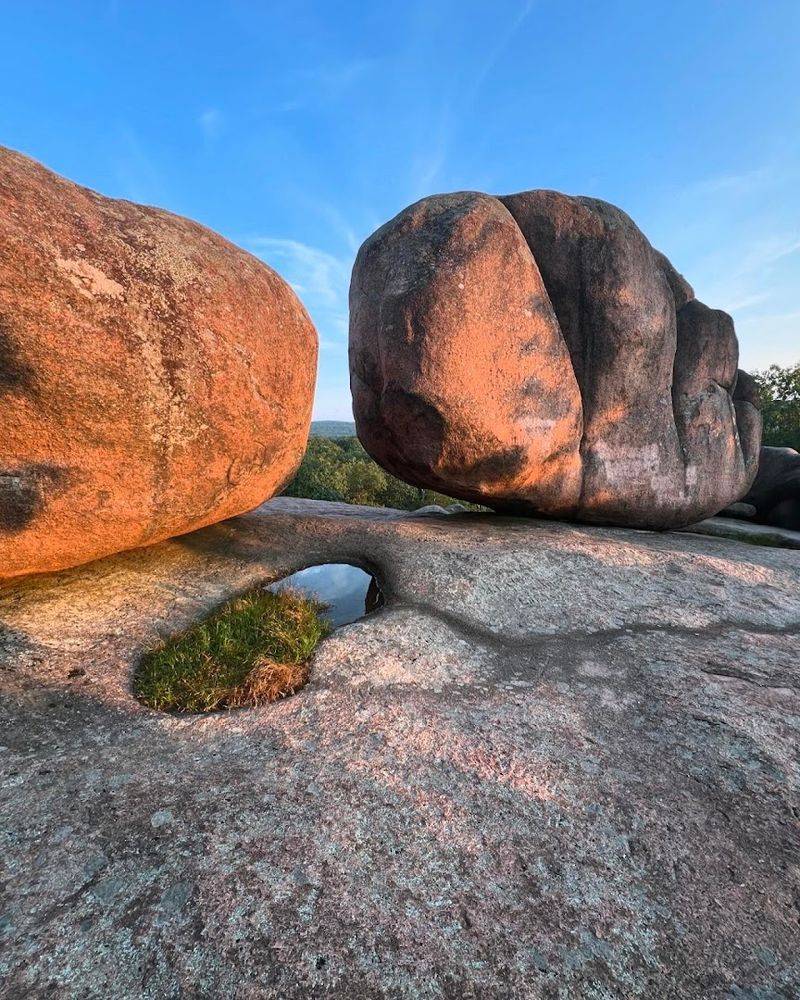
First impressions hit hard here. You step onto warm pink granite and suddenly the landscape turns playful, almost mythic, with giant boulders lining up like elephants on parade. Some rise stories high, their rounded sides softened by time and weather, giving them a surprisingly gentle presence despite their massive scale.
These rocks formed from ancient magma that cooled into granite, then slowly fractured and rounded through spheroidal weathering. Corners dissolved, edges eased, and what remained are these oversized, photogenic shapes. They are among Missouri’s oldest exposed stones, and they wear that age beautifully, more enduring than worn down.
You can weave between them, hop small gaps, and peer into shaded alcoves where lichen maps spread like constellations across the surface. Every step shifts the scale, from playground-close to cathedral-wide. Bring shoes with tread, because some surfaces carry a fine, sneaky grit that can catch you off guard.
The magic is in the silence between laughs and camera clicks. When the breeze slips through the trees, the whole formation feels alive, like the herd might shuffle forward any second. Take your time, pick a line, and follow the granite wherever it nudges you next.
The Braille Trail That Brings Everyone Into The Landscape
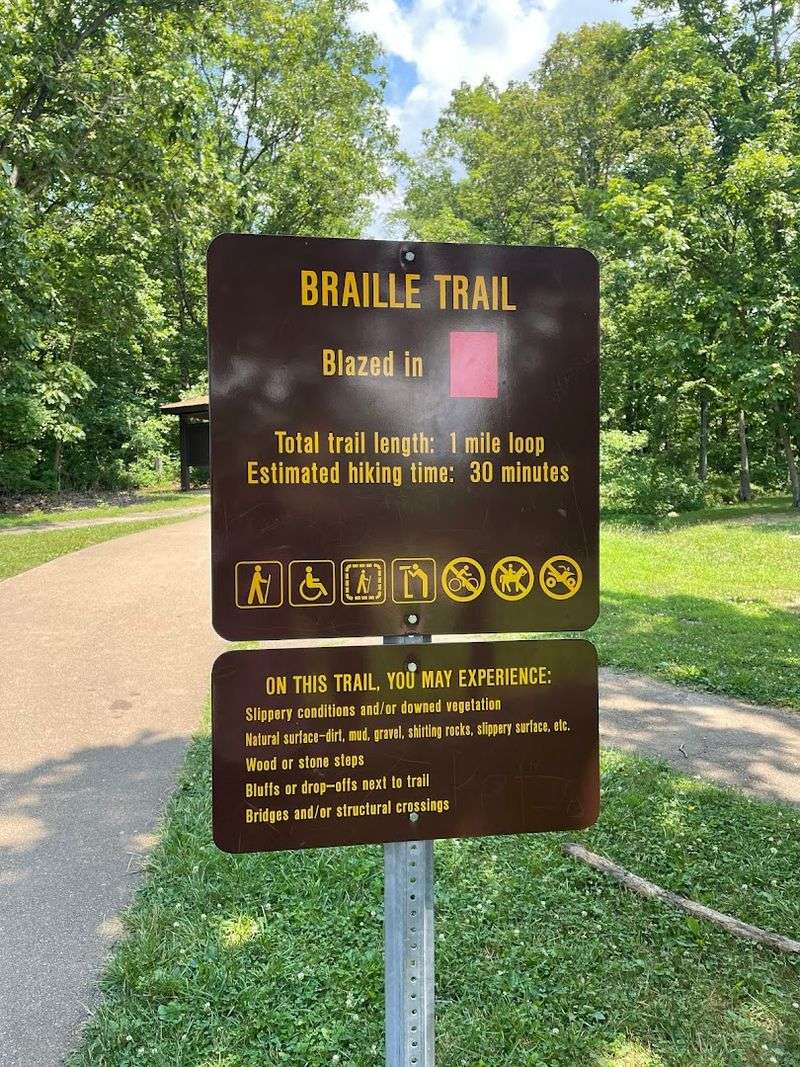
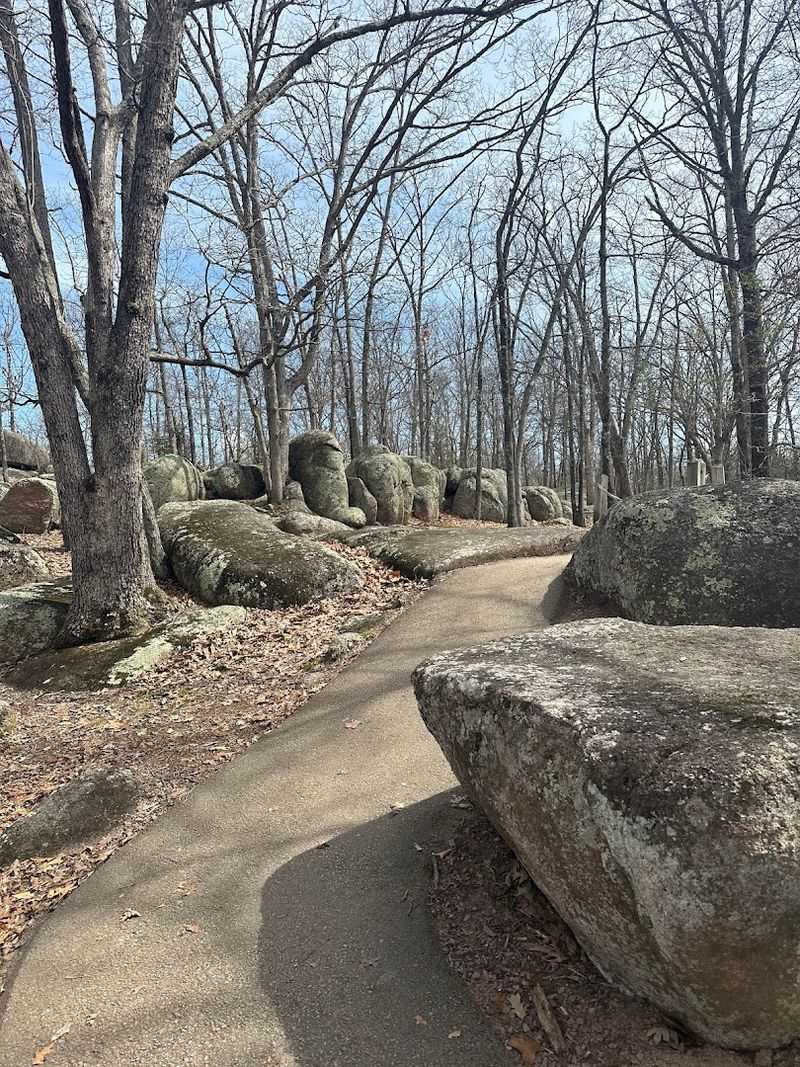
Start with the Braille Trail if you like easy access and big moments. The paved one-mile loop glides right through the boulder field, so you are never far from the stars of the show. It is stroller friendly and designed for wheelchairs, with interpretive signs in print and Braille that help bring the geology and ecology to life.
The loop does not rush you. Benches appear where the shade lands, a gentle nudge to pause and look closer at mineral sparkles or a tree’s patient reach into the rock. You get sweeping scenes one minute, then intimate pockets of granite the next, each turn offering a slightly different perspective.
What makes this path special is how it brings everyone into the experience together. Friends can roll, walk, or amble side by side, narrating textures and shapes that invite touch and curiosity. It is a comfortable way to learn the park’s rhythm before branching onto rougher nooks and more adventurous scrambles.
Take the loop clockwise or counterclockwise, then step off on spur spots where scrambling is safe and reasonable. Keep snacks at the picnic area, not the trail, and pack out everything you bring. Expect smiles from passersby, because this route consistently delivers wow without wearing anyone out.
The Hidden Quarry History Carved Into The Stone
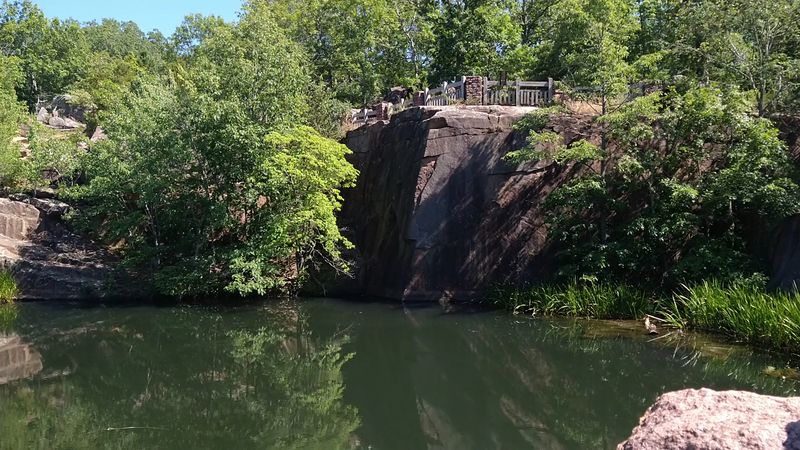
History hums between the boulders if you know where to look. Old quarry cuts slice clean lines into the granite, a sharp contrast to the rounded giants nearby. On some slabs, nineteenth-century workers carved their names and dates, leaving quiet memorials to long days, heavy tools, and lives tied closely to the land.
These quarries supplied granite that helped shape Missouri’s growth, from street paving in St. Louis to notable construction projects across the region. Standing here, you can almost hear the clank of drill and hammer echoing off the rock, a reminder that this peaceful place once worked hard.
Today, nature is steadily stitching over those scars with moss, lichen, and shallow pools that soften the edges again. Walk slowly so letters reveal themselves in slant light. The inscriptions are fragile, so admire without touching, and resist the urge to add your mark.
Photographs preserve the story without disturbing it, especially when raking light deepens the carved shadows and highlights each line. This corner of the park connects the spectacle to real people. It shifts the story from geology to grit, reminding you that landscapes are used as well as loved, shaped by both time and human hands.
Climb The Granite For The Park’s Best Views
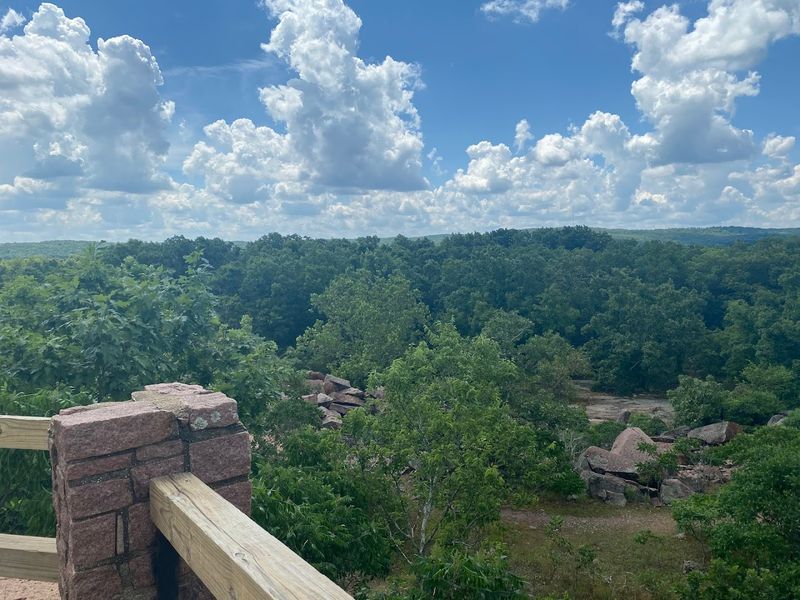
Climb carefully and the horizon opens in a way that feels quietly rewarding. From the domed tops of the boulders, forest canopies ripple like green waves, and the quarry pond glints between trunks. It is not about extreme height, but about that subtle shift in perspective, where you suddenly feel just a little taller than the trees around you.
Choose your ascent with honesty about comfort and shoes. Many routes are simple scrambles, but patience beats bravado when surfaces tilt and dust builds underfoot. Dry granite offers solid grip, yet after rain the polished sections can turn slick in a heartbeat, so slow, deliberate steps always win.
Once you settle in, the soundtrack drops to birdsong and wind threading through the trees. You might spot woodpeckers working nearby trunks or catch a hawk tracing slow, effortless circles overhead. The best spots are natural benches carved by time, perfect for water breaks, photos, and quiet moments that feel earned.
If crowds gather, shift to a neighboring perch to keep the experience relaxed. Share space, watch your footing, and leave room for those heading down. From up here, the park unfolds like a living map, inviting you to choose your next path across the granite.
The Quiet Side Of Elephant Rocks Most People Miss
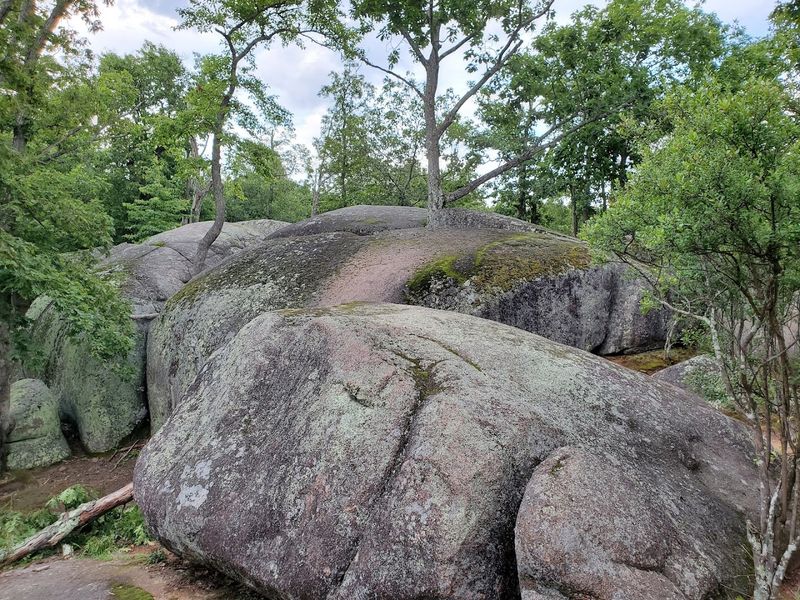
Look beyond the boulders and a quieter story begins to unfold. Lichens paint the rocks in coins of green and gray, tiny ecosystems clinging where soil is barely a rumor. In spring and early summer, wildflowers appear along the edges, small but vivid, adding color in places you might otherwise overlook.
Expect birdlife to soundtrack your visit. Songbirds chatter from the hardwoods, and woodpeckers drum like nature’s metronomes somewhere deeper in the trees. If you are lucky, you will catch a raptor riding the thermals above the treeline, circling slowly as it scans the quarry’s rim.
Vegetation here survives by adapting. Roots slip into hairline cracks, then push, hold, and widen them season by season, quietly reshaping the stone. Step lightly on bare rock and avoid the fragile patches of plant life so these small ecosystems can continue doing their work.
Move a little farther from the busiest scrambles and the entire place softens. That hush between gusts feels almost ancient, a fitting backdrop for billion-year-old granite. Take a sip of water, slow your pace, and let these quieter details balance out the more dramatic views.
How To Explore Elephant Rocks With Kids (Safely And Easily)
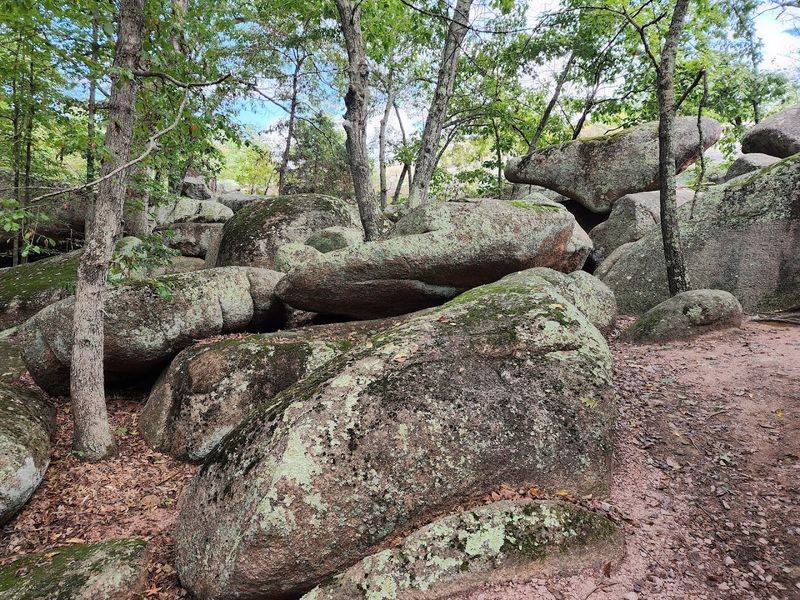
Families find easy wins here. Low-angle scrambles ring the main area, giving kids a natural space to test balance and confidence while adults stay close enough to guide every step. The terrain feels like a playground, but setting simple rules early—no running on polished slopes and no jumping gaps—keeps the experience fun and safe.
Footwear makes a real difference. Grippy soles beat sandals every time, and a small daypack helps keep hands free for climbing and steadying. Pack a mini first aid kit for small scrapes, along with plenty of water, because the granite holds heat and can warm up quickly on sunny days.
Turn exploration into a game to keep energy high. Name the boulders you climb, count lichen colors, or trace a pretend elephant path from trunk to tail across the formations. Celebrate careful downclimbing just as much as reaching the top, since getting down safely is where real confidence builds.
When energy dips, head to the picnic area for a break, then ease back in with a relaxed lap on the Braille Trail. Keep food off the rocks to avoid litter and curious wildlife. With a little planning, this becomes a smooth, memorable outing that works for all ages.
When The Granite Glows: Golden Hour At Elephant Rocks
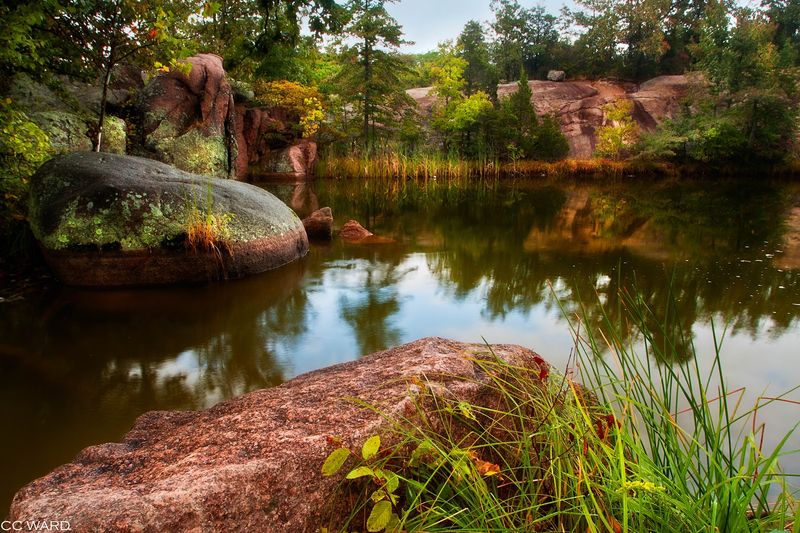
Photographers know to chase the edges of day here, when the light does something special to the landscape. Golden hour warms the pink granite until it glows from within, and long shadows carve depth and drama into every curve.
The herd-like lineup of boulders stands out sharply against a softening sky, creating scenes that feel both grounded and cinematic. Start wide to capture the full scale, then slow down and pivot to details. Mica flecks shimmer in the light, and weathered textures reveal patterns you might miss earlier in the day.
Low angles help emphasize the size of the rocks without distortion, especially if you anchor your frame with a person for scale. Bracketing exposures can help balance bright skies with shaded pockets tucked between the stones.
Respect the terrain while you compose. Tripods should stay on stable, dry granite, never on vegetation or fragile areas. If wind picks up, shield your lens from dust and step back when footing feels uncertain. No shot is worth risking a slip.
As the sun dips lower, stay a little longer. Blue hour softens everything, cooling the tones and quieting the scene. The granite stops shouting and starts whispering, offering a final, more subtle kind of beauty before the light fades.
When To Visit And What To Bring For The Best Experience
Timing can turn a good visit into a great one. Spring and fall usually deliver the best conditions, with mild temperatures and bursts of color that frame the granite beautifully. Summer brings longer days but also intense heat, and by midday the rock can feel like a radiant griddle.
Arriving early not only helps with parking but also gives you quieter trails and softer light. Packing smart keeps the day easy. Water is the priority, especially since fountains may not always be available and vending options are limited.
Add sunscreen, a hat, and sturdy shoes with real tread to handle the uneven surfaces. It also helps to download maps ahead of time, because cell service can fade quickly once you move deeper into the park.
Keep meals to the picnic areas rather than the rocks. This helps protect the granite and keeps wildlife from getting too comfortable around visitors. Bring a small bag for trash so everything you carry in leaves with you.
A basic first aid kit is worth having, especially if you plan to scramble. After rain, surfaces can turn slick, so take a more cautious approach. On cooler evenings, a light layer helps when wind moves across the open stone. Stay flexible, and let the park set the pace.
How To Explore Responsibly And Protect The Landscape
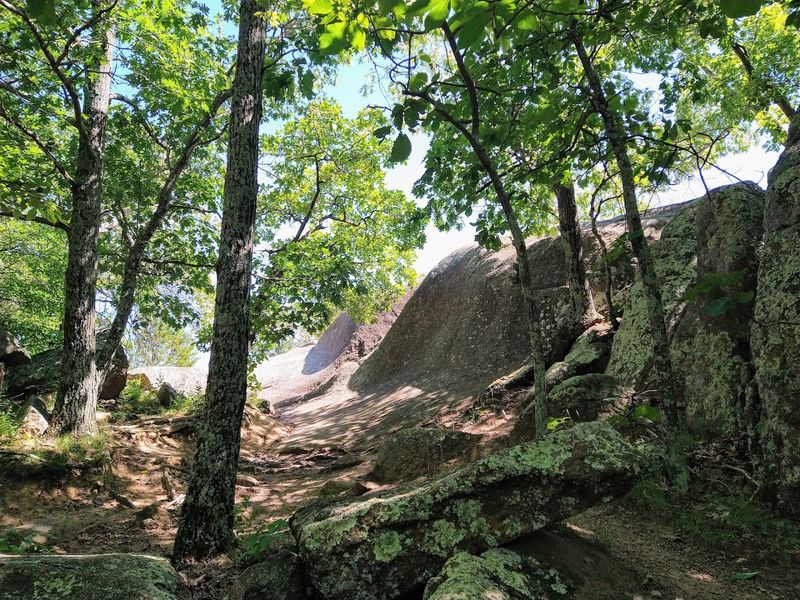
Care for this place like a local would. Stay on durable granite and established paths, and sidestep the tiny plant communities tucked into hairline cracks. Those small patches of green may look resilient, but they are slow-growing and easily damaged, taking years to recover from a single careless step.
Keep hands off inscriptions and sensitive surfaces. The historic carvings tell a workers’ story that does not need new lines added today. Photograph them, take a moment to appreciate the history, then move on so others can experience the same quiet discovery without interference.
Pack out all trash and keep an eye out for micro-litter like bottle caps or wrappers that often get overlooked. Keep food in designated picnic areas, and avoid feeding wildlife, even if it seems harmless in the moment. Noise travels easily across the granite, so letting the natural soundscape take over adds to the experience for everyone.
Most of all, set the tone through your own behavior. Offer space, share viewpoints, and give a quick heads-up if conditions shift underfoot. Respect here is simple but powerful. Treat the granite with care, and it will keep welcoming visitors without losing what makes it special.
Share this story