Tucked inside a plain strip mall in an industrial corner of St. Paul, there is a room where tiny trains never stop running. Most people drive right past it on the way to somewhere else.
That is a shame, because behind the humble front door sits one of the biggest collections of model train layouts many families have ever seen in one place. Kids push buttons to start engines, open crossing gates, and spin miniature Ferris wheels.
Grown-ups lose track of time studying hand-built towns packed with clever little details. There are LEGO displays, toy train tables, history exhibits, and seasonal evening events that sell out fast.
Keep reading to learn where this hidden spot is, what makes it so special, when to go, and how to get the most out of a visit without wasting a single minute.
A Railroad Hiding in Plain Sight
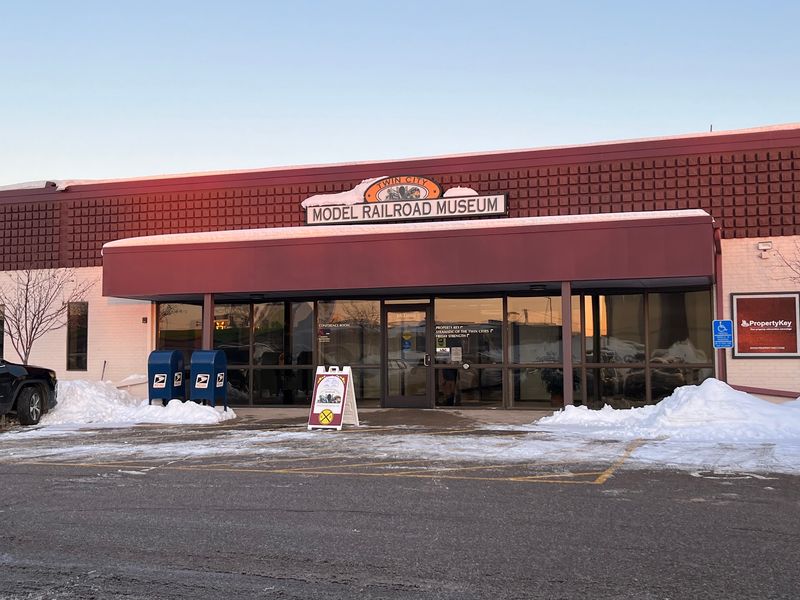
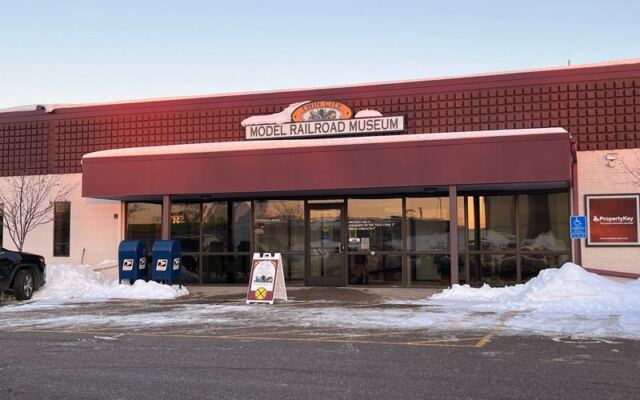
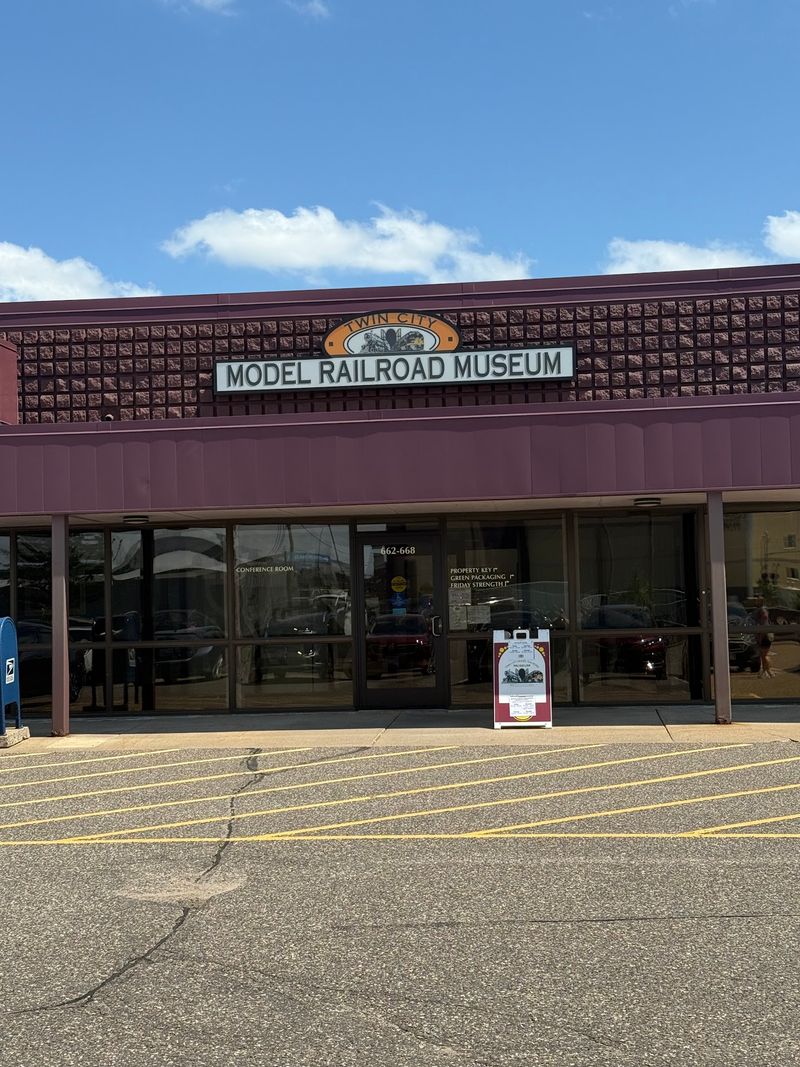
Blink on Transfer Road and the whole thing slips right past you. The Twin City Model Railroad Museum sits at 668 Transfer Rd Ste. 8, St Paul, MN 55114, in the United States.
The building is part of a strip mall inside a larger industrial area. Nothing about the outside shouts that a miniature rail empire waits within.
That understated front is part of the charm. The museum is easy to miss from the street, yet it tends to stick with people long after they leave.
Inside, the focus is railroad history plus model and toy trains. Large operating displays, toy train play areas, and history exhibits all share the space.
The place is listed as a toy museum, but that label undersells it a bit. It works as a hobby showcase, a play zone, and a small history lesson rolled into one stop.
Families, hobbyists, and curious couples all find their way here. Many of them only hear about it through a relative or friend who insists they go.
So consider this your friendly nudge. The rest of this story explains why a simple suite number in St. Paul deserves a spot on your weekend list.
From Bandana Square to a Bigger Home
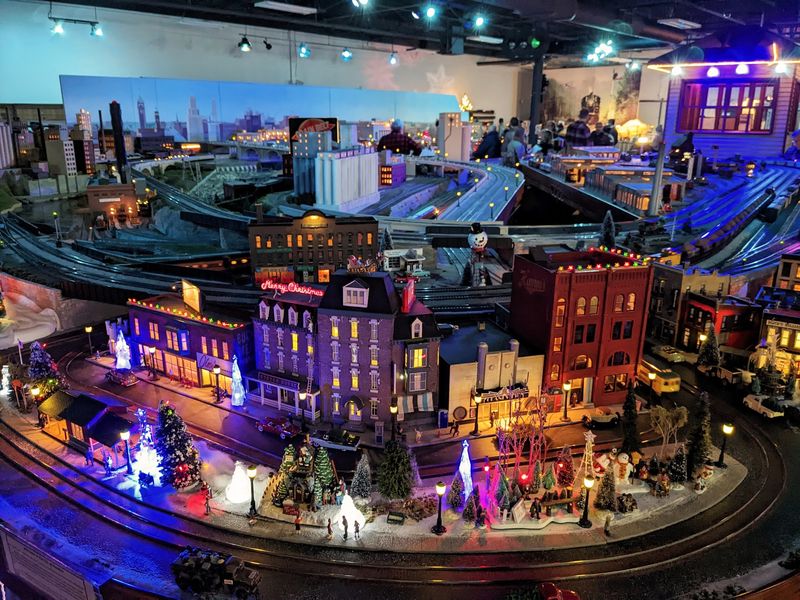
Longtime Twin Cities families may remember a different address. The museum used to operate at Bandana Square before it moved to its current Transfer Road location.
The move turned out to be a big upgrade. Returning families point out that the new space holds more layouts and puts a stronger emphasis on interactive play.
That shift matters for anyone who last visited years ago. Watching trains roll by was always the main draw, but now the whole room invites people to take part.
Grandparents who expected their grandkids to get bored in half an hour have ended up staying 90 minutes. Some had to gently pull the little ones away at the end.
The museum staff often meet people who remember the old Bandana days. Their message to those folks is simple: come see what the new place has become.
For old fans, the return trip feels like catching up with a friend who got a fresh haircut and a much bigger house. For newcomers, it is simply the best version of the museum so far.
Either way, the history of the museum itself is a nice reminder that good ideas sometimes need room to grow.
Built by an All-Volunteer Crew
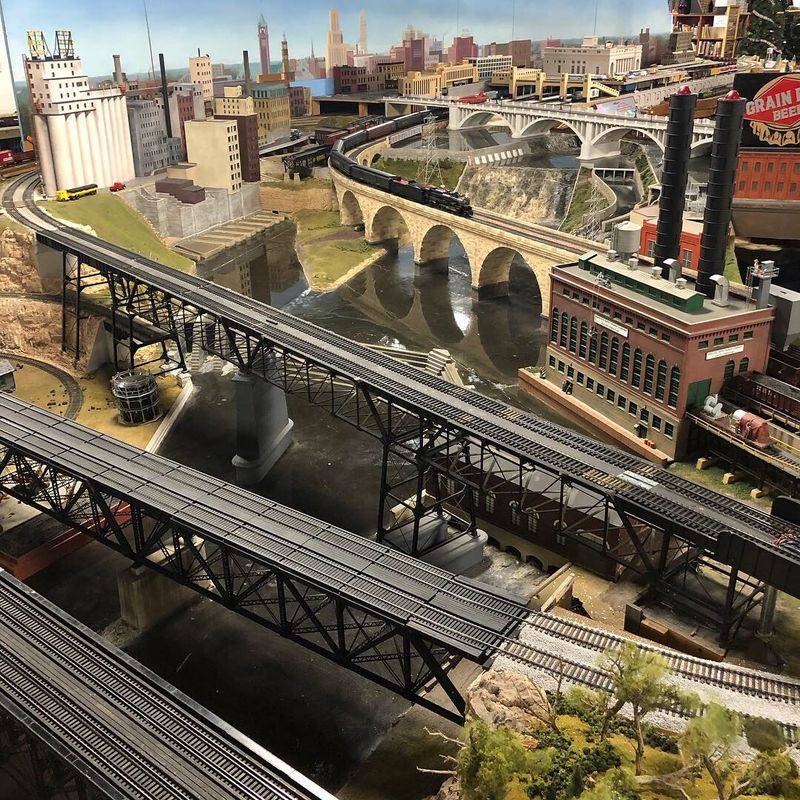
Nobody here is punching a clock for a paycheck. The museum describes itself as a labor of love run by an all-volunteer crew.
That fact explains a lot about the place. Each exhibit appears to be built and maintained with real care, and the people on the floor clearly enjoy watching others interact with their work.
Friendly staff come up again and again when people talk about their visits. Volunteers are known as welcoming, knowledgeable, and happy to chat about how a layout was made.
Talking with them is half the fun for many guests. Ask about a scene, and you may get a story about the scale, the build, or the tiny jokes tucked into the landscape.
Some fans love the place so much they become members. One member even admitted that joining made more sense than building a layout at home when so many great ones already exist here.
For Minnesota crafters and hobby builders, that volunteer spirit is a big part of the appeal. It shows what patient handwork and shared passion can produce.
The trains may run on electricity, but the museum runs on people.
One Massive Room of Moving Miniatures
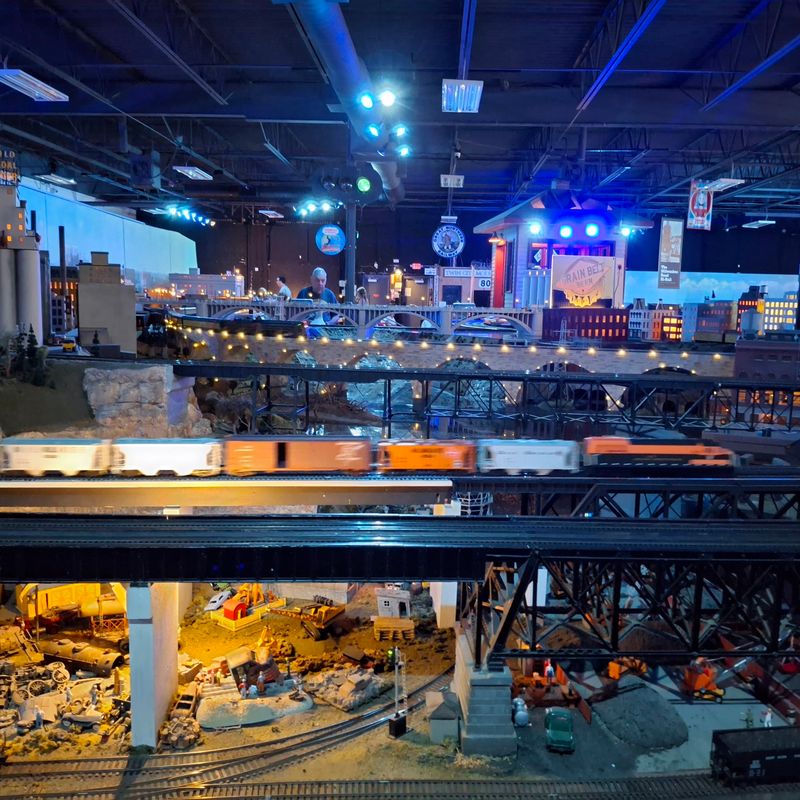
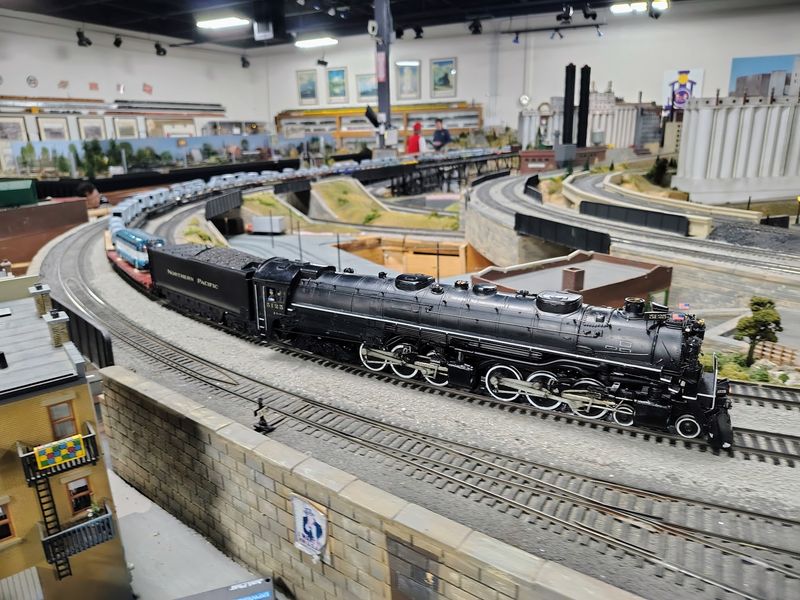
Most of the action happens in a single big room. Instead of many small separate galleries, the displays share one massive space that lets guests wander freely from layout to layout.
That setup keeps things simple. Families can spread out, and even on a busy Saturday there is usually room to move around.
Multiple model railroad sizes are on display, from larger scales to smaller ones. Fans of HO scale trains will find plenty to admire, and newcomers can learn how the different scales compare.
Some guests call it the biggest assortment of layouts they have ever seen in person. Many different kinds of miniature trains run through the scenes at the same time.
The overall style leans more toward whimsy than strict realism. Expect cheerful towns, playful touches, and moving accessories rather than museum-quiet dioramas.
The layouts also change over time. Repeat visitors note that the ever-changing scenes give them a reason to come back and see what is new.
For anyone who once dreamed of a basement big enough for a full train set, this room scratches that itch without a single hammer swing.
Buttons, Buttons Everywhere
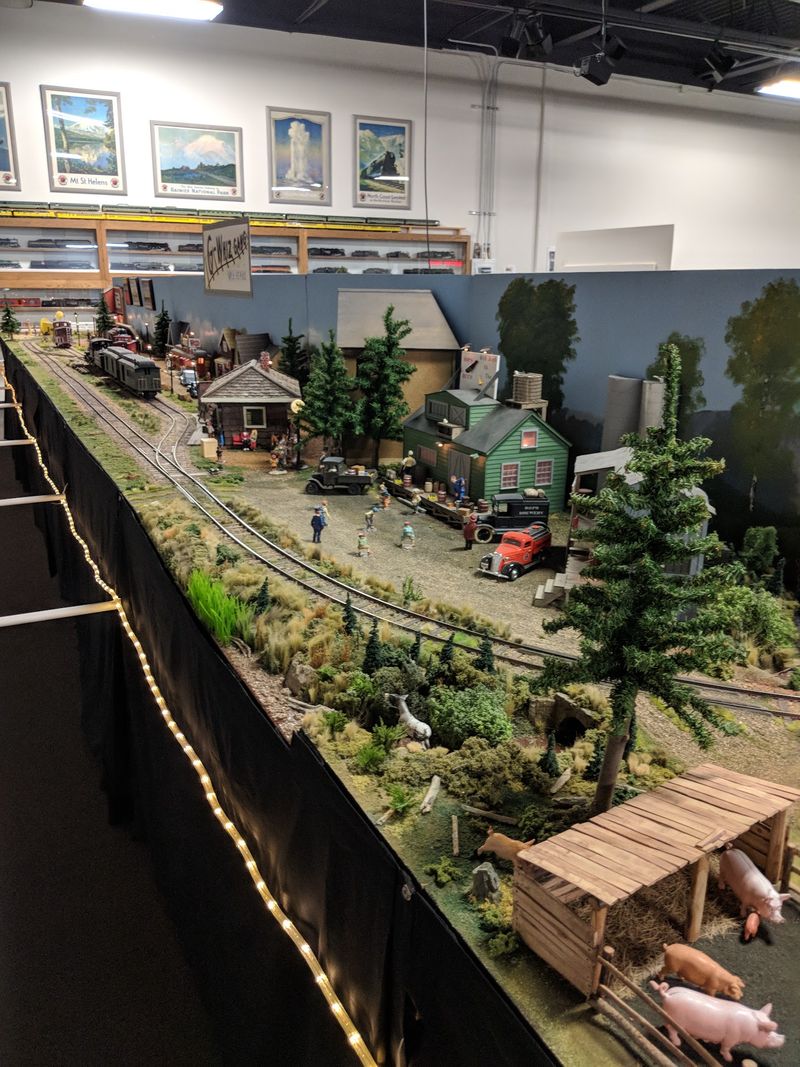
Here is a museum where pressing buttons is the whole point. Interactive displays are one of the most talked-about features of the place.
Buttons line the edges of the layouts. A push can start a train, open or close crossing gates, or activate guard shacks and water towers.
Other buttons make accessories move, like Ferris wheels and planes. Kids race from one to the next, trying to see what each one does.
Adults get just as hooked. Grown-up groups with no kids at all have spent over an hour and a half wandering and pushing buttons.
Signs do ask guests not to touch the scenery itself. Little ones need an eye on them, since there is plenty that is meant to be watched rather than handled.
Hand sanitizer stations are placed all around the room. With so many hands on so many buttons, that small detail earns quiet appreciation.
Toddlers who love cause and effect will think they have found paradise. Parents may find themselves sneaking in a few presses too, purely for research, of course.
Take the Throttle Yourself
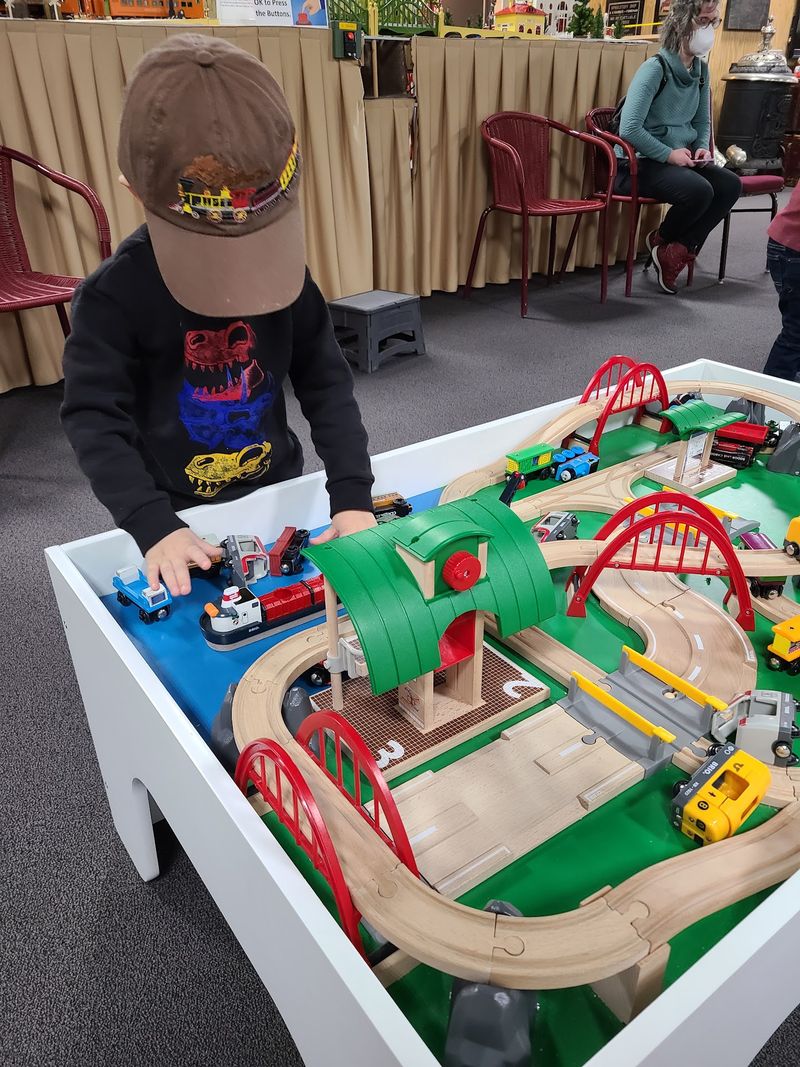
Watching a train is fun. Driving one is better.
A couple of layouts let children control the speed of the trains themselves. That small bit of control adds a whole new level of excitement for young engineers.
Kids can start and stop trains on certain exhibits, not just trigger them. It turns a passive display into something that feels like their own railroad for a few minutes.
Families often mention that this hands-on approach is what keeps children engaged. A three-year-old who was expected to lose interest quickly can end up running from train to train for nearly two hours.
Older kids enjoy it too. Teens and grown-ups who grew up with model trains often find these controls bring back their own childhood setups.
The museum describes itself as fun for all ages, and these speed-control layouts are a big reason that holds up.
Just be ready for a negotiation when it is time for the next kid in line. Sharing the throttle may be the most valuable lesson of the day.
Brick by Brick: The LEGO Displays
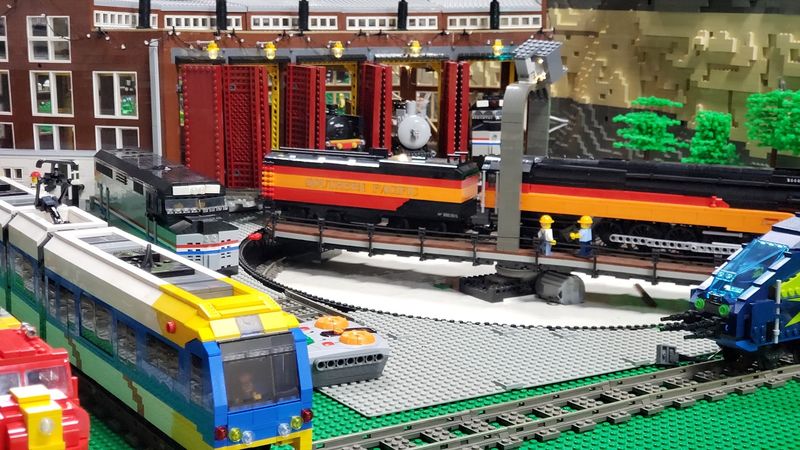
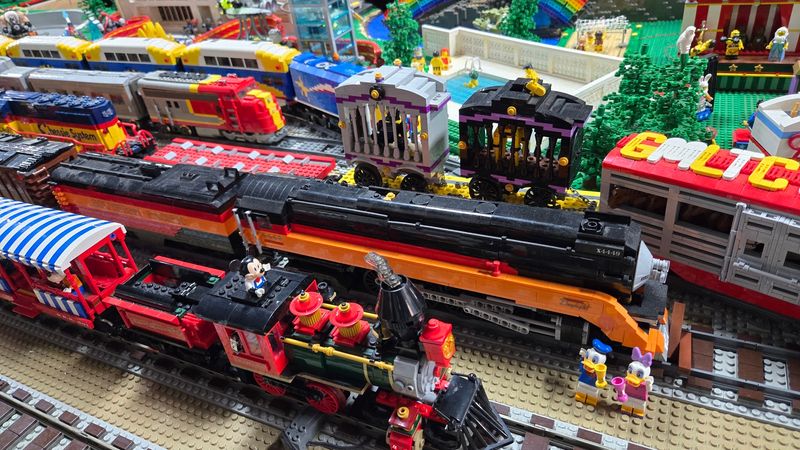
Plenty of people walk in for the classic trains and walk out talking about the LEGO. The LEGO train setups have a devoted fan base all their own.
Some guests say the LEGO display alone is worth the trip. Others call themselves flat-out obsessed with the LEGO series exhibit.
Local features are part of the fun. LEGO builds with Minnesota touches have been a highlight, including a LEGO Minnesota State Fair display spotted in the work area at one point.
For crafters and builders, this section is a goldmine of ideas. It shows how far a familiar toy can go with patience and planning.
Kids recognize the bricks right away, which makes the displays feel approachable. Adults tend to linger longer, studying how each structure was put together.
Trains wind through the LEGO scenes just as they do on the traditional layouts. The mix of model railroading and brick building feels fresh without losing the train theme.
Bring a little patience and a good eye. The LEGO corner rewards anyone willing to slow down and look closely.
I Spy in Miniature Towns
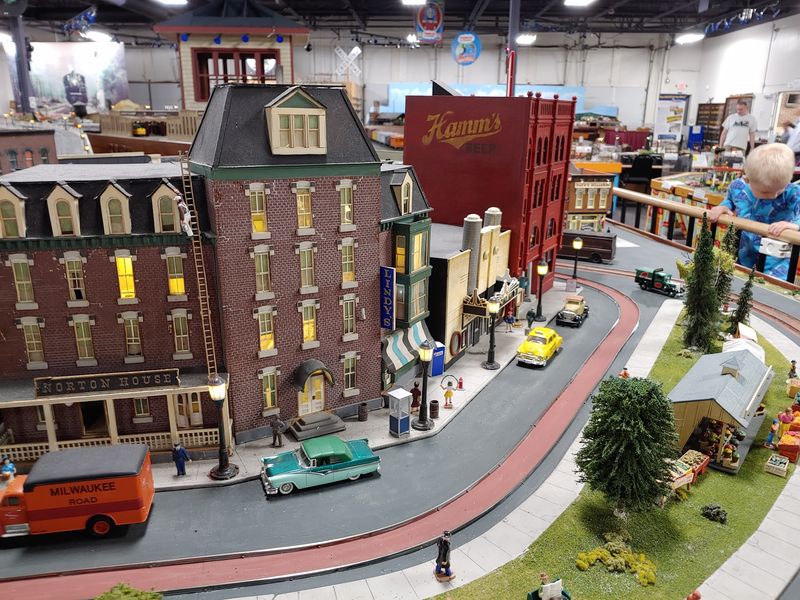
Hidden somewhere in those tiny towns are little surprises waiting to be found. The museum offers an I Spy guide for older kids who enjoy searching the scenes for hidden items.
A scavenger hunt has also been a hit with families. It gives kids a mission and keeps them studying the layouts instead of just rushing past.
The scenes are packed with intricate artistry. Buildings, figures, and landscapes are arranged with thought, and many include small pop culture and local references.
Spotting those references becomes a game for adults too. Couples without kids have enjoyed hunting for the clever nods tucked into each display.
Every layout is different, so the search never feels repetitive. One scene might be a busy town, while another tells a totally different story.
The I Spy approach works well for kids who have outgrown simple button pushing. It gives them a reason to slow down and notice the craftsmanship.
By the end, some guests find themselves planning their own basement layout. Fair warning: a single visit can turn a casual fan into a future model builder.
Toy Tables for the Littlest Engineers
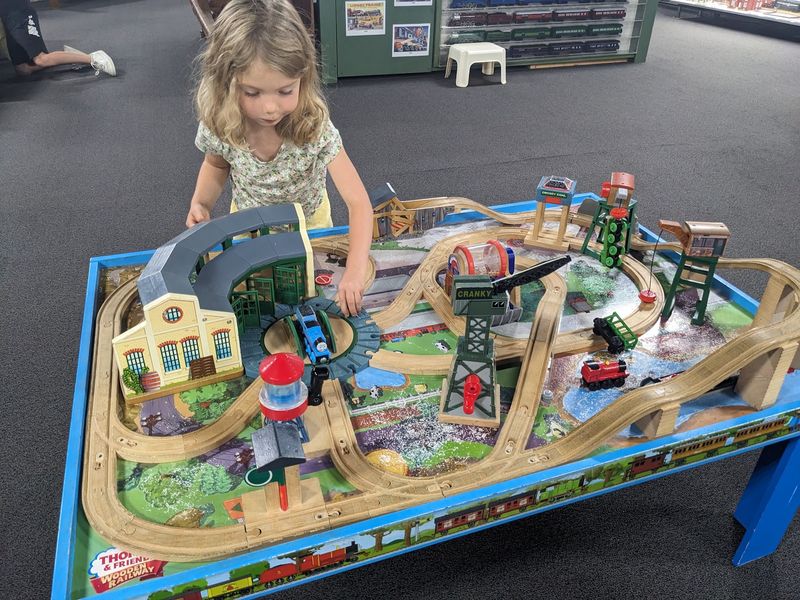
Not every train here sits behind a barrier. Kid-height train tables give the youngest guests a chance to play with their own hands.
These tables are filled with Brio and LEGO-style trains. They encourage creative building and imaginative play, which is perfect for children too small to reach the bigger layouts.
Even one-year-olds have had a blast moving between activities. Toddlers love having a spot where touching is not just allowed but encouraged.
Parents of serious train lovers may want a plan. One tip from regulars: if your child is the type who could play at a train table forever, bring a book.
The tables also give families a natural break from walking the main room. Little legs get a rest while little hands stay busy.
Nostalgic toy train displays add another layer. Grown-ups may spot a set similar to one they had years ago.
For families with a range of ages, these tables help everyone enjoy the same outing. Big kids explore the layouts while the small ones build their own tiny railways nearby.
History Exhibits and a Peek Behind the Scenes
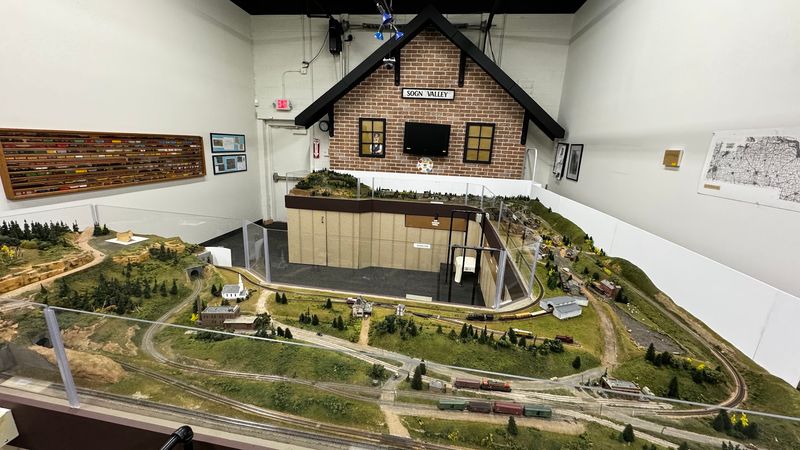
Between the moving trains, there is plenty to read and learn. Railroad history exhibits give the museum a deeper side.
Static display cases hold model trains for close viewing. Guests can learn about different scales and types of model trains along the way.
Teen train fans have especially enjoyed the historical exhibits. It is a nice balance for families whose kids have moved past the button stage.
Old trains and new trains share the space. The mix shows how the hobby has changed over the years.
An adjoining room shows a train layout build in progress. It offers a rare look at how these scenes come together before they are finished.
Do not skip it. Regulars recommend checking out that work room to see what the volunteers are building next.
For vintage collectors and hobby fans, these quieter corners can be the most rewarding part of the visit. The history makes the playful layouts feel even more impressive.
Night Trains After Dark
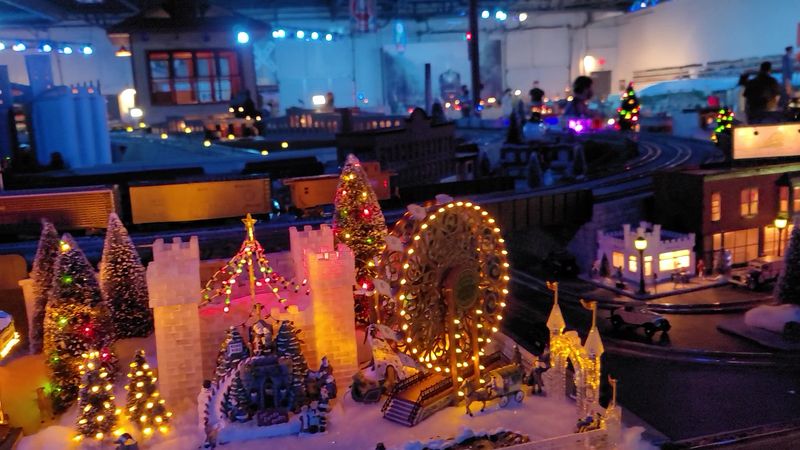
When the lights go down, the trains put on a whole new show. Night Trains is one of the museum’s most popular events.
During these evenings, the room is dimmed and the town layouts glow. Trains run through miniature streets decorated for the season.
A spooky-themed edition kicks off in October. Costumes are welcome, treats are handed out, and the mood stays fun rather than scary.
The holiday season brings decorated trains too. Families come specifically to see the layouts dressed up for the holidays.
Fans call Night Trains completely worth it. Crowds can be busy, but not overwhelming.
Timed entry has been used for Night Trains. Arriving in a time block that allows at least an hour gives plenty of room to explore.
Even families who stopped visiting when their kids got older have returned for these evenings. A teen-and-parent trip to Night Trains can feel like a fun reunion with an old favorite.
Check the museum’s schedule ahead of time, since these sessions are seasonal.
Birthday Parties on the Rails
Few birthday spots come with their own railroad. The museum offers birthday party bookings, and families have been thrilled with them.
One family celebrated their son’s first birthday here and called it perfect. The museum handled the plates and cups and provided excellent decorations.
Each child received a hat. A train runs around the party room, which gives the celebration its own built-in entertainment.
For train-loving kids, that combination is hard to beat. The party feels themed without parents needing to plan every detail.
Guests can also explore the museum, turning a party into a full outing. Kids get the layouts, the buttons, and the cake moment all in one trip.
The staff take pride in hosting these milestones. They treat these celebrations as important family events.
If a little one in your life is counting down to a big day, this could be the ticket. Just book early, since a good party room rarely stays free for long.
Hours, Parking, and Handy Visit Tips
Timing matters here, since the museum is not open every day. It runs Friday and Monday from 10 am to 3 pm, and Saturday and Sunday from 10 am to 5 pm.
Tuesday, Wednesday, and Thursday are closed. Plan around that four-day window.
Parking is free and usually plentiful. During busy events, the front can fill up, so the back lot is a solid backup.
Inside, there is a coat rack in the hall for winter jackets. One bathroom sits inside the museum, with more down the hall using a code.
Admission has been described as affordable, with one past visit noted at about $10 per person. Check the museum website for current prices before you go.
Most guests spend an hour or more. Families with small kids often stay around 90 minutes.
The museum is a short drive from Mall of America. Some dads have suggested it as the perfect escape for anyone who would rather skip the mall for an hour.
Members can pop in whenever they have a little free time, which is handy for local families.
A Gift Shop for Collectors and a Final Stop
Before heading out, the gift area deserves a few minutes. It carries a range of items, largely older model train supplies along with books and magazines.
Vintage collectors may find something special. One family left with an old vinyl record of kids’ train songs.
Museum hats are another popular pick. They make an easy souvenir for anyone who wants to show off their new favorite spot.
With a 4.8-star standing from hundreds of guests, the museum has earned plenty of fans. That kind of steady love says a lot about a place run entirely by volunteers.
It works for toddlers, teens, grandparents, hobbyists, and crafters alike. The mix of play, history, and handiwork gives each guest something to enjoy.
Not bad for a suite in an industrial strip mall. The humble outside hides a world that keeps people coming back season after season.
So the next time someone asks where to take a train-crazy kid or a curious grown-up in St. Paul, you will have the answer. All aboard for a very small railroad with a very big heart.
Share this story