Texas has never been shy about its love for meat cooked low and slow or seared to perfection. Across the state, you’ll find restaurants that have been serving the same recipes, using the same pits, and welcoming the same families for generations. These places don’t chase trends or update their menus to match what’s popular on social media.
They stick to what works, and that’s exactly why Texans keep coming back year after year.
1. Snow’s BBQ
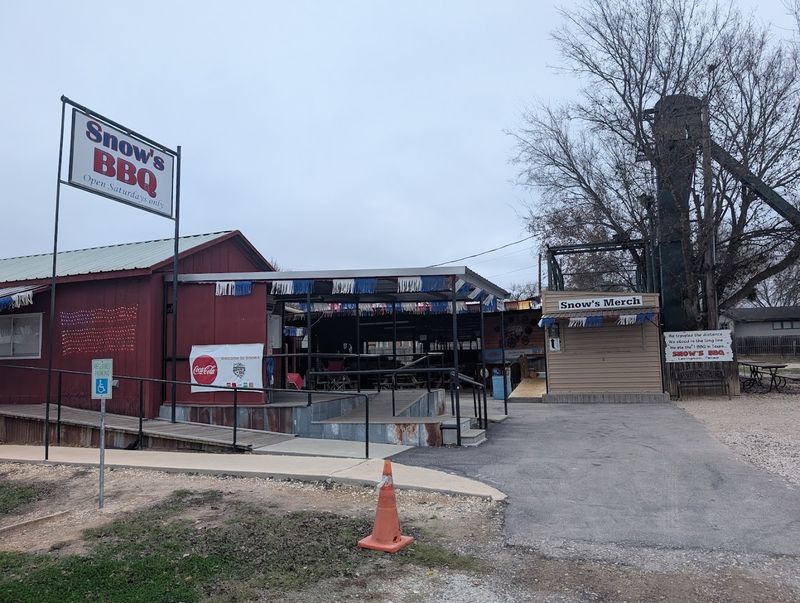
Saturday mornings in Lexington mean one thing: lining up before dawn at a tiny place that only opens one day a week. Snow’s BBQ has earned a reputation that stretches far beyond its Central Texas town, but the crew here hasn’t changed their approach one bit. Tootsie Tomanetz, now in her 90s, still tends the pits just like she has for decades.
The brisket comes out with a dark bark that cracks when you bite into it, revealing meat so tender it barely needs chewing. Pork ribs get the same careful attention, spending hours over post oak until they’re ready. Everything gets sold until it’s gone, which usually happens well before the 2 p.m. closing time listed on the door.
There’s no fancy dining room or complicated menu to navigate. You order at a simple counter, grab your meat on butcher paper, and find a spot at one of the picnic tables. The sides are classic Texas BBQ fare—nothing trendy, nothing reinvented.
Potato salad, beans, and slaw do their job without trying to steal the spotlight from the smoked meat.
What makes this place special isn’t just the food. It’s the dedication to doing things the old way, even when it would be easier to modernize. Firing up those pits in the middle of the night, every single Friday, takes serious commitment.
Most restaurants would have switched to electric smokers or expanded to seven days a week to maximize profits.
But Snow’s keeps it simple, and that’s the magic. Locals know to set their alarms early and make the drive. First-timers often show up too late and leave disappointed, learning the hard way that some Texas traditions wait for no one.
The line might be long and the wait uncomfortable, but nobody’s complaining when they finally get their hands on that brisket.
2. Dunston’s Steak House
Walk into Dunston’s in Wichita Falls and you’ll feel like you’ve stepped back to 1967, which is exactly when this place opened. The dark wood paneling, the red leather booths, the low lighting—none of it has been updated to match modern restaurant trends. The menu hasn’t changed much either, featuring thick-cut steaks prepared the same way they’ve always been done.
Regulars have their favorite servers who remember how they like their ribeye cooked and whether they want their baked potato loaded or plain. This isn’t the kind of place where the staff turns over every few months. People work here for years, sometimes decades, building relationships with families who’ve been coming in since they were kids.
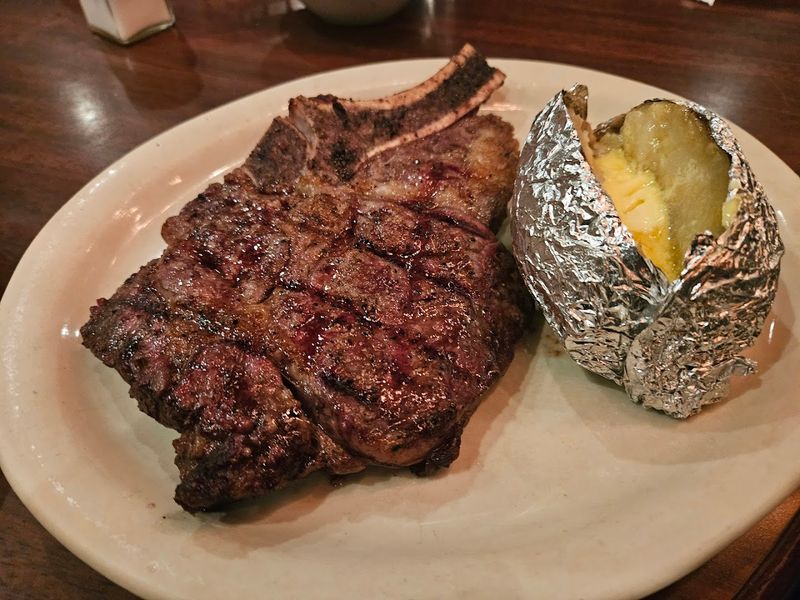
The steaks arrive on sizzling platters, cooked over high heat to create a crust that locks in the juice. You won’t find trendy cuts or exotic preparations here. It’s about ribeyes, strips, and filets done right, with classic sides that don’t try to be clever.
The salad bar still makes an appearance, a throwback to an era when every steakhouse had one.
Dunston’s could easily renovate and rebrand, chasing the upscale steakhouse market that’s boomed in recent years. Instead, they’ve stayed true to what made them successful in the first place. The prices remain reasonable compared to newer competitors, and the portions are generous without being wasteful.
Locals appreciate the consistency. When you order the same dish you’ve been eating for twenty years, it tastes exactly like you remember. There’s comfort in that reliability, especially in a world where restaurants constantly change concepts or close down entirely.
Dunston’s represents stability in an industry known for chaos, and Wichita Falls residents treasure it for exactly that reason.
3. Louie Mueller Barbecue
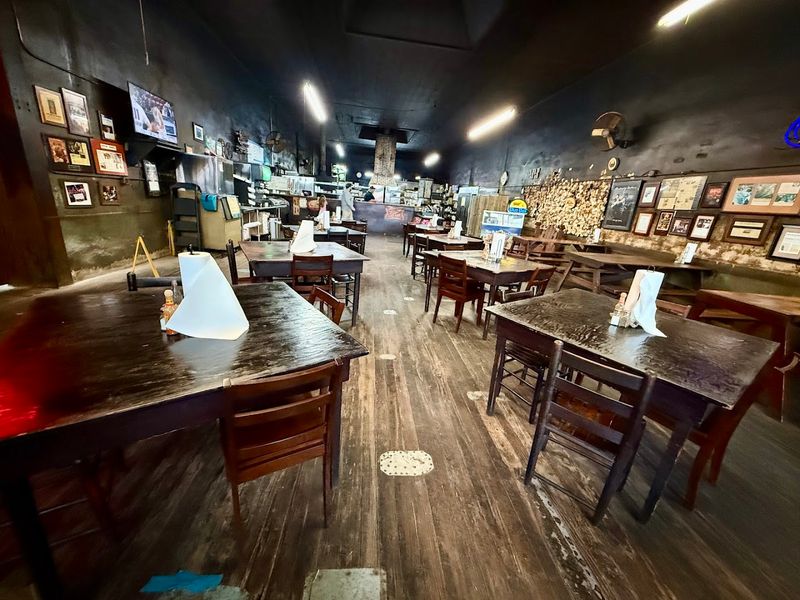
The walls inside Louie Mueller Barbecue in Taylor are black. Not painted black—stained black from decades of smoke that’s seeped into every surface. Some restaurants would scrub that away or cover it up.
Here, it’s a badge of honor, proof of the countless briskets that have passed through the pits since 1949.
Fourth-generation pitmasters now run the operation, but they’re using the same basic techniques that Louie Mueller himself used when he first opened the doors. The massive brick pits dominate the back room, radiating heat and the smell of burning oak. Brisket gets rubbed with a simple blend of salt and pepper, nothing more, because good meat doesn’t need to hide behind complicated seasonings.
You’ll find judges from the nearby courthouse eating lunch alongside tourists who’ve driven hours specifically to taste what many consider the best barbecue in Texas. The line moves steadily, with cutters working behind the counter slicing meat to order. Fat glistens on every slice of brisket, and the smoke ring runs deep into the meat, showing the hours spent in the pit.
Mueller’s hasn’t expanded into a chain or opened locations in trendy neighborhoods. They’ve stayed in Taylor, in the same building, doing the same thing they’ve always done. The success hasn’t changed the approach.
When people suggest shortcuts or modernizations, the answer is always the same: why fix what isn’t broken?
The atmosphere feels more like a working smokehouse than a restaurant trying to impress anyone. Butcher paper serves as plates, the tables are worn, and the environment is loud and casual. It’s barbecue stripped down to its essential elements—great meat, simple preparation, and respect for tradition that goes back three-quarters of a century.
4. Mary’s Cafe
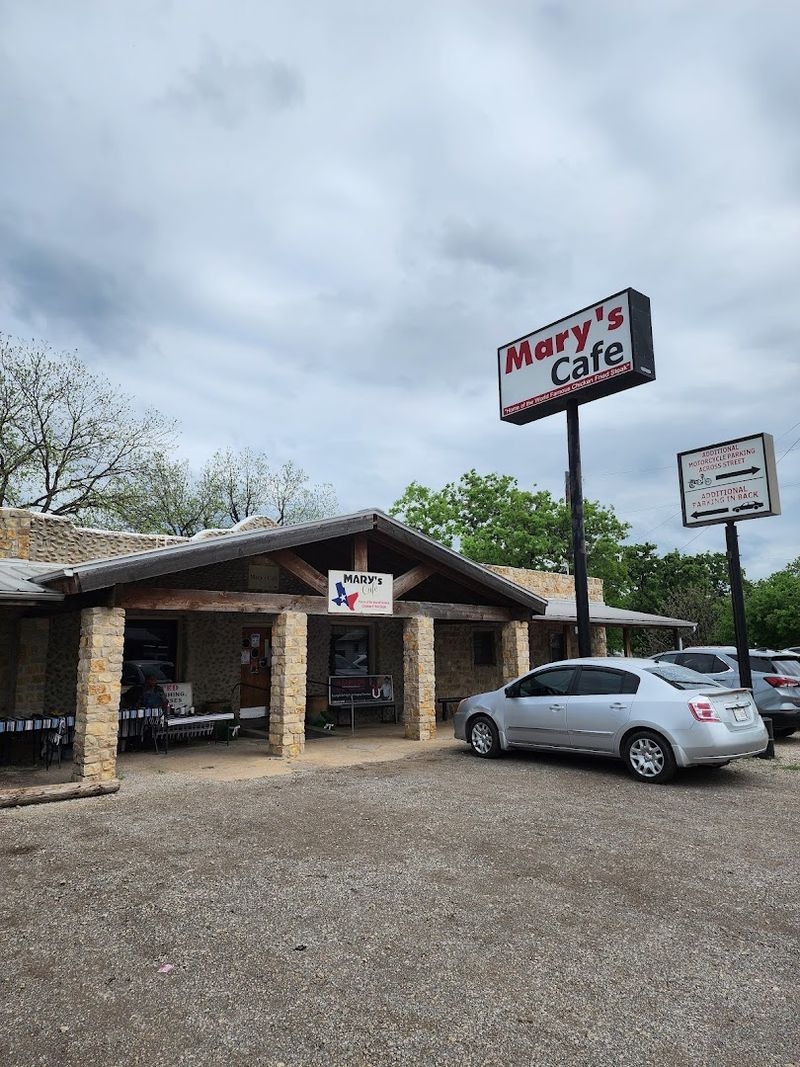
Strawn is the kind of small Texas town where everybody knows everybody, and Mary’s Cafe sits right in the middle of it. Since 1937, this unassuming spot has been serving chicken fried steak that draws people from all over the state. The recipe hasn’t changed, the cooking method hasn’t changed, and the generous portions certainly haven’t changed.
Each chicken fried steak gets hand-breaded and fried to order, coming out golden and crispy on the outside while staying tender inside. The cream gravy flows over the top, rich and peppery, exactly the way it should be. It arrives with classic sides—mashed potatoes, green beans, rolls—that complete the meal without trying to be fancy.
The cafe itself looks like it belongs in a different era, with its simple decor and no-nonsense layout. You won’t find trendy design elements or Instagram-worthy wall art. It’s a working cafe in a working town, serving food that working people want to eat.
The prices reflect that philosophy too, staying affordable even as costs have risen everywhere else.
Locals treat Mary’s like their own dining room, stopping in regularly for breakfast, lunch, or an early dinner. The staff knows most customers by name, remembering their usual orders and asking about their families. That kind of connection doesn’t happen at chain restaurants or places with high staff turnover.
Mary’s could probably charge more, given its reputation and the distance some people travel to eat there. But keeping prices reasonable for the local community matters more than maximizing profit from tourists. The chicken fried steak speaks for itself, and word of mouth has done all the marketing they’ve ever needed.
When something’s been working for almost ninety years, there’s no reason to mess with the formula now.
5. Kreuz Market
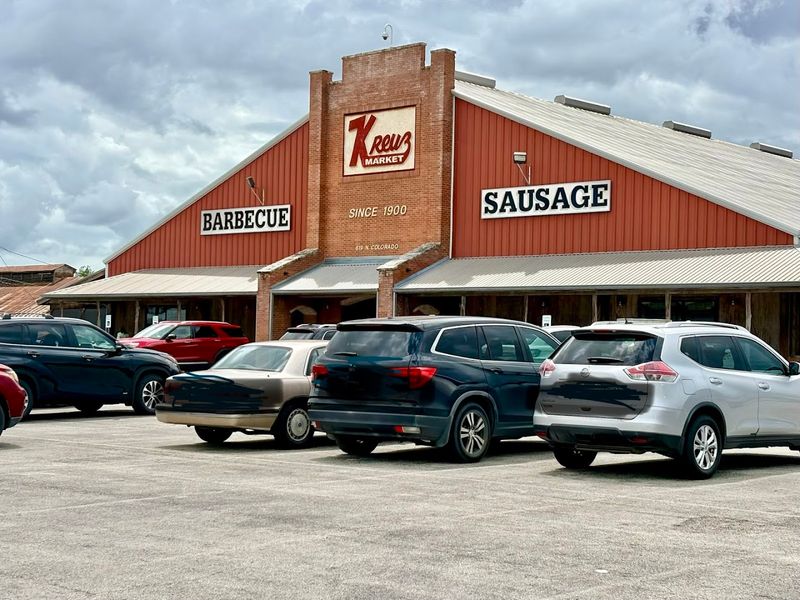
Lockhart claims the title of BBQ Capital of Texas, and Kreuz Market has been backing up that claim since 1900. The current building, which they moved into in 1999, was built specifically to house their massive operation, but the methods inside remain unchanged. No forks, no sauce, no nonsense—just meat, fire, and time.
The pits at Kreuz run constantly, smoking hundreds of pounds of meat every day. Brisket, sausage, pork chops, and ribs all get the same careful attention, cooked over post oak until they’re done. The cutters work with practiced efficiency, slicing meat to order and wrapping it in butcher paper.
You carry your meat to one of the long communal tables, grab some crackers and cheese from the side counter, and eat with your hands.
That no-fork policy isn’t a gimmick. It’s how they’ve always done it, back when this was primarily a meat market that happened to serve smoked meat. Kreuz didn’t start as a restaurant trying to create an experience—it was a butcher shop where people could buy fresh meat or grab some already-cooked.
That practical, straightforward approach still defines the place today.
The building is massive, with high ceilings and an industrial feel that some might find stark. But it’s authentic to what Kreuz is: a serious meat operation that happens to let you eat there. The smoke smell hits you the moment you walk in, and it doesn’t leave your clothes for hours afterward.
That’s part of the experience.
Kreuz has watched competitors come and go, seen barbecue trends rise and fall, and never wavered from their core approach. They don’t need to reinvent themselves or chase food trends because they’re still doing what they’ve done for over a century. The crowds that pack the place every day prove that tradition still has serious pulling power.
6. Tony’s The Pit BBQ
Boerne sits in the Texas Hill Country, where German and Mexican influences blend with traditional Texas barbecue culture. Tony’s The Pit BBQ has been part of that mix since the early days, serving meat smoked over wood fires in pits that have been in use for decades. The place doesn’t look like much from the outside—just a building with smoke rolling out back—but locals know what they’re getting.
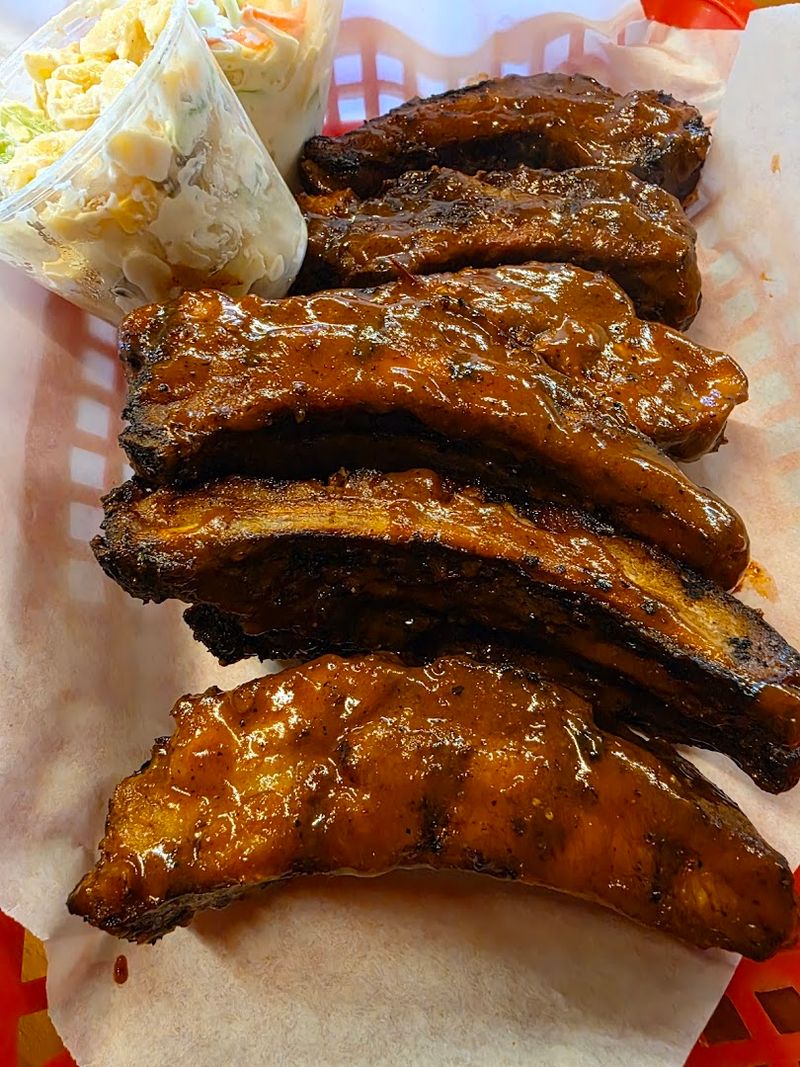
Inside, the menu keeps things straightforward: brisket, ribs, sausage, and chicken, all prepared the traditional way. The meat comes out with the kind of bark and tenderness that only comes from slow, patient cooking over real wood. There are no shortcuts or gimmicks here, just a deep understanding of how time, heat, and smoke work together to create something unforgettable.
Tony’s has resisted the urge to expand or franchise, staying firmly rooted in Boerne even as the town has grown and changed around it. The dining area reflects that same commitment to simplicity, offering a casual, comfortable space where families can relax and enjoy a good meal. Picnic tables fill the room, paper towels stand in for napkins, and the atmosphere makes it clear that the focus is on the food, not appearances.
Regulars come in knowing exactly what they want, and first-time visitors quickly understand why this place has such a loyal following. Conversations flow easily, the smell of smoked meat lingers in the air, and there’s a sense of familiarity that’s hard to replicate in newer, trend-driven spots. Tony’s proves that great barbecue doesn’t need reinvention—just consistency, care, and a respect for tradition that keeps people coming back.
7. Perini Ranch Steakhouse
Buffalo Gap is barely a town, more of a wide spot in the road between Abilene and nothing much. But people drive there specifically to eat at Perini Ranch Steakhouse, a place that’s been serving mesquite-grilled steaks since 1983. The Perini family started this as an extension of their working ranch, and that authentic connection to ranching culture still defines everything about the experience.
The steaks get grilled over mesquite wood, which gives them a distinct flavor you don’t get from gas grills or other woods. Mesquite burns hot and fast, creating a char on the outside while keeping the inside juicy. It’s a technique that requires attention and skill, and Perini’s crew has it down to a science after forty years of practice.
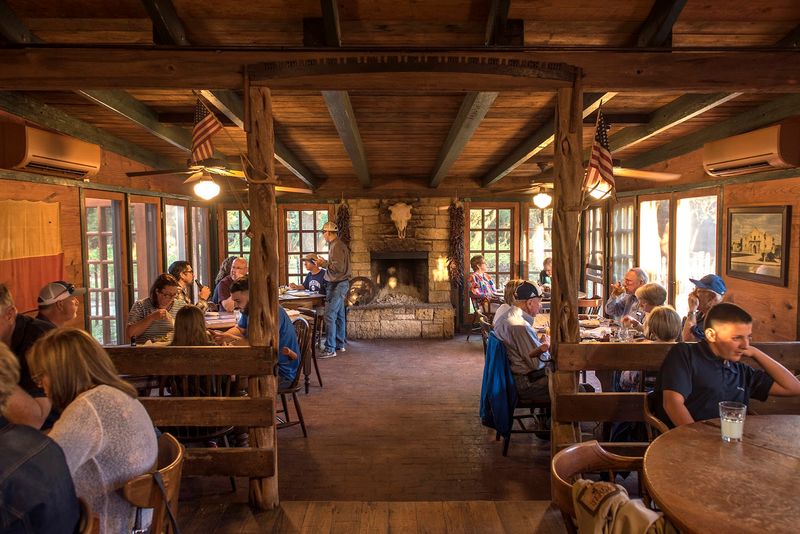
The building itself reflects the ranch setting, with Western decor that feels genuine rather than themed. You’re eating in what feels like an actual ranch house, because that’s essentially what it is. The patio offers views of the surrounding Hill Country, and the whole atmosphere reminds you that this isn’t some corporate steakhouse trying to manufacture a Texas experience—it’s the real thing.
Tom Perini became famous in Texas food circles for his dedication to traditional ranch cooking methods and his refusal to compromise on quality. Even as the restaurant gained national attention, the approach stayed the same. The portions are generous, the sides are classic, and nobody’s trying to reinvent what a Texas steakhouse should be.
Perini Ranch could have expanded to major cities or sold the concept to investors looking to capitalize on the name. Instead, they’ve kept it in Buffalo Gap, on the ranch, maintaining the character that made it special in the first place. Locals and tourists alike appreciate that commitment to staying true to the original vision, even when easier money might have been available elsewhere.
8. Leona General Store
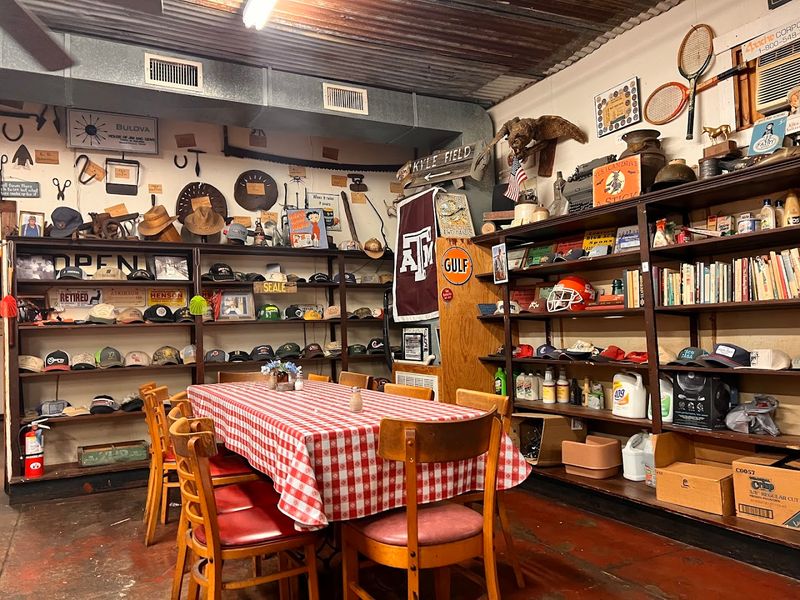
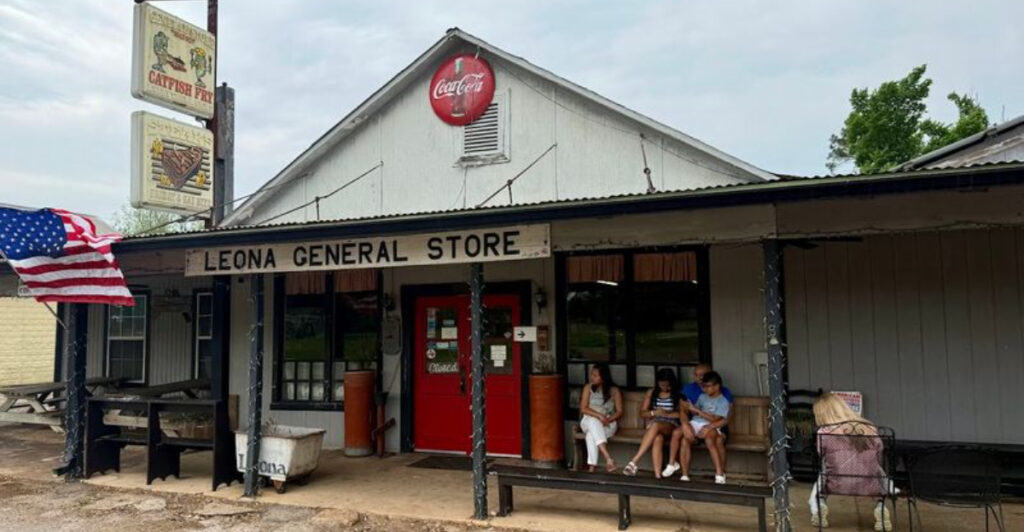
This place started as an actual general store back in the 1890s, and while it’s been serving barbecue for decades now, the building and the approach haven’t changed much. You can still see the old store layout, and the pits out back have been smoking meat for longer than most restaurants have existed.
The barbecue here follows Central Texas traditions—simple rubs, long cooking times, and post oak smoke. Brisket comes out with a thick bark and that pink smoke ring that shows it’s been done right. The sausage has the right snap when you bite into it, and the ribs pull away from the bone without falling apart completely.
What makes Leona General Store special is how little it cares about being discovered. They’re not marketing themselves or trying to get featured on food shows. They’re just doing what they’ve always done, serving the local community and whoever else happens to find them.
The dining area is simple, the service is friendly but not fussy, and the whole experience feels like stepping back in time.
The store still sells a few general merchandise items, maintaining that connection to its original purpose. You can grab a cold drink from the cooler, order your barbecue, and sit down to eat in a building that’s been part of this tiny community for over a century. There’s something special about eating in a place with that much history, knowing that generations of Texans have done the same thing in the same spot.
Leona General Store proves that you don’t need to be in a major city or have a famous pitmaster to serve excellent barbecue. You just need good technique, patience, and respect for tradition. The folks here have all three, and they’ve never felt the need to change what’s been working since before most of us were born.
9. Black’s Barbecue
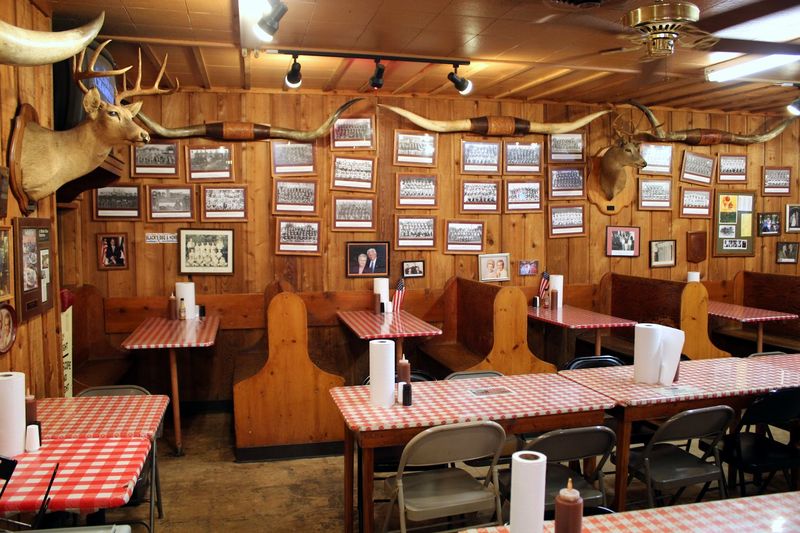
Since 1932, this Lockhart institution has remained in the same family, earning its reputation as the oldest continuously operated family-run barbecue restaurant in Texas. Four generations of the Black family have kept the fires burning, using the same pit room and many of the same techniques that made them successful nearly a century ago. Walking into Black’s feels like entering a living museum of Texas barbecue history.
The pit room sits right behind the counter, visible to everyone who walks in. You can watch the pitmasters work, pulling briskets from the massive brick pits and slicing them to order. The meat has that perfect combination of crusty bark and tender interior that only comes from patient overnight cooking.
The beef ribs are massive, with meat that pulls away cleanly, and the sausage still gets made using recipes passed down through the family.
Black’s has seen barbecue go through countless trends and fads. They’ve watched competitors try new techniques, exotic woods, and creative seasonings. Through it all, Black’s has stuck with what works—simple salt and pepper rubs, post oak smoke, and time.
Lots and lots of time.
The dining room maintains a comfortable, unpretentious atmosphere where everyone from construction workers to food critics can enjoy the same great barbecue. The prices stay reasonable, especially considering the quality and the history you’re experiencing. You can order at the counter, grab some sides, and find a table without any fuss or pretension.
Being in Lockhart means competing with other legendary barbecue joints, but Black’s holds its own through consistency and respect for tradition. They haven’t tried to be the trendiest or the most talked-about place. They’ve just focused on doing what they do well, day after day, year after year.
That dedication to craft over hype has kept them in business longer than most restaurants last, and locals continue to support them because they know exactly what they’re getting every single time.
10. The Big Texan Steak Ranch & Brewery
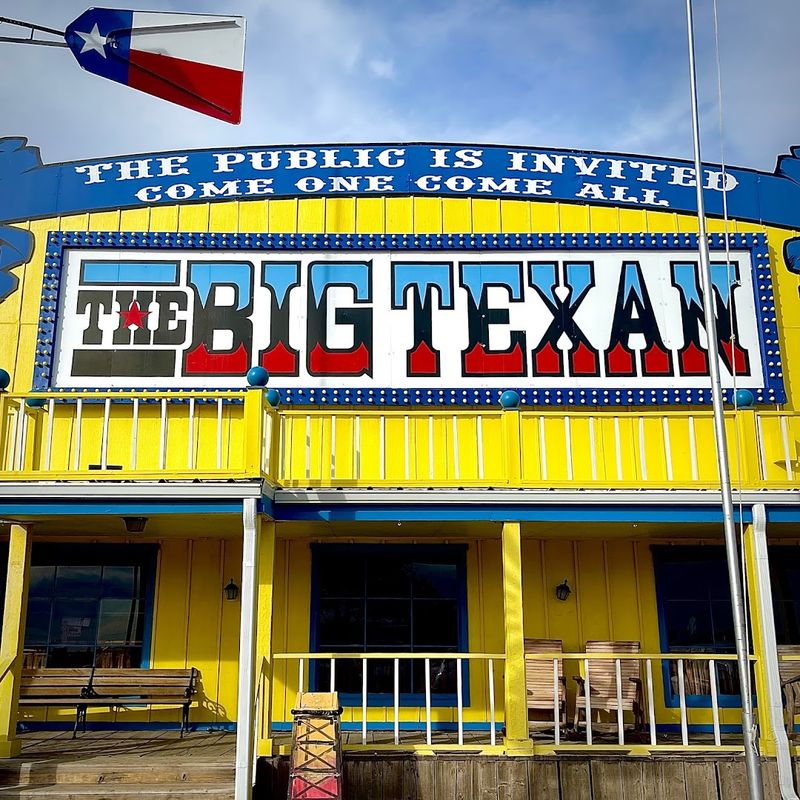
Amarillo’s Big Texan is famous for one thing above all else: the free 72-ounce steak challenge. Finish the massive steak, plus all the sides, in under an hour, and your meal is free. Thousands have tried since the restaurant opened in 1960, and most have failed, but the challenge remains exactly the same as it’s always been.
No modifications, no shortcuts, just you versus four and a half pounds of beef.
Beyond the spectacle of the challenge, The Big Texan serves as a genuine steakhouse with a menu full of more reasonably sized options. The steaks are hand-cut, well-marbled, and cooked to order. The Western theme runs throughout the entire building, from the decor to the staff uniforms, creating an experience that’s unabashedly Texan without any apologies.
The location on old Route 66 made it a natural stopping point for travelers crossing the country, and The Big Texan leaned into that role. The giant cowboy statue outside, the over-the-top Western styling, the challenge itself—all of it was designed to attract attention and give people a memorable experience. And it worked, turning the restaurant into one of the most recognizable landmarks in the Texas Panhandle.
Some might call it touristy, and they wouldn’t be wrong. But The Big Texan never pretended to be anything other than what it is—a big, bold, fun steakhouse that celebrates Texas culture with enthusiasm. Locals still eat there regularly because underneath the showmanship, the food is legitimately good.
The steaks are quality, the portions are generous, and the service is friendly.
The Big Texan could have easily sold out or changed with the times, toning down the Western theme to appeal to more sophisticated tastes. Instead, they’ve doubled down on what made them famous, maintaining the challenge, the decor, and the whole experience exactly as it’s been for decades. That commitment to their original vision has made them a Texas institution that continues to draw crowds year after year.
11. Cooper’s Old Time Pit Bar-B-Que (Llano)
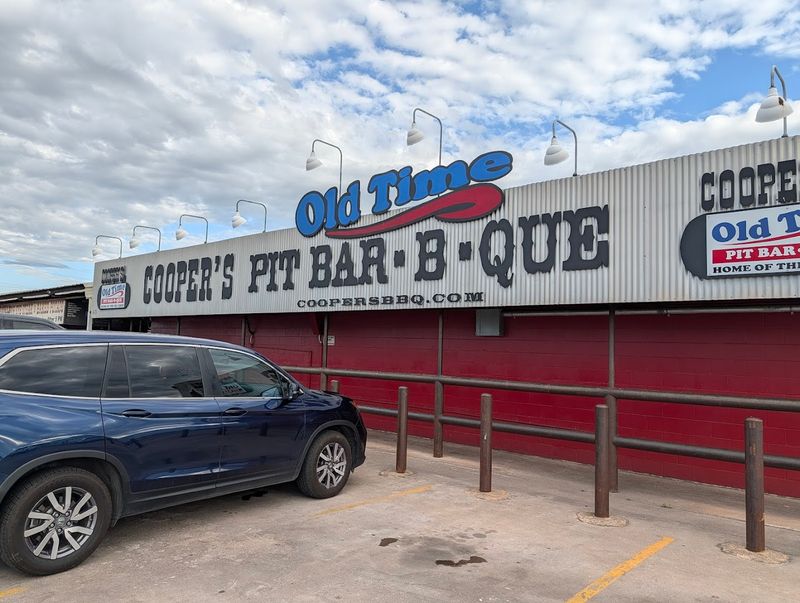
Cooper’s in Llano does barbecue differently than most places, and they’ve been doing it their way since 1953. Instead of ordering at a counter inside, you walk up to the outdoor pits where the meat is actually cooking. You point at what you want, they cut it right there, weigh it, and hand it to you still hot from the fire.
Then you take your meat inside to pay and grab sides.
The pits themselves are massive, open-air affairs where mesquite wood burns down to coals. Brisket, ribs, pork chops, and sausage all cook over these fires, getting basted regularly with a mop sauce that’s been part of Cooper’s recipe from the beginning. The mesquite gives everything a distinctive flavor that’s different from the post oak used at most Central Texas joints.
This direct-pit ordering system means you can see exactly what you’re getting before you commit. You can ask for a specific piece of brisket, request extra bark, or get the fattiest pork chop they’ve got. The pitmasters work the fires all day, turning meat, adding wood, and managing the heat with the kind of skill that only comes from years of experience.
Cooper’s expanded to a few other locations over the years, but the Llano original remains the heart of the operation. The building is simple, the atmosphere is casual, and nobody’s putting on airs about what they’re doing. It’s straightforward Texas barbecue, cooked over wood fires, served without fuss.
Llano itself is a small Hill Country town that sees plenty of tourists passing through, but Cooper’s maintains its local character. The prices are fair, the portions are substantial, and the quality stays consistent. They haven’t tried to upscale the experience or turn it into something fancier than it needs to be.
Cooper’s is about good meat, cooked right, served in a way that’s been working for seventy years.
12. Cattlemen’s Steakhouse (Fabens, near El Paso)
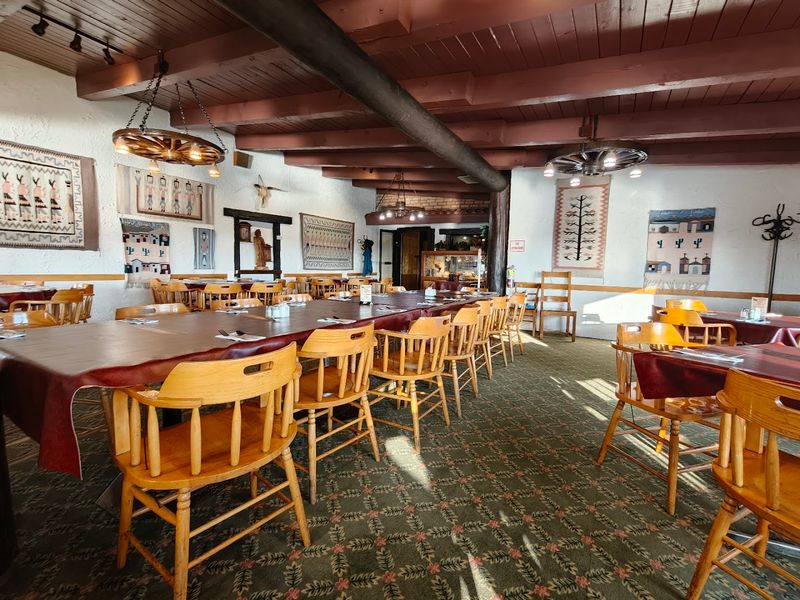
Far West Texas is a different world from the rest of the state, and Cattlemen’s Steakhouse in Fabens reflects that distinct character. Located in the desert between El Paso and nowhere, this place has been serving steaks to ranchers, travelers, and locals since 1973. The building sits in the middle of vast open space, surrounded by the kind of landscape that reminds you just how big and empty parts of Texas can be.
The steaks at Cattlemen’s are thick, well-marbled, and cooked over mesquite—the wood that grows naturally in this part of Texas. Mesquite burns hot and gives the meat a flavor that’s become associated with Southwestern cooking. The cuts are generous, the sides are classic, and nothing on the menu tries to be trendy or fusion-inspired.
It’s straightforward steakhouse food done well.
What makes Cattlemen’s special is its location and its connection to actual cattle ranching. This isn’t a themed restaurant pretending to be Western—it’s in ranching country, serving people who work with cattle for a living. The atmosphere reflects that authenticity, with decor that’s Western because that’s the culture here, not because some designer thought it would be appealing.
The drive to Cattlemen’s is part of the experience. You’re not going there because it’s convenient or close to anything else. You’re making a specific trip, driving through desert landscape to reach a steakhouse that’s been in the same spot for fifty years.
That sense of destination, of making an effort to get there, adds to the appreciation of the meal.
Cattlemen’s hasn’t changed much over the decades because it doesn’t need to. The local community supports it, travelers discover it, and the reputation spreads through word of mouth. In a region where restaurants struggle to survive due to the sparse population, Cattlemen’s has thrived by staying true to what West Texas dining is all about—good meat, cooked right, in an atmosphere that’s genuine to the place.