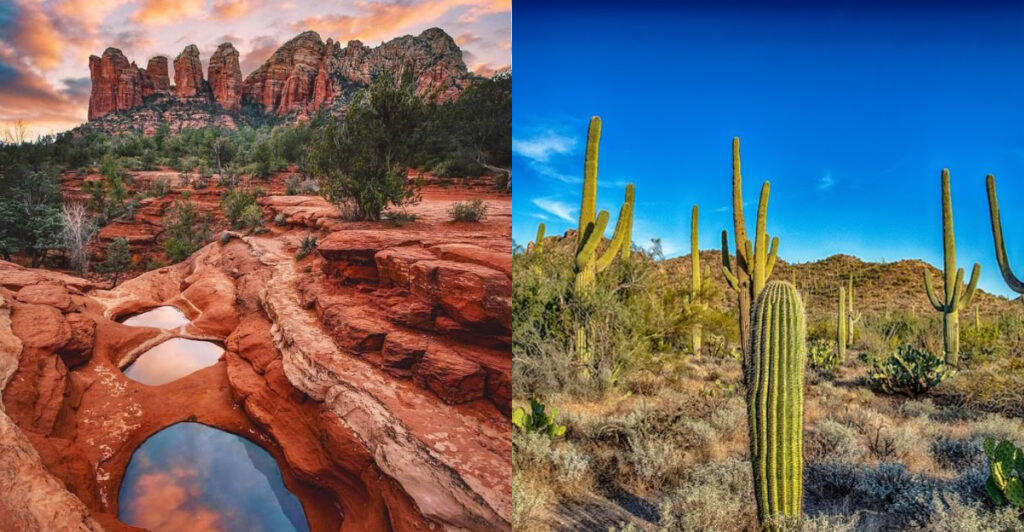
Arizona is one of those places that makes your jaw drop the moment you step outside. From the towering walls of the Grand Canyon to the red rock formations of Sedona and the saguaro-studded deserts of Tucson, this state packs more natural beauty into one place than almost anywhere else in the country. The best part? You do not need to be an experienced hiker or spend an entire day on the trail to experience it. Some of the most breathtaking scenery in Arizona is just a short walk away, tucked along trails that are beginner-friendly, family-approved, and genuinely unforgettable.
Whether you are chasing a waterfall, peering over a canyon rim, or wandering through a forest of ancient cacti, Arizona has a short trail for every kind of adventurer. The seven trails featured here are proof that big rewards do not always require big effort. Each one offers something unique, from geological wonders millions of years in the making to peaceful desert landscapes that feel like another world entirely. Many of these hikes clock in at under three miles round trip, making them perfect for a morning outing, a spontaneous afternoon adventure, or a family trip with younger kids in tow.
Arizona welcomes millions of visitors every year, and it is easy to understand why. The state sits at the crossroads of several distinct ecosystems, meaning you can hike through desert, forest, canyon, and creek all within the same region. These seven trails highlight the very best of what Arizona has to offer in a short, sweet, and stunning package. Lace up your hiking shoes, bring plenty of water, and get ready to fall in love with the Grand Canyon State one trail at a time.
1. Blue Mesa Trail (Chambers)
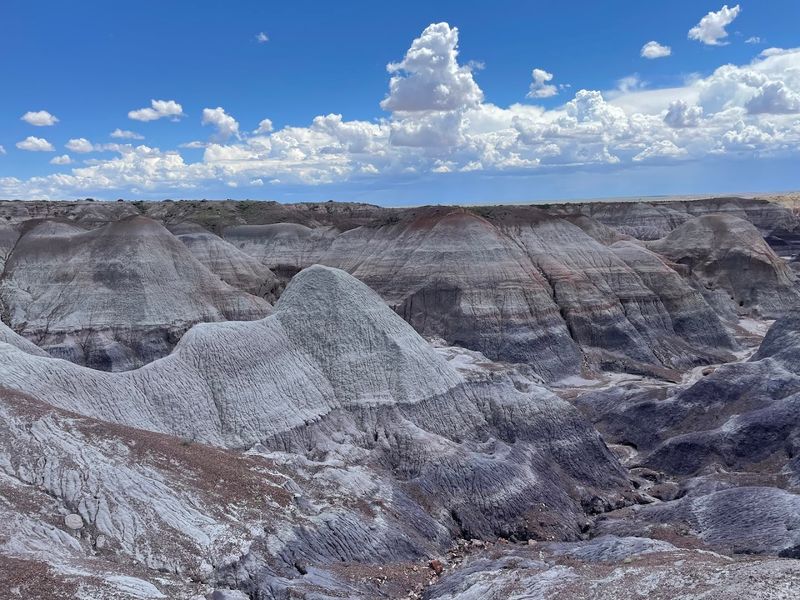
Stepping onto the Blue Mesa Trail feels like walking onto the surface of another planet.
Located inside Petrified Forest National Park near Chambers, this one-mile loop winds through a surreal landscape of blue, gray, and lavender badlands that look like they were painted by hand.
The colors shift throughout the day as sunlight moves across the hills, making every hour feel like a completely different experience.
What makes this trail so special is what lies beneath your feet.
The ground is made up of bentonite clay, which swells when wet and cracks when dry, creating a rippled, alien texture that is unlike anything you will find on a typical hiking trail.
Scattered throughout the landscape are chunks of petrified wood, ancient logs that have slowly transformed into glittering stone over 225 million years.
Visitors are not allowed to take any pieces home, but the park rangers are happy to explain the fascinating science behind how wood becomes rock over geological time.
The trail itself is paved and well-marked, which makes it accessible for most fitness levels, including families with young children.
There is a small amount of elevation change, but nothing that should slow you down significantly.
The views from the mesa overlook are genuinely jaw-dropping, offering a panoramic sweep of the banded hills stretching out in every direction.
Early morning visits are highly recommended because the light is softer and the colors appear more vivid before midday.
Temperatures in this part of Arizona can climb quickly, so bringing extra water is always a smart idea.
Admission to Petrified Forest National Park is required, but the Blue Mesa experience is absolutely worth every penny of the entrance fee.
2. South Kaibab Trail to Ooh Aah Point (Grand Canyon Village)
There is a reason hikers literally say “ooh” and “aah” when they reach this viewpoint.
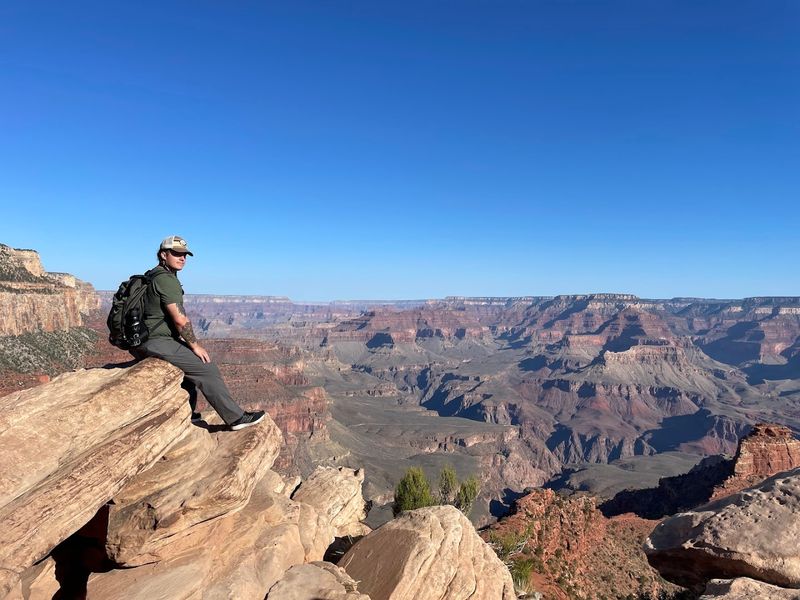
The South Kaibab Trail to Ooh Aah Point is one of the most rewarding short hikes in all of Grand Canyon National Park, delivering some of the most open and unobstructed canyon views accessible without a full-day commitment.
At just 1.8 miles round trip, this trail punches well above its weight in terms of scenery.
Starting at the South Kaibab Trailhead, the path descends quickly along an exposed ridgeline, meaning the views open up almost immediately after you begin walking.
Unlike many Grand Canyon trails that are hemmed in by canyon walls, the South Kaibab route follows an open spine of rock that offers 360-degree sightlines into the canyon depths.
On a clear day, you can spot the Colorado River far below, winding like a silver thread through billions of years of layered geology.
The hike down to Ooh Aah Point covers about 600 feet of elevation loss, which means the return trip back up is noticeably more challenging.
Pacing yourself on the way down is smart planning, especially during warmer months when temperatures inside the canyon rise sharply.
The National Park Service strongly advises against hiking below the rim during midday in summer, so an early morning start is ideal.
Dogs are not permitted on South Kaibab Trail, and water is not available along the route, so pack accordingly.
The trailhead is accessible via the free Kaibab/Rim Route shuttle bus from Grand Canyon Village, which makes logistics simple.
Watching sunrise from Ooh Aah Point with the canyon glowing in shades of orange and gold is the kind of memory that stays with you for years.
3. White Tank Waterfall Trail (Waddell)
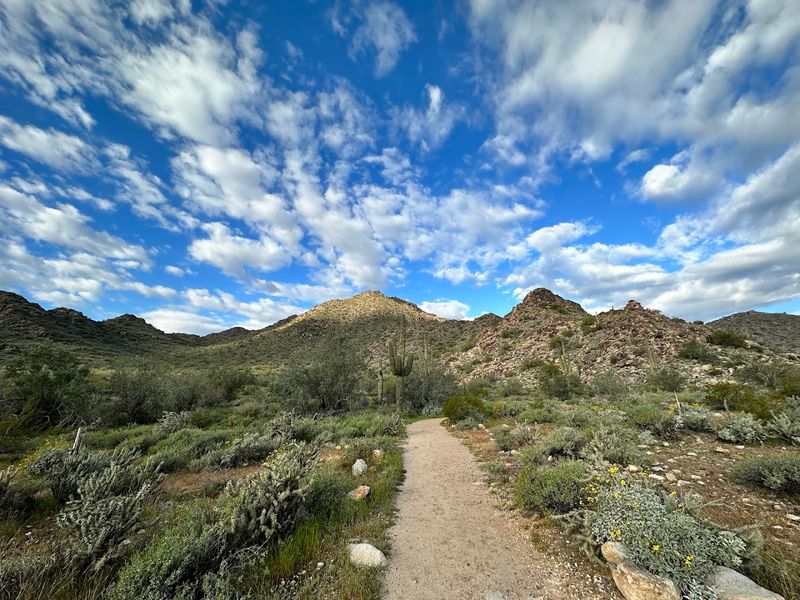
Most people do not picture waterfalls when they think of the Arizona desert, but White Tank Mountain Regional Park near Waddell is full of surprises.
The Waterfall Trail here is a 1.8-mile out-and-back hike that leads through a rocky desert canyon to a seasonal waterfall tucked against a granite wall.
After a good rain, the falls can be genuinely impressive, sending water cascading down into a natural basin below.
Even during drier periods when the waterfall is just a trickle or entirely dry, the trail itself is worth every step.
Along the way, hikers pass through classic Sonoran Desert scenery filled with saguaro cacti, palo verde trees, and brittlebush.
The canyon walls grow taller and closer together as you approach the waterfall area, creating a dramatic sense of enclosure that feels exciting rather than claustrophobic.
One of the most underrated highlights of this hike is the collection of Hohokam petroglyphs carved into the canyon rocks.
These ancient symbols were etched into the stone by the Hohokam people centuries ago and are remarkably well-preserved.
Interpretive signs along the trail help explain their significance and give hikers a deeper appreciation for the cultural history embedded in this landscape.
The trail is rated easy to moderate and is suitable for families with children who are comfortable on rocky terrain.
Sturdy shoes are a must since the path crosses over loose rocks and uneven ground near the waterfall area.
White Tank Mountain Regional Park charges a small day-use fee for entry, and the park offers excellent picnic facilities if you want to extend your outing.
Arriving on a weekday morning helps you enjoy the trail without the weekend crowds that tend to gather here.
4. Seven Sacred Pools via Soldier Pass Trail (Sedona)
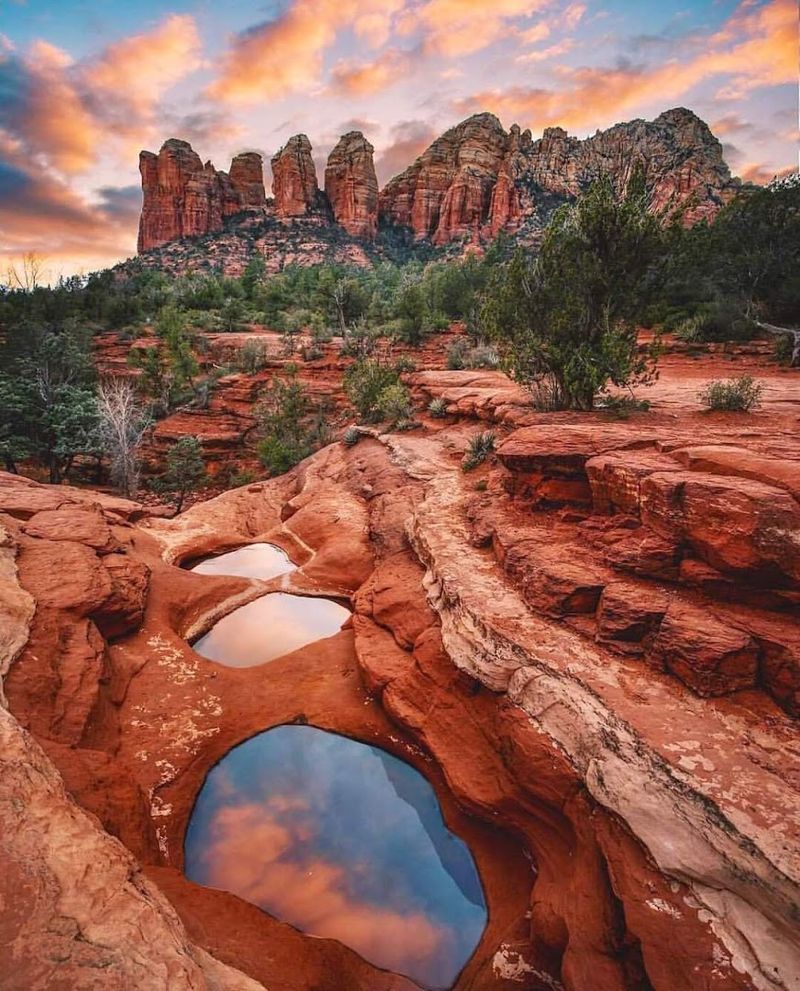
Sedona has no shortage of stunning trails, but Soldier Pass Trail holds a special place among locals who know where to look.
The trail leads to a series of natural rock pools known as the Seven Sacred Pools, carved into red sandstone by centuries of flowing water and erosion.
At roughly 4 miles round trip, it sits comfortably in the short-to-moderate category while delivering some of the most distinctive scenery in all of red rock country.
The pools themselves are shallow depressions in the rock that collect rainwater and runoff, and they look almost too perfect to be natural.
Surrounding the pools are smooth, rounded sandstone formations in deep shades of orange and rust that glow brilliantly in the afternoon sun.
The whole area has a quiet, almost meditative quality that makes it easy to understand why people consider this spot sacred.
Beyond the pools, the trail also passes near the Devil’s Kitchen sinkhole, a dramatic collapse in the earth that formed when an underground limestone cavern gave way.
It is a stark reminder of just how geologically active and ancient this landscape truly is.
Interpretive signage near the sinkhole explains the science behind how it formed and why it continues to slowly expand over time.
Parking for Soldier Pass Trail requires a Red Rock Pass or America the Beautiful pass, and spaces fill up early on weekends.
The Sedona Red Rock Shuttle offers an alternative way to reach several trailheads in the area if parking is a concern.
Hiking boots with ankle support are recommended since the trail involves some rocky sections and mild scrambling near the pools.
Morning light in Sedona is particularly magical, casting long shadows across the red rocks and giving the landscape a warm, golden glow.
5. Saguaro Loop and Nature Trail (Tucson)
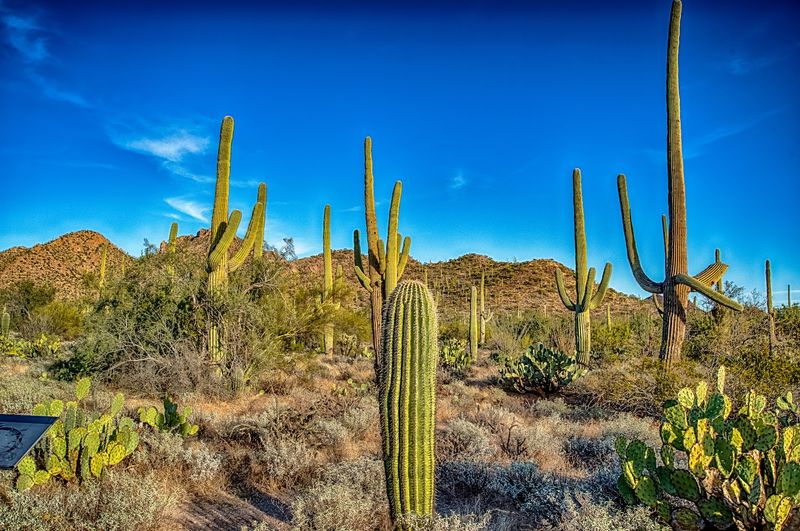
Few hiking experiences in the American Southwest are quite as iconic as walking among a forest of giant saguaro cacti.
Saguaro National Park near Tucson protects one of the densest concentrations of these towering plants anywhere on earth, and the Saguaro Loop and Nature Trail offers a perfect introduction to this remarkable landscape.
The loop covers about two miles and moves through a classic Sonoran Desert environment that feels timeless and wild even though it sits close to a major city.
Saguaro cacti are remarkable organisms.
They grow incredibly slowly, taking up to 75 years just to develop their first arm, and they can live for more than 150 years.
Walking among them gives you a genuine sense of scale and deep time that is hard to describe.
Some of the plants along this trail are taller than a two-story house, their thick arms reaching upward in shapes that seem almost expressive, like they are frozen mid-gesture.
The nature trail portion of the route includes numbered posts that correspond to a free interpretive guide available at the trailhead.
This self-guided feature makes the hike especially educational for families and first-time visitors who want to learn about desert plants, wildlife, and ecology without hiring a guide.
Keep an eye out for Gila woodpeckers, cactus wrens, and the occasional roadrunner darting across the trail.
The best times to hike here are early morning or late afternoon when temperatures are cooler and wildlife is more active.
Tucson summers are scorching, so visiting between October and April is ideal for the most comfortable experience.
The park charges a modest entrance fee, and the visitor center nearby has exhibits that add wonderful context to everything you will see along the trail.
6. Shoshone Point (Grand Canyon Village)
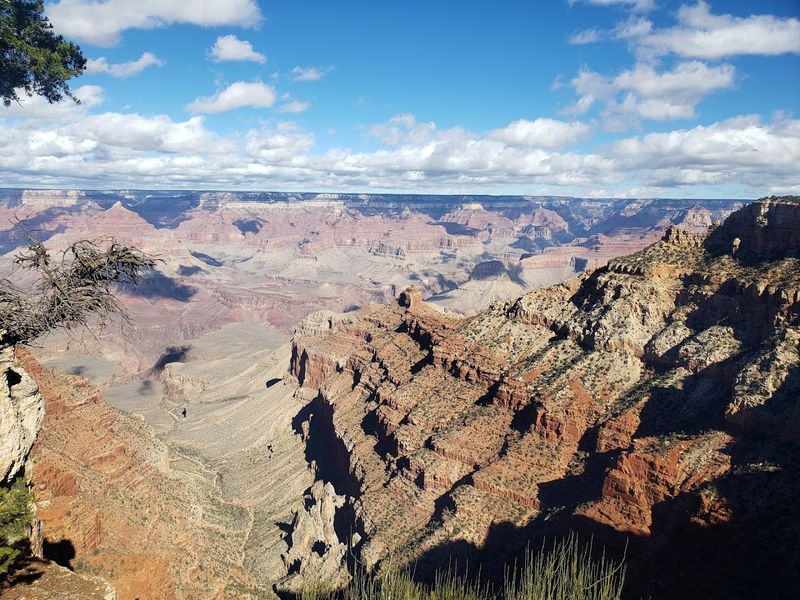
Most Grand Canyon visitors crowd the popular overlooks along the South Rim, but Shoshone Point remains one of the canyon’s best-kept secrets.
This two-mile round-trip hike along an unpaved service road leads to a private, fenced overlook that juts out dramatically over the canyon, offering a 270-degree panoramic view that rivals anything you will find at the busier viewpoints.
The walk itself is flat and easy, shaded by ponderosa pines for most of the route.
What sets Shoshone Point apart is the almost complete absence of crowds.
Because the trailhead is easy to miss and the overlook is not heavily advertised in park literature, most tourists never find it.
On a busy summer weekend at the Grand Canyon, you might share Shoshone Point with just a handful of other visitors, which creates a genuinely peaceful experience that feels rare along the South Rim.
Standing at the edge of the overlook with almost no one else around is a profoundly different experience than jostling for space at Mather Point.
The overlook platform sits at the end of a rocky promontory that extends out into the canyon, giving visitors the sensation of floating above the abyss.
The Colorado River is visible far below on clear days, and the layered geology of the canyon walls is on full display in every direction.
Sunrise and sunset visits are especially rewarding when the light turns the canyon walls deep shades of amber and crimson.
There is no water available along this trail, so carrying at least one liter per person is essential.
The trailhead is located off Desert View Drive, about 1.5 miles east of the main visitor area.
No permit is required for day hikers, though the area can be reserved for private events and may occasionally be closed to the general public.
7. HoneyBee Canyon North Trail (Oro Valley)
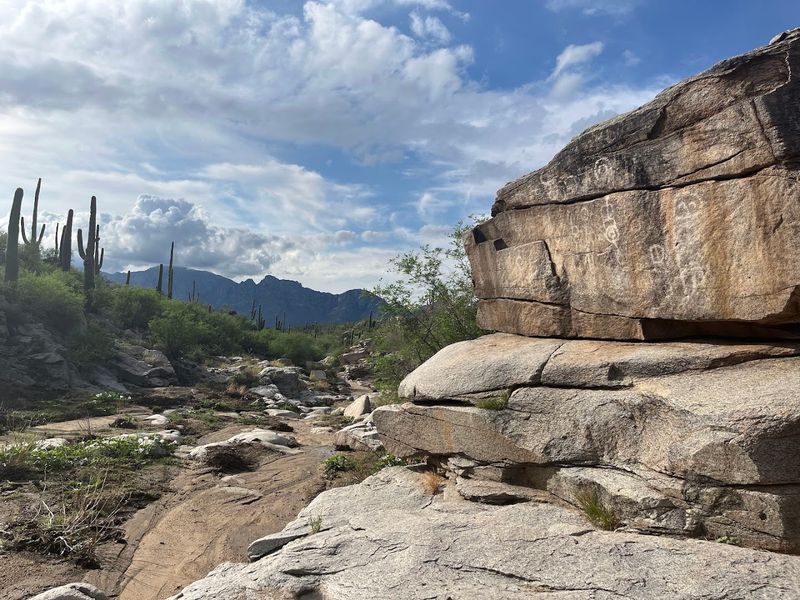
Tucked into the foothills just north of Tucson, HoneyBee Canyon Park in Oro Valley is a genuine hidden gem that rewards curious hikers with petroglyphs, wildlife sightings, and sweeping mountain views all packed into a short and accessible trail.
The North Trail through HoneyBee Canyon covers roughly 2.5 miles and winds through a narrow desert canyon where the walls close in overhead and the outside world seems to disappear entirely.
The petroglyphs here are among the most compelling reasons to visit.
Carved into dark basalt boulders along the canyon floor, these ancient images include spirals, human figures, and animal shapes left behind by people who lived in this region thousands of years ago.
Unlike some petroglyph sites that keep visitors behind barriers, HoneyBee Canyon allows you to walk right alongside the rock art, though touching the carvings is strictly discouraged to help preserve them for future generations.
Wildlife is abundant in this canyon.
Mule deer are frequently spotted in the early morning hours, and the canyon’s rocky terrain provides perfect habitat for cactus wrens, black-throated sparrows, and the occasional Cooper’s hawk circling overhead.
In spring, the canyon floor comes alive with wildflowers that add splashes of yellow, purple, and orange to the otherwise earth-toned landscape.
HoneyBee Canyon Park is free to enter, which makes it an especially appealing option for budget-conscious travelers looking to experience authentic Arizona desert scenery without paying park entrance fees.
The trailhead is well-marked and has a small parking area that fills up on weekend mornings.
Arriving by eight in the morning on a Saturday virtually guarantees a parking spot and a quieter experience on the trail.
Comfortable athletic shoes work fine here, though trail runners or light hiking boots are ideal for the rockier canyon sections.