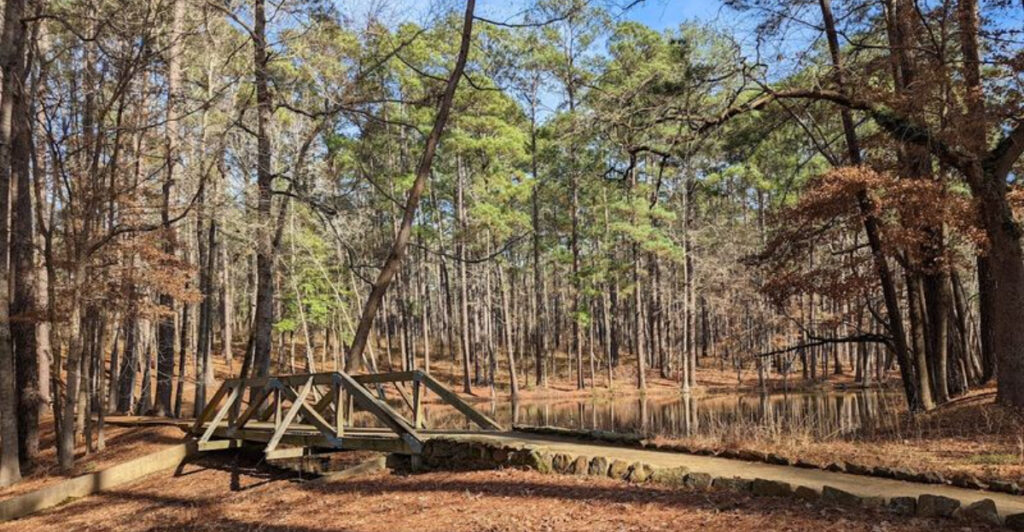
Mission Tejas State Park sits tucked away in the Piney Woods of East Texas, where towering loblolly pines stretch toward the sky and history whispers through every trail. This 600-acre retreat near Grapeland offers more than just camping and hiking—it’s where Spanish colonial heritage meets the natural beauty of dense forests and quiet pathways. Whether you’re walking along the historic El Camino Real or exploring the reconstructed mission, this park delivers a blend of outdoor adventure and cultural discovery that’s hard to find anywhere else in the state.
1. El Camino Real de los Tejas National Historic Trail
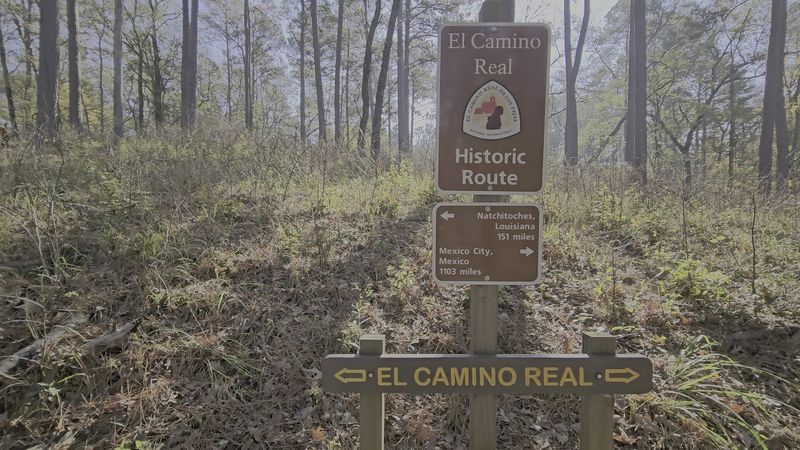
Walking the same path that Spanish missionaries and explorers traveled centuries ago isn’t something you get to do every day. The El Camino Real—literally “Royal Road”—cuts right through Mission Tejas State Park, connecting you to a route that once linked Mexico to Louisiana through the heart of Texas. Stepping onto this trail feels like touching a piece of living history.
The path itself winds through dense stands of pine, and interpretive markers along the way explain how indigenous peoples, Spanish colonists, and early Texans all used this corridor. It’s not a difficult hike, but the weight of what happened here makes every step feel significant. You’re literally following in the footsteps of centuries of travelers.
Park rangers often point out that this wasn’t just a trade route—it was a lifeline that shaped the entire region’s development. Families, soldiers, priests, and traders all passed through these woods. Today, the trail offers a peaceful walk where you can reflect on Texas history while surrounded by the same towering pines that would have sheltered those early journeys.
Bring your camera and a sense of curiosity. The trail connects to several other paths within the park, so you can extend your exploration as much as you’d like.
2. Reconstructed Mission San Francisco de los Tejas
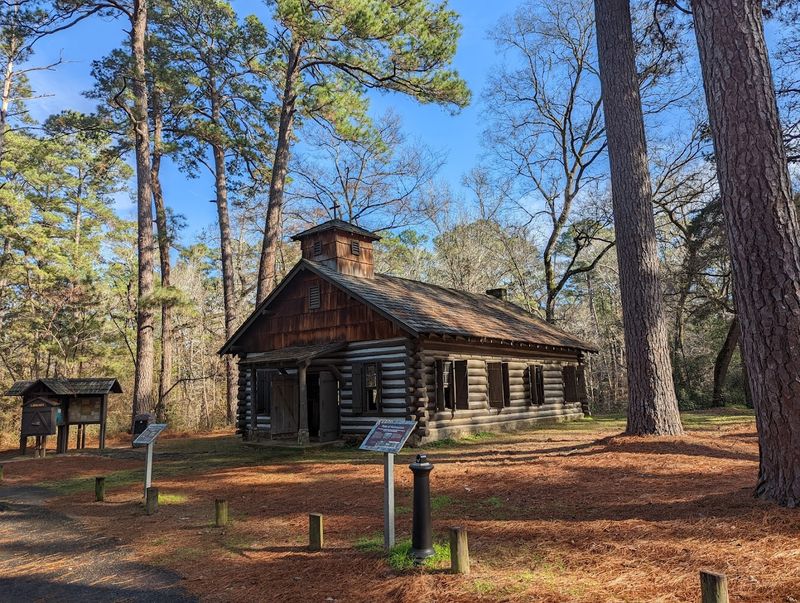
The reconstructed mission building stands as a fascinating window into Spanish colonial Texas, even though it’s not the original structure. Built by the Civilian Conservation Corps in the 1930s, this replica honors the first Spanish mission established in East Texas back in 1690. The mission served the Tejas people and represented Spain’s attempt to establish a foothold in the region.
What makes this reconstruction special is how it captures the rustic, frontier character of early mission life. Unlike the grand stone missions you’ll find in San Antonio, this one reflects the humble, temporary nature of Spain’s first efforts in the Piney Woods. The log construction and simple design tell a story of adaptation and survival in an unfamiliar landscape.
Inside, you’ll find interpretive displays explaining the mission’s short-lived history—it only operated for three years before being abandoned due to disease and supply issues. Yet its legacy lived on, eventually giving Texas its name from the Tejas people. Walking through the mission grounds, you can almost imagine the challenges those early missionaries faced.
The building sits in a peaceful clearing surrounded by towering pines, making it a perfect spot for reflection and photos. It’s open during park hours, and there’s no additional fee beyond your park entrance.
3. Miles of Towering Loblolly Pines
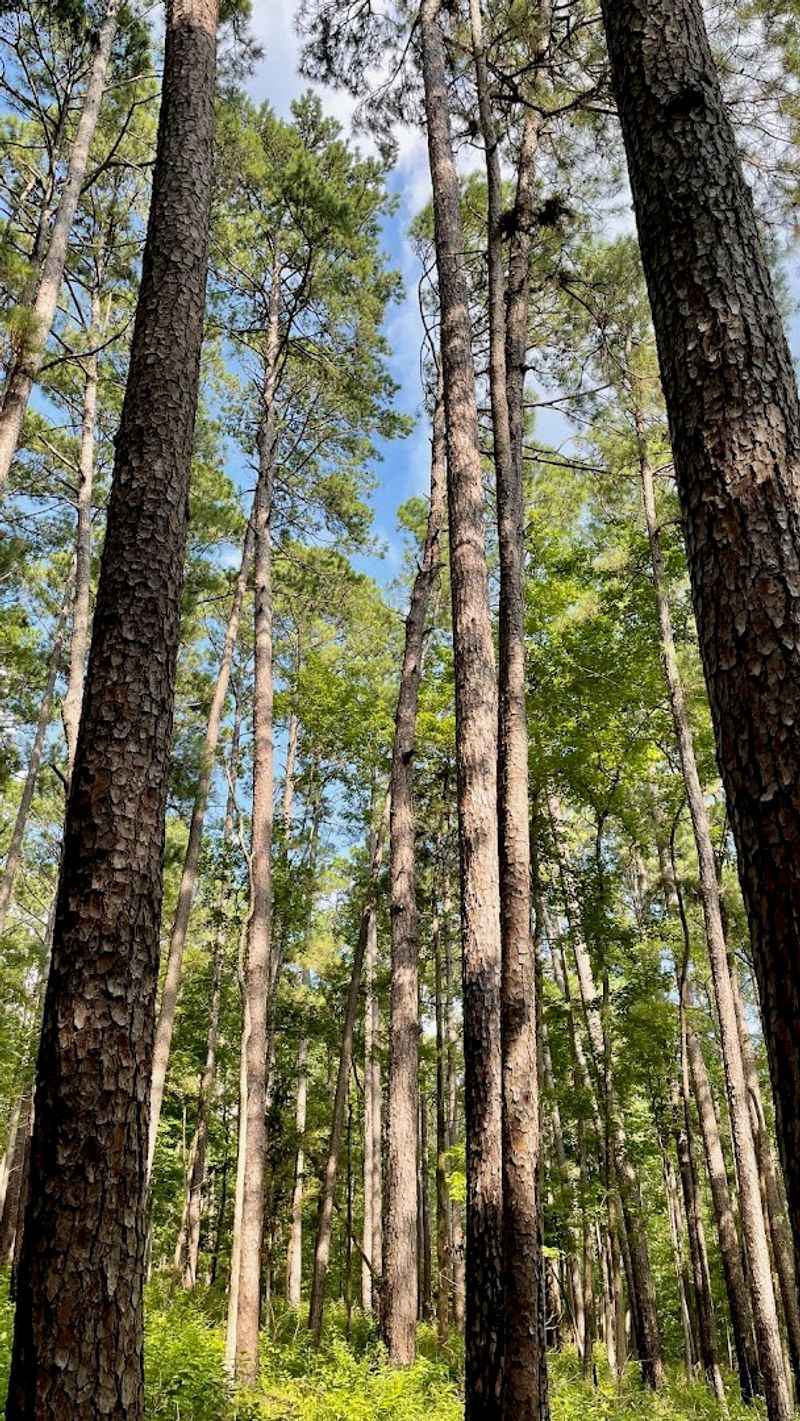
Forget the stereotypical image of flat, scrubby Texas landscape—Mission Tejas delivers something completely different. The park’s signature feature is its cathedral-like forest of loblolly pines that can reach over 100 feet tall. These aren’t just trees; they’re living monuments that create an atmosphere unlike anywhere else in the state.
The moment you step onto any trail, you’re enveloped by this vertical forest. The pine canopy filters sunlight into soft, golden beams that shift throughout the day. The forest floor stays relatively clear beneath these giants, carpeted with pine needles that cushion your footsteps and release that distinctive, fresh scent with every step you take.
Visitors consistently mention how peaceful and almost otherworldly these woods feel. The pines create a natural sound barrier, muffling outside noise and amplifying the rustle of wind through needles and the calls of woodland birds. It’s the kind of place where you naturally lower your voice and slow your pace.
The park protects some truly impressive specimens, including the famous Sentry Pine—one of the oldest and largest trees in the area. Photographers love the way light plays through the pine trunks, especially during early morning and late afternoon when the angles create dramatic contrasts.
4. Eight and a Half Miles of Hiking Trails
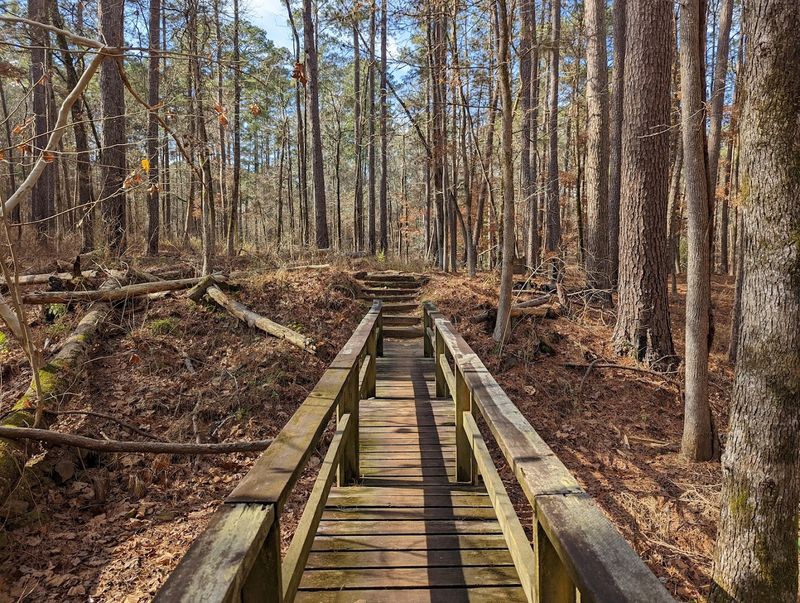
For a relatively compact park, Mission Tejas packs an impressive trail system into its 600 acres. More than a dozen different trails totaling 8.5 miles offer everything from easy nature walks to more challenging routes that’ll definitely get your heart pumping. The variety means everyone from casual strollers to serious hikers finds something that fits their ability level.
Trail names reflect the park’s history and natural features—you’ll find the Piney Woods Church Trail, the El Camino Real Trail, and the challenging Step Step Trail that reviewers mention as a genuine workout. Most paths are well-marked with frequent trail maps, which visitors appreciate since cell service is spotty to nonexistent out here. Getting temporarily turned around is part of the adventure, but the signage keeps things manageable.
The Open Matchett Trail leads to a unique destination: the old CCC bathtub, a Depression-era relic from when the Civilian Conservation Corps worked these woods. Combining this trail with Step Step creates a loop that showcases both history and natural beauty while providing enough elevation change to remind you this isn’t flat coastal Texas.
Recent renovations have improved trail maintenance significantly. Hikers report clear paths, good drainage, and minimal overgrowth even after wet weather. Pack bug spray—the mosquitoes can be fierce, especially near dawn and dusk.
5. Recently Renovated Campground with Modern Amenities
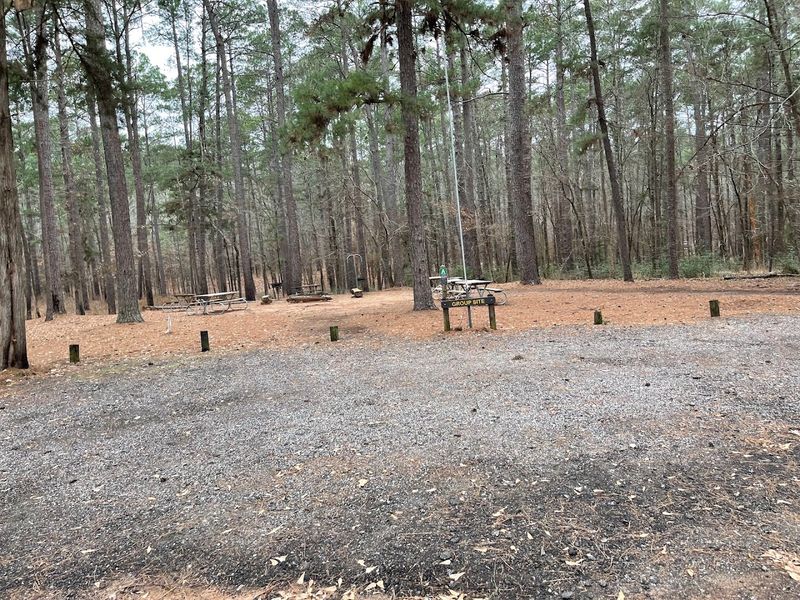
Timing matters, and recent visitors to Mission Tejas have lucked into experiencing the park right after a major renovation that transformed the camping experience. The park underwent extensive upgrades and reopened to rave reviews, with campers praising everything from the freshly poured concrete RV pads to the repaved roads winding through the campground.
What really gets campers excited is the upgraded electrical service. Several sites now offer 50-amp hookups alongside the standard 30-amp and regular outlets—a game-changer for RVers and even electric vehicle owners who can charge up while enjoying the forest. One reviewer specifically mentioned that sites 7, 9, 10, 11, 12, 13, 14, and 15 have the full suite of electrical options, despite the official website not yet reflecting the updates.
The bathrooms earn consistent praise for cleanliness and being well-stocked, which any experienced camper knows can make or break a trip. There’s even a free shower in the bathroom block, a nice touch for tent campers or those in RVs without full facilities. The electrical hookup boxes feature lights, which might seem minor until you’re fumbling with connections in the dark.
The campground maintains an intimate, peaceful vibe despite the modern upgrades. Midweek visits especially offer quiet, uncrowded experiences where road noise is virtually nonexistent and nature takes center stage.
6. Historic Rice Family Log Home
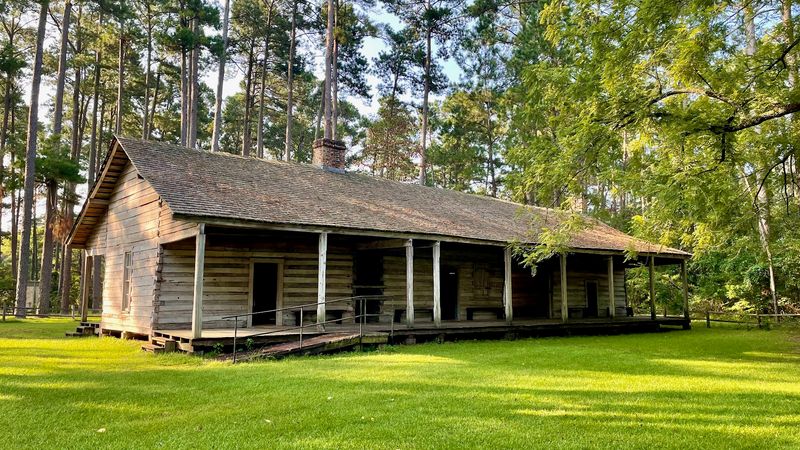
Among the historic structures preserved at Mission Tejas, the Rice Family Log Home stands out as a tangible connection to pioneer life in East Texas. This authentic 19th-century cabin represents the kind of dwelling that frontier families actually lived in, built from the abundant pine timber surrounding them. Unlike the reconstructed mission, this is the real deal—weathered logs and all.
The cabin’s construction showcases pioneer ingenuity and the building techniques that allowed families to carve out homes in the wilderness. Hand-hewn logs fit together with remarkable precision, and the simple but effective design kept families sheltered through Texas summers and winters. Walking through the structure gives you immediate appreciation for how different daily life was without modern conveniences.
Park interpreters sometimes conduct programs at the cabin, explaining how families cooked, stored food, and managed household tasks in such tight quarters. The home sits in a cleared area that would have been similar to the yard space pioneers maintained, both for practical purposes and to keep wildlife at a respectful distance.
Visitors appreciate that the cabin is accessible and well-preserved without being overly sanitized. It feels authentic because it is, offering a genuine historical experience alongside the park’s natural attractions. Combined with the mission and El Camino Real, it creates a comprehensive picture of the region’s layered history.
7. Peaceful Fishing Pond Surrounded by Forest
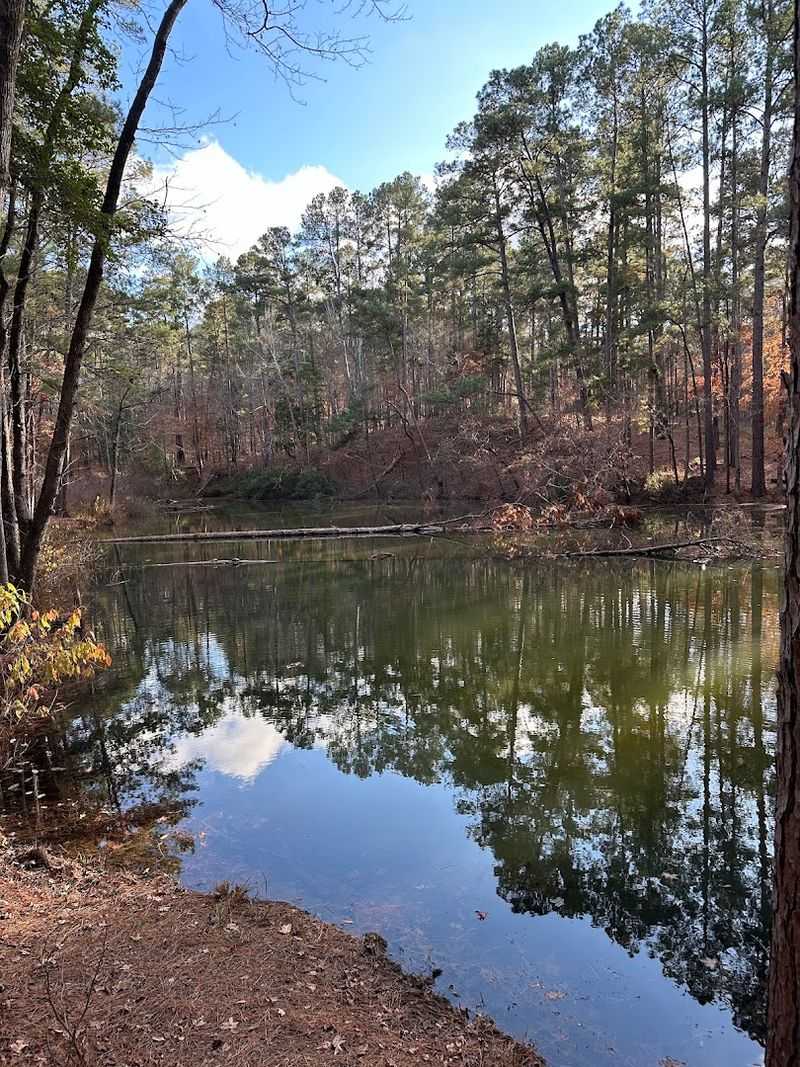
Tucked into the forest, the park’s fishing pond offers a quiet escape even within this already peaceful setting. It’s not a massive lake—this is an intimate spot where you can cast a line without worrying about boat traffic or crowds of competing anglers. The pond sits surrounded by pines that reflect beautifully on the water’s surface during calm mornings.
Several reviewers mention walking the trail around the pond, which makes for an easy, family-friendly loop even if fishing isn’t your thing. The path offers nice views from different angles and provides opportunities to spot wildlife coming to the water’s edge. Turtles, wading birds, and occasionally deer make appearances for patient observers.
Anglers should bring their own gear and verify current Texas fishing license requirements. The pond is stocked, though it’s managed for a natural experience rather than trophy catches. This is more about the meditative quality of fishing in a beautiful setting than filling a cooler with your limit.
The pond area includes picnic tables, making it an ideal spot for families to spend a relaxed afternoon. Kids can fish, explore the shoreline, or just enjoy being outdoors while adults soak in the tranquility. One visitor described having the entire picnic area to themselves and spending a lovely afternoon in complete peace—exactly the kind of experience this pond delivers.
8. The Legendary Sentry Pine
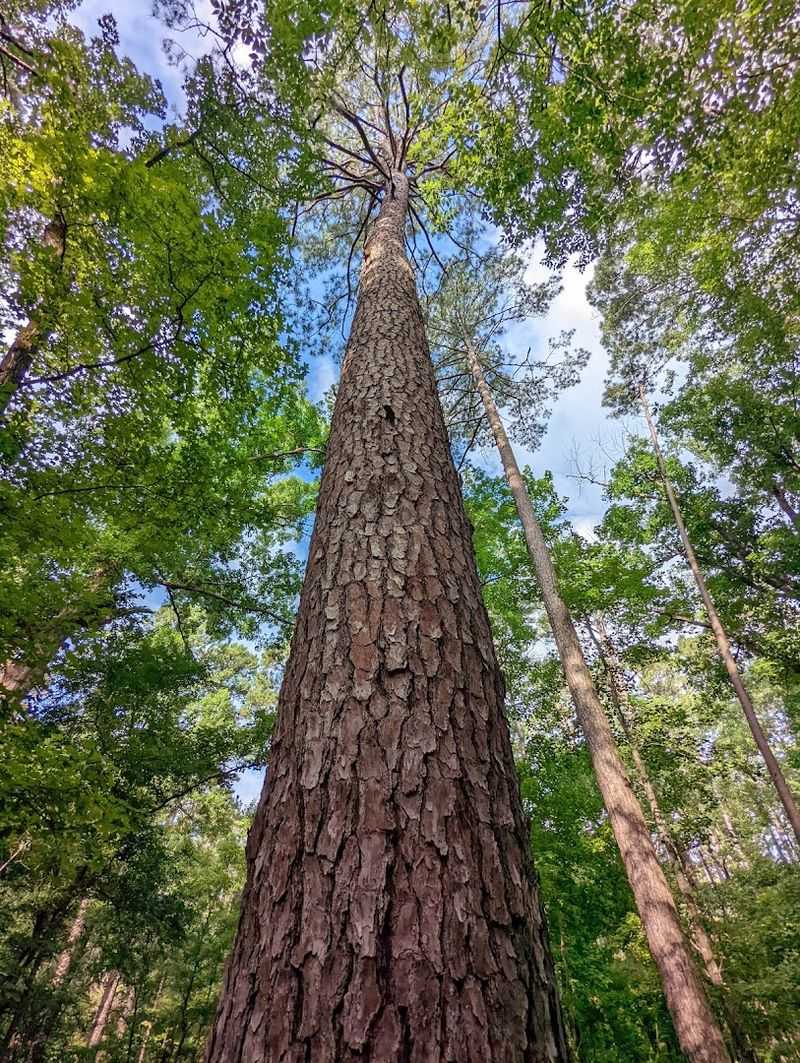
Some trees earn names and reputations, and the Sentry Pine is definitely one of them. This massive loblolly pine has stood watch over the forest for generations, surviving storms, droughts, and the passage of time that claimed countless other trees. Finding it along the trails feels like meeting a celebrity—one that happens to be several hundred years old and over a hundred feet tall.
The Sentry Pine’s impressive girth requires several people linking hands to encircle it, and its height makes you crane your neck to spot the crown. Standing at its base, you get a visceral sense of just how long this tree has been here and how many changes it has witnessed. Spanish missionaries, Native Americans, pioneers, and now modern visitors have all passed beneath its branches.
The tree serves as a landmark along the trail system, and many hikers make reaching it a specific goal of their visit. Photographers find it particularly photogenic, as the surrounding forest creates a natural frame that emphasizes the Sentry Pine’s commanding presence. The play of light through its upper branches changes throughout the day, offering different moods and compositions.
Rangers can point you toward the best route to reach the tree, and interpretive information near the site explains its ecological significance. Old-growth specimens like this one provide crucial habitat and help researchers understand the region’s forest history.
9. Family-Friendly Playground and Group Facilities
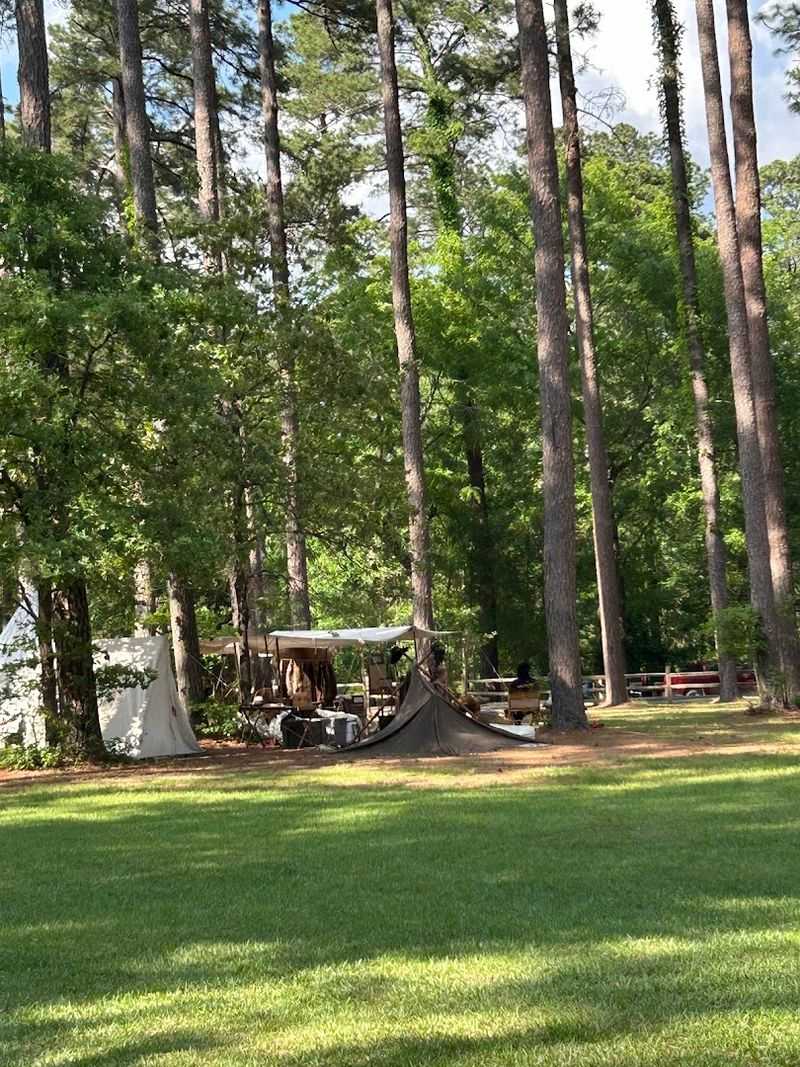
Not every park feature needs to be historic or wilderness-focused to be valuable, and Mission Tejas recognizes that families need practical amenities too. The park includes a playground that gives kids a dedicated space to burn energy while parents relax at nearby picnic tables. It’s well-maintained and positioned in a pleasant clearing that stays shaded by surrounding pines.
The group camping area earns specific praise from reviewers who’ve used it for gatherings. One visitor described it as the “perfect size”—large enough to accommodate a group comfortably without feeling like a crowded convention. The group site includes the amenities you’d expect, and its location within the park provides enough separation from individual campsites to keep everyone happy.
The park’s campfire circle gets mentioned frequently as a highlight for evening gatherings. It’s designed to accommodate groups and provides a focal point for storytelling, stargazing, and the timeless pleasure of watching flames dance against the darkness. Several reviewers noted finding plenty of kindling and firewood nearby, though it’s always smart to bring your own or purchase it to avoid depleting natural resources.
These facilities make Mission Tejas particularly appealing for family reunions, scout troops, or friend groups wanting to experience the outdoors together. The combination of modern conveniences and natural beauty strikes a balance that keeps both kids and adults engaged and comfortable throughout their stay.