Some North Shore stops get a quick glance through the windshield, but one park near Two Harbors keeps convincing Minnesotans to pull over year after year. It packs a stairway of waterfalls, rocky river ledges, a Lake Superior shoreline, and trails ranging from a short paved stroll to a rugged loop that tests your footing.
Families, wheelchair users, leashed dogs, and serious hikers all find a path that fits them here. Keep reading for the full plan, from the best season to go and the quieter trails most crowds skip, to the hours, fees, and small tips that make a first visit feel like a seasoned regular’s tenth.
A North Shore Classic Off Highway 61
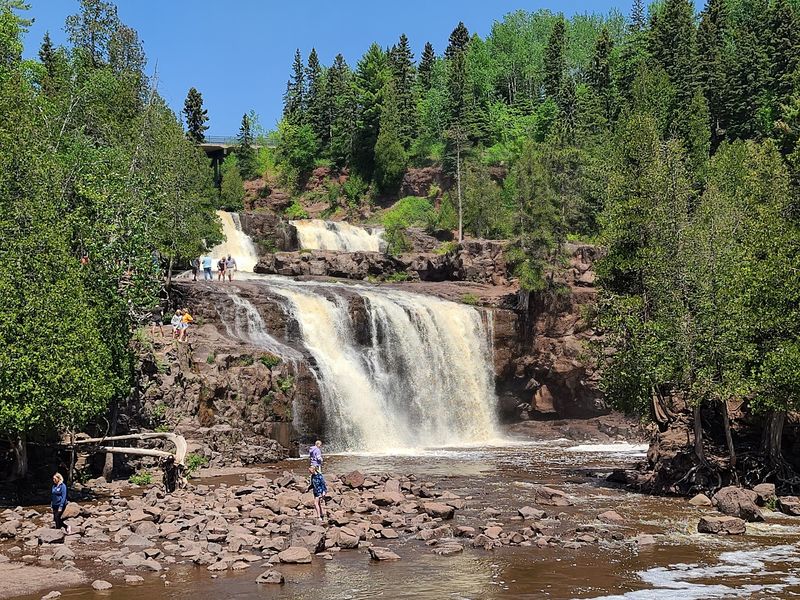
Plenty of Minnesota road trips have a ritual stop, and for the North Shore crowd that stop is Gooseberry Falls State Park. The park sits at 3206 MN-61, Two Harbors, MN 55616, in the United States, right along the highway that traces Lake Superior.
It covers 1,682 acres. That space holds waterfalls, campgrounds, picnic areas, and a web of trails.
Many travelers heading up from Duluth treat it as close to mandatory. The appeal is simple: the reward is big, and the effort required is small.
Paved paths lead from the visitor center to the main falls in a short walk. Longer routes branch out for anyone who wants more miles under their boots.
The park also draws a remarkable level of loyalty. Families describe it as their must-stop on an annual drive up the shore, and some admit they never pass by without pulling in.
For a place this easy to reach, it offers a surprising amount of variety. Lake views, river rocks, quiet forest trails, and a well-stocked gift shop all share the same address.
The question is not whether to stop. It is how long to stay once you get there.
Wildflowers, Wildlife, and the Bigger Picture
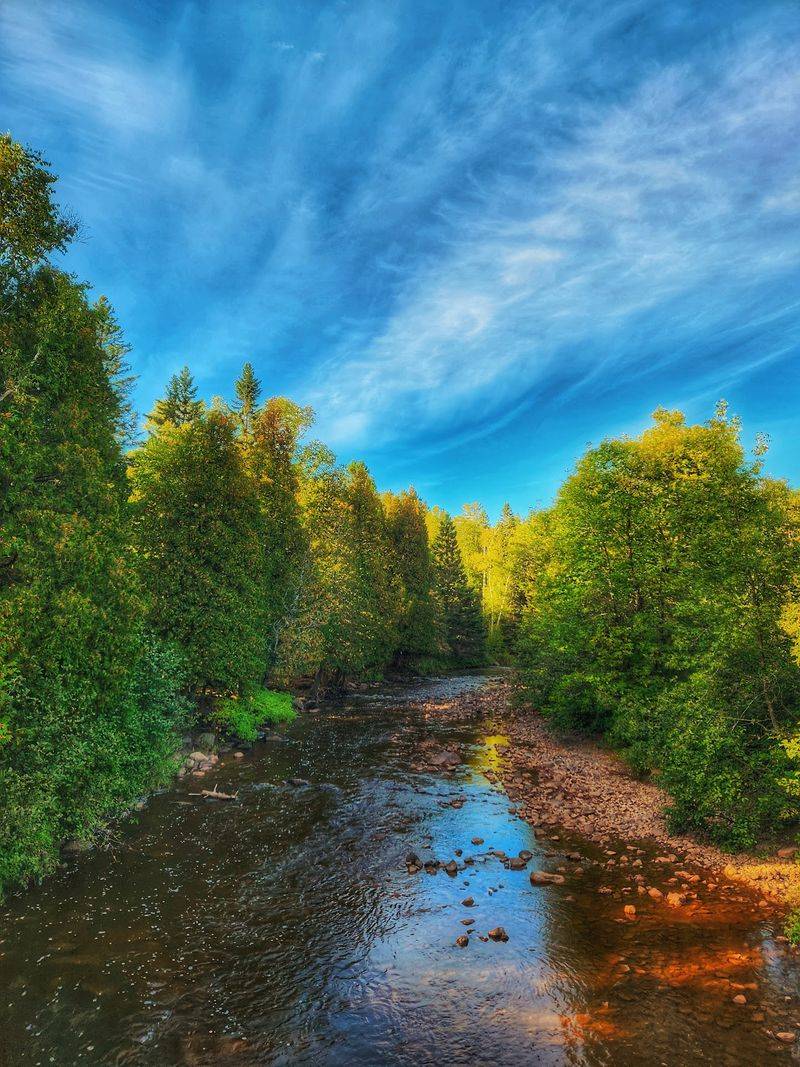
Waterfalls get the headlines, but the land around them deserves a second look. The park is known for diverse wildlife, and its trails wind through forest, riverbank, and lakeshore habitat.
That range is a big part of why nature lovers linger. Lots of plant life and creatures share these 1,682 acres, and the quieter trails offer the best chance to notice them.
Bird lovers have a reason to bring binoculars. The Gitchi Gummi Trail is suggested for anyone hoping to spot some birds along the way.
Wildflower fans should plan a little ahead. Bloom timing changes from year to year, so park staff at the visitor center are the best source for what is showing along the trails during your trip.
The message from longtime fans is consistent. Do not limit a visit to the falls alone, because many other worthwhile sights are scattered around the park.
A slow walk with a field guide can turn a quick waterfall stop into a half-day study session. Nobody grades the homework, which makes it the best kind.
Three Falls, One Easy Stroll
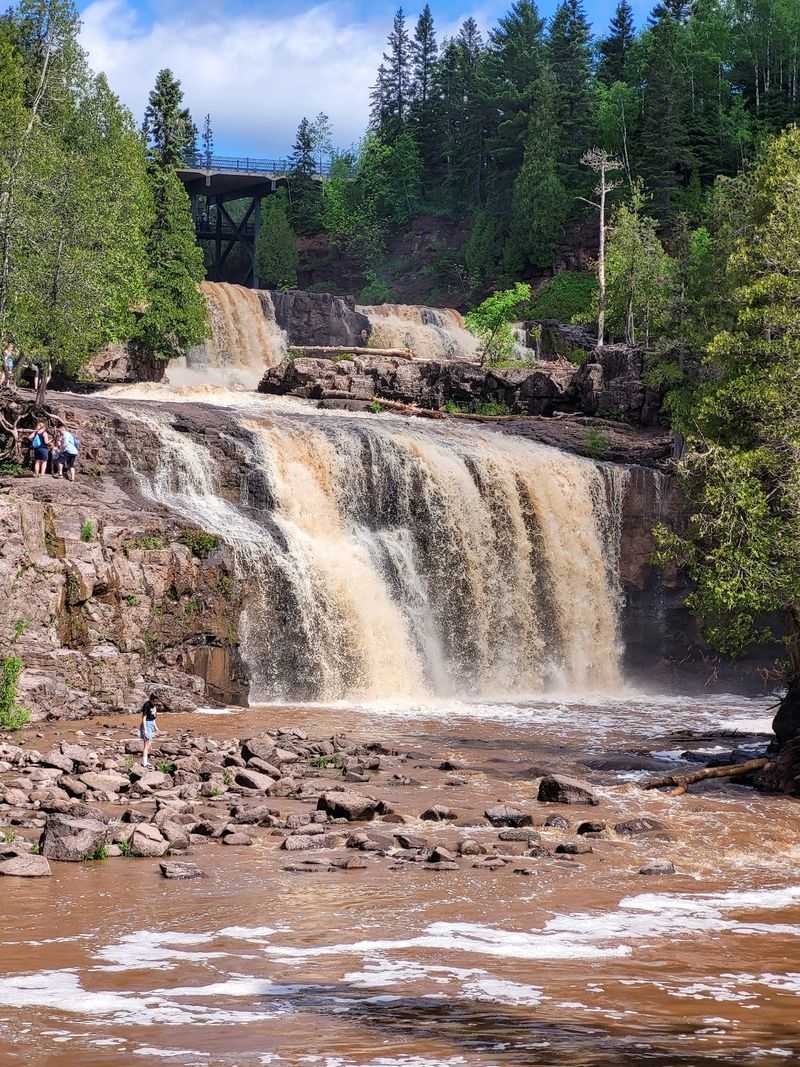
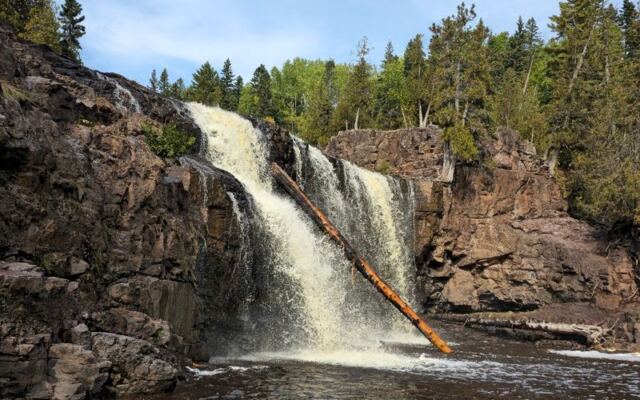
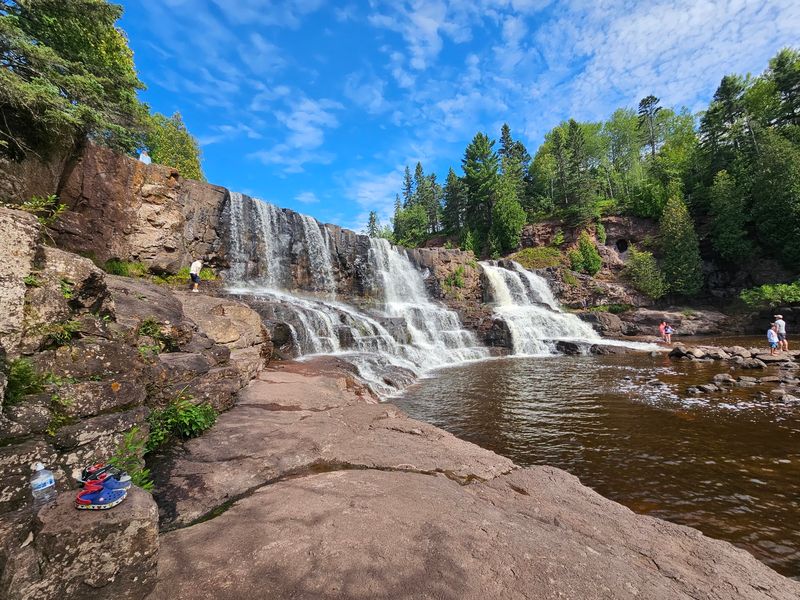
Most parks give you one waterfall and call it a day. Here, the river drops in a sequence of Upper, Middle, and Lower Falls, all reachable on short, well-maintained trails.
The water spills over rugged basalt rock. Multiple viewing points let you study the falls from an upper, middle, and lower angle.
Opinions vary on which tier wins. The upper falls tend to impress, while the lower falls can feel modest, especially when the river runs low.
Expectations matter here. These are not towering cascades, and anyone hoping for Niagara-scale drama should adjust the mental picture before arriving.
What the falls lack in height, they make up for in access and variety. Even on a slow water day, photo opportunities seem to appear around every bend.
The walk from the visitor center is short. Paved surfaces, boardwalks, steps, and ramps carry you to the overlooks without much fuss.
Fans say the falls are worth the stop whether the water is high or low. That flexibility makes the park an easy call in almost any month.
A good plan is to start at the top and work your way down. Each level reveals a slightly different personality of the same river.
Why Water Levels Change Everything
Timing a visit to Gooseberry Falls is a little like checking the weather before a picnic. The river level shifts with rain and season, and it changes the whole experience.
When water runs high, the falls look fuller and more impressive. That is why some fans recommend going during peak season when flow is strongest.
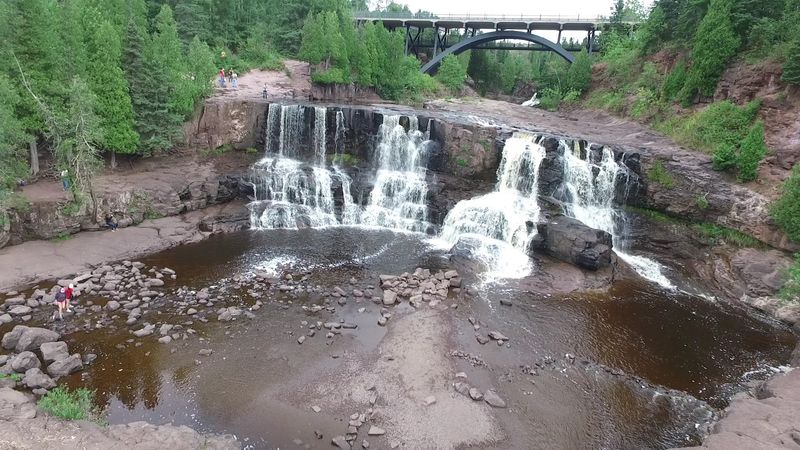
Drought years tell a different story. Recent dry stretches left the water quite low, shrinking the falls to a modest splash.
Low water has a hidden bonus, though. With the river receded, you can walk out on the riverbed and reach spots that would normally sit underwater.
Rock hopping across the stream becomes possible. Getting up close to the falls turns into part of the fun rather than something to admire from a railing.
So there is no truly bad level. High water favors the photographers, and low water favors the explorers.
Checking recent conditions before you go helps set expectations. The park website from the Minnesota DNR is a sensible first stop for current information.
Either way, the trip pays off. You just get a different version of the same river depending on what the sky has been doing.
Paths That Welcome Every Pace
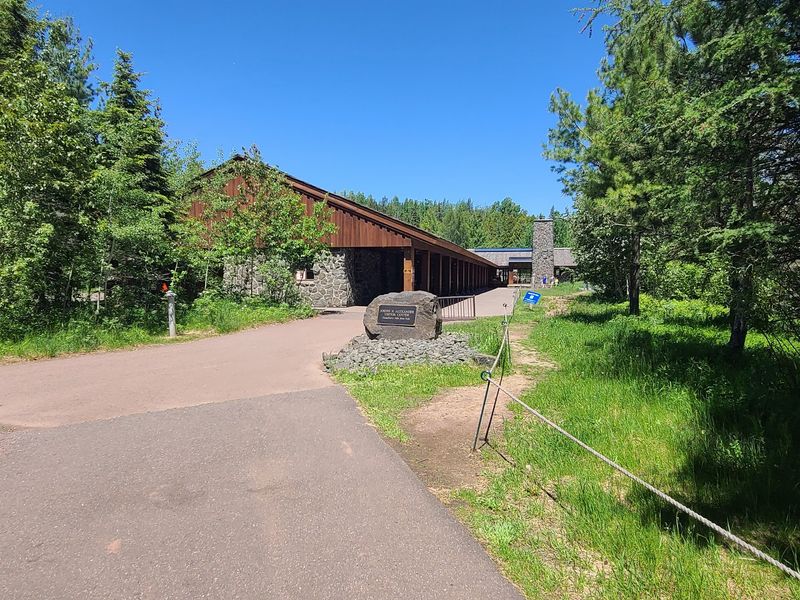
Accessibility is where this park quietly outshines many of its neighbors. Much of the main path is fully paved, and boardwalks fill in many of the gaps.
Steps and ramps both appear along the way. That mix gives people with different mobility needs a choice of how to reach the views.
Wheelchair users have made the trip successfully, including in a powered wheelchair. A few tree roots push up the paved surface, but going slowly gets you over them.
Older hikers fare well too. Folks in their seventies have been spotted handling the main route with ease.
Some off-pavement sections get uneven. Those stretches are optional, so nobody has to tackle them to see the main falls.
The effort-to-reward ratio here is the park’s quiet superpower. You get classic North Shore scenery without needing legs of steel or a recovery day afterward.
Fitness level barely matters for the core experience. That is a big reason the park works so well for multigenerational family outings.
Grandparents, toddlers in strollers, and teenagers who would rather be anywhere else can all reach the same overlook. Group harmony, at least for a few minutes, is achievable.
Rock Scrambling Along the River
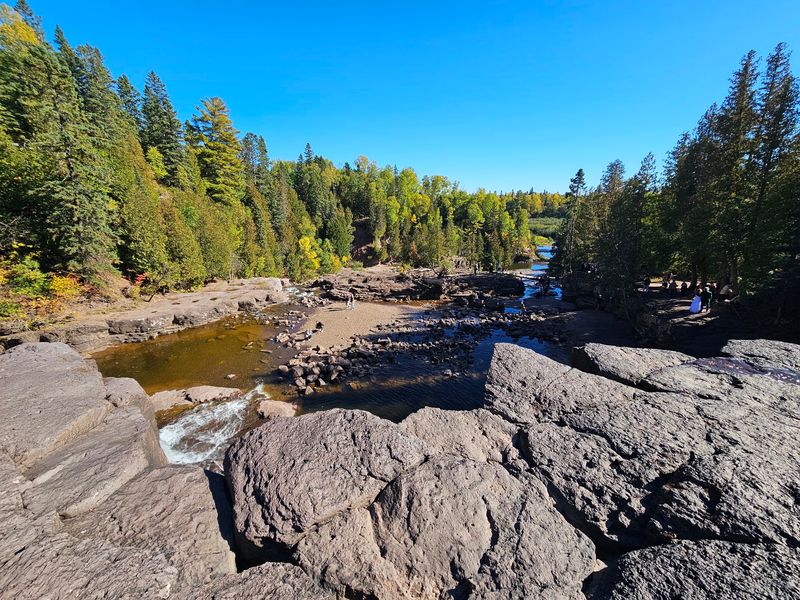
Somewhere inside every adult is a kid who wants to climb on big rocks. Gooseberry Falls hands that kid a permission slip.
Both sides of the river are open for exploring. You can hop across giant boulders, wander along ledges, or wade into the shallows.
Anyone who has ever wanted to play mountain goat on river stones will feel right at home. Balance tests come free of charge.
A spot just past the lower falls works for getting into the water. It is considered safe for older children, which makes it popular on warm days.
Water shoes earn a spot in the bag. When the river is slow and low, dipping your toes in becomes an easy part of the visit.
Caution still matters, of course. Rocks along any river can be slick, and one family learned that lesson when a young hiker slipped in on a cool day.
Supervise little ones closely and pick footing with care. A spare set of dry clothes in the car is a smart insurance policy.
Handled sensibly, this is where many of the best memories happen. Kids tend to remember the boulders long after they forget the overlook.
The Trail Down to Lake Superior
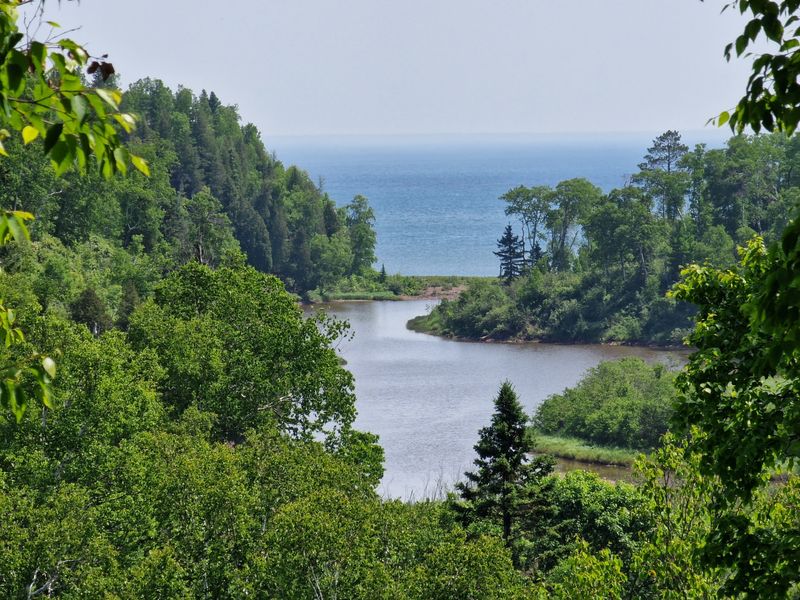
Plenty of people stop at the main falls and turn back to the car. The ones who keep walking discover that the river eventually meets Lake Superior.
A trail leads down to the lakeshore in a short hike. The walk is peaceful, even late in the fall season.
At the bottom, a broad area of rock spreads out along the water’s edge. It is easy to climb on and makes a natural place to sit for a while.
A small beach sits nearby. Picnic tables and fire pits turn the area into a ready-made lunch break spot with a lake view.
Here is a useful tip from regulars. Hike past the little hut and continue down by the beach to reach the flat rocks.
On calm days, the lake makes a fine backdrop for photos. It is also a welcome breather before the climb back up.
Many families end up liking this section even more than the falls themselves. The scale of the lake shifts the whole mood of the visit.
Bring a packed lunch and give this stretch real time. Rushing it would be like leaving a movie before the best scene.
A Loop With a Surprise Ending
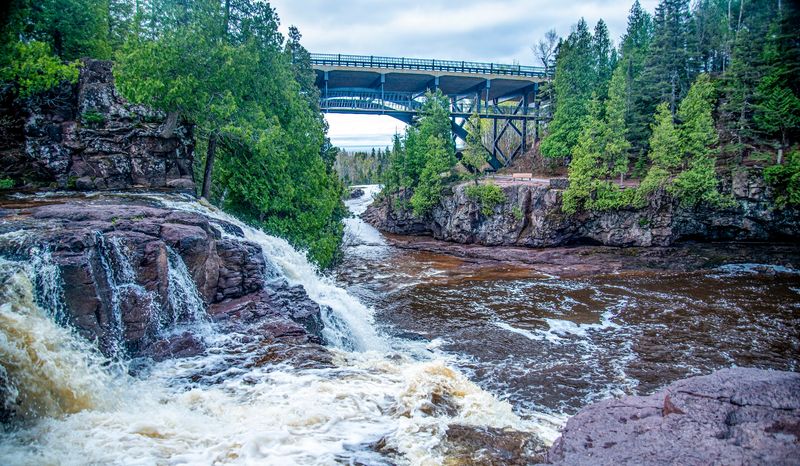
Good hikes save a twist for the final act, and the roughly three-mile loop here does exactly that. It connects the lakeshore, the river, and the falls into one satisfying circuit.
After climbing back up from Lake Superior, cross the small wooden bridge. The trail then heads up the right side of the river.
A few steps are part of the climb. They sound harder than they are, and they reward you with another view from above the falls.
The route continues to the upper falls, tucked under the big bridge and across the highway. They are smaller than the main waterfall, yet they still earn the detour.
The loop is relatively easy to follow. Families describe it as a family-friendly adventure that shows far more than the main viewing area.
Seeing the park from several angles changes the experience. Many hikers come away preferring the full loop to simply standing at the central overlook.
Allow a comfortable chunk of time and pack water. The pace is relaxed, but the stops add up quickly.
By the end, the main falls feel like the opening act. The loop is the full concert.
Fifth Falls for Crowd Dodgers
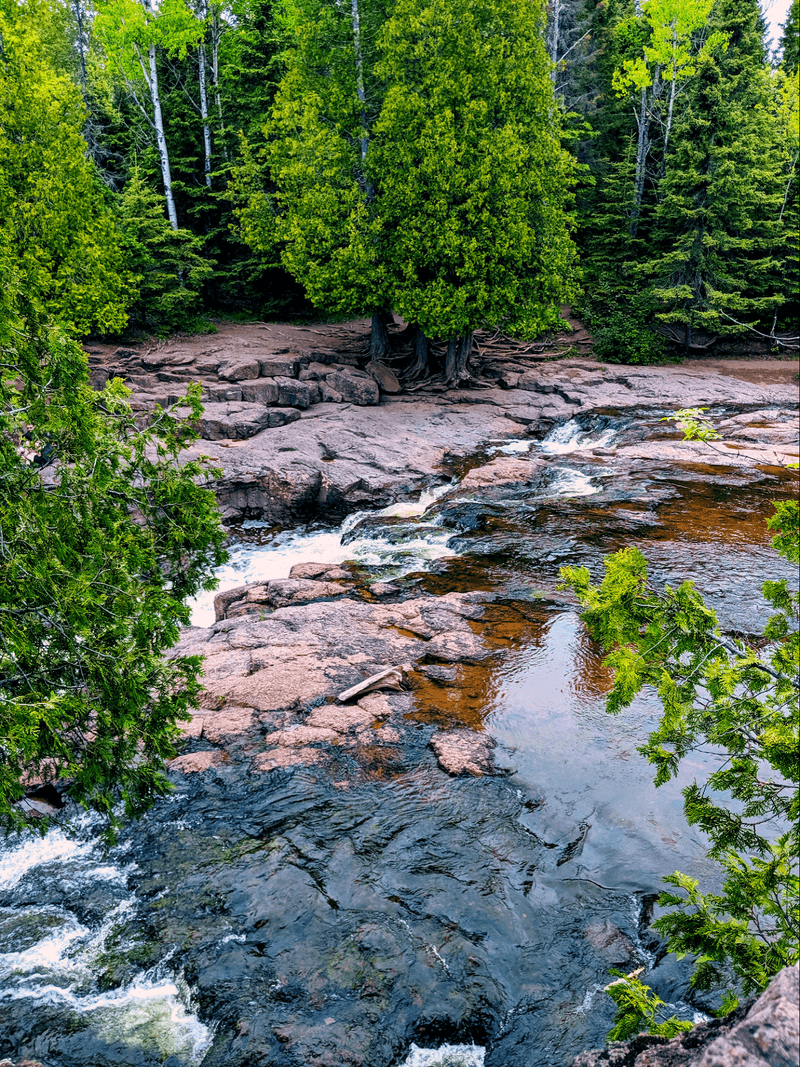
Crowds have a predictable habit. They gather at the main falls and rarely wander very far beyond them.
That habit works in your favor. The hike to Fifth Falls draws far fewer people, so it offers a calmer slice of the park.
From the visitor center, the trek is about a mile each way. It is not especially challenging for most hikers.
Those who make a loop of it cover a little more than three miles. Fans call it a beautiful walk that stays manageable for average fitness levels.
Quiet is the main payoff. On busy weekends, Fifth Falls can feel like a different park entirely.
The route is a favorite for repeat visitors. Some make it a yearly tradition alongside their stop at the main overlook.
Comfortable shoes are enough here. No special gear is needed, and the trail suits families with kids who can handle a few miles.
Consider it the park’s best-kept open secret. Everyone could go, yet most simply do not.
Gitchi Gummi Trail and Its Rugged Charm
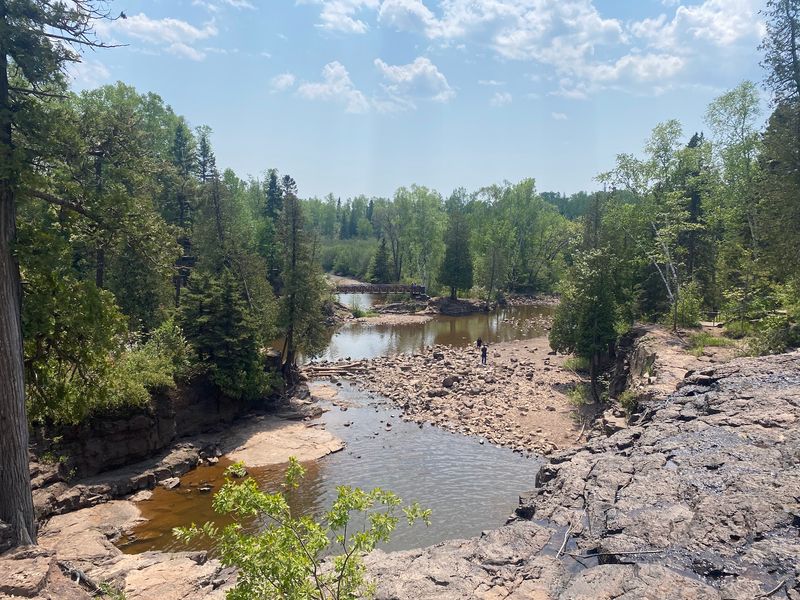
Not every trail here wants to hold your hand. The Gitchi Gummi Trail Loop is the park’s tougher sibling, and it seems proud of that reputation.
Expect rough, rocky terrain. Roots poke up at random, and some inclines are genuinely steep.
The trail suits younger hikers, fit adventurers, and anyone seeking a challenge. Bird watchers also find good reasons to take it.
Kids handle it better than you might guess. Plenty of children tackle the route, including ten-year-olds keeping pace with their parents.
Breaks are smart, especially with little ones or for hikers with physical limitations. The views make every pause worthwhile.
Another perk is solitude. While the falls area gets hit hardest by crowds, this trail can feel nearly empty on the same day.
The red trail also earns a mention as one of the better areas in the park. Hikers chasing quieter scenery should look at both on the trail map.
One last piece of advice comes with a grin. Admire the water from the trail, and resist any urge to test whether you can walk on it.
Visitor Center Perks and a Souvenir Stop
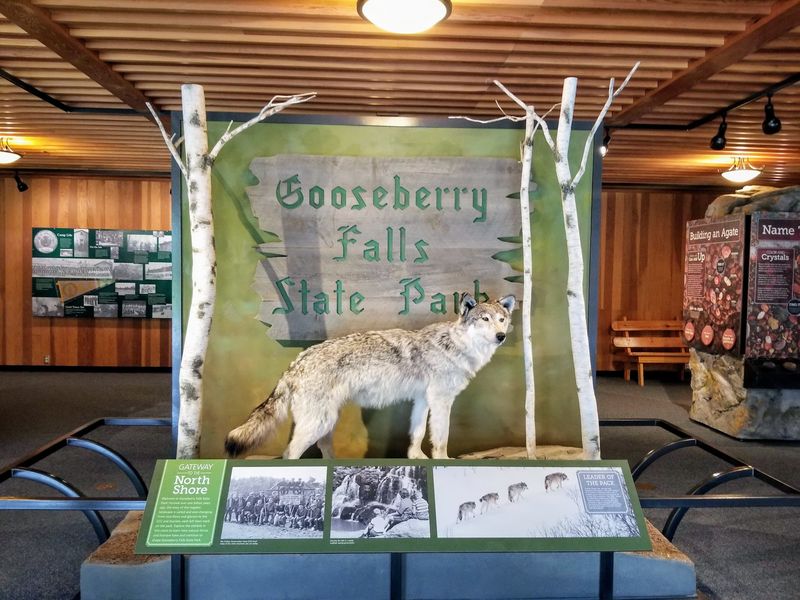
Park facilities often get forgotten, but this visitor center gets a surprising amount of praise. It has been compared to a resort lobby next to typical park buildings.
Clean, accessible restrooms are a big draw. Modern bathrooms make a long North Shore drive much more pleasant.
Informative exhibits explain the park before you hit the trails. Guided tours are also offered for those who like context with their scenery.
The gift shop deserves its own moment. It carries a wide variety of souvenirs, which makes it a fun browse for collectors of park keepsakes.
Crafters and gift hunters may find it a handy stop for North Shore mementos. It is an easy place to pick up something for the folks back home.
The visitor center is free to visit. It also serves as the launch point for the paved walk to the falls.
Gathering trail information here first saves guesswork later. Staff and displays help you match a route to your group.
Think of it as base camp with nicer restrooms. Start here, and the rest of the day tends to flow smoothly.
Seasons, Crowds, and Fall Colors
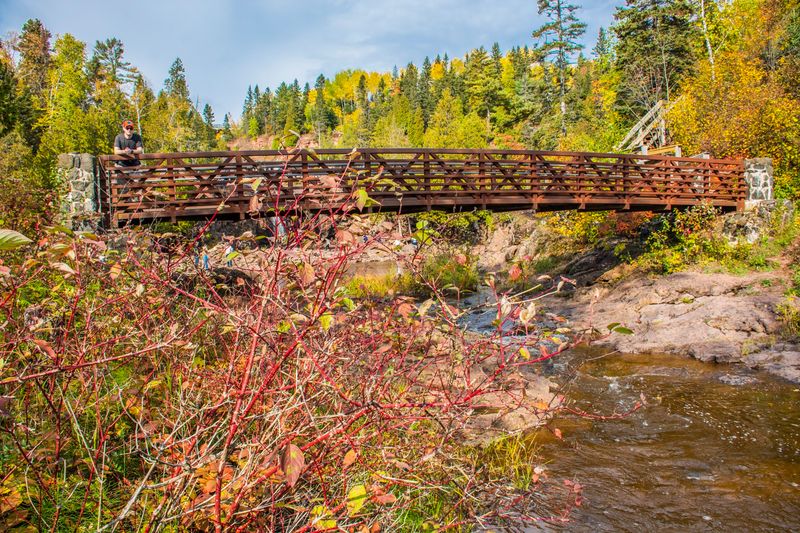
Ask longtime fans their favorite season, and fall comes up again and again. The autumn colors make the park a strong pick from late September into October.
Popularity comes at a price, though. Peak color weekends bring heavy crowds, and getting a photo without strangers in the frame can be tricky.
Some families simply embrace the bustle. Others avoid tourist season altogether and come when things are quieter.
Summer brings lush greenery and stronger flow in wetter years. It is also the season for picnics and wading.
Winter has its own draw. Dramatic ice formations take over the falls, giving the park a completely different look.
Families have enjoyed visits as late as November too. The lake can be calm and the trails less busy.
To dodge crowds in any season, head to the side trails. Fifth Falls and the Gitchi Gummi Trail stay quieter even on packed days.
Arriving soon after the 8 am opening also helps. Early birds tend to claim the best overlook spots before the tour buses of the day roll in.
Practical Notes Before You Go
A little planning keeps the day relaxed. The park is open daily from 8 am to 10 pm, every day of the week.
Visiting the visitor center is free. A parking pass fee applies in some areas, so check the Minnesota DNR website for current details before you go.
Dogs are welcome on leashes. Bring bags and water for four-legged hiking partners.
Pack water shoes for the river and sturdy footwear for the rougher trails. A change of clothes is wise for kids who love the shallows.
Campgrounds are available for anyone wanting more than a day trip. Picnic areas and lakeside fire pits support longer stays.
A bike path leads up to the castle and the bridge overlook. It adds another way to see the park.
Hike options range from a quick half mile with some steps to a five-mile outing. Choose based on time, energy, and who is along for the ride.
Those on a tight schedule may find the main falls a bit brief. With a few hours to spare, though, the trails and lakeshore turn a quick stop into a satisfying outing well worth the drive up the shore.
Share this story