Texas is full of surprises, especially when you venture beyond the big cities. Scattered across the wide-open countryside are tiny towns that pull in crowds by the millions, not for rodeos or oil wells, but for reasons that might leave you scratching your head. From mysterious art installations in the desert to ghost-hunting hotspots and quirky music festivals, these rural communities have carved out their own strange and wonderful niches that keep visitors coming back year after year.
1. Terlingua
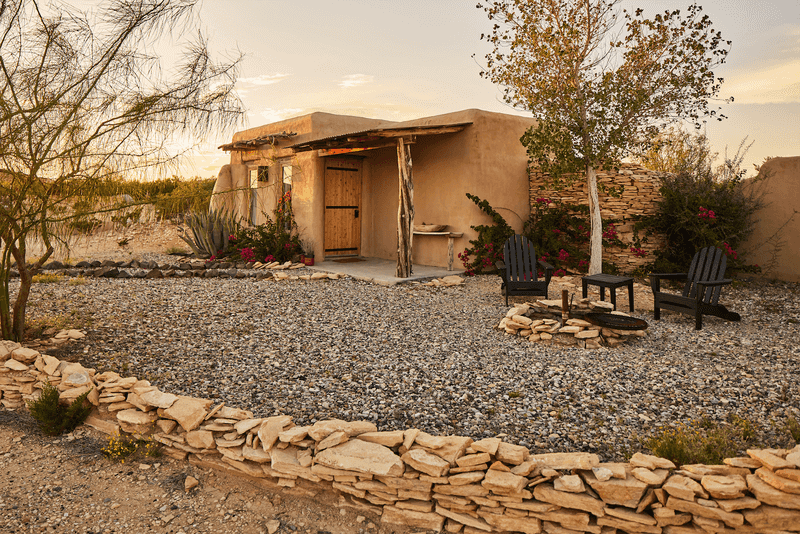
Out in the middle of nowhere, where the Chihuahuan Desert stretches endlessly and cell service becomes a distant memory, sits a ghost town that refuses to stay quiet. Terlingua was once a bustling mercury mining hub, but when the mines closed in the 1940s, most folks packed up and left. What remained were crumbling adobe ruins and stories that seemed too wild to be true.
Fast forward to today, and this tiny spot near Big Bend National Park draws chili lovers from around the globe every November for the Terlingua International Chili Championship. Thousands descend on this population-of-barely-100 community to argue over beans, spices, and what truly makes championship chili. The competition has been running since 1967, and it’s become legendary in cooking circles.
Beyond the chili cook-off, Terlingua has transformed into an unexpected artist colony and adventure basecamp. Painters, writers, and musicians have claimed the old buildings, turning ruins into galleries and performance spaces. The Starlight Theatre, a restored trading post, hosts live music that echoes across the desert on weekend nights.
Visitors also flock here for dark sky stargazing that rivals anywhere on Earth. With zero light pollution for miles, the Milky Way appears so bright you can read by it. Daytime brings rock hounds searching for agate, hikers heading into Big Bend, and river rafters tackling the Rio Grande.
The town maintains its ghost-town vibe while somehow supporting several restaurants, a quirky cemetery where locals leave beer for the departed, and enough characters to fill a dozen novels. It’s the kind of place where everyone has a nickname and a backstory, where tumbleweeds actually do roll past your feet, and where the nearest grocery store requires a 90-mile round trip that nobody seems to mind making.
2. Shiner
Population 2,000. Beer production? Over 6 million cases annually.
That’s the math that makes Shiner one of Texas’s most unlikely success stories. This tiny farming community in Lavaca County became famous for one thing: brewing beer that Texans swear by, shipped to all 50 states and beyond.
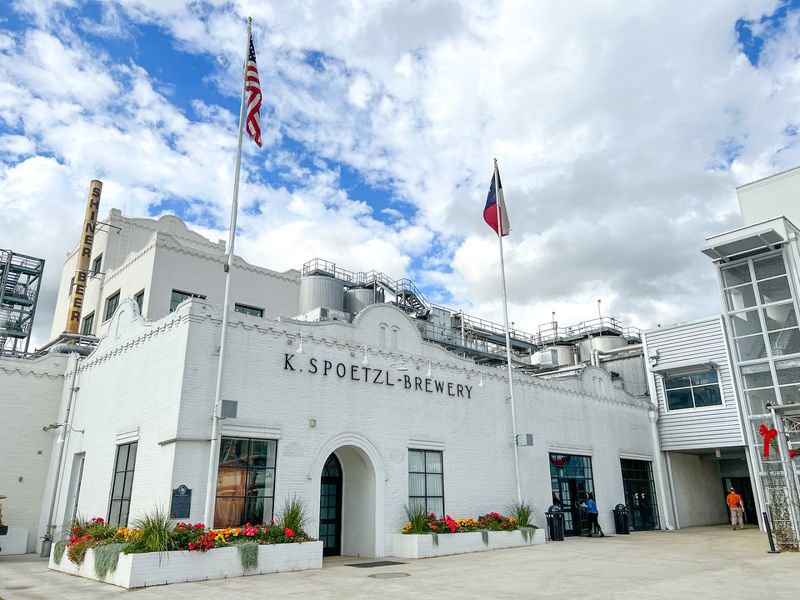
The Spoetzl Brewery opened in 1909, started by Bavarian immigrant Kosmos Spoetzl, who brought Old World brewing techniques to the prairie. What began as a local operation serving Czech and German farmers somehow grew into a craft beer empire before craft beer was even a thing. The flagship Shiner Bock has achieved cult status, especially during barbecue season.
More than 100,000 visitors tour the brewery each year, which is remarkable considering the entire town could fit inside a large shopping mall. The free tours end with generous samples in the Hospitality Room, where strangers become friends over cold longnecks. The gift shop does serious business in Shiner swag that folks wear proudly from Alaska to Maine.
But Shiner isn’t just about beer. The town celebrates its Czech heritage with the annual Bocktoberfest, featuring polka bands, kolaches, and enough sausage to feed a small army. Downtown still has that 1950s main street feel, with original storefronts and a pace of life that seems immune to modern rushing.
The surrounding countryside produces cattle, cotton, and some of the state’s best kolache bakeries. Locals will argue passionately about whose grandmother makes the most authentic version of these Czech pastries. St. Ludmila Catholic Church, built in 1921, features stunning painted interiors that rival European cathedrals, a hidden architectural gem that most beer tourists never discover but absolutely should.
3. Fort Davis
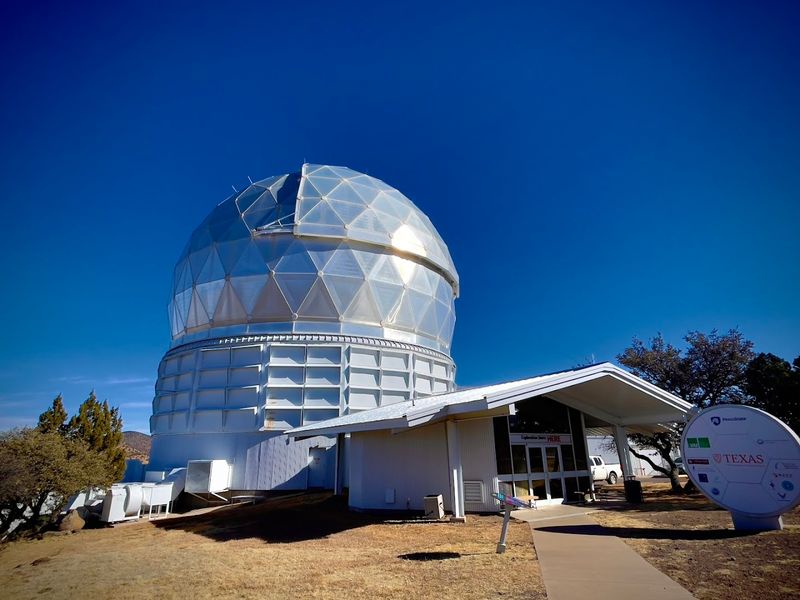
At 5,050 feet elevation, Fort Davis claims the title of highest town in Texas, which matters more than you’d think. The altitude creates weather that feels downright un-Texan: cool summers, actual seasons, and air so clear it attracted astronomers who built one of the world’s premier observatories here.
The McDonald Observatory sits atop Mount Locke, housing some of the largest telescopes in North America. Their Star Parties draw astronomy enthusiasts and curious families who’ve never seen Saturn’s rings through a real telescope. On clear nights, which happen about 300 times a year, the sky puts on a show that leaves city dwellers speechless.
The town itself grew around a frontier military post established in 1854 to protect travelers and mail routes from raids. Today, Fort Davis National Historic Site preserves the best example of a frontier fort in the Southwest. Rangers in period clothing demonstrate cavalry drills and explain what life was like for Buffalo Soldiers stationed at this remote outpost.
Main Street looks like a Western movie set, except everything’s real and still functioning. The historic Limpia Hotel, built in 1912, welcomes guests who appreciate creaky wooden floors and rocking chair porches. Several art galleries showcase landscape paintings that capture the dramatic light and colors of the Davis Mountains.
Nearby, Davis Mountains State Park offers hiking through landscapes that feel more like Colorado than Texas. Mule deer wander through town at dusk. The Indian Lodge, a pueblo-style hotel inside the park, books months ahead for summer weekends.
Cyclists tackle the challenging climbs on roads that wind through working cattle ranches. The town supports an organic farm-to-table restaurant that seems impossibly sophisticated for a population under 1,200. Coffee roasters, a craft meadery, and a thriving artists’ community have transformed Fort Davis into West Texas’s unlikely cultural hub.
4. Wimberley
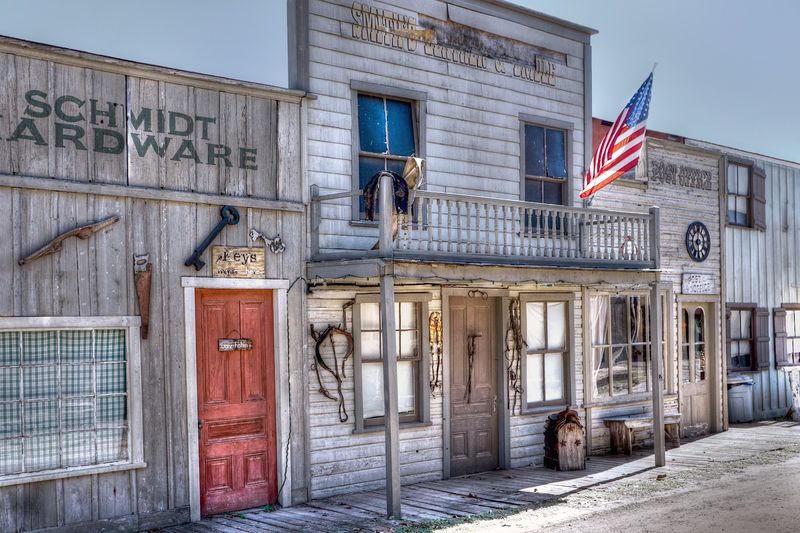
Cypress Creek runs right through the middle of town, creating swimming holes that have launched a thousand Instagram posts. Wimberley sits in the heart of Hill Country, where limestone cliffs meet spring-fed water and old-growth cypress trees provide shade that feels like natural air conditioning. Austinites discovered this spot decades ago and never stopped coming.
On the first Saturday of each month from April through December, the population explodes for Market Days, a sprawling outdoor marketplace that’s been running since 1982. Over 475 vendors set up shop selling everything from handmade furniture to goat milk soap, attracting upwards of 15,000 shoppers who clog Highway 12 for miles. It’s become one of the largest outdoor markets in the Southwest.
Blue Hole Regional Park represents Wimberley’s crown jewel—a pristine swimming area fed by natural springs that maintain a refreshing temperature even during brutal Texas summers. Locals guard their secret spots along the creek, but visitors can enjoy designated areas perfect for cliff jumping, floating, and forgetting that civilization exists just 45 minutes away.
The artist community here rivals much larger cities. Dozens of galleries line the main drag, featuring painters, sculptors, glassblowers, and jewelers who chose Wimberley specifically for its creative energy and natural beauty. The Corral Theater hosts live performances in an intimate setting that sells out regularly despite having only 100 seats.
Weekends bring food trucks, live music at outdoor venues, and wine tasting rooms that showcase Texas vintages. Jacob’s Well, a nearby natural spring that drops 140 feet straight down, draws divers willing to wait hours for a chance to explore its depths.
Old Baldy, a bald cypress tree estimated at over 500 years old, stands as a living monument along the creek. Bed and breakfasts book solid during peak season, filled with couples seeking romance and families needing a nature break from screen time.
5. Canyon
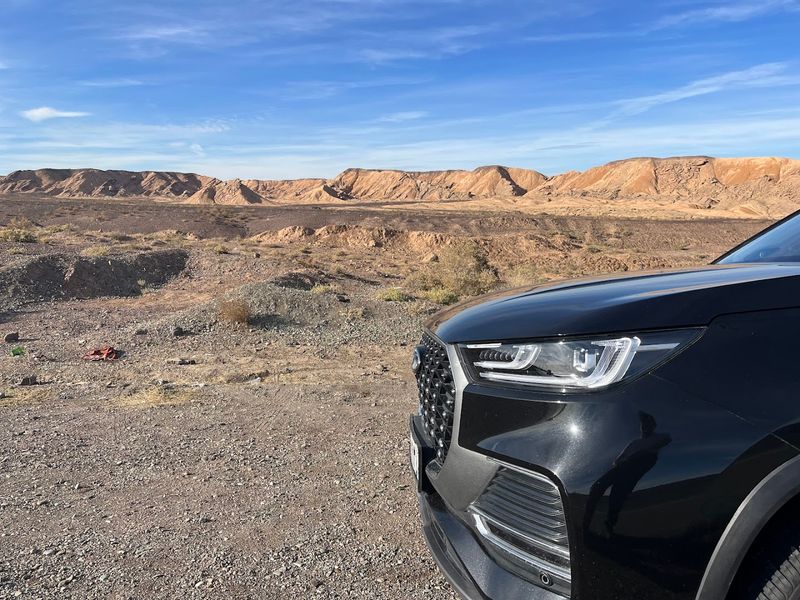
Home to 15,000 residents and the second-largest canyon in America, Canyon serves as gateway to Palo Duro Canyon State Park, where 120 miles of trails wind through rock formations painted in reds, oranges, and purples that seem Photoshopped until you see them in person. The canyon drops 800 feet below the surrounding plains, a geological surprise that catches first-time visitors completely off guard.
Every summer since 1966, the outdoor musical drama TEXAS has performed in the Pioneer Amphitheatre carved into the canyon floor. More than 3 million people have watched this production that tells the story of Panhandle settlement through song, dance, and a finale featuring actual fireworks echoing off canyon walls. Performers descend on horseback, and the natural acoustics create sound effects no theater could replicate.
West Texas A&M University anchors the town, bringing unexpected cultural offerings like the Panhandle-Plains Historical Museum, the largest history museum in Texas. Collections include everything from paleontology specimens to pioneer artifacts to contemporary art, housed in a building that keeps expanding because donors keep giving.
The downtown square maintains its historic courthouse and buildings that haven’t changed much since the 1920s. Local restaurants serve chicken-fried steak that could convert vegetarians, and pie shops take their recipes seriously enough to inspire road trips from Dallas.
Buffalo Lake National Wildlife Refuge sits just outside town, providing habitat for migrating birds and year-round wildlife watching. The flat plains surrounding Canyon seem endless until you reach the canyon rim, where the earth simply opens up.
Hiking, mountain biking, and horseback riding through Palo Duro attract outdoor enthusiasts who appreciate trails less crowded than Colorado’s. Sunrise and sunset turn the canyon into a light show, with shadows and colors shifting minute by minute. The Lighthouse Trail leads to the canyon’s most photographed rock formation, a hoodoo that stands sentinel over the landscape.
6. Luckenbach
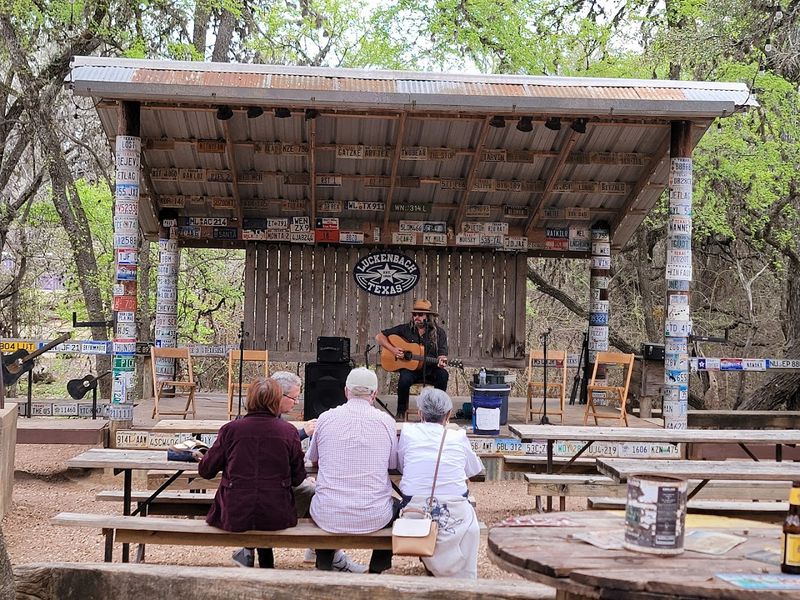
“Everybody’s somebody in Luckenbach” goes the saying, and in a town with a population that hovers around three, that’s not hard to achieve. This isn’t really a town—it’s more like a state of mind with a general store, a dance hall, and enough live music to make Nashville jealous.
Waylon Jennings and Willie Nelson made Luckenbach famous with their 1977 hit song that romanticized escaping to this simple place. What they sang about was real: a former German settlement that had dwindled to almost nothing until John Russell “Hondo” Crouch bought it in 1970 and turned it into a laid-back gathering spot for musicians and misfits.
The old general store and post office, established in 1849, still operates, selling cold beer, basic groceries, and more Luckenbach merchandise than seems possible for such a small space. Outside under massive oak trees, picnic tables fill with folks who drove hours just to crack open a longneck and listen to whoever’s playing guitar that afternoon.
Music happens here almost daily, sometimes scheduled, often spontaneous. The dance hall hosts everything from unknown singer-songwriters to surprise appearances by major touring acts who just want to play for people who actually listen. No cover charge, just a tip jar and good vibes.
Special events draw massive crowds: the annual Hug-In on Valentine’s Day, Fourth of July celebrations, and the Great World Championship Ladies-Only Chili Cookoff that’s been running since the 1970s. Thousands pack into the property, parking in pastures and walking through fields to reach the music.
There’s no hotel, no restaurant beyond the general store’s snacks, and no reason to stay beyond the music and the feeling. Yet people keep coming, seeking whatever it was that Waylon and Willie were singing about—a place where pretense dies and everybody really is somebody, or maybe nobody, and that’s perfectly fine either way.
7. Marfa
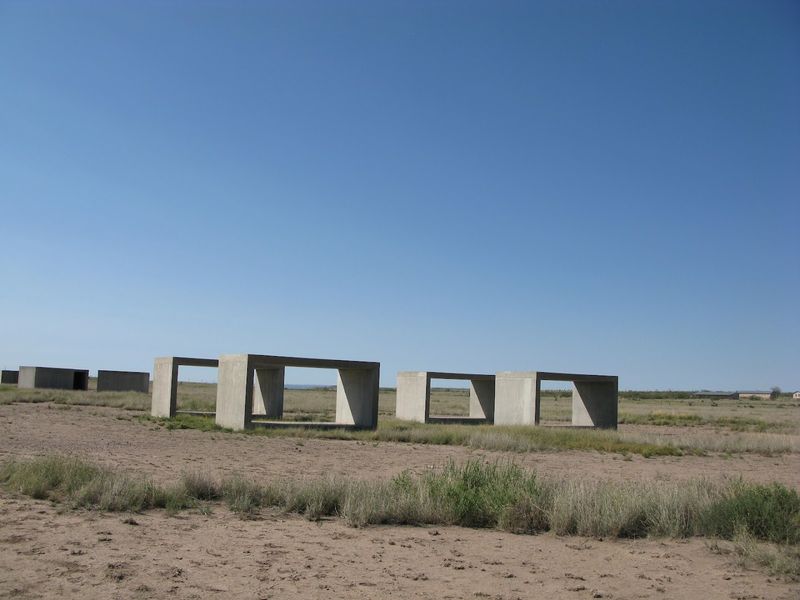
In 1971, minimalist artist Donald Judd moved to this dying railroad town and started buying buildings to house his art. That decision transformed Marfa from a forgotten outpost into one of the art world’s most important destinations, a place where New York gallery owners fly in for openings and celebrities hide out in renovated adobes.
The Chinati Foundation occupies a former military base, displaying massive permanent installations by Judd and other contemporary artists across 340 acres. Concrete boxes, aluminum sculptures, and earthworks interact with the desert landscape in ways that either blow your mind or leave you wondering what the fuss is about—there’s rarely middle ground.
But Marfa offers more than high art. The mysterious Marfa Lights have been documented since the 1880s, unexplained glowing orbs that appear in the distance on certain nights. A designated viewing area lets visitors scan the horizon hoping to spot them, and plenty do, though explanations range from atmospheric phenomena to car headlights to alien activity.
Downtown has transformed into a collection of galleries, boutiques, and restaurants that wouldn’t be out of place in Brooklyn. The Hotel Saint George and Hotel Paisano (where Giant was filmed in 1955) offer accommodations that mix historic charm with modern design sensibility. Food trucks serve gourmet tacos, and coffee shops roast their own beans.
Prada Marfa, a permanent sculpture installation 37 miles outside town, replicates a Prada store complete with real handbags and shoes, standing alone on the prairie like a mirage. It’s become one of the most photographed art installations in America.
The juxtaposition defines Marfa: ranchers in pickup trucks share streets with artists in vintage Mercedes, Border Patrol agents grab breakfast next to gallery curators, and somehow it all works. Summer brings film festivals, music events, and enough cultural programming to rival cities 100 times larger. The population barely tops 1,700, but the influence extends worldwide.
8. Uncertain
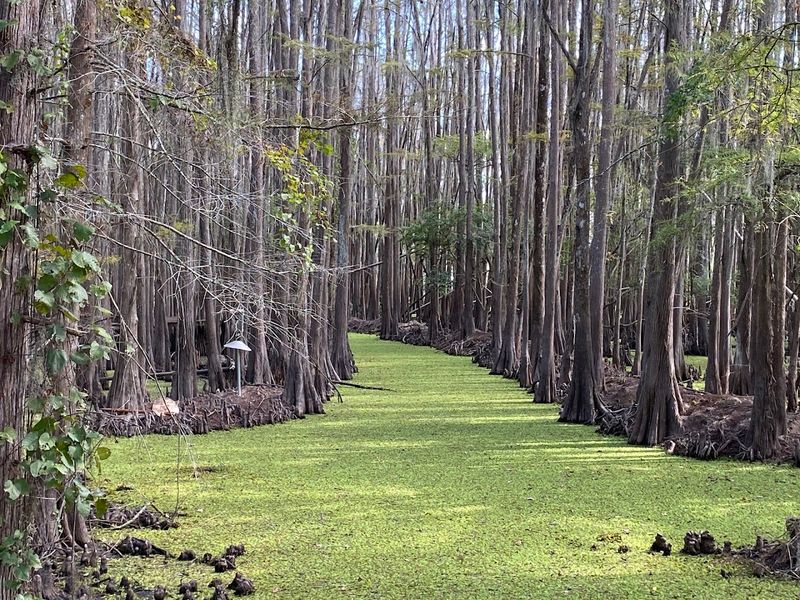
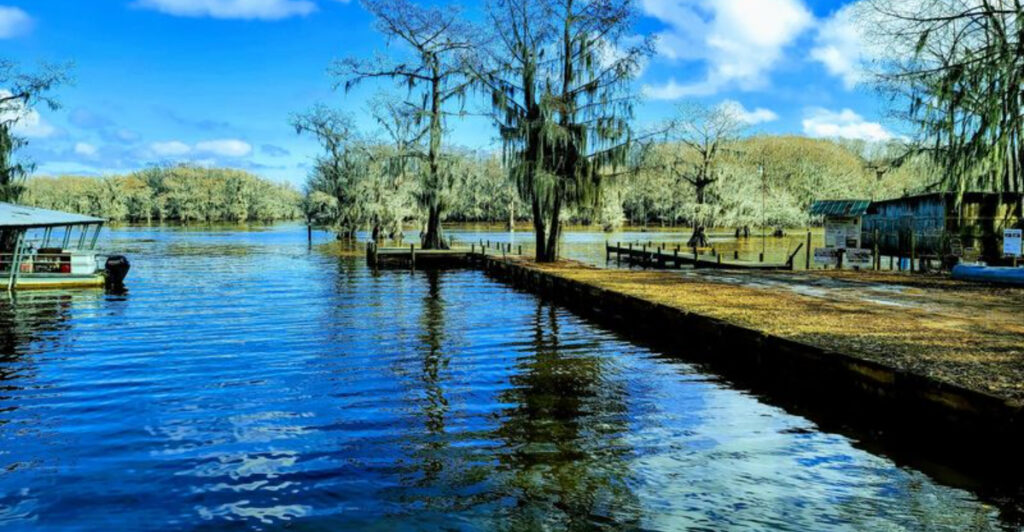
The name itself raises questions, and the town delivers on that promise of strangeness. Uncertain sits on the shore of Caddo Lake, a 25,400-acre maze of cypress swamps, Spanish moss, and waterways that feel more Louisiana than Texas. Population fluctuates around 100, but the mystique draws far more attention than the census suggests.
Caddo Lake State Park provides access to this otherworldly ecosystem, the only natural lake in Texas and one of the few places in the state where alligators live wild. Paddling through the cypress forest feels like entering a primeval world where pterodactyls wouldn’t seem out of place. Bald cypress trees draped in Spanish moss rise from dark water, creating corridors that twist and turn until you lose all sense of direction.
The lake supports incredible biodiversity—250 bird species, 70 types of fish, and plant life found nowhere else in Texas. Bass fishing tournaments bring serious anglers who navigate the sloughs and channels with local guides who know every stump and sandbar. Without a guide, getting lost is practically guaranteed.
Uncertain gained additional fame from the 2013 documentary that explored the town’s quirky residents and their relationship with the lake. Colorful characters and an economy dependent on fishing and tourism created a portrait of rural Texas life that felt authentic and slightly surreal.
The town itself consists of a few streets, some fishing camps, and not much else. What draws visitors is the lake and the sense of stepping into a different world. Sunrise and sunset photography here produces images that look enhanced but aren’t—the light filtering through cypress and fog creates natural drama.
Boat tours run regularly, taking visitors into the deeper swamps where eagles nest and lotus fields bloom in summer. The Texas Freshwater Fisheries Center nearby offers education about the lake’s ecology. Uncertain remains uncertain about its future, but for now, it serves as portal to one of Texas’s most unique natural environments.
9. Gruene
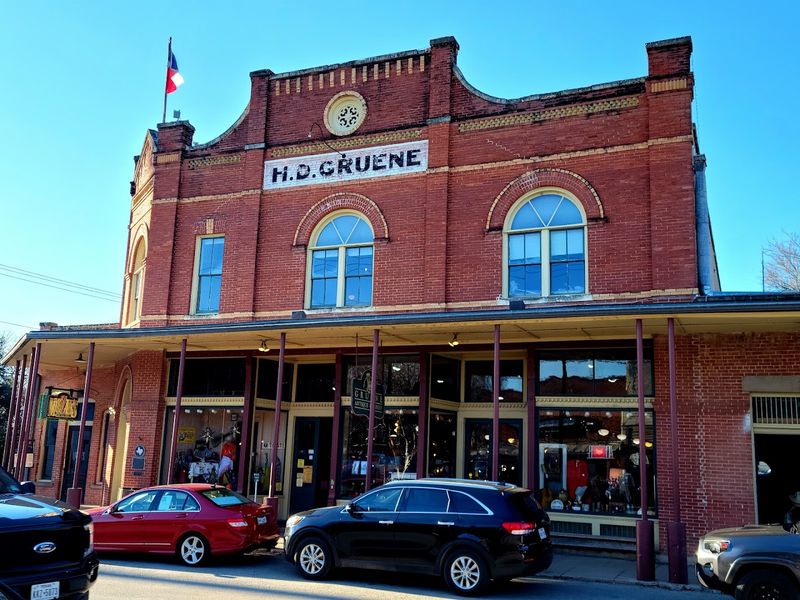
Gruene Hall has been hosting dances since 1878, making it the oldest continuously operating dance hall in Texas. The wooden building sags just enough to prove its age, with a spring-loaded floor that bounces under boot heels and walls covered in band stickers and carved initials spanning generations. Major touring acts still play here, choosing this intimate venue over arenas because the acoustics and atmosphere can’t be replicated.
The entire town is essentially a preserved German settlement from the 1870s, rescued from demolition in the 1970s and transformed into a tourist destination that manages to feel authentic despite the crowds. Original buildings house antique shops, art galleries, and restaurants that serve Hill Country cuisine with recipes passed down through families.
The Guadalupe River flows right past town, creating tubing opportunities that draw summer crowds by the thousands. Outfitters rent tubes and provide shuttle service for floats that can last anywhere from two hours to all day, depending on how many stops you make at riverside bars and swimming holes.
Gruene Mansion Inn offers bed-and-breakfast accommodations in historic buildings with views of the river. The property maintains period architecture while providing modern comforts, a balance that’s harder to achieve than it looks. Wedding venues book years in advance because the setting photographs like a fairy tale.
Weekends bring live music not just at the hall but at outdoor venues and restaurants throughout the district. The Gristmill Restaurant occupies the ruins of a 100-year-old cotton gin, with multilevel decks overlooking the river. Waiting times can stretch to hours during peak season, but nobody seems to mind much when there’s cold beer and a view.
Technically part of New Braunfels, Gruene maintains its own identity and zip code. The combination of history, music, river recreation, and shopping creates a destination that appeals to multiple generations. Grandparents who danced here in the 1960s bring grandkids who are making their own memories on the same floor.
10. Albany
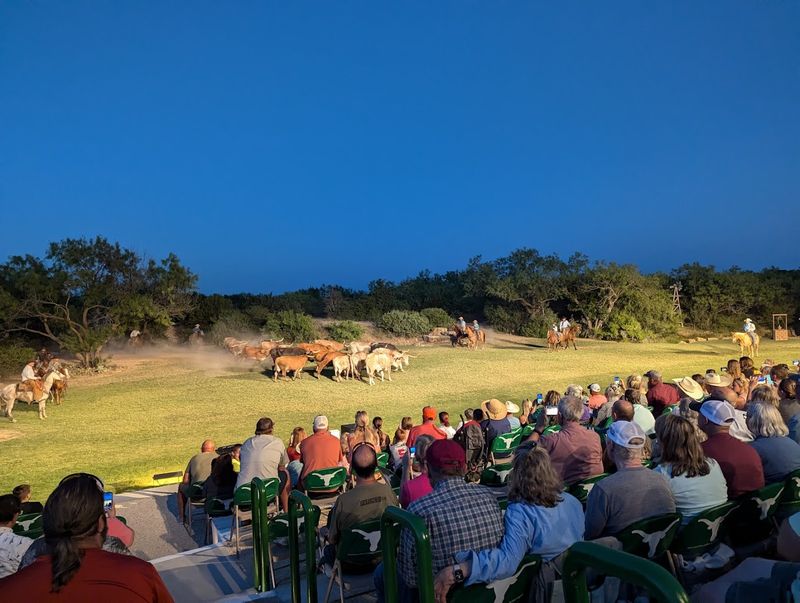
Every June, Albany transforms into the Old West for the Fort Griffin Fandangle, an outdoor musical production that’s been running since 1938. More than 8,000 people descend on this town of 2,000 to watch locals reenact frontier history through song and dance on the Prairie Theater stage. It’s the only show where the cast members are exclusively Albany residents, from toddlers to octogenarians, all volunteering to keep their town’s story alive.
The show runs just two weekends per year, yet it defines Albany’s identity and economy. Tickets sell out months ahead. Visitors camp in pastures, stay with host families, or drive from surrounding towns each night.
The production quality rivals professional theater, despite being entirely amateur, because generations of families have perfected their roles and passed down knowledge of staging, costumes, and choreography.
Fort Griffin State Historic Site sits just north of town, preserving ruins of the 1867 frontier fort that once protected buffalo hunters and settlers. The Longhorn Herd maintained at the site represents the official Texas State Longhorn Herd, descendants of cattle that built the ranching industry. Rangers offer tours explaining how this remote outpost shaped regional history.
Downtown Albany features the Old Jail Art Center, a museum that seems impossibly sophisticated for a small prairie town. Collections include pre-Columbian artifacts, Chinese ceramics, European paintings, and contemporary sculpture—donations from collectors who fell in love with Albany and wanted to give back. It’s free and rivals big-city museums for quality.
The Shackelford County Courthouse, built in 1883, still anchors the town square with Victorian architecture that photographs beautifully against wide Texas skies. Local restaurants serve steaks from nearby ranches, and the Beehive Saloon maintains the atmosphere of a frontier watering hole without the gunfights.
Albany survives on ranching, oil, and the annual influx of Fandangle visitors who spend money and spread word about this town that refuses to let its history fade. It’s community theater on a scale that seems impossible until you witness it yourself.