California gets reduced to big-ticket icons so often that it is easy to forget how much of its real magic lives in the strange, quiet, offbeat corners most travelers drive right past. If you are craving the version of the state that feels more personal, more surprising, and far less polished, these places reveal a California shaped by desert dreamers, vanished boomtowns, ancient geology, eccentric builders, and coastal wonders that never need a Hollywood filter to impress you.
From otherworldly lakes and redwood cathedrals to hidden gardens buried beneath the Central Valley heat, each stop on this list offers a different side of the same state – one that feels curious, layered, and wildly alive in ways postcards rarely capture. Skip the crowded checklist, lean into the unexpected, and you will find that California’s best treasures are not always the most famous ones – they are the ones that leave you with a story you cannot stop telling.
1. The Museum of Jurassic Technology (Los Angeles)
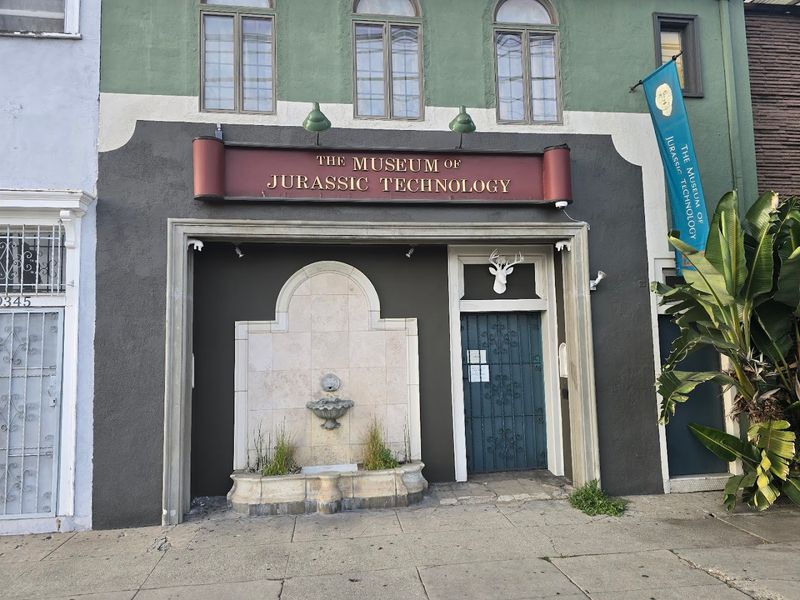
Stepping inside feels less like entering a museum and more like crossing into a beautiful, intelligent riddle.
Nothing here rushes to explain itself, and that is exactly why the experience lingers with you long after you leave.
In a state famous for spectacle, this place proves that curiosity can be even more captivating when it whispers.
Tucked into Los Angeles, the Museum of Jurassic Technology blends art, folklore, science, and illusion in a way that keeps you slightly off balance in the best possible sense.
One room may feel scholarly, the next dreamlike, and another almost impossible to categorize, which makes every hallway feel like a private discovery.
If you are the kind of traveler who enjoys asking more questions than getting neat answers, this is one of California’s most unforgettable hidden treasures.
What makes it special is not just the odd collection of exhibits, but the deliberate mood surrounding them.
Low light, hushed rooms, and carefully framed details encourage you to slow down and pay attention, which is rare in a city that usually moves fast.
You are not pushed through a highlight reel here – you are invited to wander, wonder, and decide for yourself what is true, symbolic, or somewhere in between.
After exploring, the small tea service in the courtyard adds a surprisingly gentle finish to the whole experience.
It softens the mystery without breaking the spell, giving you a chance to sit with everything you just saw.
If your ideal California stop is unusual, intimate, and impossible to fully describe to someone who has never been, the Museum of Jurassic Technology absolutely earns a place on your list.
2. Mono Lake Tufa State Natural Reserve (Lee Vining)
Some landscapes do not just look different – they make you feel as if you have stepped onto another planet.
The water, the silence, and the pale stone towers create a scene that is both stark and strangely graceful.
It is the kind of place that makes you pause before you even think about taking a photo.
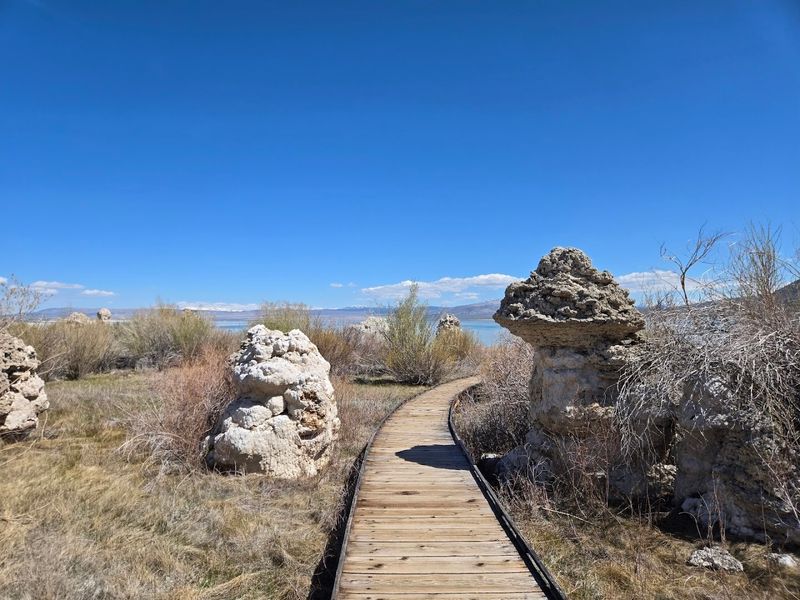
Near Lee Vining, Mono Lake Tufa State Natural Reserve showcases one of California’s most unusual geological displays.
The tufa formations, which rise from the lake like weathered sculptures, were created over centuries as freshwater springs interacted with the lake’s mineral-rich alkaline water.
That science is fascinating on its own, but what stays with you is the atmosphere – vast, ancient, and almost unreal.
Light changes everything here, so timing matters if you want the full effect.
Sunrise and sunset wrap the tufa towers in soft color, while the surrounding Sierra Nevada gives the whole setting a dramatic frame that feels unmistakably Californian.
Even when other visitors are nearby, the open space creates a sense of solitude that is hard to find in more famous natural landmarks.
Birdlife adds another layer, especially during migration seasons when the lake becomes an important habitat.
You can come for geology and leave talking about silence, color, scale, and the way the shoreline seems to shift with every few steps.
If you want California at its most elemental – beautiful, strange, and entirely unconcerned with trends – Mono Lake Tufa State Natural Reserve is one of those places that quietly resets your idea of what this state can look like.
3. Glass Beach (Fort Bragg)
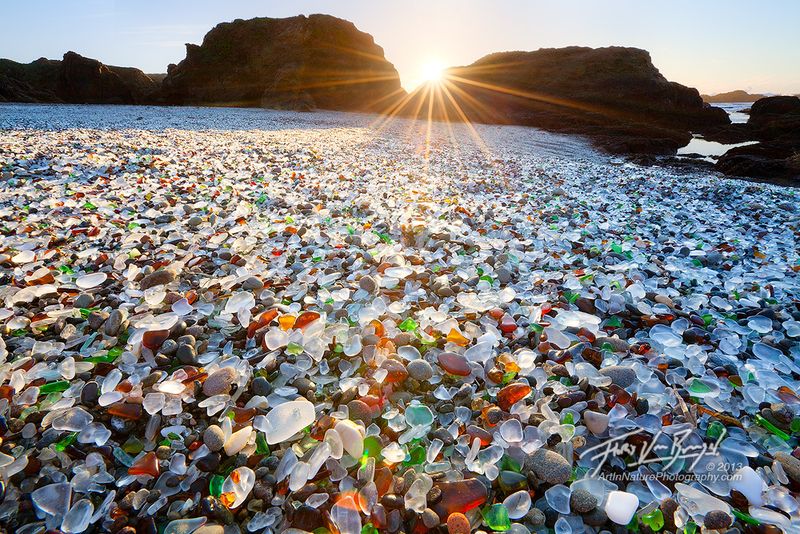
At first glance, the shoreline looks like it has been dusted with small jewels.
Then you realize those glints of blue, green, amber, and clear glass are the remains of the past, softened by years of wave action into something unexpectedly beautiful.
Few places in California show transformation quite so vividly.
Along the coast in Fort Bragg, Glass Beach tells a story that is both complicated and strangely hopeful.
What was once a dumping area eventually became a place where the ocean reshaped discarded material into smooth sea glass, creating a beach that now fascinates visitors from all over.
That contrast is part of what makes it memorable – not perfection, but reinvention.
You should know that the glass is not as thickly piled as old photos and legends sometimes suggest, and that is actually a good reminder to arrive with realistic expectations.
The joy here comes from slowing down, scanning the ground, and noticing how every tide and shift in light changes the colors under your feet.
Nearby coastal scenery adds plenty to the experience, with rocky bluffs, salt air, and that distinct Northern California mood that feels cool, raw, and quietly dramatic.
Responsible visiting matters, because leaving the glass where it is helps protect the very thing people come to see.
Instead of treating it like a souvenir hunt, it feels better to appreciate the beach as a living lesson in how landscapes absorb human history and keep moving forward.
If you are looking for a California stop that is scenic, unusual, and layered with meaning beneath its sparkle, Glass Beach delivers something far more interesting than a typical coastal postcard.
4. The Integratron (Landers)
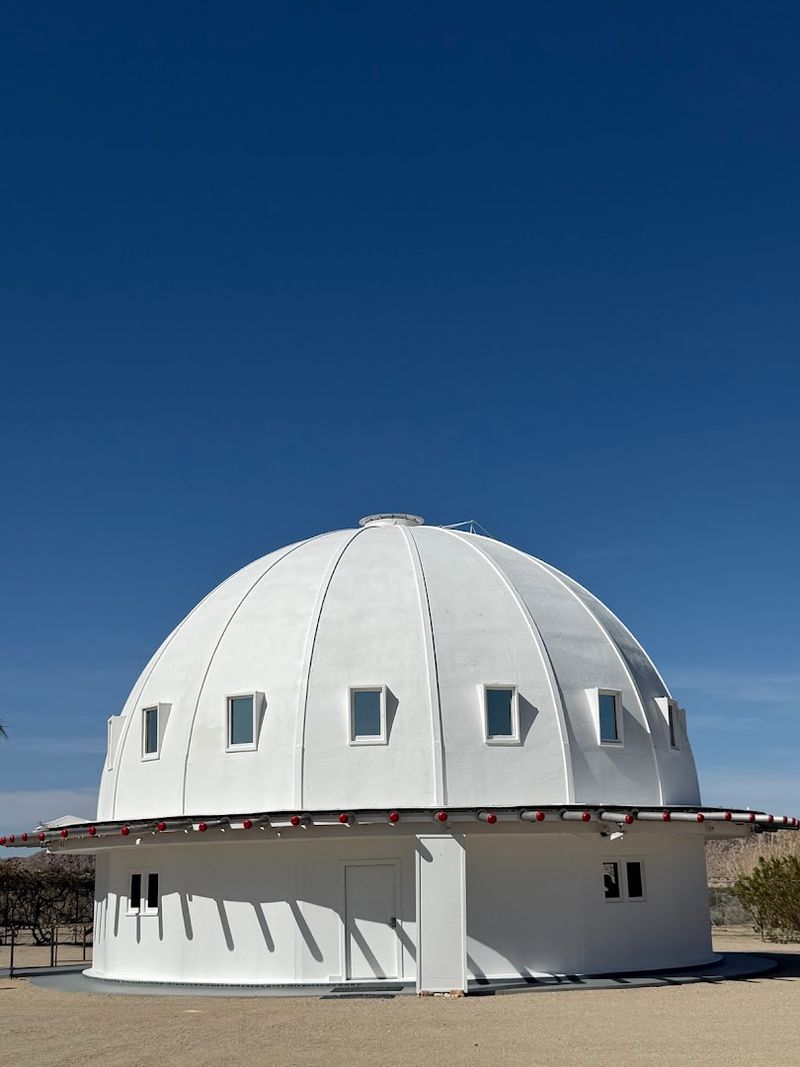
There are few places in California where the desert feels this strange, serene, and deliberately tuned to wonder.
The white dome rising out of the high desert looks almost too clean and too curious to belong to the landscape around it.
That tension is exactly what makes the stop so compelling.
Out in Landers, the Integratron has built its reputation on mystery, sound, and a deep sense of atmosphere.
Its history includes eccentric ideas, desert spirituality, and a design that seems part experiment, part art installation, and part local legend.
Even if you arrive skeptical, the setting itself encourages you to loosen your grip on certainty and simply experience it.
Most visitors come for a sound bath, where crystal bowls resonate beneath the dome and the acoustics do much of the magic.
The effect can feel meditative, physical, and surprisingly emotional, especially after time spent driving through the open desert where everything already feels stripped down.
It is not a flashy attraction, and that is the point – this place works through stillness, vibration, and attention rather than visual overload.
Because the Mojave region offers so many bold landscapes, the Integratron stands out by giving you an inward experience instead of just an outward one.
It feels very Californian in a way that the state rarely advertises: inventive, a little weird, spiritually curious, and comfortable blurring the line between science, ritual, and performance.
If you want a hidden treasure that leaves you feeling calmer, slightly puzzled, and completely certain you did not just do the usual tourist thing, the Integratron is one of the most distinctive detours you can make.
5. Salvation Mountain (Niland)

Color explodes from the desert here in a way that feels joyful, handmade, and completely unapologetic.
What could have been just another remote roadside stop becomes something far more affecting when you stand close enough to see the layers of paint, straw, effort, and belief.
It is one of those places where sincerity becomes the main attraction.
Near Niland, Salvation Mountain rises as a monumental piece of folk art built by Leonard Knight and maintained as a symbol of devotion and creative persistence.
The painted hill is covered in bright colors, messages, and textures that make it feel both playful and deeply personal.
In a state known for polished aesthetics, this site stands out because it is imperfect, vulnerable, and powered by one person’s vision on an extraordinary scale.
You do not need to share the beliefs expressed there to appreciate the atmosphere.
What reaches you is the commitment behind it, the way the desert setting amplifies every color, and the sense that you are standing inside a life work rather than viewing a conventional attraction.
The surrounding Imperial County landscape adds to that feeling, making the installation seem even more improbable and memorable.
Visiting matters respectfully, because the site is fragile and shaped by ongoing care.
If you take your time, you start noticing details beyond the obvious spectacle – hand-painted surfaces, weathered textures, and the emotional force of a place built without irony.
For travelers chasing hidden California instead of curated California, Salvation Mountain offers something rare: a landmark that is visually loud yet emotionally direct, odd yet welcoming, and impossible to separate from the desert light that makes it glow like a mirage with a heartbeat.
6. Bodie Ghost Town (Bridgeport)
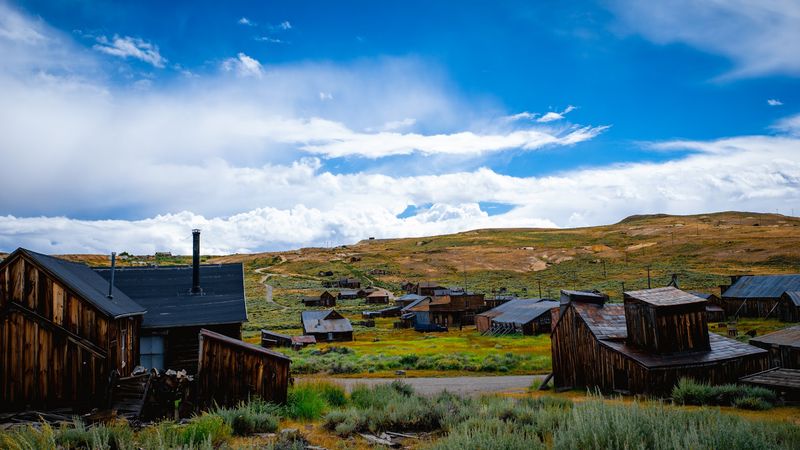
Wind, dust, and silence do a lot of the storytelling here.
Instead of a polished reconstruction, you get the unsettling power of a town that looks as if people simply stepped away and never quite returned.
That feeling gives this California landmark a weight you cannot fake.
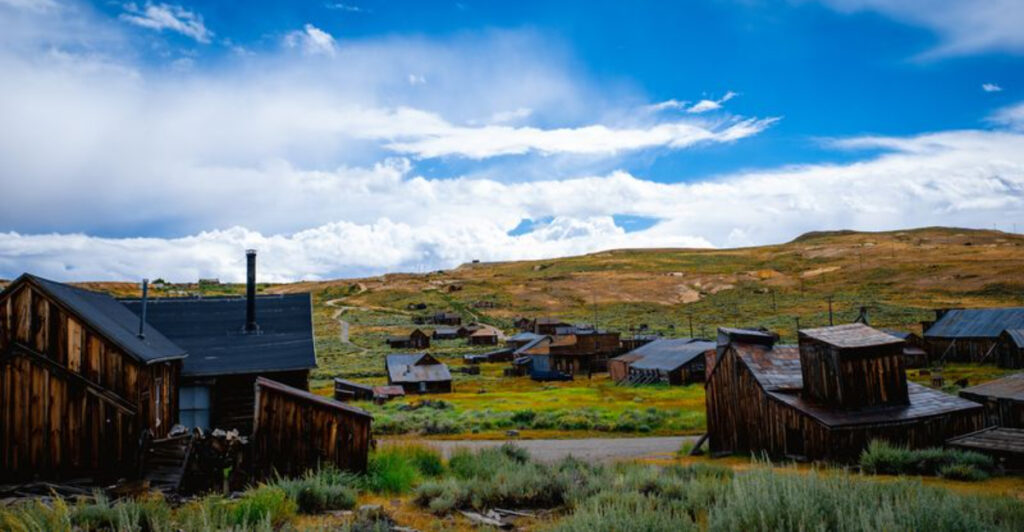
Outside Bridgeport, Bodie State Historic Park preserves one of the state’s most compelling ghost towns in a condition known as arrested decay.
Buildings still stand with their weathered facades, interiors remain stocked with remnants of daily life, and the streets hold onto the rough energy of a once-booming mining settlement.
You are not looking at an abstract chapter of Gold Rush history – you are walking through its aftermath.
The high desert setting matters as much as the structures themselves.
Wide skies, dry air, and distant mountains make the town feel exposed, while the altitude adds a starkness that heightens every creak, shadow, and boarded window.
It is easy to imagine ambition, hardship, greed, and loneliness all colliding here, which is why Bodie feels more immersive than many better-known historical attractions.
Photography is excellent, but this is not just a visual experience.
Reading the stories of fires, crime, weather, and eventual decline gives the place a human scale that turns abandoned buildings into evidence of real lives interrupted by changing fortunes.
If you want to understand another side of California – one built on extraction, risk, and sudden reinvention – Bodie Ghost Town offers a gripping reminder that the state’s mythology was never only about sunshine and glamour.
Sometimes, its greatest hidden treasures are the places that show what was lost as clearly as what survived.
7. Schooner Gulch State Beach (Point Arena)
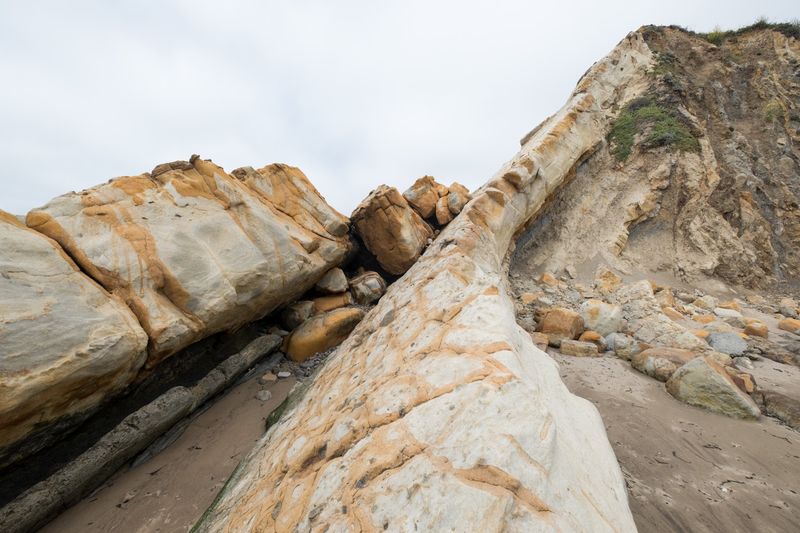
Timing transforms this stretch of coast from beautiful to unforgettable.
When the tide pulls back, the shoreline reveals one of California’s strangest natural scenes – giant rounded boulders lined across the beach like a carefully placed outdoor sculpture.
It feels surprising even after you know it is coming.
Near Point Arena, Schooner Gulch State Beach is best known for the area often called Bowling Ball Beach.
The nearly spherical rock formations appear during low tide, creating a pattern so unusual that first-time visitors often assume they are artificial.
They are not, and that is part of the thrill – geology here looks designed, yet it was shaped slowly by erosion, sediment, and relentless coastal energy.
Even beyond the famous boulders, the setting is deeply rewarding.
The cliffs, sea stacks, and crashing waves carry the moody beauty that defines much of Northern California’s shoreline, and the walk down adds a feeling of earned discovery.
Because access depends on conditions, planning ahead with tide charts is essential if you want to catch the beach at its most dramatic.
This is the kind of place that rewards patience over speed.
Instead of treating it like a quick photo stop, it is worth lingering long enough to watch how changing light and water levels alter the entire composition of the cove.
If your ideal California treasure combines coastal drama, geological oddity, and that satisfying sense of finding something most travelers miss, Schooner Gulch State Beach absolutely deserves your attention.
It proves that some of the state’s most memorable landscapes are not the loudest or easiest ones – they are the ones that reveal themselves only when you arrive at exactly the right moment.
8. Forestiere Underground Gardens (Fresno)
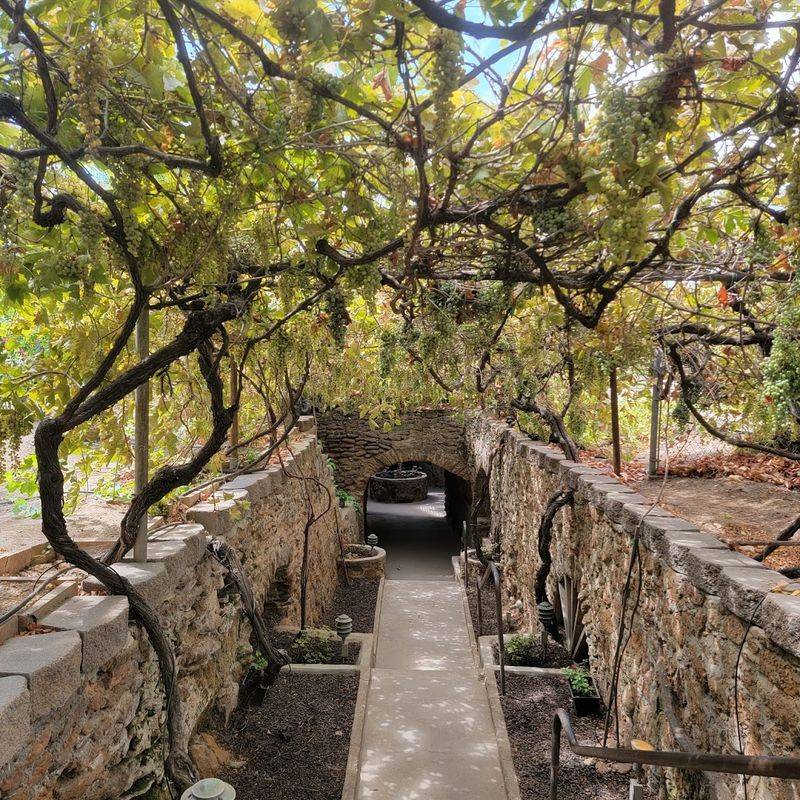
In the middle of California’s hot Central Valley, finding a hidden world beneath the surface feels instantly intriguing.
What begins as a curiosity turns into admiration the moment you understand that one person carved this place out over decades by hand.
It is inventive, intimate, and much more atmospheric than you might expect.
In Fresno, the Forestiere Underground Gardens reflect the vision of Baldassare Forestiere, who transformed hard local soil into a network of subterranean rooms, passageways, courtyards, and planted spaces.
Inspired in part by ancient underground architecture, he created a home and garden system designed to stay cooler in the valley heat.
The result feels practical, artistic, and quietly astonishing all at once.
Walking through the site, you notice how light filters down through openings and how citrus trees emerge from carefully planned spaces above.
That contrast between enclosed shade and living greenery gives the gardens a calm, almost secretive beauty.
It also tells a larger California story about immigrants, agriculture, adaptation, and the determination to build something lasting in a demanding environment.
This is not a flashy attraction, which is exactly why it works so well as a hidden treasure.
Guided visits help bring out the human story behind the architecture, and that personal history makes the space feel warmer rather than merely unusual.
If you are interested in the California that exists beyond beaches and famous city neighborhoods, the Forestiere Underground Gardens offer a deeply memorable detour – one shaped by labor, imagination, and a very local response to climate.
Few places reveal so clearly how creativity can grow from hardship and turn necessity into something beautiful enough to outlive its maker.
9. Goldstone Deep Space Communications Complex (Fort Irwin)
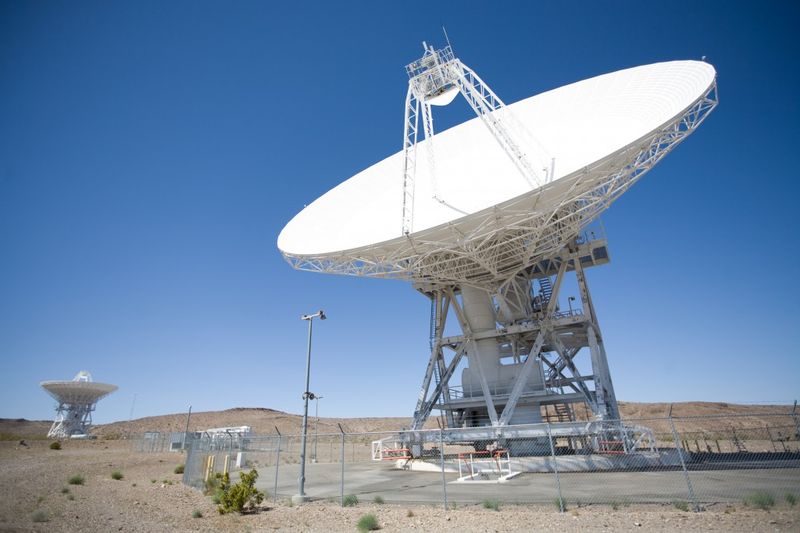
Few California sights make you feel the scale of human curiosity quite like giant antenna dishes standing in a silent desert basin.
The setting is stark, remote, and almost cinematic, but the real pull comes from knowing these structures are part of humanity’s conversation with deep space.
That thought alone makes the landscape feel larger.
Located near Fort Irwin in the Mojave Desert, the Goldstone Deep Space Communications Complex plays a crucial role in NASA’s Deep Space Network.
The massive antennas help send commands to spacecraft and receive data from missions far beyond Earth, turning this isolated piece of California into a gateway for exploration on a planetary scale.
It is a powerful reminder that the state is not only shaped by entertainment and natural beauty, but also by science and ambition.
Because access can be limited and operations matter most, this is one of those places where planning and expectations are important.
Even so, learning about Goldstone and seeing its dishes against the desert backdrop is deeply memorable, especially if you enjoy places where engineering, geography, and imagination intersect.
The contrast is striking – raw open land below, and above it the invisible traffic of messages moving across unimaginable distances.
What makes Goldstone feel like a hidden treasure is that it expands your idea of what a California road trip can include.
This is not just another scenic stop; it is a chance to connect the Mojave with Mars, quiet desert horizons with interplanetary missions, and local ground with distant worlds.
If you are drawn to places that inspire awe through knowledge as much as beauty, the Goldstone complex offers one of the most unusual and intellectually exciting detours in the state.
10. Prairie Creek Redwoods State Park (Orick)
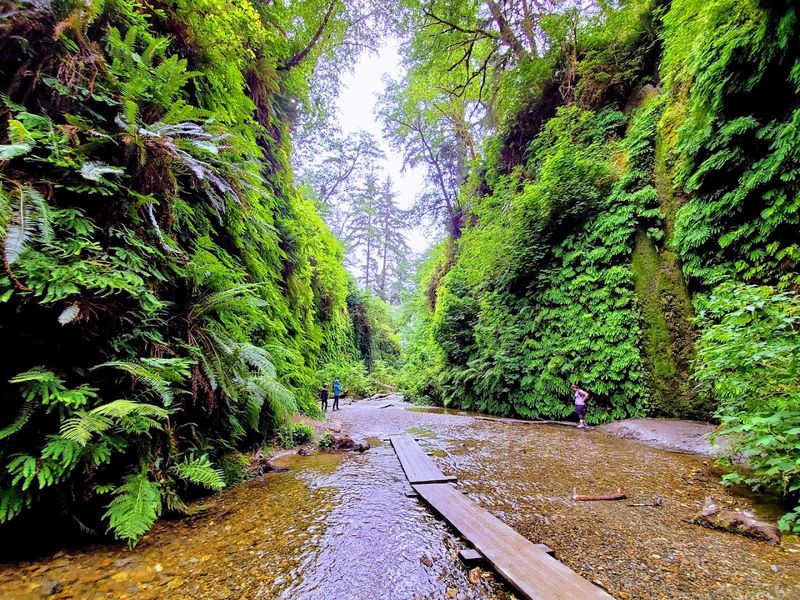
Some places do not need drama because their scale does all the work for them.
The moment you enter a redwood grove and look up, everyday noise seems to fall away, replaced by the hush of filtered light and towering trunks that make time feel slower.
It is one of California’s most grounding experiences.
Near Orick, Prairie Creek Redwoods State Park offers a remarkable mix of old-growth forest, open prairie, and rugged coastline.
That variety makes it feel especially rich, but the ancient redwoods are what stay with you most – massive, textured, and almost impossible to fully absorb in a single visit.
Unlike a rushed scenic overlook, this park rewards walking, lingering, and letting the landscape gradually work on you.
Trails wind through fern-lined groves where the air feels cool and damp even when other parts of California are sweltering.
Wildlife adds to the magic, with Roosevelt elk often seen in the prairies and nearby areas, reminding you that this ecosystem is not just preserved scenery but living habitat.
Every part of the park feels connected, from foggy forest stillness to the wild Pacific edge.
What makes Prairie Creek such a true hidden treasure is not that it is unknown, but that it still feels capable of giving you a private, almost reverent experience.
In a state packed with famous nature destinations, this park offers something deeper than quick spectacle – perspective, scale, and the kind of quiet awe that changes your pace without asking permission.
If you want to meet California in one of its oldest and most majestic forms, Prairie Creek Redwoods State Park is a place where beauty stops feeling decorative and starts feeling essential.