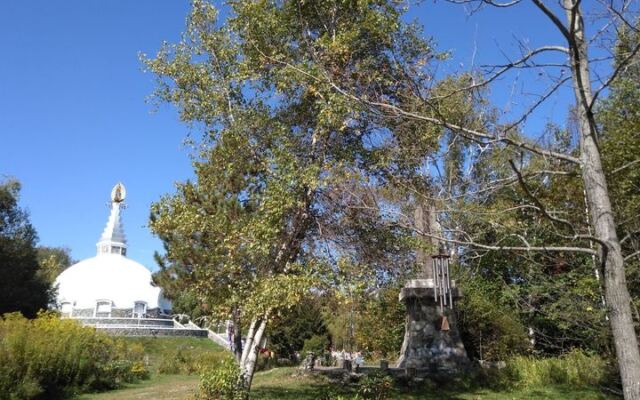
Somewhere past Troy, past Brunswick and Cropseyville, the pavement gives way to dirt and the GPS starts to sound unsure of itself. Then the trees open up, and a white monument about 100 feet tall stands in a forest clearing in rural Rensselaer County.
It is one of only two unique Peace Pagodas in the United States, and plenty of New Yorkers have never heard of it. The story behind it involves a Buddhist nun who walked thousands of miles for peace, a crew of volunteers, and a great deal of recycled material.
Keep reading to learn where it is, what waits on its two levels, how to handle the rocky trail and tiny parking area, and why people of every faith, or no faith at all, keep coming back season after season.
1. A Monument Hidden Down a Dirt Road
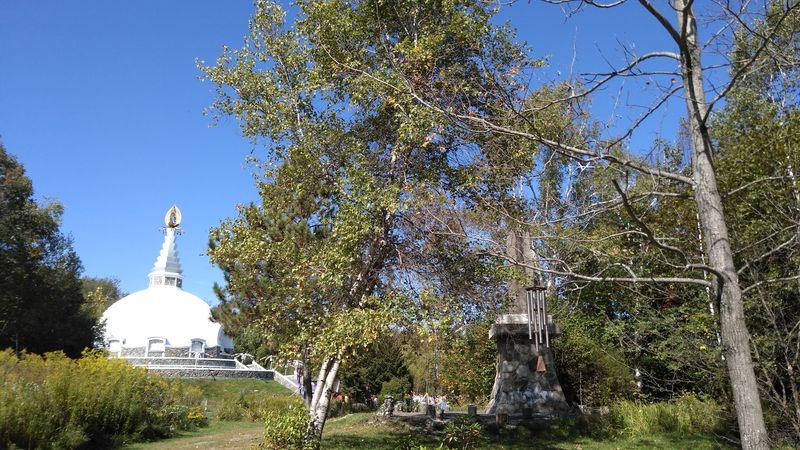
Few landmarks in New York make you work this hard just to find them. The Grafton Peace Pagoda sits at 87 Crandall Rd, Petersburgh, NY 12138, deep in the wooded hills of Rensselaer County in upstate New York.
Many people know it by its Grafton name, since the grounds sit in the forested country around the town of Grafton. The route reportedly carries you out beyond Troy, Brunswick and Cropseyville before turning onto a long dirt road or two.
Once the GPS announces your arrival, there is not much to see at first. A small parking area waits on the roadside opposite the entrance, and signs confirm you are close.
The pagoda itself stays tucked behind the trees until the very end. That slow reveal is part of the charm, and it is a big reason the place feels so different from anything else in the state.
Classified simply as a pagoda, the site holds a near-perfect 4.9 out of 5 from around 300 people who have made the trip. Not bad for a spot that many locals pass within a few miles of without realizing it exists.
So what exactly is waiting at the end of that dirt road? The answer starts with a remarkable woman and her very long walks.
2. The Nun Who Walked for Peace
Thousands of miles on foot. That is the résumé of the woman behind this pagoda.
The monument was built by Jun Yasuda, a Buddhist nun known for her long walks for peace across the United States. She reportedly once walked all the way from San Francisco to Washington, D.C.
That kind of commitment explains a lot about the place. It was not built as an attraction or a business, but as a living statement about peace.
Her effort did not happen alone, either. The grounds carry tributes to the volunteers who helped bring the project to life, and the hard work of a community near and far shows up all around the property.
For New Yorkers who love a good story about stubborn dedication, this one hits home. It is proof that a big idea can still take shape the old-fashioned way, one pair of hands at a time.
The grounds also share teachings about the importance of faith and love. You do not need to follow any religion to appreciate that message, and plenty of guests say they are not religious at all.
Of course, the walk to see her work is a small journey of its own. Let’s talk about the trail.
3. Two Paths Through the Woods
Choose your adventure. From the parking area, there are two ways to reach the pagoda grounds.
The first is a straight, even pathway, basically a short walk up a gravel or dirt road to the main entrance. It is the easier option and works well for anyone who wants a gentler approach.
The second is a specially designed woodland trail. It takes roughly five minutes, and it is rocky, full of tree roots and sometimes muddy after rain.
Sturdy shoes are a smart call if you go that way. Sneakers that you do not mind getting dirty will save you some grief.
The trail is short, but it is meant to feel like a small pilgrimage. It sets a calm, unhurried tone before you ever reach the clearing.
And then comes the moment people talk about most. When the trees open and the pagoda appears, many first-timers stop in their tracks, surprised by its size.
There is also a handicap-accessible trail off to the left, which matters for a reason we will get to in the practical notes. The point is that there is more than one way in, so nobody has to miss out.
4. One Hundred Feet of Surprise
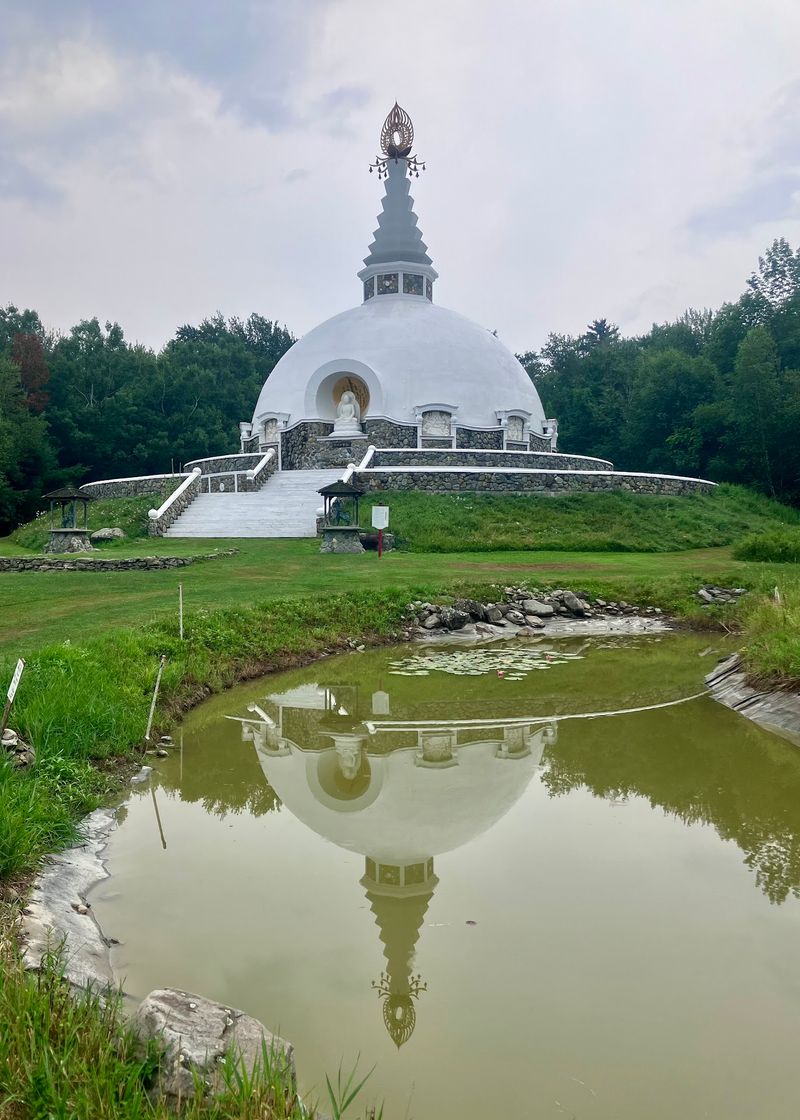
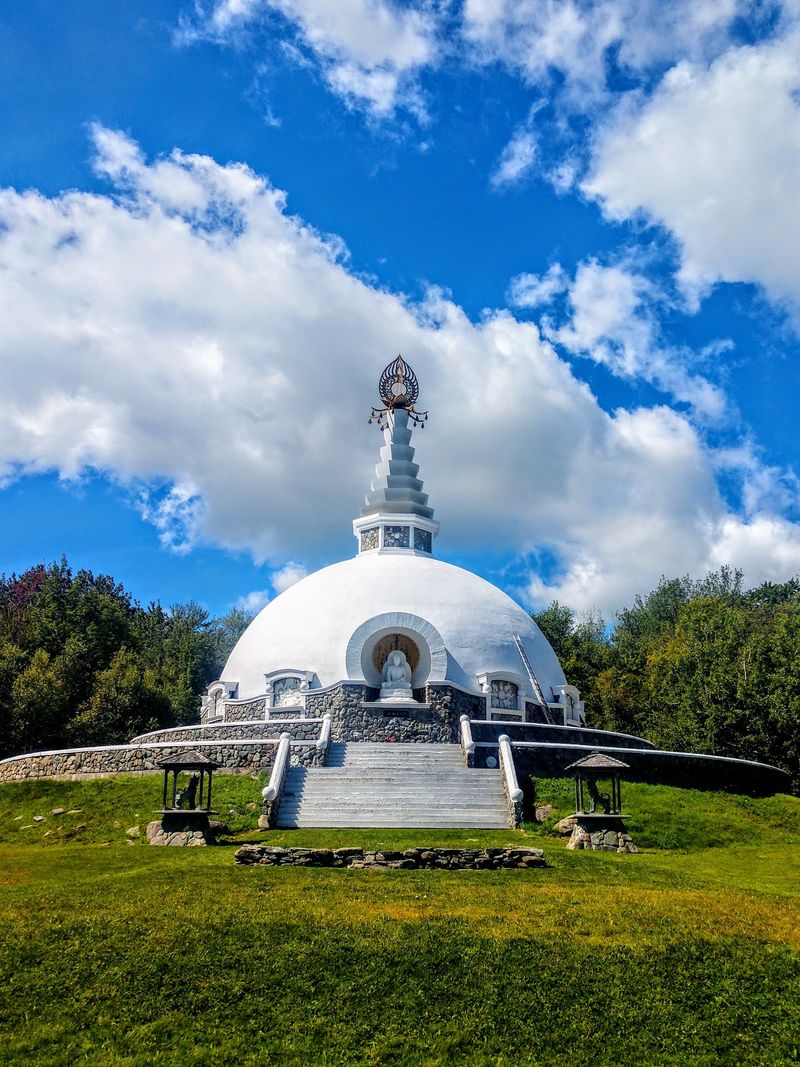
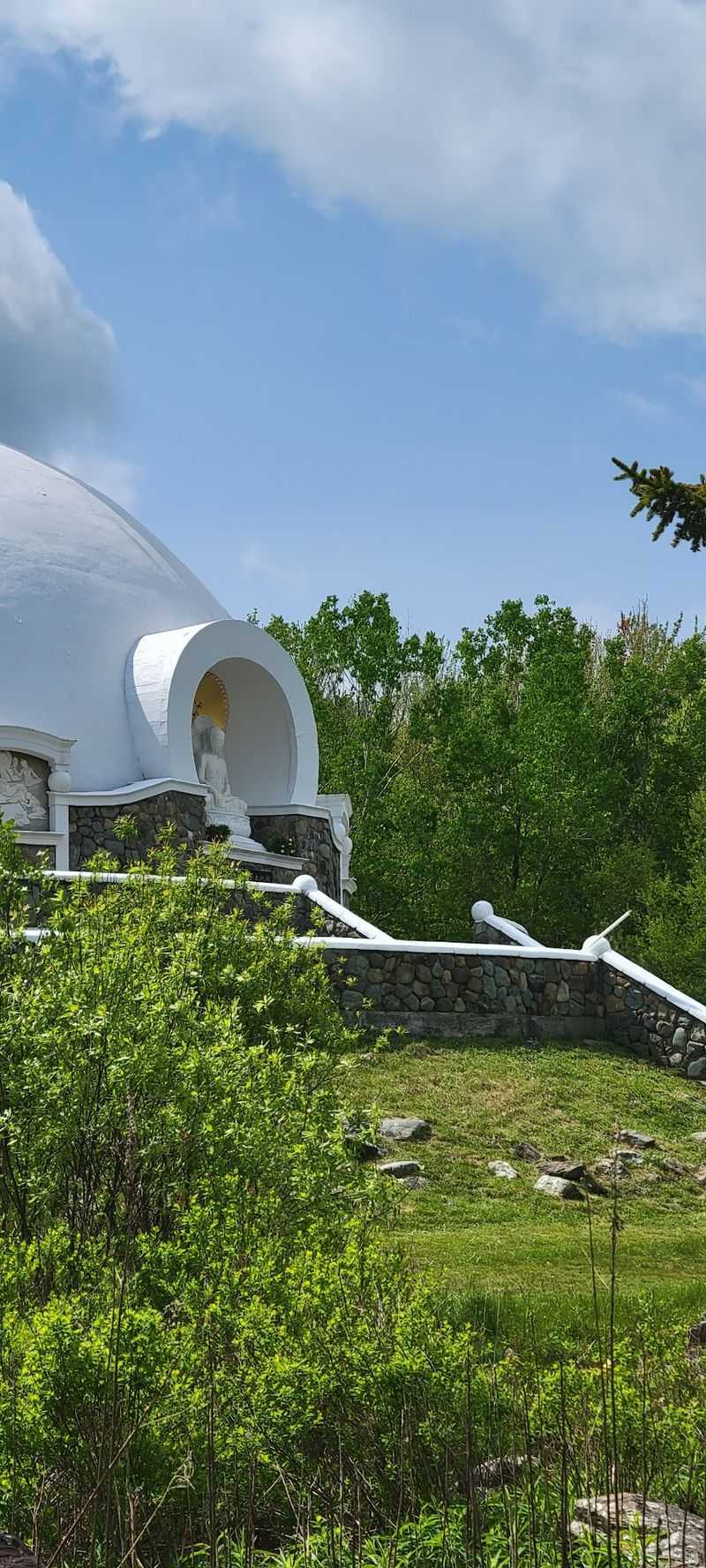
Big does not quite cover it. The pagoda stands about 100 feet tall and roughly 130 feet wide.
Plenty of first-time guests admit they were not expecting anything close to that scale. Out in the hills of Rensselaer County, it is the last thing most people expect to find.
Here is a fun fact worth knowing. Most of the structure is reportedly made of recycled materials, which adds another layer to its message.
At the center sits a statue of Buddha, a focal point that draws the eye as you approach. The white form against the green forest is simple, bold and hard to forget.
You are not limited to admiring it from a distance. Guests can walk on and around the pagoda, exploring its two different levels.
That freedom to move around it makes the visit feel personal rather than roped off. It is the kind of monument you experience up close instead of just snapping a photo from the parking lot.
But the real storytelling happens when you start circling it. The walls have quite a tale to tell.
5. A Life Told in Stone
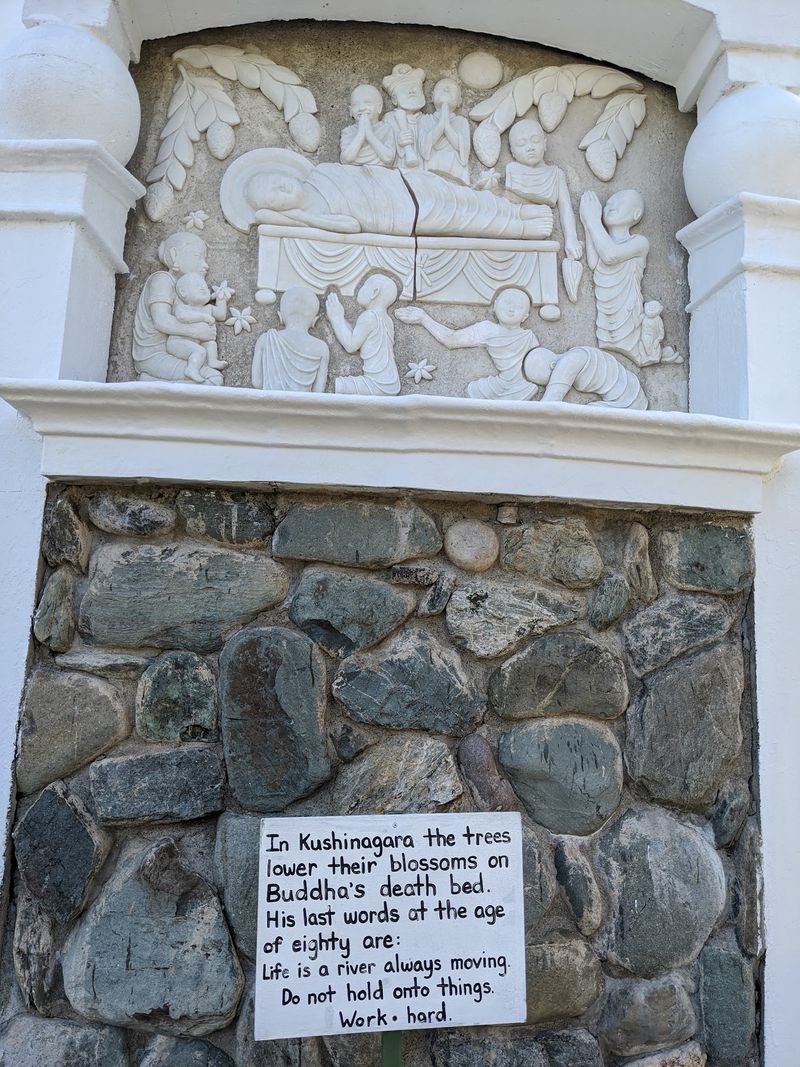
Walk a full lap and you get a history lesson. Around the pagoda, artwork and sculptures depict the stages of Buddha’s life and major events, including his passing.
For anyone who knows little about Buddhism, this is a gentle and accessible introduction. Several guests mention they barely knew anything about Buddha before arriving and left genuinely fascinated.
The carvings reward slow walking. Each panel tells part of the story, so circling the structure becomes a kind of guided tour without a guide.
It is also an easy way to engage kids or curious grandparents. The pictures do much of the explaining, and the walk itself is not long.
Around the wider grounds, more statues and carvings appear here and there. They add interest to the walking space without making it feel cluttered.
There is an educational side to this place that sometimes surprises people. They come for the scenery and end up learning something real.
Once the lap is done, many guests drift toward a quieter corner of the property. That is where the water comes in.
6. The Pond and the Gardens
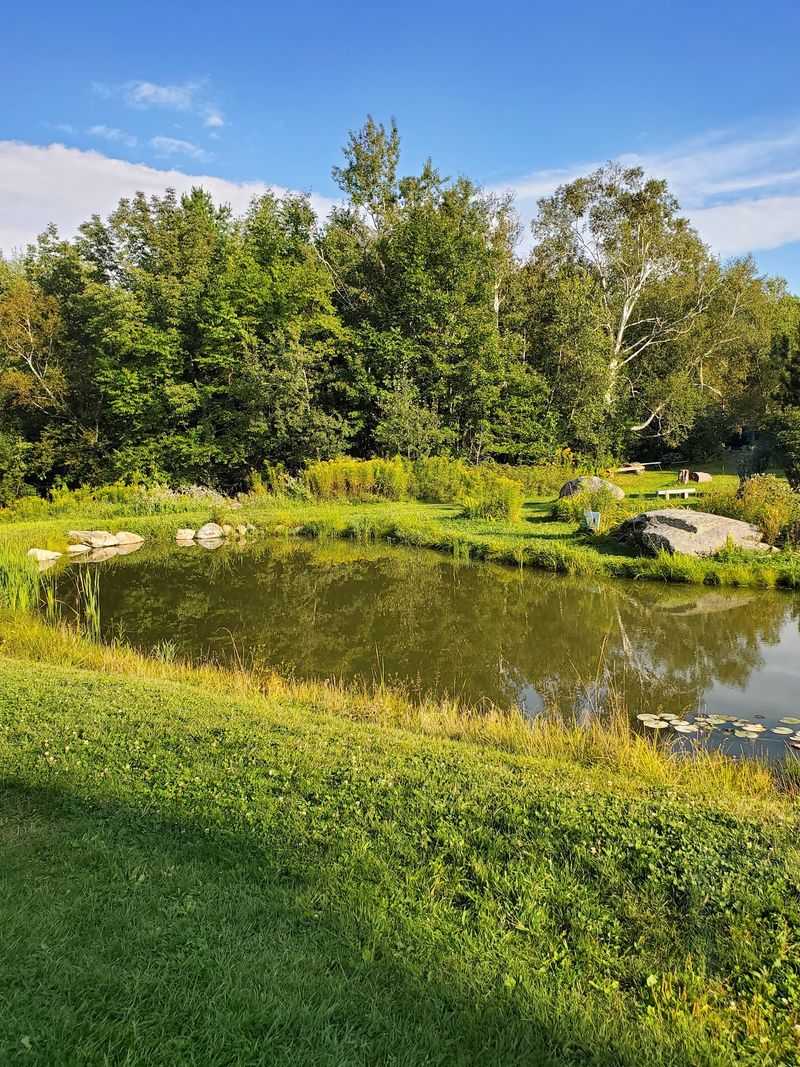
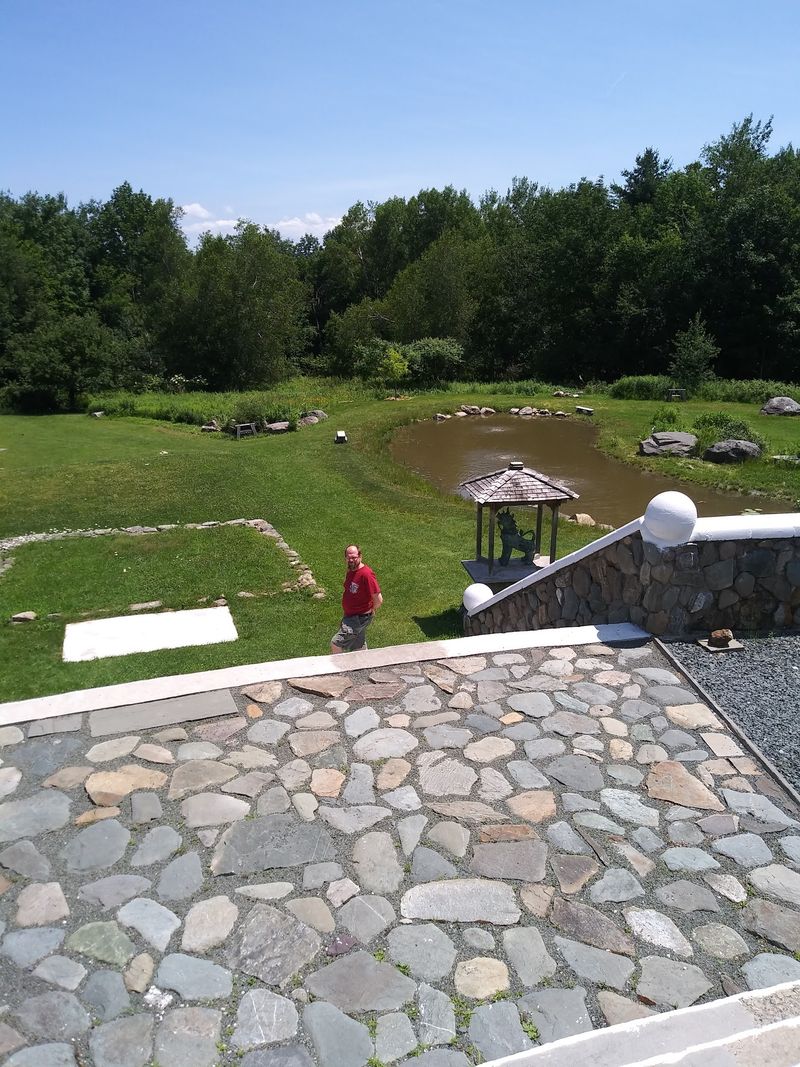
Not every highlight here is 100 feet tall. A small pond sits on the grounds, home to koi, and it is one of the favorite spots to pause.
Gardens surround the area, along with trees where guests can simply sit for a while. There is a prayer path to walk, too, for those who want a more reflective visit.
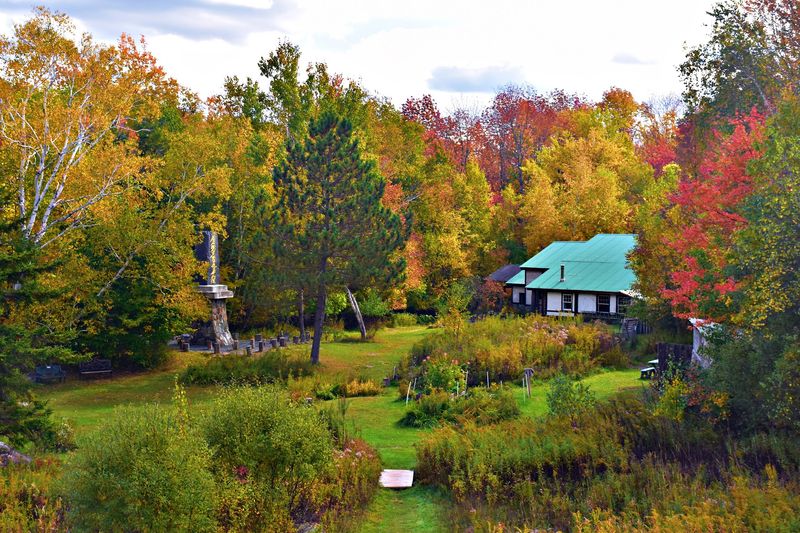
Fall is a standout season. The pond reflects the changing colors, and with the pagoda in the scene, people often call it a picture-perfect moment.
Still, the pond is not just a photo stop. It gives the property a slower rhythm, a place to rest between exploring the monument and visiting the temple.
Families tend to like this part. It offers a natural break, and there is enough walking space to stretch your legs without wandering far.
Please treat the grounds kindly. Regulars ask people to respect the surrounding area so it stays this way for the next group.
Speaking of the temple, it deserves its own spotlight. Many guests say sitting inside was the most memorable part of their day.
7. Inside the Temple
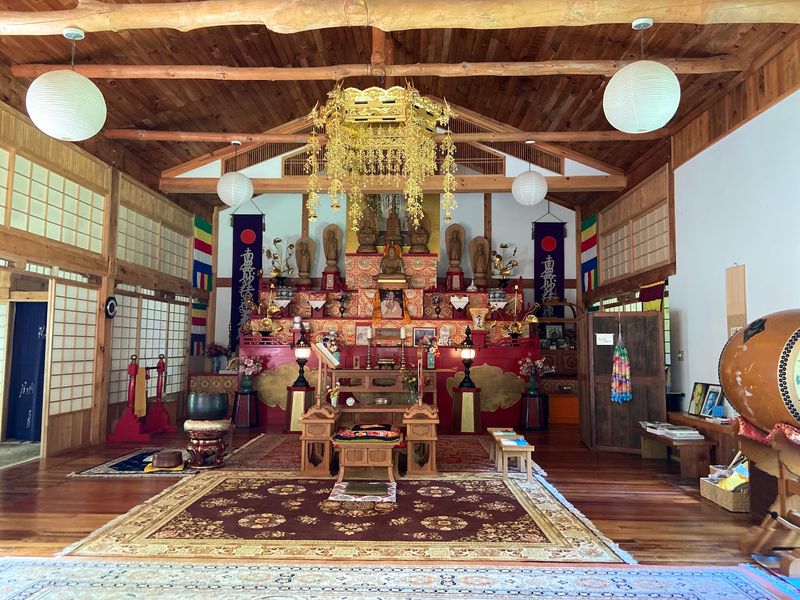
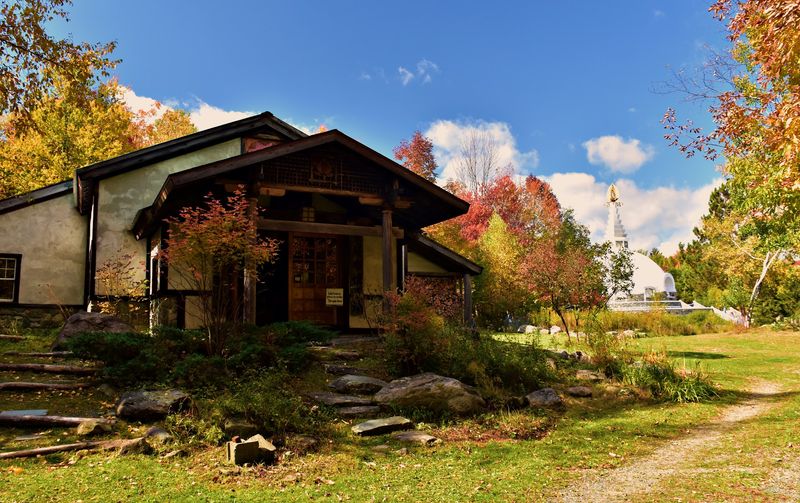
Beyond the pagoda stands a temple, and it is reportedly every bit as lovely as the main monument. Guests are allowed to enter when it is open.
Sitting inside is described by many as a calming experience. People who came mainly for the pagoda often leave talking about the temple instead.
Timing matters here. The temple is not always open, and some guests arriving on a quiet weekday or a chilly afternoon found it closed.
When a monk is present, he is said to be kind and glad to help. If you have questions, peeking into the temple room to see if someone is there is a good first step.
Some lucky guests have even been invited in for evening prayer. That kind of welcome is not guaranteed, but it shows the open spirit of the place.
Remember that this is an active spiritual site. Quiet voices and respectful behavior go a long way.
All of this raises a fair question. Who exactly is this place for, and will it suit your crew?
8. Calm for Every Kind of Visitor
Religion is optional. That is one of the clearest messages from people who have been here.
Many guests say they are not Buddhist, or not religious in any way, and still found the experience meaningful. The site welcomes those of any faith who come with respect.
It is often described as secluded and quiet. Some people report being the only ones on the property, which makes the walk around feel especially calm.
Families come here together, and one guest brought an elderly father who reportedly loved it. It is the kind of outing that works across generations.
Others return again and again, visiting in every season. For them, it is a reliable escape from the noise of daily life.
A short stop is worthwhile if you are nearby, but some guests linger much longer. There is room to walk, sit, reflect and simply slow down.
A few practical details, however, can make or break the trip. Here is what to know before loading up the car.
9. Before You Load Up the Car
Parking is tight. The roadside lot is small, with room for maybe five cars, so arriving at a quiet time helps.
Leave the dog at home. Dogs are not allowed on the grounds.
Restrooms are a common question. Some guests mention there are no bathrooms on site, while others note an outhouse up the handicap trail to the left, so it is wise to plan ahead either way.
Wear good shoes, especially if you take the woodland trail. Rocks, roots and mud are part of the deal.
No admission prices appear in the information available, but donations are welcomed and help support the site. Many guests choose to give something.
Hours for the temple can vary, and it may be closed during your visit. Checking the official website at graftonpeacepagoda.org or calling ahead is a smart move.
Bring patience for the drive, too. Dirt roads and a remote setting are part of what keeps this place so peaceful.
10. Why It Stays With You
Some places impress you. This one tends to quiet you down.
The Grafton Peace Pagoda brings together a remarkable story, a striking monument, a koi pond, a welcoming temple and woods that keep the outside world at a distance. It all happens far from any highway, which is exactly the point.
For upstate New Yorkers, it is a reminder that community effort and devotion can still build something lasting. Volunteers, recycled materials and a nun who walked across the country made it happen.
It is not a theme park, and it does not try to be. There are no crowds most days, little fuss and just a few simple rules to follow.
Go in fall for the colors, or any season for the calm. Many people say they never tire of it, no matter how often they return.
Be respectful, leave a donation if you can and keep the grounds as you found them. Do that, and this hidden treasure in the hills of Rensselaer County will be ready to welcome you, and the next curious traveler, for years to come.
Share this story