Some people walk into a vintage store for ten minutes and walk out five hours later with a bag of ceramics and no regrets. In Portland’s Central Eastside, that happens a lot. One building here holds three floors, more than 230 vendors, a wall full of clocks, a phone booth that tells stories, and a basement that brings back the early 2000s.
It also has a true crime museum, oversized board games, and a row of local artists working right in front of shoppers. For Oregonians who care about keeping quirky, independent places alive, this one deserves a long look. Read on to find out what is inside, which floor holds what, how parking really works, and why so many people plan a quick stop and end up staying all afternoon.
A Warehouse District Address Worth Finding
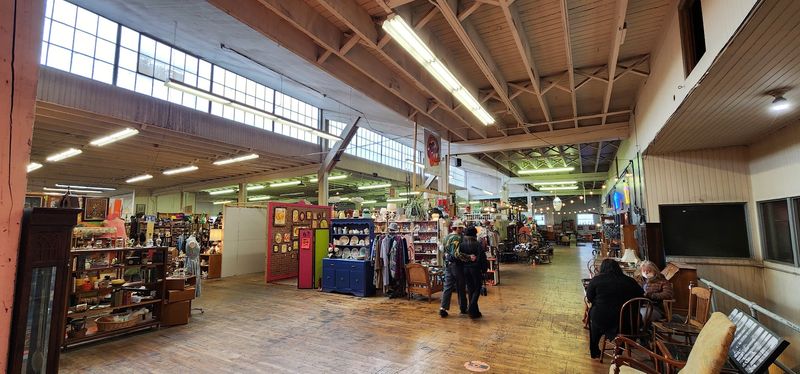
Memory Den | Vintage Mall sits at 499 SE 2nd Ave, Portland, OR 97214, in the United States. The address places it in the Central Eastside, a warehouse district just across the river from downtown.
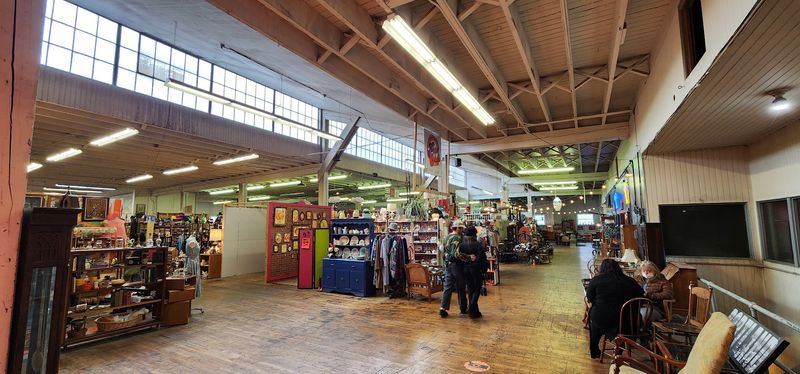
The building is not a tiny boutique. It is a large, multi-level space officially listed as an antique store, though calling it a store undersells the scale.
Inside, more than 230 independent vendors rent booths and stock them with their own finds. That vendor count is the whole reason the phrase just looking tends to fall apart here.
Each booth runs on its own taste and its own pricing. One corner may lean toward mid-century housewares, while the next might focus on vintage clothing or odd collectibles.
The result is a shopping trip that feels more like a neighborhood than a single shop. Shoppers wander, double back, and find another corner they somehow missed.
For locals, it is the kind of independent business that keeps Portland’s east side interesting. For travelers, it often becomes a planned stop instead of a lucky accident.
Getting there is only the first step, though. The real question is how a building this size got its character in the first place.
Built in 1937, Still Collecting Stories
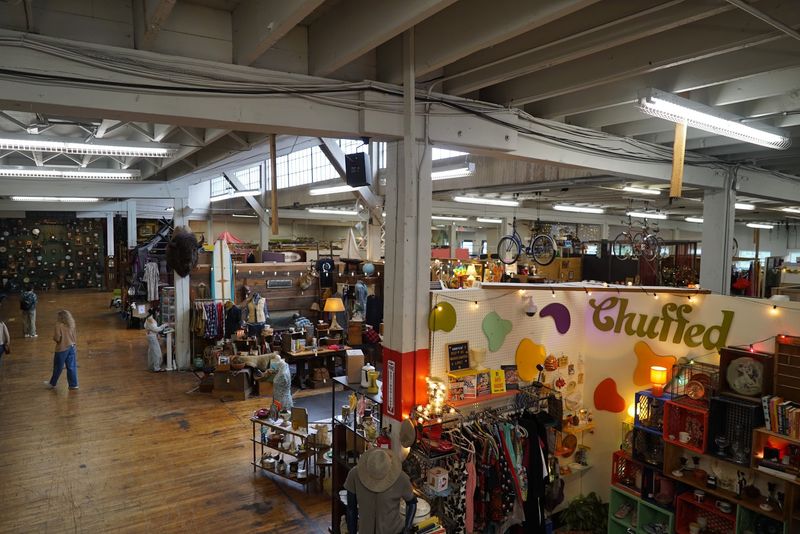
Old buildings and old treasures make a natural pair. The structure that houses Memory Den dates back to 1937, a detail the team proudly connects to its charm.
That history shows up in the layout. There are nooks, crannies, and little corners where shoppers can sit down and rest between booths.
A building with nearly ninety years behind it also comes with quirks. Some shoppers with sensitive breathing find the space dusty in places, and the lower vaults can carry a chemical odor, so bringing a mask is a smart move for anyone prone to allergies.
The team has acknowledged that feedback openly. They describe the historic character as part of the appeal while saying they keep looking for ways to improve comfort.
That balance matters in a city where older commercial buildings often get torn down or turned into something generic. Here, a 1930s warehouse keeps working, filled with objects from every decade since.
There is something fitting about it. A place built before most of its merchandise was made now serves as the home for all of it.
And the building’s three levels each have their own personality, which is where things start to get fun.
Three Floors, Three Different Moods
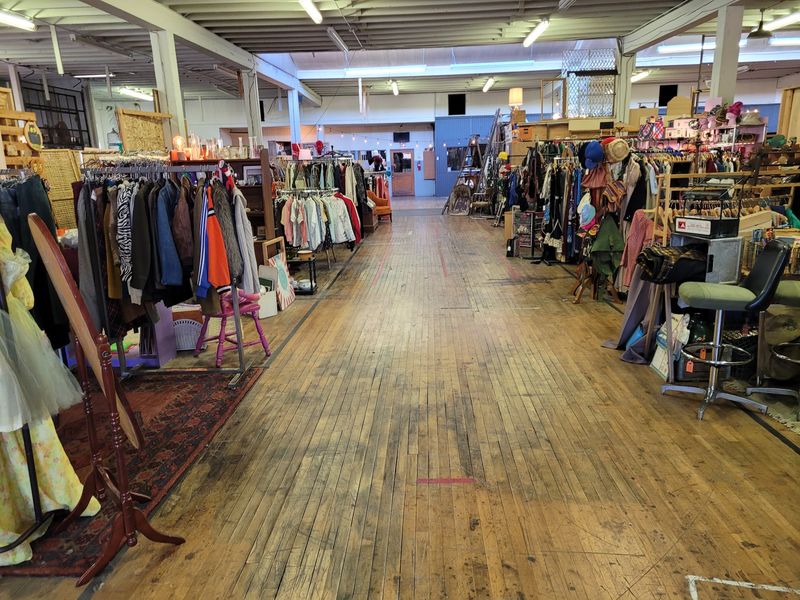
Plan for stairs. Memory Den spreads across a basement, a main floor, and an upstairs level, and each one serves a different purpose.
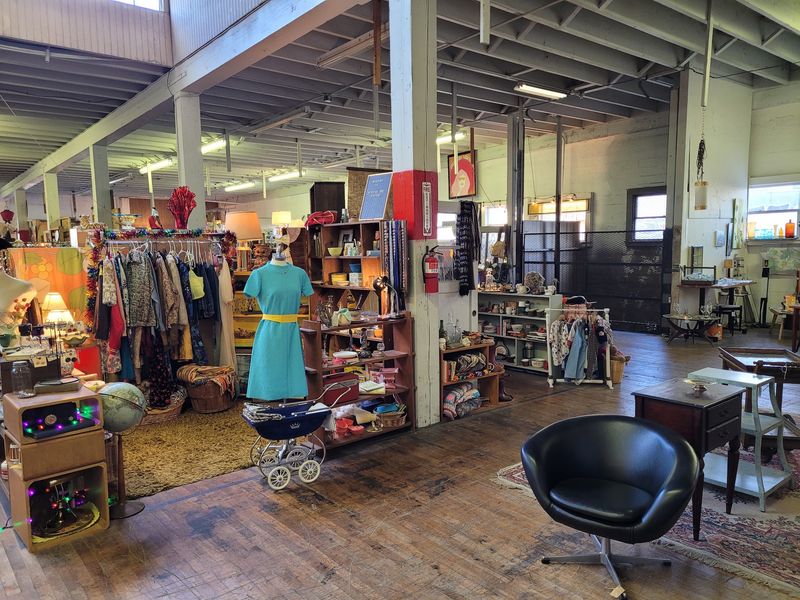
The lower floor leans heavily toward vintage clothing. Racks of jackets, tops, and accessories fill much of that space.
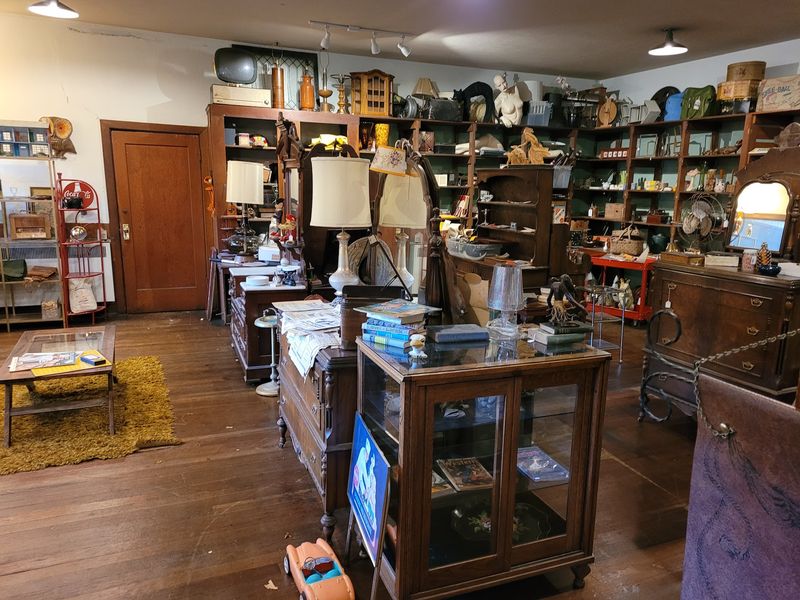
The main and top floors hold the bulk of the home goods and collectibles. Furniture, housewares, knickknacks, ceramics, books, and art all compete for attention.
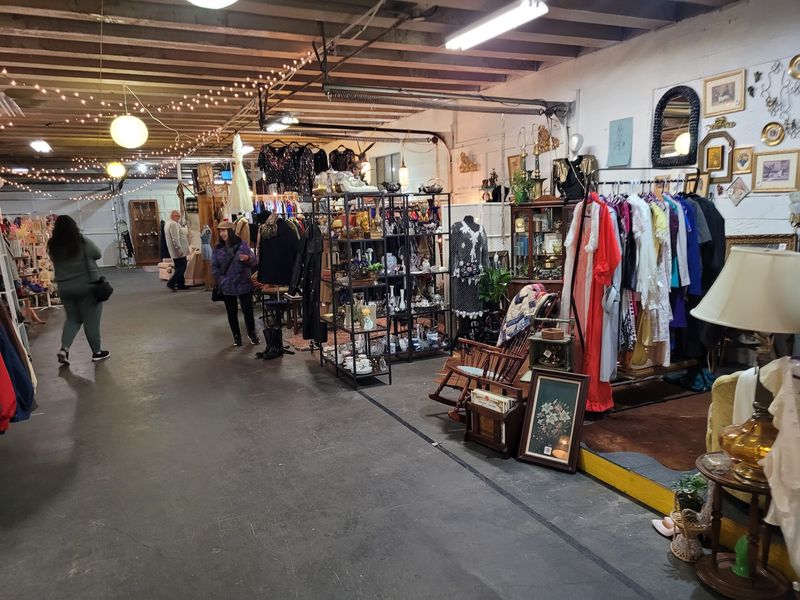
The space is big, yet it rarely feels jammed. Booths are packed with goods, but the aisles leave enough room to browse comfortably even when the mall has a good crowd.
That size catches people off guard. Plenty of shoppers spend two hours inside and still admit they never made it to every floor.
Others commit fully. Sessions of three and a half, five, and even five and a half hours are common enough that the staff treats them as normal.
A good strategy is to pick one floor, finish it, and then move on. Bouncing back and forth tends to eat up the clock fast.
Of all three levels, though, the basement has quietly become the star.
The Y2K Basement Time Machine
Somewhere along the way, the early 2000s became vintage. Memory Den leaned into that with a newer Y2K basement, and it has turned into one of the most talked-about areas in the whole building.
The theme goes beyond the merchandise. A large DJ-style setup plays early 2000s music along with parts of the matching music videos.
Old-style televisions run vintage videos, and VHS tapes show up for anyone collecting physical media. A TV in the basement has also offered free play on a video game for anyone who wants a break from shopping.
For younger shoppers, this floor feels like a museum of their childhood. For parents, it is a slightly alarming reminder of how fast time moves.
Plenty of first-timers name the basement as their favorite part of the visit. Some even admit they came in skeptical about shopping and left as fans.
It works because it mixes browsing with something to do. People who are not hunting for anything specific still find a reason to linger.
Head back upstairs, however, and the mood shifts toward clocks, phones, and a quieter kind of nostalgia.
A Clock Wall and a Phone Booth Full of Tales
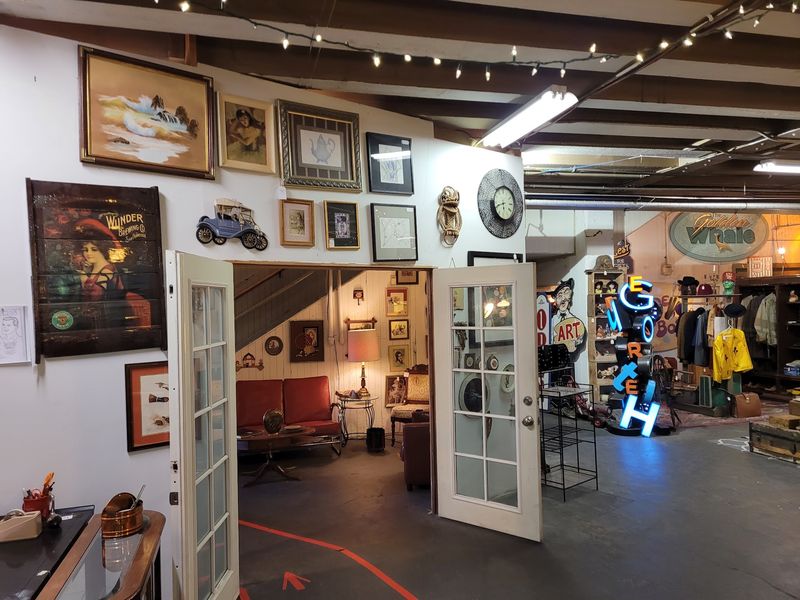
Time is literally on display here. The second floor features a clock wall, a spot many shoppers single out as a favorite.
It is also one of the most photographed corners in the building. Memory Den is full of displays built for pictures, and this wall tends to lead the list.
Not far off is another oddball feature. A phone booth set up for stories lets shoppers pick up the receiver and listen, turning an everyday relic into a small piece of entertainment.
These touches matter because they slow people down. A shopper heading toward the next booth stops, looks, and suddenly ten more minutes have passed.
Around the floors, more interactive extras keep popping up. Chess boards, checkerboards, and oversized board games sit in different areas for anyone who wants to play.
Those games are especially handy for groups with mixed interests. One person can hunt for vintage glassware while another settles into a match.
For families, it means kids have something to do besides asking when it is time to leave. For couples, it makes the place a surprisingly easy date idea.
Then there is the corner where art is being made in real time.
Artist Alley and the Local Makers
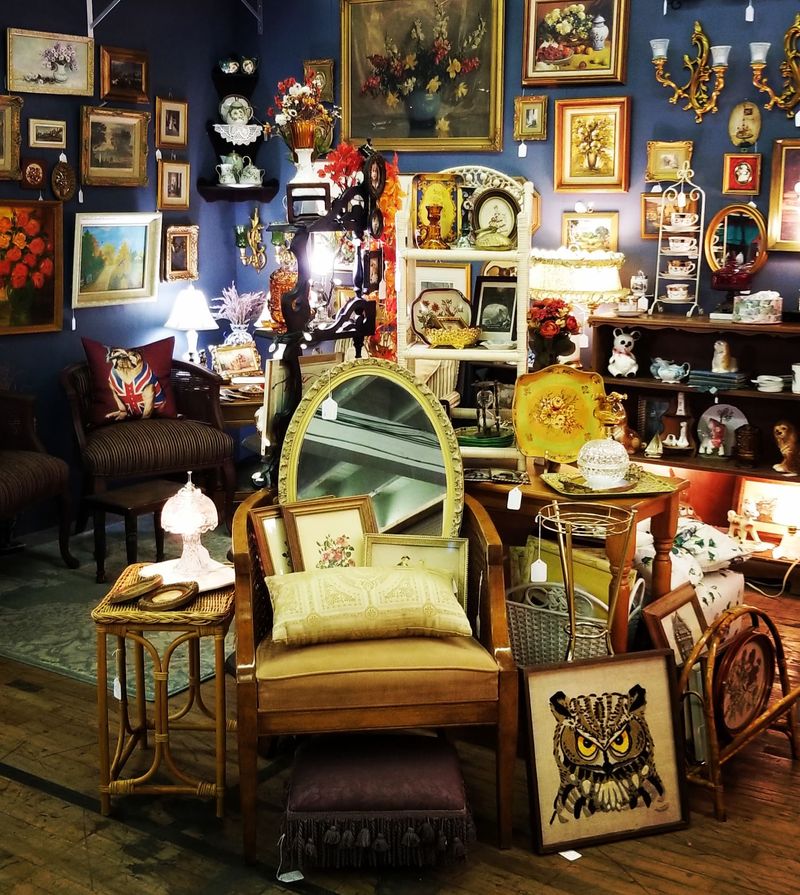
Not everything at Memory Den is old. Artist Alley gives local creators a space to sell their work, and some of them are often right there making new pieces.
That live element sets it apart from a standard gallery. Shoppers can see art in progress and talk to the people who made it.
The work on display covers a range of styles, and much of it is available for purchase. Several shoppers leave with prints or original pieces as gifts.
Artist Alley keeps coming up as a highlight for repeat guests. Some say they plan to make Memory Den a regular stop every time they come to Portland, partly because of this section.
There is also a fun bonus for collectors. An Inciardi prints machine sits inside, dispensing small art prints that some people collect from location to location.
Staff members have even been known to get excited alongside collectors and trade prints so a shopper can complete a set. That is not a typical checkout experience.
For Oregon residents who want local creative work to stay visible and affordable to find, this alley is a real asset.
Of course, not every corner is this cheerful.
The Mausoleum and the Spooky Side
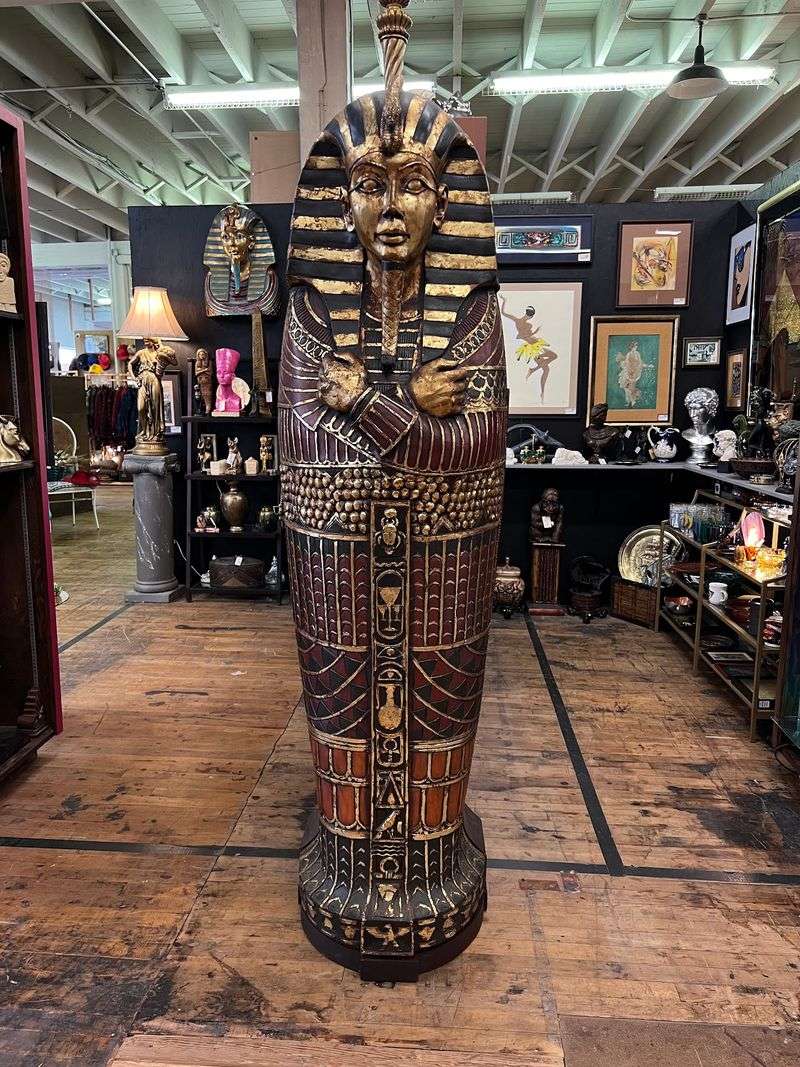
Every big vintage mall has a weird corner. At Memory Den, the weird corner has its own name and a museum.
The Mausoleum, located upstairs, sells oddities including antique medical equipment. Its owner has been known to invite curious shoppers into a true crime museum connected to the space.
That exhibit is detailed and informative, covering infamous criminal cases and dark chapters of history. Staff in that room tend to be friendly and happy to walk people through what they are seeing.
Elsewhere, a haunted section features items connected to the paranormal. It adds a playful scare to what otherwise looks like a standard afternoon of antique browsing.
There is also a small oddity area beyond those rooms. Fans of the unusual will find plenty to keep them curious.
Squeamish shoppers can easily skip these areas. The rest of the mall has more than enough to fill the day.
For true crime fans, though, this section may be the reason to come in the first place. It is hard to find this combination of shopping and exhibits anywhere else in town.
After all that, a quiet seat and a cup of something might be in order.
Coffee, Books, and Places to Pause
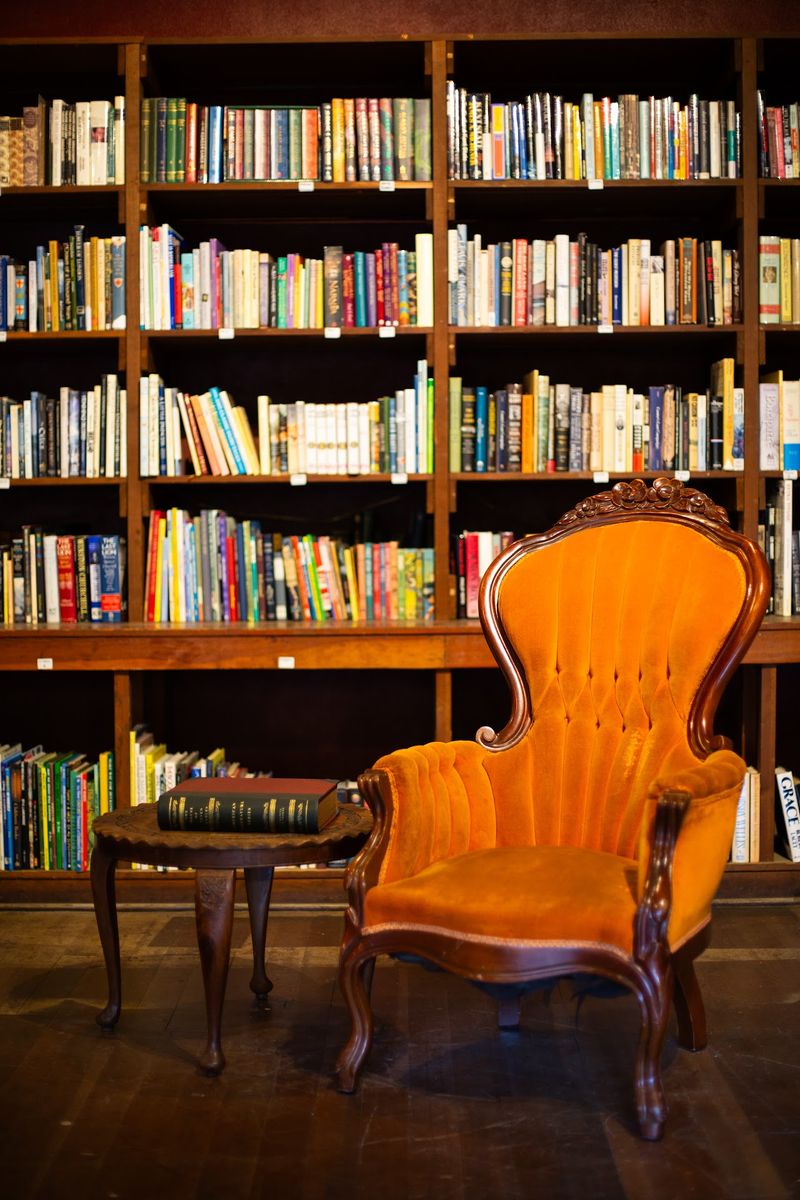
Long shopping days need breaks. Memory Den built them into the floor plan.
There is a coffee spot on site along with a small library section. Between them, shoppers can refuel and sit for a while without leaving the building.
Seating appears in the nooks scattered around the floors. Those little rest areas are a big reason five-hour visits are actually doable.
The bathrooms get unexpected praise too. The one on the second floor carries an 80s and 90s style and is kept clean, which is not something every older building can claim.
Practical touches continue near the entrance. Lockers are available for stashing purses and bags, so hands stay free for digging through racks.
Staff can also hold items while shoppers keep browsing. That way, a stack of finds does not have to travel up and down three floors.
Together, these details turn a big building into a comfortable one. Nobody has to cut the trip short because of tired feet or full arms.
Speaking of staff, they may be the most mentioned feature of all.
The Crew Who Knows Every Corner
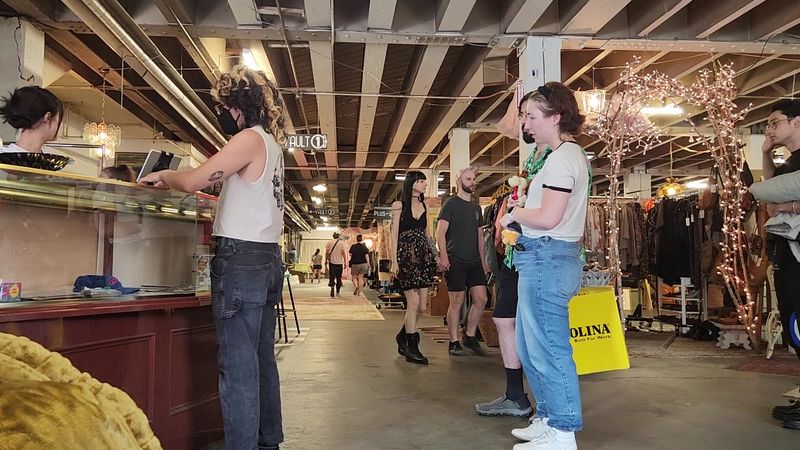
A building with 230 vendors could feel overwhelming. The team at the front helps prevent that.
Helpful staff is the single most common theme people bring up about Memory Den. Cashiers get special credit too.
New arrivals often get a quick orientation explaining what sits on each floor and where the bathrooms and lockers are. Some employees go further and suggest which areas to explore based on a shopper’s personal style.
Checkout gets the same care. Fragile ceramics are wrapped so they make it home safely, and items in locked cases are retrieved without fuss.
Small gestures stand out as well. Some shoppers mention getting a lollipop on the way out.
Workers across the floors, including those in the themed rooms, tend to notice when someone is lingering. They step in to chat or point out something interesting without being pushy.
That warmth gives a large mall the feel of a neighborhood shop. Many first-time guests leave saying they already plan a return trip.
Friendly service is great, but prices still matter when it comes time to pay.
What Things Cost, Booth by Booth
Here is the honest truth about prices. They depend entirely on which booth you are standing in.
Each vendor sets its own prices based on condition, rarity, and sourcing. That independence explains why the range is so wide.
Many shoppers find prices fair and leave with plenty of finds without overspending. Home goods, knickknacks, and non-clothing collectibles often get the warmest feedback.
Vintage clothing is where opinions split. Some pieces are priced well above typical thrift levels, and a few shoppers feel certain items run high compared with prices elsewhere.
The smart approach is to treat Memory Den like a market rather than a discount shop. Compare booths, take your time, and buy what feels right.
For Oregonians watching their budgets, that flexibility is useful. A small gift or a quirky piece of decor can fit almost any spending plan, while rare finds come with rare-find price tags.
Browsing costs nothing at all. Plenty of people return regularly just to see what is new, buying only when something truly grabs them.
Before any of that happens, though, there is the matter of parking.
Hours, Parking, and a Fair Verdict
Good news for planners: the schedule is simple. Memory Den is open every day of the week from 11 AM to 7 PM.
Arriving near opening gives the most time to explore. Since long visits are common, a late start can mean rushing the final floor.
Parking takes some patience. There are two small lots, but they fill quickly, and street spots in this warehouse district can be tight on busy days.
A few laps around the block usually solve the problem. Building in extra time keeps frustration low.
Inside, the payoff is substantial. More than 230 vendors, three themed floors, local art, oddities, games, and a crew that actually likes helping people make this one of Portland’s most entertaining places to shop.
It suits vintage collectors, families, couples, groups of friends on a weekend trip, and even people who claim to hate shopping. The haunted corners and true crime museum add an extra layer for the curious.
Bring a mask if dust bothers you, set a loose budget, and let go of any strict schedule. Just looking is a fine plan, as long as nobody expects it to last.
Share this story