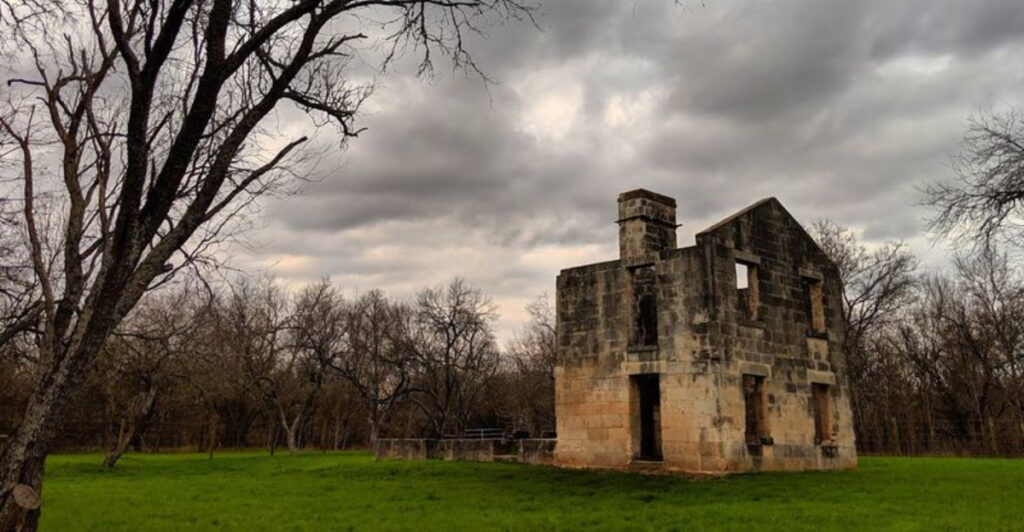
Texas holds secrets in its wide-open spaces, and some of the best ones are parks where crowds never seem to show up. These places offer silence, solitude, and a rare chance to experience nature without fighting for parking or dodging selfie sticks. Whether you’re looking for eerie ruins, forgotten trails, or landscapes that feel like they belong to another time, these eight spots deliver peace and a touch of mystery that’s hard to find anywhere else.
1. Big Bend Ranch State Park
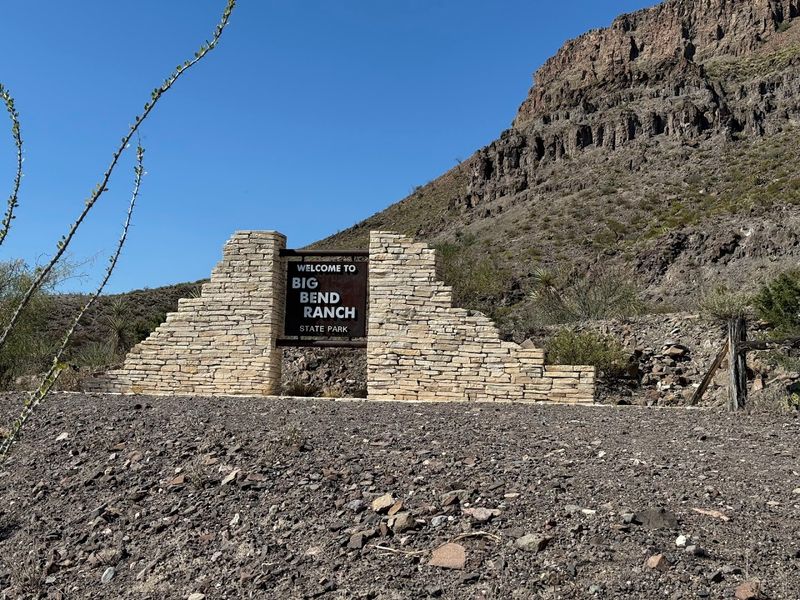
Stretching across more than 300,000 acres of raw Chihuahuan Desert, this massive state park sits west of Big Bend National Park and sees a fraction of the visitors. Most travelers stick to the national park, leaving this wild expanse feeling like your own private corner of Texas. The landscape here doesn’t hold back—jagged volcanic peaks, deep canyons carved by ancient rivers, and trails that wind through terrain so remote you might not see another soul for hours.
Getting around requires some planning since many roads are primitive and best tackled with high-clearance vehicles. But that rough access is exactly what keeps the crowds away. You can hike to places like Closed Canyon, where narrow rock walls tower overhead and sunlight filters through in golden streaks, or explore the Contrabando Movie Set, a ghost town film location that adds an extra layer of eeriness to the already haunting scenery.
Camping here feels like stepping back in time. Primitive sites scatter across the park, offering nothing but space, stars, and silence. You won’t find wifi or convenience stores, just endless desert horizons and the kind of quiet that makes you notice your own heartbeat.
Spring and fall bring the best weather, though summer nights can still be magical if you’re prepared for the heat.
Wildlife roams freely through this landscape—javelinas, roadrunners, golden eagles, and occasionally even mountain lions. The park’s isolation means animals act like humans are just another part of the scenery. Sunrise and sunset paint the rocks in shades of orange and purple that photographs never quite capture.
If you’re seeking a place where nature still feels untamed and crowds are just a distant memory, this sprawling desert sanctuary delivers exactly that kind of solitude.
2. McKinney Falls Homestead
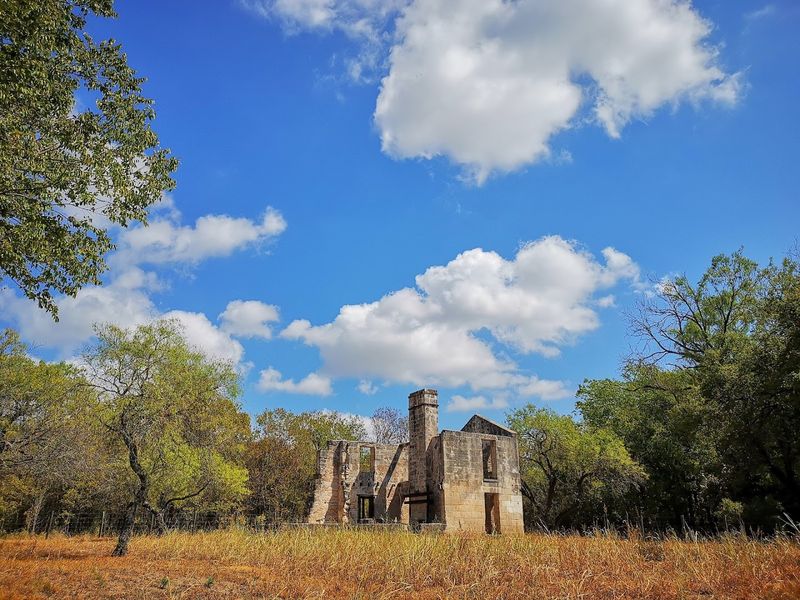
Just minutes from downtown Austin, these weathered limestone ruins stand as quiet witnesses to Texas frontier life. The McKinney family built their homestead here in the 1850s, and while the park around it draws some visitors to the waterfalls, the actual ruins sit tucked away where most people never wander. Thick oak trees shade the crumbling walls, and the whole area carries a peaceful melancholy that makes you wonder about the lives lived within those stones.
The main house foundation and partial walls remain, along with remnants of outbuildings that once supported a working frontier ranch. Walking among these structures feels like touching history directly—you can still see where doorways opened, where windows looked out over the creek, and where families gathered after long days of hard work. Native limestone blocks, hand-cut and stacked, have held their position for over 170 years despite floods, storms, and the relentless march of time.
Most park visitors head straight for Onion Creek and the falls, leaving the homestead area surprisingly empty. Early morning visits offer the best chance for complete solitude, when mist rises from the creek and sunlight angles through the trees in cathedral-like beams. The quiet here isn’t just about absence of noise—it’s the kind of stillness that makes you speak in whispers, respecting the weight of all those years.
Bring a camera and take time to notice details: the way vines have woven through window openings, how wildflowers push up through cracks in old foundations, the patient work of erosion slowly reclaiming human construction. The site reminds you that even in a bustling city, places exist where past and present overlap in hushed reverence. It’s not dramatic or flashy, just genuinely peaceful and oddly moving.
3. Caddo Lake State Park (Forgotten Corners)
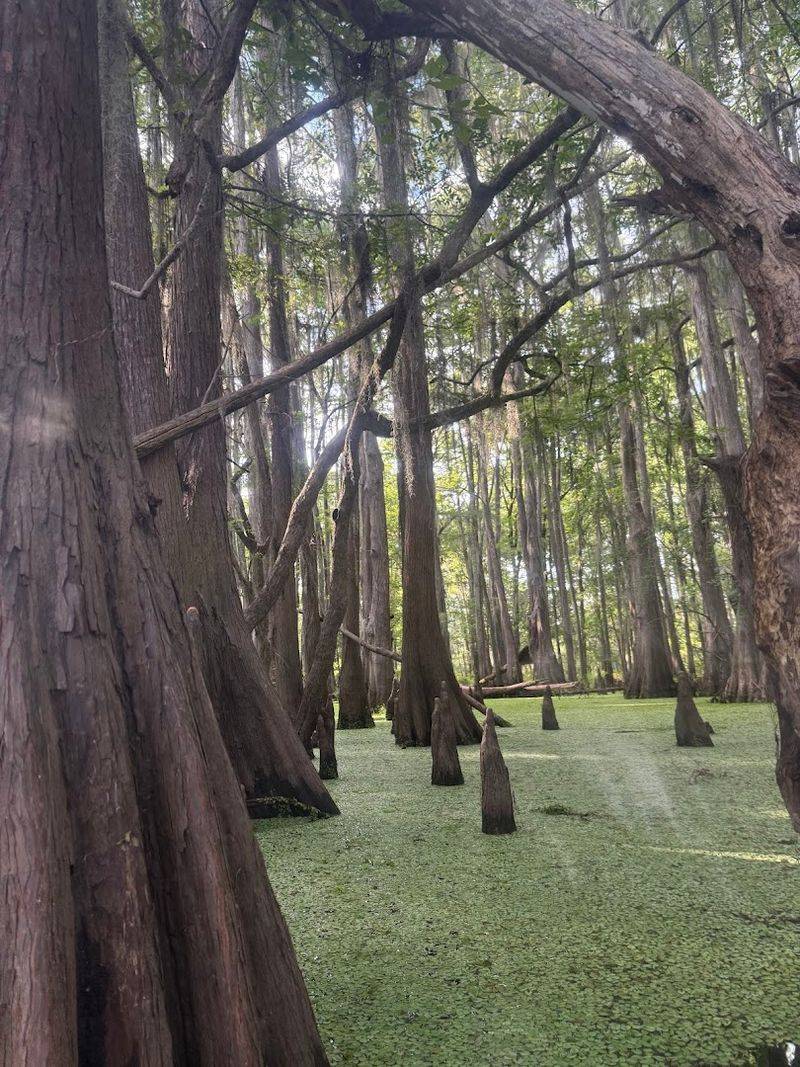
Spanish moss drapes from ancient cypress trees like tattered curtains, and morning fog transforms this East Texas lake into something from a gothic novel. While some areas of Caddo Lake attract fishermen and paddlers, the park’s deeper corners remain blissfully forgotten by most visitors. These backwater channels and hidden coves create a maze of waterways where silence settles thick as the humidity and the only sounds come from herons taking flight or turtles sliding off logs.
The lake itself formed naturally, making it Texas’s only naturally occurring large lake—though locals will tell you it’s actually more Louisiana than Texas in character. Bald cypress trees, some hundreds of years old, rise from the water with their knobby knees exposed, creating an otherworldly forest that feels prehistoric. Paddling through these areas requires attention since channels twist and turn without obvious markers, but that’s precisely what keeps casual visitors on shore.
Wildlife thrives in this wetland ecosystem. Alligators sun themselves on muddy banks, though they’re generally shy and slip into the water long before you get close. Egrets, ibis, and wood ducks populate the shallows, while river otters occasionally make appearances for those patient enough to sit still.
The park’s trails loop through bottomland hardwood forest, offering dry-land exploration that’s equally quiet and atmospheric.
Best times to visit are early spring or late fall when temperatures cooperate and mosquitoes take a break. Bring insect repellent regardless—this is swamp country, after all. Rent a kayak or canoe and spend a few hours getting lost among the cypress trees, letting the maze of waterways and hanging moss work their strange magic.
The forgotten corners of Caddo Lake don’t give up their secrets easily, but they reward anyone seeking genuine solitude with an experience that feels miles away from modern Texas.
4. Joyland Amusement Park
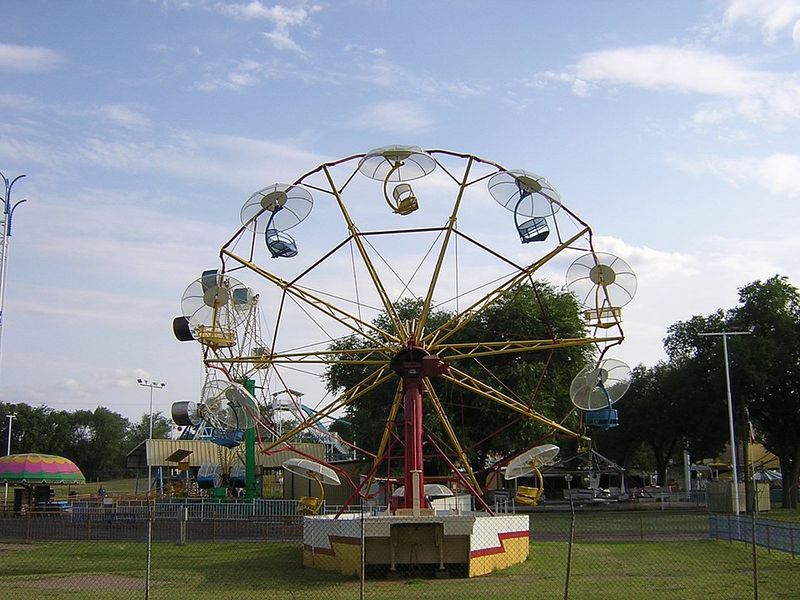
Rust and silence have replaced screams and laughter at this abandoned amusement park on the edge of Lubbock. Joyland operated from 1947 until 1973, bringing joy to generations of West Texas families before economic pressures and changing entertainment preferences forced its closure. Now the skeletal remains of rides stand frozen in time, paint peeling from once-bright carousel horses and roller coaster tracks curving toward nowhere.
It’s not officially a park anymore, but the site holds a haunting beauty that urban explorers and photographers find irresistible.
The property sits behind chain-link fencing, technically off-limits to wanderers, though its visibility from surrounding streets means you can glimpse the decay without trespassing. What remains tells stories of mid-century American optimism—the belief that small-town amusement parks could thrive forever, that Ferris wheels and funnel cakes represented permanent fixtures of community life. Walking the perimeter, you can almost hear the phantom echoes of carnival music and children’s delighted shouts carried on the dry Lubbock wind.
Weather has been particularly unkind to the structures. West Texas sun bleaches and cracks, winter winds tear at weakened joints, and occasional rain accelerates rust on exposed metal. The Tilt-A-Whirl platform sits empty, its mechanical arms frozen in positions that once sent riders spinning.
The train that circled the park rests on deteriorating tracks, going nowhere after decades of stillness. Even the ticket booth, where countless transactions once happened, stands hollow and graffiti-marked.
Preservation efforts have been discussed over the years, but nothing concrete has materialized. For now, Joyland exists in limbo—too expensive to restore, too nostalgic to demolish completely. If you visit the area, respect property boundaries but take a moment to observe from public spaces.
There’s something deeply melancholic about abandoned amusement parks, these places designed for happiness now serving as monuments to impermanence and the inevitable passage of time.
5. Goliad State Park Historic Ruins
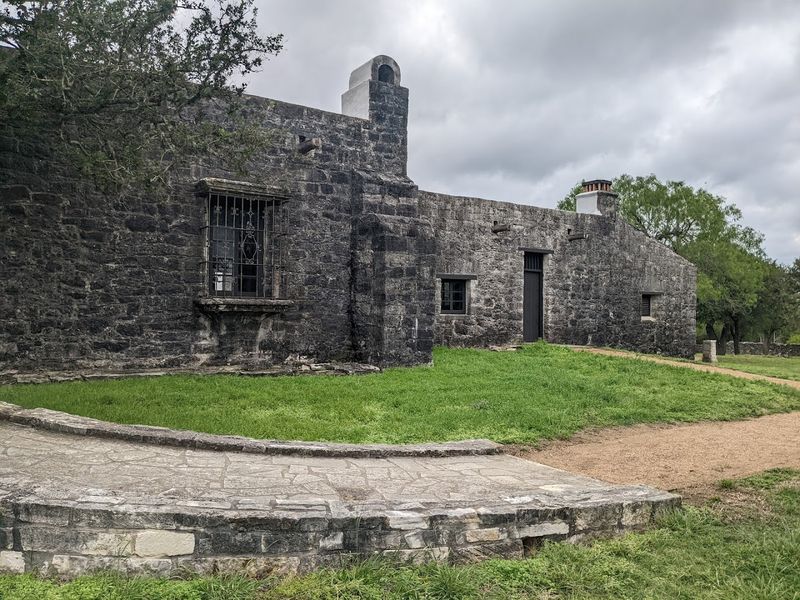
Mission Espíritu Santo’s restored church draws some attention, but wander beyond the main buildings and you’ll find crumbling walls and forgotten corners where history whispers rather than shouts. Goliad State Park preserves important Texas Revolution sites, yet most visitors stick to the well-marked paths and miss the atmospheric ruins scattered through the grounds. These fragments of Spanish colonial architecture—partial walls, foundation outlines, irrigation ditches from the 1700s—create pockets of solitude where you can contemplate three centuries of human ambition, conflict, and daily life.
The mission was established in 1749 to convert and educate the local indigenous population, part of Spain’s vast colonization effort across the Southwest. Original stone structures included living quarters, workshops, granaries, and defensive walls, though only portions survive today. Walking among these ruins, you notice construction techniques that have endured remarkably well—limestone blocks fitted without mortar, archways designed to distribute weight efficiently, and placement that took advantage of natural terrain for defense and water access.
What makes these ruins particularly haunting is their layered history. Spanish missionaries, Native American converts, Mexican soldiers, and Texian revolutionaries all occupied these grounds at different times. Each group left marks, whether physical structures or historical footnotes written in blood and sacrifice.
The nearby Presidio La Bahía, just outside the park, witnessed the Goliad Massacre during the Texas Revolution, adding tragic weight to the entire area’s atmosphere.
Visit during weekdays or early mornings for the best chance at solitude. The park’s location in a small South Texas town means it never gets overwhelmingly crowded, even during peak seasons. Bring water and wear sun protection—shade is limited among the ruins.
Photography enthusiasts will find endless compositions as sunlight plays across weathered stone and native grasses push through cracks in ancient foundations. These ruins don’t demand attention loudly, but they reward quiet observation with glimpses into Texas’s complex, multicultural past.
6. Enchanted Rock (Night Whispers)
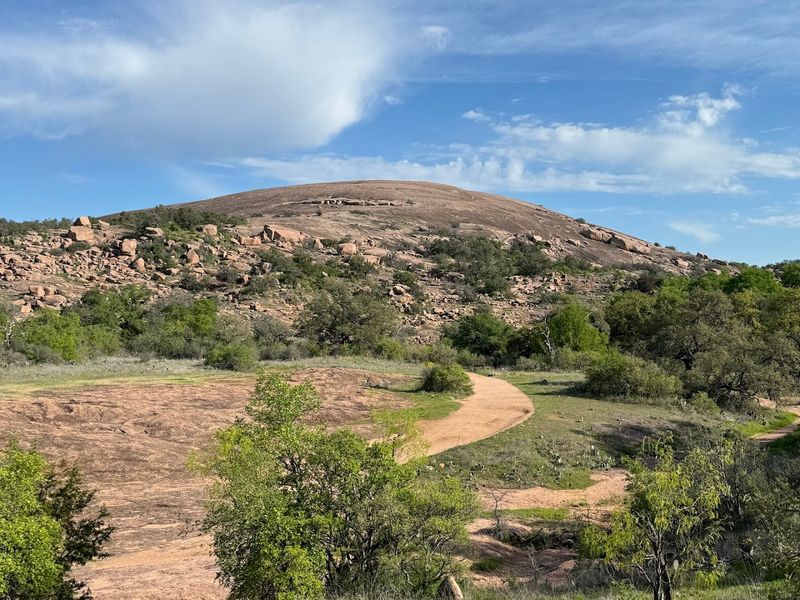
Everyone knows Enchanted Rock during daylight hours—the massive pink granite dome attracts hikers and climbers from across Texas. But the park offers a completely different experience after dark during special stargazing events or overnight camping trips. When most visitors have driven home and the sun drops below the Hill Country horizon, the rock transforms into something genuinely mystical.
Native American legends speak of ghost fires flickering on the summit and strange creaking sounds as the granite cools and contracts after absorbing a day’s worth of Texas heat.
Those sounds are real, scientifically explained by thermal expansion and contraction, but they’re no less eerie when you’re camped at the base of a 425-foot-tall rock formation under a sky packed with stars. The creaks and groans echo across the stone surface, creating an acoustic phenomenon that early indigenous peoples interpreted as spirits speaking. Modern visitors might understand the physics, but the experience still raises goosebumps when you’re alone on the summit trail with only moonlight showing the way.
The park’s dark sky designation means minimal light pollution, making it exceptional for astronomy. On clear nights, the Milky Way stretches overhead in a luminous band, and constellations pop out with clarity city dwellers never experience. Meteor showers become truly spectacular events here.
The contrast between the ancient, solid rock beneath your feet and the infinite cosmos above creates a perspective shift that’s hard to put into words—you feel simultaneously grounded and insignificant.
Camping requires reservations and planning, but walk-in primitive sites offer the most solitude. Bring warm layers since temperatures drop significantly after sunset, even in summer. Flashlights with red filters help preserve night vision while navigating.
The trail to the summit takes about an hour, manageable even in darkness if you’re reasonably fit and careful. Standing atop Enchanted Rock at 2 AM, listening to the stone whisper its thermal secrets while stars wheel overhead, ranks among the most peaceful yet otherworldly experiences Texas offers.
7. Fort Leaton Trading Post Ruins
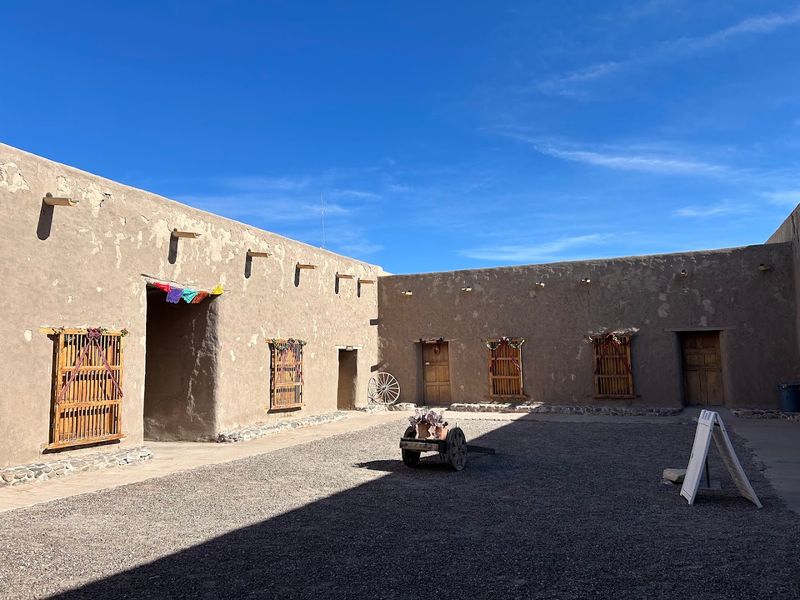
Along the Rio Grande near Presidio, thick adobe walls slowly melt back into the desert they came from. Fort Leaton started as a private trading post in 1848, built by Ben Leaton who recognized opportunity in the borderlands between two nations. The fortress-like structure served as both home and commercial enterprise, facilitating trade between American settlers, Mexican merchants, and various Native American groups.
Today it operates as a state historic site, but its remote location means you’ll often have the sprawling ruins entirely to yourself.
The architecture reflects the harsh realities of frontier life—walls three feet thick, few windows, rooms arranged around a central courtyard for defense. Leaton designed his post to withstand attacks while housing his family and storing valuable trade goods. Walking through the restored and unrestored sections, you get a visceral sense of isolation.
This was true frontier, where the nearest help might be days away and survival depended on strategic alliances, trading savvy, and occasionally brutal pragmatism.
Much of the original structure remains in ruins, protected but not fully reconstructed. Exposed adobe bricks show how desert materials were shaped into living spaces, and you can trace the outlines of rooms that once bustled with activity—storerooms filled with goods, living quarters where Leaton’s family slept, trading areas where deals were negotiated in multiple languages. The Rio Grande flows just beyond the walls, though it’s much diminished from its historical flow, adding to the site’s melancholy atmosphere.
Interpretive signs provide historical context, but the real education comes from simply standing in the space and imagining the challenges of 19th-century border life. Summer heat here is intense, so spring and fall visits make more sense unless you’re specifically seeking that authentic desert experience. The drive to Fort Leaton takes you through some of Texas’s most remote territory, passing through landscapes that look unchanged from Leaton’s time.
Pack water, respect the fragile adobe structures, and take time to absorb the profound quiet of this forgotten outpost.
8. Balmorhea State Park
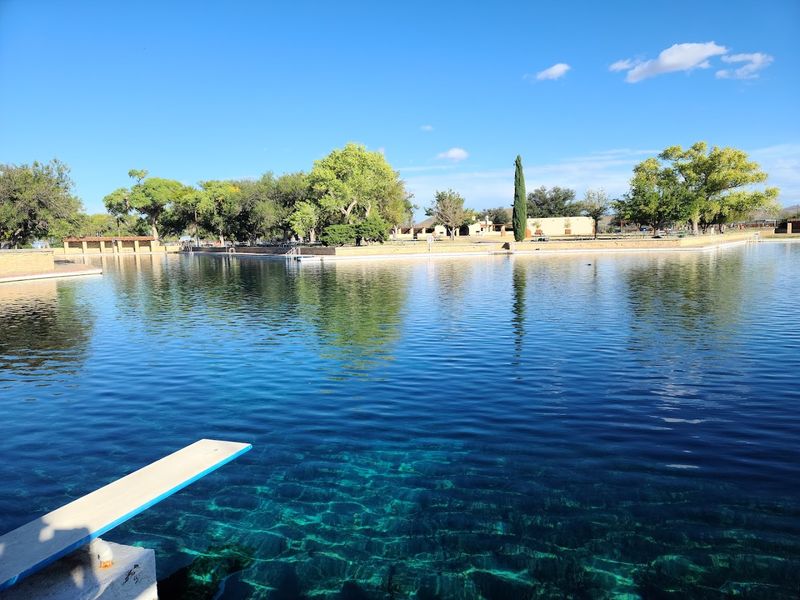
Fed by the San Solomon Springs, Balmorhea’s massive spring-fed pool maintains a constant 72-76 degrees year-round and pumps out 15 million gallons of water daily. While summer weekends can draw crowds, visit during weekdays or off-season months and you’ll find this West Texas oasis remarkably peaceful. The pool itself is enormous—nearly two acres of crystal-clear water where you can snorkel among native fish species and see every detail of the bottom even in the deepest sections.
Built by the Civilian Conservation Corps in the 1930s, the pool’s design integrates natural spring flow with human engineering. Stone walls and structures blend with the desert landscape, creating something that feels both constructed and organic. The surrounding park includes camping areas, a small wetland ecosystem, and interpretive displays about the unique hydrology that makes this place possible.
But the main attraction remains that impossibly clear water, so transparent it barely seems real.
What makes Balmorhea special for solitude-seekers is its location deep in West Texas, far from major population centers. Getting here requires commitment—it’s not a place you stumble upon accidentally. That distance filters out casual visitors, especially during school years when families can’t easily make the trip.
Early morning swims offer the best chance for near-total solitude, when steam rises from the warm water into cool desert air and the only sounds are spring water bubbling up from underground.
The fish population includes several endangered species that have adapted to these specific spring conditions, making snorkeling here an ecological education as well as recreation. Mexican tetras, Comanche Springs pupfish, and various other natives glide through the water, unbothered by human presence. Underwater visibility extends 30-40 feet on good days, creating an almost surreal swimming experience.
Pack snorkel gear, respect the no-sunscreen rule that protects water quality, and give yourself time to simply float and observe. In a state not known for natural swimming holes, Balmorhea stands as a genuine treasure—especially when you have it mostly to yourself.