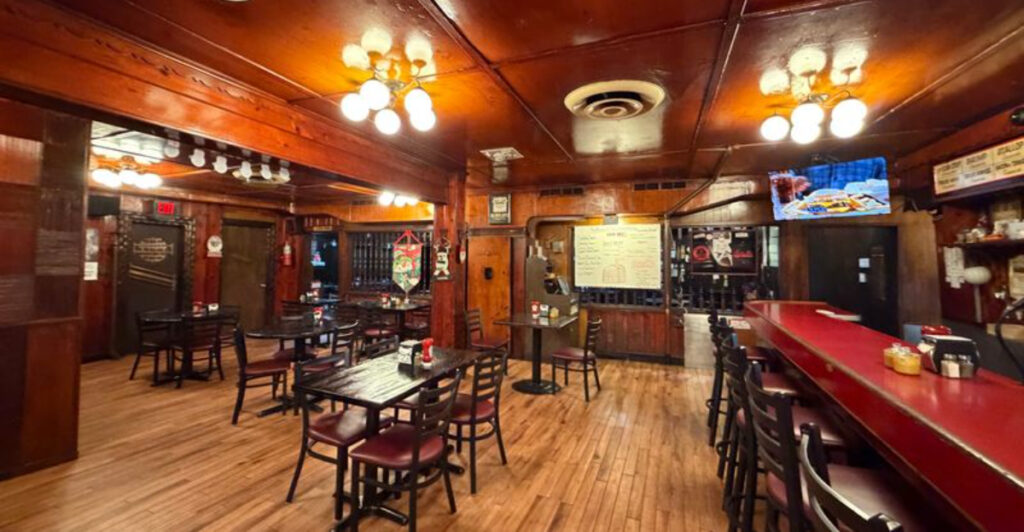
There are places in New Jersey where the “menu strategy” is basically inherited. Your uncle orders the same chicken he ordered in 1987.
Your neighbor has opinions about which hot dog texture is correct. Someone at the next table can explain tomato pie ratios with the seriousness of a courtroom witness.
These are not trendy restaurants trying to look vintage; they simply never stopped being themselves. Some are taverns with neon signs and paper-thin pizza.
Some are roadside counters where the grill has more personality than most dining rooms. A few have famous dishes, famous booths, or famous arguments attached to them, but the real pull is simpler: locals trust them.
They bring out-of-towners, warn them what to order, and then watch for the reaction. From Belleville chicken to Camden cheesesteaks, these are the old-school New Jersey restaurants people talk about like they are sharing a family recipe.
1. Belmont Tavern – Belleville
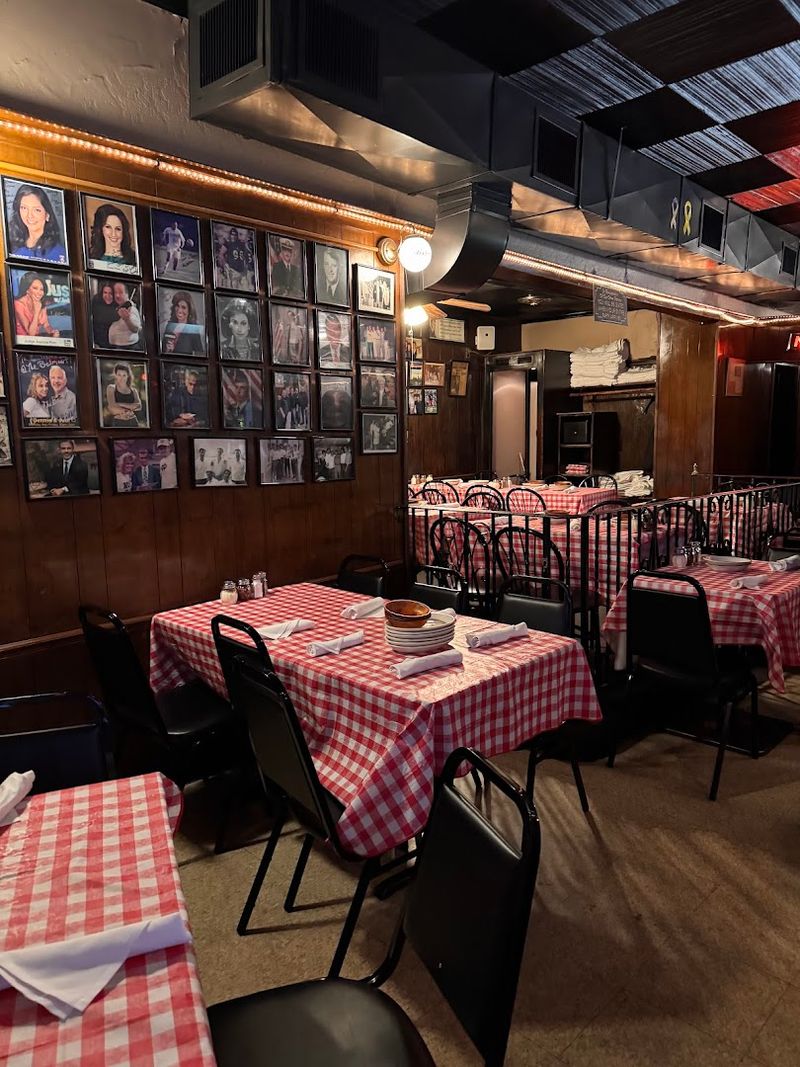
The thing to understand about Belmont Tavern is that people do not whisper “Chicken Savoy” casually. They say it like a password.
This Belleville Italian-American institution has been tied to that sharp, garlicky, vinegar-kissed roasted chicken for decades, and the dish has become one of North Jersey’s great edible legends.
The version here is famously simple on the plate and stubbornly hard to imitate: crisp-edged chicken, herbs, garlic, cheese, and that bright acidic finish that keeps it from feeling heavy.
The room itself has the lovable confidence of an old neighborhood tavern that never needed a makeover to prove anything. Photos, regulars, and plates of red-sauce comfort do most of the decorating.
Go in expecting portions that encourage sharing, but do not let politeness keep you from guarding your own pieces of Savoy. The menu also leans into classic Italian-American favorites, so a table can easily build a meal around pasta, shrimp, calamari, and a round of drinks.
This is not the place to overthink. Call ahead, bring people who appreciate garlic, and order the dish everyone in Essex County seems to have an opinion about.
2. Rutt’s Hut – Clifton
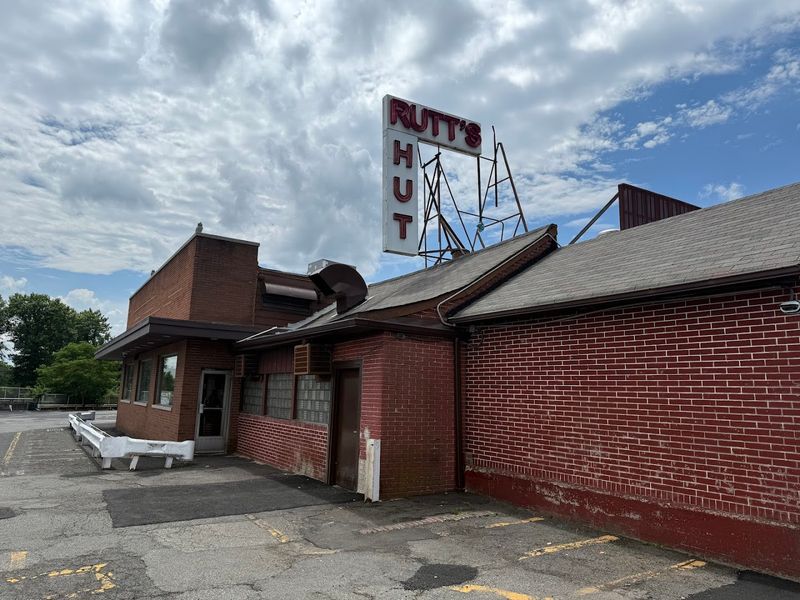
A hot dog casing cracking open in hot oil should not be dramatic, and yet at Rutt’s Hut, it absolutely is. The Clifton landmark has been around since 1928, and its deep-fried hot dogs are so tied to the place that “Ripper” has become less a menu item than a New Jersey food category.
The name comes from the way the dogs split as they fry, creating those craggy edges that catch mustard, onions, and the famous relish. The experience depends on your mood: stand at the counter for the full old-roadside effect or settle into the dining room when you want to linger a little longer.
Either way, order at least one Ripper with relish, because skipping it is like going to the shore and refusing to look at the ocean. The relish has a tangy, chopped, almost slaw-like personality that cuts right through the richness.
Rutt’s also serves breakfast and classic American plates, but the hot dogs are the gravitational center. It is casual, fast, and proudly unpolished in the best possible way.
Come hungry, bring cash just in case, and do not be surprised if someone in line has been ordering the same thing since childhood.
3. Hiram’s Roadstand – Fort Lee
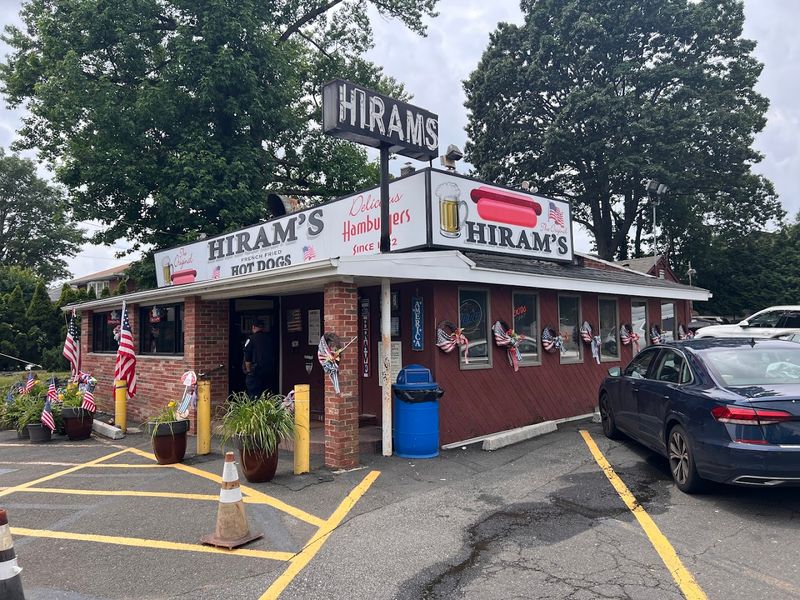
Before Fort Lee became synonymous with traffic, towers, and the George Washington Bridge approach, Hiram’s Roadstand was already doing its thing: frying hot dogs, feeding regulars, and staying refreshingly uninterested in becoming sleek.
The low-key roadside spot dates back to the 1930s in local lore, and its appeal is the kind that does not require much translation.
You smell the grill, hear the order being called, and understand why people keep coming back. The move is a hot dog with enough snap and character to make you wonder why anyone ever complicated lunch.
Add fries, maybe chili or cheese if that is your style, and eat like you had somewhere to be but happily forgot. Current menu listings still center on American roadstand classics like hot dogs, burgers, chili cheese fries, and quick-service comfort food.
What makes Hiram’s feel guarded is not secrecy so much as loyalty. Generations of North Jersey families have treated it as a stop you make because your parents made it, and their parents probably did too.
Parking can be a little tight when everyone has the same craving, but turnover is part of the rhythm. This is a no-fuss place, and that is exactly the point.
4. White Manna – Hackensack
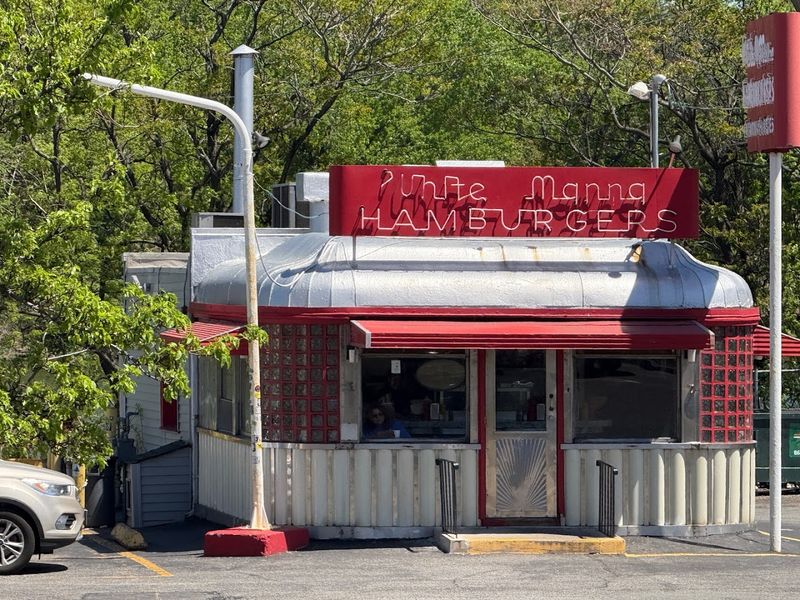
At White Manna, the grill is the show. Tiny beef patties hit the flat-top, onions pile up, buns steam, and the whole room seems built around the idea that a burger should be eaten immediately, not photographed from twelve angles.
The Hackensack icon has been serving its famous sliders since 1946, and the official description still keeps the promise beautifully plain: sliders, shakes, and crinkle-cut fries. The building itself helps.
Small, bright, curved, and unmistakably old-school, it feels less like a restaurant you visit than a piece of roadside burger history you briefly get to stand inside. Order more sliders than you think you need.
One disappears too quickly, two feels like research, and three starts to make sense once the onions and melted cheese do their work. The burgers are not oversized or dressed up; they are compact, greasy in the correct way, and best with fries on the side.
Seating is limited, patience is useful, and the counter energy is part of the meal. White Manna is one of those places where the simplicity is the flex.
It has survived every burger trend by making the kind of little sandwich that does not need explaining once you take the first bite.
5. Star Tavern – Orange
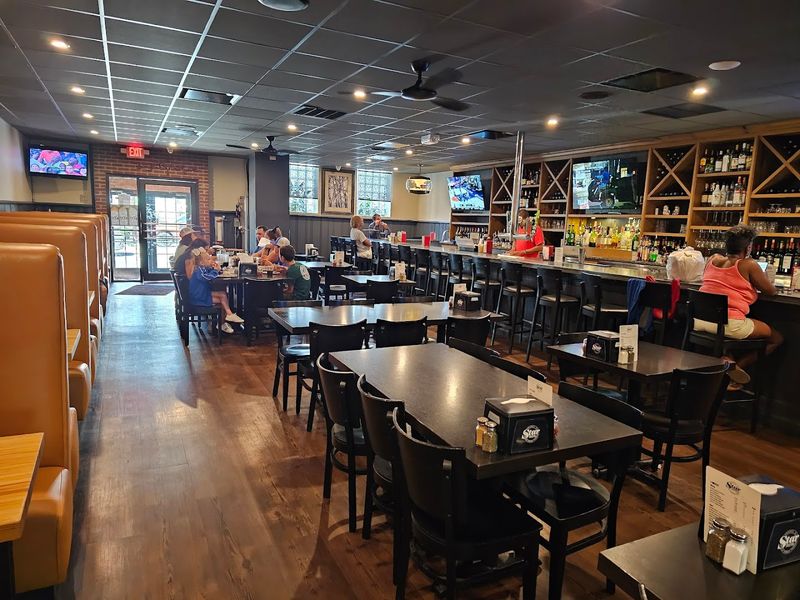
The first slice at Star Tavern usually folds before your argument about pizza style even begins. This Orange favorite has been a neighborhood name since 1945, known for thin-crust pies that arrive hot, crisp, and ready to be eaten faster than you planned.
It is bar pizza in the most New Jersey sense: casual, sharable, a little nostalgic, and highly capable of starting debates among people who all technically love it. The crust is the star because it stays light enough for “just one more slice” to become a dangerous phrase.
A plain pie is enough to understand the place, but pepperoni, sausage, or extra cheese will not steer you wrong. The room has that comfortable tavern rhythm where families, regulars, and post-work groups all seem equally at home.
It sits near the Montclair/Glen Ridge/West Orange orbit, which makes it an easy pick when nobody wants a fussy dinner but everyone wants something with a reputation. Do not arrive expecting delicate Neapolitan restraint or massive boardwalk slices.
Star Tavern is its own thing: thin, crisp, unfussy, and deeply loved. Order a pie for the table, then accept that you probably should have ordered two.
6. Kinchley’s Tavern – Ramsey
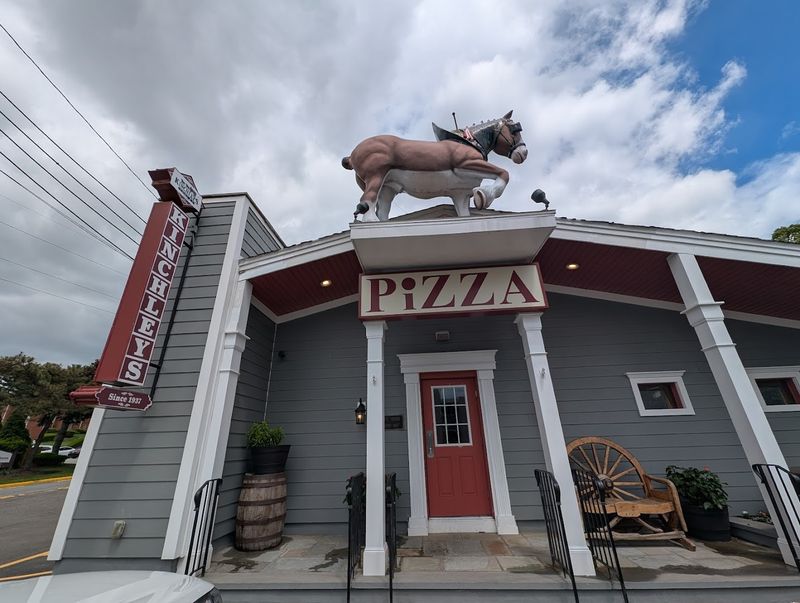
There is a horse on the roof, which is a helpful reminder that Kinchley’s Tavern has never been interested in blending in. The Ramsey institution has been a local favorite since 1937 and is best known for ultra-thin crust pizza served in a casual, family-friendly tavern setting.
Inside, the appeal is wonderfully specific: red-checkered energy, old Bergen County comfort, and pizza so thin it practically dares you to underestimate it. The crust is crisp without turning into a cracker, the cheese and sauce stay balanced, and the whole pie lands somewhere between snackable and dangerously addictive.
A plain pie is the cleanest test, but Kinchley’s also rewards topping people, especially anyone who likes sausage, pepperoni, or onions. The menu has more than pizza, and there is a full bar, but locals know the pies are why you came.
One practical note matters: Kinchley’s states that checks or credit cards are not accepted, with an ATM on premises, so plan accordingly before your table gets emotionally attached to a second order. It is the kind of place where kids become regulars before they know what “regular” means, then return years later with kids of their own.
7. Papa’s Tomato Pies – Robbinsville
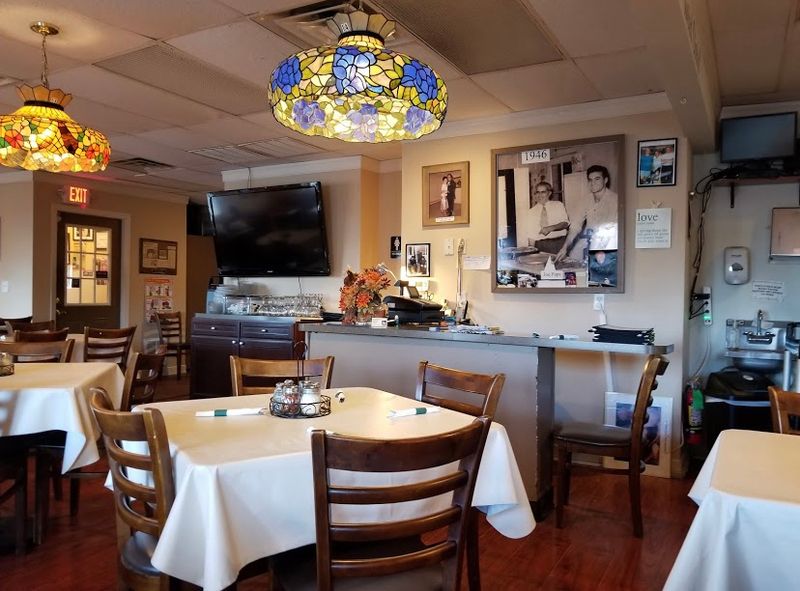
Mustard on pizza sounds like a dare until Papa’s Tomato Pies makes it taste inevitable. Founded in 1912, Papa’s calls itself the oldest continuously family-owned pizza restaurant in the United States, and that claim alone would make it historic.
But the reason people keep talking about it is the pie itself, especially the famous mustard pie with spicy brown mustard tucked under the cheese and sauce. This is Trenton tomato pie territory, which means the construction is part of the identity: cheese first, tomato on top, and a balance that feels different from the average pizza-night order.
The Robbinsville location is newer than the original Trenton roots, but the family story and style came with it. Go with someone willing to split a mustard pie even if they are skeptical; the flavor is sharper, deeper, and more subtle than the phrase “mustard pizza” suggests.
A plain tomato pie is also worth ordering so you can taste the sauce, crust, and cheese without distraction. Papa’s is old-school without feeling frozen in amber.
It is more like a living family argument, passed down through dough, sauce, and people who know exactly how they like their slice.
8. De Lorenzo’s Tomato Pies – Robbinsville
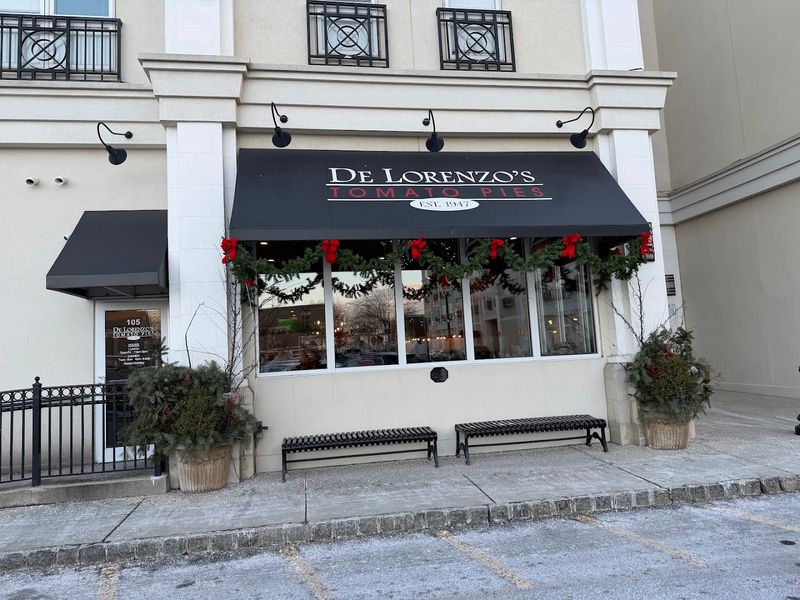
Not far from Papa’s, De Lorenzo’s proves that Robbinsville has enough tomato pie gravity for more than one legend. Its roots go back to the De Lorenzo family’s Trenton pizza story, with the Robbinsville location opening in late 2007 after decades of devotion to thin-crust tomato pies.
The style is clean, crisp, and confident: a thin crust with enough structure to hold the sauce and toppings, but not so much bulk that it steals the spotlight. A tomato pie with sausage or pepperoni is a safe classic, but the clam pie has long had its own fan club among people who like their pizza briny, garlicky, and a little different.
De Lorenzo’s feels slightly more polished than some old-school tavern counters, yet it still carries that inherited Trenton seriousness about doing one thing properly. The menu is not trying to be everything to everyone; the tomato pies are the reason you are there.
It is smart to check hours before going, since the restaurant has historically kept a schedule that rewards planning more than spontaneity. For anyone building a New Jersey pizza education, this is required coursework.
Eat slowly enough to notice the crust, then immediately start debating your next topping combination.
9. Donkey’s Place – Camden
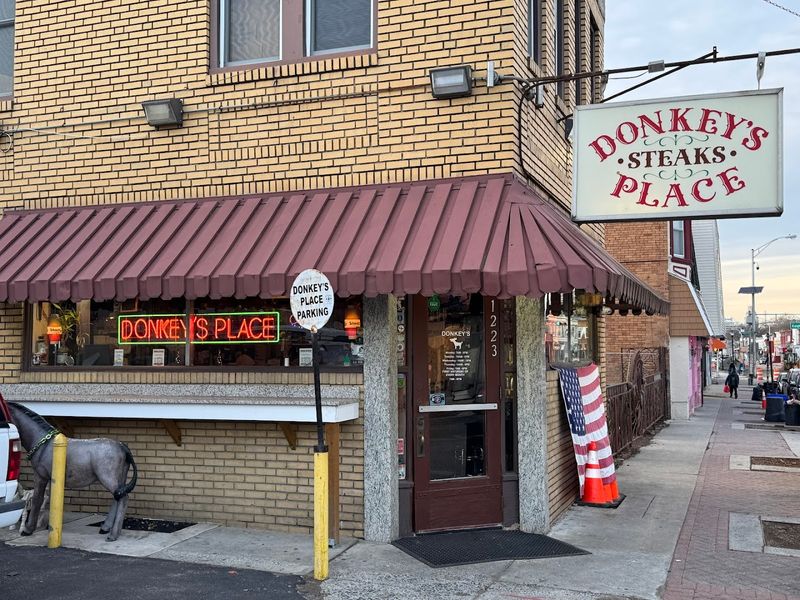
The cheesesteak at Donkey’s Place does not arrive on a long roll, which is exactly why people remember it. This Camden bar has been around since 1943, and its signature sandwich comes on a round poppy-seed Kaiser roll with steak, onions, and American cheese.
That one decision changes everything. The roll soaks up the juices without collapsing, the onions bring sweetness and bite, and the sandwich eats more like a compact heavyweight than a sprawling sub.
Donkey’s has become famous well beyond Camden, but it still feels like a neighborhood place first: bar, grill, regulars, stories, and a sandwich that refuses to ask Philadelphia for permission. The original Haddon Avenue location keeps limited, old-school hours compared with a standard dinner restaurant, so it is best treated as a lunch or early evening mission rather than a late-night whim.
Fries belong on the table, and so does at least one moment of silence after the first bite if you came in thinking all great cheesesteaks had to look the same. Donkey’s is not polished.
It is better than polished. It is stubborn, specific, and proud of the exact thing that makes it different.
10. Holsten’s Brookdale Confectionery – Bloomfield
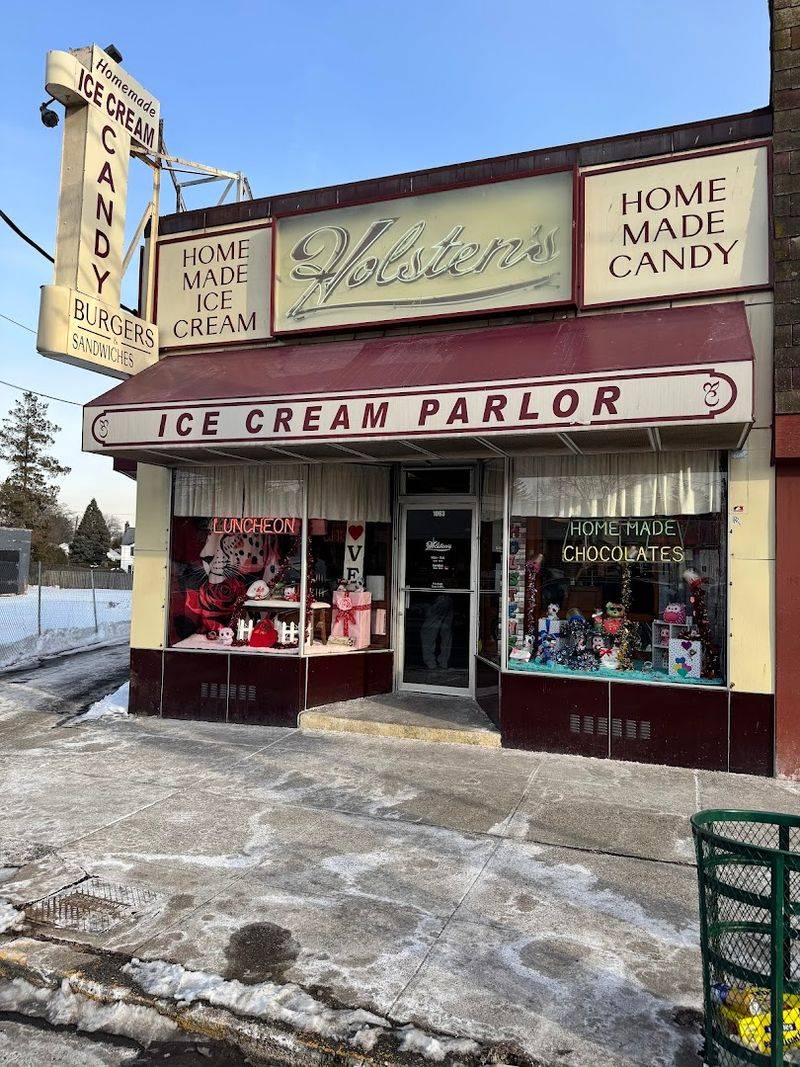
A booth can become famous, but ice cream keeps the lights on. Holsten’s in Bloomfield will always draw “Sopranos” pilgrims, thanks to its role in the show’s final scene, yet locals know it as something warmer and more useful: an old-fashioned confectionery, ice cream parlor, and casual diner that has been feeding the neighborhood for generations.
Its own story traces the business from candy and ice cream roots into breakfast, burgers, sandwiches, onion rings, and homemade sweets. The best visit lets both sides of Holsten’s matter.
Have a burger or sandwich if you are hungry, order onion rings if you want the wink, then make room for ice cream or something from the candy counter. The vibe is charming because it is not manufactured.
You get booths, counter service energy, families, fans taking photos, and regulars who are simply there because they like the place. It can get busy when TV nostalgia collides with dessert cravings, so a little patience helps.
Still, Holsten’s never feels like a one-note pop culture stop. The reason it works is that the fame sits on top of a real local institution, not the other way around.
Come for the booth if you must; stay for the sundae.
11. Moore’s Tavern – Freehold
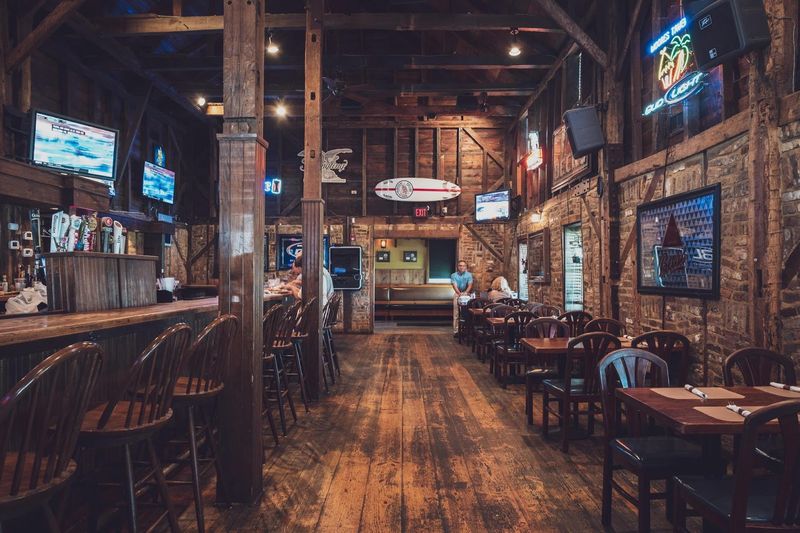
Freehold has plenty of history, and Moore’s Tavern wears its share without turning dinner into a museum lecture. The tavern’s story reaches back to the Revolutionary War era, giving it the kind of deep local roots that make a burger and a beer feel oddly connected to centuries of Monmouth County life.
Today, it is more sports bar and neighborhood tavern than candlelit relic, which is part of the charm. You can watch a game, meet friends, order wings or a sandwich, and still know you are sitting in a place with a longer memory than most restaurants could dream of.
That mix keeps Moore’s from feeling precious. It is historic, yes, but not fragile.
The menu leans broad and crowd-pleasing, which makes it an easy pick for groups that cannot agree on pizza, burgers, salads, or something fried. The downtown Freehold location also makes it convenient before or after a walk around town.
What earns Moore’s a spot here is the continuity: generations have used taverns like this as unofficial living rooms, and this one still knows how to play that role. Go for a casual meal, not a hushed pilgrimage, and let the old bones of the place do their quiet work.
12. Ho-Ho-Kus Inn & Tavern – Ho-Ho-Kus
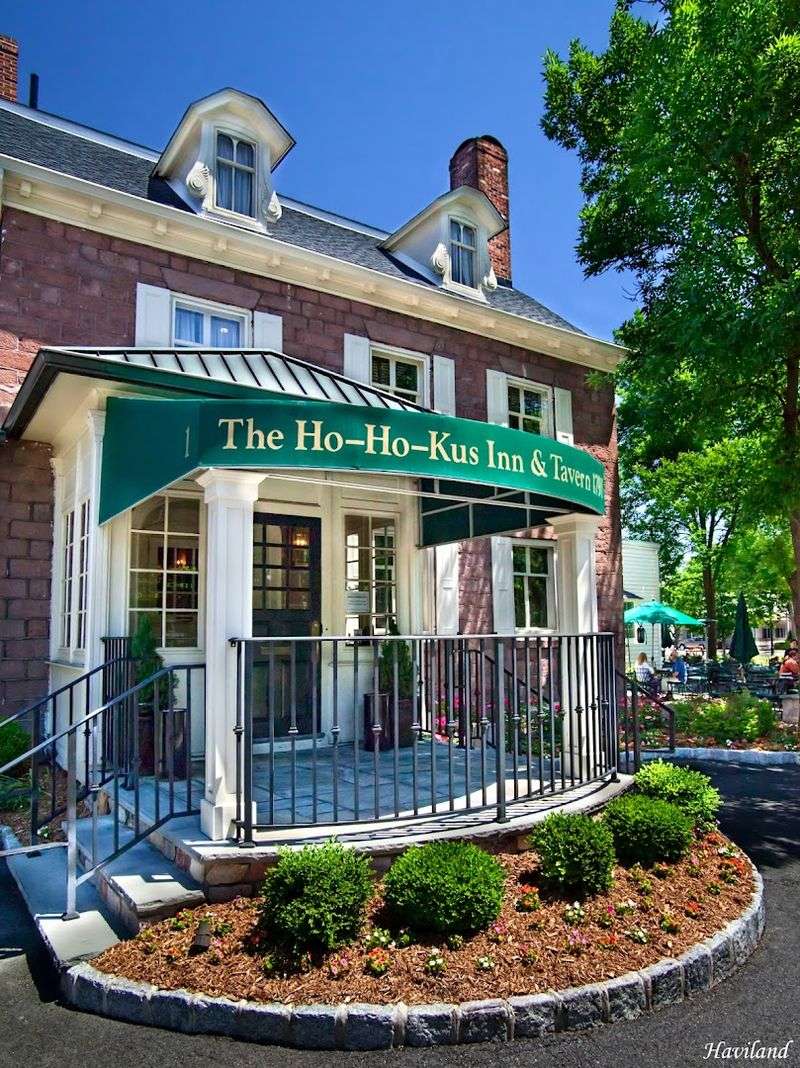
Some restaurants look old because a designer bought the right light fixtures. Ho-Ho-Kus Inn & Tavern looks old because it actually is.
The building dates to 1796, was constructed by Andrew Zabriskie as a home for his son, later served other roles, and first became a tavern in 1890. It is also listed on the National Register of Historic Places, which gives the whole experience a sense of occasion before the first drink lands on the table.
This is the most refined stop on the list, less paper-napkin legend and more historic-inn dinner with polished service. That makes it especially good for people who want old-school New Jersey without sacrificing a proper night out.
Expect tavern classics, seasonal cooking, cocktails, and rooms that feel distinct rather than generic. The setting near Franklin Turnpike adds to the old crossroads feeling, as if travelers have been finding reasons to stop here forever.
Reservations are a smart idea for dinner, especially on weekends or holidays. What keeps it from feeling too formal is the tavern side of its personality: warm wood, conversation, and the sense that history is present but not hovering over your plate correcting your posture.
It is classic Bergen County with real roots, not costume drama.