A first-timer can walk out of a three-hour class holding a wooden spoon carved by their own hands. No power tools, no experience, just a knife and a chunk of wood.
That same spirit runs through workshops across Illinois. People are learning to hammer hot iron, spin wool on a drop spindle, and cut glass into ancient mosaic patterns.
These are skills our great-great-grandparents used every day. Now they live in small studios, riverside forges, and city storefronts, waiting for curious beginners.
I love that a weekend afternoon can turn into a skill that lasts a lifetime. Honestly, I’m tempted to sign up for half of these at once.
1. Galena Spoon Co
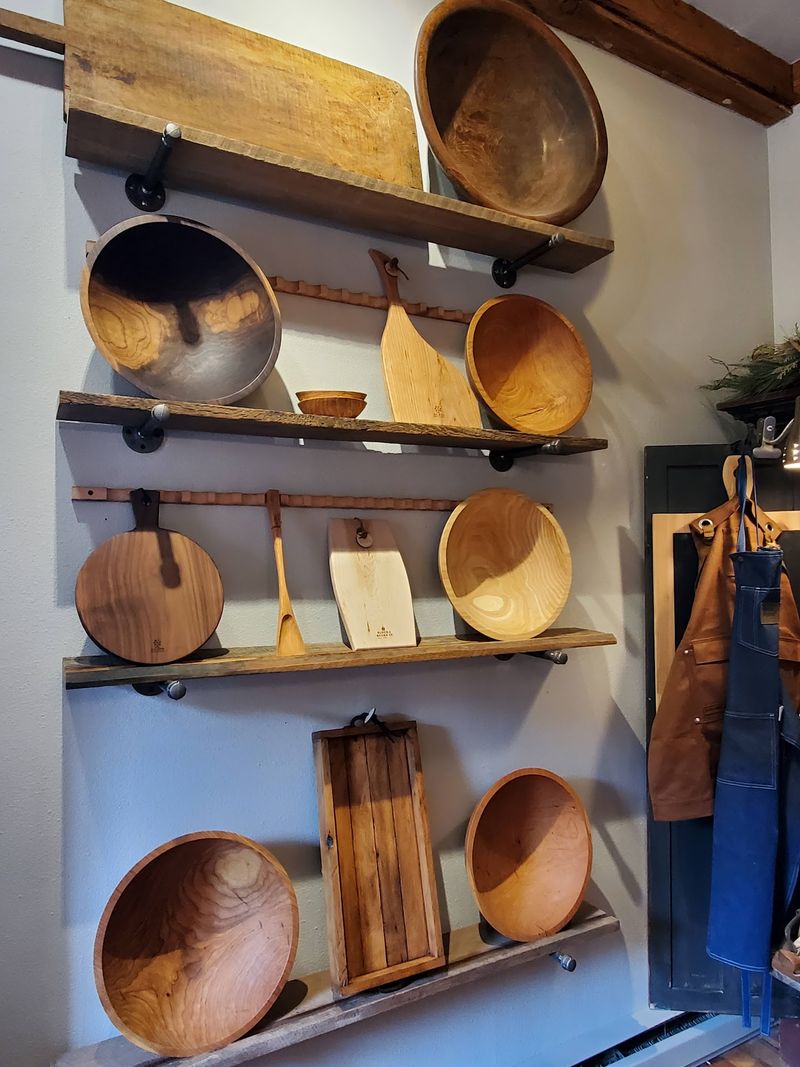
Your kitchen drawer is full of spoons, but how many did you make yourself? Here, a beginner class can change that number from zero to one in a single afternoon.
Galena Spoon Co is a working artisan studio that teaches spoon carving. Beginner classes run about three hours, and you leave with a finished spoon you shaped yourself.
No carving background is needed. Students who have never held a carving knife still head home with a handsome spoon and a strong urge to make more.
Spoon carving is one of the oldest woodworking crafts around. Before factories, families carved their own utensils from local wood using simple hand tools.
The shop sits on historic South Main Street, while carving workshops may meet at the nearby Spoon Carver Cottage. Check your booking details for the correct location.
Galena is famous for its preserved 19th-century brick buildings and rolling hills. A class here pairs nicely with a slow stroll through those old storefronts afterward.
Think of the class as a slow, quiet break from screens. Your hands stay busy, your mind settles down, and your spoon gets better with each careful cut.
Couples often book classes together, which makes it a fun date idea. You each get a spoon, and you’ll probably compare them on the drive home.
Hours are generous for weekend visitors. The shop opens Thursday through Monday, with Saturday hours stretching to 6:30 PM.
Plan ahead, since Tuesdays and Wednesdays are closed. Booking a class before your trip is the smart move if you want a guaranteed seat.
Free street parking makes the stop simple. Free Wi-Fi is available too, in case you want to brag about your spoon online immediately.
Address: 305 S Main St, Galena, IL 61036
2. Hot Iron Blacksmith
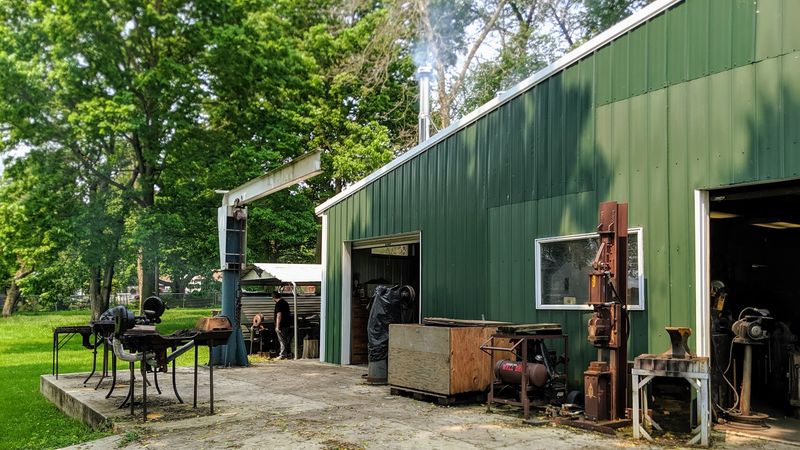
Few teachers can explain the science behind a hammer swing. At this riverside forge, the blacksmith holds engineering degrees in metallurgy and mechanical engineering.
Hot Iron Blacksmith sits on the bank of the Illinois River near Peoria. Bud Harvey and his wife, Janelle, own and run the shop together.
That technical background shows up in the lessons. You learn why hot steel behaves the way it does, not just where to hit it.
The shop motto is “Forging Iron into Black Gold Treasures.” It’s a fun line, and it captures the goal of turning raw metal into something worth keeping.
An intro class is the easiest way to get started. Students describe the teaching as patient, which matters when you’re holding glowing metal for the first time.
Blacksmithing once kept whole towns running. Smiths made tools, hinges, and horseshoes long before hardware stores existed.
The skills taught here come from industry practice and from noted master blacksmiths. That mix gives you both old-school technique and modern know-how.
Bud also creates custom metal art for clients. So the shop isn’t just a classroom, it’s an active studio where real commissions take shape.
Chillicothe is a small river town of roughly 6,000 people. The rural setting feels right for a craft that started in village forges.
Hours aren’t posted on a fixed schedule, so reach out before you visit. Classes are the best reason to make the drive anyway.
Wear sturdy shoes and natural-fiber clothes for any forge work. Sparks and synthetic fabric are not a friendly pair.
Address: 12000 N Riverview Rd, Chillicothe, IL 61523
3. Weave & Wobble
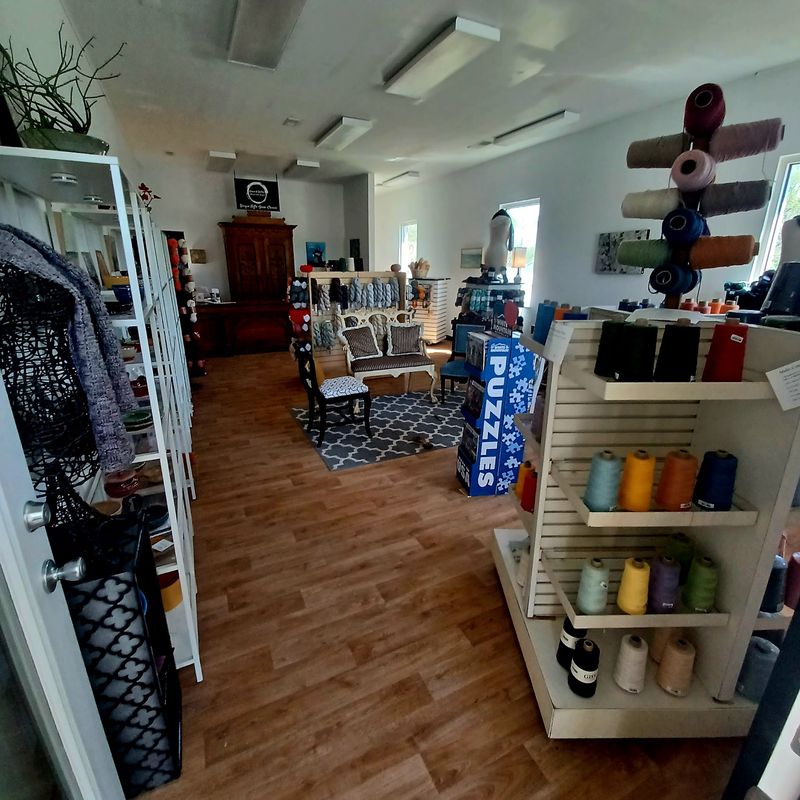
The name alone tells you this place has a sense of humor. Weaving and wobbly pottery wheels share one roof here, along with plenty of yarn.
Weave & Wobble is a handicraft studio and shop in Belleville. It offers classes in yarn crafts and pottery, plus weaving workshops.
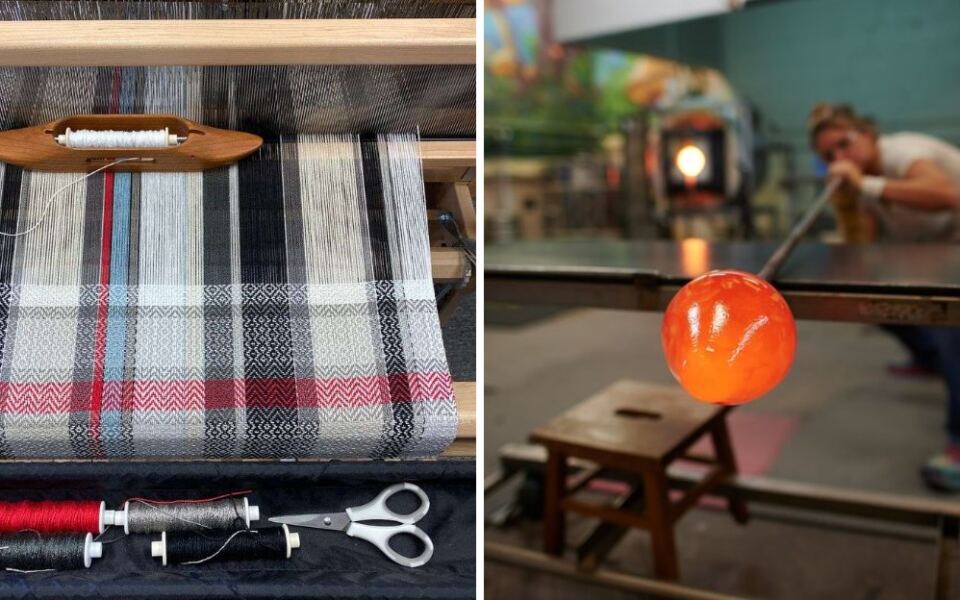
The class list goes deeper than you might expect. Students have taken crochet, spinning, drop spindle, and weaving classes here.
Drop spindle spinning is about as old school as fiber gets. People twisted wool into thread this way for thousands of years before spinning wheels arrived.
Nicole runs the classes, and her teaching gets high marks for patience and fun. The studio feels safe and inviting for nervous beginners.
That matters when your first yarn looks more like a lumpy noodle. Good instructors keep you laughing instead of quitting.
Beyond classes, the studio offers handmade pottery and craft supplies. Its dedicated yarn shop is currently closed, so contact the studio if you’re looking for specific materials.
Hours are short and split. Tuesday runs 5–7 PM, Wednesday noon–7 PM, Thursday and Friday 5–7 PM, and Saturday 10 AM–noon.
The studio closes Sunday and Monday. Classes are often arranged separately, so texting ahead is the best way to secure a spot.
Belleville is a historic city in the Metro East area of Southern Illinois. It’s an easy trip from much of the St. Louis region.
Parking is free, with an on-site lot plus street spaces. A gender-neutral restroom is available too.
Address: 1537 Donna Dr, Belleville, IL 62226
4. JDraper Glass LLC

Molten glass moves like honey and glows like a sunset. Learning to shape it might be the coolest hot job you’ll ever try.
JDraper Glass LLC is a glassblowing studio in Peoria. It offers hands-on workshops along with handcrafted glass gifts.
Glassblowing goes back more than 2,000 years. The basic idea of gathering hot glass on a pipe and blowing air into it hasn’t changed much.
Workshops let you do more than watch. Instructors guide you through the process so you can shape and blow the glass yourself.
Even watching is a treat, though. The studio also hosts glassblowing demonstrations that show how beautiful pieces can still be useful.
Instructors earn strong praise for their teaching. You’ll learn the process step by step instead of guessing near a furnace.
Hot shops are serious places, so listen closely to safety tips. Closed-toe shoes and cotton clothing are always a smart choice around this kind of heat.
Hours are limited to Thursday through Saturday, 9 AM to 3 PM. The studio is closed Sunday through Wednesday.
That tight window means booking ahead is wise. Workshops can be a great group outing or a memorable gift for someone who has everything.
The studio sits on West Main Street in Peoria, the riverfront city in central Illinois. It’s an easy stop if you’re exploring the area.
JDraper Glass describes itself as LGBTQ+ friendly and a transgender safe space. A gender-neutral restroom is also on site.
And the best part? You may get to take home a glass piece you helped make.
Address: 734 W Main St, Peoria, IL 61606
5. Esther’s Place
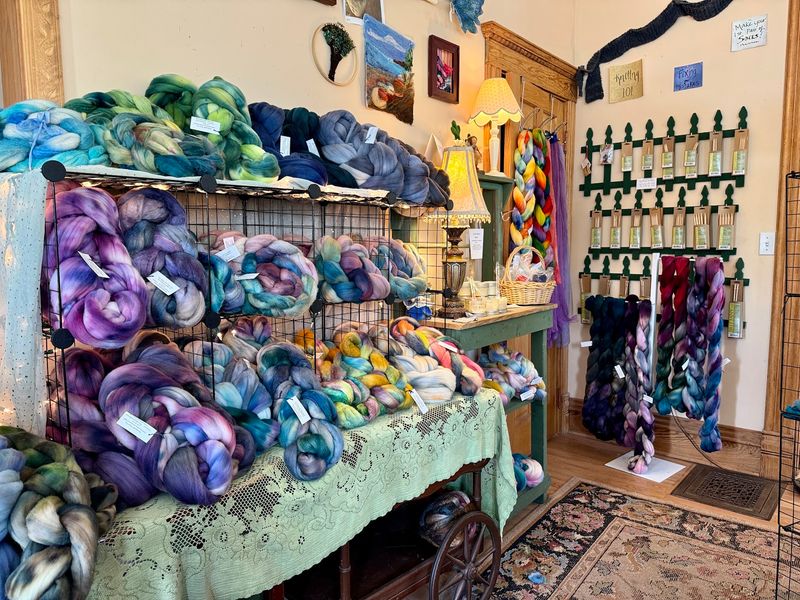
Some yarn shops sell wool. This one leans into where the wool comes from, with locally sourced fiber on the shelves.
Esther’s Place is a craft shop in Big Rock, a tiny village in Kane County. Fewer than 700 people live here, and farmland stretches out around town.
That rural setting fits the shop perfectly. Wool, sheep, and countryside have gone together for centuries.
Classes teach felting and needlework. These are pioneer-era skills that turned raw fiber into warm, useful goods.
Needle felting is a fun place to start. You poke loose wool with a barbed needle until it tangles into a firm shape, like a small animal or ornament.
It sounds odd, but it works. The fibers lock together, and slowly a fuzzy blob becomes something recognizable.
Programs also cover skills like carding raw wool and drop-spindle spinning. Carding brushes fibers in one direction so they can be spun into yarn.
Shopping is part of the fun too. The locally sourced wool and yarn make it easy to keep practicing at home.
The shop opens Thursday and Friday from 10 AM to 6 PM. Saturday hours run 10 AM to 4 PM.
Esther’s Place closes Sunday through Wednesday. Plan your country drive around those days.
Parking couldn’t be easier, with a free lot and free street spots. A quick stop works, but a class deserves a longer visit.
Big Rock sits west of the Chicago suburbs. The drive itself feels like a mini escape into farm country.
Address: 201 Galena St, Big Rock, IL 60511
6. TLD DESIGNS : TLD DESIGN CENTER & GALLERY
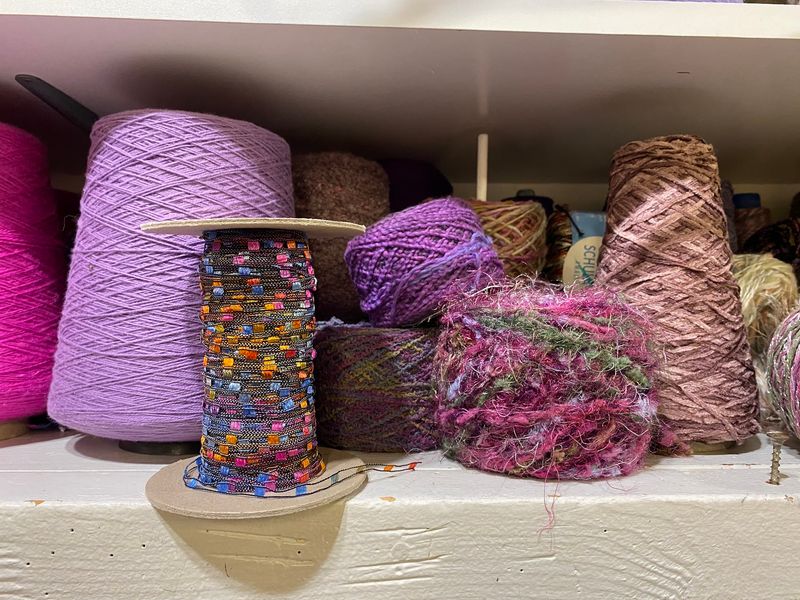
Soap, candles, glass beads, and handwoven cloth walk into a shop. That’s not a joke setup, just the class list here.
TLD Designs has been artist owned and operated since 1993. The space blends a micro gallery, a yarn shop, a classroom, and a mini bead store.
The class lineup is huge. Options include knitting, weaving, crochet, felt making, soap and candle making, and glass bead making and fusing.
Metal smith jewelry making is on the menu too. So are sewing, fashion design, fabric painting and printing, plus yarn dyeing and painting.
Many of these were everyday household skills a century ago. Families made their own soap, candles, and clothing because stores weren’t on every corner.
The supply side is just as deep. You’ll find new and used weaving looms, knitting needles, crochet hooks, and wool for spinning and felting.
Hand-dyed and solid wools fill the shelves. Expect plenty of color and texture in the yarn area.
Adults and kids are both welcome in classes. That makes it a handy spot for a parent-and-child craft day.
Staff also help with custom orders. If you have an idea but lack the skill, they can point you in the right direction.
Hours run Wednesday through Saturday, 11 AM to 6 PM. The shop closes Sunday, Monday, and Tuesday.
Westmont is a suburban village west of Chicago. The shop sits on East Quincy Street near the village’s main area.
A gender-neutral restroom is available. Bring a notebook, because choosing just one class may be the hardest skill of all.
Address: 26 E Quincy St, Westmont, IL 60559
7. Chicago School of Woodworking, LLC
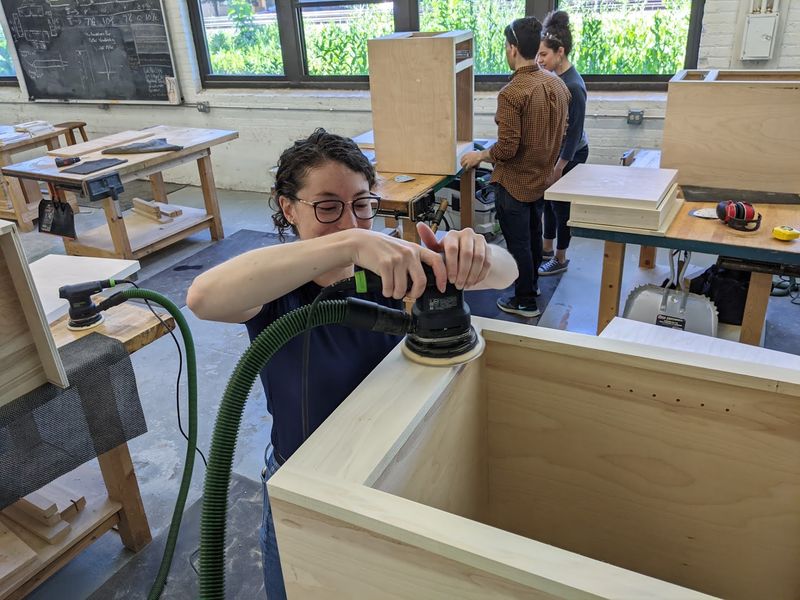
Buying flat-pack furniture is easy. Building a real table that could outlast you is far more satisfying.
The Chicago School of Woodworking opened in 2007 to train students in furniture making. Over time, the program grew to include turning, scroll saw, marquetry, and cabinet making.
Marquetry is one of the coolest skills on that list. Woodworkers fit thin pieces of different wood together to create pictures and patterns.
Turning uses a lathe to shape spinning wood into bowls, legs, and spindles. It’s a craft with deep roots in old furniture shops.
The focus is on creating furniture that’s both useful and beautiful. That goal guides the lessons from start to finish.
Machines are a big part of the experience. You learn a lot about using shop equipment safely and properly.
The results tend to look polished and professional. That’s a nice reward after hours of measuring twice and cutting once.
Hours fit around busy schedules. The shop opens Monday through Wednesday from noon to 10 PM, and Thursday from noon to 9 PM.
Weekend sessions run Saturday 9 AM to 4 PM and Sunday 9 AM to 3 PM. Fridays are closed.
Those late weeknight hours are great for workers who can’t make daytime classes. You can trade your desk chair for a workbench after dinner.
The school sits on Northwest Highway on Chicago’s far northwest side. It’s a city spot with a workshop heart.
Start small if you’re new, then work up to bigger builds. Your future heirloom is waiting in a pile of lumber.
Address: 5680 N Northwest Hwy, Chicago, IL 60646
8. The Chicago Mosaic School
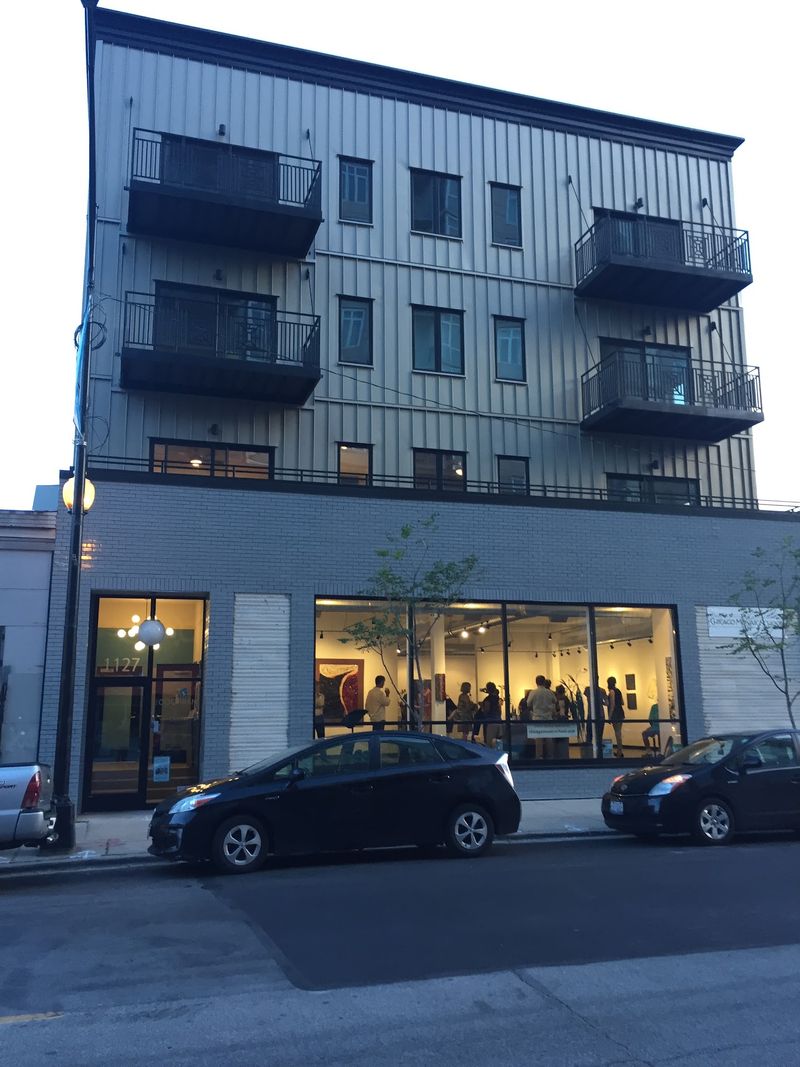
Ancient Romans decorated floors with tiny stone pieces. In Chicago’s Edgewater neighborhood, you can learn that same art form today.
The Chicago Mosaic School is a nonprofit focused on the fine art of mosaics. Its teaching style is academic and centered on materials.
That means you learn more than how to glue tiles. Courses cover history, materials, and andamento.
Andamento is a fun word to know. It describes the flow or direction of the pieces, which guides your eye across a mosaic.
A six-week Mosaic I course offers serious depth. Students come out with much more knowledge than they expected.
Shorter options exist too. A three-hour intro class packs in plenty of techniques, and you make a project to take home.
The small cut pieces are called tesserae. Learning to shape glass and stone into just the right size is part of the challenge.
The school also aims to build an open community. Artists share skills and push mosaics forward in a modern setting.
Hours are friendly for visitors. Tuesday and Wednesday run 10 AM to 4 PM, Thursday and Friday run 10 AM to 5 PM.
Weekend hours are 11 AM to 5 PM on Saturday and Sunday. The school closes Mondays.
The school describes itself as LGBTQ+ friendly and a transgender safe space. Everyone gets a seat at the cutting table.
Granville Avenue makes for an easy trip in Chicago. Your new hobby might just turn your kitchen backsplash into a weekend project.
Address: 1127 W Granville Ave, Chicago, IL 60660
9. The Chicago Weaving School
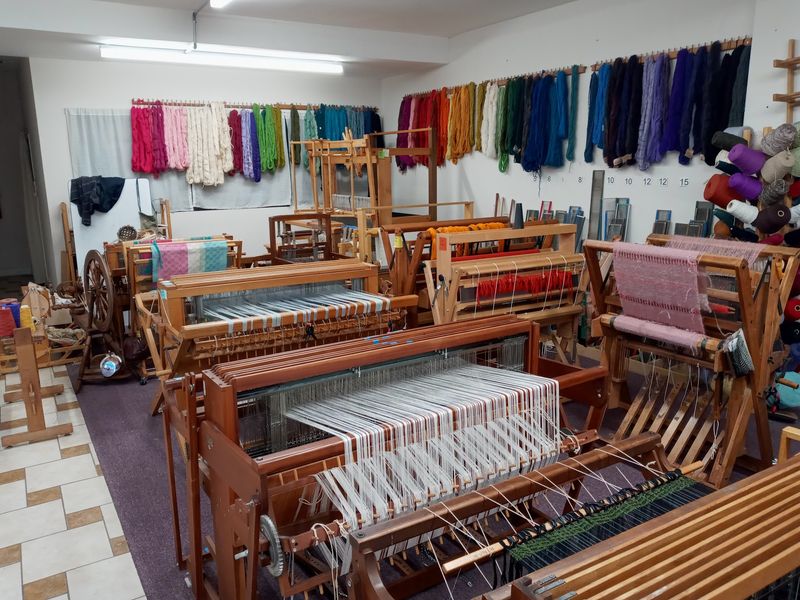
Cloth and baskets don’t come from nowhere. At this Irving Park Road studio, you learn to make both from scratch.
The Chicago Weaving School teaches loom weaving and basketry. It’s a place built around learning, with structured training on floor looms.
Floor looms can look a bit intimidating at first. All those threads and pedals seem like a puzzle, but good lessons make them click.
Natalie, the owner, leads and teaches the classes. Her knowledge gets plenty of praise from students.
The school operates by appointment only, so don’t plan on dropping in without arranging a visit.
Classes are offered throughout the week, and new students can enroll when a loom becomes available. Contact owner Natalie Boyett to discuss scheduling and find the right class.
That flexibility makes it possible to fit weaving into a busy week without committing to a rigid starting date.
Basketry is just as old and just as useful. People stored food and carried goods in woven baskets for thousands of years.
The schedule has some quirks, so check it closely. Monday, Wednesday, and Saturday run 10 AM to 2 PM.
Thursday has two sessions, 10 AM to 2 PM and 5:30 to 9:30 PM. Sunday hours are 1 to 5 PM, while Tuesday and Friday are closed.
The Thursday evening window is great for working folks. Sunday afternoons make a relaxing way to wrap up the weekend.
Chicago has plenty of craft spots, but few focus this closely on weaving. Your first handwoven scarf might become your favorite thing in the closet.
Address: 4201 W Irving Park Rd, Chicago, IL 60641
10. Arc Academy
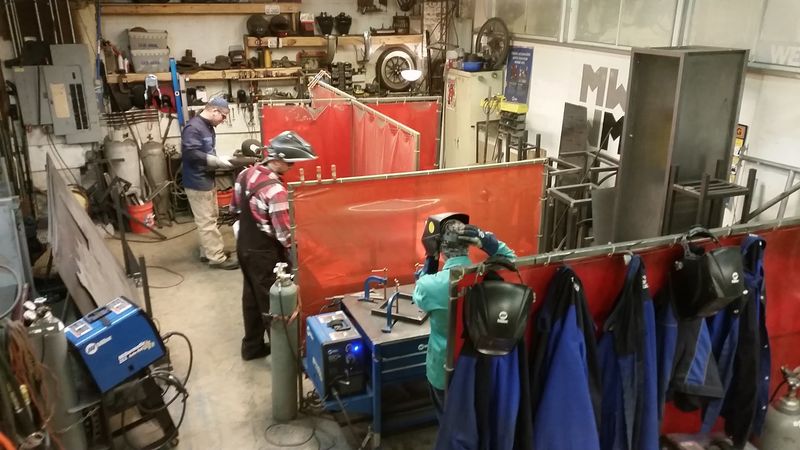
No certificates and no experience required. That’s the refreshingly simple pitch from this welding school and makerspace.
Arc Academy teaches welding and metal fabrication on West Chicago Avenue. The goal is to put knowledge, access, and equipment directly in your hands.
Beginners are the target audience here. Instructors get praised for explaining basics clearly and staying patient with first-timers.
Blacksmithing shows up alongside welding. So you can try both old-world forge work and modern metal joining.
Welding may sound modern, but metalworking skills have been passed down for generations. Knowing how to fix or build with steel used to be common knowledge.
Classes cover several skills, not just one. That variety helps you figure out which metal craft fits you best.
The makerspace side is a big bonus. Shop equipment is expensive, so access to tools can keep a new hobby going.
Hours aren’t posted in a set schedule. Reach out before visiting to see current classes and shop times.
Dress the part when you go. Long sleeves, sturdy boots, and natural fabrics are smart choices around sparks.
The shop sits in a busy commercial stretch of Chicago. It’s proof that hands-on trades still have a home in the big city.
Illinois has a long history of industry and metal work. Learning a bit of that skill yourself feels like joining the story.
Your first weld bead may look messy. Keep at it, and soon you might build a garden trellis, a shelf, or a wild sculpture.
Address: 2225 W Chicago Ave, Chicago, IL 60622
Share this story