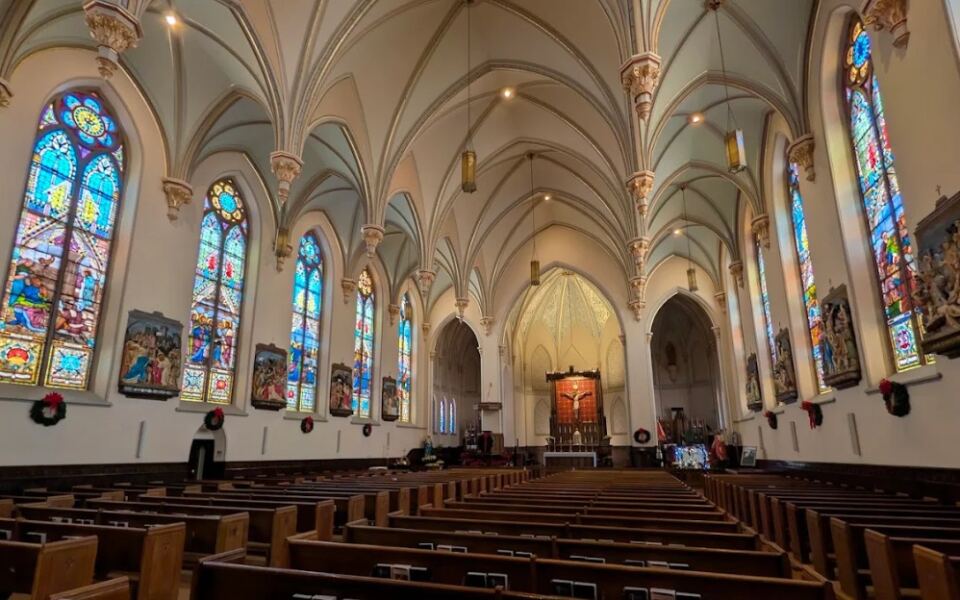
A church in Tennessee has lotus columns and winged sun discs, like someone moved a slice of ancient Egypt downtown. I had to read that twice.
That same building once served as a hospital during the Civil War. Another church on this list is its city’s oldest public building still in use, with a nave from 1844. A third sits on a mountain college campus and opens its doors daily.
I love that these places welcome curious visitors, not just Sunday regulars. You can come for stained glass, stone arches, and painted walls, then leave with a camera roll full of jaw-dropping ceilings.
Faith is personal, and you don’t need to share any particular belief to admire great craftsmanship. Rose windows, carved wood, and limestone walls speak a language anyone can understand. So which one would you visit first, and how long would you stare at the ceiling?
1. All Saints’ Chapel, Sewanee
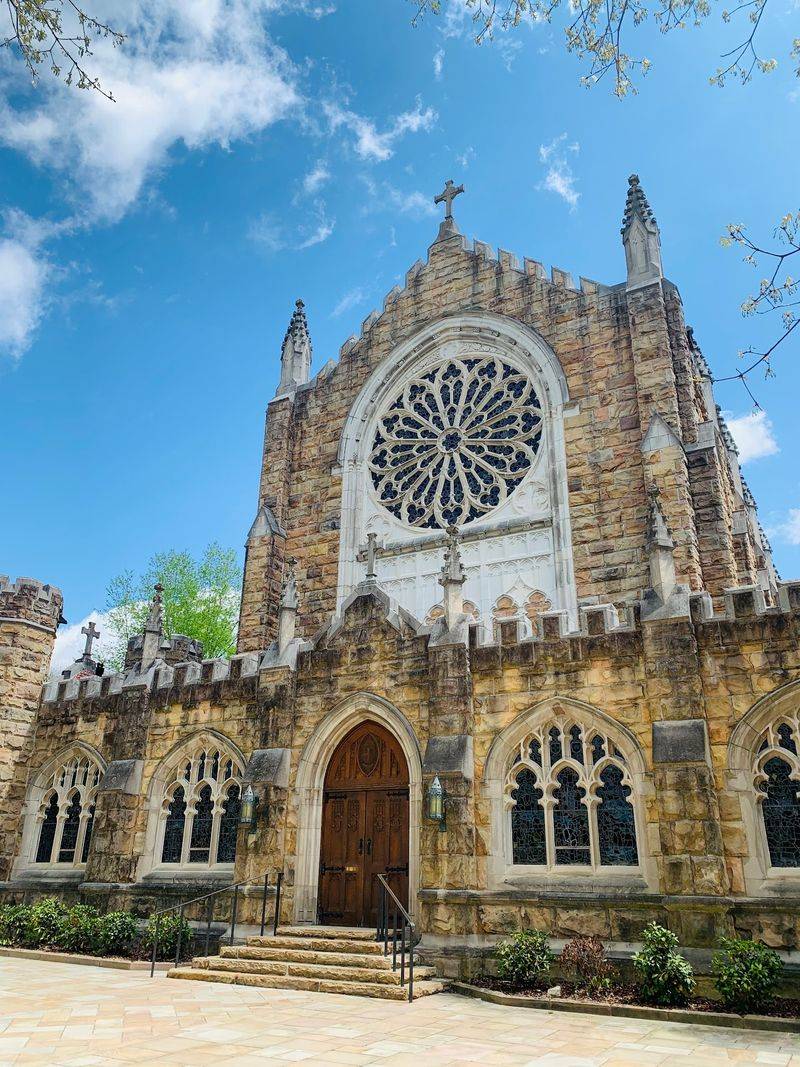
Few college students get to study down the road from a stone cathedral-sized chapel. At Sewanee, that’s just part of campus life on the mountain.
All Saints’ Chapel sits on University Avenue in a small collegiate village of around 2,500 residents. It’s an active campus chapel and house of worship, so you’ll be visiting a place people truly use.
The building follows the Gothic Revival style, and it commits to the look. Think soaring stone rib vaults stretching overhead like the skeleton of a giant stone whale.
Then there’s the nave, which is wide and expansive. Your footsteps may feel small in a space this tall, and that’s half the fun.
Light is the real star here. Stained-glass rose windows throw color across the stone, turning a plain afternoon into something that looks staged for a movie.
Architecture fans tend to linger, and you probably will too. Bring a camera, but also give yourself a few quiet minutes just to look up.
A Monday visit could feel almost private. On Sunday, you’ll see the chapel doing what it was built to do, which has its own appeal.
Restrooms are available on site, a small detail you’ll appreciate after a mountain drive. Sewanee sits up on the Cumberland Plateau, so the trip itself makes a nice part of the day.
Treat the chapel as the centerpiece of a slow campus stroll. The Gothic stonework sets the tone for the whole village, and it’s easy to see why.
Please keep voices low if a service or prayer is happening. A little respect goes a long way in a space where people come to worship.
2. The Downtown Presbyterian Church, Nashville
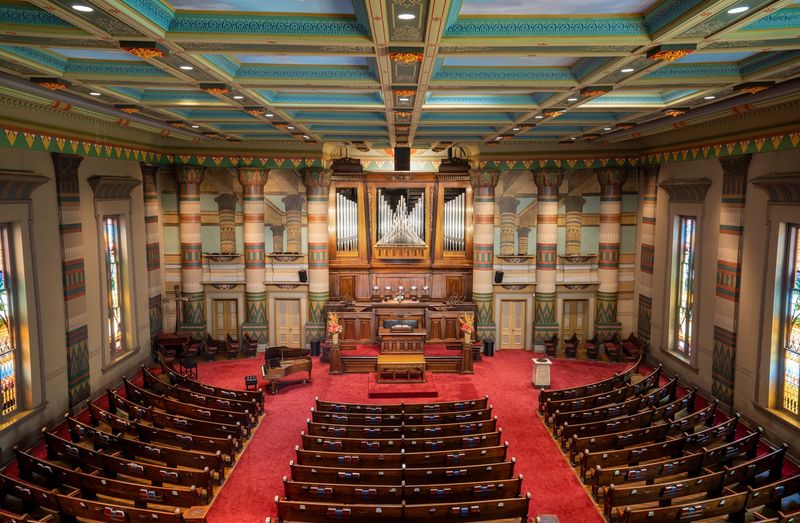
Nashville is famous for guitars, but one downtown church looks like it borrowed its style from the pharaohs. Yes, really.
The Downtown Presbyterian Church was designed by William Strickland in the 1840s. It’s celebrated as a rare example of Egyptian Revival architecture, which is not something you spot on many Tennessee street corners.
Inside, the details pile up fast. Lotus columns rise toward the ceiling, and winged solar discs add a dramatic, ancient feel.
The walls deserve a slow look. They’re decorated with trompe-l’œil paintings, which use perspective to create the illusion of depth.
So that “carved” detail you’re admiring might actually be paint. Go ahead and squint, because figuring out the illusion is part of the joy.
History adds another layer. During the American Civil War, the church served as a hospital, a sobering reminder of how buildings take on new roles in hard times.
Standing in the sanctuary, you’re sharing space with that story. It makes the colorful walls feel even more meaningful.
Visit before lunch, then wander the rest of downtown with a head full of lotus columns.
Restrooms are available, and the church offers onsite services. It remains a working house of worship, not a museum, so a respectful attitude fits right in.
The address sits on Rep. John Lewis Way, right in the middle of the city’s busy core. You can pair it with other downtown sights without moving your car.
Honestly, it’s one of the most surprising rooms in the state. Few places let you step from honky-tonk country into something inspired by ancient Egypt in a single block.
3. Basilica of Saints Peter & Paul, Chattanooga
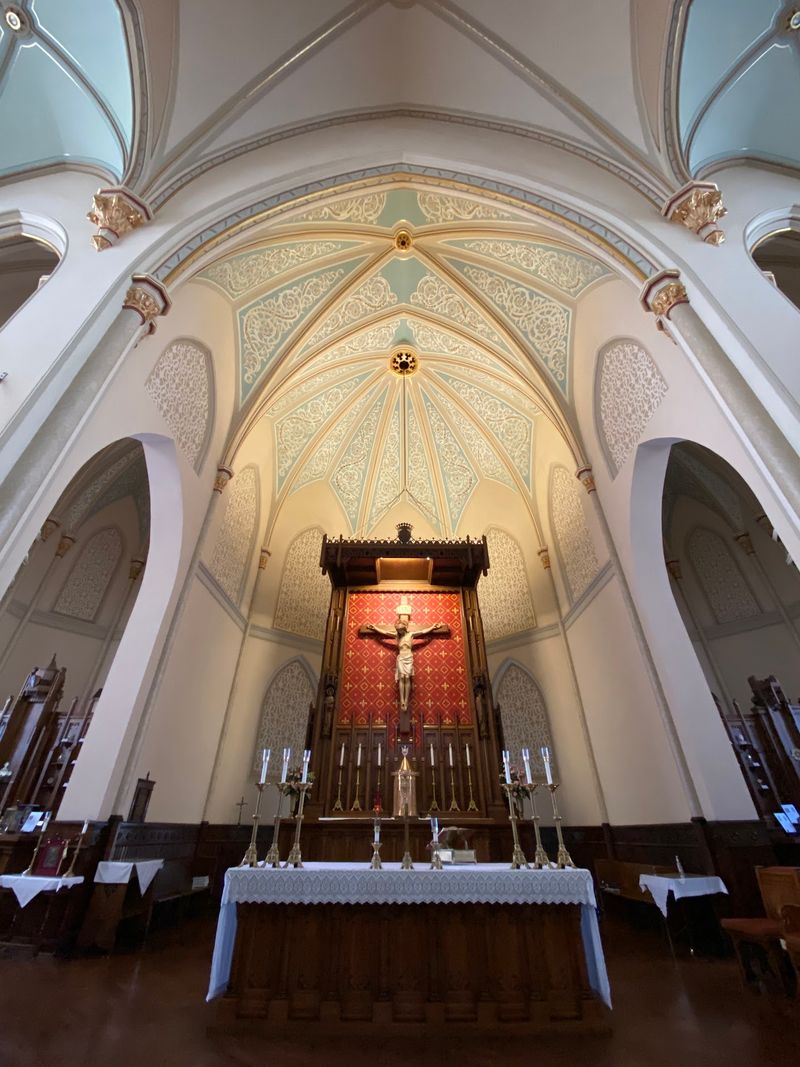
Twin brick towers poking above downtown Chattanooga tend to make drivers do a double take. That’s the Basilica of Saints Peter and Paul announcing itself.
The building dates to the 19th century and wears the Gothic Revival style in brick. Those towers alone make it one of the most photographed church fronts on East 8th Street.
Step through the doors and look straight up. Ornate ribbed barrel ceilings curve overhead, creating a sense of rhythm that pulls your eyes toward the altar.
Now turn to the windows. They’re pictorial stained glass crafted in Munich, so each one tells a story in rich color.
You could spend a long time reading those scenes like a picture book. Kids and adults alike can make a game of spotting different figures.
The parish calls Truth, Beauty, and Goodness central to its mission. Judging by the craftsmanship, they take the beauty part seriously.
It’s an active Roman Catholic basilica and parish. Services happen in English, Spanish, and Latin, which shows how many people call this place home.
Crowds peak from Sunday morning into the afternoon. Weekday daytime hours tend to be the quietest, which is perfect for slow looking.
Parking is easy, a rare treat downtown. There’s a free lot plus free street parking, and restrooms are on site.
Pair your stop with a stroll around Chattanooga’s walkable center. The basilica makes a peaceful break between busier attractions.
Keep your phone on silent and voices soft. People come here to pray, and a little courtesy keeps it welcoming for everyone.
4. Church Street United Methodist Church, Knoxville
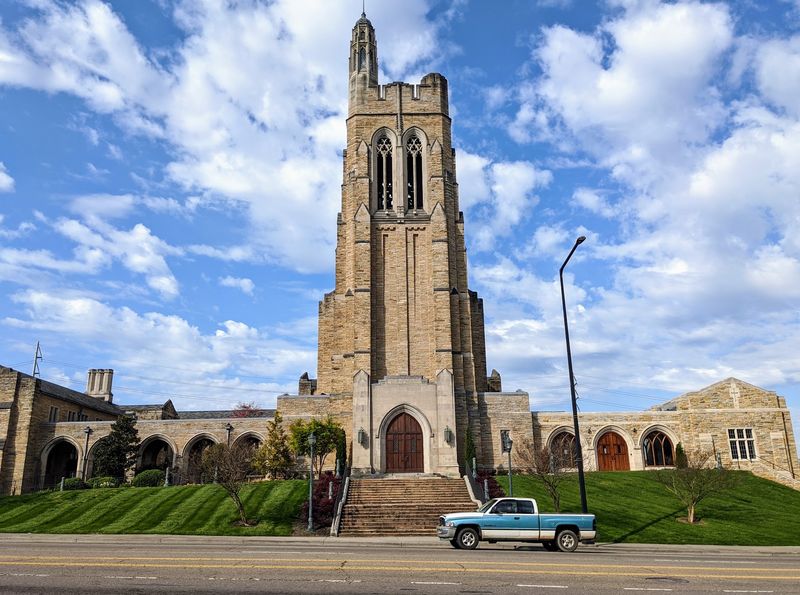
The same architect behind the Jefferson Memorial in Washington, D.C. left his mark on Knoxville. John Russell Pope designed this church alongside Charles Barber.
That’s quite a pedigree for a building on Henley Street. Church Street United Methodist Church shows off an English Gothic exterior built from sandstone.
The stone gives the outside a rich, earthy look. Stand across the street for a moment to take in the full shape before heading in.
Inside, tall arched wooden ceilings steal the show. Their intricate design draws the eye upward and adds to the sanctuary’s Gothic character.
Then come the windows. The stained glass here is often described as masterwork quality, and it rewards anyone who slows down.
Notice how the colors change as the day moves along. A morning visit and an afternoon visit might feel like two different rooms.
This is a living congregation, not a museum. The church offers weekly services along with community programming throughout the week.
Want some quiet? Monday morning, Tuesday daytime, and Wednesday morning are typically calm, while Sunday and Thursday mornings get busy.
Drivers can relax here. A free on-site parking lot makes stopping by easy, and restrooms are available.
The church sits close to downtown Knoxville, so it fits nicely into a day of exploring. Think of it as a quick lesson in Gothic design without a textbook.
If staff are around, a friendly hello is always a nice touch. Then let those arches and windows do the talking.
5. St. Peter Catholic Church, Memphis
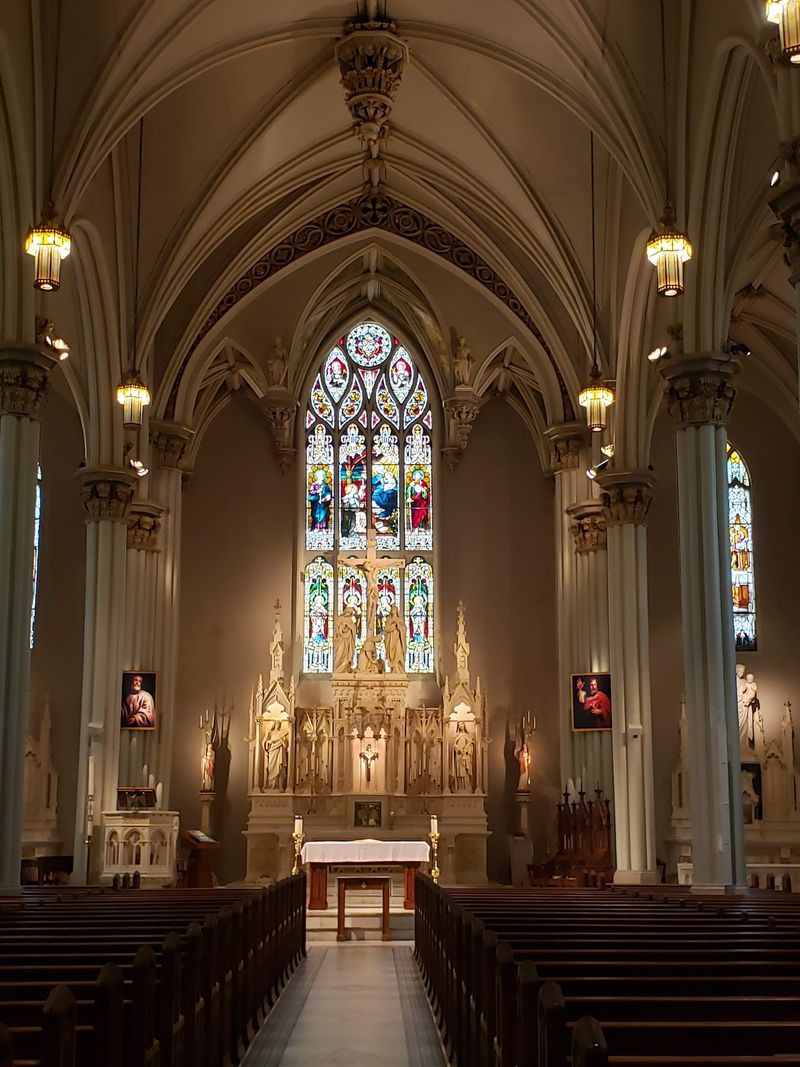
Memphis has a whole street of history, and St. Peter Catholic Church holds its own on it. The building sits in the Adams Avenue historic district.
The parish was founded in 1840, while construction of the present Gothic Revival church began in 1852 and was completed in 1855.
The church serves as a ministry of the Dominican Friars of the Southern Province. So you’re visiting a place shaped by a long religious tradition, still active today.
Once inside, your eyes will likely land on the high altar first. It’s ornate, detailed, and clearly the centerpiece of the room.
Above you, vaulted ceilings sweep upward in long curves. They give the space a lifted, airy feeling that photos rarely capture well.
Along the walls, towering lancet windows stretch tall and narrow. Their stained glass adds color and height at the same time.
Lancet windows have that pointed top shape you see in medieval churches. Once you notice them, you’ll start spotting them in Gothic buildings everywhere.
Sunday morning is the busiest time. Weekday daytime hours are usually quiet, which gives you room to wander and wonder.
Calvary Episcopal Church, another stop on this list, is also downtown. Seeing both in one trip makes a fun side-by-side lesson in church design.
Remember that people still come here to worship and reflect. Keep things hushed and enjoy the beauty respectfully.
6. Wightman Chapel at Scarritt Bennett Center, Nashville
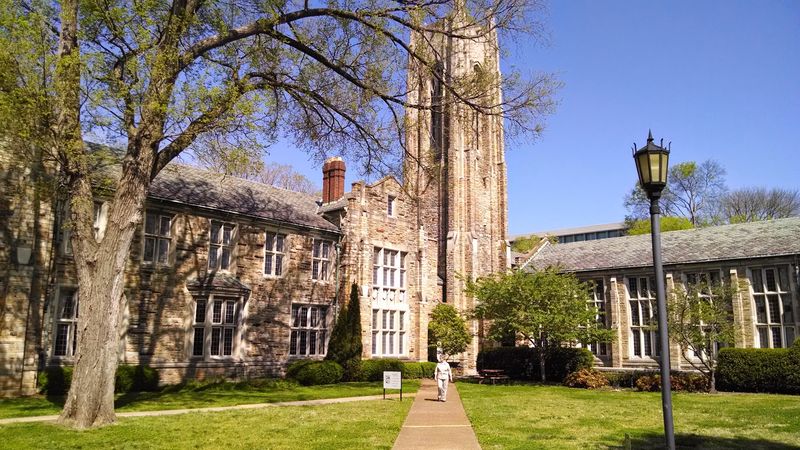
Couples tend to fall for this chapel the second they cross the threshold. It’s a popular wedding spot for good reason.
Wightman Chapel sits on the Scarritt Bennett Center campus in Nashville. The style is Collegiate Gothic, the look you’d expect at an old university with ivy dreams.
Natural ashlar stone forms the walls. Ashlar means the stones are cut into neat, squared blocks, which gives the room a crisp, handsome feel.
Carved woodwork adds a softer touch. The contrast between smooth wood and solid stone keeps your eyes busy in the best way.
Now for the stained glass. It was created by Charles Connick, a well-known name in American stained glass.
Fans of glass art might plan a whole trip around that detail alone. Even casual visitors can enjoy how the colors glow against the stone.
The chapel hosts worship, events, and weddings. Access is easy, which helps if you’re bringing family members who don’t love long walks.
Here’s the catch: visits require an appointment. Reach out ahead of time rather than just showing up.
The campus sits on 19th Avenue South, near some of Nashville’s busy university neighborhoods. It feels like a calm pocket away from the honky-tonk noise.
Planning a big day in Tennessee? Put this chapel on your shortlist, because that Connick glass makes a dreamy backdrop for vows.
7. Calvary Episcopal Church, Memphis
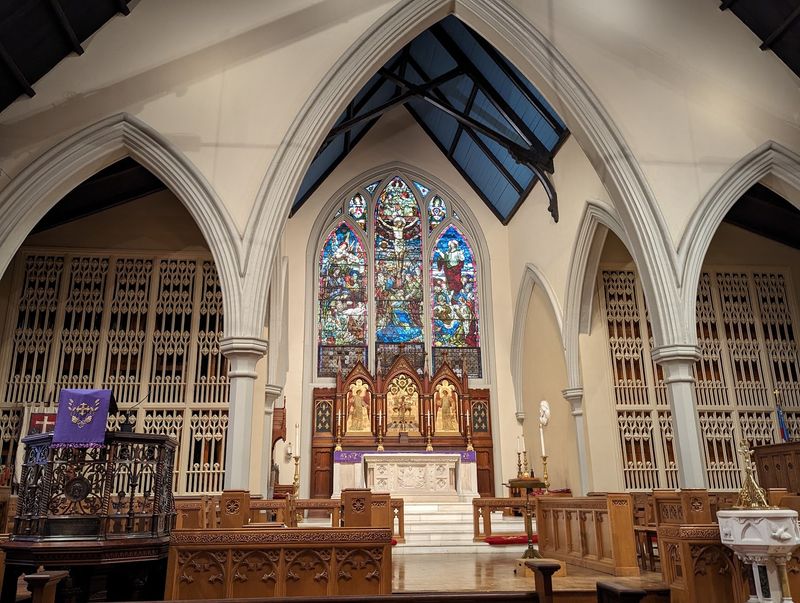
Talk about staying power. Calvary Episcopal Church holds the title of the oldest public building still in use in Memphis.
The congregation was founded in 1832. Its nave, the main part of the church where people gather, survives from 1844.
That means you can sit in a room that has welcomed worshippers for well over 170 years. Pretty impressive for a city that has changed so much around it.
Look up, and the ceiling tells its own story. Timber beams form a Gothic pattern overhead, giving the space a sturdy, crafted look.
Wood ceilings like this have a different feel than stone vaults. The beams make the room feel both grand and grounded.
Then let your eyes drift to the windows. The stained glass is more than a century old, adding glowing color to the historic walls.
Calvary remains an active Episcopal church with onsite services. You’re visiting a place with a long past and a busy present.
The church sits on North 2nd Street, right in the heart of the city. It’s an easy add-on to a downtown walking day.
Since St. Peter Catholic Church is also nearby, you can compare two very different historic interiors during a downtown Memphis visit. Wood beams here, vaulted ceilings there.
Bring curiosity and a quiet voice. History this old deserves a little reverence.
8. Trinity Episcopal Church, Clarksville
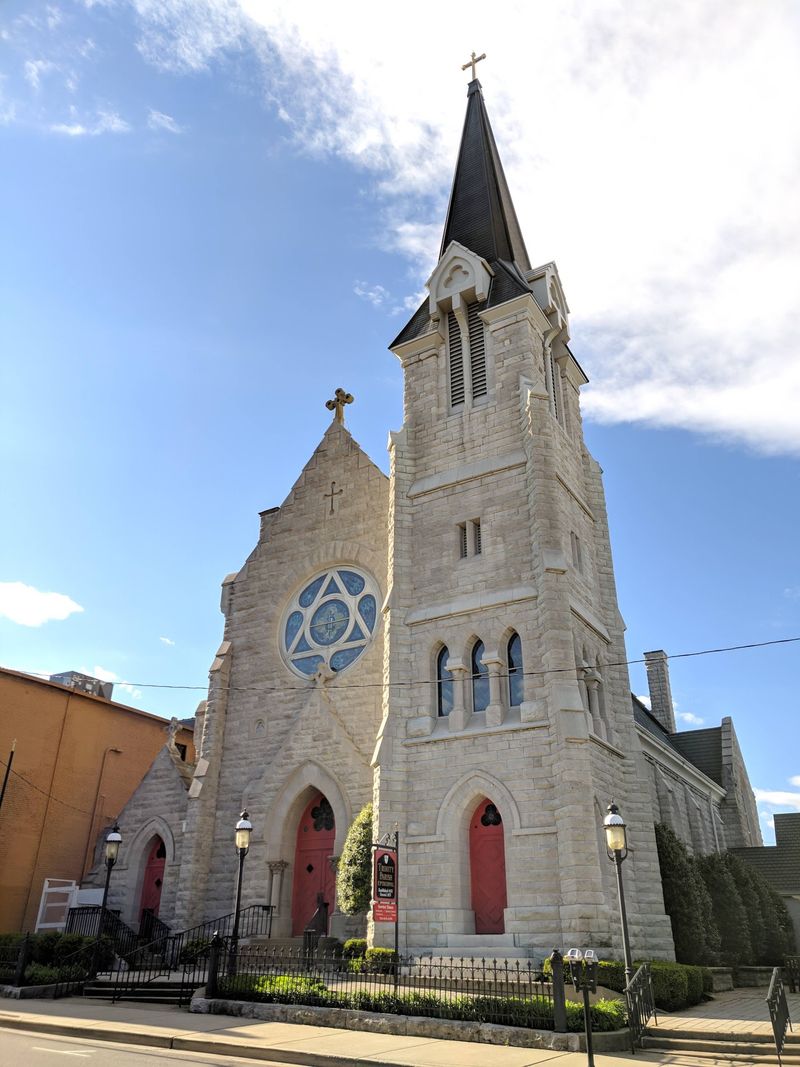
Some builders grab whatever stone is handy, and in 1877 that meant gorgeous local limestone. Trinity Episcopal Church in Clarksville was built from native quarried rock.
The result is a historic Romanesque-style church. It stands on Franklin Street, adding old-world charm to the city’s historic core.
Limestone gives the walls a pale, solid presence. Run your eyes along the stonework and you’ll see why builders loved it.
Inside, the roof trusses grab attention fast. They’re hand-crafted from wood, a reminder of how much skill went into churches of that era.
Trusses are the beams that hold a roof up. Here, they double as artwork, which feels like getting a bonus for showing up.
Color rounds out the picture. Historic stained glass fills the windows with bright, rich hues.
Visit on a sunny day if you can. The light pouring through old glass is one of the simplest joys in any Gothic building.
The parish worships in the Anglican tradition. It aims to be an accepting and diverse community, and that welcoming spirit shows in its mission.
Clarksville sits northwest of Nashville, making it a fair day trip from the city. The church gives you a great reason to explore its downtown streets.
Wrap up your church tour here, and you’ll end on a high note. A limestone landmark from 1877 is a fine way to finish any adventure.
Share this story