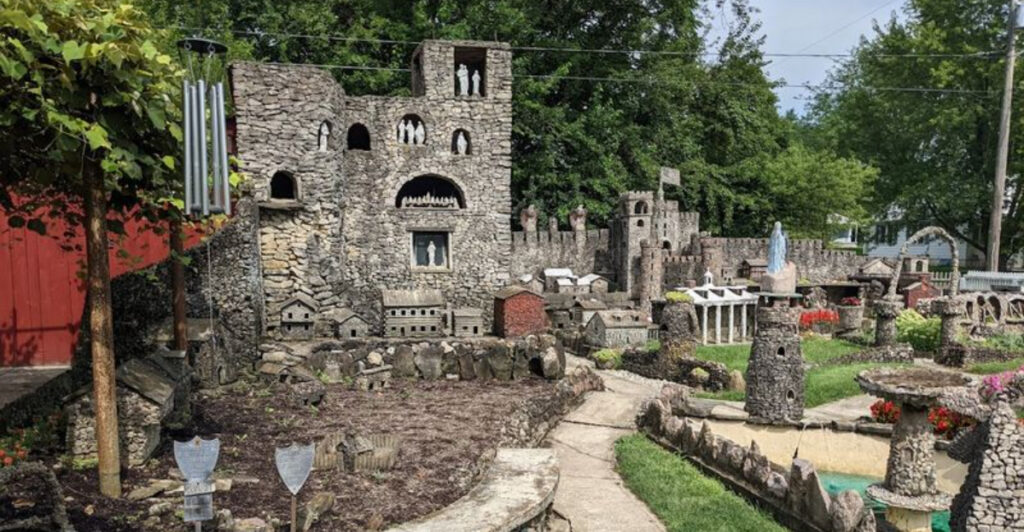
Tucked into a quiet Springfield neighborhood, Hartman Rock Garden feels like the kind of place you would never believe until you see it with your own eyes. What looks modest from the street opens into a wildly imaginative world built from stone, cement, shells, and pure determination.
It is quirky, heartfelt, and wonderfully hard to compare to anything else in Ohio. If you love roadside oddities, outsider art, or hidden gems with real soul, this is one stop you will not forget.
1. A backyard attraction unlike anything else
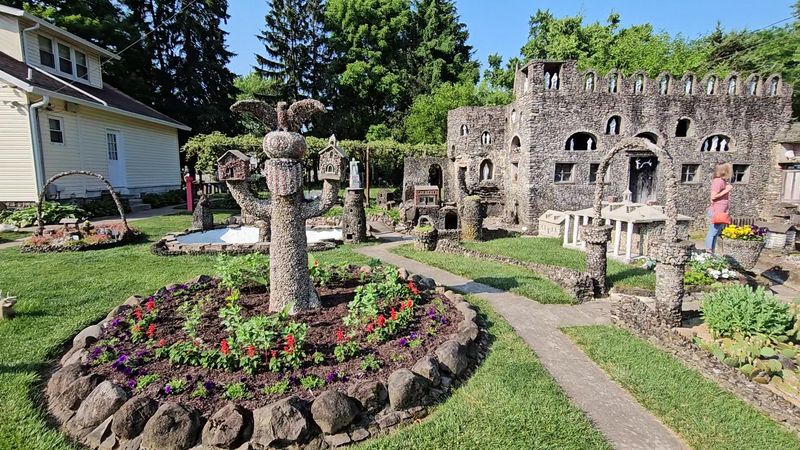
You do not visit Hartman Rock Garden expecting grandeur from the outside. Sitting in a neighborhood at 1905 Russell Avenue, it looks almost too humble to be one of Ohio’s most memorable attractions.
Then you step closer, and the yard transforms into a densely detailed landscape of stonework, miniature scenes, towers, and handmade imagination.
What makes it so strange and so appealing is the contrast. This is not a giant theme park or a polished museum exhibit, but a deeply personal vision built where someone lived and worked.
That intimacy makes every sculpture feel more surprising, as if you have stumbled into a secret that somehow became a public treasure.
Plenty of odd attractions rely on gimmicks, but this place feels sincere. You are not just looking at unusual objects.
You are entering one man’s patient, creative world, and that is what makes the experience linger.
2. The incredible story behind Ben Hartman’s creation
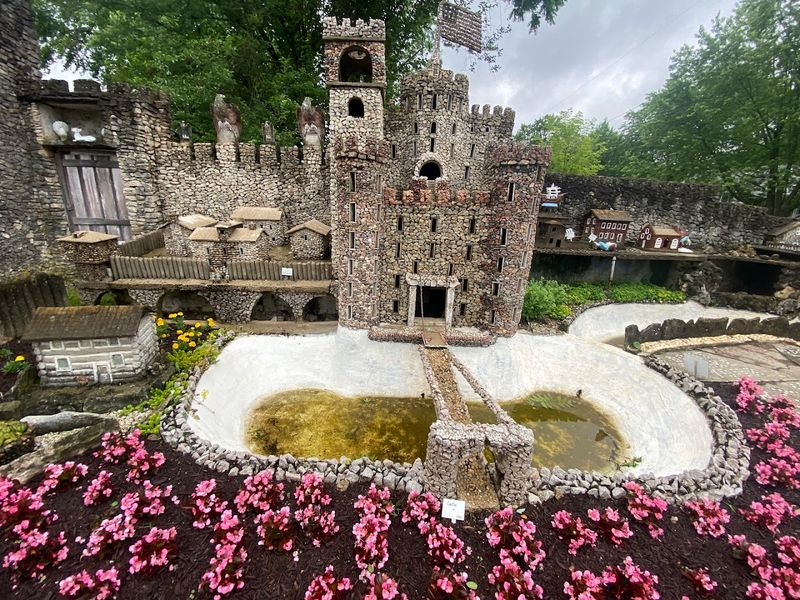
The garden becomes even more remarkable once you learn who made it. Ben Hartman, a Springfield resident and stonemason, created this extraordinary environment between 1932 and 1944, shaping roughly 250,000 stones into an elaborate folk art wonder.
Knowing that scale changes the way you see every tiny wall, church, arch, and decorative flourish.
This was not a weekend hobby that got slightly out of hand. It was a long commitment powered by patience, obsession, and imagination, the kind of personal project that most people would abandon long before it ever resembled a finished work.
Instead, Hartman kept building, scene by scene, until his backyard became something unforgettable.
That backstory gives the garden emotional weight. You are not only admiring unusual craftsmanship.
You are seeing what happens when one person follows a creative vision with absolute dedication, even when that vision must have seemed completely bizarre to neighbors.
3. Why the tiny details steal the whole show
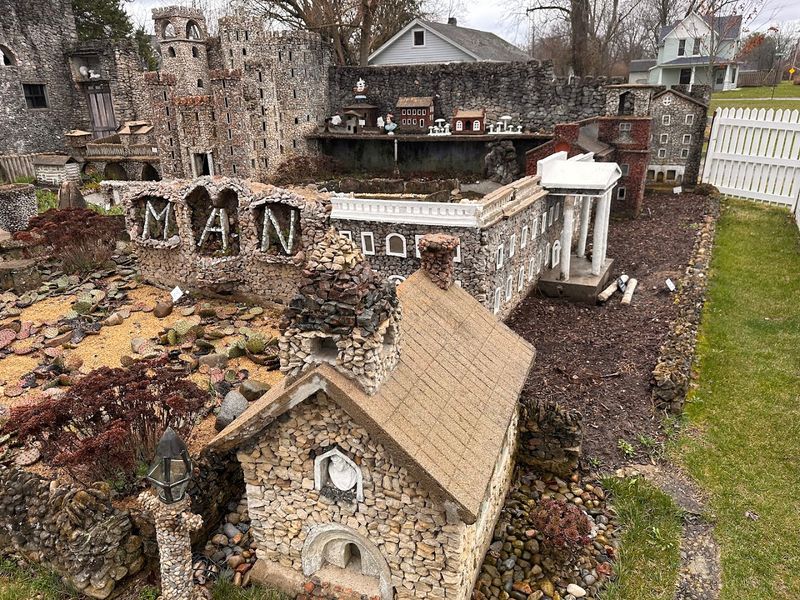
The first thing that grabs you is the overall weirdness, but the details are what keep you there. Every section rewards slow looking, because tiny features reveal themselves in layers: little buildings, miniature landscapes, decorative stone patterns, and delicate touches that make the garden feel alive.
You can spend ten minutes here or nearly an hour depending on how closely you want to look.
That is why so many visitors mention photo opportunities and repeat visits. The garden invites you to pause, lean in, and notice how much care was packed into a relatively small space.
Even kids seem to respond well because there is always another small surprise waiting a few steps away.
I think that is part of its charm as a roadside stop. It never overwhelms you with size, but it absolutely overwhelms you with intention.
The more carefully you look, the more impressive Hartman’s patience becomes.
4. A folk art landmark with real emotional pull
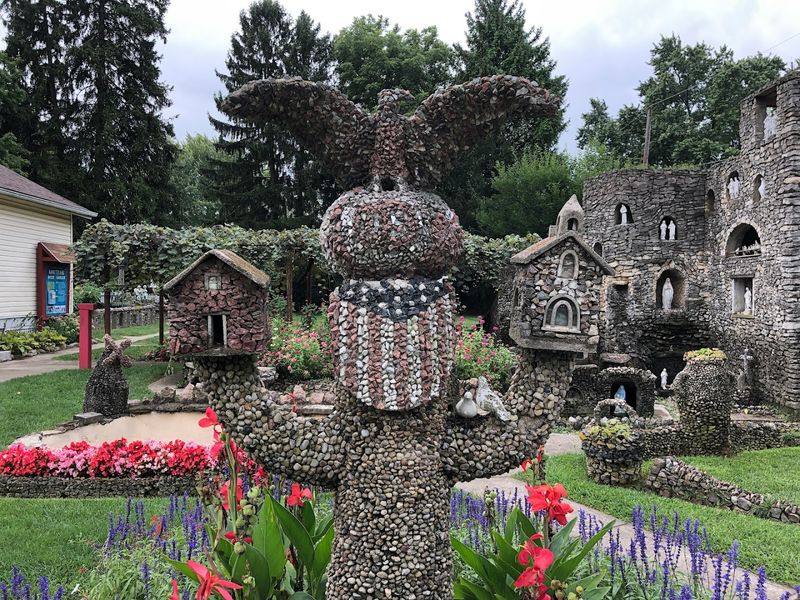
Some unusual attractions are fun for five minutes and then disappear from your mind by the next exit. Hartman Rock Garden is different because it carries a surprising emotional pull.
You can feel the love, labor, and concentration behind it, and that gives the whole place a warmth that goes beyond simple novelty.
Visitors often describe it as inspiring, charming, or sweet, which says a lot about the atmosphere. Even though it is undeniably odd, it does not feel cold or eccentric for the sake of being eccentric.
Instead, it feels personal, generous, and almost tender, like a handmade story preserved in stone.
That emotional quality is probably why people urge others to donate and help preserve it. You are not just supporting a quirky stop.
You are helping protect a rare piece of American folk art that still feels rooted in everyday life, neighborhood history, and one person’s extraordinary creative devotion.
5. What it is actually like to visit today
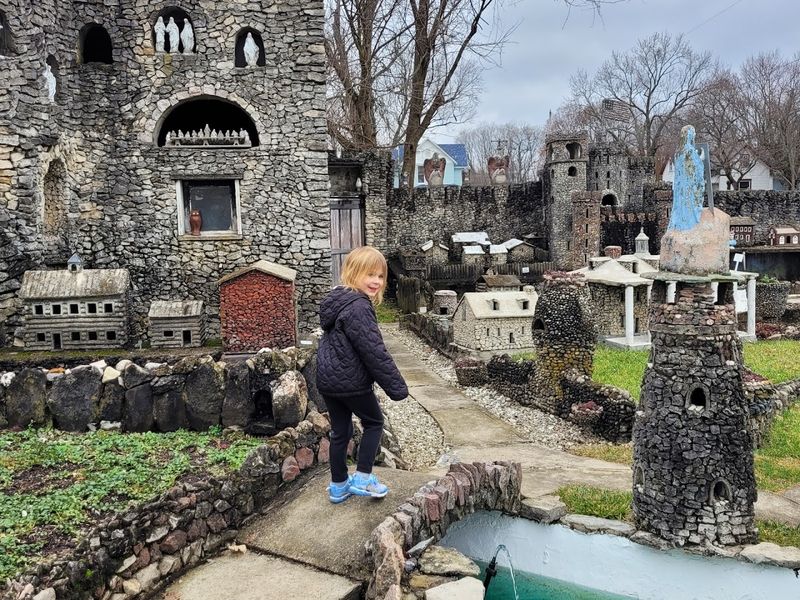
One of the nicest things about visiting Hartman Rock Garden is how approachable it feels. It is a self-guided experience, so you can move at your own pace, double back for photos, or simply wander and take it all in without pressure.
The setting stays relaxed, which suits a place born from personal creativity rather than polished commercial tourism.
The garden is open daily from 8 AM to 6 PM, making it easy to fit into a flexible day around Springfield. Since it is free to the public, it also works well as a spontaneous stop when you are passing through the area and want something memorable that will not demand a big time commitment.
Street parking is the norm, and most people seem to appreciate that the visit can be short or surprisingly absorbing. If you are the type who loves looking closely, reading history, and taking pictures, you will probably stay longer than expected.
6. Why the neighborhood setting makes it even stranger
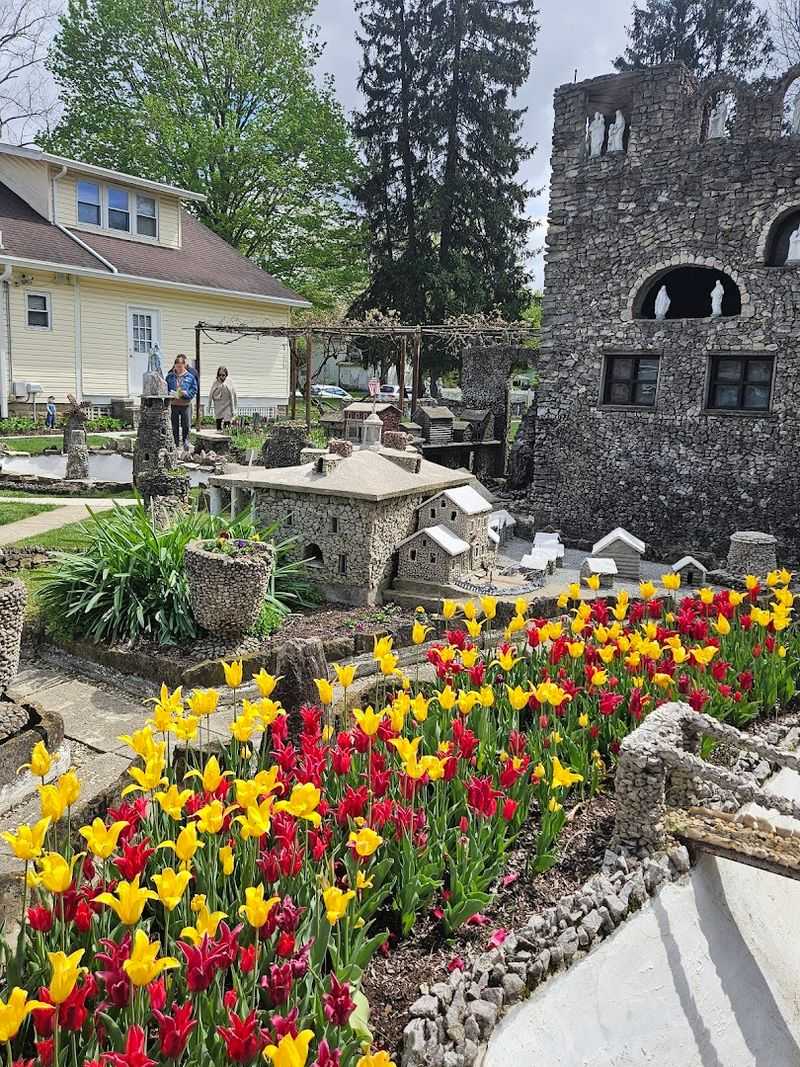
Part of the magic comes from where the garden sits. You are not driving into a sprawling tourist district or a fenced entertainment complex.
You are entering a regular neighborhood, which makes the sudden appearance of this elaborate stone fantasy feel even more unexpected and slightly surreal.
Several visitors mention how neat it is to find something this imaginative in what feels like someone’s backyard. That reaction makes perfect sense because the setting heightens the shock of discovery.
Ordinary streets and houses frame an attraction that looks like it should exist in a dream, a storybook, or an outsider art encyclopedia.
That contrast is one reason the garden sticks with you. It proves that wonder does not always announce itself with giant signs and giant parking lots.
Sometimes it hides in plain sight, tucked between everyday homes, waiting for curious people to notice that something extraordinary happened there.
7. A perfect stop for curious families and photographers
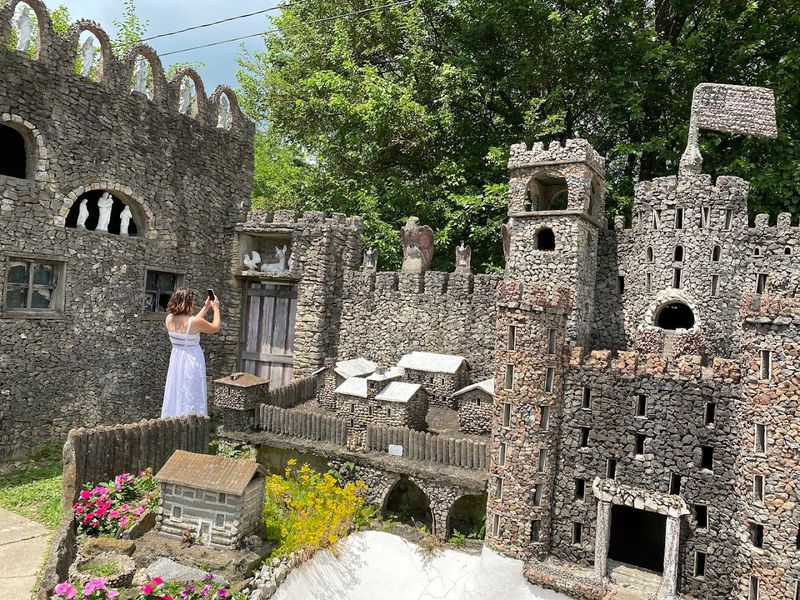
Hartman Rock Garden works especially well if you are traveling with kids, camera lovers, or anyone who enjoys unusual places with lots to spot. Reviews mention interactive brochures and even scavenger-hunt style activities for children, which is a smart match for a space built around observation and discovery.
Instead of rushing through, families can turn the visit into a quiet little adventure.
Photographers also get plenty to love here. The textures, tiny scenes, handmade structures, and changing angles create image opportunities that feel far richer than the garden’s footprint suggests.
Even casual phone photos tend to come out well because there is so much visual character packed into each section.
I like that the appeal crosses age groups so easily. Adults can appreciate the history and craftsmanship, while children respond to the miniature world and treasure-hunt feeling.
That combination makes the stop feel welcoming rather than niche.
8. The restoration and preservation effort matters
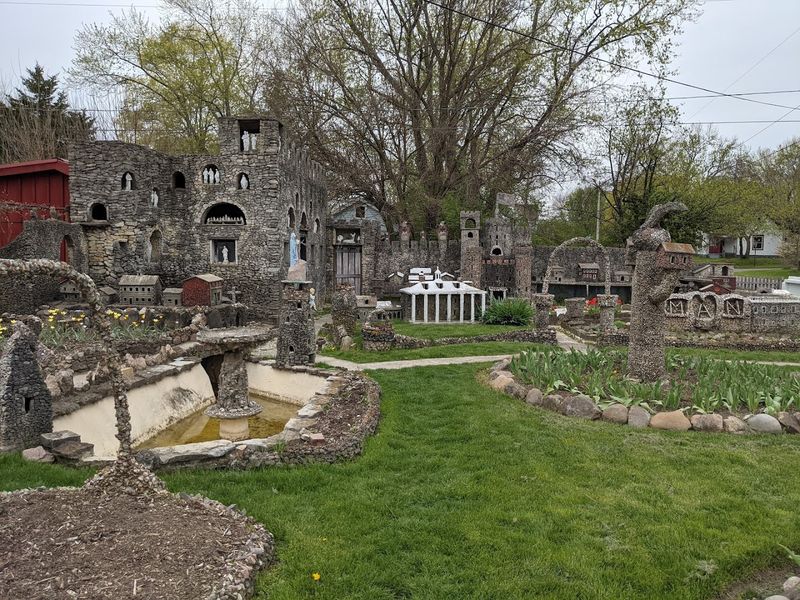
It would be easy for a fragile, one-of-a-kind environment like this to disappear over time. Weather, neglect, and changing ownership could have erased much of what Ben Hartman built, which is why the restored condition of the garden matters so much.
When you walk through today, you are seeing not just a historic creation, but a preservation success story.
That ongoing care deserves real credit. Reviews repeatedly mention how well kept the space feels, and that maintenance helps visitors understand the garden rather than just glimpse a deteriorating curiosity.
Preservation turns it from a fading relic into a living landmark, one that still communicates Hartman’s original vision with clarity and charm.
This is also why donations matter, even though admission is free. Supporting the site helps protect a rare folk art environment that cannot be replaced once lost.
Places this unusual survive because people decide they are worth saving for strangers.
9. How long to stay and what to expect
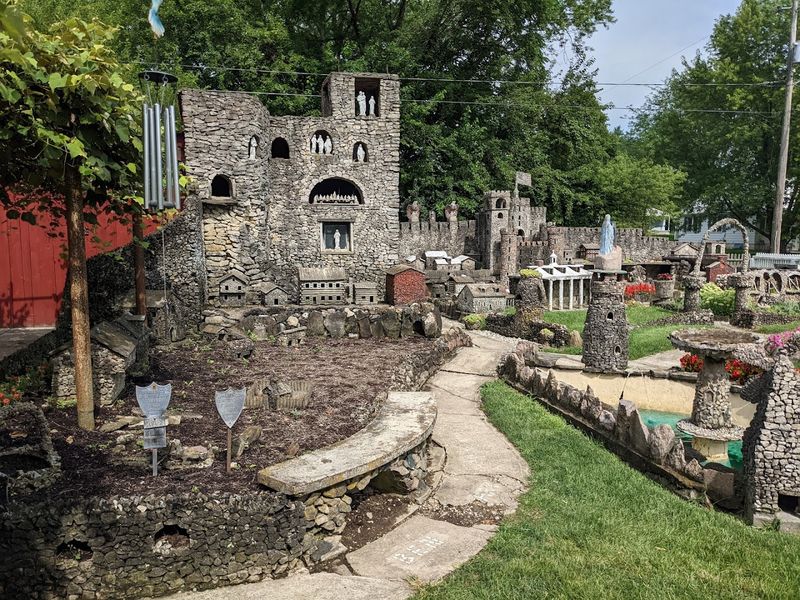
If you are wondering whether Hartman Rock Garden is worth building a whole day around, the honest answer is probably no. If you are wondering whether it is absolutely worth a stop while in Springfield or passing nearby, the answer is yes. Most visitors seem to spend anywhere from ten minutes to an hour, depending on how deeply they engage with the details.
That flexibility is actually one of its strengths. You can treat it as a quick roadside oddity, a photo stop, a history lesson, or a peaceful little detour that breaks up a longer drive.
Because it is free and self-guided, there is very little risk in giving it a chance.
The best mindset is simple: come expecting something small but memorable. This is not about scale, crowds, or spectacle.
It is about craftsmanship, curiosity, and the joy of finding a place that feels unlike almost anything else you have visited.
10. Why Hartman Rock Garden belongs on your Ohio list
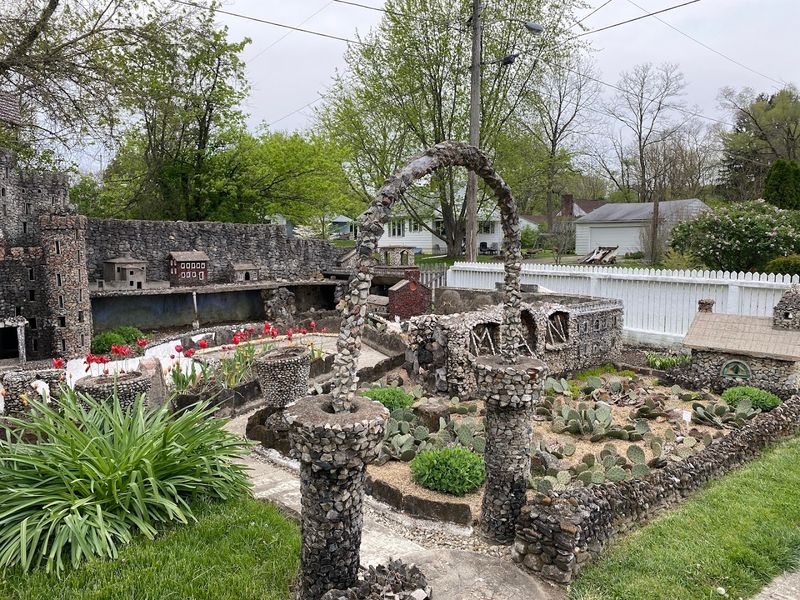
Ohio has its share of museums, parks, and roadside attractions, but Hartman Rock Garden earns a special place because it is so hard to categorize. It is part art environment, part historic site, part neighborhood curiosity, and part testament to sheer human persistence.
That combination gives it a personality bigger than many more famous destinations.
What stays with you most is not just the weirdness, though there is plenty of that. It is the feeling that creativity can erupt anywhere, even in an ordinary yard, and leave behind something that still delights strangers decades later.
Few places make that idea feel so visible and so tangible.
If you enjoy hidden gems with a genuine story, this Springfield landmark absolutely deserves your attention. Hartman Rock Garden may be small, but it delivers the kind of offbeat, memorable experience that travelers spend years hoping to discover by accident.