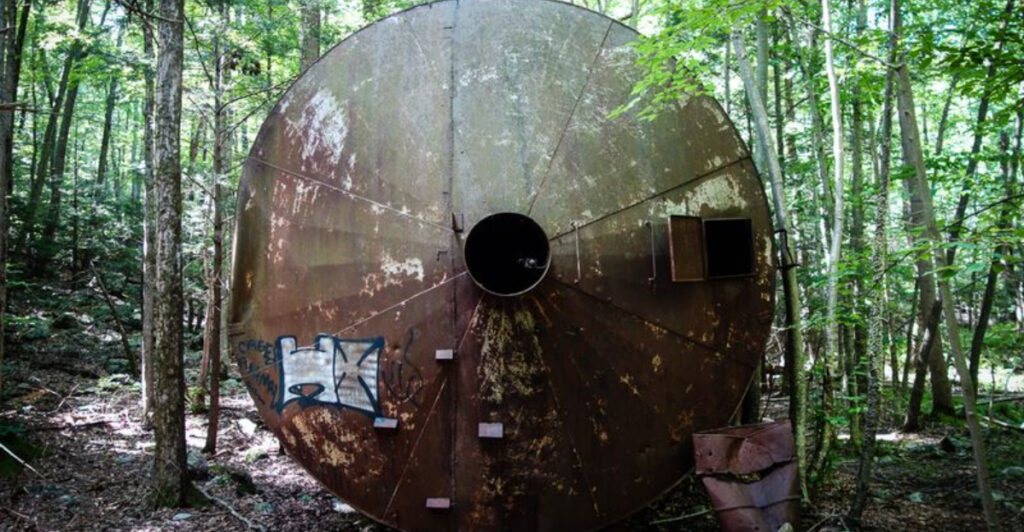
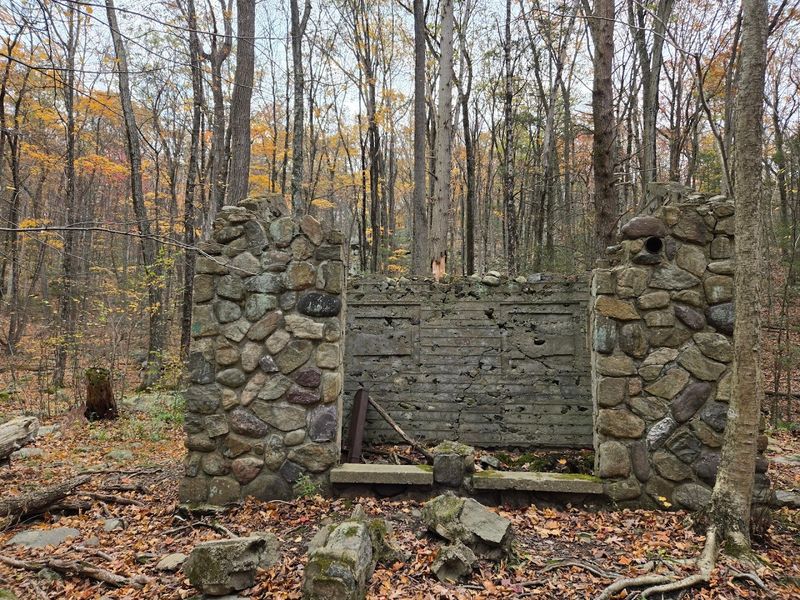
A stone building sits in the woods like somebody walked away mid-project and never came back. A few steps later, enormous old water tanks appear between the trees, round and heavy and oddly dramatic, as if West Milford has been hiding a secret level of New Jersey history all this time.
That is the fun of Apshawa Preserve. One minute, you are following blue or green trail markers through oak and maple forest.
The next, you are standing beside the remains of an early 1900s water purification system, with Apshawa Brook moving nearby and the quiet of the Highlands pressing in around you. It is not polished.
It is not theatrical. It is better than that.
The ruins feel discovered, not displayed, and the hike makes you earn the reveal just enough to make it stick. For anyone who likes their woods with a little mystery, this West Milford trail absolutely delivers.
The Quiet West Milford Trail Hiding a Forgotten Industrial Past
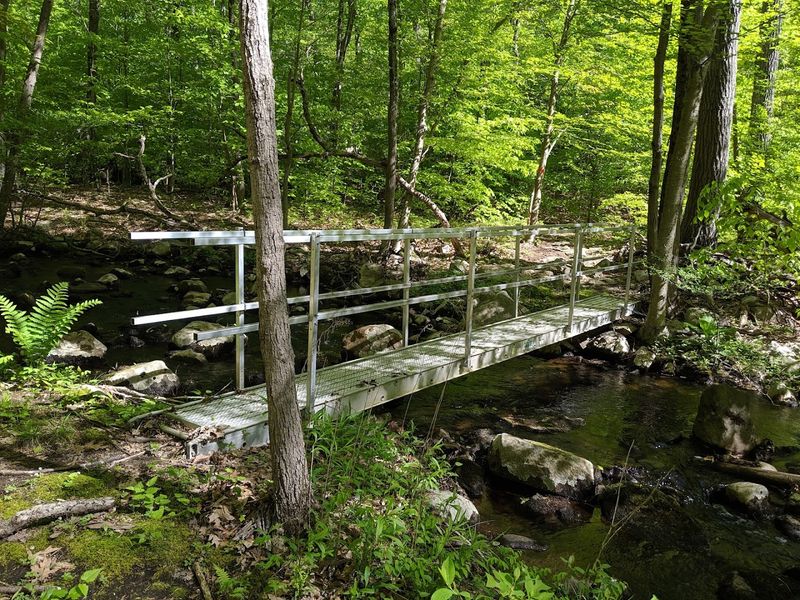
Apshawa Preserve sits off Northwood Drive in West Milford, tucked into the northern New Jersey Highlands where the roads start to twist, the yards get bigger, and the woods feel a little more serious. The preserve covers more than 500 acres, with a trail system that winds through forest, along water, past rocky overlooks, and eventually toward the kind of ruins you do not expect to find sitting quietly between the trees.
That is the official version. The local version is simpler: this is one of those places people recommend with a lowered voice, like they are letting you in on something.
The trailhead begins from a dirt parking lot at 4 Northwood Drive. There is a kiosk, a gate through the deer fence, and a blue-blazed trail that immediately makes the suburban world feel far away.
Do not expect a paved park loop with benches every few hundred feet. Apshawa has rocks, roots, wet patches, small climbs, and enough trail intersections to make you glad you took a photo of the map before walking in.
The industrial past here is tied to water. Butler Reservoir, also known as Kathleen M.
Caren Memorial Reservoir, anchors much of the preserve’s scenery, and the old dam, stone structure, and large tank ruins are remnants of an early 1900s water system. That backstory gives the hike its strange charm.
You are not visiting a fenced-off historical attraction with interpretive plaques doing all the work for you. You are walking through a living forest that has simply grown around the old infrastructure.
Moss takes over edges. Leaves gather in corners.
The brook keeps moving. The woods do what woods do, and the ruins stand there taking it, quiet and stubborn.
How Apshawa Preserve Turns a Forest Hike Into a Time Capsule
The first trick Apshawa pulls is making you think you are on a perfectly normal North Jersey hike. The trees are familiar.
The trail markers are familiar. The rhythm is familiar too: step over a root, dodge a muddy patch, look up because a woodpecker is making a racket somewhere overhead.
Then the route starts layering in little surprises. A deer exclosure fence gives parts of the preserve a slightly enclosed, almost secret-garden feeling, and it also hints at the careful conservation work happening behind the scenes.
It is there to protect native plants from heavy browsing, which is the kind of practical detail you might miss if you are only focused on finding the ruins. The trail system also lets you choose your level of commitment.
Hikers can make Apshawa a longer reservoir loop, a shorter walk to scenic water views, or a more direct outing toward the dam, ruins, and waterfall. That flexibility is part of the preserve’s appeal.
You can turn it into a proper half-day ramble, or you can aim for the historic pieces without circling every corner of the property. What makes it feel like a time capsule is not just the age of the ruins.
It is the way different eras overlap without announcing themselves. The early 1900s waterworks are still there.
The reservoir still shapes the land. Newer trail reroutes tell their own story too, including wet sections and changing conditions that have altered how hikers move through the preserve.
So yes, bring decent shoes. But bring a little curiosity too.
Apshawa rewards people who notice things.
The Ruins That Suddenly Appear Deep in the Woods
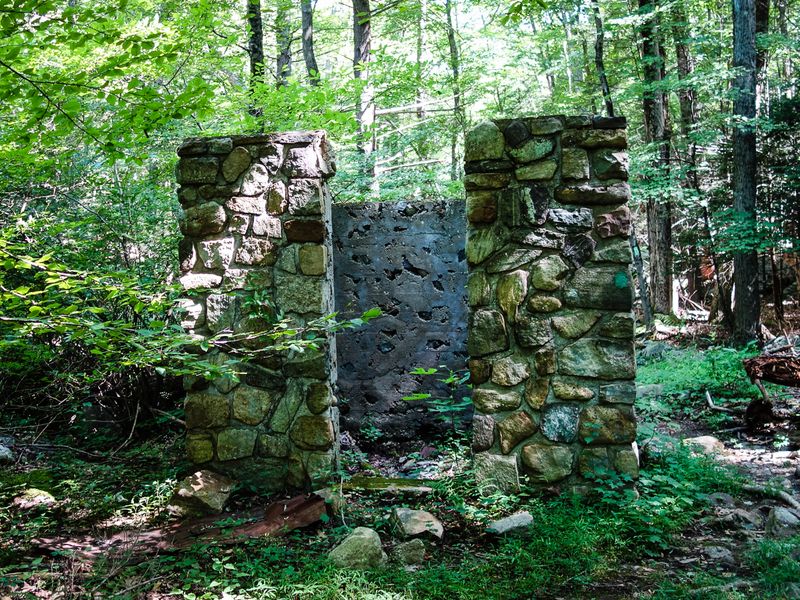
The best part of the ruins is that they do not politely introduce themselves from a distance. They arrive all at once.
After the woods and the water and the usual trail concentration, the stone building comes into view near the route. Then the tanks show up, huge and round, sitting in the forest with the kind of presence that makes everyone instinctively slow down.
These are not dainty ruins. They are big, industrial, and wonderfully out of place.
The site is generally understood as part of a water purification or waterworks system from the early 1900s, connected to the reservoir and the surrounding infrastructure. That detail matters because it separates Apshawa from the more romanticized abandoned spots people pass around online.
This was not a mansion, a hotel, or some spooky movie set. It was infrastructure.
It was built for a purpose. Water had to be stored, moved, cleaned, and managed, and these remnants are the muscular leftovers of that job.
There is something very New Jersey about that. Our prettiest places often come with utility hiding in the background: canals, reservoirs, rail beds, quarries, mills, and old service roads that nature has softened but not erased.
Apshawa fits neatly into that tradition. It is beautiful, but not delicate.
Historic, but not fussy. The ruins are also a good reminder not to treat abandoned structures like playground equipment.
Look, take photos, admire the scale, and let the site be. The forest has been doing the restoration work for decades, and frankly, it has a better eye than most of us.
Waterfalls, Reservoir Views, and Weathered Stone Remnants
Apshawa would still be worth the drive even if the ruins were not there. That is the part people sometimes undersell.
The preserve’s centerpiece is Butler Reservoir, a quiet body of water that gives the hike some of its best pauses. On the longer loop, the reservoir views are the steady payoff.
The trail moves in and out of the trees, sometimes close enough to the water that you can stop on flat rocks and watch the surface go still. Depending on the route, hikers can find overlooks, shoreline views, and quiet spots where the whole preserve feels farther from town than it really is.
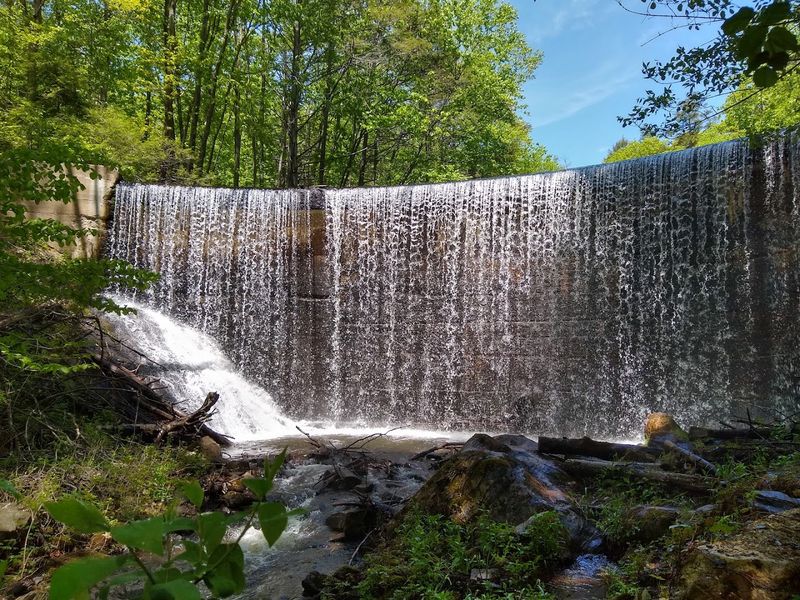
Then there is Apshawa Falls, which is more charming than thunderous. This is not a Niagara moment, and thank goodness.
It is a series of cascades along Apshawa Brook, best after recent rain, with water tumbling over rocks into a wider pool. In dry spells, the flow can shrink quite a bit, so timing matters if the waterfall is high on your list.
The dam adds another layer. Built as part of the old water system, it appears before or near the ruins depending on your route, and it gives the area that old-waterworks feeling before the tanks fully come into view.
The mix is what makes this hike memorable: reservoir, brook, dam, cascades, stone, steel, mud, leaves. Nothing feels staged.
It is all just there, stitched together by the trail.
Why This Hidden New Jersey Hike Feels More Like an Adventure
Some hikes are pretty because they behave themselves. Apshawa is pretty because it does not.
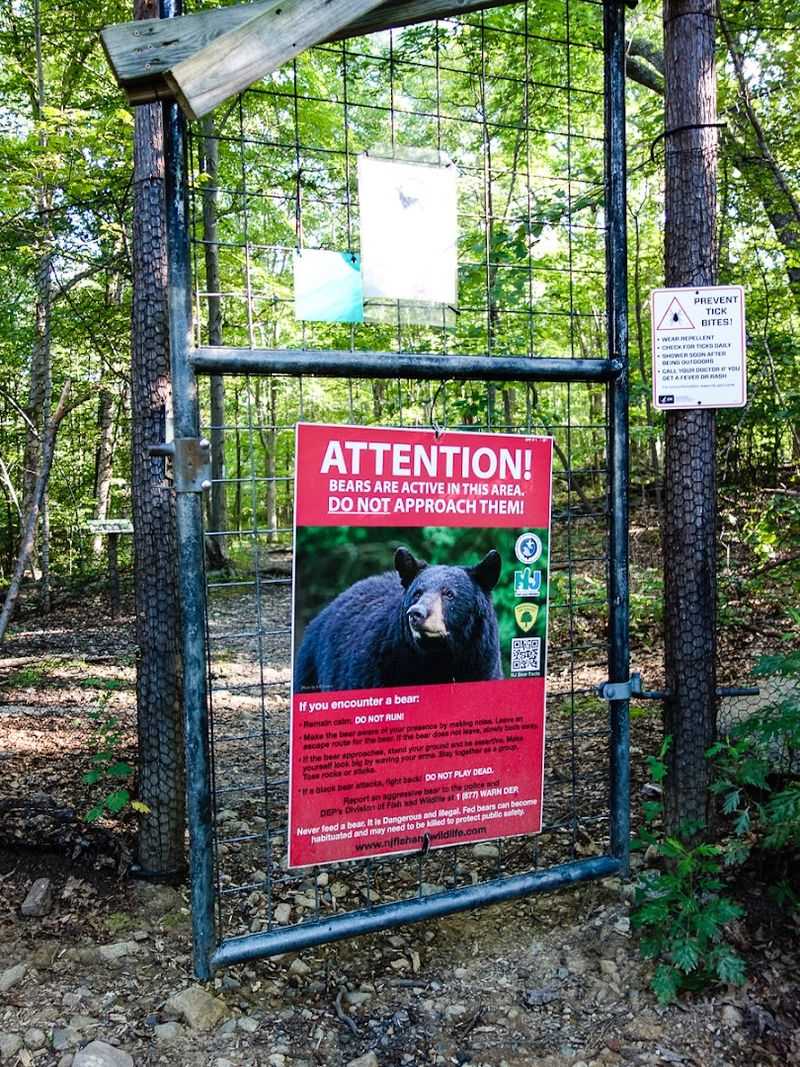
The trails here have just enough messiness to keep you awake. Expect roots, rocks, uneven ground, wet patches, seasonal stream crossings, and a few sections that feel steeper than they looked on the map.
That is not a warning meant to scare anyone off. It is the reason the hike feels like an actual outing instead of a stroll you accidentally tracked on your phone.
You will want shoes with grip, especially after rain. You will also want to pay attention at intersections, because Apshawa’s trail network uses multiple colors and has seen reroutes over the years.
The blue trail starts from the lot, and depending on your route, you may connect with white, red, green, orange, or yellow blazes. That sounds fussy on paper.
On the ground, it is part of the fun. You get to make small choices.
Do you take the longer reservoir loop? Do you head more directly toward the dam and ruins?
Do you pause at the water, or keep moving because the woods are getting interesting? The preserve also has a slightly wilder personality than many suburban parks.
There are no restrooms at the trailhead, so plan before you arrive rather than learning humility the hard way. Apshawa feels like an adventure because it asks for a little participation.
Not expertise. Just attention.
What to Know Before Exploring the Apshawa Preserve Ruins
The practical stuff is refreshingly simple. Apshawa Preserve is located at 4 Northwood Drive in West Milford, and the preserve is generally open from dawn to dusk.
Access is from Northwood Drive off Macopin Road, and parking is in a dirt lot near the trail kiosk. There is no big visitor center, no snack stand, and no restroom building waiting at the start, so treat it like a real woods walk rather than a manicured attraction.
Cell service can be inconsistent in wooded and hilly parts of North Jersey, so save or screenshot a current map before you start. That matters here because the trail system has multiple intersections, and routes can shift over time due to wet conditions, reroutes, or maintenance.
For a direct ruins-and-waterfall outing, many hikers choose a shorter loop that reaches the dam, old water tank ruins, and Apshawa Falls without committing to the full reservoir circuit. For a fuller hike, the longer reservoir loop adds more water views and a broader sense of the preserve.
Go after a stretch of rain if you want the falls at their best, but avoid heading out right after a major storm unless you are ready for slick rocks and sloppy trail sections. In summer, bug spray is not optional in spirit, even if it is optional in law.
In fall, the oak and maple woods do exactly what you hope North Jersey woods will do. The ruins themselves are the highlight, but they are not the whole story.
Apshawa works because the old industrial pieces, the reservoir, the brook, and the forest all feel connected. The place does not explain itself too loudly, and that is part of its appeal.
It lets you walk in, look around, and slowly realize that the woods have been keeping history in plain sight.