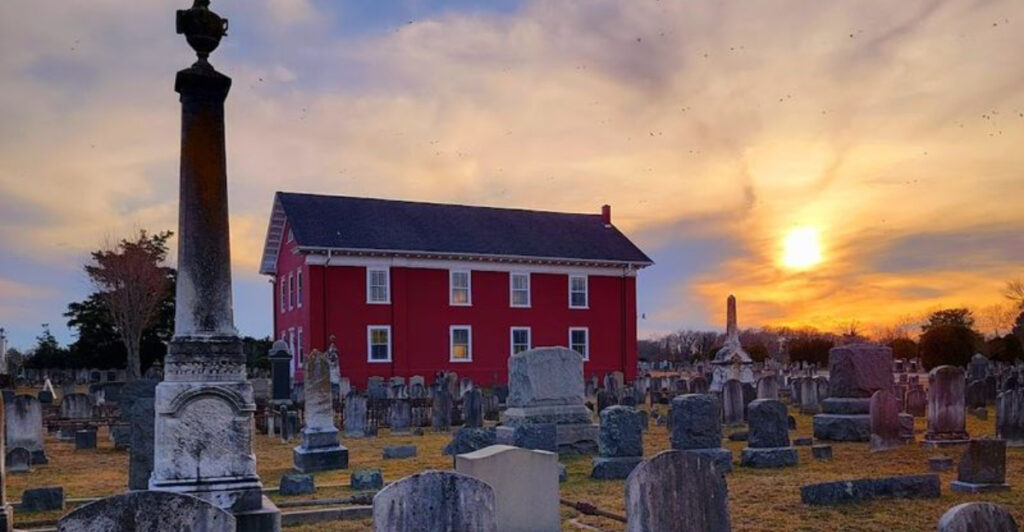
The oldest marked grave at Cold Spring Presbyterian Cemetery belongs to Sarah Eldridge Spicer, who died in 1742.
That is 34 years before anyone signed the Declaration of Independence, long before Cape May became the polished beach town people know today, and very long before families started arguing over where to park near Washington Street Mall.
The church sits at 780 Seashore Road in the Cold Spring section of Lower Township, only about three miles from the center of Cape May and right beside Historic Cold Spring Village. It does not need spooky music, velvet ropes, or dramatic lighting to feel memorable.
The place has enough real history doing the heavy lifting. Cold Spring Presbyterian Church is still active, still rooted in the same community, and still surrounded by a cemetery that reads like a stone-carved family album of southern New Jersey.
Some stories here go back to the 1700s. A few reach even farther.
A Church That Was Here Before America Was Born
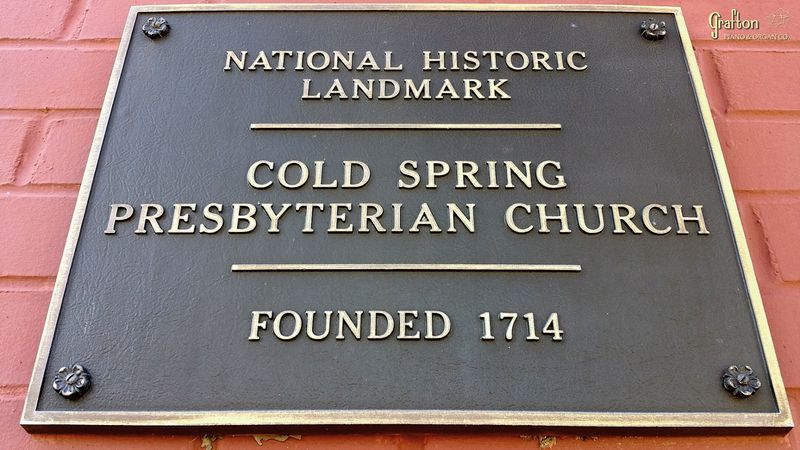
Cold Spring Presbyterian Church was founded in 1714, which makes it older than the United States, older than New Jersey as a state, and older than almost every “historic” thing people casually point at on a weekend trip. The congregation began when this part of Cape May County was still a rural, sea-edged settlement of farms, forests, creeks, and salt air.
The first meetinghouse was not the brick building visitors see now. Early worshipers gathered in a log structure, the kind of simple building that matched the landscape around it.
There was no grand entrance, no polished tourism brochure, and no convenient coffee stop around the corner. People came because this was where community happened.
Church was not just Sunday worship. It was news, neighbors, family milestones, public life, and sometimes the only steady institution for miles.
That is what makes Cold Spring feel different from a preserved landmark that has been frozen behind glass. Its story is not just architectural.
It is social. Generations came through war, illness, storms, changing roads, new governments, and the slow transformation of Cape May from working coastal county to vacation name-drop.
The church’s early history also connects it to the growth of Presbyterian life in America. Its roots trace back to a time when organized congregations were spreading through the colonies, and Cape May’s location at the southern tip of New Jersey made it both remote and connected.
Ships, farms, fishing families, and trade routes all shaped the area. That long timeline is easy to miss if you are driving too fast down Seashore Road.
One minute you are thinking about the beach. The next, you are passing a church community that was already gathering before George Washington was born.
The Old Brick Chapel That Still Stands In Cape May
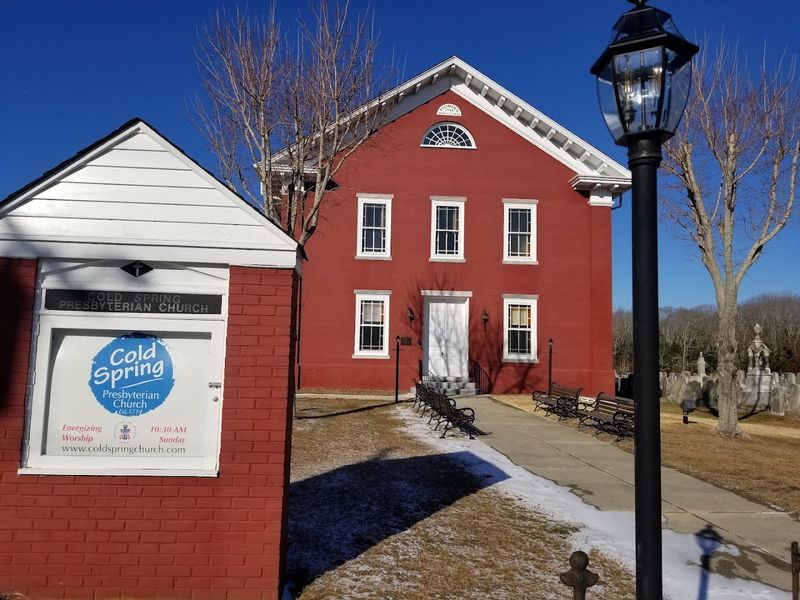
The building locals know as “Old Brick” arrived in 1823, and it still has the sturdy, no-nonsense look of something built to outlast bad weather and worse ideas. It is a two-story red brick church with clean Federal-style lines, the kind of building that does not beg for attention but absolutely rewards a second look.
The current chapel replaced an earlier frame-and-shingle church from 1764, which had replaced the original log meetinghouse. That gives the site a layered quality.
You are not looking at one old building pretending to be the whole story. You are standing on a church property that kept rebuilding as the community grew, shifted, and needed more room.
One especially Cape May detail makes the building even better: the 1823 church was designed by Thomas H. Hughes, the same architect associated with Congress Hall in Cape May.
That connection neatly ties Cold Spring’s quiet inland setting to one of the shore’s most famous landmarks. Congress Hall gets the vacation photos and the porch cocktails.
Old Brick gets the deeper local roots. The church was added to the National Register of Historic Places in 1991 for its significance in settlement, architecture, religion, and government.
That combination matters. Cold Spring is not listed just because it is old.
Plenty of old buildings are interesting without being nationally meaningful. This one earned recognition because it helps explain how a community formed, worshiped, organized itself, and stayed visible across centuries.
The setting adds to the effect. The church is not tucked into a crowded downtown block.
It sits near Historic Cold Spring Village, where restored buildings interpret South Jersey life from the late 1700s into the 1800s. So the whole area has a slightly time-bent feeling.
You can leave modern Cape May with its beach tags and Victorian inns, drive a few minutes, and land in a much older version of the county.
A Cemetery Where The Oldest Stones Date Back To 1742
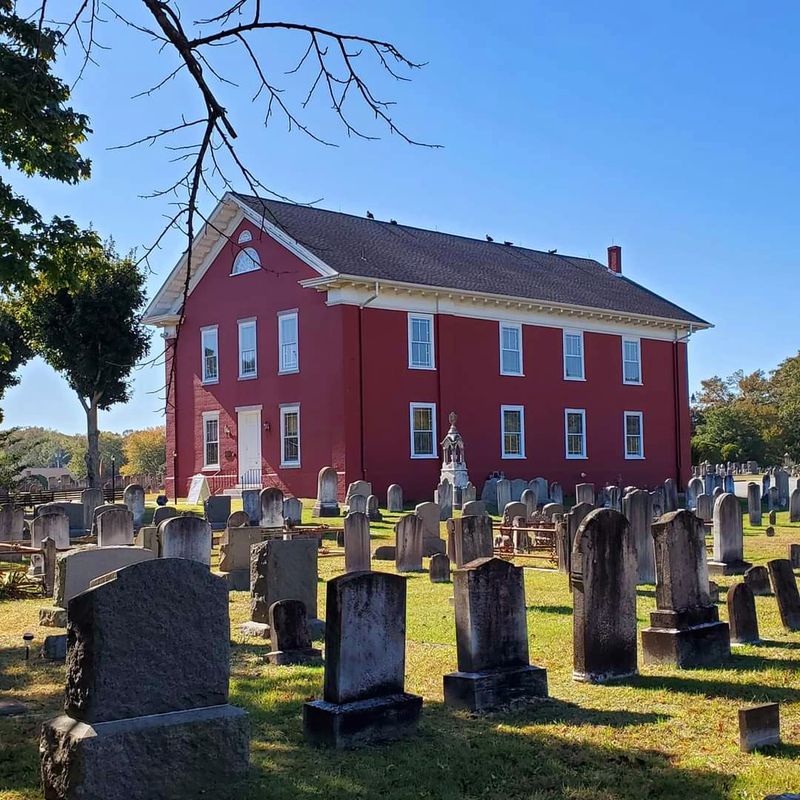
Walk into Cold Spring Presbyterian Cemetery and the dates start doing strange things to your sense of time. A grave from 1890 may look old at first, until you notice one from the early 1800s.
Then the 1700s appear, and suddenly American history stops feeling like something that happened elsewhere. The oldest marked grave belongs to Sarah Eldridge Spicer, who died in 1742.
That single stone anchors the cemetery’s reputation, but it is hardly the only reason to slow down. The grounds hold thousands of memorials, with names that echo through Cape May County history: Eldridge, Spicer, Hughes, Schellinger, Bennett, Hand, and many others.
Some were prominent. Some were ordinary residents.
Together, they make the cemetery feel less like a collection of graves and more like a town archive written in marble, slate, and weather-softened carvings. The stones are part of the experience.
Older markers can be uneven, tilted, or difficult to read, which is exactly why they feel so human. A polished modern plaque tells you information.
A worn 18th-century headstone makes you lean closer, squint a little, and remember that time is not gentle with anything, including names. This is not a place to rush through between lunch and the beach.
The ground can be uneven, and the older sections deserve careful walking. That slower pace suits the cemetery.
You notice small details: family plots grouped together, military markers, changing headstone shapes, and inscriptions that reveal how language around grief has changed over the centuries. There is something quietly powerful about seeing colonial-era graves in a place many people associate with summer vacations.
Cape May can feel all porches, hydrangeas, fudge shops, and beach umbrellas. Cold Spring Cemetery reminds you that before the resort town came the families who worked, worshiped, buried their dead, and built a lasting community at the edge of New Jersey.
The Mayflower Family Ties Hidden In The Graveyard
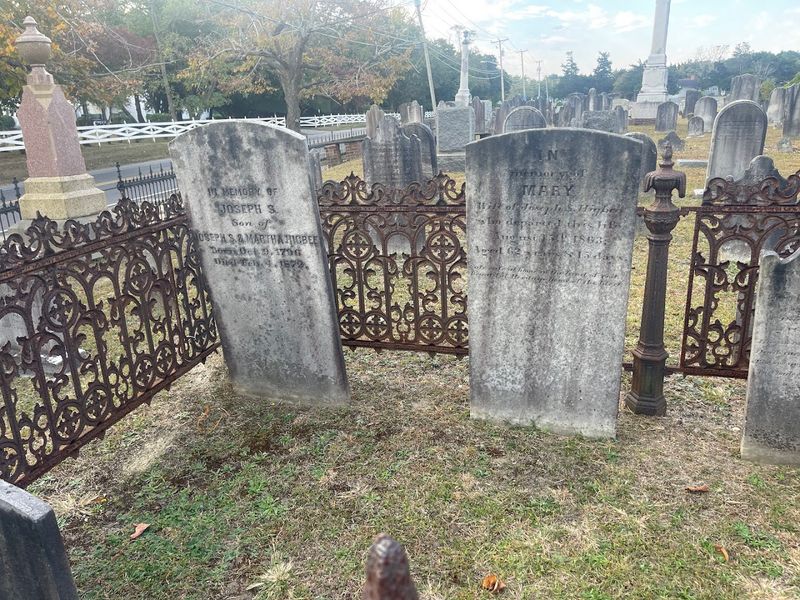
Here is the fact that tends to make genealogy people stand up a little straighter: Cold Spring Presbyterian Cemetery is known for having one of the largest concentrations of Mayflower descendants outside Massachusetts. That is not the kind of thing you expect to find near Cape May, but South Jersey history has a way of sneaking up on you.
The Mayflower landed in 1620, more than a century before Sarah Eldridge Spicer’s grave was placed here. Over time, descendants of those early English settlers moved beyond New England.
Families spread through New York, Pennsylvania, and New Jersey, following land, marriage, trade, church connections, and plain old opportunity. Some of those lines eventually led to Cape May County.
That matters because cemeteries are often the final proof in a family story. A name passed down in a family Bible is one thing.
A name carved into a stone, in the place where that person actually lived and died, hits differently. For visitors tracing ancestry, Cold Spring can turn a distant family rumor into something solid underfoot.
The Mayflower connection also gives the cemetery a bigger historical reach than its already impressive 1700s dates suggest. The people buried here were not living in isolation at the bottom of New Jersey.
Their family lines connect to colonial migration, religious communities, coastal settlement, and the messy, fascinating movement of people across early America. Even if you are not hunting for an ancestor, the connection adds a little jolt to the visit.
It reminds you that history rarely stays in the places where schoolbooks leave it. Pilgrim ancestry does not stop at Plymouth Rock.
Revolutionary history does not only live in Philadelphia and Boston. Sometimes it turns up beside a red brick church on Seashore Road, hiding in plain sight between Cape May and Lower Township.
And honestly, that is part of the fun. Cold Spring does not announce itself with a giant roadside spectacle.
It lets you discover the surprise one name, one date, and one family line at a time.
The Revolutionary War Hero Buried On The Grounds
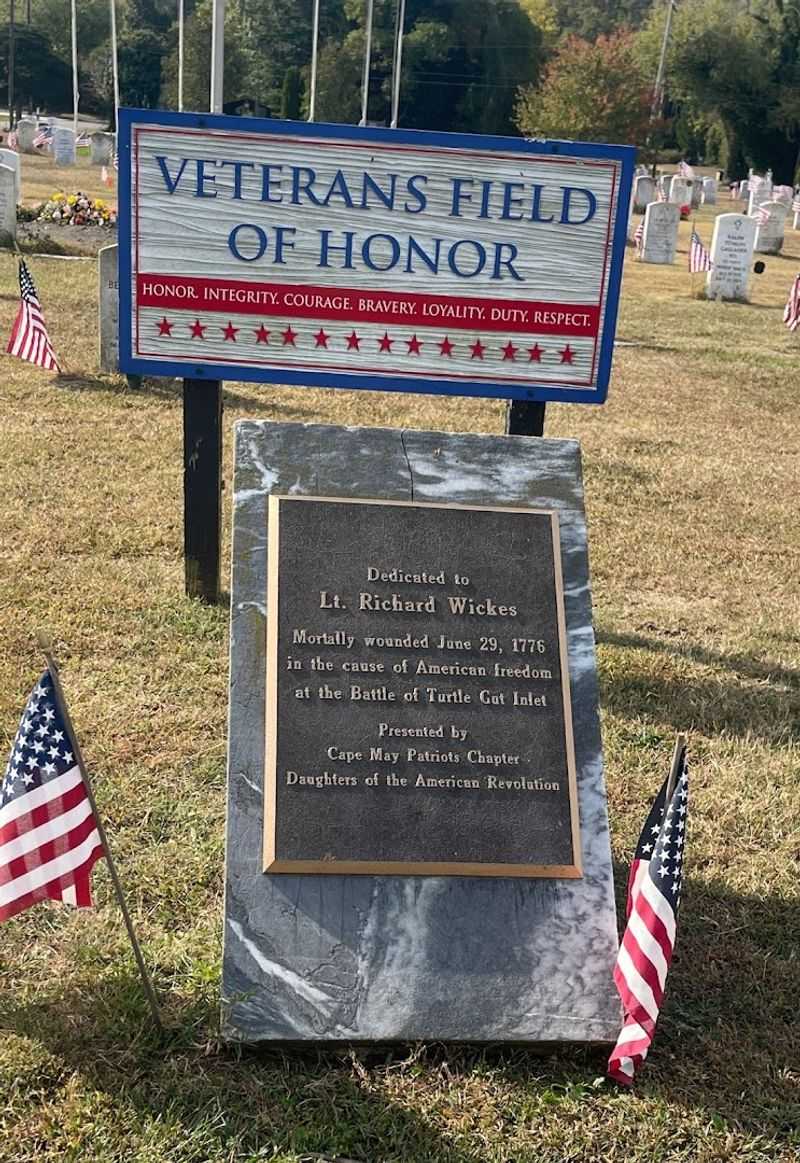
Lieutenant Richard Wickes died on June 29, 1776, just days before the Declaration of Independence was adopted. That timing alone is enough to stop you.
He gave his life fighting for a country that technically had not been born yet. Wickes was mortally wounded during the Battle of Turtle Gut Inlet, a Revolutionary War clash tied closely to the Cape May area.
It was not one of those enormous textbook battles with sweeping paintings and famous speeches. It was smaller, local, and strategically important in the way coastal conflicts often were.
Ships, supplies, waterways, and timing all mattered. For South Jersey, the Revolution was not some distant drama playing out far away.
It reached these shores. His grave at Cold Spring Presbyterian Cemetery gives the site a direct link to that moment.
Standing there, the Revolution feels less like powdered wigs and parchment and more like a young officer dying near home before independence was even official. That is the kind of detail that makes history feel immediate rather than decorative.
The cemetery also includes other veterans, and the Veterans Field of Honor adds another layer to the grounds. The military burials stretch the story beyond the 18th century, showing how one local cemetery kept receiving the people who served through later American conflicts.
The result is not a single historic snapshot. It is a long record of service across generations.
Cape May visitors often know the area for lighthouses, beaches, and Victorian architecture, all of which deserve their attention. But Wickes’ story belongs on that local history map too.
His burial place is a reminder that the Jersey Shore was not only a vacation coastline. It was a working, vulnerable, strategically important edge of the colonies.
The grave is quiet. No reenactment drums.
No dramatic cannon smoke. Just a name, a date, and the uncomfortable realization that independence had a human cost before it had a national birthday.
Why Cold Spring Presbyterian Still Feels Alive Today
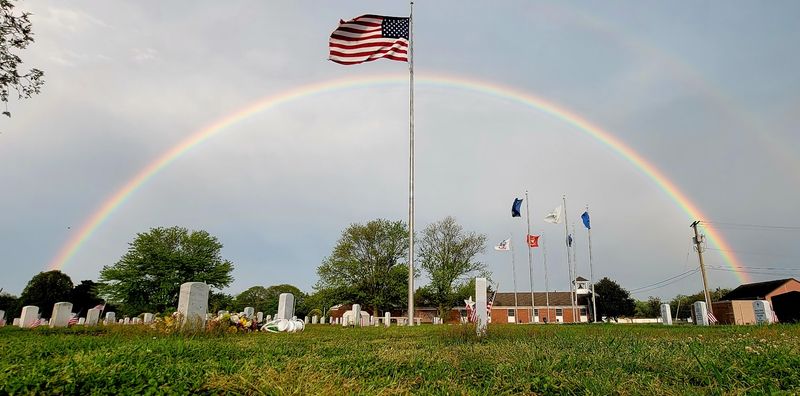
Plenty of historic churches are beautiful but silent. Cold Spring Presbyterian is not one of them.
It remains an active congregation, with Sunday worship at 10:30 a.m. in person and online, plus community events and ministries that keep the property connected to present-day Cape May life. That living quality changes the whole visit.
You are not wandering around an abandoned relic where the story ended a century ago. You are visiting a place where the past and present overlap in ordinary ways.
People still gather here. Families still come through the doors.
The cemetery is still cared for. The church still answers the phone at 609-884-4065.
History may be the hook, but continuity is the real story. The location helps, too.
Cold Spring Presbyterian sits at 780 Seashore Road, adjacent to Historic Cold Spring Village and only a short drive from Cape May’s busier streets. That makes it easy to pair with a history-minded afternoon.
You can spend time at the cemetery, look over the Old Brick church, and then head next door to the open-air village, where restored buildings and interpreters bring 18th- and 19th-century South Jersey into clearer focus. Still, the church does not feel like an attraction pretending to be quaint.
It feels like a local institution that happens to have extraordinary history attached to it. That distinction matters.
The cemetery is not a prop. The church is not a backdrop.
The names on the stones belonged to people who shaped this corner of New Jersey long before beach traffic and summer rentals became part of the rhythm. Cold Spring Presbyterian’s charm is not loud.
It is in the brickwork, the old family names, the 1742 grave, the Mayflower ties, the Revolutionary War burial, and the simple fact that this place kept going. Centuries passed, Cape May changed around it, and the church stayed right where it was.