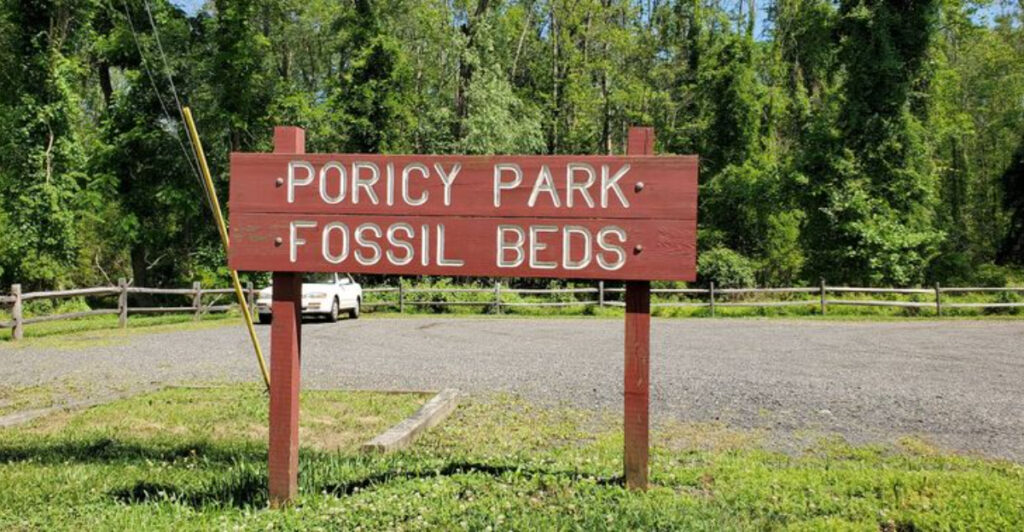
A few steps off Middletown-Lincroft Road, you can crouch beside a shallow creek, scoop up a handful of dark gravel, rinse it through a screen, and pull out something that last saw daylight when New Jersey was underwater.
That is the strange little magic of Poricy Park in Middletown, where Poricy Brook cuts through ancient marine layers and turns an ordinary walk in the woods into a low-key fossil hunt.
This is not a theme park version of prehistory. There are no animatronic dinosaurs, no dramatic cave entrance, no souvenir “dig site” staged with plastic bones.
Just a creek, some mud, a little patience, and real fossils from the Navesink Formation, a layer of rock and sediment roughly 72 million years old. For families, curious adults, and anyone who likes their New Jersey day trips with a little grit under the fingernails, Poricy Park is a wonderfully weird local treasure.
Why Poricy Park Is One Of New Jersey’s Coolest Hidden Finds
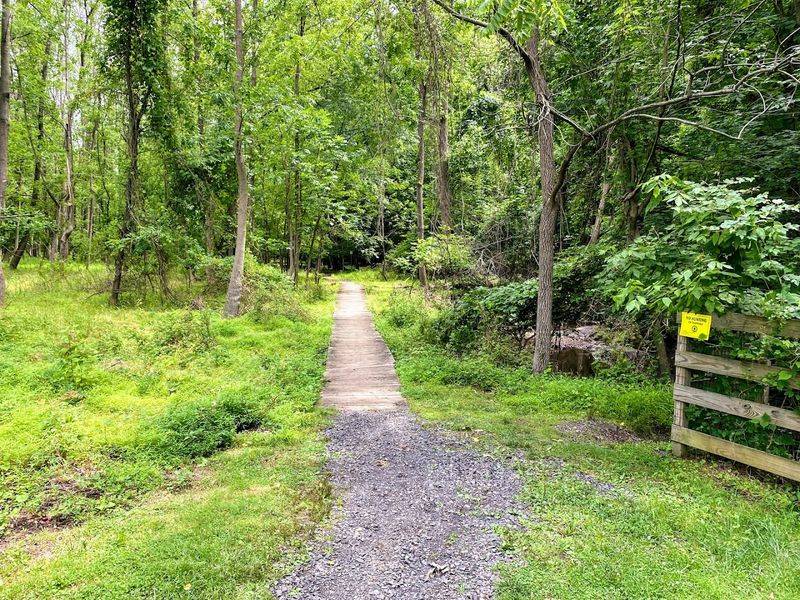
Poricy Park does not announce itself like one of New Jersey’s bigger outdoor attractions. It sits in Middletown Township in Monmouth County, spread across about 250 acres of woods, trails, wetlands, open space, historic buildings, and creek beds.
You could drive nearby on a normal weekday, heading toward errands or school pickup or the Garden State Parkway, and have no idea that a Cretaceous fossil bed is tucked into the landscape nearby. That is part of what makes it so good.
The park has the kind of quiet, local feel that makes you wonder why more people are not talking about it. There is a Nature Center on Oak Hill Road, the historic Murray Farmhouse and Barn, walking trails, wildlife habitat, and then, a short drive away, the fossil beds along Poricy Brook near Middletown-Lincroft Road.
The fossil beds are the part that makes Poricy Park feel almost unfairly interesting. Lots of New Jersey parks have pretty trails.
Plenty have playgrounds, ponds, or picnic tables. Not many let you stand in a creek and sift through sediment from a time when the Atlantic Coastal Plain was covered by a shallow sea.
That is the real hook here. Poricy Park is not just a pretty place to stretch your legs.
It is one of those rare New Jersey spots where the state’s deep past is not locked behind museum glass. You can actually get your hands wet, sort through the gravel, and recognize that the little shell or tooth in your palm is older than the hills, older than humans, older than almost every familiar thing in the modern landscape.
And because the park still feels humble, it has not lost its charm. You do not need to be a serious fossil collector to appreciate it.
You just need shoes that can get dirty and a willingness to look closely.
How A Quiet Middletown Creek Became A Fossil Hunting Spot
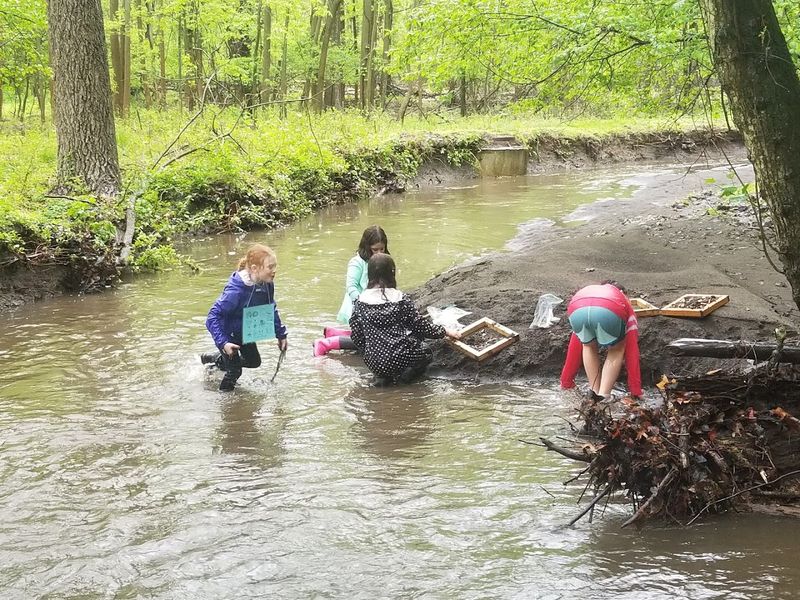
Here is the wonderfully odd thing about Poricy Brook: the creek is doing the digging for you. Over time, the flowing water has cut into the land and exposed a fossil-rich layer called the Navesink Formation.
That layer dates back roughly 72 million years, to the Late Cretaceous period, when this part of New Jersey was not suburban Monmouth County but part of a shallow ocean environment. The fossil beds at Poricy Park are known among collectors because that ancient marine layer keeps showing up in the streambed as the brook naturally shifts and erodes.
That detail matters because it explains why the rules are strict. The fossils are found in the creek bed, not by hacking into the banks like someone in a movie with a pickaxe and a very bad plan.
Middletown’s visitor guidance warns people not to climb on the banks because they are steep, slippery, and hazardous in places. It also makes clear that visitors should avoid prohibited equipment and stick to careful collecting in the proper area.
The stream naturally exposes new fossils, so patience beats brute force every time. Local context makes the place even more interesting.
Middletown is not exactly remote. Poricy Park is in the same general world as neighborhood streets, schools, shopping centers, and shore traffic.
That contrast is what gives the fossil beds their punch. One minute you are in regular New Jersey, the next you are looking at evidence from a vanished sea.
The park’s broader story is tied to preservation, too. Poricy Park exists because open space in this part of Monmouth County was protected instead of paved over.
The park includes the Murray Farmhouse, a historic site dating to the colonial era, which adds another layer of time to the visit. In one place, you get 18th-century New Jersey history and fossils from tens of millions of years earlier.
That is a pretty good range for a town park. So no, Poricy Brook did not “become” a fossil spot because somebody planted a few specimens there for kids to find.
It became one because geology, water, and preservation all lined up. The creek kept cutting.
The fossils kept appearing. New Jersey, for once, kept the place accessible.
What You Might Find In The 72 Million Year Old Fossil Beds
Do not show up expecting a complete dinosaur skull to roll out of your screen. Poricy Park’s fossil beds are marine fossil beds, which means the best finds usually come from animals that lived in or near the ancient sea.
That is actually more interesting than it sounds, especially once you realize how much of prehistoric New Jersey was shaped by water. The common finds at Poricy Brook include fossilized shells, oysters, clams, belemnites, and the occasional shark tooth.
The exposed material belongs to the Navesink Formation, the same roughly 72-million-year-old layer that makes the site special. For beginners, shells are often the easiest fossils to notice first.
They may not look dramatic at a glance. Some are dark, worn, and mixed in with pebbles.
But once you start noticing shapes, ridges, curves, and textures that do not quite match ordinary stones, your eyes adjust. That is when the creek becomes addictive in the best possible way.
Shark teeth are the crowd-pleasers, of course. They are usually small, and finding one feels like winning a tiny prehistoric lottery.
The trick is not to rush. Sift slowly.
Look for glossy, triangular shapes. Let the water clear away the mud before you decide that a screen is empty.
Belemnites are another classic find. They come from extinct squid-like creatures, and fossil pieces can look a bit like pointed, bullet-shaped fragments.
Kids often love them once they understand they are holding a piece of an ancient sea animal, not just a weird little rock. Part of the fun is that the finds are modest enough to feel real.
Poricy Park is not promising museum-quality treasures in every scoop. Some visits may produce a handful of shell fragments.
Another day, especially after rain has moved sediment around, someone might find something more exciting. That uncertainty is the whole appeal.
It makes everyone slow down, compare finds, ask questions, and look again. The best fossil hunting here is not about taking home a bucket of ancient stuff.
It is about the moment your brain switches from “I am standing in a creek” to “I am touching New Jersey when it was ocean floor.”
The Best Way To Sift For Fossils Without Overthinking It
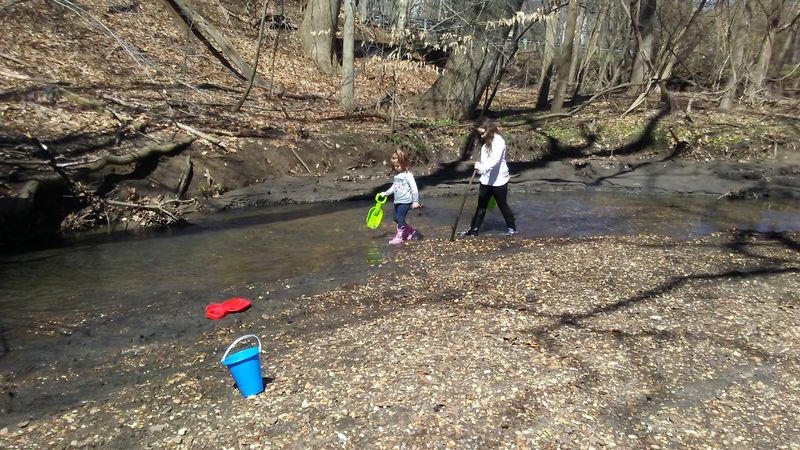
A good Poricy Park fossil hunt starts with the least glamorous item in the car: shoes you do not care about. The creek can be muddy, slippery, shallow, chilly, or all of the above, depending on the season and recent rain.
Old sneakers, water shoes, or sturdy boots are far better than sandals that will slide around or flip-flops that will betray you immediately. The basic method is simple.
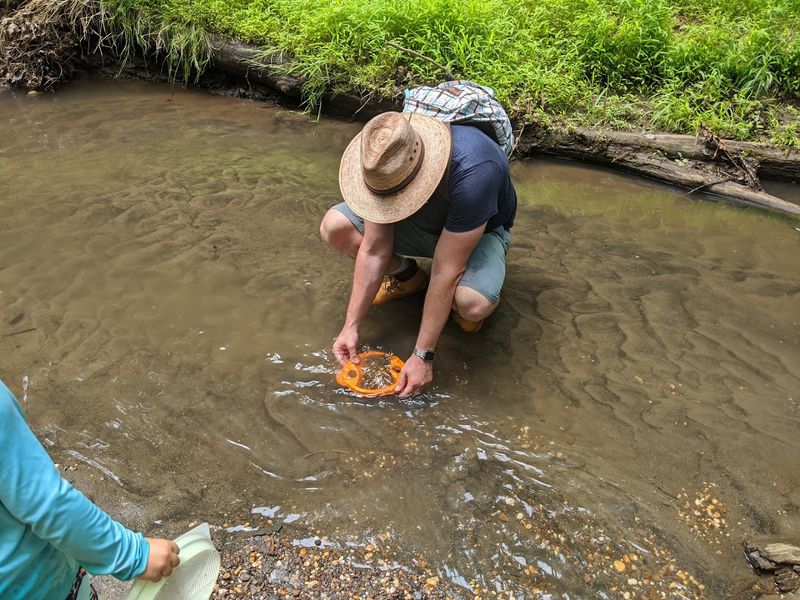
Find a safe, accessible spot in the streambed, scoop a small amount of gravel and sediment, rinse it through a screen, and study what is left. You are looking for shapes that stand out from ordinary stones: ridged shell pieces, smooth dark fragments, small points, curves, or anything with a pattern that feels biological rather than random.
The Nature Center has historically been the helpful starting point for visitors who want a little orientation, and park information has noted that small screens and trowels may be available through the center. The official township information also makes clear that visitors should collect only from the streambed and should avoid climbing or digging into the banks.
That rule is not just park fussiness. Digging into the sides speeds erosion and can damage the very site people came to enjoy.
Timing helps. After a good rain, the creek may expose new material, though you still want safe conditions and common sense.
Early spring is often a good fossil-hunting season in New Jersey because thawing ground and rain can uncover fresh finds. Summer can work too, but expect more people, more bugs, and kids who will absolutely step in the deepest patch of water within five minutes.
Bring a small container for your best finds, not a giant haul bag. A plastic sandwich container, old pill bottle, or small zip-top bag is plenty.
The point is to keep a few favorites, not half the creek. The easiest mistake is treating the outing like a race.
Fossil hunting at Poricy Park rewards patience more than intensity. Scoop, rinse, look.
Then look again. The good stuff is often small enough to miss the first time.
Why Families Love This Hands On Outdoor Adventure
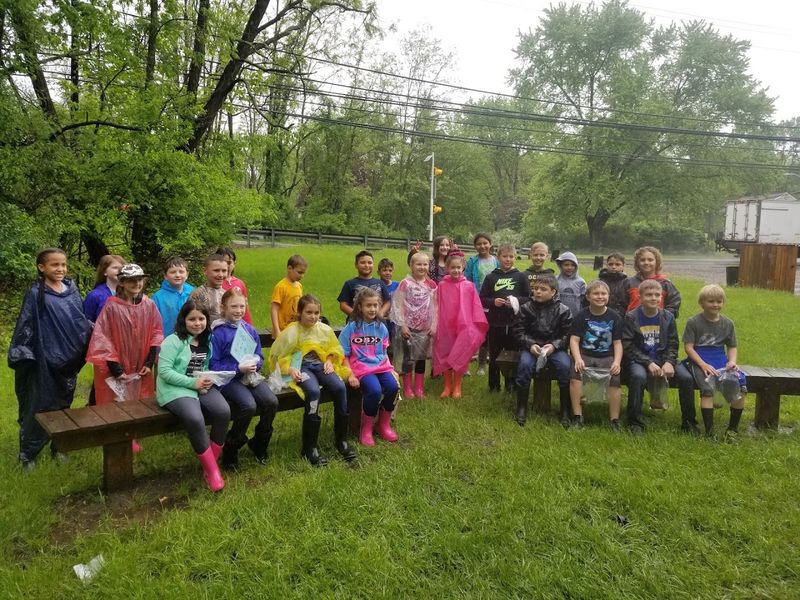
Poricy Park works so well for families because it gives kids permission to do what they already want to do outside: splash, dig, sort, compare, and ask a hundred questions. The difference is that here, the mud has a point.
There is a nice balance to the place. It feels adventurous without being overwhelming.
You are not committing to a rugged backcountry trek or an expensive attraction with timed entry, parking stress, and a gift shop exit strategy. You are visiting a local park where the main activity is bending over a creek and seeing what turns up.
That makes it especially good for kids who are not always impressed by scenic overlooks or long nature walks. Fossil hunting gives them a mission.
A plain-looking scoop of gravel becomes a puzzle. Is this a rock? Is this a shell? Is this anything?
The adults get pulled in too, usually right around the moment someone finds the first recognizable fossil and suddenly everyone is crouched over the screen like it contains buried treasure. The park also has enough around it to stretch the outing.
Poricy Park includes trails, nature areas, the Nature Center, and the Murray Farmhouse and Barn area, though the farmhouse and barn are generally tied to special events or field trips rather than everyday drop-in touring. The fossil beds themselves are in a separate area from the main Nature Center, so families should check the park map or township directions instead of assuming everything is in one parking lot.
There is an educational piece, but it does not feel like homework. Kids learn that New Jersey was once covered by a shallow sea. They learn that fossils are not always giant bones. They learn that real discovery can be slow and muddy and still completely exciting.
Parents will appreciate the practical side. The fossil beds are approachable for beginners, and the barrier to entry is low. That does not mean it is stroller-friendly in the creek or spotless by any stretch. It means you can keep the plan simple.
Bring the right shoes, supervise closely near the water and banks, keep expectations realistic, and the day mostly takes care of itself. The best family outings are the ones where nobody has to fake enthusiasm.
At Poricy Park, the first fossil usually handles that.
What To Know Before You Visit Poricy Park Fossil Beds
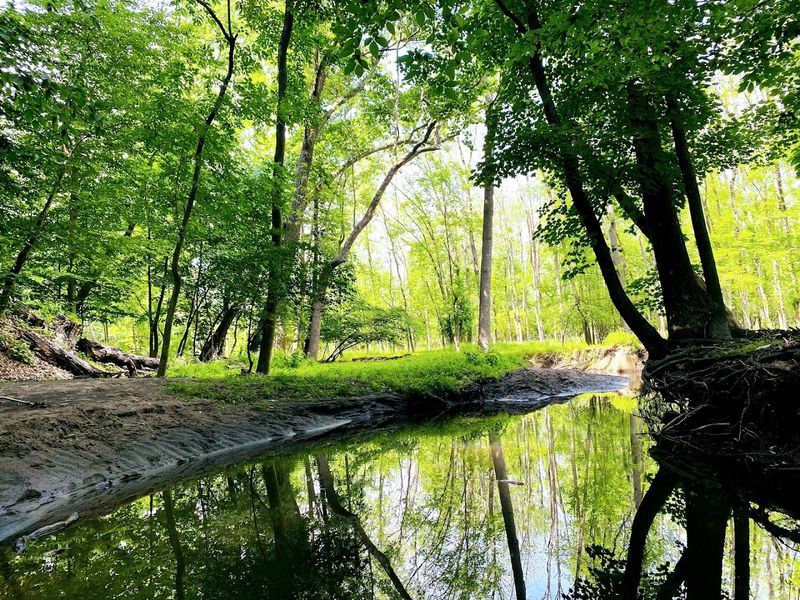
The fossil beds are not located directly at the Nature Center, and that is the detail that saves a lot of first-time visitors from a confused parking-lot moment. Middletown lists the Poricy Park Nature Center at 345 Oak Hill Road, while the fossil beds are along Middletown-Lincroft Road between Nutswamp Road and Oak Hill Road, with separate parking areas.
The fossil beds are a short drive from the main park area, so it is worth checking the township map before you go. Hours are refreshingly simple for the outdoor parts of the park.
The trails and fossil beds are generally open dawn to dusk. The Nature Center is typically open on weekdays during business hours, while the Murray Farmhouse and Barn are generally used for special events, programs, or field trips.
If you are hoping to ask questions, borrow equipment, or connect with staff, plan around Nature Center hours rather than assuming it is open on a random weekend afternoon. Rules matter here more than they might at a regular park.
Stay in the streambed when fossil hunting. Do not dig into the banks. Do not climb the banks. They can be slippery and unsafe, and damaging them hurts the site.
Collect lightly and keep only a few favorite finds. If you uncover something unusual, it is worth checking with the Nature Center rather than tossing it into a backpack and forgetting about it under a granola bar wrapper.
Dress for mess. Bring water, a towel, a change of socks for kids, and a small container for fossils.
Bug spray helps in warm months. After rain, the creek may reveal more material, but conditions can also be slicker, so use judgment.
Poricy Park is one of those places that feels very New Jersey once you understand it: practical, a little hidden, surprisingly rich in history, and much cooler than it looks from the road. Beneath the everyday rhythm of Middletown, Poricy Brook is still carrying pieces of an ancient sea into view.