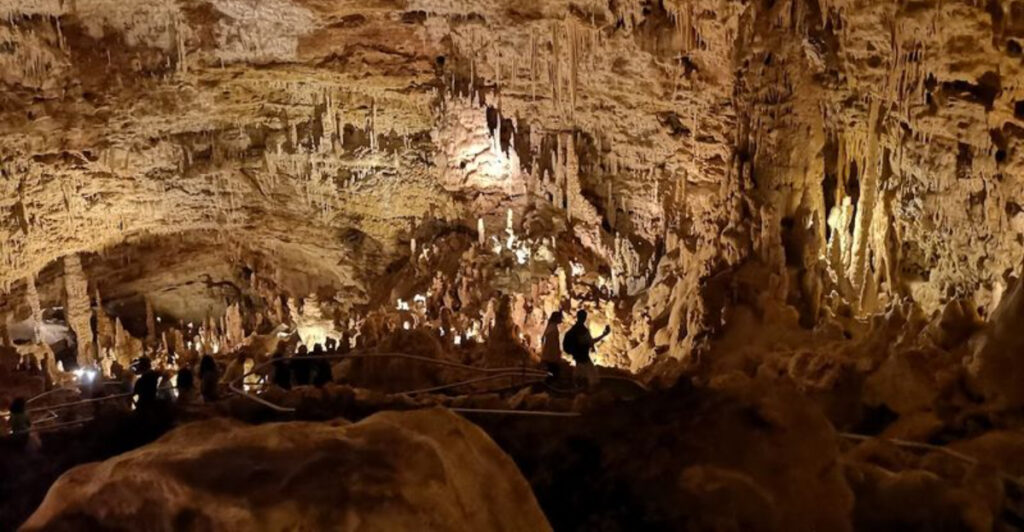
Texas hides some of the most stunning underground landscapes in the country. Beneath the rolling hills and rocky terrain, there are caverns filled with glittering formations, massive chambers, and otherworldly beauty that most people never get to see. These hidden gems offer a chance to escape the Texas heat and explore a completely different realm just below the surface, where stalactites hang like chandeliers and underground rivers carve through ancient limestone.
1. Longhorn Cavern (Burnet)
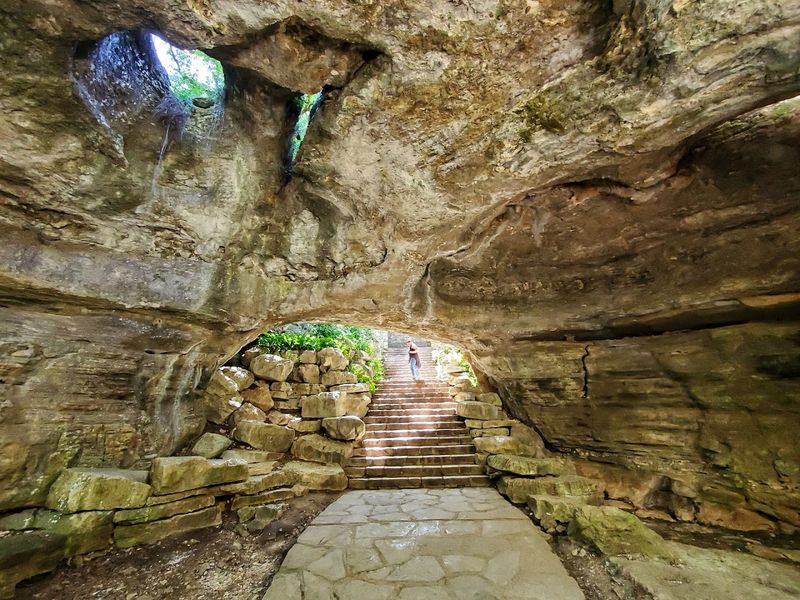
Carved by an underground river over millions of years, this Hill Country wonder has a wild past that includes everything from Ice Age animals to Confederate gunpowder production. The cavern stayed a comfortable temperature year-round, which made it a popular hideout for outlaws in the 1800s and later a dance hall during Prohibition. Walking through these passages feels like stepping into a geology textbook that also moonlights as a history museum.
The formations here aren’t your typical cave decorations. Instead of hanging stalactites, you’ll find smooth, flowing walls created by that ancient river’s relentless work. Some chambers stretch so wide you could fit a small house inside, while narrow passages twist and turn like a natural maze.
The colors range from cream to rust, with mineral deposits painting streaks across the limestone canvas.
Rangers lead tours that wind through about a mile of passages, sharing stories about the cave’s many lives. You’ll hear about the Comanche people who used it for shelter, the miners who searched for bat guano, and the Civilian Conservation Corps workers who built the trails in the 1930s. The temperature stays around 68 degrees, so bring a light jacket even on scorching summer days.
Adventure seekers can book the wild cave tour, which involves crawling through tight spaces and getting properly dirty. Regular tours stick to developed paths with handrails and electric lights. Either way, you’re exploring a Texas landmark that’s been forming since before humans walked the earth.
The cavern sits inside a state park, so you can make a full day of it with hiking trails and picnic areas aboveground.
2. Cave Without a Name (Boerne)
A local boy stumbled into this hidden treasure in 1939 while chasing a goat, and the discovery sparked so much excitement that the owners held a naming contest. The winning entry? “Cave Without a Name,” because the student said it was too beautiful for words. That poetic sentiment still rings true when you first glimpse the glittering formations packed into these intimate chambers.
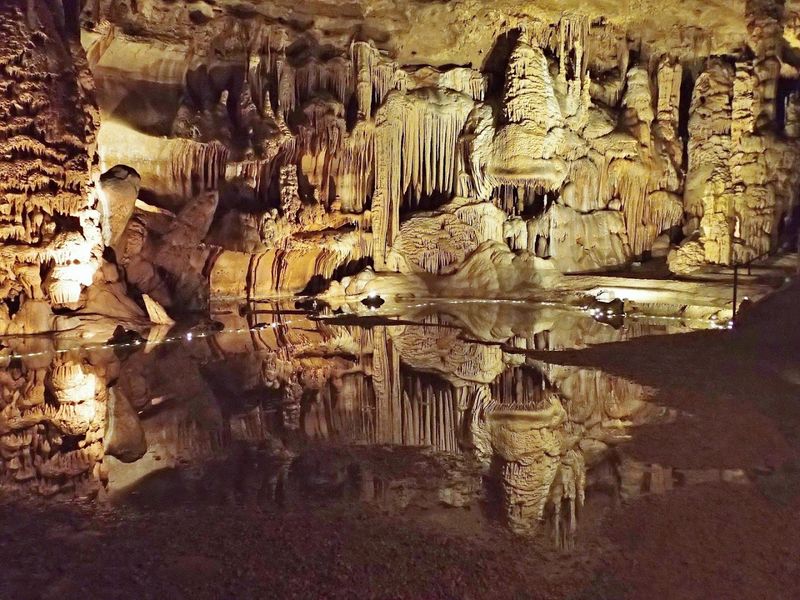
What makes this cavern special is its density of decorations. Every surface seems to sprout delicate soda straws, flowstone curtains, or crystalline clusters. The signature formation is a massive stalactite column that looks like frozen honey dripping from the ceiling.
Lighting brings out the warm amber and orange tones in the limestone, creating an almost cozy atmosphere despite being underground.
The family who discovered the cave still runs it, keeping things personal and low-key. Tours last about an hour and cover six rooms connected by natural passages. Your guide will point out formations that resemble everything from fried eggs to cave bacon, and the acoustics are so good that musicians occasionally perform concerts down here.
The sound bounces off the walls in a way that makes simple songs feel magical.
Located just outside Boerne in the Texas Hill Country, the cave maintains a steady 66 degrees year-round. The entrance involves descending stairs into the earth, and the paths inside are paved but still require some careful footing. Kids especially love the scavenger hunt aspect of finding all the different formation types.
Unlike massive commercial caves, this one feels like a secret you’re being let in on, a private showing of nature’s underground art gallery that hasn’t changed much since that goat led a curious kid to its entrance decades ago.
3. Inner Space Cavern (Georgetown)
Highway workers drilling test holes for Interstate 35 in 1963 accidentally punched through the roof of this massive cavern system. Their drill bit dropped 40 feet into darkness, revealing chambers that had been sealed off for thousands of years. The discovery included Ice Age animal bones from creatures like mammoths and saber-toothed cats, making this both a geological marvel and a paleontological jackpot.
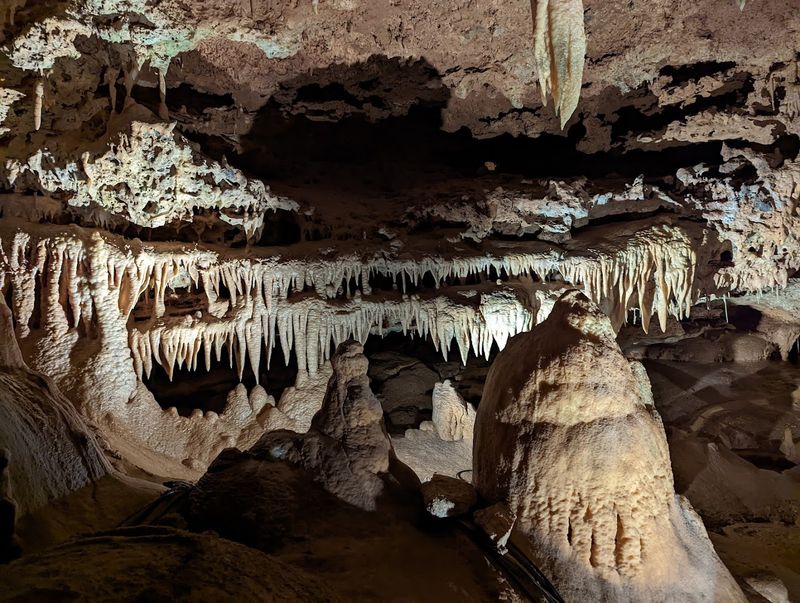
The main tour takes you past formations with names like Ivory Falls and the Flowing Stone of Time, a massive flowstone cascade that looks like a frozen waterfall. One chamber features a shallow lake that perfectly mirrors the ceiling, creating a disorienting effect where up and down seem to merge. The cavern stays active, meaning water still drips and formations still grow, adding microscopic layers year after year.
Multiple tour options let you choose your adventure level. The standard tour covers about three-quarters of a mile on paved trails with theatrical lighting that highlights the best features. Adventure tours venture into undeveloped sections where you’ll climb over breakdown rocks and squeeze through tighter passages.
There’s even a summer-only option that focuses on the cave’s history as an Ice Age trap for animals.
The temperature hovers around 72 degrees, making it a popular escape during brutal Texas summers. Georgetown’s location north of Austin means you can easily combine a cave visit with exploring the charming downtown square. The visitor center displays some of those ancient bones found during the initial exploration, giving context to the cavern’s deep history.
What started as a construction surprise has become one of Central Texas’s most accessible underground adventures, proving that sometimes the best discoveries happen completely by accident when you’re just trying to build a road.
4. Devil’s Sinkhole (Rocksprings)
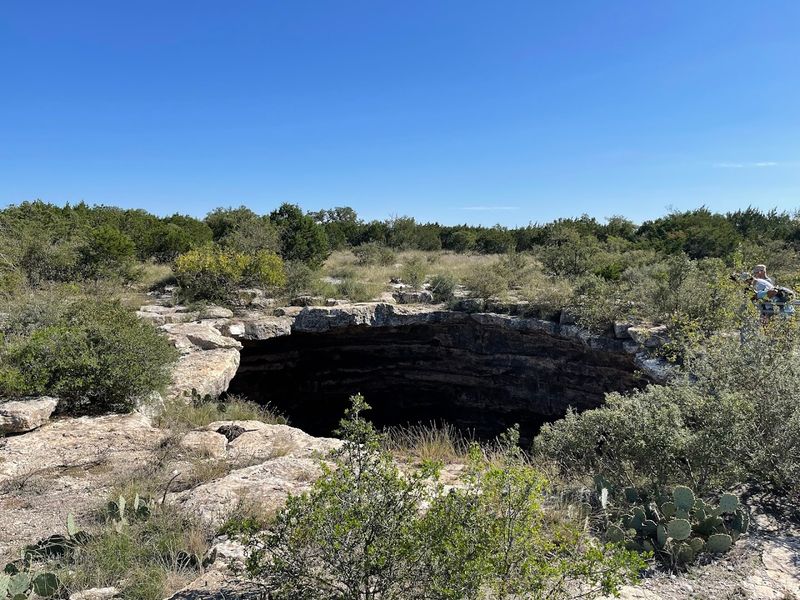
Picture a vertical shaft plunging 140 feet straight down into the earth, so deep that early settlers thought it must lead to hell itself. That’s how this natural wonder got its ominous name, though the real residents are far less frightening than demons. Every summer evening, millions of Mexican free-tailed bats spiral out of the darkness in a living tornado, heading out for their nightly insect hunt across the Edwards Plateau.
The sinkhole formed when the roof of an underground cavern collapsed, creating a circular opening about 40 feet across. Below that entrance lies a room roughly the size of a football field, with passages extending even deeper into the limestone. The bats roost on the ceiling during the day, and their guano has piled up over centuries, creating its own unique ecosystem of cave-adapted creatures.
Access requires advance reservations through the Nature Conservancy, which manages the site to protect both the bats and the fragile cave environment. Evening bat flight tours happen from May through October when the colony is in residence. You’ll stand at the rim as darkness falls, watching the bats emerge in waves that can last for hours.
The sound of their wings creates a rushing noise like wind through trees.
Getting there involves a bumpy ride across ranch roads in Edwards County, about two hours west of San Antonio. The remoteness adds to the experience, emphasizing how wild and untouched this place remains. Tours also include information about white-nose syndrome and other threats facing bat populations.
Morning tours let you watch the bats return from their night of hunting, pouring back into the hole like a reverse waterfall. Either way, witnessing this daily migration feels like watching something from a nature documentary, except you’re standing right there as millions of wings beat against the Hill Country sky.
5. Cascade Caverns (Boerne)
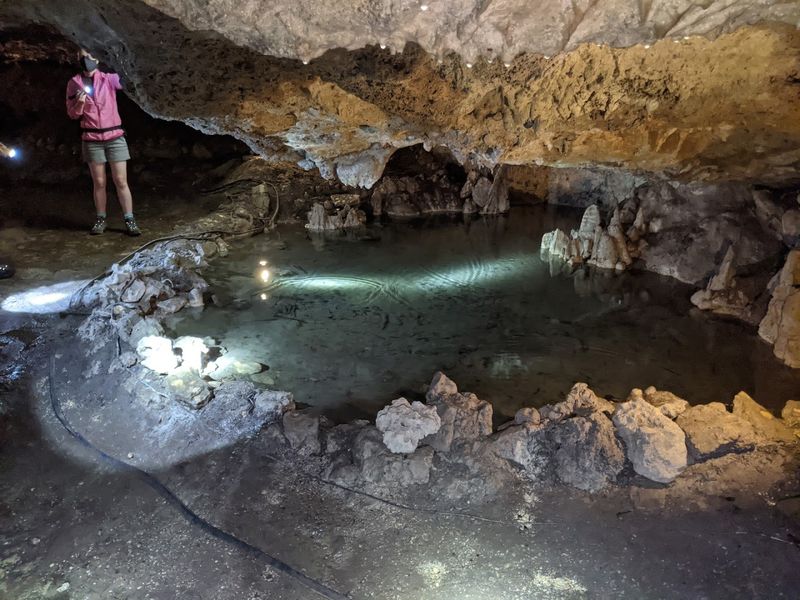
Most Texas caves are bone-dry or feature only the occasional drip, but this Boerne gem boasts a 100-foot underground waterfall that still flows during wet seasons. The sound of rushing water echoing through limestone chambers creates an atmosphere completely different from typical cave experiences. Spanish explorers knew about the entrance in the 1700s, but serious exploration didn’t happen until the 1870s when locals began giving lantern-lit tours.
The waterfall is the headliner, but the cavern delivers plenty of other visual treats. Massive columns connect floor to ceiling where stalactites and stalagmites have fused together over millennia. Delicate helictites twist in seemingly impossible directions, defying gravity as they grow.
The formations show off colors from pure white to deep orange, depending on the minerals present in the water that formed them.
Tours wind through several rooms, each with its own character and signature features. The paths are paved but include some stairs and uneven sections, so wear shoes with good grip. Your guide will point out formations that resemble familiar objects, from curtains to soda straws, explaining the geological processes behind each type.
The cavern maintains a constant 63 degrees, which feels refreshingly cool after the Texas heat outside.
The property above the cave includes walking trails and picnic areas, plus opportunities to pan for gemstones, a kid-friendly activity that extends the visit beyond just the underground portion. Located in the Hill Country between San Antonio and Boerne, the cavern makes an easy day trip from either city. The family-owned operation keeps things relaxed and informative without being overly commercialized.
That underground waterfall alone sets this cave apart from others in the region, offering a sensory experience where you don’t just see the cave but hear its living, flowing water system at work.
6. Kickapoo Cavern (Brackettville)
Way out in Kinney County, where ranches stretch for miles and cell service becomes a suggestion rather than a guarantee, sits one of Texas’s most pristine cave systems. The state park that protects it doesn’t offer daily tours or paved trails. Instead, you need to book ahead for guided trips that venture into wild, undeveloped passages where you’ll experience the cave much like early explorers did, minus the torches and significantly better safety equipment.
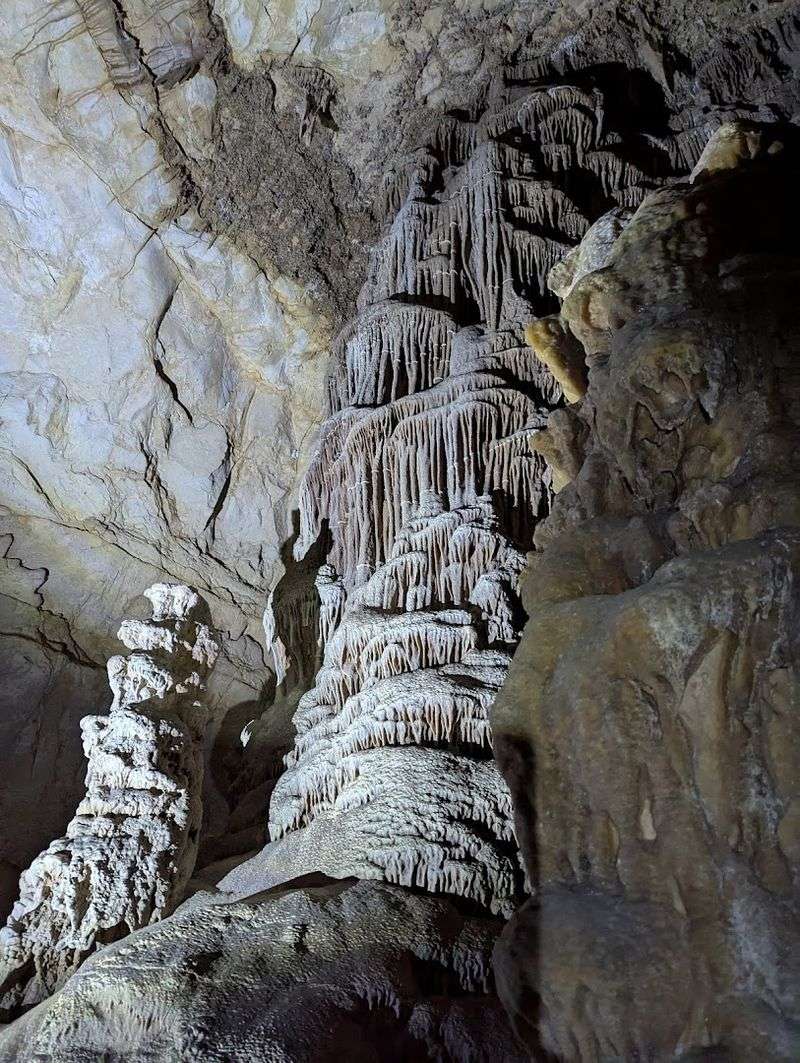
The cavern system includes more than 20 caves, with Kickapoo Cavern itself featuring over a mile of mapped passages. Formations here have grown undisturbed for thousands of years, creating displays of delicate soda straws, massive flowstone deposits, and crystalline pools. The lack of artificial lighting means you’ll explore by headlamp, which somehow makes the formations seem even more spectacular when your beam catches them.
Several caves in the park host bat colonies, including Brazilian free-tailed bats that migrate here each summer. The park offers special bat flight viewing programs where you can watch these nocturnal hunters emerge at dusk. Green Cave, another feature of the park, gets its name from the algae that grows near the entrance where sunlight penetrates, creating an emerald glow.
This isn’t a casual tourist stop. The park sits nearly two hours west of San Antonio, and tours require physical fitness since you’ll be climbing, crawling, and navigating uneven terrain. Helmets are mandatory, and you’ll likely get muddy.
But for adventurous souls, that’s exactly the appeal. You’re not walking through a polished attraction but experiencing a genuine wild cave, complete with the thrill and slight nervousness that comes from being deep underground in passages where every footstep matters. The remoteness and the effort required make discovering these chambers feel like a real achievement, a genuine exploration rather than a simple sightseeing stop.
7. Caverns of Sonora (Sonora)
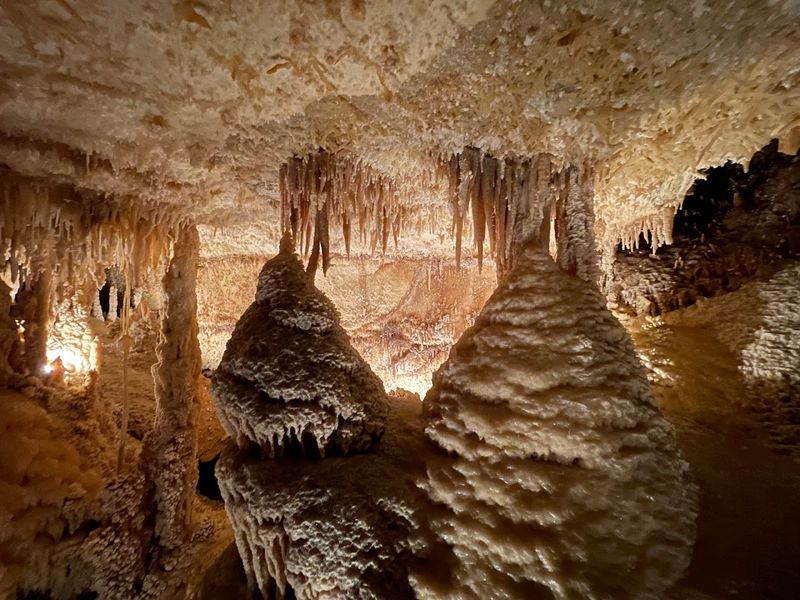
Cave experts and geologists consistently rank this as one of the most beautiful show caves in the entire world, not just Texas. What sets it apart is the sheer density and variety of formations packed into its chambers. Everywhere you look, something extraordinary catches your eye: clusters of helictites that twist like crystal corkscrews, delicate aragonite needles, butterfly-shaped formations, and displays so intricate they seem designed by a particularly ambitious jeweler rather than slow geological processes.
Discovered by accident in 1905 when a dog fell into a small opening, the cavern remained relatively unknown until serious exploration began in the 1950s. What explorers found was a wonderland of speleothems, the technical term for cave formations. The cavern is still actively growing, with water continuing to deposit minerals and build formations molecule by molecule.
Some areas feature formations so delicate that a touch would destroy decades of growth.
The standard tour covers about two miles of walking, including some stair climbing, and takes roughly two hours. Your guide will point out specific formations with wonderfully descriptive names like the Butterfly, the Soda Straws Room, and the Crystal Palace. Photography is allowed, and you’ll want your camera because these formations photograph beautifully.
The cavern stays at 70 degrees year-round, comfortable enough that you won’t need heavy layers.
Located in West Texas near the town of Sonora, the cavern requires a bit of a drive from major cities, about three hours from San Antonio or two from San Angelo. That isolation has helped preserve its pristine condition. The tour is more educational than theatrical, focusing on geology and formation processes rather than dramatic lighting and music.
For anyone serious about caves or just appreciating natural beauty, this is a must-see destination. The formations here represent millions of years of patient mineral deposition, creating an underground gallery that rivals anything human artists could imagine.
8. Colorado Bend State Park Caves (Bend)
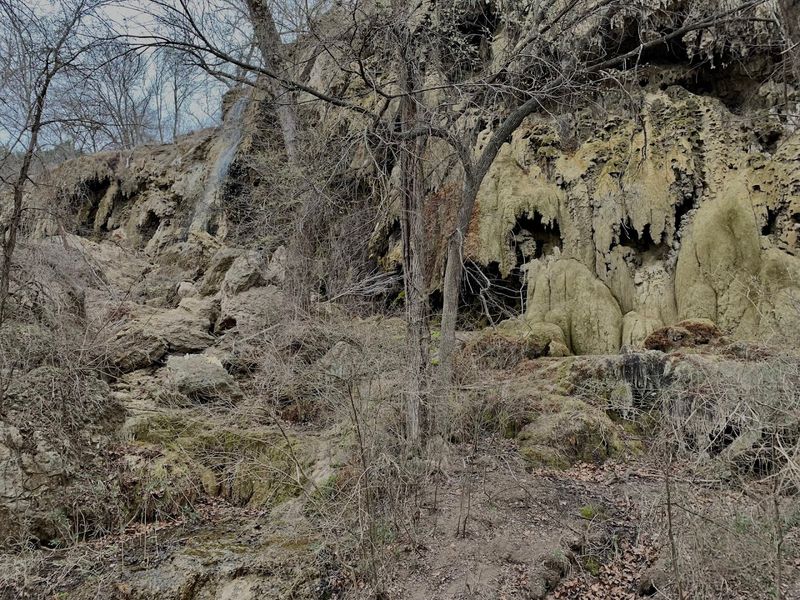
This remote state park along the Colorado River hides multiple cave systems, including Gorman Cave, which requires a guided tour and a willingness to get seriously adventurous. Forget paved paths and handrails; exploring here means crawling through passages, squeezing past tight spots, and navigating by headlamp through chambers that few people ever see. The park’s isolation in Lampasas and San Saba counties means you’re truly getting away from civilization.
Gorman Cave extends for miles underground, with different tour options depending on your fitness level and courage. The wild cave tour involves belly crawling, chimneying up vertical sections, and wriggling through spaces that test your comfort with enclosed areas. You’ll emerge muddy, tired, and grinning from the accomplishment.
Less intense tours explore the more accessible sections while still giving you a taste of real caving rather than a sanitized tourist experience.
The park itself deserves exploration beyond just the caves. Gorman Falls, a 70-foot waterfall draped in lush vegetation, requires a challenging hike but rewards you with one of Texas’s most photogenic water features. The Colorado River offers swimming holes, and the night skies are spectacular thanks to minimal light pollution.
Primitive camping lets you extend your visit and really disconnect from modern life.
Access requires planning since the park sits about two hours northwest of Austin on winding roads that feel progressively more remote. Tours book up quickly, especially on weekends, so reserve your spot well in advance. You’ll need to bring your own water, snacks, and a sense of humor about getting dirty.
The cave maintains cool temperatures, but you’ll work hard enough that you might not notice. This is caving for people who want the real experience, not a sanitized version. The reward is discovering underground spaces that remain wild and challenging, where you’ll earn every view and formation through physical effort and a bit of courage.
9. Enchanted Rock Secret Cave (Fredericksburg)
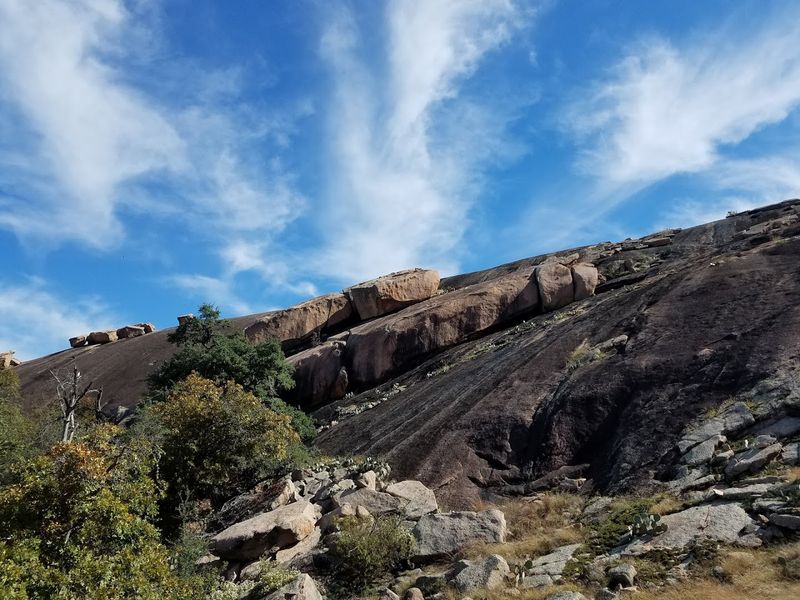
Everyone knows about the massive pink granite dome that defines Enchanted Rock, but fewer visitors discover the small caves and rock shelters hidden around its base and along surrounding formations. These aren’t grand caverns with stalactites but rather weathered openings in the ancient granite, created by different geological processes than the limestone caves found elsewhere in Texas. Some shelters show evidence of use by Native Americans who sought refuge here centuries ago.
The most accessible caves require scrambling over boulders and exploring the spaces between massive granite slabs. These formations, called exfoliation caves, form when the outer layers of granite peel away like an onion, creating gaps and overhangs. The rock’s pink color comes from feldspar crystals, and up close, you can see the individual mineral grains that make up this billion-year-old stone.
Some openings are shallow shelters, while others tunnel deeper into the rock piles.
Exploring these spaces adds an extra dimension to hiking Enchanted Rock. After climbing to the summit for panoramic Hill Country views, venture around the base to discover these hidden nooks. The contrast between the exposed dome and the sheltered caves creates different microclimates, with cooler air and unique plant life near the openings.
Always watch for wildlife, as these shelters attract everything from birds to small mammals seeking shade.
The state park sits just north of Fredericksburg, making it an easy add-on to visiting that charming German-influenced town. Entry requires a day-use permit, and the park often reaches capacity on nice weekends, so arrive early or reserve ahead. Bring plenty of water since the exposed granite reflects heat intensely.
While the caves aren’t the main attraction, discovering them feels like finding secret passages in a familiar place. They remind you that even well-known landmarks hide surprises for those willing to explore beyond the obvious trails, offering intimate spaces that contrast beautifully with the dome’s grand scale.
10. Natural Bridge Caverns (San Antonio)
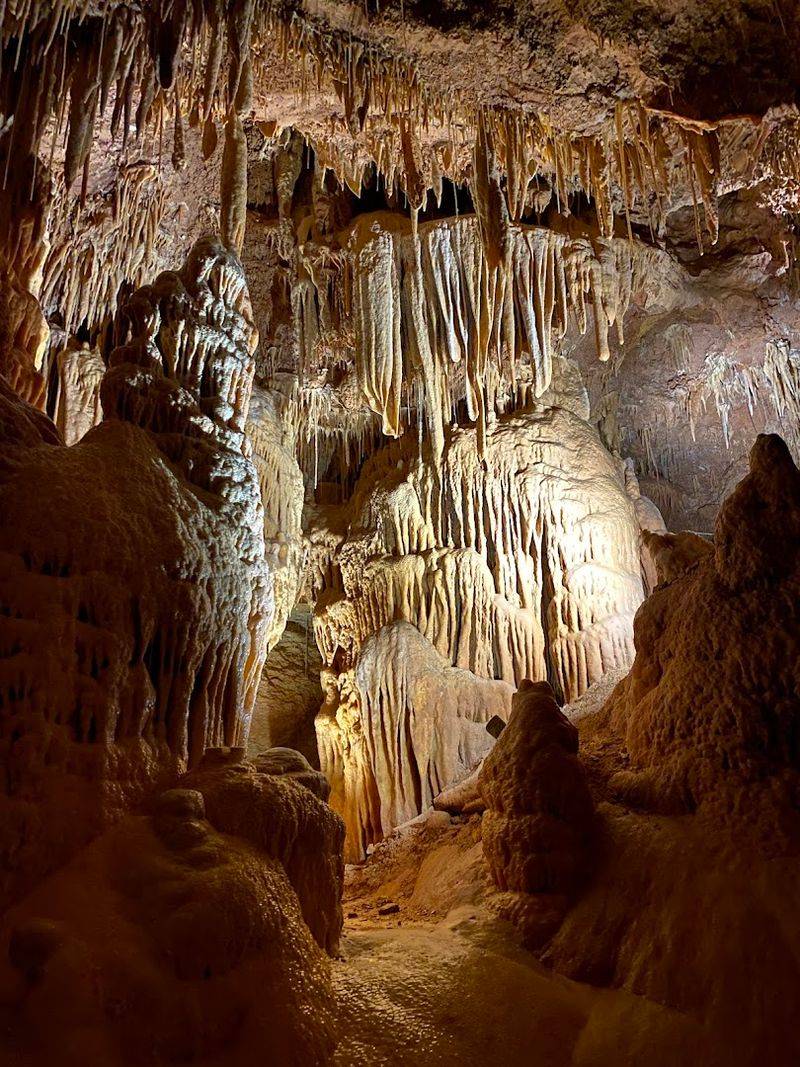
Named for the 60-foot limestone bridge spanning the entrance, this is Texas’s largest commercial cavern and one of the most spectacular show caves in the United States. College students discovered it in 1960, crawling through a small opening that led to massive chambers decorated with formations on a scale that defies easy description. Today’s tours descend 180 feet below the surface, winding through rooms where stalactites hang like crystal chandeliers and flowstone cascades down walls in frozen waves.
The sheer size impresses immediately. The largest room, called the Hall of the Mountain King, stretches so vast that your flashlight beam barely reaches the far walls. Formations here include everything from delicate soda straws to massive columns thicker than tree trunks.
The lighting design uses colored spots to highlight specific features without overwhelming the natural beauty, letting the formations’ own textures and colors shine through.
Multiple tour options cater to different interests and physical abilities. The standard Discovery Tour covers the main chambers on developed trails with handrails and steps. Adventure tours venture into undeveloped sections, requiring helmets and a willingness to get muddy.
There’s even a specialized tour focusing on the cavern’s formation and geology, perfect for science enthusiasts. Above ground, the property includes a zip line course, a ropes challenge, and a maze, making it a full day’s entertainment.
Located just outside San Antonio near New Braunfels, the caverns are easily accessible from major highways. The temperature underground stays around 70 degrees year-round, providing relief from summer heat. Tours last about 75 minutes and involve walking about three-quarters of a mile, including climbing some stairs on the return journey.
The facility is professionally run with modern amenities, making it family-friendly while still showcasing genuinely impressive natural features. This is cave tourism done right, balancing accessibility with preservation, letting visitors experience underground wonders without sacrificing the formations’ integrity or the sense of awe that comes from standing in chambers that took millions of years to create.