Just off Charleston’s postcard skyline, a small island fort sits in the harbor like a forgotten secret. Castle Pinckney does not have the fame of Fort Sumter, but that quiet obscurity is exactly what makes it so fascinating.
Looking at it today, you get the eerie feeling that history paused here and never fully restarted. If you love places that seem suspended between ruin, memory, and myth, this harbor castle pulls you in fast.
1. A Forgotten Fort in Plain Sight
Castle Pinckney feels almost unreal because it hides in plain sight.
From the Charleston waterfront, you can spot this low brick fort resting on its tiny island, yet many visitors never give it more than a passing glance.
That contrast is what grabbed me immediately, because it looks important, mysterious, and oddly overlooked all at once.
Built in the early nineteenth century, the fort was designed to protect Charleston Harbor after earlier coastal defenses proved vulnerable.
Its compact footprint and rounded walls give it a castlelike appearance, which explains why the name sticks so easily in your mind.
Even without stepping inside, you can sense that it belongs to a very different chapter of the harbor.
Today, the structure carries a quiet, almost suspended mood that photographs never fully capture.
You are looking at military history, maritime history, and urban history layered together.
Few abandoned sites feel this close to a city and this distant from modern life.
2. Why It Looks Like Time Stopped
What makes Castle Pinckney feel stuck in time is not just its age.
It is the way the fort seems removed from the normal rhythm of Charleston, even while boats, traffic, and city life move around it every day.
That separation gives the island a strange stillness, like history settled there and refused to leave.
The brick walls show wear, the grounds look quiet and spare, and the entire setting lacks the polished presentation you find at heavily visited landmarks.
There are no crowds shaping your impression, no gift shop softening the atmosphere, and no busy interpretation center telling you exactly what to feel.
Instead, the place asks you to imagine its earlier purpose and fill in the missing noise yourself.
I think that is why it lingers in your mind.
Castle Pinckney does not perform history for visitors.
It simply sits there, weathered and silent, letting the harbor winds, changing light, and long passage of years tell the story.
3. Its Early Role in Harbor Defense
Castle Pinckney was part of Charleston Harbor’s layered defense system during a period when coastal cities worried deeply about attack from the sea.
After the War of 1812 exposed weaknesses in American defenses, stronger harbor fortifications became a national priority.
This little island fort grew from that urgency, even if it later slipped into the shadow of larger sites.
Its position in the harbor mattered because any defensive installation here could help monitor movement through important shipping approaches.
Charleston was a valuable port, and protecting it meant protecting trade, military movement, and civic confidence as well.
In that sense, Castle Pinckney was never just an isolated outpost.
It was part of a wider strategy meant to signal readiness and control.
What fascinates me is how much ambition was packed into such a compact fort.
You can still read the logic of its placement from the water.
The island may look small now, but its original military purpose was serious, calculated, and tied directly to Charleston’s survival.
4. A Site Touched by the Civil War
Like so many places in Charleston Harbor, Castle Pinckney carries Civil War associations that deepen its emotional weight.
Before Fort Sumter became the war’s defining flashpoint, harbor defenses across Charleston were already politically and militarily significant.
That means this smaller fort existed within the same charged landscape where secession, strategy, and symbolism collided.
Castle Pinckney was used by Confederate forces during the early war period, and its position linked it to the wider network of batteries and forts surrounding the city.
Even if it never gained the dramatic fame of nearby landmarks, it participated in the same tense world of preparation, communication, and control.
Knowing that changes how you look at the site, because the quiet ruin starts to feel connected to one of the nation’s most studied conflicts.
There is something haunting about that contrast.
The island appears calm now, almost passive, yet it once belonged to a harbor on edge.
When you remember that, the silence around Castle Pinckney feels heavier and more meaningful.
5. The Island Setting Adds to the Mystery
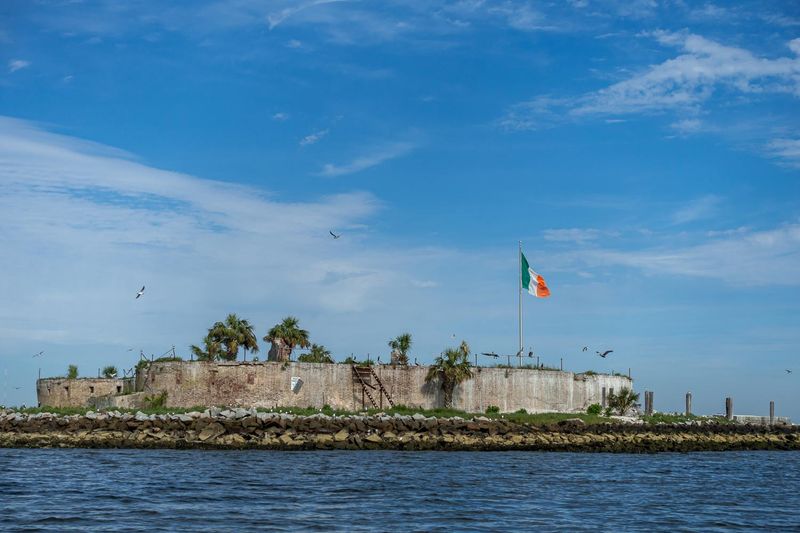
Part of Castle Pinckney’s power comes from its setting on a tiny island in the harbor.
Water creates distance in a way that streets never can, so even a short stretch feels like a protective barrier between the fort and the modern city.
That separation turns an already historic structure into something more cinematic and mysterious.
From shore, you are forced to experience the fort at a slight remove.
You cannot casually wander over the way you might approach an old building downtown, and that changes your relationship with it immediately.
Instead of consumption, the site invites contemplation.
You look, wonder, and mentally piece together what life might have been like for soldiers stationed in that exposed, isolated place.
The harbor itself heightens the mood with shifting light, moving tides, and broad open views.
On clear days, Castle Pinckney can appear serene, almost delicate against the water.
In darker weather, it seems lonelier and more severe, which only reinforces the feeling that time behaves differently there.
6. Why It Lives in Fort Sumter’s Shadow
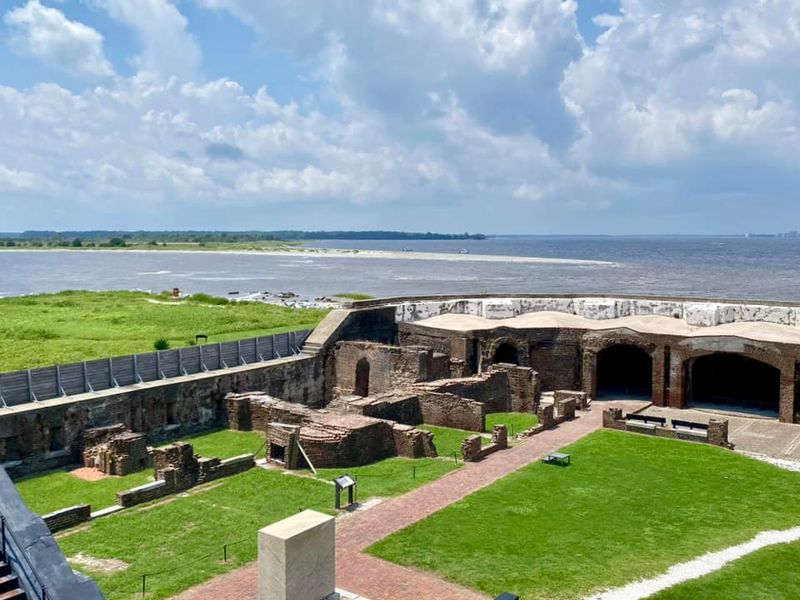
One reason Castle Pinckney remains so little known is simple: Fort Sumter dominates Charleston Harbor’s historical narrative.
When most people think about the harbor, they think about the opening shots of the Civil War, organized tours, and one of the country’s most recognizable military sites.
Against that enormous legacy, a smaller abandoned fort can easily disappear from public attention.
Yet that lesser fame is exactly what makes Castle Pinckney so compelling.
It feels more elusive, less interpreted, and somehow more intimate because you have to seek it out mentally as much as visually.
Instead of arriving with a fully scripted story already attached, you approach it with curiosity and maybe a little uncertainty.
That opens space for a different kind of connection.
I would never call it a replacement for Fort Sumter, because the two sites carry different weights.
But Castle Pinckney adds texture to the harbor’s history.
It reminds you that famous events happened within a larger defensive world filled with places that mattered, then quietly slipped from common memory.
7. What You Can Actually Experience Today
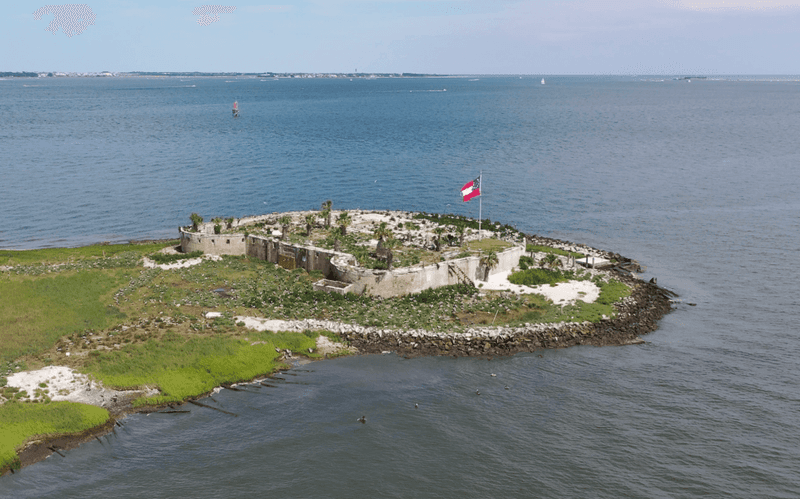
For most people, experiencing Castle Pinckney today means viewing it from a distance rather than exploring the interior up close.
That limitation might sound disappointing at first, but it actually contributes to the site’s unusual appeal.
Because access is restricted, the fort remains something you observe, imagine, and interpret from the edges of the harbor.
You might notice it from the waterfront, from a boat, or during broader views across Charleston Harbor, and each vantage point changes the feeling slightly.
Some angles emphasize the fort’s compact scale, while others make it look more imposing against the open water.
In every case, the experience is less about checking off a tourist stop and more about noticing a fragment of history that many people miss entirely.
That kind of encounter can be surprisingly memorable.
You are not overwhelmed with information or guided through a polished route.
Instead, Castle Pinckney works on your imagination, which is often how abandoned places become unforgettable in the first place.
8. The Beauty of Weathered Brick and Silence
Castle Pinckney is not grand in the way many famous ruins are grand.
Its beauty comes from weathered brick, restrained form, and the quiet dignity of a structure that still holds together after generations of changing tides and shifting priorities.
You can sense the wear of salt air and time, and that patina gives the fort much of its emotional pull.
There is also something deeply effective about the site’s silence.
Without heavy visitation or commercial framing, the architecture speaks through shape, texture, and placement rather than spectacle.
Rounded walls, low profiles, and the simple geometry of defense all become more noticeable when nothing distracts from them.
It is a reminder that military architecture can feel unexpectedly poetic once its original urgency has faded.
I think that is why the fort photographs so well in certain light.
Morning haze, gray clouds, or late afternoon sun can make the bricks glow or darken dramatically.
Every change in atmosphere seems to reveal another layer of age, solitude, and endurance.
9. Why Castle Pinckney Stays With You
Castle Pinckney stays with you because it offers something increasingly rare: a sense of unresolved history.
It is clearly important, clearly old, and clearly connected to Charleston’s larger story, yet it resists easy packaging.
That unfinished quality makes the fort feel more alive in your imagination than many fully restored places ever do.
When you think back on it, you remember more than bricks and harbor water.
You remember the feeling of seeing a place that has not been entirely absorbed into the modern tourism machine, a place still carrying gaps, silences, and unanswered questions.
Those absences are not weaknesses.
They are what give Castle Pinckney its atmosphere and emotional force.
If you are drawn to locations that feel suspended between past and present, this harbor fort is unforgettable.
It does not need dramatic crowds or elaborate presentation to matter.
Castle Pinckney simply waits in the water, quietly proving that overlooked places can sometimes leave the deepest impression.