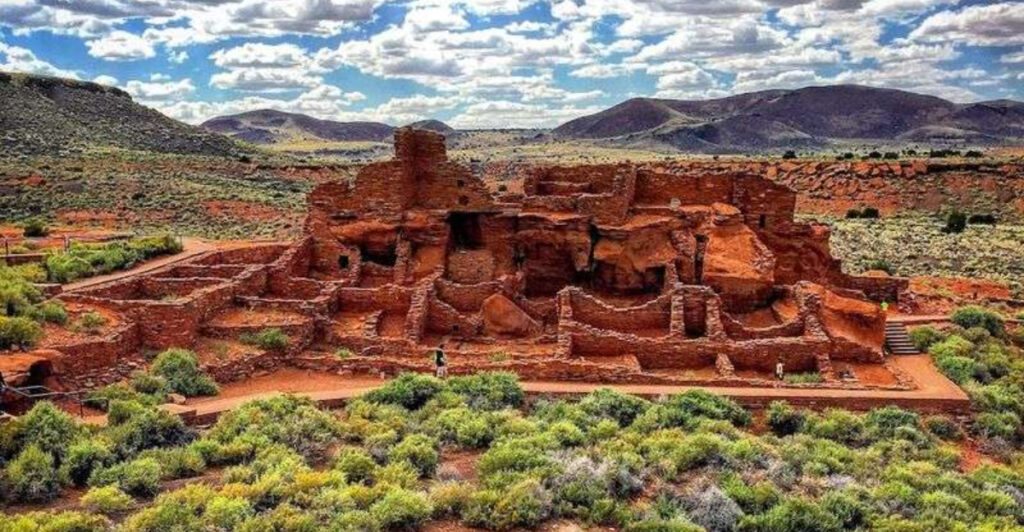
You do not need a passport to get that ancient-city-rising-from-the-desert feeling. At Wupatki National Monument, stone ruins emerge from the red earth with the kind of quiet presence that instantly changes your pace. The setting feels vast and almost cinematic, thanks to the wide Arizona sky, volcanic landscape, and deep stillness surrounding the site.
What could have been a quick roadside stop ends up feeling much bigger once you start walking among the centuries-old structures. The combination of history, scenery, and atmosphere lingers long after the drive ends. If you want a destination with real wow factor, this Arizona loop delivers beautifully.
Red Stone, Big Sky, Instant Wow Factor
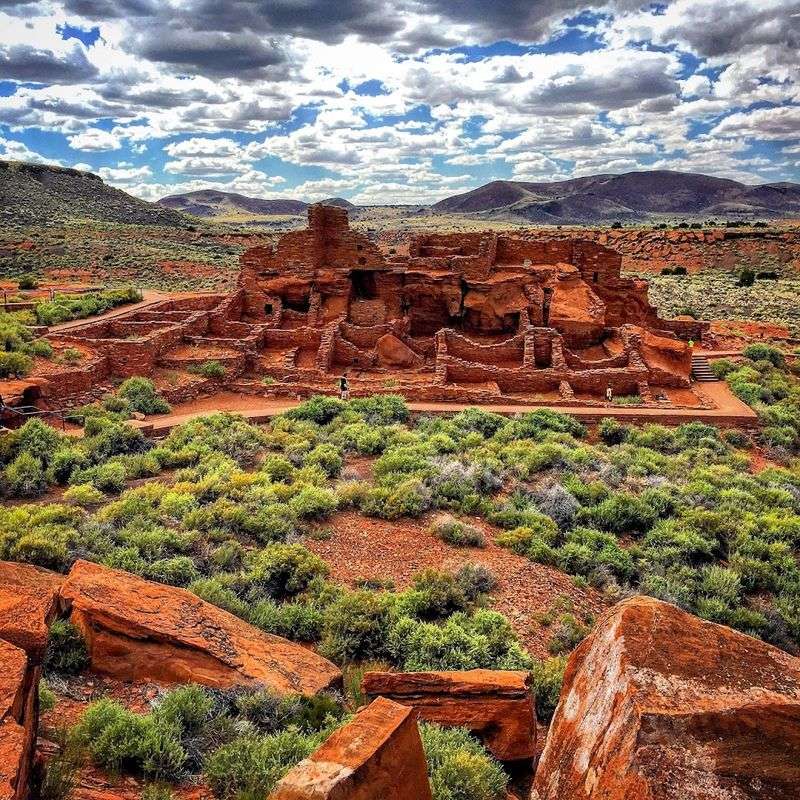
The first thing that hits me at Wupatki is how clean the scene looks. Red stone walls stand against a huge Arizona sky, and the emptiness around them makes every line feel sharper.
You are not squeezing through crowds or hunting for the good angle because the setting does most of the work for you.
The approach feels dramatic in a quiet way. The land rolls out in broad, open stretches, and the ruins appear like they belong exactly where they are, not staged, not polished, just grounded.
That is why people reach for the Machu Picchu comparison, even though Wupatki has its own desert personality and does not need borrowed mystique.
What strikes you the most is the contrast. The monument feels both exposed and protected, with architecture that looks tough enough to hold its shape against wind, sun, and time.
From the first stop, you get that rare travel moment where scale, color, and silence all click at once. If you are coming from Flagstaff, the shift in scenery adds even more payoff.
Pines give way to open country, volcanic textures, and sandstone tones, so by the time you arrive, the monument already feels like a different world.
Before you even start walking, Wupatki makes a strong case for itself as one of Arizona’s most visually striking historic places.
The Story Behind the Stone Walls
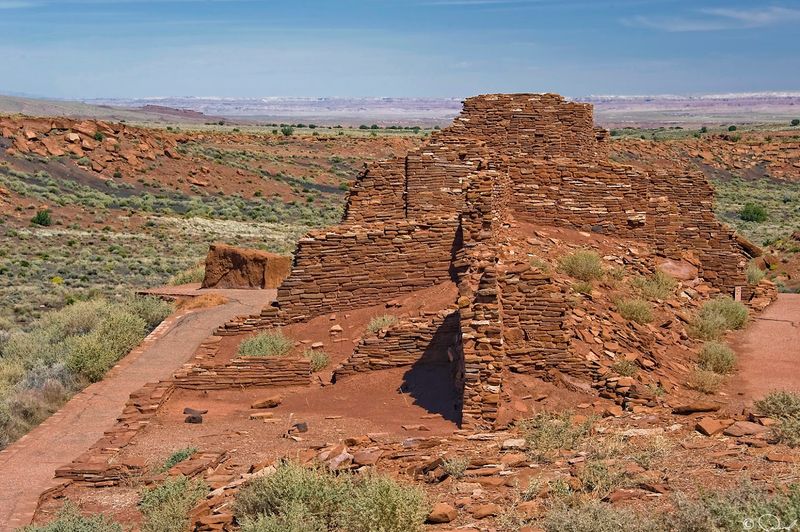
Long before it became a scenic stop for modern travelers, Wupatki was part of a lived-in landscape shaped by movement, adaptation, and connection. The story often shared here is not about one isolated settlement in the middle of nowhere.
It is about a place where communities gathered, exchanged ideas, and built something substantial in a demanding environment.
One reason the site feels so layered is the way culture and geology overlap. After volcanic activity changed the surrounding region centuries ago, people adapted to new conditions and made use of the opportunities the land offered.
That context gives the stone walls more weight because you are not just looking at buildings, you are looking at evidence of response, resilience, and planning.
Wupatki is still tied to living Indigenous traditions. For many Native peoples, this is not frozen history sealed behind glass.
It remains a meaningful cultural landscape, and that awareness changes how you move through the monument if you are paying attention.
The site feels richer when you treat it as more than a photo stop. You begin to notice the placement of structures, the practicality of construction, and the wider network of human presence across the desert.
Wupatki does not shout its story, but once you understand the basics, every wall and pathway starts speaking with much more force.
Walking Through Wupatki Pueblo
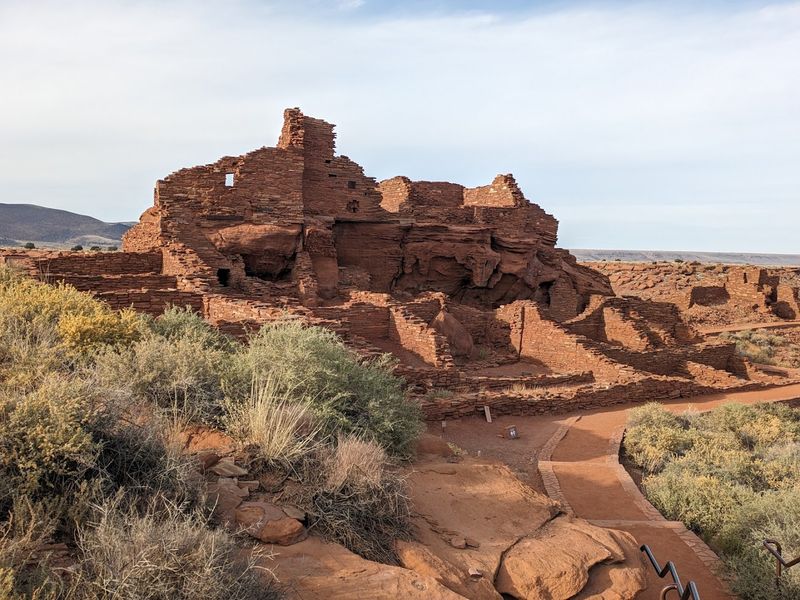
Up close, Wupatki Pueblo is where the monument stops being an idea and becomes a presence. The masonry, the stacked forms, and the layout make it easy to imagine this as a serious community space rather than a romantic ruin in the middle of nowhere.
Even from the trail, the structure has a confident, almost urban feel. The details are what pull me in. You notice how the pueblo works with the rock instead of fighting it, and how the walls seem tuned to the land’s color palette.
Nothing feels decorative for the sake of decoration, which somehow makes the design more impressive, not less.
There is also a surprising amount to think about beyond the main walls. Features associated with ceremony, gathering, and daily life hint at a place that was socially active, not just architecturally interesting.
When you slow down, the site starts to read less like a single building and more like a carefully organized center of activity.
The walk is not difficult, but rather rewarding. The paths are manageable for many visitors, and the views keep changing as you move around the structure.
By the end, what stays with you is not only the age of the place, but the intelligence behind it and the sense that this high desert location once held a very full human world.
The Surrounding Views Are Half the Experience
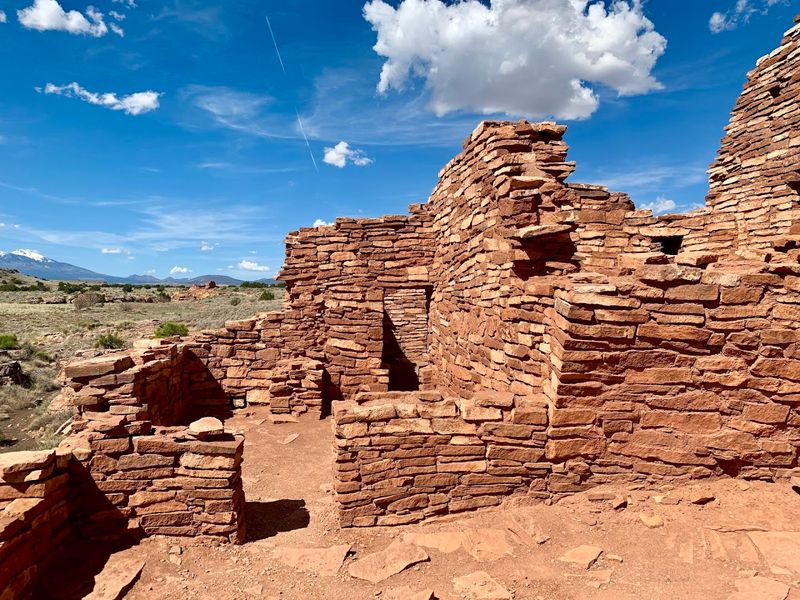
Step away from the walls for a minute and the bigger magic shows up. Wupatki sits in a landscape that feels wide open in every direction, with desert grass, cinder hills, layered earth tones, and distant mountains creating a view that never looks flat.
The monument is impressive, but the surrounding space is what gives it emotional scale. This is the kind of place where weather and light completely change the mood.
Morning can make the stone look crisp and cool, while late-day sun pulls out warmer reds and browns that turn the ruins almost luminous. Even the drive between stops has that windshield-stare effect where you keep saying, just one more overlook.
The scenery does not compete with the archaeology. Instead, it explains it. The openness helps you picture visibility, movement, and why a settlement here would feel connected to a larger world rather than cut off from it.
On a clear day, the horizon seems endless, and that adds to the monument’s distinct personality. You are not visiting a ruin hidden in dense forest or wedged into a city edge.
You are moving through a cultural landscape where architecture and geography still make sense together, and that relationship is exactly what gives Wupatki its unforgettable visual punch.
The Best Time to Visit Wupatki
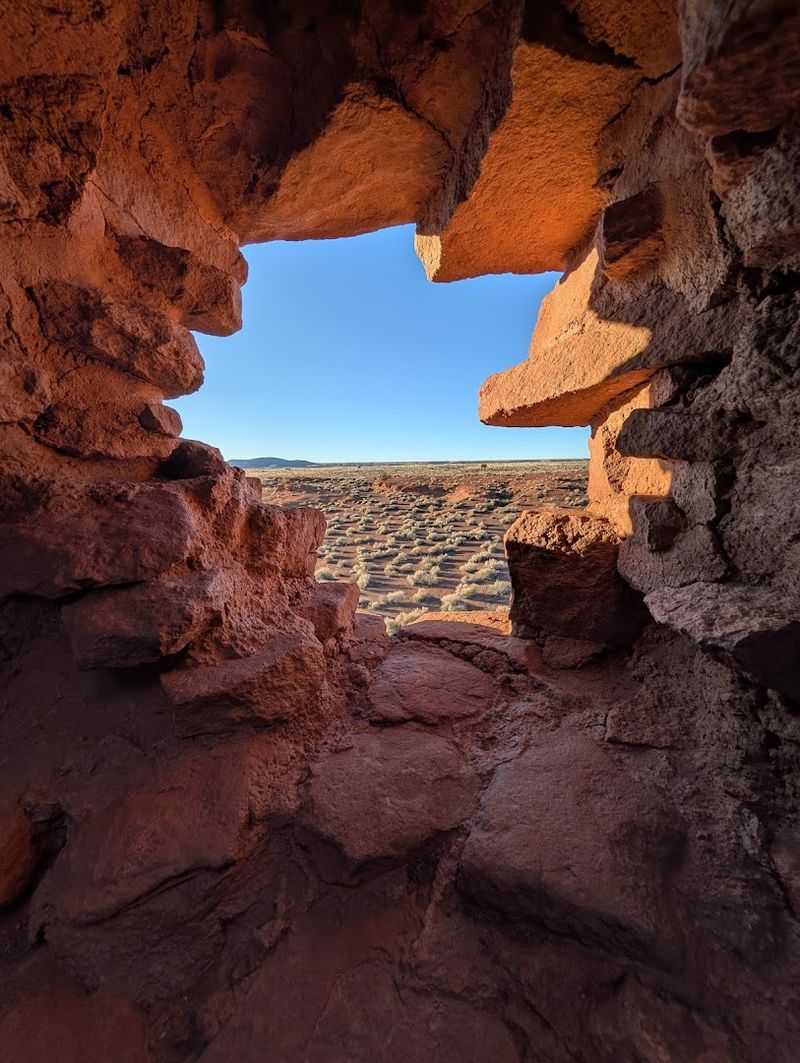
Timing matters here more than people expect. Wupatki is an outdoor experience with very little shade, so the season, the hour, and the quality of light all shape how much you enjoy it.
If you want the monument at its most comfortable and photogenic, cooler months and shoulder-season days are hard to beat.
Morning is my favorite window because the air tends to feel fresher and the site carries a calm, unhurried mood. Late afternoon is also excellent if you want warmer colors on the stone and a little more drama across the landscape.
Midday can still work, but the sun can flatten textures and make the open areas feel more intense. Another smart move is thinking beyond the monument itself.
The scenic loop and nearby volcanic terrain make this area especially satisfying when the weather invites longer stops, slower walks, and plenty of roadside pauses. A day with clear visibility also helps because distant features add so much to the overall experience.
If you are choosing one simple strategy, go early or go later and give yourself more time than you think you need. Wupatki rewards patience more than speed.
The best visit is not about racing through sites, it is about catching that sweet spot when the ruins, the desert light, and the quiet all line up perfectly.
How to Visit Without Stress
Here is the good news: Wupatki feels remote, but it is not hard to visit if you plan like a grown-up instead of winging it.
Most people reach it from the Flagstaff area, and the scenic road through the monument makes the journey part of the experience, not a boring connector. Once you are inside, the main sites are spread out enough to feel adventurous but not chaotic.
Start at the visitor center when it is open. It gives you context, current information, and a better sense of how to pace the loop, especially if you are trying to decide how many stops to make.
Reviews often mention that some trails are straightforward but not overloaded with on-site explanation, so a little orientation up front goes a long way.
Bring water, sun protection, and realistic expectations about amenities between stops. This is not the kind of place where you want to discover you forgot a hat, skipped snacks, or assumed every area would have extra services waiting for you.
The walks are generally manageable, but the dry, exposed setting means comfort depends on preparation. The practical tip is simple: do not rush the road. Pull over where allowed, look around, and let the changing terrain register.
Wupatki is one of those monuments where access is easy enough for a casual trip, but the experience gets much better when you give it a little intention.
Why Wupatki Stays With You
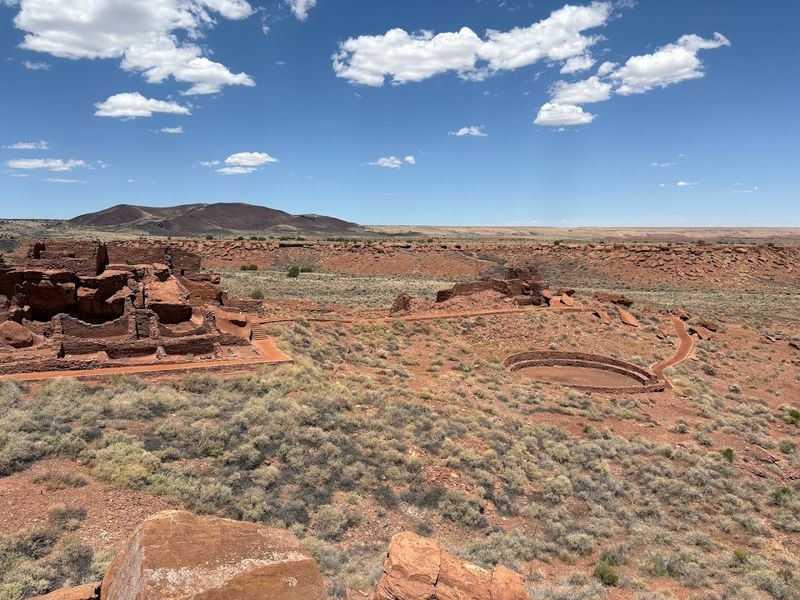
What makes Wupatki unforgettable is not just that it is old, scenic, or easy to add to an Arizona road trip. It is the way everything fits together so naturally that the place feels complete without trying too hard.
The ruins, the volcanic history, the open desert, and the sense of human ingenuity all land at once. The monument stays with you because it gives you something bigger than a checklist experience.
You walk away with visual memory, yes, but also with questions about how people lived well here, what daily life sounded like, and how this landscape continues to hold meaning. That mix of beauty and depth is hard to shake.
There is also a rare honesty to the site. Wupatki does not rely on spectacle, gimmicks, or overbuilt presentation to impress you.
It trusts the power of place, and if you meet it halfway, the reward is a visit that feels thoughtful, grounded, and unexpectedly moving.
So when people ask why they should go here instead of chasing some international comparison, the answer is simple: because Arizona already has a place that delivers awe on its own terms. Wupatki is not trying to be anywhere else.
It gives you stone, silence, sky, and story in one clean sweep, and that combination tends to linger long after the road bends away.