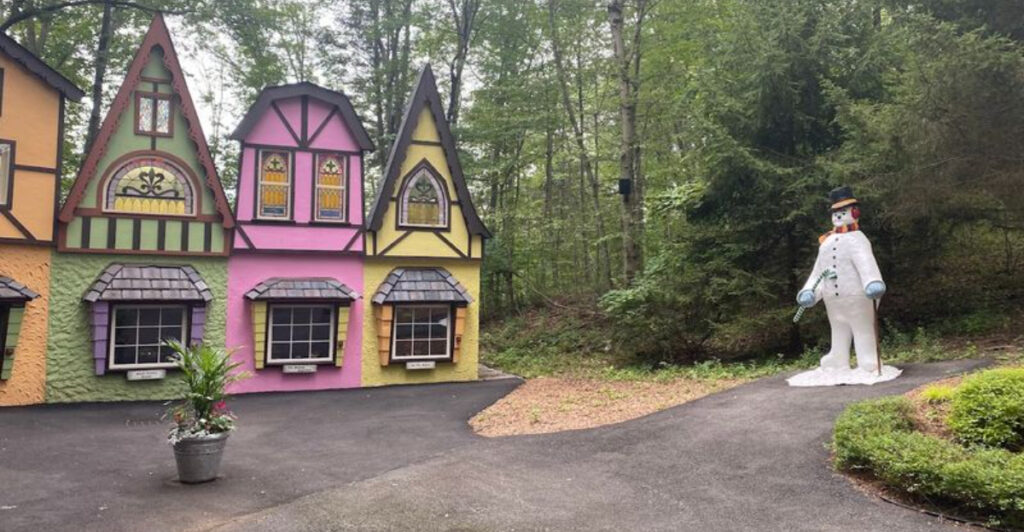
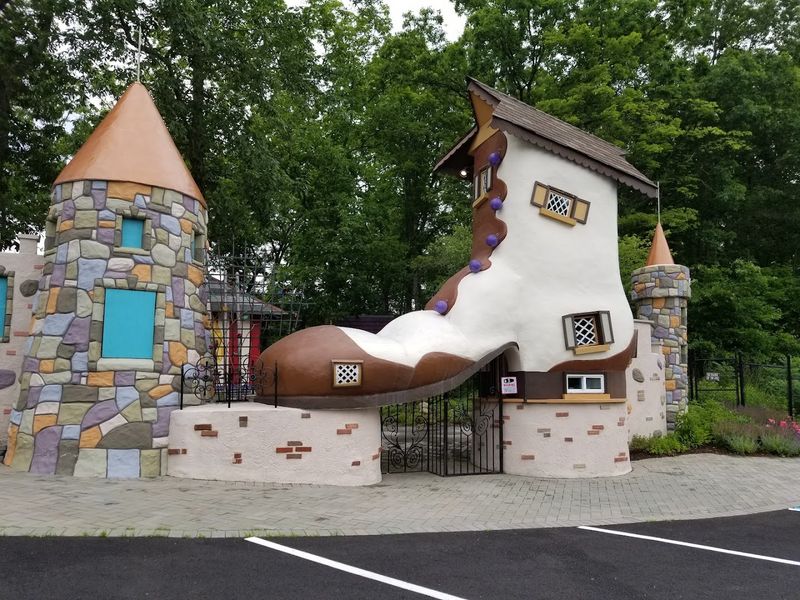
There is a giant shoe tucked into the woods of Oak Ridge, and somehow that is not the strangest thing waiting past the entrance. At Fairy Tale Forest, little cottages sit under the trees like somebody emptied a nursery-rhyme bookshelf onto a North Jersey hillside.
One minute you are looking at Humpty Dumpty. The next, you are standing near Snow White, Rapunzel, or the Three Little Pigs while kids press buttons, peer into windows, and decide which tiny house they would move into first.
The park is not trying to out-shout Six Flags or turn a family outing into a full-body endurance test. That is the charm.
This restored storybook park at 140 Oak Ridge Road feels smaller, slower, and more personal, with more than 20 near life-size fairy-tale cottages and displays arranged along winding paths under the trees.
A Storybook Escape Hidden in Oak Ridge
Blink and you might miss the kind of North Jersey magic people spend years assuming disappeared. Fairy Tale Forest sits in Oak Ridge, a quiet section of Jefferson Township in Morris County, not far from Route 23 but far enough from the usual retail-strip noise to feel like you took the wrong turn into somebody’s childhood memory.
The address is easy enough, 140 Oak Ridge Road, but the mood changes fast once you step inside. Instead of steel coasters, giant screens, and speakers blasting from every direction, the park leans on footpaths, trees, little houses, painted figures, and that old-fashioned thrill of wondering what is around the bend.
This is the rare family attraction where the scale is part of the appeal. The kids are not staring up at everything from adult ankle height.
They can walk right up to the Old Woman in the Shoe, stop at the School of Rhymes, look for Forest Gnomes, and recognize the stories before anyone has to explain the concept.
Sussex Skylands describes the park as a place where Grimm’s fairy tales and nursery rhymes are displayed through more than twenty near life-size cottages and statuary, including scenes from Hansel and Gretel, Humpty Dumpty, Rapunzel, Snow White, Cinderella, Goldilocks, Little Red Riding Hood, Pinocchio, Peter Pumpkin Eater, and the Three Little Pigs.
That mix is exactly why it works. A preschooler can enjoy the colors and characters.
A grandparent can enjoy the fact that the whole place still feels handmade. Parents can enjoy a day that does not require a spreadsheet, a locker rental, and a half-hour argument over a roller coaster height requirement.
The Family Dream That Built Fairy Tale Forest
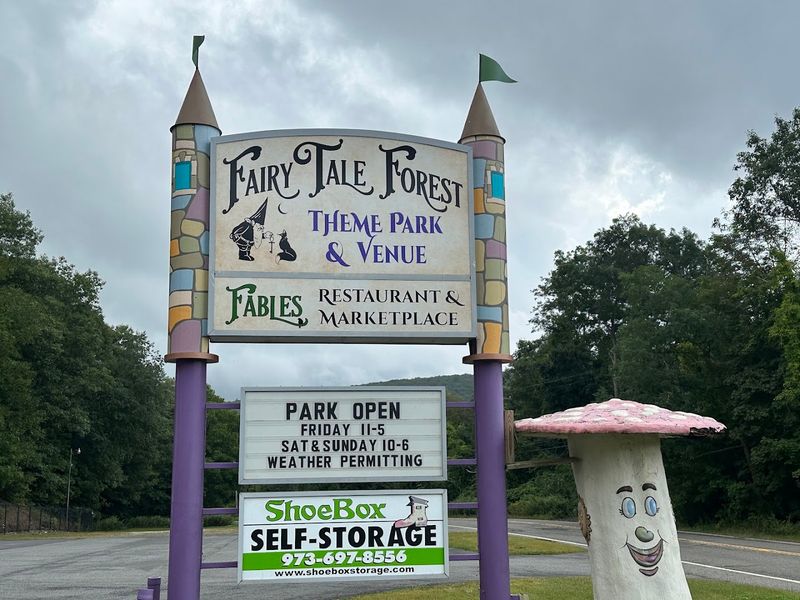
Paul Woehle Sr., a German immigrant and skilled craftsman, founded Fairy Tale Forest in 1957 after drawing on the Grimm stories his mother had read to him as a child. He did not simply buy a theme and install it.
He designed, built, painted, and shaped much of the park himself, with help from his sons, creating a fantasy village that felt personal from the start. That family-made quality matters because Fairy Tale Forest has never been just another kiddie park with a few cartoon cutouts.
The place was built around story, memory, and craftsmanship, right down to the Chapel of Happily Ever Afters, which Woehle modeled after the chapel he attended while growing up. Inside are two of his original paintings, one of Cinderella and one of Snow White, both heading toward their own happily-ever-after endings.
For decades, the park was woven into local family life. Its own history notes that the 1950s, 1960s, and 1970s were golden years, when locals, summer residents, school groups, camps, and church outings filled the paths.
In the 1970s, the park added a kiddie carousel, fire engine rides, a gift shop, magic shows, and storytelling from a small stage. Then the forest went quiet.
Fairy Tale Forest closed in 2003, and for years, it became the kind of place people remembered with a very specific sentence: “I went there when I was little.” Its return is part restoration, part family legacy. The park’s history says it has been reborn with the grounds once again led by a member of the founding family, which gives the comeback a little more weight than a simple reopening.
Why the Restored Cottages Feel So Nostalgic
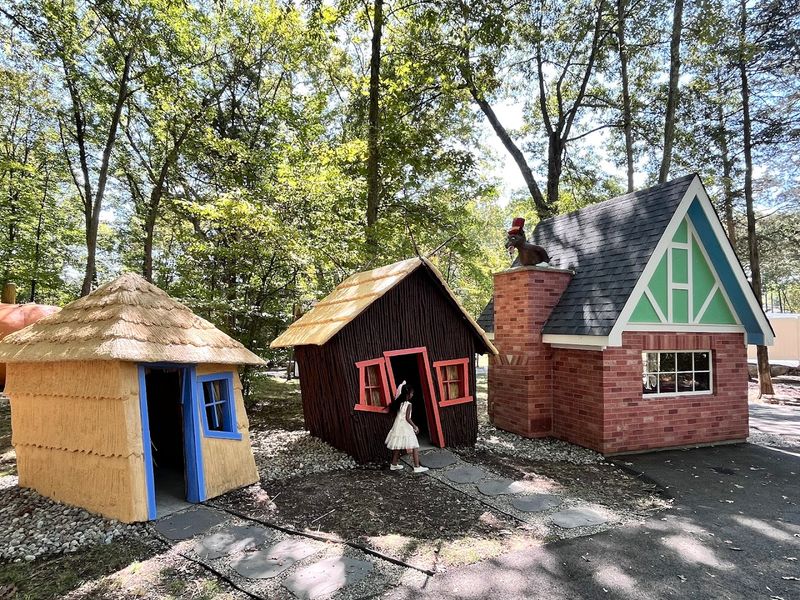
Nostalgia works best when it has texture, and Fairy Tale Forest has plenty of it. The cottages do not look like they were designed by committee to match a brand guide.
They look like storybook props that somehow survived weather, childhood, and changing tastes. The colors are bright but not slick.
The figures are charming without being polished into blandness. The signs, windows, tiny doors, and odd little shapes make the park feel closer to a hand-painted pop-up book than a modern attraction.
That is why the restoration is so important. It did not erase the weirdness.
It protected it. The attraction list still reads like a roll call from a very busy nursery bookshelf: Cinderella, Hansel and Gretel, Rapunzel, the Gingerbread Man, the Old Woman in the Shoe, the Shoe Cobbler inspired by The Elves and the Shoemaker, Goldilocks and the Three Bears, Snow White and the Seven Dwarfs, Little Red Riding Hood, Humpty Dumpty, Pinocchio, and Peter Peter Pumpkin Eater.
There are also a few unexpected stops that make the park feel rooted in a particular older era of family entertainment. Davy Crockett has a place here.
So does the Three Ring Circus, a miniature circus designed by Woehle and manufactured in Germany. The Panorama of the Story of Christ includes pieces hand-carved in wood by Carl Peters from Germany and hand-painted by Woehle.
Those details give Fairy Tale Forest its slightly time-traveling quality. It is not pretending to be trendy. It is not trying to flatten every story into the same shiny look. It lets the older references stay older, which is part of the fun.
For New Jersey families used to big, loud, expensive outings, that kind of patience feels almost rebellious.
The Little Details Kids Notice Before Adults Do
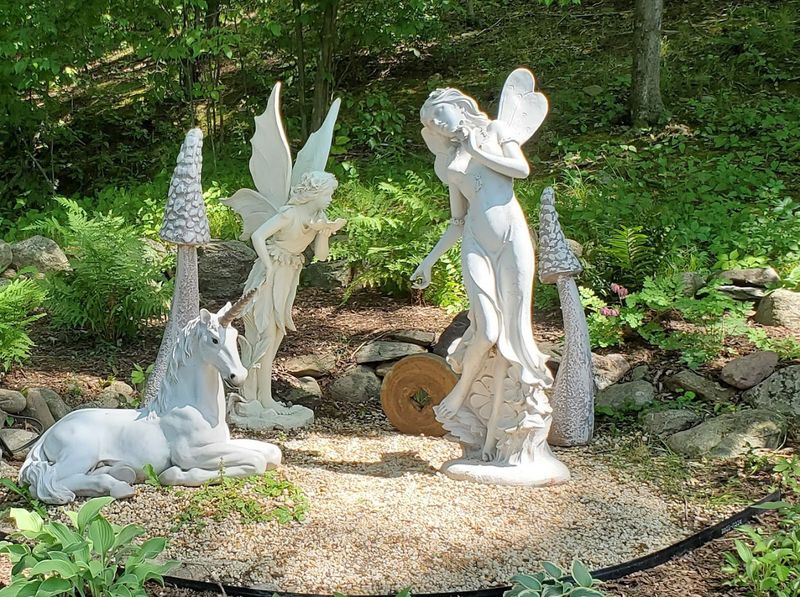
Adults tend to scan the scene. Kids investigate it.
That is why Fairy Tale Forest is such a good match for younger visitors: the best parts are down at their speed. A child is much more likely than an adult to stop at a cottage window, study a painted face, ask why a pig built with straw, or linger near a wishing well long after the grown-ups think everyone has “seen it.” The park is built for those pauses.
Sussex Skylands notes that visitors can listen to fairy-tale tunes and tidbits with the push of a button, which is exactly the sort of small interaction that turns a walk into a mission for kids who like to be in charge of the magic. The attractions also reward repeat glances.
The Forest Gnomes Home explains that gnomes are shy creatures hiding among tree trunks and mushroom caps. The School of Rhymes gives little ones a place to gather for classic rhymes.
The Bluebird Stage hosts fractured fairytale skits, interactive storytime, special guests, and professional entertainment, depending on the schedule. That means the park is not just a loop of things to photograph.
There are moments to listen, watch, touch, and ask questions. Even the practical layout helps.
The picnic-style seating area is placed near Gnomes Nest Concessions & Grill, across from the Bluebird performance stage and close to the Gift Shoppe, so families can pause without feeling like they are leaving the action behind. And because the park is compact, kids can feel like they have genuinely explored the whole place.
They are not being dragged from zone to zone. They are wandering through a little world where the next discovery is close enough to keep them moving.
Shows, Characters, and Seasonal Magic Around Every Bend
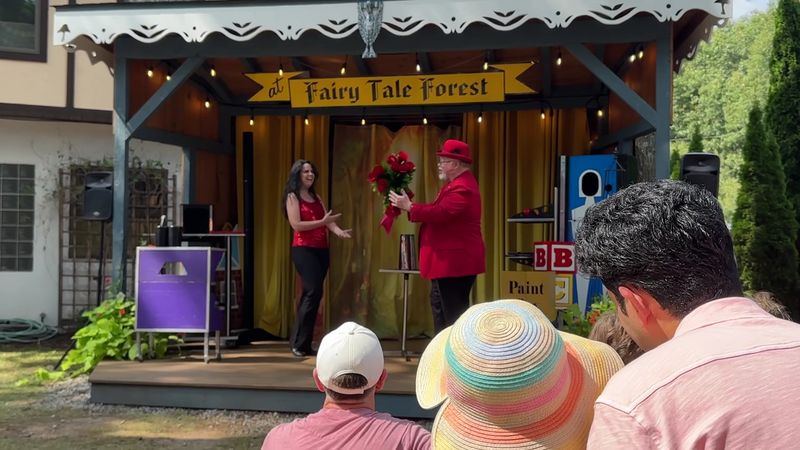
The park is small enough to feel manageable, but it is not static. That is the trick.
Fairy Tale Forest uses shows, characters, and seasonal programming to keep the experience from feeling like a one-and-done walk past old displays.
The Bluebird Stage gives the park a natural gathering spot for storytime, skits, and visiting performers, while the events calendar has included magic shows, Halloween activities, costume parades, scavenger hunts, pumpkin painting, and seasonal guests like Rosie Witch and Mr. Pumpkin Head.
Fall is an especially good fit for this place. A wooded storybook park already has a slightly mysterious edge once the leaves start turning, and the park leans into it with activities like Boo Clues, scarecrow dressing, ghost stories at the School of Rhymes, and pumpkins available to pick and paint for an additional fee while supplies last.
Gnomes Nest Concession & Grill has also served seasonal treats during fall festivities, including pumpkin-spice items, baked goods, beverages, caramel apples, and handmade chocolates. Winter has its own history here, too.
In 1987, Fairy Tale Forest began a winter wonderland tradition with lights, Frosty the Snowman, hot chocolate, and Santa Claus in his Christmas House. A few years later, the park got a pop-culture footnote that still surprises people: in 1993, Mariah Carey filmed outdoor scenes for “All I Want for Christmas Is You” at Fairy Tale Forest, with Tommy Mottola appearing as Santa.
That little bit of trivia is fun, but it also makes sense. If you needed a place that already looked like Christmas had been hiding in the woods, Fairy Tale Forest was ready before the camera showed up.
How to Plan the Perfect Visit Without Rushing the Wonder
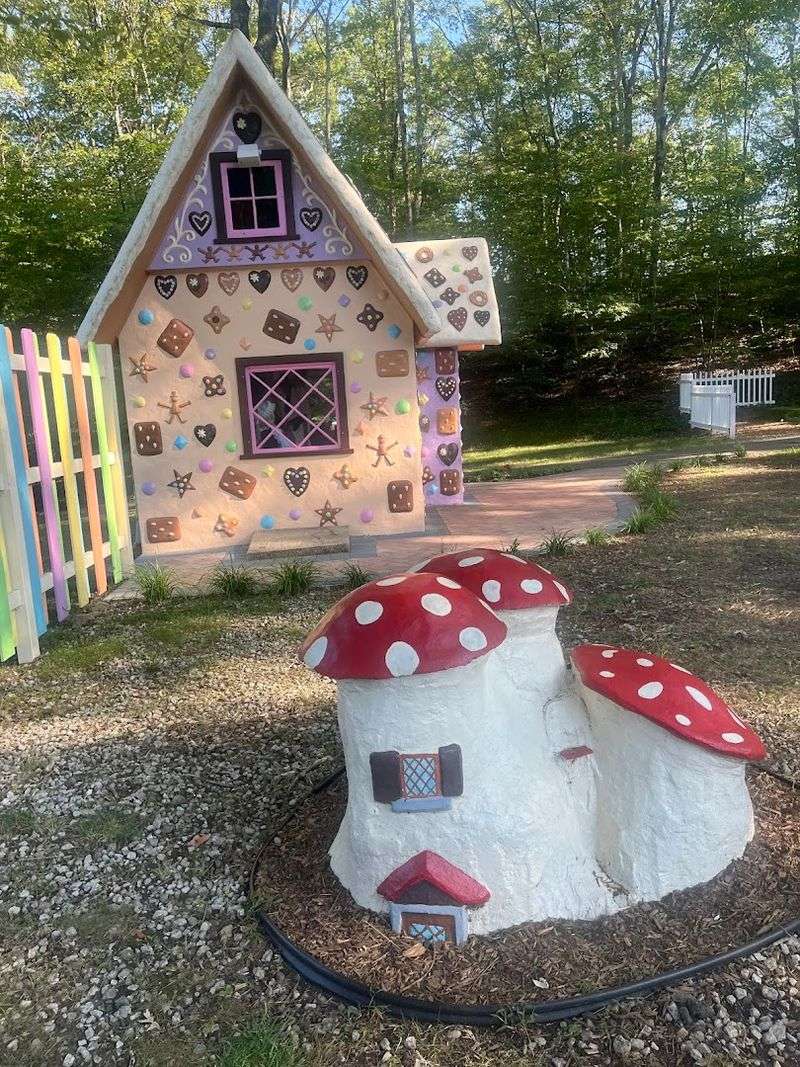
Planning this outing is thankfully simple, which is part of why it works so well for families. Fairy Tale Forest’s 2026 season begins May 23, with the park open for Memorial Day, and NJ Family reports that opening weekend hours are 10 a.m. to 6 p.m.
Saturday and Sunday and 10 a.m. to 5 p.m. on Memorial Day Monday. The gate closes one hour before closing, so arriving late in the afternoon is not the best move if you want to take your time.
Admission is paid at the gate, with general admission listed at $22 for adults, $20 for kids ages 2 to 17, and $21 for seniors 65 and older. Parking is free, with visitor parking on Grove Street across from the entrance and handicap parking at the front of the shoe.
The biggest planning tip is to treat Fairy Tale Forest like a slow walk, not a race. Give kids time to press buttons, double back, inspect the cottages, and watch whatever is happening at the Bluebird Stage.
The park says 75 to 80 percent of the grounds are wheelchair and stroller accessible with assistance, but it is still a wooded attraction, so comfortable shoes make more sense than cute ones. Outside food is not allowed, but food and drinks are available on-site, and the picnic-style seating area sits near the concessions and performance stage.
Pets are not allowed, and the park is smoke-free. Weather matters here more than it would at an indoor attraction; the park notes that it closes in thunderstorms or substantial rain for safety.
On a clear day, though, the best plan is almost old-fashioned: arrive early, wander slowly, and let the forest set the pace.