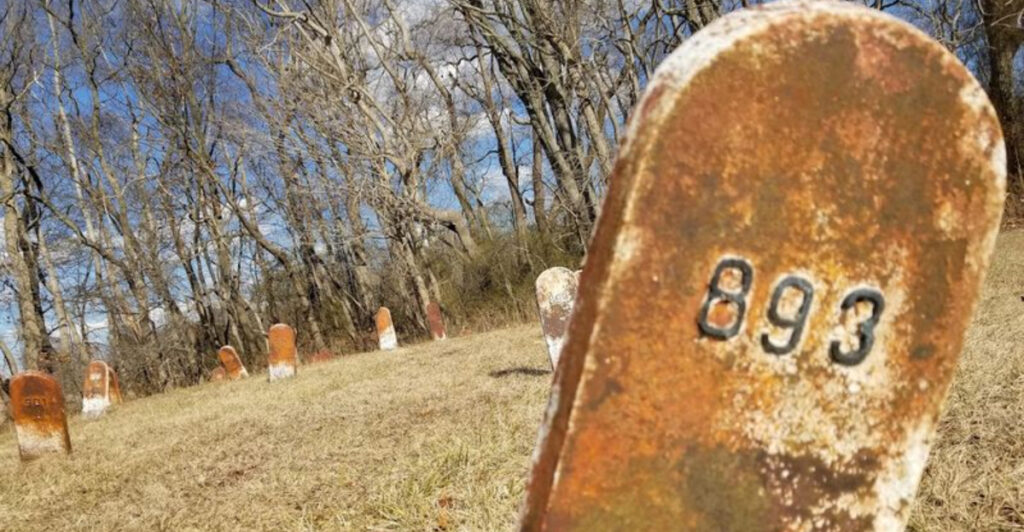
A cemetery full of headstones should not feel like a math worksheet, but that is exactly what stops people cold in Marlboro.
One marker says 47. Another says 312. Another says 817. No last names. No dates. No “beloved mother” or “cherished son.”
Just small numbered markers scattered across a quiet field near County Route 520, across from the former Marlboro Psychiatric Hospital site. There are more than 900 graves here, and the plainness is what makes the place hit so hard.
This is not New Jersey’s loudest haunted spot. There are no creaky mansion tours, no costumed guides, no gift shop selling ghost mugs at the exit.
It is quieter than that, and honestly, more unsettling. The ghosts people talk about here are tied to something real: patients who lived, died, and were buried by number before anyone thought to give their names back.
The quiet cemetery across from the old Marlboro hospital
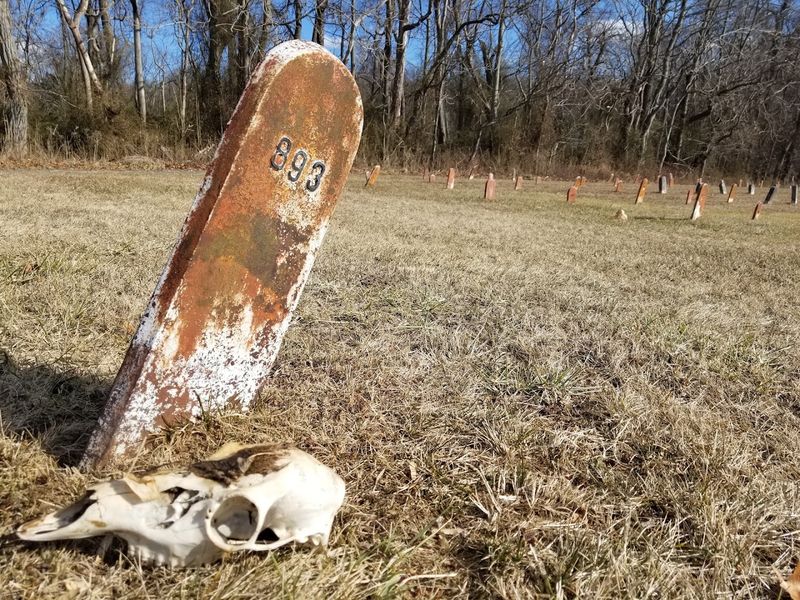
You can drive along County Route 520 in Marlboro and miss the cemetery if you are not looking for it. That feels almost too fitting.
This is not the kind of place that announces itself with iron gates, grand stone angels, or a dramatic entrance that says, yes, something important happened here. It sits near the former Marlboro Psychiatric Hospital property, tucked into a plain stretch of Monmouth County where the landscape does not do much hand-holding.
The hospital opened in 1931 and remained in operation until 1998, serving as one of New Jersey’s major state psychiatric facilities for more than six decades. At its peak, Marlboro was not some small roadside institution.
It was a sprawling campus with patient wards, staff buildings, service roads, farmland, and the kind of self-contained world that state hospitals often became. Today, the old hospital buildings are gone, which makes the cemetery feel even stranger.
You are not standing beside crumbling brick walls or peeking through broken windows anymore. You are standing near land that has slowly been folded back into public space, with Monmouth County working to turn portions of the former hospital property into passive recreation areas and parkland.
Nearby Big Brook Park adds another layer to the story, since parts of that landscape were once tied to farmland used by hospital patients. That is the thing about this corner of Marlboro: the past is not screaming at you, but it is absolutely still there.
On one side, there are woods, trails, open fields, and the ordinary rhythm of modern Monmouth County. On the other, there is a small burial ground where rows of numbered markers quietly remind visitors that history does not always need a building to haunt a place.
Why hundreds of graves were marked with numbers instead of names
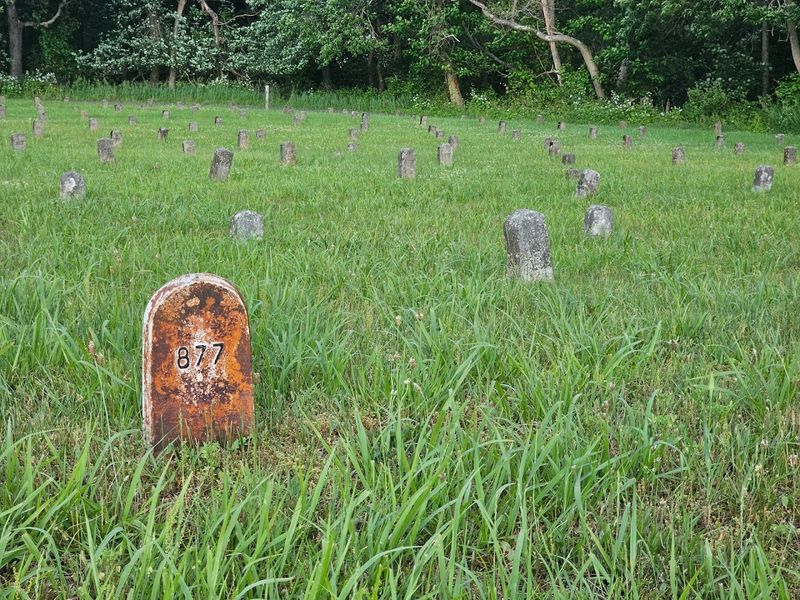
The numbering was not some spooky design choice created to make the cemetery feel mysterious. It came from bureaucracy, poverty, stigma, and the deeply impersonal way institutions often handled people who had no one left to claim them.
When patients at Marlboro Psychiatric Hospital died and no family member arranged a private burial, the state could bury them in the hospital cemetery. Instead of individual headstones with names, many graves were marked with simple numbers.
It was efficient. It was easy to track in records.
It was also devastatingly cold when you see it in person. The cemetery contains more than 900 burials, often described as 924 or 927 graves depending on the source and counting method, and the markers are small enough that they can look almost like survey posts from a distance.
Then you get close and realize each one stands for a person. That is when the place stops feeling like a curiosity and starts feeling like a failure of care.
New Jersey has plenty of old cemeteries where the stones are worn down by weather and time, but even those fading markers usually try to tell you something. A surname.
A year. A family connection.
A phrase chosen by someone who loved the person buried there. Marlboro’s numbered graves deny visitors that first human clue.
The names did exist in institutional records, but the field itself told a different story for decades. It said these people were accounted for, but not publicly remembered.
There is a big difference between being recorded and being honored. Standing among the markers, you feel that difference immediately.
A number can keep a file in order. It cannot tell you who laughed loudly, who missed home, who had a favorite song, or who once had a whole life before becoming a patient in a state hospital.
The memorial pavilion that gave patients their names back
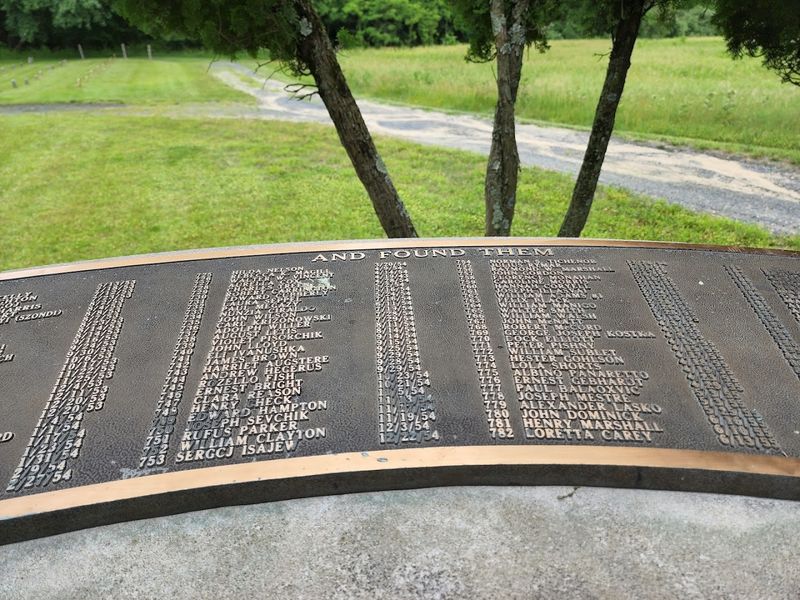
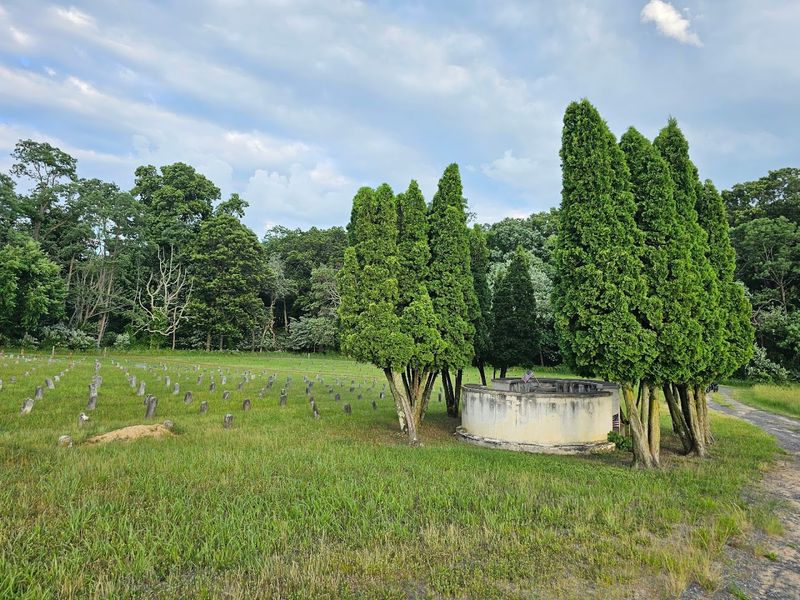
The most important structure in the cemetery is not a spooky ruin or a dramatic statue. It is a memorial pavilion, and its purpose is simple: it connects the numbered graves back to names.
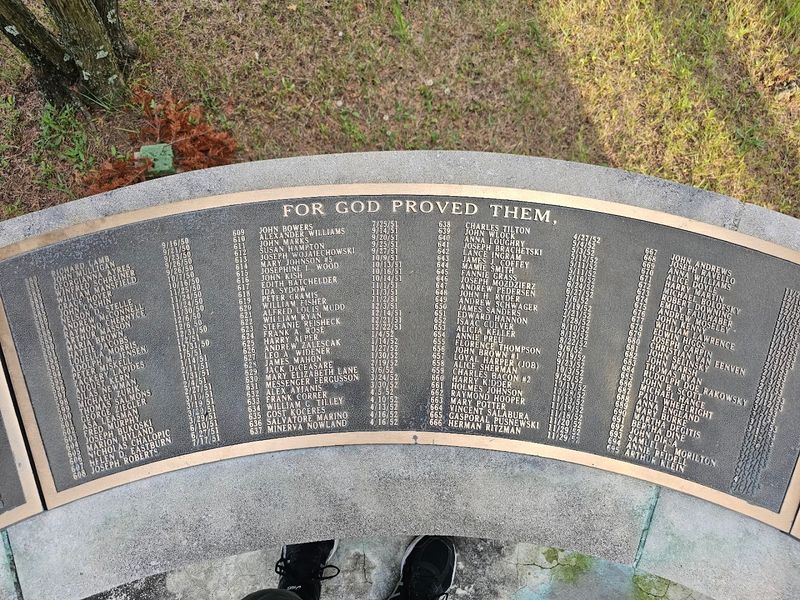
Built in the early 1990s, the pavilion includes bronze plaques listing the people buried there, along with dates of death, so visitors can match the numbers in the field with actual human beings. That changes the entire experience.
Without it, the cemetery would feel almost unbearably anonymous. With it, the numbered markers become part of a larger act of recovery.
You can stand in the grass, look at a marker, walk to the pavilion, and understand that the person buried beneath that number was not meant to disappear forever. The pavilion is not flashy, which is exactly right.
A dramatic monument would feel out of place here, like putting a spotlight where a candle is needed. The power is in the restraint.
The bronze plaques do not try to make the story neat or pretty. They simply restore names where numbers had taken over.
That small correction carries a lot of weight. It reminds visitors that the patients buried here were not legends, props, or background characters in a haunted asylum story.
They were people whose identities were known, even if they were not given full dignity at the grave site for a very long time. The pavilion also changes the tone of the so-called haunting.
Ghost stories usually depend on mystery, but this memorial does the opposite. It removes some of the mystery and replaces it with responsibility.
It says the people buried here should be read as names, not just counted as graves. That is a quieter kind of haunting, but it is much harder to shake.
Dorothy Henson and the one grave that breaks the pattern
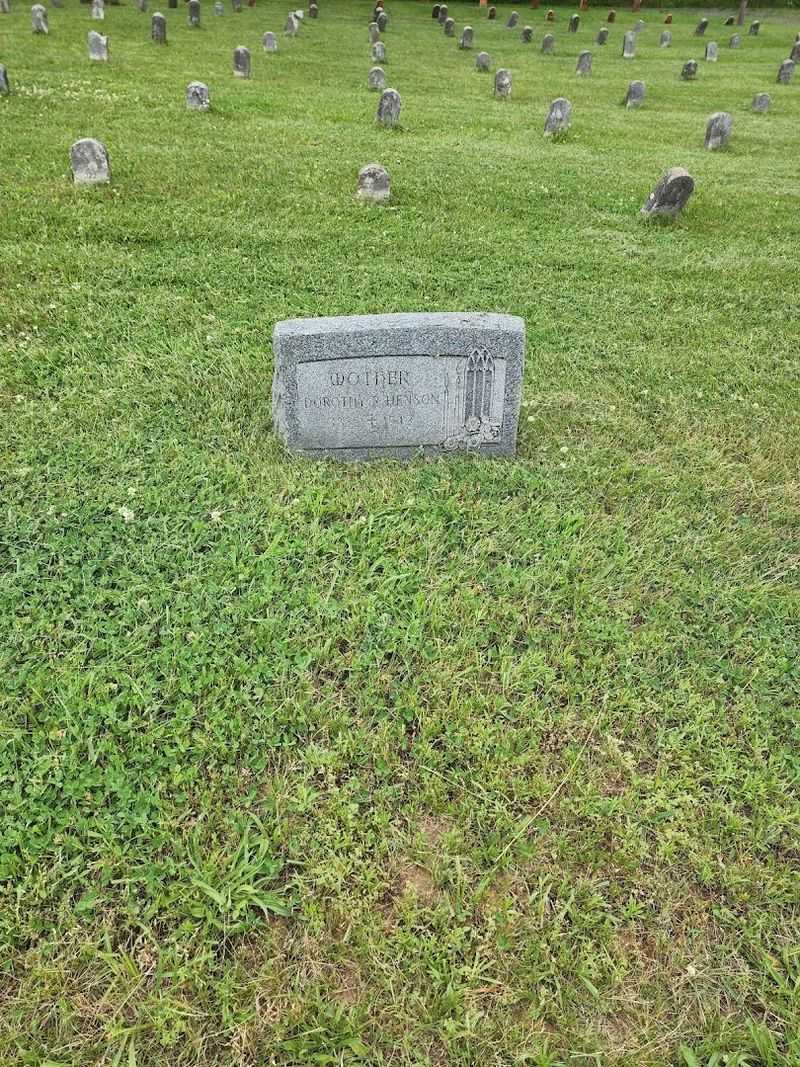
Among all those numbered markers, one grave stops visitors for a different reason. It bears a name: Dorothy R.
Henson. That may not sound dramatic until you understand the setting.
In a cemetery where the overwhelming pattern is number after number after number, a single named headstone feels almost startling. It is not ornate.
It is not massive. It does not need to be.
The fact that it names her at all is what makes it stand apart. Dorothy’s grave has become one of the most talked-about details in the cemetery because it breaks the system everyone else seems trapped inside.
Visitors naturally wonder why she received a named marker when so many others did not. Was there a relative involved?
Did someone on staff make special arrangements? Was it a paperwork difference, a private kindness, or something else entirely?
The answer is not neatly settled, and that uncertainty has helped fold Dorothy into the site’s local lore. There is also an added wrinkle that makes the story feel even more tied to the cemetery’s larger theme of identity.
Some accounts note a possible spelling difference between the name on her stone and the name listed on memorial records. In a place where names were already separated from graves, even a small inconsistency feels meaningful.
Dorothy’s marker also changes how you see the numbers around it. Once one person is named in the field, the silence around the others feels louder.
Her grave does not solve the sadness of Marlboro’s cemetery. It sharpens it.
One named marker makes you aware of how much a name matters, and how strange it is that so many people had to wait for a pavilion, plaques, and public memory to receive that basic recognition.
How Marlboro’s dark past fed its haunted reputation
Marlboro Psychiatric Hospital had all the ingredients New Jersey ghost stories tend to latch onto: a large state institution, isolated roads, abandoned buildings, tunnels, rumors, and a long operational history that ended with closure in 1998.
After the hospital shut down, the empty campus became a magnet for urban explorers, photographers, teenagers with flashlights, and paranormal enthusiasts who were drawn to the decaying buildings before they were demolished.
Stories spread about strange noises, shadowy figures, disembodied voices, and uneasy feelings around the grounds. That is how places like this become folklore machines.
But Marlboro’s haunted reputation did not come only from atmosphere. The hospital’s real history included serious concerns about conditions, oversight, and the treatment of vulnerable patients, which gave the ghost stories a heavier foundation than the usual “old building feels creepy” routine.
When people know a place was connected to suffering, neglect, or institutional failure, they tend to feel something there, whether they believe in ghosts or not. The cemetery intensifies that feeling because it gives the history a physical, undeniable form.
A vacant hallway can be demolished. A rumor can be exaggerated.
But more than 900 numbered graves are not a rumor. They are right there in the ground.
That is why the paranormal label fits and does not fit at the same time. Yes, visitors have described the site as eerie, and yes, it belongs in the conversation when people talk about New Jersey’s most unsettling places.
But calling it haunted can almost make it sound too entertaining. This is not a haunted hayride.
It is a burial ground tied to real people and real institutional history. The scariest part is not whether something moves between the trees.
It is how easily a person could once be reduced to a number.
Why this place feels more like a memorial than a ghost story
The longer you sit with the story of Marlboro’s numbered cemetery, the less it feels like a paranormal attraction and the more it feels like a public lesson in dignity. The setting is undeniably eerie.
Rows of small markers with numbers instead of names will do that. The hospital’s reputation adds a chill, and the quiet location near the former psychiatric campus gives the whole place a strange, suspended feeling.
But the emotional center of the cemetery is not fear. It is recognition.
That matters, especially now that the surrounding land has been moving into a different chapter. The former hospital property is no longer defined by abandoned buildings, trespassing stories, and decay.
Much of that landscape is being reimagined through open space, trails, and passive recreation, while nearby Big Brook Park already gives visitors woods, meadows, wildlife habitat, and one of the area’s more unusual local claims to fame: fossil hunting along Big Brook. That shift is oddly hopeful.
A place once associated with confinement is becoming a place where people can walk freely. Still, the cemetery keeps the story from becoming too tidy.
It reminds visitors that land can be reclaimed without erasing what happened there. What makes this site unforgettable is how little it does to dramatize itself.
There is no elaborate sculpture telling you what to feel, no theatrical ghost-tour setup, no overproduced legend. There are numbers in the grass, names on bronze plaques, Dorothy Henson’s named stone, and the knowledge that each marker represents someone whose life was larger than the system that buried them.
The haunting here is not about proving the supernatural. It is about presence, memory, and the quiet shock of seeing how much a name matters when it is missing.