Tennessee has more to offer than just Nashville honky-tonks and Gatlinburg’s tourist bustle. Scattered across the state are small towns, natural wonders, and historic sites that most visitors overlook completely.
These underrated destinations give out-of-towners a chance to see a different side of Tennessee—one with fewer crowds, deeper stories, and landscapes that feel refreshingly off the beaten path.
1. Jonesborough
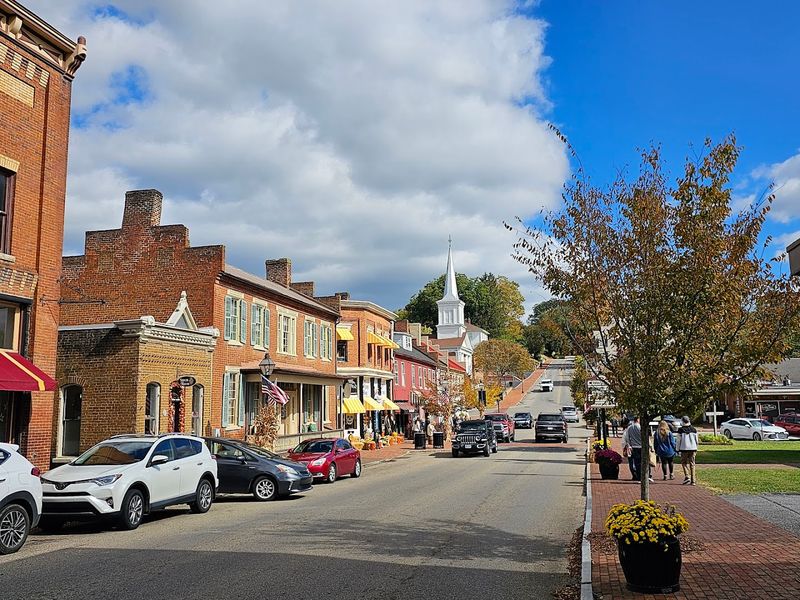
Tennessee’s oldest town doesn’t shout for attention, and that’s exactly why it works. Jonesborough has been around since 1779, and instead of turning itself into a theme park version of history, it just kept its brick buildings, added some galleries and cafes, and let visitors figure out the rest.
The International Storytelling Center is the big draw here. It hosts festivals, performances, and workshops that celebrate oral tradition in a way that feels personal rather than scripted. Even if you’re not catching a show, the center’s presence gives the whole town a creative, slightly bookish vibe.
Walking the main drag takes maybe twenty minutes if you’re moving fast, but most people don’t. There are antique shops, local artisan stores, a historic courthouse, and enough architectural detail to keep history buffs happy. The streets are flat, the pace is slow, and nothing feels rushed.
Jonesborough also throws a solid farmers market and seasonal events that locals actually attend. It’s a town that functions as a real community, not just a postcard backdrop, which makes wandering through it feel more authentic than performative.
2. Townsend
Townsend calls itself the “Peaceful Side of the Smokies,” and it’s not bluffing. While Gatlinburg and Pigeon Forge pack in the mini-golf courses and pancake houses, Townsend keeps things quiet. You get the same mountain access without the traffic jams or neon signs.
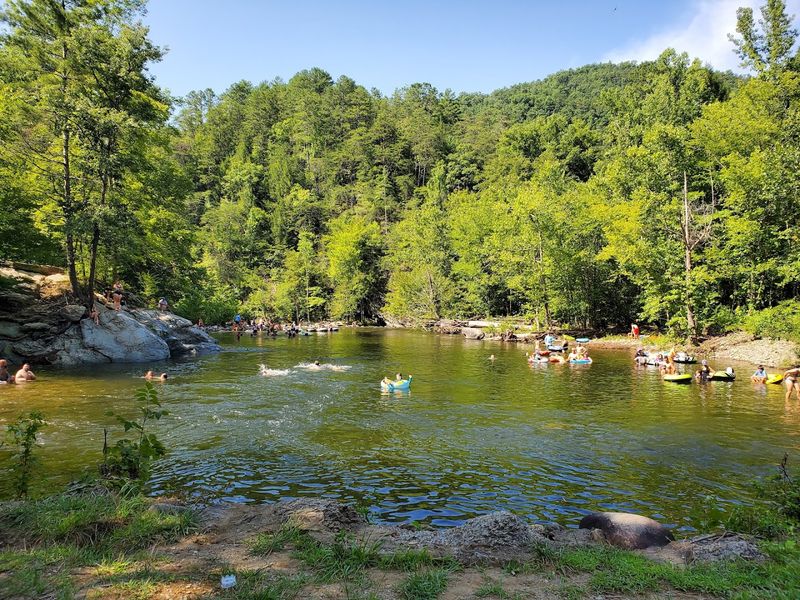
The town sits right at the edge of Great Smoky Mountains National Park, so trailheads, waterfalls, and scenic drives are all within reach. Cades Cove, one of the park’s most popular loops, is just a short drive away. You can also tube down the Little River, explore Tuckaleechee Caverns, or just sit on a porch and watch the fog roll in.
Townsend doesn’t have a ton of restaurants or shops, but that’s kind of the point. It’s designed for people who want to spend their day outside and their evening somewhere calm. The lodging options lean toward cabins and mom-and-pop motels rather than sprawling resorts.
If you’re looking for nightlife or constant entertainment, this isn’t your spot. But if you want easy access to the Smokies without the sensory overload, Townsend delivers exactly what it promises.
3. Greeneville
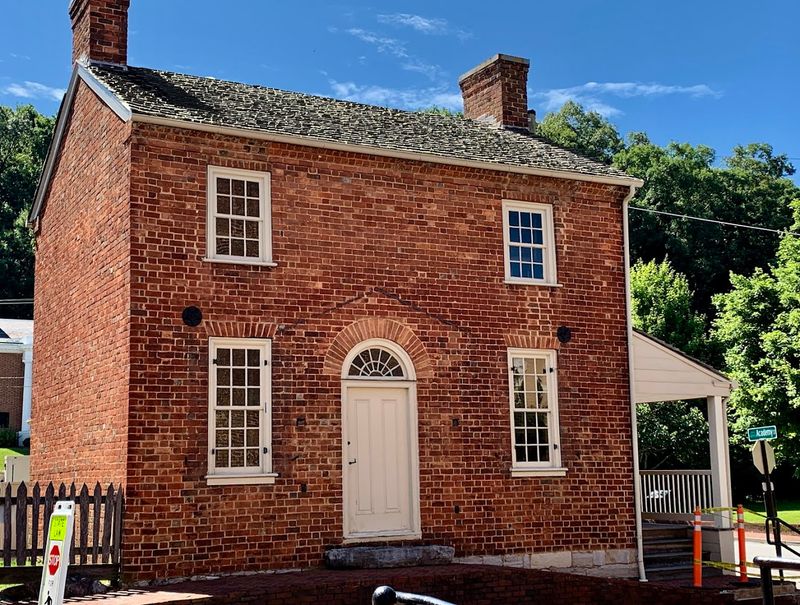
Most people couldn’t pick Andrew Johnson out of a lineup, but his story is one of the wildest chapters in American history. Greeneville is where he lived, worked as a tailor, and eventually returned after surviving impeachment by a single Senate vote. The Andrew Johnson National Historic Site covers his home, his tailor shop, and the national cemetery where he’s buried.
The museum does a solid job explaining Reconstruction, Johnson’s clashes with Congress, and the constitutional drama that nearly ended his presidency. It’s not a feel-good tour, but it’s historically meaty. You’ll leave with a better understanding of post-Civil War politics than most college grads have.
Beyond the Johnson site, Greeneville has a pleasant downtown with local shops, murals, and a few good lunch spots. It’s not a place you’d spend three days, but it pairs well with a road trip through East Tennessee. The town also hosts the Iris Festival each spring, which draws gardeners and flower fans from across the region.
4. Big South Fork National River & Recreation Area (Oneida)
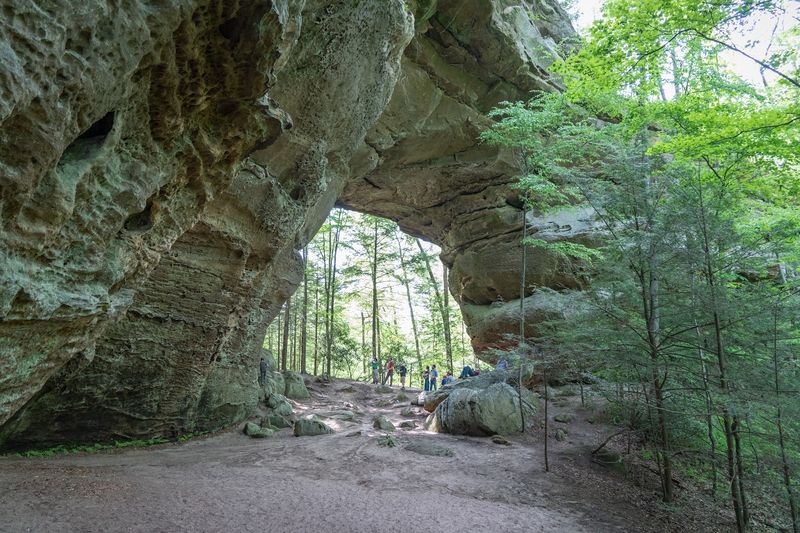
Big South Fork doesn’t get the same hype as the Smokies, which means it doesn’t get the same crowds either. The park straddles the Tennessee-Kentucky border and offers over 125,000 acres of gorges, bluffs, rivers, and trails. It’s rugged without being intimidating, and there’s enough variety to keep outdoor lovers busy for days.
Hiking is the main event. Trails range from easy riverside walks to challenging ridge routes with serious elevation changes. Twin Arches is one of the park’s signature features—two massive natural stone arches that look like something out of a fantasy novel.
Yahoo Falls, Kentucky’s tallest waterfall, is also accessible from the park.
Paddling the Big South Fork River is another popular option, especially in spring when water levels are higher. You can also ride horses, camp in backcountry sites, or just drive the scenic roads and stop at overlooks. The park has historic structures too, including old homesteads and mining remnants that add a human layer to the landscape.
5. Burgess Falls State Park (Sparta)
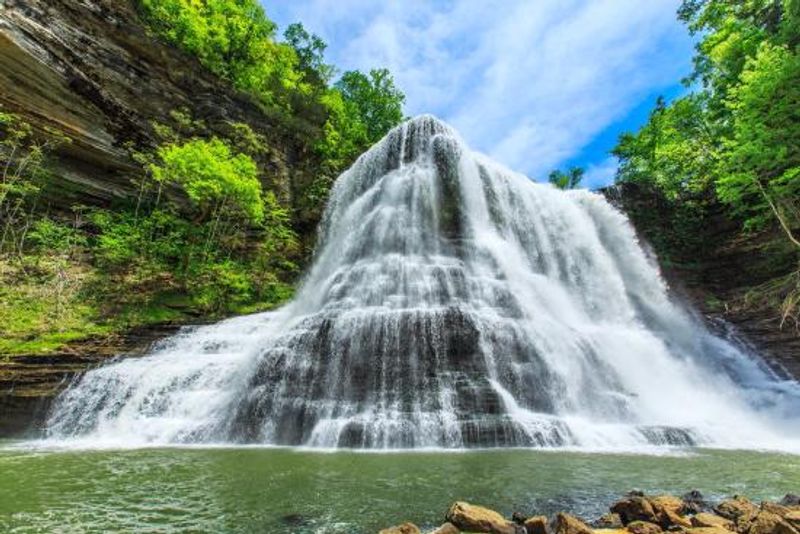
Burgess Falls is what happens when you want drama without a lot of hassle. The park’s main trail follows the Falling Water River downstream past four waterfalls, each one bigger and more impressive than the last. The final drop—a 136-foot plunge into a deep gorge—is the showstopper.
The hike to the main falls is about a mile and a half round trip, with some stairs and uneven terrain toward the end. It’s manageable for most people, including families with older kids. The overlook platform gives you a head-on view of the falls, and the sound alone is worth the walk.
Spring is prime time for water volume, but the falls run year-round. Fall colors add another layer of beauty, and winter ice formations can be stunning if you’re willing to brave the cold. Summer gets busy, especially on weekends, but mornings are usually quieter.
There’s not much else at the park—no lodge, no visitor center with interactive exhibits—but that simplicity works in its favor. You show up, you hike, you see waterfalls, you leave happy. Sometimes that’s all a day trip needs to be.
6. Cummins Falls State Park (Cookeville)
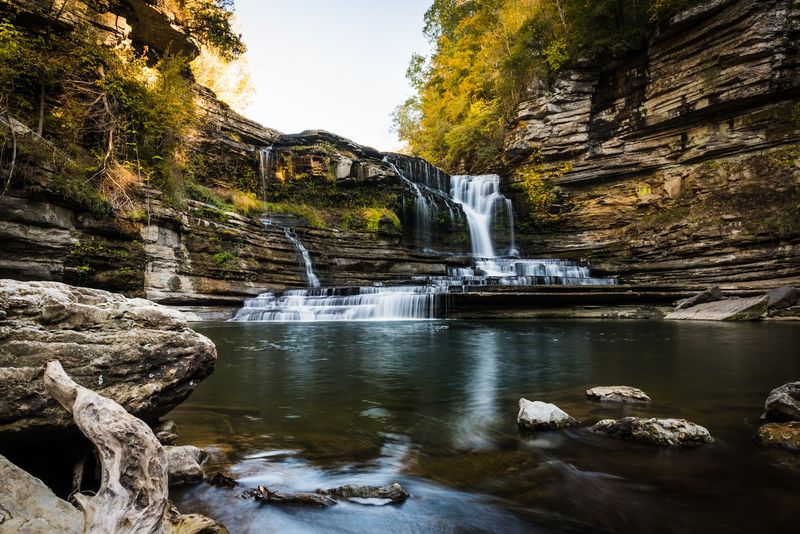
Cummins Falls is not a stay-dry kind of waterfall. The 75-foot cascade dumps into a natural swimming hole that’s become one of Tennessee’s favorite summer hangouts. Getting there requires a hike that includes rock-hopping, creek crossings, and a little bit of scrambling, so wear shoes you don’t mind soaking.
The park limits daily visitors to protect the area, so reservations are required during peak season. It’s a smart move that keeps the experience from turning into a crowded pool party. Once you’re there, the setting feels almost tropical—clear water, layered rock formations, and plenty of spots to sit and soak.
There are overlooks for people who’d rather admire the falls from above, but most visitors come to get in the water. The swimming hole is deep enough for jumping (if you know what you’re doing) and wide enough that it doesn’t feel cramped even with a decent crowd.
Cummins Falls isn’t a quick stop. Plan on spending a few hours, and bring a waterproof bag for your phone. The park also connects to the Blackburn Fork State Scenic River, which offers additional paddling and fishing opportunities for those who want to extend the adventure.
7. Paris Landing State Park (Buchanan)
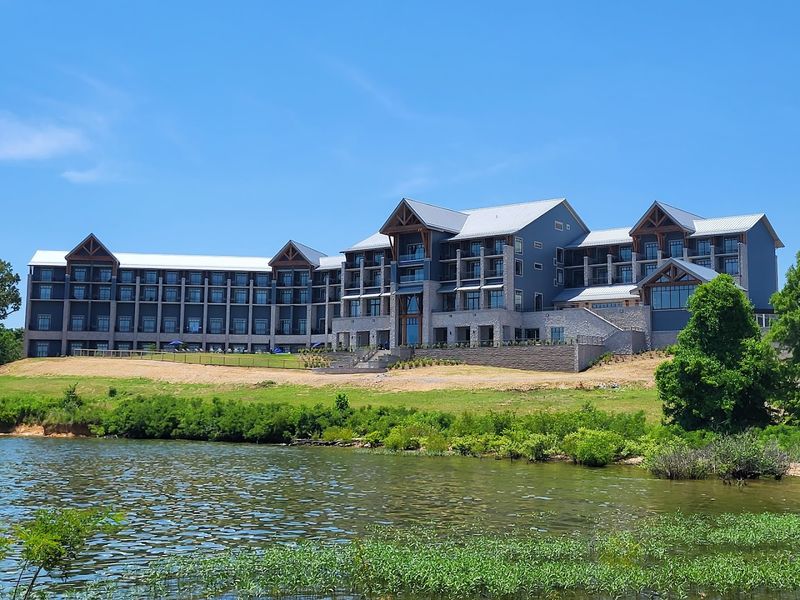
Paris Landing sits on the western edge of Tennessee, right where Kentucky Lake opens up into miles of blue water and quiet coves. It’s not flashy, and it doesn’t try to be. This is a park for people who want to fish, boat, camp, or just sit by the water and watch the day pass.
The park has a marina, a golf course, a lodge, and cabins—all the infrastructure you need for a weekend getaway without feeling like you’re at a resort. The fishing here is excellent, with bass, crappie, and catfish all in play depending on the season. You can rent a boat, launch your own, or fish from the shore.
Hiking trails wind through wooded areas and along the shoreline, offering easy walks with lake views. There’s also a swimming pool, picnic areas, and a restaurant at the inn. It’s the kind of place where families come back year after year because it delivers exactly what they’re looking for.
8. Reelfoot Lake (Tiptonville)
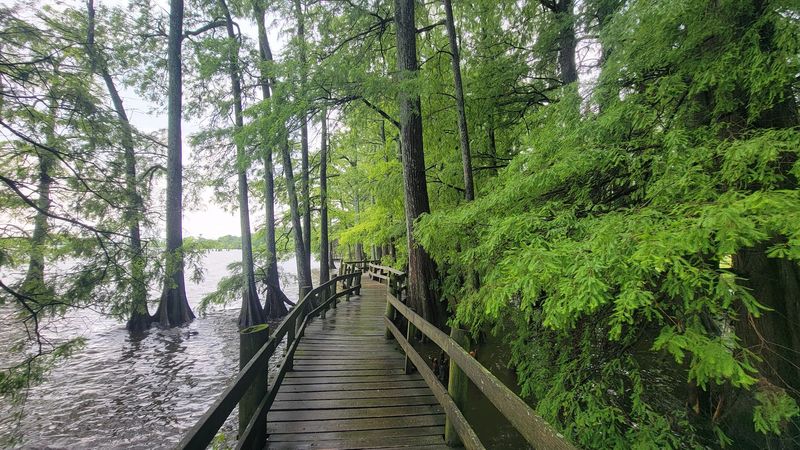
Reelfoot Lake doesn’t look like the rest of Tennessee. Formed by earthquakes in the early 1800s, the shallow lake is filled with bald cypress trees draped in Spanish moss, giving it a swampy, almost haunted atmosphere. It’s beautiful in a way that feels more Louisiana than Volunteer State.
Wildlife viewing is the main draw. Bald eagles winter here in impressive numbers, and the lake is a major stop for migratory waterfowl. You’ll also spot herons, egrets, turtles, and the occasional alligator gar.
Boat tours are available, and they’re the best way to navigate the cypress forest and learn about the lake’s ecology.
Fishing is another popular activity. Crappie and bluegill are plentiful, and the lake’s unique structure creates excellent habitat. You can fish from a boat, from the bank, or from one of the piers.
There are also hiking trails, a visitor center, and a small museum that covers the lake’s geological and cultural history.
9. Bell Buckle
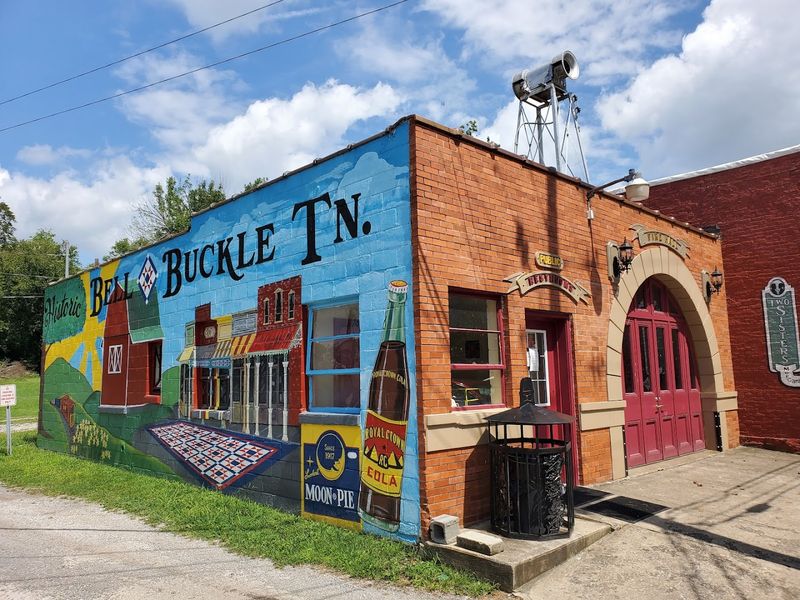
Bell Buckle is tiny—like, blink-and-you-miss-it tiny—but it punches above its weight when it comes to charm. The town’s main street is lined with antique stores, craft shops, cafes, and galleries, all housed in buildings that look like they haven’t changed much since the early 1900s. It’s the kind of place where you park once and spend two hours wandering.
The town hosts the RC Cola & Moon Pie Festival every June, which is exactly as quirky as it sounds. Thousands of people show up to celebrate Southern junk food with live music, games, and, yes, a Moon Pie eating contest. It’s goofy and fun and perfectly on-brand for Bell Buckle.
Beyond the festival, the town is just pleasant to explore. The shops are independently owned, the staff is friendly, and there’s a genuine sense of community. You’ll find handmade pottery, vintage furniture, local honey, and plenty of things you didn’t know you needed until you saw them.
Bell Buckle also has a couple of solid lunch spots and a historic bed-and-breakfast if you want to stay overnight. It’s not a destination in the traditional sense, but it’s a perfect road trip stop—the kind of place that reminds you why small-town America still has appeal.
10. Milky Way Farms (Pulaski)
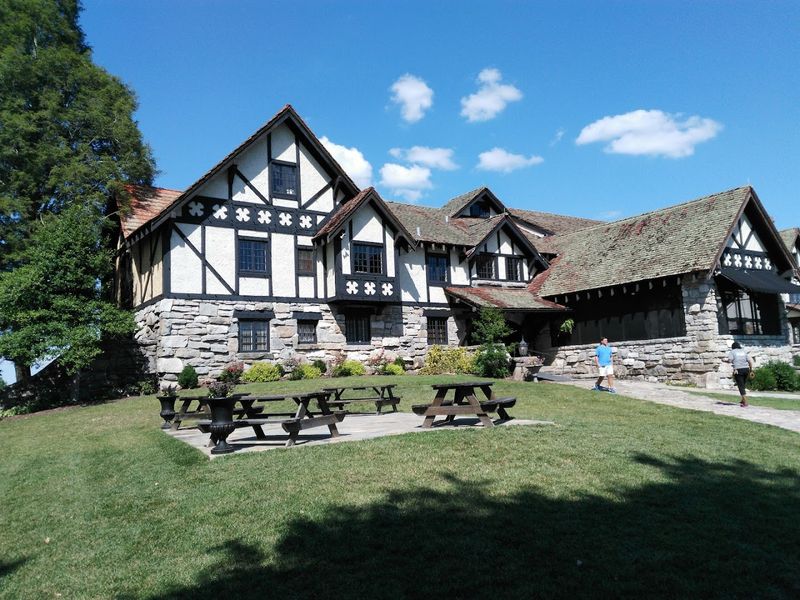
Milky Way Farms has a backstory that sounds made up but isn’t. In the 1930s, Frank Mars—founder of the Mars candy empire—bought a massive estate in rural Tennessee and turned it into a gentleman’s farm complete with a mansion, barns, and prize-winning cattle. The property eventually became a wedding and event venue, but it still carries that old-money, pastoral elegance.
The mansion is the centerpiece, with grand architecture and period details that make it feel like a Southern estate from another era. The grounds are immaculate, with rolling pastures, gardens, and historic outbuildings. You can tour the property, attend events, or just drive through and take photos if the gates are open.
It’s unexpected, visually striking, and tied to a piece of American business history that most people don’t know about. The fact that it’s sitting in the middle of nowhere makes it even more intriguing.
Pulaski itself is worth a quick look if you’re in the area. The town has a historic square, a few local shops, and some Civil War history. But Milky Way Farms is the real draw—a glimpse of what happens when candy money meets Tennessee countryside.
11. Dale Hollow Lake (Celina)
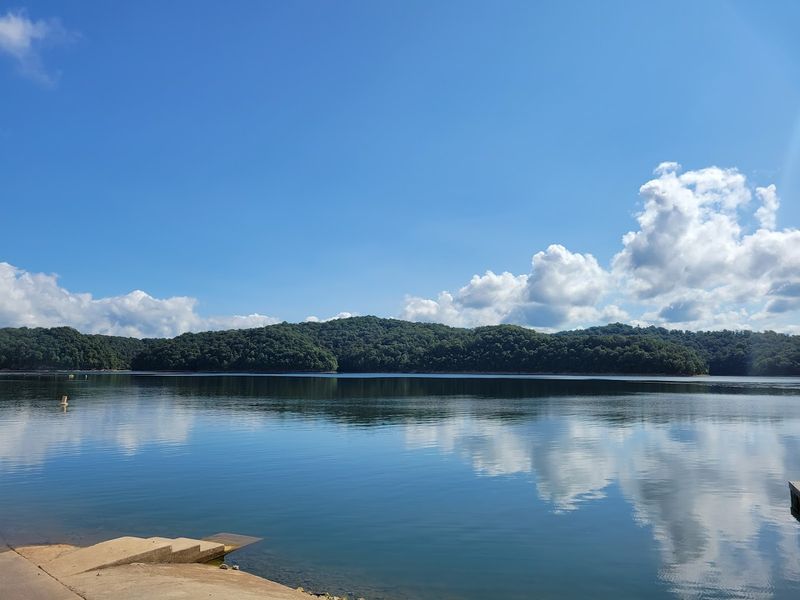
Dale Hollow Lake is one of the cleanest, clearest lakes in the country, and it sits quietly on the Tennessee-Kentucky border without much fanfare. The water is so transparent that you can see fish swimming below the surface, which makes it a favorite for scuba divers, anglers, and anyone who appreciates a lake that doesn’t look like a muddy pond.
Fishing is world-class. Dale Hollow produced a world-record smallmouth bass back in 1955, and serious anglers still come here chasing that legacy. You’ll also find walleye, trout, and muskie.
The lake has multiple marinas, boat ramps, and fishing guides if you want local expertise.
Beyond fishing, there’s swimming, kayaking, paddleboarding, and plenty of secluded coves for anchoring and relaxing. Hiking trails wind through the surrounding hills, and wildlife sightings—deer, eagles, turkeys—are common. The lake is big enough that it never feels crowded, even on summer weekends.
Lodging options include cabins, campgrounds, and a state park resort. The area is low-key and family-friendly, with none of the party-boat energy you get at some Tennessee lakes. Dale Hollow is for people who want peace, clean water, and outdoor activities without the noise.
12. Tennessee Valley Railroad Museum (Chattanooga)
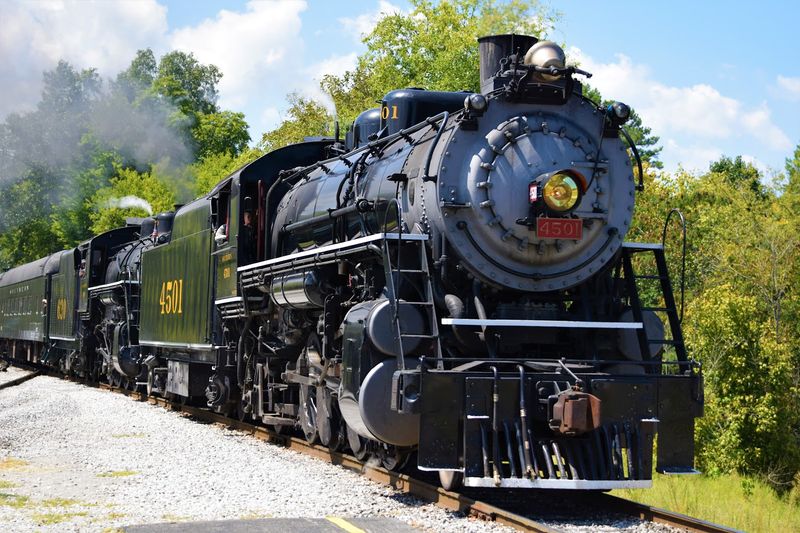
The Tennessee Valley Railroad Museum isn’t just a collection of old trains sitting behind velvet ropes. It’s a working museum where you can actually ride restored locomotives, hear the whistle blow, and feel the rumble of steel wheels on track. It’s hands-on history that appeals to train enthusiasts and families alike.
The museum operates several different excursions, including scenic rides through the Tennessee countryside and themed events like the Polar Express during the holidays. The trains are beautifully restored, and the staff—many of them volunteers—are genuinely passionate about railroad history. You’ll learn about steam engines, diesel locomotives, and the role railroads played in shaping the South.
The museum grounds include a depot, repair shops, and a collection of vintage cars and engines you can walk through. There’s also a gift shop packed with train memorabilia, model kits, and books. It’s the kind of place where kids get wide-eyed and adults remember why they loved trains in the first place.
13. Tuckaleechee Caverns (Townsend)
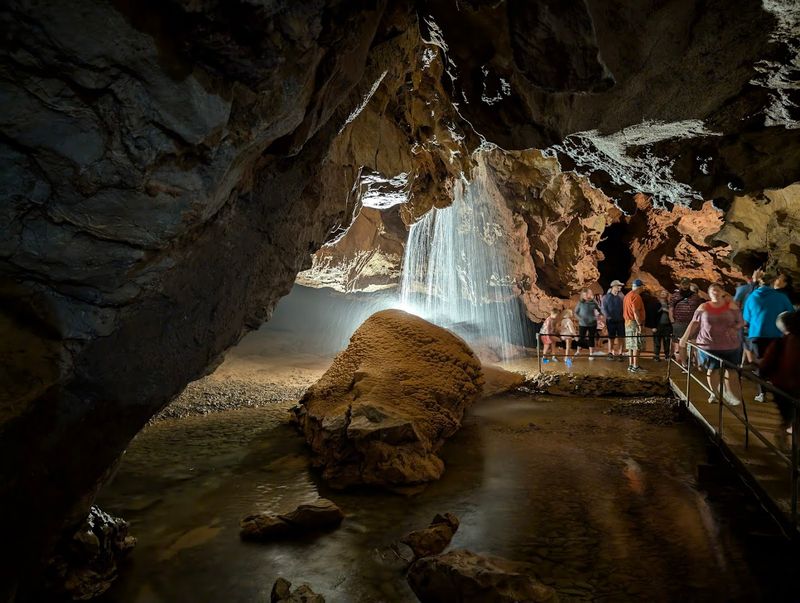
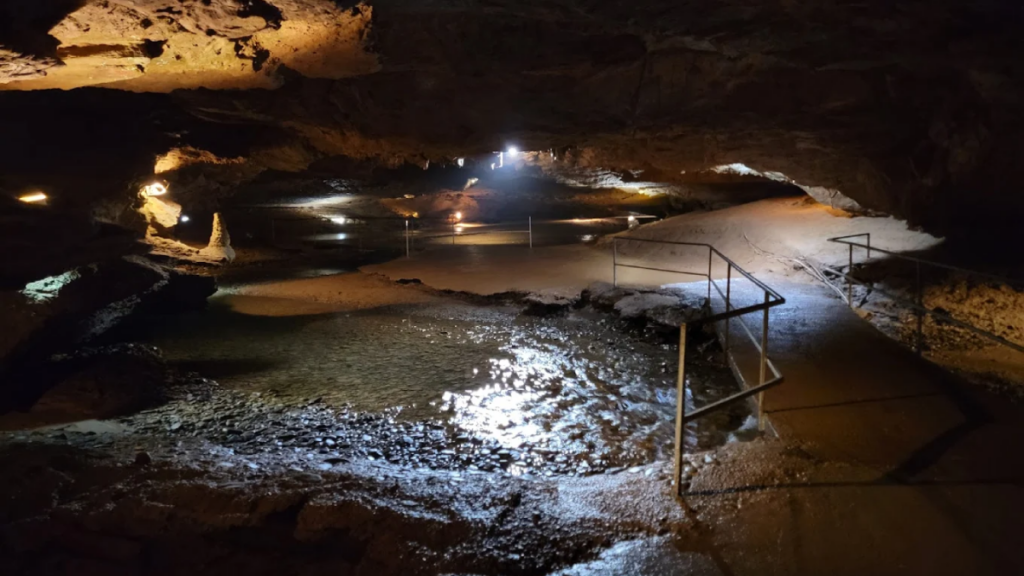
Tuckaleechee Caverns is the kind of place that makes you realize how much cool stuff is hiding underground. The cave system features massive rooms, towering stalagmites, and an underground waterfall that drops over 200 feet—one of the tallest in any show cave in the eastern United States. The whole tour takes about an hour, and it’s well worth the time.
The caverns stay a constant 58 degrees year-round, so bring a jacket even if it’s blazing hot outside. The guided tour covers about a mile of walkways, with plenty of stops to admire formations and hear stories about the cave’s history.
It’s a nice break from hiking and driving, and it gives you a completely different perspective on the region’s natural features. Kids usually love it, especially the waterfall.
There’s not a lot else at the site—just a small gift shop and parking area—but the cave itself delivers. It’s one of those places that reminds you Tennessee’s beauty isn’t just above ground.
14. Oak Ridge
Oak Ridge has one of the strangest origin stories of any American city. Built in secret during World War II as part of the Manhattan Project, the town was home to tens of thousands of workers who didn’t fully know what they were building. Today, Oak Ridge is a fascinating mix of science, history, and unexpected beauty.
The American Museum of Science and Energy is the best place to start. It covers the Manhattan Project, nuclear energy, and Oak Ridge’s role in shaping modern science. The exhibits are well done and accessible, even if you’re not a physics nerd.
Nearby, the Graphite Reactor is a National Historic Landmark where you can see the actual reactor used in the 1940s.
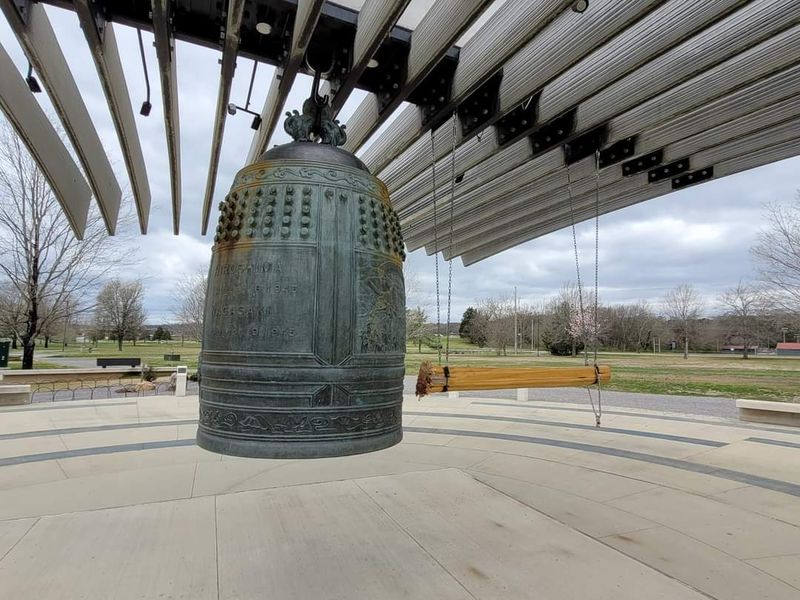
The International Friendship Bell is one of the state’s whimsical hidden gems. The bell was a gift from Oak Ridge’s sister city in Japan and symbolizes reconciliation and peace. It’s a quiet, reflective spot that adds emotional depth to the city’s story.
Oak Ridge also has decent hiking, a nice greenway system, and a surprisingly vibrant arts scene. It’s not your typical Tennessee destination, but that’s exactly what makes it interesting. If you want history with substance and a side of science, Oak Ridge delivers.
15. Fall Creek Falls State Park (Spencer)
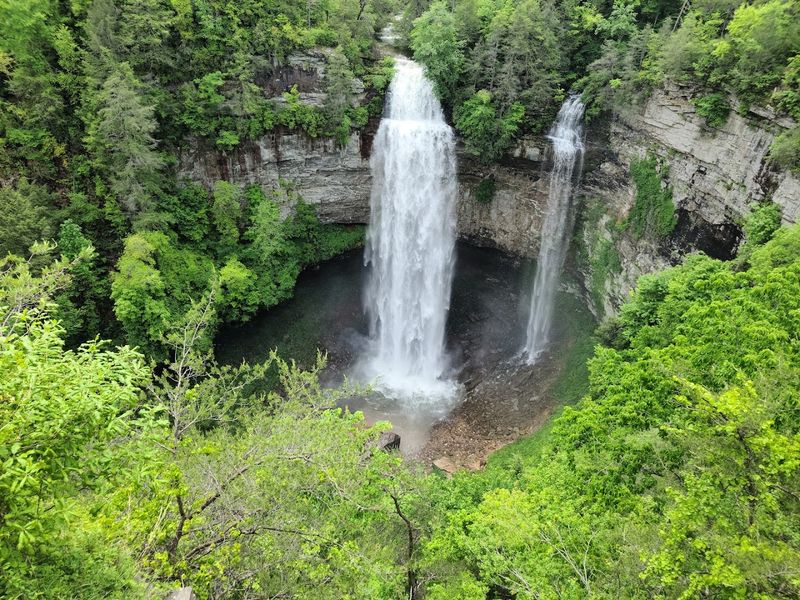
Fall Creek Falls is one of Tennessee’s best-kept secrets, which is wild considering it has the tallest waterfall east of the Rockies. The main falls drop 256 feet into a gorge surrounded by forest, rock formations, and enough scenic overlooks to keep your camera busy all day. Tennesseans know about it, but out-of-state visitors often skip it in favor of the Smokies.
The park covers over 26,000 acres and includes multiple waterfalls, gorges, and more than 30 miles of trails. You can hike to the base of the falls, explore cable suspension bridges, or take easier walks to overlooks. There’s also a lake for swimming and paddling, plus camping, cabins, and a lodge if you want to stay overnight.
It’s big enough to feel wild but developed enough to be accessible. You can spend a full weekend here without running out of things to do.
Fall is peak season for foliage, but spring brings high water volume and wildflowers. Summer gets busy but manageable. Winter is quiet and offers a totally different perspective on the waterfalls.
No matter when you visit, Fall Creek Falls feels like Tennessee at its most dramatic and beautiful.