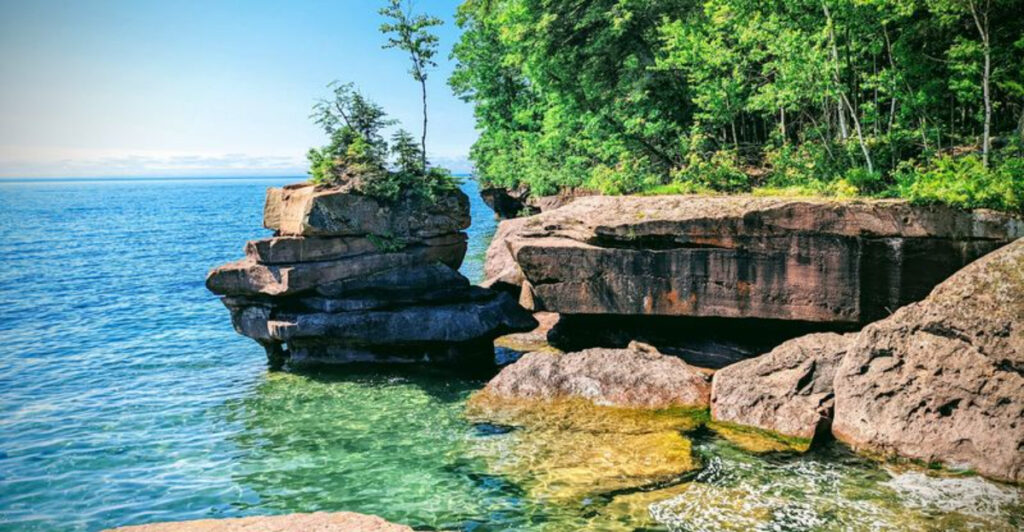
Tucked away on Madeline Island in the middle of Lake Superior, Big Bay State Park feels like the kind of place people almost hesitate to tell others about. Spanning more than 2,000 acres, the park combines sandstone bluffs, old-growth forest, quiet boardwalk trails, and a surprisingly beautiful sandy beach into one unforgettable stretch of scenery.
The setting feels remote in the best possible way, especially because so many Wisconsin travelers still have no idea it exists. Every part of the park encourages you to slow down and take it in. If you want an adventure that feels peaceful, scenic, and genuinely off the beaten path, this Wisconsin escape absolutely delivers.
The Ferry Ride That Makes Wisconsin Feel Wild Again
Getting to Big Bay State Park is half the adventure. Before you even set foot on a trail, you board a ferry in Bayfield, Wisconsin, and spend about 20 to 25 minutes crossing Lake Superior to reach Madeline Island.
There’s something about watching the mainland slowly fade behind you that immediately shifts your mindset into full exploration mode. The air feels colder, the water looks impossibly wide, and suddenly the trip starts feeling bigger than a normal state park visit.
Once you dock in La Pointe, you drive roughly 5 to 7 miles along Highway H until the park entrance comes into view. The road winds through dense forest, small island neighborhoods, and long quiet stretches where Lake Superior occasionally flashes between the trees.
That gradual build-up makes the arrival feel even more dramatic. Then the sandstone bluffs appear near the entrance, and the scenery instantly justifies the extra travel effort.
The park covers 2,350 acres, which means even during the busier summer season, it rarely feels crowded in an overwhelming way. Big Bay has quietly built a devoted following among campers, hikers, kayakers, and travelers looking for a less commercial side of Wisconsin outdoors.
Clean facilities greet you right away, trail maps are easy to find near the entrance, and the whole atmosphere feels calm instead of overly developed. A Wisconsin State Park System vehicle admission sticker or day pass is required, so planning ahead helps.
If you’re visiting more than one state park during the trip, the annual pass quickly pays for itself. From the ferry crossing onward, Big Bay feels less like a quick stop and more like the beginning of a real escape.
Sandstone, Sea Caves, and a Shoreline That Steals the Show
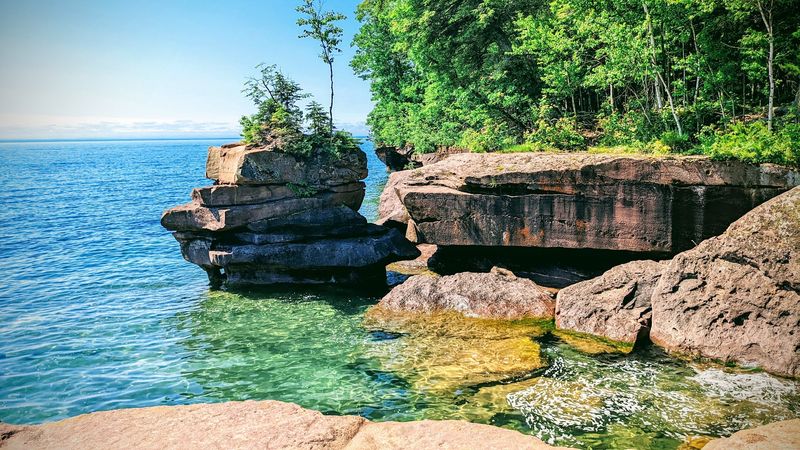
Four miles of Lake Superior shoreline — that’s the crown jewel of Big Bay State Park, and it absolutely earns the attention. Rugged sandstone bluffs shaped by centuries of wind, ice, and wave action rise along the coast, creating natural formations that look far more dramatic than most people expect from Wisconsin.
The sea caves tucked into these cliffs quickly become one of the most photographed and memorable parts of the entire park. The Bay View Trail runs 1.3 miles along the shoreline and gives you constant glimpses of the lake through the trees before suddenly opening into sweeping cliffside overlooks.
Walking it feels cinematic in the best way. The sound of waves crashing below mixes with the wind moving through the forest, and every turn seems to reveal another stretch of impossible blue water reaching toward the horizon.
Some overlooks feel so wide open that it is easy to forget you are still in the Midwest. For visitors wanting a longer hike, the Point Trail covers 1.7 miles and delivers even bigger views of the bluffs and surrounding shoreline.
Bald eagles regularly nest in the area, and spotting one gliding over Lake Superior adds another layer to the experience. The water itself has that famously cold, crystal-clear Superior color that shifts between deep blue and turquoise depending on the weather.
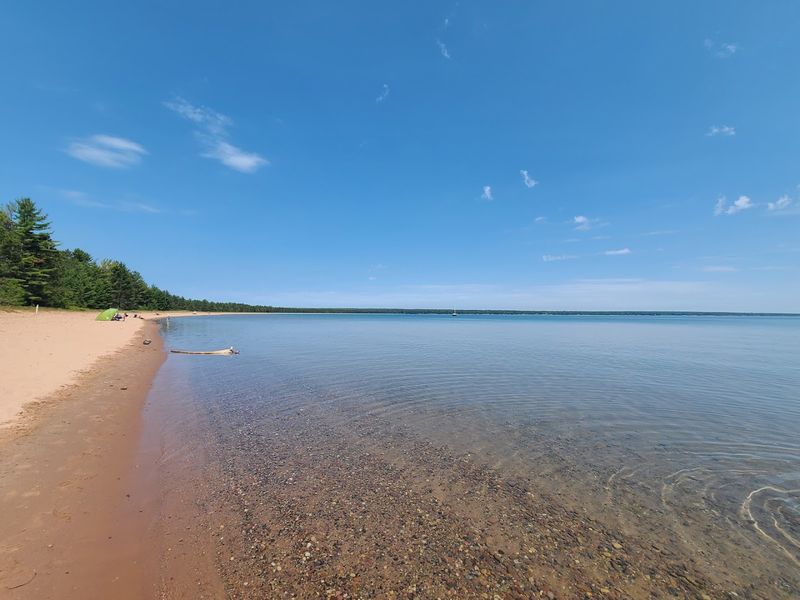
Then there is the beach. The 1.5-mile sandy stretch connected to Big Bay Town Park softens the rugged scenery just enough to make the coastline feel balanced.
On calm summer afternoons, the protected bay becomes surprisingly peaceful for swimming, wading, or simply sitting in the sand watching the light move across the lake.
Secret Ecosystems and Surprising Finds Hidden Inside the Park
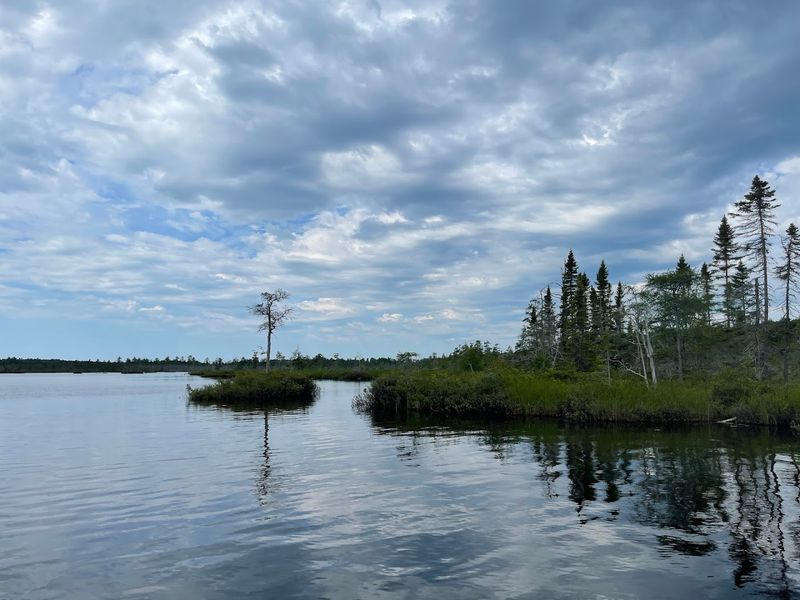
Most people come to Big Bay State Park for the Lake Superior shoreline, but the interior of the park hides an entirely different world worth exploring. Sphagnum bogs, old-growth hemlock forests, barrier beaches, wetlands, and lakeside dunes all exist within the same 2,350 acres — a combination of ecosystems that feels surprisingly diverse for one Wisconsin state park.
Every section of the landscape has its own atmosphere, shifting from quiet forest shade to open marshland within a single walk. The Boardwalk Trail is where the bog experience really opens up.
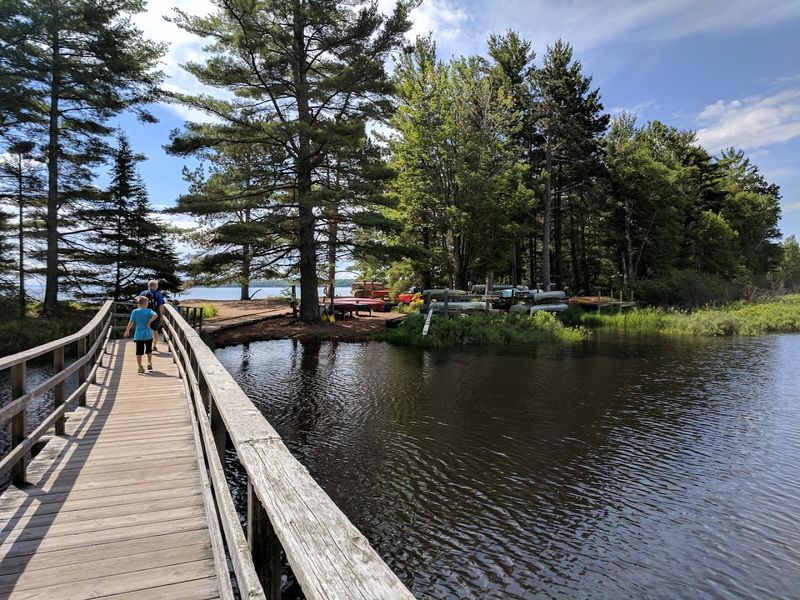
Stretching roughly 1 to 1.5 miles, this accessible trail moves through wetland areas with views of both the bog and Lake Superior beyond the trees. It feels completely different from the cliffside shoreline trails.
The spongy moss underfoot, the still water, and the unusual plant life create a quieter, almost mysterious mood. Carnivorous plants grow in parts of the bog, adding another unexpected detail to the landscape.
Early summer brings another layer of beauty. Wildflowers begin appearing along trail edges and across the forest floor, while mushrooms emerge after rainfall in the denser wooded sections of the park.
The Woods Trail is especially rewarding after damp weather, when the forest floor suddenly fills with texture and earthy scent. Bald eagles also return to nest here every year, and seeing one circle above the trees or shoreline is not uncommon.
The 2.6-mile Lagoon Ridges Trail gives visitors the best chance to move through several ecosystems in a single hike. After rainfall, waterproof shoes are a smart idea because some sections can get muddy quickly, but that ruggedness is part of what makes the park feel so untouched.
Everything You Need to Know Before You Pack Your Bag
Planning a trip to Big Bay State Park takes a little more logistics than your average state park visit, but the extra effort pays off in spades. The ferry from Bayfield runs from roughly April through December, with winter access sometimes available via an ice road or wind-sleds when conditions cooperate.
Checking ferry schedules in advance is a must — you don’t want to miss the last boat back.
The park has 60 to 62 campsites available, ranging from electrical hookup sites for RVs to walk-in tent sites for those who prefer a quieter, more removed experience. The campground stays especially peaceful later in the season when crowds thin out.
Reservations are strongly recommended, particularly for summer weekends — sites here book up fast once word gets out. Facilities are well-maintained throughout the park. Clean restrooms, picnic areas with grills, and water fill stations are all available.
You can call their number or visit the official Wisconsin DNR website, which has up-to-date information on trail conditions, camping availability, and seasonal closures. Hours run daily from 6 a.m. to 11 p.m. year-round.
Bug spray is genuinely essential during late spring and early summer. Late spring and early summer can bring intense fly activity in the wooded trails — the kind that no amount of spray fully stops, but that eases significantly on the beach.
Dogs are welcome on a leash in many areas of the park but are restricted from the main beach and boardwalk. Knowing these details ahead of time helps you plan a visit that actually goes smoothly from start to finish.
Why Big Bay Feels Nothing Like Most Wisconsin Parks
Wisconsin has some genuinely excellent state parks, but Big Bay occupies its own category. The island setting alone separates it from every other option in the state — you have to earn your visit with a ferry ride, and that small barrier keeps the crowds manageable and the atmosphere calm.
There’s a feeling of genuine remoteness here that’s hard to manufacture anywhere else in the Midwest. The park is also one of only three Wisconsin state parks designated for optimal Milky Way viewing thanks to its exceptionally dark skies.
On a clear night away from city light pollution, the sky above Big Bay is the kind of thing that makes you reconsider your whole relationship with the night.
Stargazers who time their visit around a new moon are in for an experience that’s nearly impossible to replicate closer to home.
The diversity of landscapes packed into 2,350 acres is another thing that sets this park apart. Old-growth hemlock forest, sandstone sea caves, sphagnum bog, barrier beach, lakeside dunes, and cliff-top overlooks — most parks specialize in one or two of these things.
Big Bay has all of them, and the transitions between habitats feel almost theatrical. The park has the kind of staying power that keeps people returning for years. That kind of staying power is rare.
Whether you’re here for a single afternoon hike or a multi-day camping stay, Big Bay State Park has a way of getting under your skin and quietly becoming one of your favorite places in the world. That’s not hype — it’s just what the place does.
Make It a Madeline Island Moment Worth Remembering
Visiting Big Bay State Park on its own is already a great trip. But combining it with everything else Madeline Island has to offer turns it into something truly memorable.
La Pointe, the small town where the ferry docks, has a laid-back charm that makes it worth spending extra time on the island rather than rushing back to the mainland after a single trail run.
Kayaking and canoeing in the calm bay waters are experiences that pair naturally with a park visit. The protected bay keeps conditions manageable for paddlers of most skill levels, and exploring the shoreline from the water gives you an entirely different perspective on the sandstone bluffs.
Rentals are available on the island if you don’t have your own gear, making this accessible for first-timers. Swimming at the beach on a warm summer afternoon is the classic wind-down after a morning of hiking.
The bay water is calmer than the open lake, and the sandy stretch is large enough that you can usually find a comfortable spot even on a busy day. Wading in after a long trail loop feels like a well-earned reward, and the water clarity is genuinely impressive.
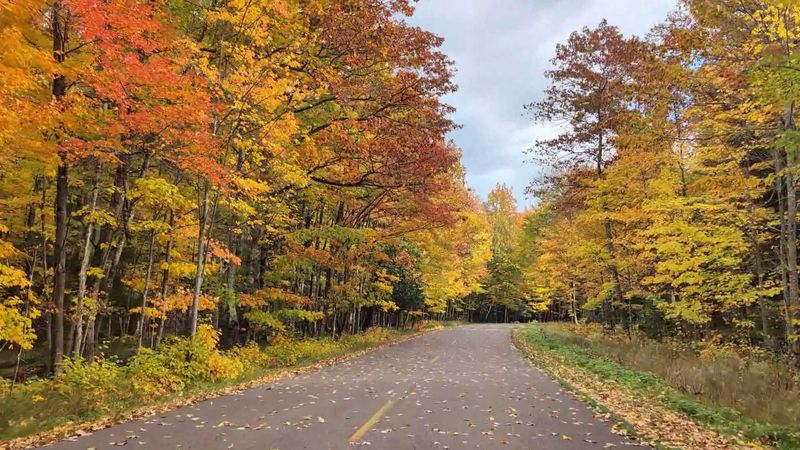
Fall color season brings its own magic to the island. September and October bring especially beautiful fall color, the combination of turning foliage and lake views as something close to perfect.
Winter visits, while logistically more involved, offer a snow-covered solitude that feels almost otherworldly. Whenever you go, plan to stay at least one night on the island — a day trip is a great start, but Madeline Island rewards those who linger just a little longer.
Share this story