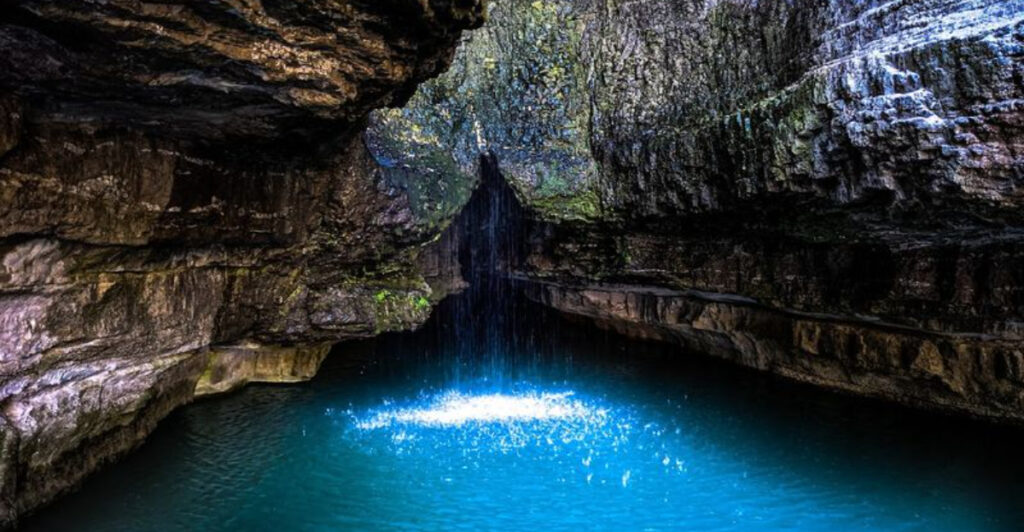
Roaring River State Park in southwest Missouri stops people almost immediately with water so intensely blue-green it barely looks real. The spring pool glows with a clarity and color that feels more tropical than Midwestern, especially once sunlight cuts across the rocks beneath the surface.
What begins as a quick scenic stop quickly turns into something much bigger, thanks to forested hills, peaceful trails, and the park’s relaxed old-school atmosphere. The beauty here feels easy to access but surprisingly hard to forget. If you are looking for a Missouri state park that delivers an instant wow factor and plenty more once you settle in, this one absolutely deserves attention.
The Blue Pool That Stops You Mid-Step
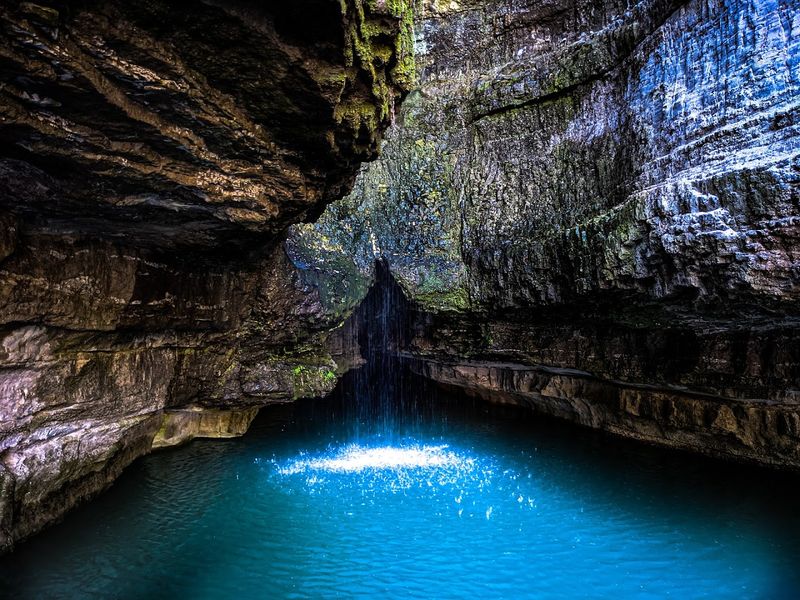
The first surprise at Roaring River State Park is how quickly the water takes over your attention. You round into the spring area, and suddenly the color shifts from ordinary creek tones to a glassy blue that looks startling against the surrounding stone and trees.
It is the kind of scene that makes you pause before reaching for a camera, because your eyes need a second to believe it.
The spring basin looks clean, cold, and sharply defined, with submerged rock details visible through the water when the light cooperates. Instead of a muddy or shadowy pool, you get clarity and color at the same time, which is a rare combination in a heavily visited park.
Even on a busy day, the spring itself has a visual force that cuts through chatter and pulls your focus back to the water.
Part of the appeal is the contrast. The Ozark setting around it is green, rugged, and textured, while the spring adds this smooth, luminous patch that almost glows in comparison.
That combination gives the area an immediate identity, and you do not need a long hike or complicated plan to experience it.
If you are traveling with people who have different energy levels, this is a strong advantage. You can arrive, walk a short distance, and still get a memorable payoff without turning the outing into an all-day endurance test.
For photographers, casual visitors, and families alike, the visual reward starts early. That opening impression matters because it sets the tone for the rest of the park. Roaring River is not trying to overwhelm you with size.
It wins through precision – vivid water, clean lines, and a spring setting that looks almost unreal while staying unmistakably Ozark.
Where The Park’s Energy Begins
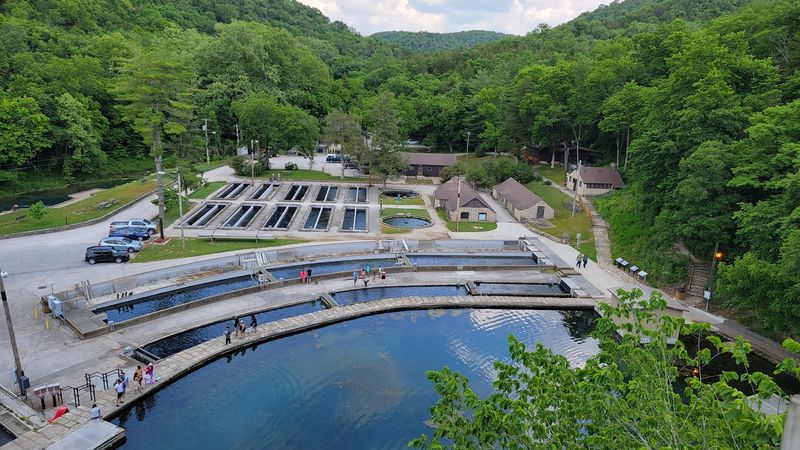
Roaring River State Park is organized around water, and that becomes obvious once you move beyond the first look at the spring. The flow that begins here shapes the park’s layout, its sound, and much of the experience visitors remember afterward.
You are not just looking at a pretty pool; you are standing at the source of the place’s rhythm. Follow the water away from the spring, and the park starts to reveal its structure.
Paths, overlooks, and gathering spots all make more sense when you notice how the stream threads through the landscape. That steady current adds motion to every stop, so even simple walks feel active rather than static.
The sound is part of the draw too. In some sections, it is a low rush that blends with birds and breeze, while in others it picks up enough volume to become the main track of your visit.
That constant movement keeps the park from feeling decorative or staged, because the scenery is always doing something.
This is also why Roaring River stands out from parks where the best feature is isolated from everything else. Here, the signature attraction spreads outward.
The spring feeds the creek, the creek guides where you look and linger, and the whole setting develops a sense of continuity that makes a casual stroll more interesting than expected.
If you like places with a strong center, this park delivers one. The water is the headline, but it also handles all the supporting work, tying together trails, viewpoints, and quiet corners.
By the time you have wandered for a bit, you realize the spring is not a side attraction – it is the park’s living engine.
Missouri Color, Ozark Stone, and Clear-Water Detail
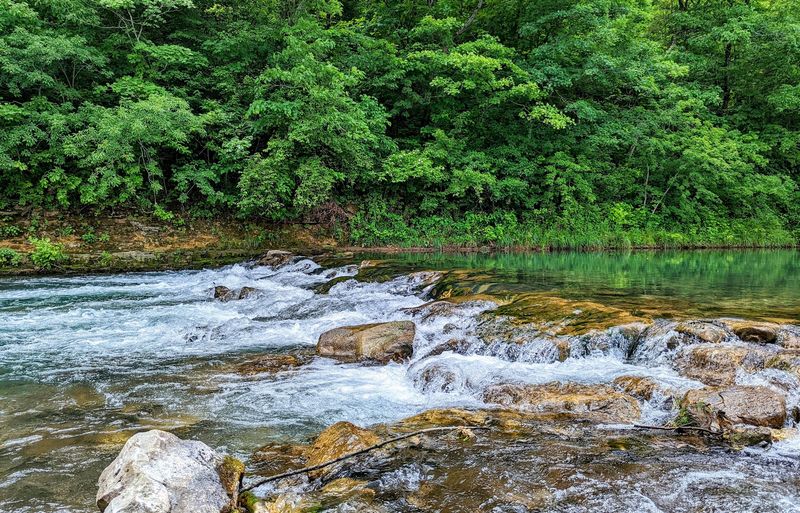
One reason this park is so visually satisfying is the way Missouri geology shows up in plain view. The spring water slides over and around pale rock, and those stony edges sharpen the color instead of dulling it.
You get a close look at how the Ozarks build scenery through texture, contrast, and movement rather than dramatic height alone.
Look closely near the waterline and the details keep adding up. There are pockets of shadow that turn the blue deeper, thin ripples that bend reflections across the surface, and rough limestone that gives the whole spring area structure.
It is a lesson in how clear water can make a landscape more legible, because the features are easier to read. That clarity changes the mood of the park. Instead of feeling dense or closed in, the spring area feels open and precise, almost polished by nature.
Trees still frame the scene, but they do not swallow it, and the rock keeps everything grounded in a distinctly Ozark setting.
For visitors who enjoy noticing small visual differences, this is where Roaring River gets especially good. The water is not one flat shade, and the stone is not one flat color.
Depending on cloud cover, season, and angle, the spring can lean turquoise, blue-green, silver, or clear enough to spotlight the bottom.
That range is a big part of the park’s appeal. You are not seeing a generic scenic stop that looks identical in every photo.
Roaring River gives you a living palette built from Missouri rock, cold water, and changing light, which means the view rewards more than a quick glance.
The Fishing Legacy Woven Into the Landscape
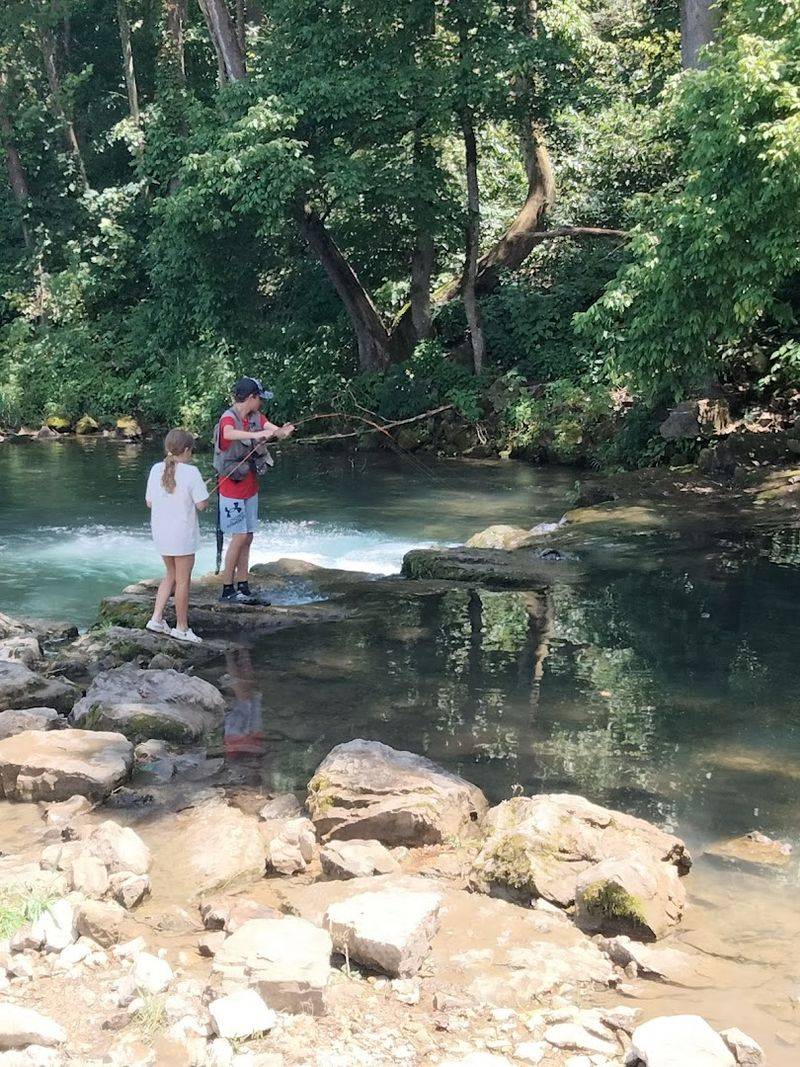
Roaring River State Park is not only about looking at the spring. The park also carries a strong fishing identity, and that history changes the way you read the landscape once you are on site.
Water here is scenic, but it is also practical, managed, and deeply connected to a long outdoor tradition in southwest Missouri.
You notice it in the streamside design, the way access points are integrated into the park, and the steady presence of anglers moving with calm purpose. Even if you are not planning to fish, the culture around it adds character.
The park feels used in a grounded, specific way rather than treated as a backdrop for quick photos. That matters because it keeps Roaring River from becoming one-note. A lot of scenic spring destinations peak at the overlook, then flatten out.
Here, the fishing element adds a lived-in layer, giving the water a role beyond beauty and making the park feel connected to repeated habits, seasons, and local knowledge.
There is also something appealing about the pace this creates. People are not racing around trying to conquer a checklist.
They are watching currents, choosing spots, and settling into the sound of moving water, which gives the park a more patient energy than many heavily photographed destinations.
For visitors, that legacy works whether or not a rod ever leaves the car. It shapes the atmosphere without requiring participation, and it broadens the appeal of the place.
Roaring River can impress you as a scenic stop, but its fishing roots are a big reason the park feels established, distinctive, and woven into Missouri outdoor life.
How to Explore It Without Rushing the Good Parts
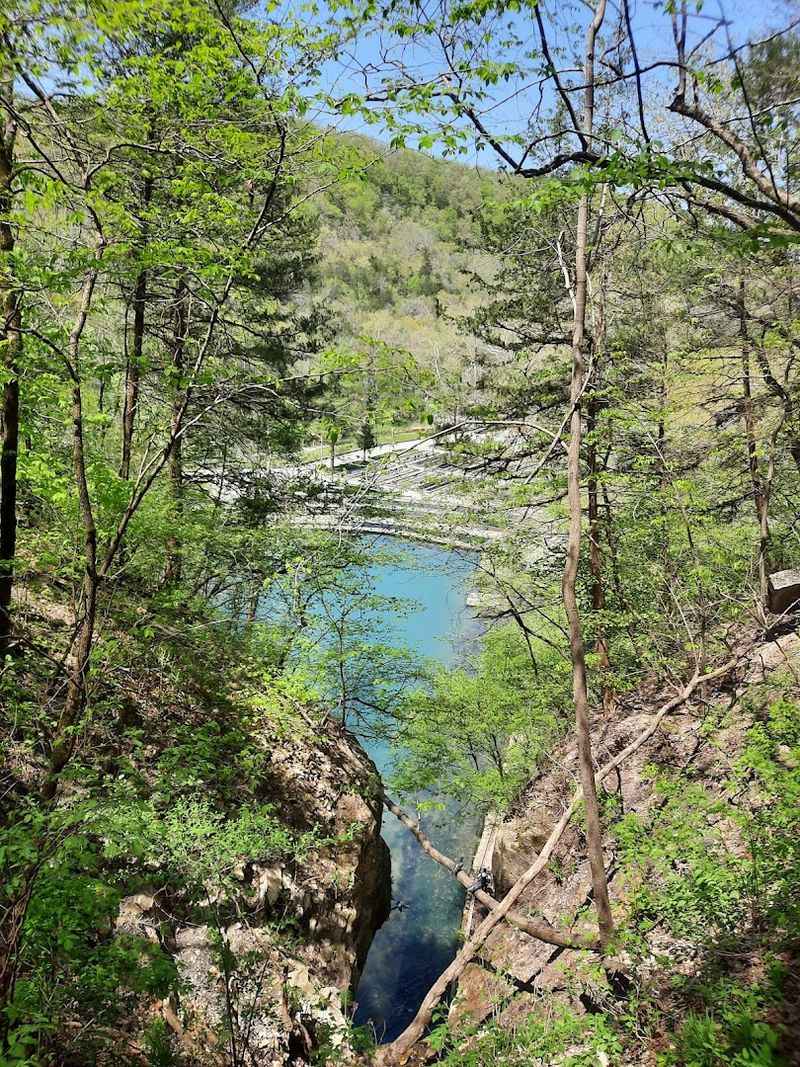
The best way to experience Roaring River State Park is to slow down more than you think you need to. This is not a place where the smartest move is sprinting to the spring, snapping one photo, and leaving.
The park gets better when you give yourself time to connect short walks, stream views, and a few unplanned pauses.
Start with the spring while your attention is fresh, because that first look carries real punch. After that, let the water guide you instead of treating the visit like a strict route.
Wander to nearby viewing areas, notice how the stream changes character as it moves away from the source, and pay attention to the way sound shifts from point to point.
If you are traveling with family or friends, this approach works especially well. Some people can linger at the water, others can keep moving, and the park still holds together as a shared outing.
Nobody needs to be an intense hiker to get a satisfying day here, which makes the experience easier to tailor.
Timing helps too. Earlier and later parts of the day often make the spring area more pleasant for lingering, and angled light can bring out more depth in the water.
Midday still shows off the color well, but the quieter stretches are often better for hearing the current and noticing smaller details around the rocks and trees. The key is resisting the urge to turn Roaring River into a quick checkpoint. Give it a little room.
When you do, the park stops being a single famous view and starts working as a full, connected experience built around water, walking, and repeated moments that land better because they are not rushed.
When to Go and What to Notice on the Ground
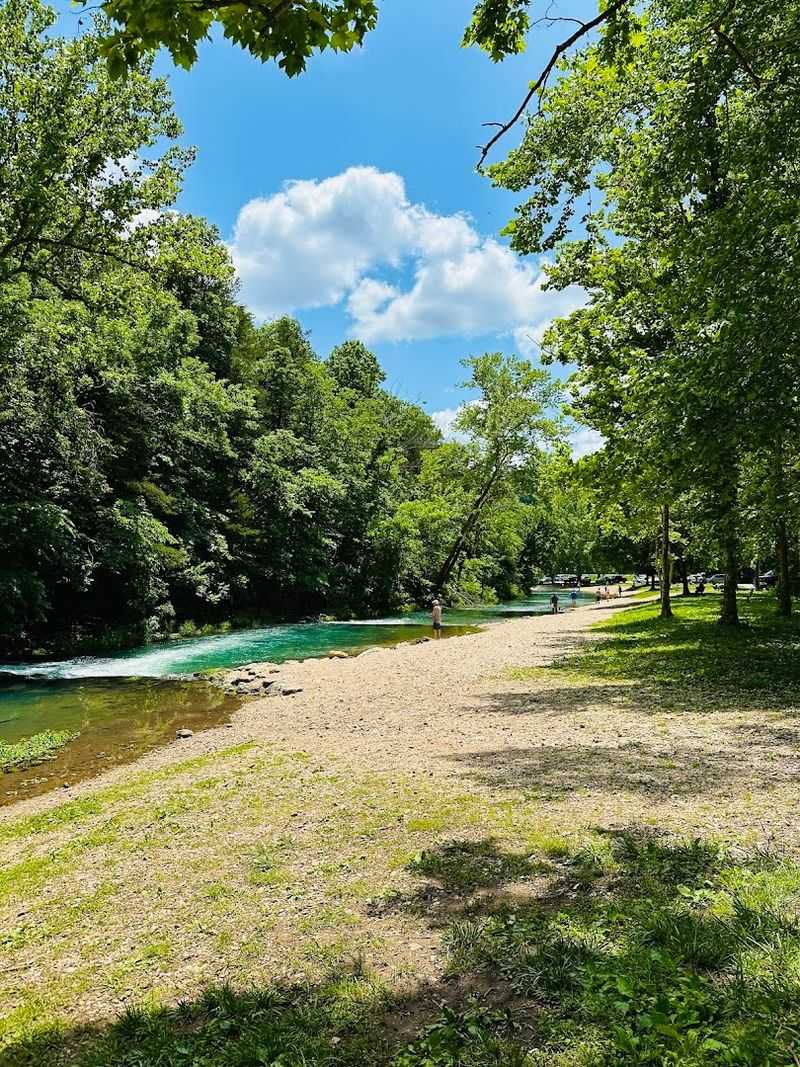
Planning a visit to Roaring River State Park is easier when you know what kind of day you want. If your priority is color and photos, bright light helps the spring show off its clarity and blue-green tone.
If you prefer a quieter visit, aiming for less crowded hours can make the same area feel more spacious and easier to absorb.
Footwear matters more than many visitors expect. The park is approachable, but you will enjoy it more if you are comfortable walking on paved or uneven surfaces near water and stone.
Nothing about the main experience requires extreme gear, yet practical shoes make it easier to linger, explore, and shift directions without thinking twice.
It also pays to look beyond the obvious focal point. Watch how tree cover changes the water’s appearance, where the current speeds up, and how the creek edges alternate between polished and rough. Those details are easy to miss if you are only trying to recreate one exact postcard angle.
Weather can change the mood fast. On a bright day, the spring can appear especially vivid and crisp, while overcast light brings out subtler tones in the rock and surrounding greenery.
Neither version is bad; they simply highlight different strengths, which is useful if you are choosing between a photography stop and a more relaxed scenic walk.
The smartest plan is simple: arrive ready to move at an easy pace, expect to spend more time near the water than you first assumed, and stay observant.
Roaring River rewards attention. The more carefully you look at the ground, the banks, and the current itself, the more layered the park becomes.
Why This Spring Stands Out in a State Full of Pretty Places
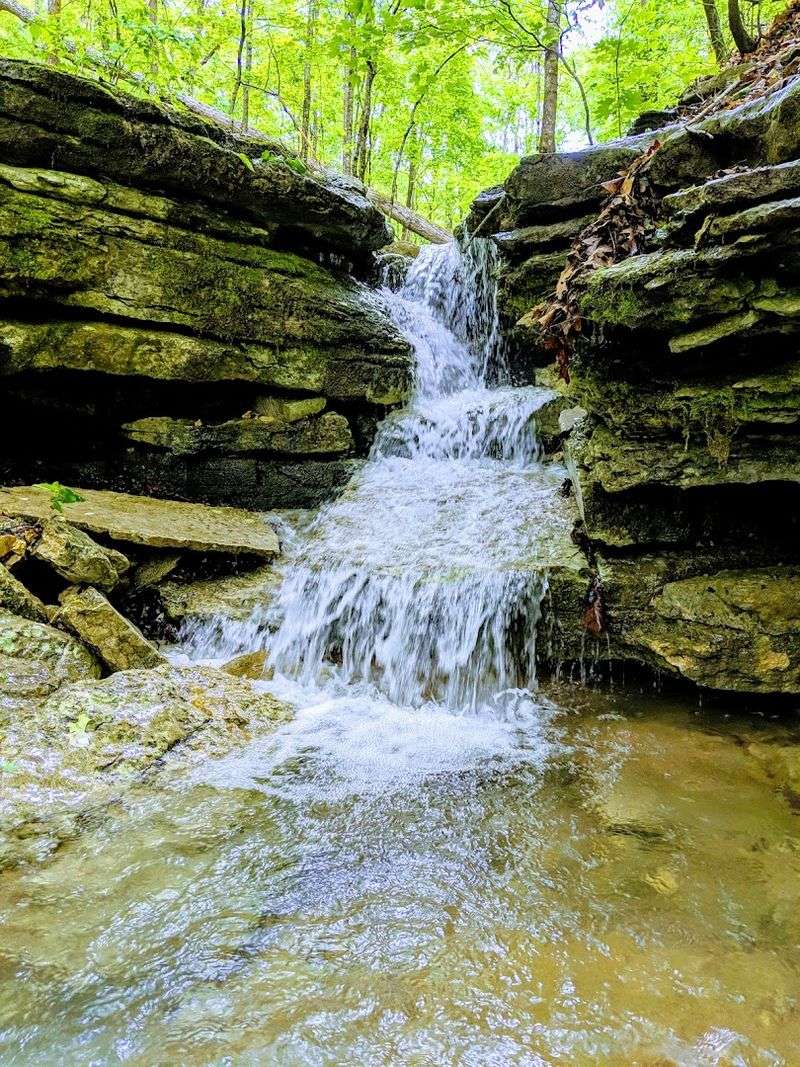
Missouri has no shortage of attractive outdoor spots, which makes it harder for any one place to separate itself quickly. Roaring River State Park manages to do exactly that because its signature view is immediate, distinctive, and easy to access.
You do not need a grueling hike, perfect weather, or expert-level planning to understand why the spring leaves such a strong impression.
Its biggest advantage is concentration. The color of the water, the shape of the spring area, the surrounding Ozark rock, and the sound of the current all work together in a compact space.
That makes the experience efficient in the best way, delivering visual impact without stripping away the slower pleasures of walking and observing.
Just as important, the park has range. It can function as a short scenic detour, a longer wandering afternoon, or part of a fishing-centered outing, and none of those approaches feel forced.
Some places excel at one style of visit and disappoint outside that lane, but Roaring River stays flexible without becoming vague.
There is also a strong sense of place here. The spring is beautiful, yet it is not anonymous beauty that could belong anywhere.
The setting is unmistakably tied to the Ozarks, to cold clear water moving through stone, and to a park culture that balances scenery with regular use.
That is why this spring sticks. It offers an unusual color you will remember, but it backs that up with structure, texture, and purpose.
Roaring River State Park does not rely on hype or oversized claims. It simply puts one of Missouri’s most striking natural sights in front of you and lets the water handle the convincing.
Share this story