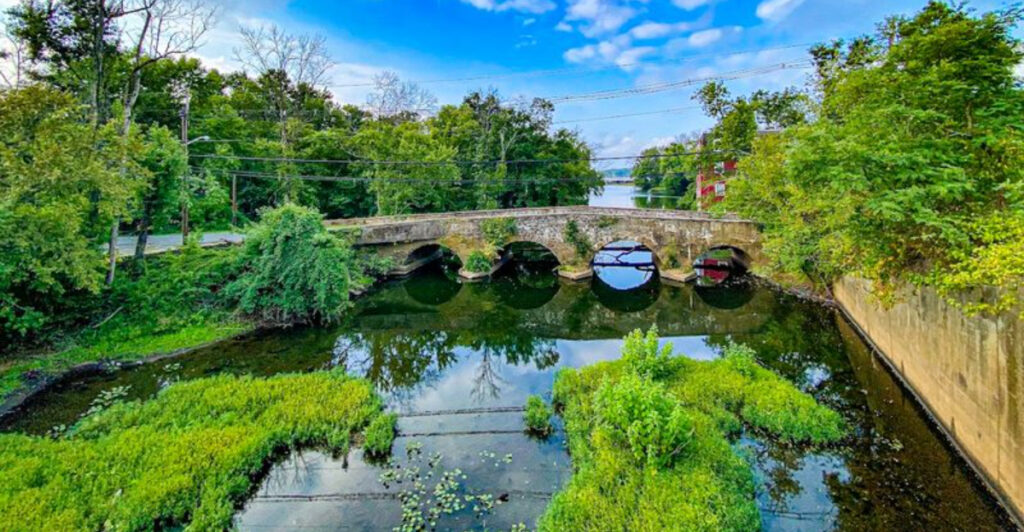
A stone arch in Princeton still takes daily traffic the way it has since George Washington’s first term. A red covered bridge in Hunterdon County looks like it wandered out of a postcard and refused to leave.
A swing bridge in Bergen County sits near the spot where retreating Continental soldiers crossed the Hackensack River in one of those history-class moments that feels much more real when you are standing beside the water. New Jersey’s old bridges are not just pretty leftovers from another century.
They are shortcuts, survivors, engineering experiments, battlefield witnesses, and quiet neighborhood landmarks that locals pass without always realizing what they are looking at. Some are tucked beside mills and towpaths.
Others still carry cars, bikes, and walkers over creeks with names that sound older than the roads themselves. Together, they prove that in New Jersey, history does not always sit behind glass.
Sometimes, it crosses the river right in front of you.
1. Stony Brook Bridge, Princeton
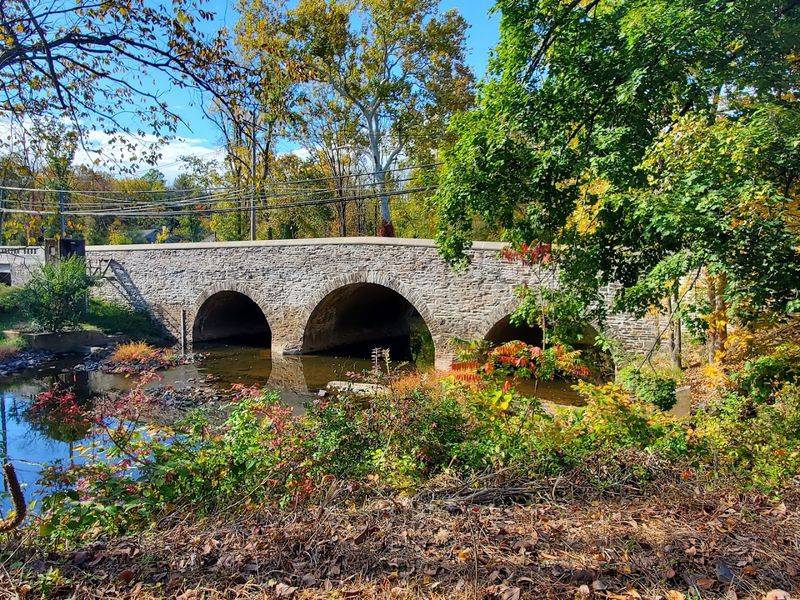
The first thing to know about the Stony Brook Bridge is that it is not retired. This is not some roped-off relic waiting politely for visitors to admire it.
Built in 1792, the triple-arch stone bridge still carries U.S. Route 206 over Stony Brook, making it one of the most remarkable everyday pieces of infrastructure in New Jersey.
The state has identified it as the oldest state-owned bridge still in use, which is the kind of fact that makes sitting in Princeton traffic feel a little less ordinary. Local masons built it with stone from nearby quarries, and its low, sturdy arches have outlasted horse teams, wagons, early automobiles, delivery trucks, and generations of commuters.
It was widened in 1916 and later rehabilitated in a major project that preserved the historic stone arch while strengthening it for modern traffic.
The best way to appreciate it is not to speed over it, but to pair it with a visit to the Princeton Battlefield area, where the landscape still hints at the roads and crossings that shaped Revolutionary War movement through town. It is humble, useful, and deeply old-fashioned in the best possible way.
2. Kingston Bridge, Kingston
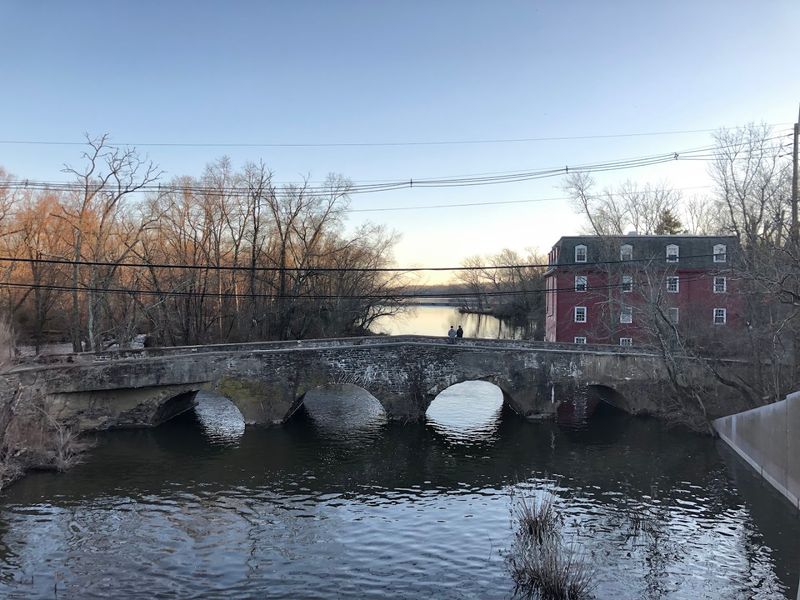
Stand near the Kingston Bridge and you get one of those very New Jersey moments where three counties, an old river crossing, a historic village, and a modern road all seem to be jostling for space.
The bridge crosses the Millstone River at a spot where Franklin Township, South Brunswick, and Princeton all come close together, which already gives it more personality than most spans.
Built in 1798, this four-arch stone bridge replaced an earlier wooden crossing destroyed during the Revolutionary War, and it once carried the King’s Highway, the important colonial route that later became associated with Route 27. Today, newer traffic flows nearby, but the old bridge still has that broad-shouldered look of a road that once mattered enormously.
What makes Kingston especially rewarding is the setting. The bridge sits near the Delaware and Raritan Canal State Park and the Kingston Mill Historic District, so it is easy to turn a quick bridge stop into a slow wander by the water, the lock area, and the village streets.
It is less dramatic than a covered bridge and less flashy than an iron truss, but that is exactly its charm. Kingston Bridge feels like a quiet piece of early America hiding in plain sight.
3. Mill Pond Bridge / Bridgepoint Bridge, Montgomery Township
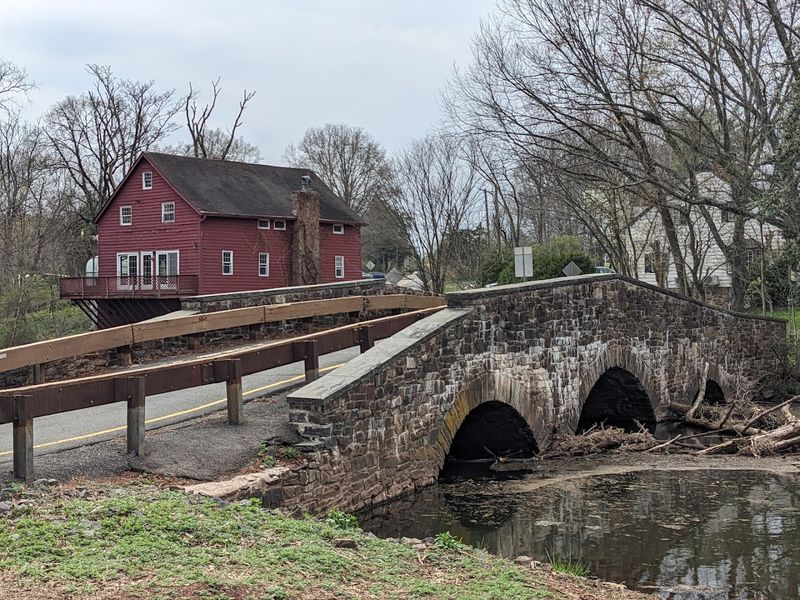
A little stone bridge can change the pace of a whole road, and Mill Pond Bridge does exactly that. Set in Montgomery Township’s Bridgepoint Historic District, this triple-arch fieldstone bridge looks like it belongs to the farms, mills, and rural lanes around it because it does.
It is believed to date to the 1820s, when this area was tied closely to local agriculture and commerce, and its random fieldstone construction gives it a rough, hand-built character that polished modern bridges rarely have. The surrounding district adds a lot to the experience.
This is not a bridge sitting alone with nothing to say; it is part of a historic landscape of old roads, mill history, preserved land, and quiet Central Jersey countryside. Nearby Mill Pond Park and the Opie’s Mill trail make it especially easy to work into a low-key outing, with a simple loop trail and enough scenery to slow down even the most impatient walker.
Come for the bridge, but let the area do the rest. The pleasure here is in noticing the layers: old stone, old farm roads, a creek crossing, and the feeling that Montgomery’s past is still stitched right into the route.
4. Cat Tail Brook Bridge, Hillsborough
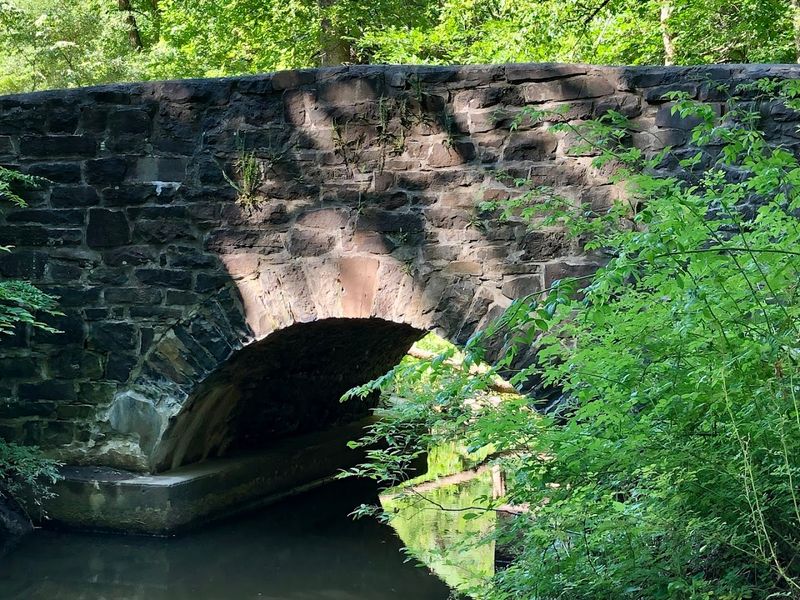
There is something wonderfully direct about Cat Tail Brook Bridge. It is small, sturdy, and not trying to impress anyone, which is exactly why it does.
Built in 1825, the single-arch stone bridge carries Montgomery Road over Cat Tail Brook in Hillsborough, using local fieldstone in a compact span that shows off early 19th-century craftsmanship without making a fuss. Its arch is only about eleven feet across, but the bridge has presence because every stone looks like it had to earn its place.
Historical records point to B. J.
Gray as the builder, with local oversight and stonework tied to named craftsmen, which gives this modest crossing a surprisingly personal backstory. For visitors, this is more of a pause-and-notice stop than a full afternoon destination.
It works best if you are already exploring Hillsborough’s rural roads, historic districts, or nearby Somerset County sites. The reward is in the detail: the curve of the arch, the texture of the fieldstone, and the realization that a road bridge this small has kept its job for nearly two centuries.
In a state full of big infrastructure, Cat Tail Brook Bridge is a reminder that the little crossings have stories too.
5. Warrington Stone Bridge, Knowlton Township
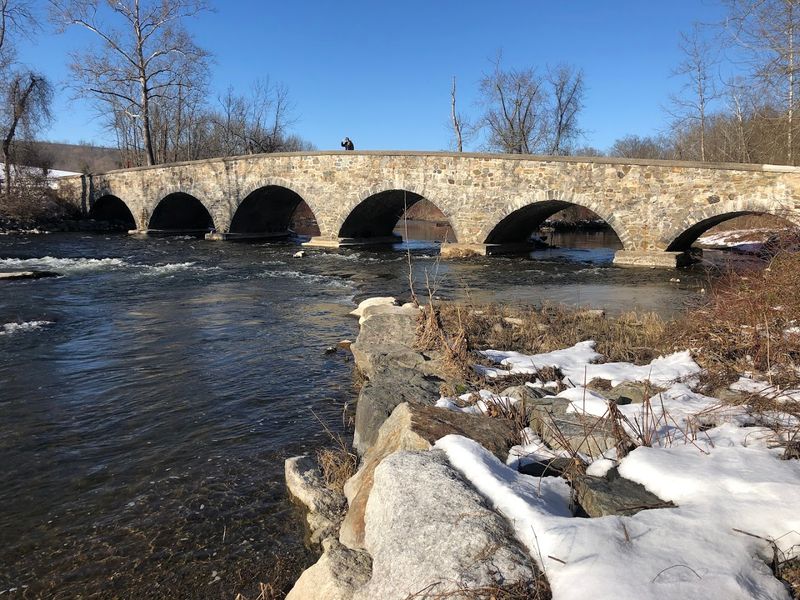
Warrington Stone Bridge feels like the kind of place you discover by accident and then immediately want to tell someone about. It carries Brugler Road over the Paulins Kill in Knowlton Township, and with six stone arches, it has a long, grounded elegance that sets it apart from the smaller rural stone bridges scattered around the state.
The bridge likely dates to the mid-19th century, with later repairs visible in its concrete-capped wing walls and updated stonework. That mix of old and patched-up is part of its appeal.
It has not been frozen into a museum version of itself; it has been maintained, adjusted, and kept useful. The Paulins Kill setting gives it an extra lift, especially if you like old bridges with a quiet river valley around them rather than a busy downtown backdrop.
This is one of the better picks for people who enjoy a scenic drive through Warren County, where the roads still have room to bend and breathe. The bridge’s six arches make it feel substantial without being grandiose, and its one-lane character keeps the crossing intimate.
It is a practical bridge with a poetic side, built for movement but best appreciated slowly.
6. New Hampton Pony Pratt Truss Bridge, New Hampton
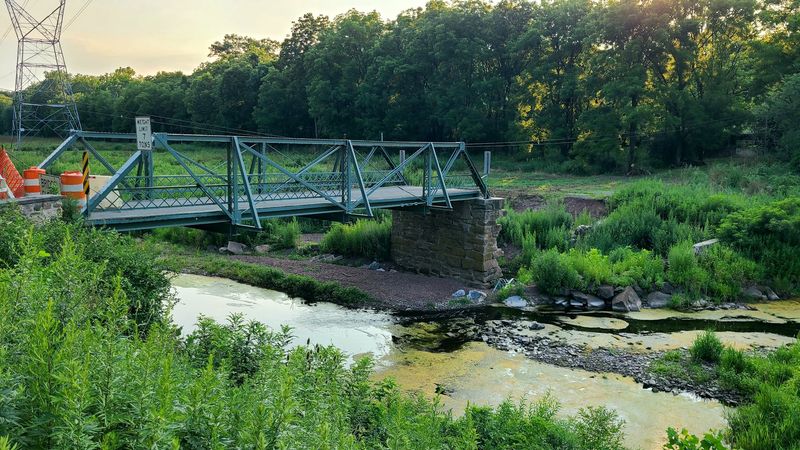
The New Hampton Pony Pratt Truss Bridge looks different from the stone arches on this list, and that is the point. Built in 1868 over the Musconetcong River, it represents a moment when bridge building was moving into the iron age, with engineers experimenting in ways that still look surprisingly graceful today.
Designed by Francis C. Lowthorp and built by William Cowin of Lambertville, the bridge is a rare composite cast- and wrought-iron pony Pratt truss, one of only a few early examples of its kind still standing in the United States.
That may sound technical, but the visual takeaway is simple: instead of heavy masonry, you get a delicate-looking web of iron members, posts, rails, and geometry doing the work. The bridge sits between Hunterdon and Warren counties, which makes it a good stop on a Musconetcong River ramble or a broader historic bridge loop through western New Jersey.
It is not a bridge that shouts. It asks you to look closely at how the pieces fit together.
The more you notice the ironwork, the more it feels like a 19th-century machine that just happens to carry a road across a river.
7. Main Street Bridge, Clinton
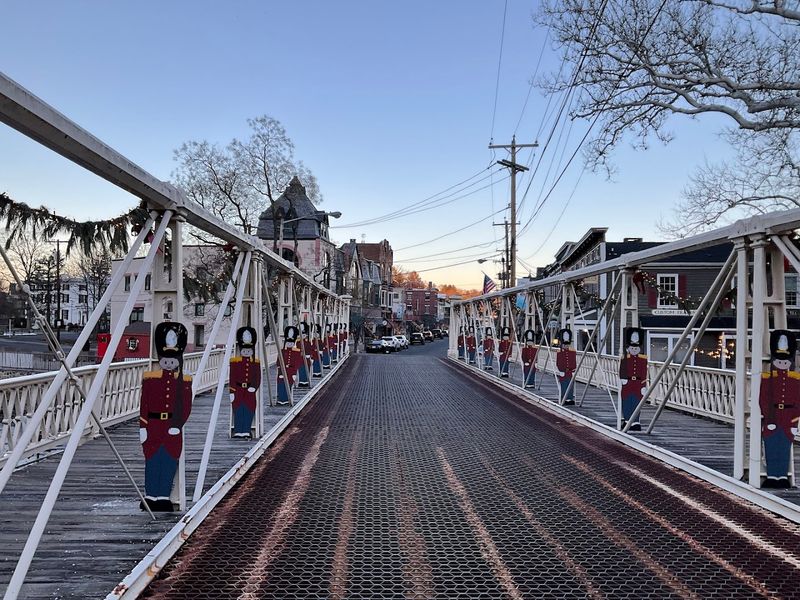
Main Street Bridge in Clinton benefits from one of the best small-town settings in the state, and it knows it. The surrounding scene gives the crossing a strong sense of place, where architecture, water, and walkable streets all reinforce the feeling that you have stepped into a very photogenic slice of local history.
It is easy to linger here longer than planned.
What keeps it interesting is that the bridge does not have to do everything by itself. It works as part of a broader streetscape, connecting views and movement while adding an understated historic backbone to the heart of town.
You notice how naturally it fits the rhythm of Clinton once pedestrians, storefronts, and river views come into the picture.
I think that is why this bridge stays with people. It is not just a structure you cross, but a frame for the experience of being in Clinton at all.
If you appreciate places where infrastructure and town identity are tightly linked, Main Street Bridge delivers that connection without trying too hard.
8. Green Sergeant’s Covered Bridge, Delaware Township
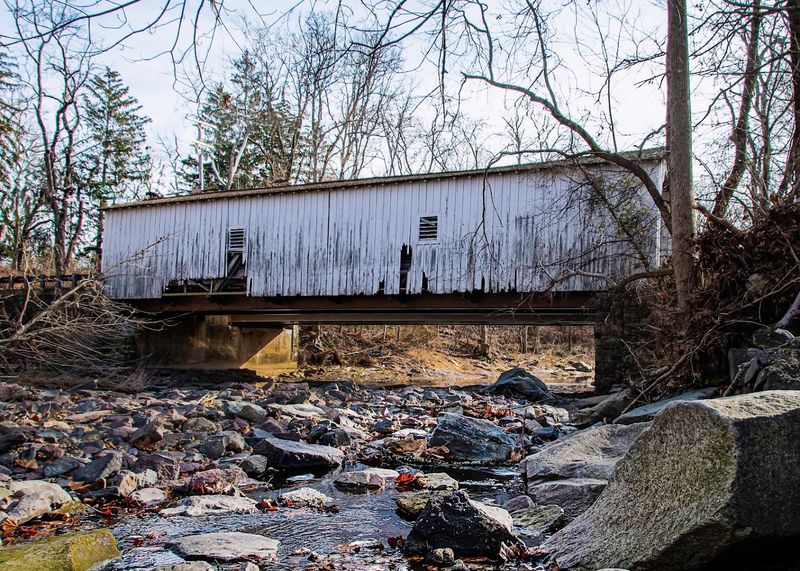
Green Sergeant’s Covered Bridge has the rare ability to make grown adults slow down and grin. Painted red and tucked over Wickecheoke Creek in Delaware Township, it is New Jersey’s last historic covered bridge, which gives it instant bragging rights without needing any extra drama.
Built in 1872 and designed by Charles Ogden Holcombe of Lambertville, the bridge carries Rosemont-Sergeantsville Road through a rural Hunterdon County setting that still feels suited to a covered span.
The name comes from the Sergeant family, connected to the surrounding property, and the bridge’s survival has made it one of the state’s most beloved old crossings.
It is a one-lane bridge, so the visit has a built-in moment of patience: wait your turn, roll through slowly, and let the wooden enclosure do its little time-machine trick. This is a great add-on to a Delaware Township or Stockton-area drive, especially in fall, when the creek valley and back roads make the bridge feel even more cinematic.
Still, it is not just charming because it is covered. It is charming because it is stubbornly, beautifully specific: a wooden 19th-century survivor in a state better known for parkways, turnpikes, and steel.
9. Nevius Street Bridge, Raritan / Hillsborough
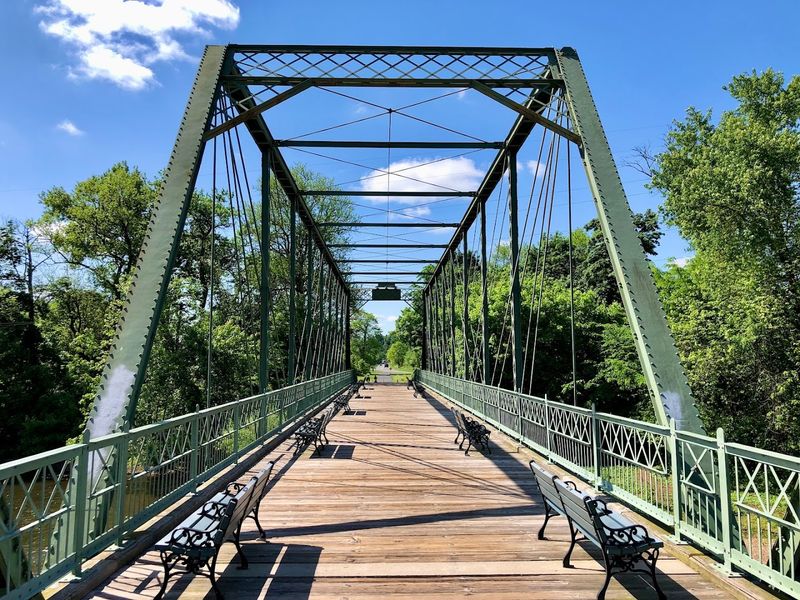
The Nevius Street Bridge is the kind of bridge that got a second life by slowing down. Built in 1886 by the Wrought Iron Bridge Company of Canton, Ohio, it once carried vehicles across the Raritan River between Raritan Borough and Hillsborough Township.
Today, after nearby modern road changes took over the heavy lifting, the old metal truss bridge serves pedestrians, connecting River Road in Hillsborough with the Raritan River Greenway. That shift suits it beautifully.
Instead of squeezing cars across a narrow historic span, visitors can walk it, study it, and look downriver without feeling rushed. The bridge is a double-intersection Pratt through truss, also known as a Whipple truss, with two spans and a strong industrial profile that feels completely different from the stone bridges earlier on this list.
The setting adds layers too: the Raritan River, the nearby canal history, and older utility structures around the north end all hint at how much work this river corridor once supported. This is one of the most satisfying bridges for walkers because the experience is built into the crossing itself.
You are not just looking at history from the roadside. You are moving through it at human speed.
10. Neshanic Station Lenticular Truss Bridge, Branchburg
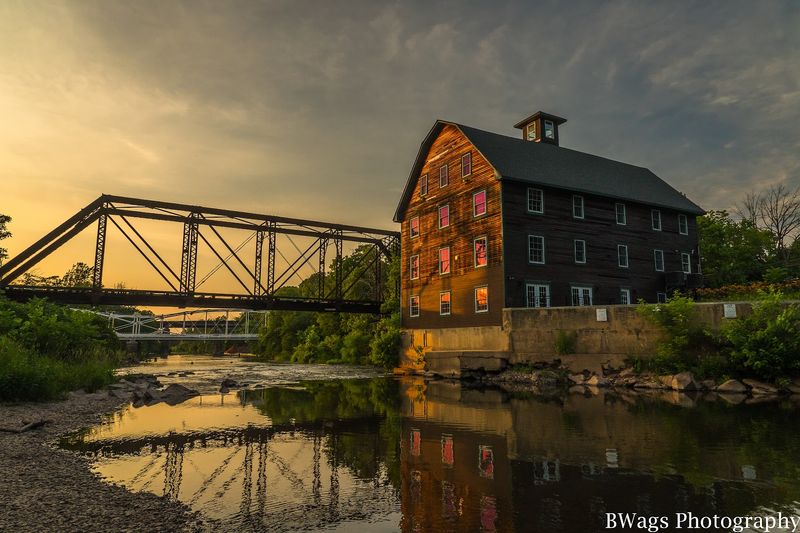
The Neshanic Station Lenticular Truss Bridge has curves where you expect angles, and that is what makes it so memorable. Built in 1896 by the Berlin Iron Bridge Company of East Berlin, Connecticut, it carries Elm Street over the South Branch of the Raritan River in Branchburg’s Neshanic Station area.
Its lenticular, or parabolic, truss design gives the bridge a distinctive lens-like profile, almost as if the ironwork is bowing outward and inward at the same time. That unusual shape was the specialty of the Berlin Iron Bridge Company, and it gives this crossing a visual personality that even casual visitors can spot immediately.
The bridge has two spans and stretches about 285 feet, making it substantial enough to feel impressive without losing its rural village scale. Neshanic Station itself adds to the mood, with historic district character, river views, and the quiet rhythm of a place that has not been over-polished for visitors.
This is a bridge for people who enjoy oddball engineering as much as scenery. Go slowly, notice the arched trusses, and think of it as New Jersey’s answer to the question: what if a bridge looked a little like a pair of iron eyeglasses over the river?
11. Swing Bridge at New Bridge Landing, New Milford
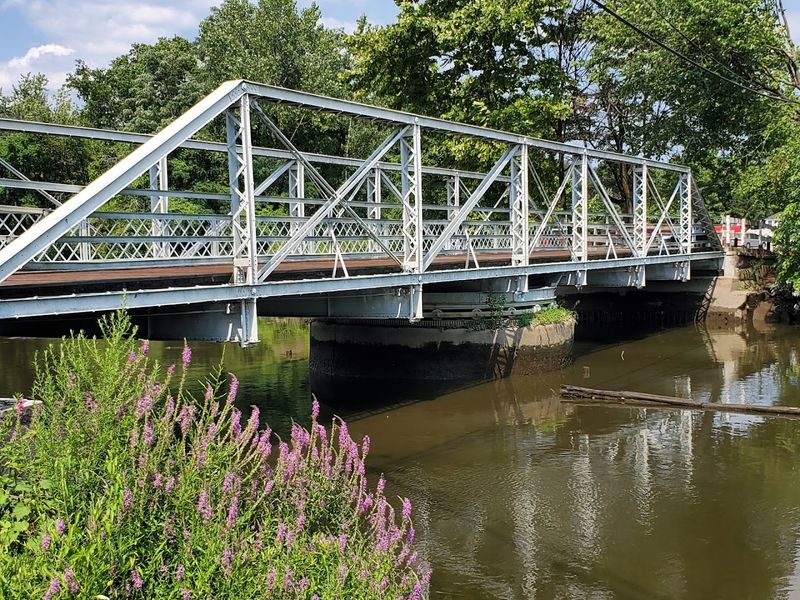
The Swing Bridge at New Bridge Landing carries a story much bigger than its footprint. The iron bridge dates to 1888–1889, but the crossing itself reaches back to 1745, when wooden bridges at this narrow point of the Hackensack River helped connect communities and military routes.
During the Revolutionary War, the site became famous as the “Bridge That Saved a Nation,” associated with George Washington’s retreat from Fort Lee in November 1776. The current metal swing bridge replaced earlier wooden spans and later became recognized as New Jersey’s oldest highway swing bridge.
Even better, this is a history stop with a full setting around it. Historic New Bridge Landing includes the Steuben House and other preserved structures, making the bridge part of a larger landscape rather than a lone curiosity.
The span no longer rotates for river traffic and has been closed to automobiles for decades, but pedestrians can still experience the crossing and the river views that made this spot strategically important. Visit when the historic site has programming, or come quietly for a walk and let the geography explain the history.
It is easy to understand why armies cared about this place once you see how the river narrows and the roads meet.