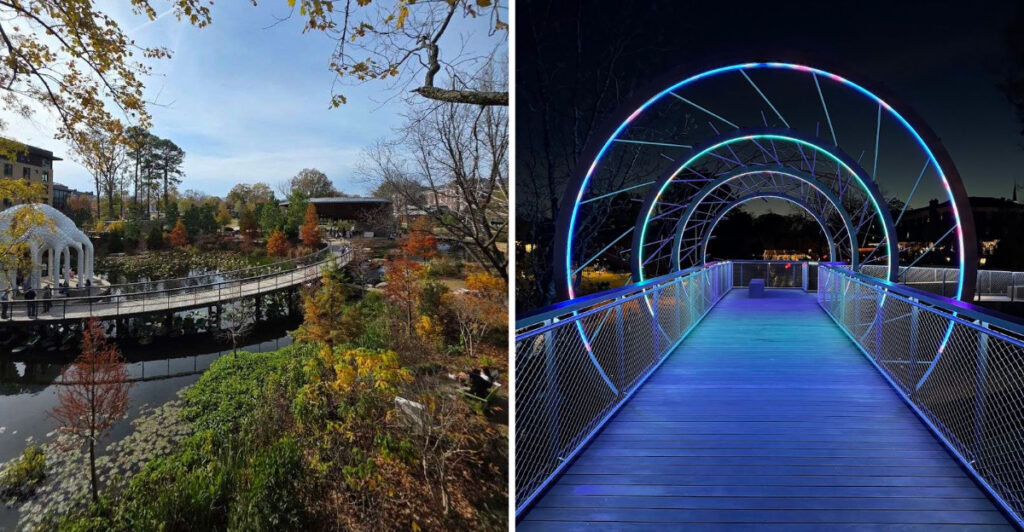
Cary’s Skywalk turns an ordinary park stroll into something far more memorable by lifting visitors directly into the tree canopy above Downtown Cary Park. Instead of staying rooted to standard walking paths, this elevated walkway creates a slow, scenic experience that feels part overlook, part nature trail, and part urban escape.
The views shift constantly as trees, skyline details, and open park space unfold from above, giving the whole area a surprisingly fresh perspective. It is calm, photogenic, and just unusual enough to stand out from typical city parks. If you want a North Carolina outing that feels both relaxing and genuinely different, this sky-high stroll delivers.
A Canopy-Level Entrance That Resets the Whole Park
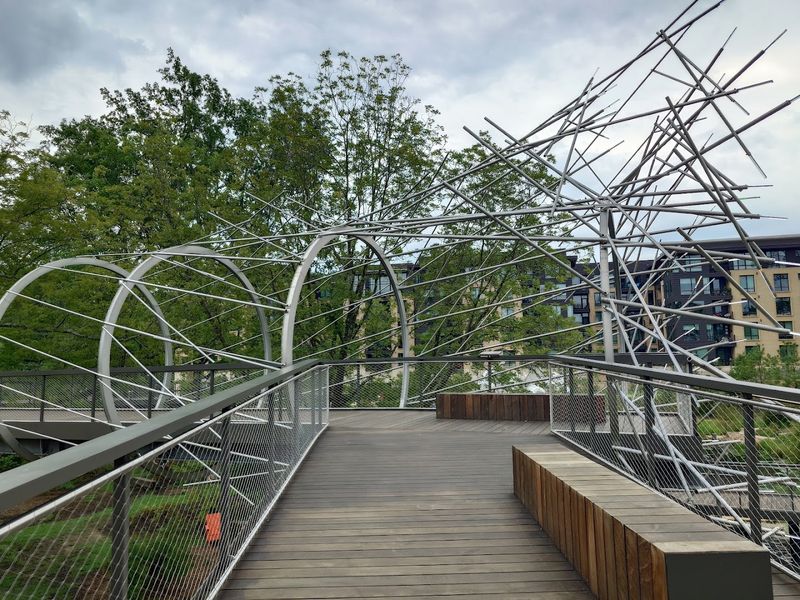
The most striking part of Cary’s Skywalk is how quickly it changes your point of view. One minute you are moving through Downtown Cary Park at ground level, and the next you are lifted into the branches, looking across leaves, trunks, and open sky instead of straight ahead at a typical paved path.
That shift matters because it turns a simple walk into a visual event. The structure runs along the eastern side of the park, elevated about 17 feet above the ground, which puts you close enough to the canopy to notice textures that usually stay overhead.
Bark patterns, clusters of leaves, and the way sunlight filters through branches become part of the route instead of background scenery. Even if you arrive expecting a short architectural feature, the feeling is more immersive than that.
The path itself does not cut through the landscape in a rigid line. It bends and curves around existing trees, which gives the walk a softer rhythm and keeps the design tied to the site rather than imposed on it.
That decision is one of the smartest parts of the experience because the Skywalk never reads like a platform dropped into a park for attention.
Instead, it acts like a suspended promenade with enough motion, height, and openness to make every few steps look slightly different from the last. You are not racing to an endpoint here.
The pleasure comes from the changing angles, the layered views into the park below, and the unusual chance to move through a public green space at eye level with the trees rather than beneath them.
471 Feet of Curves, Views, and Small Design Payoffs
At 471 feet long, the Skywalk has enough length to feel like a destination rather than a decorative bridge. That distance gives the route room to unfold gradually, which is exactly why the walk works so well.
You are not stepping up for one quick photo and stepping right back down. The curves are a major part of the appeal. Because the walkway winds around existing trees, your sightlines keep changing, and the park reveals itself in fragments instead of one wide, obvious reveal.
A lawn appears through branches, then a garden edge, then a glimpse of people moving below, and each turn gives the route a little suspense without trying too hard.
There are also practical touches that naturally slow the pace. Benches along the Skywalk create natural pause points, which means you can stop without feeling like you are blocking the experience for everyone behind you.
Sitting up there for a few minutes lets the walkway do something many park features cannot do – it encourages stillness while keeping you visually engaged.
From those resting spots, the down-and-across views become part of the fun. You can look outward into the tree canopy or downward at activity in the park, which adds a layered sense of movement to a simple stroll.
The structure feels substantial, but it does not dominate the landscape. Its best design trick is that it turns a walk into a sequence of little observations, each one arriving naturally as the path continues to bend through the trees.
North Carolina After Dark: Light Passage Changes the Mood
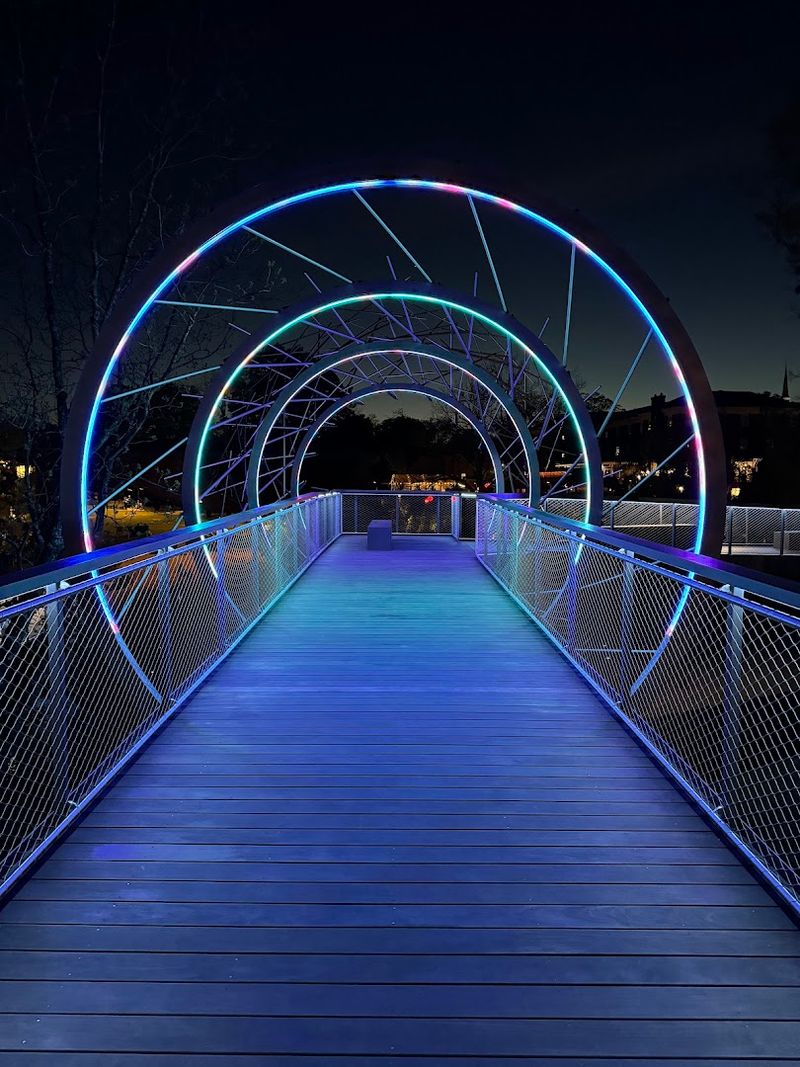
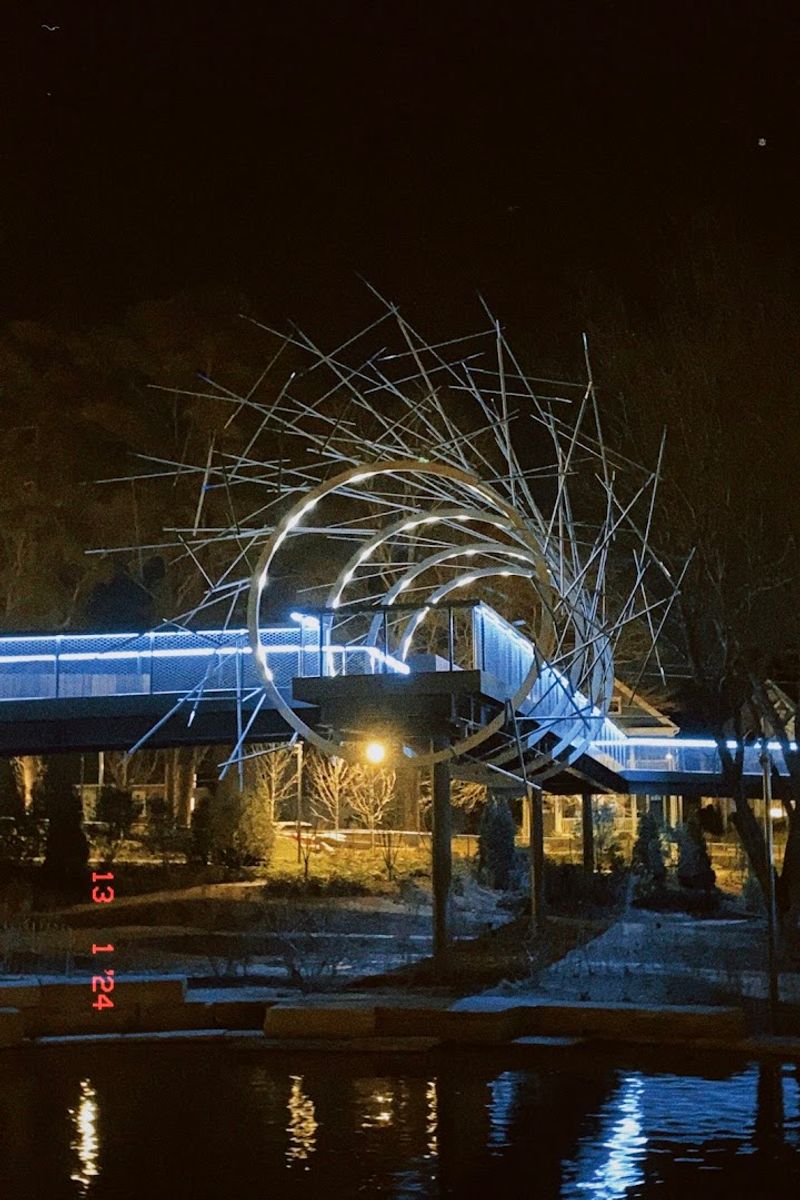
Visit the Skywalk during daylight and you get one experience. Return in the evening and the atmosphere shifts because of Light Passage, the public art installation that wraps around the structure.
The installation wraps the structure in shifting color and movement after dark and gives a more theatrical side to a walkway already built around unusual perspective.
This is not a random set of decorative lights clipped onto a railing. The installation is integrated into the Skywalk, so the visual effect reads as part architecture, part artwork, part nighttime landscape feature.
As the colors illuminate after dark, the elevated path stands out against the trees in a way that feels contemporary without severing its connection to the park.
The best part is how the lighting changes your attention. During the day, your focus tends to drift toward leaves, branches, and views across Downtown Cary Park.
In the evening, your eyes track the glowing lines and shifting color while the surrounding trees become a darker frame, which makes the path itself feel more sculptural.
That contrast gives Cary a rare public-space moment: a walkable piece of infrastructure that performs differently depending on the hour. You can appreciate the Skywalk as landscape design in the sun, then come back later for an art-forward version of the same route.
For visitors who like places with more than one personality, that matters. It means the experience is not locked into a single mood, and it rewards timing in a way most park paths never even attempt.
Look Down and Around: How the Skywalk Connects the Park
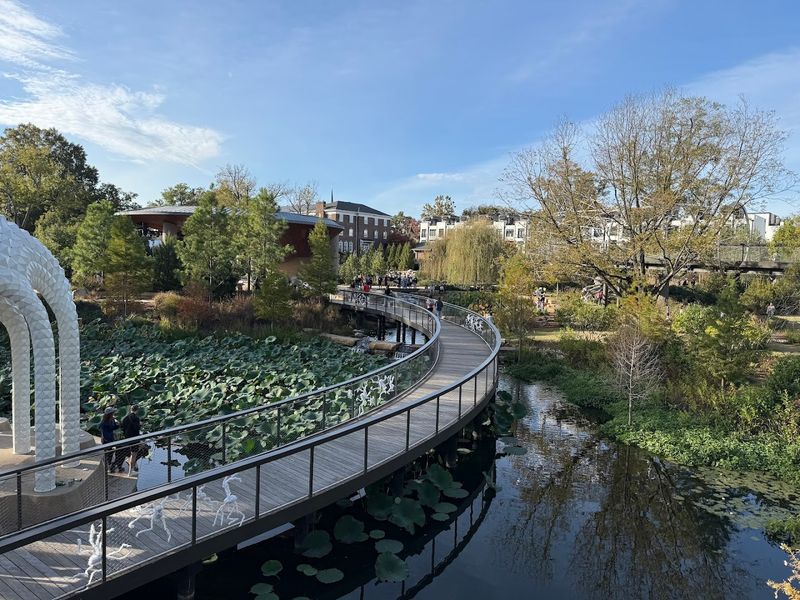
One reason the Skywalk stands out is that it is not isolated from the rest of Downtown Cary Park. It is woven into the larger layout, with multiple entry points that connect the elevated route to different parts of the park.
That makes it easy to treat the walk as part of a broader visit instead of a separate attraction tucked off to the side.
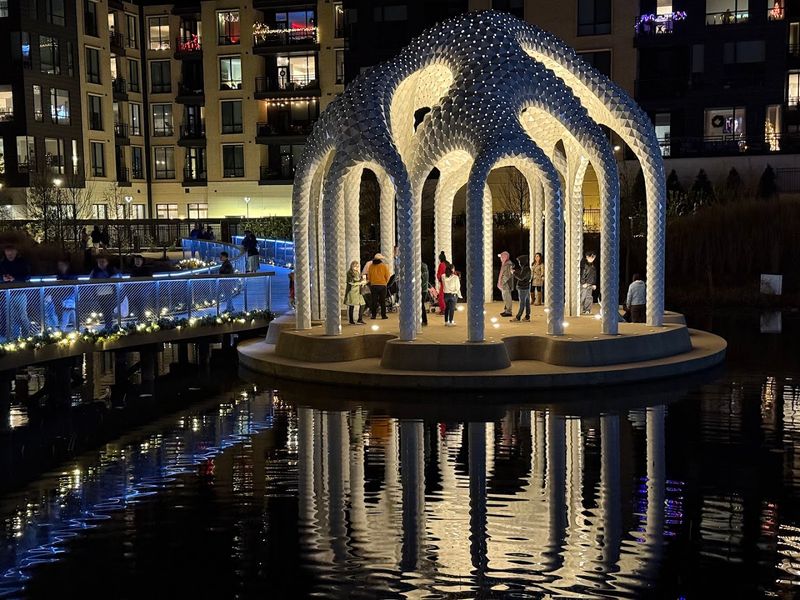
From above, the layout of the park suddenly becomes easier to understand. You can spot how the spaces relate to each other, from the Nest Playground to the Great Lawn Pavilion and surrounding landscaped areas.
That overview gives the Skywalk an almost map-like function, but in a much more enjoyable form than studying a sign near an entrance.
It also changes how you watch people use the park. At ground level, your view is limited by plantings, buildings, and the usual interruptions of movement.
Up on the Skywalk, the activity below becomes part of the scenery, with play, strolling, gathering, and open lawn use unfolding under and beyond the tree canopy.
There is another practical link built into the experience too: the Skywalk serves as a path to the botanical garden beneath it. That detail reinforces the idea that the structure is not only scenic but functional, helping visitors move between elevated and planted spaces with a more memorable transition than a standard sidewalk could offer.
In a park full of features, that connective role matters. The Skywalk adds height, views, and novelty, but it also helps stitch the site together into one coherent visit, which is exactly why it leaves a stronger impression than a simple overlook platform would.
Two Decades of Planning Built Into One Short Walk
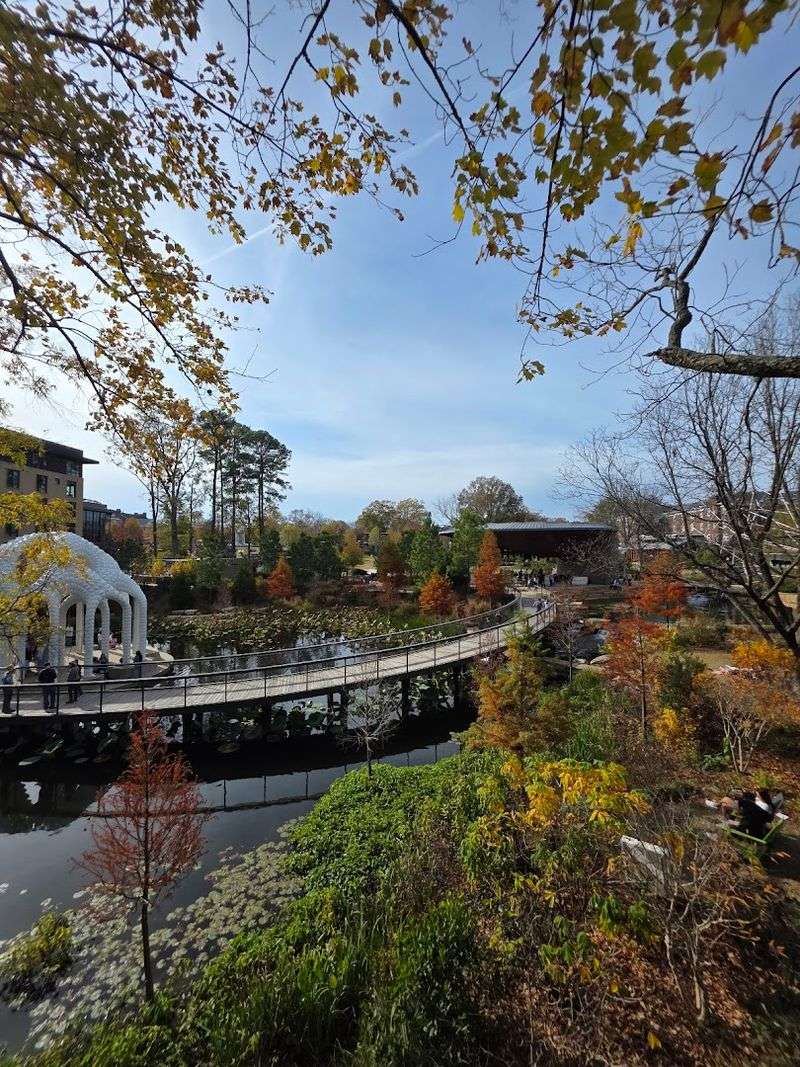
The Skywalk may feel fresh and contemporary, but it did not appear overnight. Downtown Cary Park officially opened on November 19, 2023, after about two and a half years of construction and roughly two decades of planning.
Knowing that timeline adds weight to the experience because the walkway starts to read as a long-developed civic idea rather than a quick design flourish.
That context matters when you notice how deliberately the path relates to the trees already on site. The route curves around existing trunks instead of flattening the landscape into a simpler shape, and that choice signals patience in both planning and execution.
It suggests a project shaped by long-range thinking about what this park should contribute to downtown Cary, not just how it should photograph on opening week.
There is also something appealing about how public ambition shows up here in a very accessible form. The result of years of work is not hidden inside a building or reserved for a special event.
It is a walkway anyone can step onto, moving at their own pace, whether they want a quiet pass through the canopy or a longer stop to look out over the park.
That makes the Skywalk feel like years of planning made visible. Instead of reading about investment and design strategy in an abstract way, you can experience it directly through circulation, views, seating, and the relationship between structure and landscape.
Cary did not just add a feature. It delivered a specific kind of public space, one that condenses years of effort into a route that is simple to use, easy to remember, and distinct within North Carolina’s growing collection of contemporary parks.
Best Timing for a Better Walk in Cary
If you want the Skywalk at its most visually rewarding, timing matters. Early morning brings softer light and a calmer pace, which helps the tree canopy stand out and makes the elevated height feel even more noticeable.
Late afternoon and golden hour are also strong choices because the changing light adds depth to the branches and railings without flattening everything into midday brightness.
Evening is ideal if Light Passage is the main draw. That is when the art installation becomes part of the walk instead of a detail you only know is there.
The structure takes on a more dramatic profile after dark, and the park below reads differently too, with open spaces and pathways becoming part of a layered nighttime scene rather than a broad daytime panorama.
For a more relaxed visit, it helps to approach the Skywalk as a loop within a larger park outing rather than a single stop. Walk it once at a steady pace, then circle back later from another entrance if time allows.
Because the views shift depending on direction, light, and what is happening below, the second pass can feel noticeably different from the first.
A little comfort planning also improves the experience. Shoes suited for strolling, a little patience for stopping at benches, and enough time to linger all make a difference.
This is not a place to rush through while checking a box. The Skywalk rewards attention, especially when you let the route set the tempo.
Choose a good hour, slow down, and the design starts revealing details that are easy to miss when the goal is simply crossing from one side to the other.
Why This Elevated Path Sticks in Your Memory
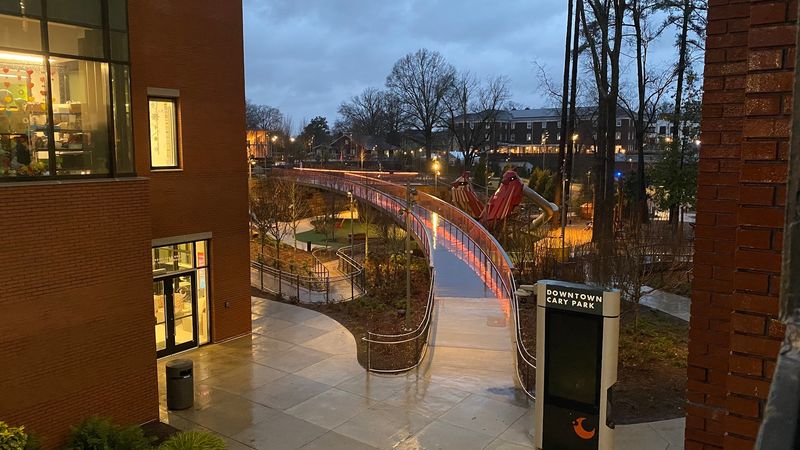
The Skywalk stands out because it combines several roles without becoming cluttered or confused. It is a walkway, an overlook, a piece of public art infrastructure, and a viewing platform for the park below.
Most places do one of those jobs well. This one stacks them together and still stays easy to understand the moment you step onto it.
Just as important, the experience is specific to Cary. You are not looking at a generic elevated boardwalk dropped into any available green space.
The route responds to Downtown Cary Park’s layout, connects to its other features, and uses the site’s mature trees as the central visual element, which gives the whole thing a local identity rather than a copied formula.
The scale helps too. The Skywalk is long enough to create a progression, high enough to alter perspective, and accessible enough to feel woven into an ordinary park visit.
That balance is tricky. If it were shorter, the effect would be more novelty than destination. If it were larger or more imposing, it could overwhelm the landscape it depends on.
Instead, the final impression is unusually crisp. You remember the curve of the path, the eye-level branches, the benches that invite a pause, the views toward playgrounds and lawns, and the nighttime glow of Light Passage.
Those details add up to a place with a clear identity and a surprisingly layered experience for such a simple concept.
In a region with no shortage of parks, Cary’s Skywalk earns attention by changing how you move through one. That shift in perspective is exactly why it lingers after the walk is over.