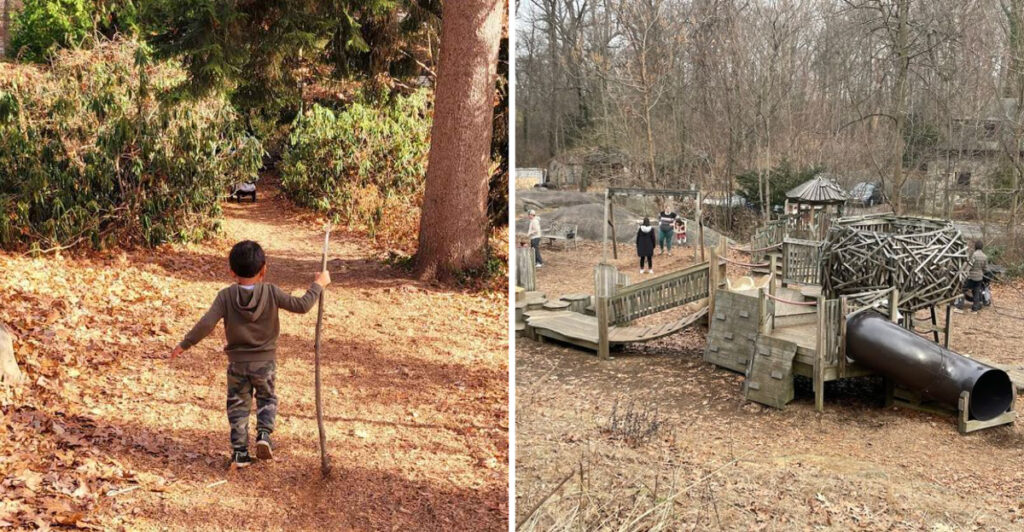
Nature’s Discovery Playground in Scarsdale, New York, rethinks what a playground can feel like by swapping plastic slides and noisy equipment for woods, rocks, trails, and hands-on outdoor exploration. Hidden inside the Greenburgh Nature Center, this family favorite gives kids space to climb, balance, build, and wander through an environment that feels far more connected to nature than a typical park.
Wooden structures, natural boulders, and tree-lined paths keep the experience active without feeling overstimulating. The result is calmer, more creative, and surprisingly memorable for both kids and parents. If your family has been craving screen-free play with real outdoor energy, this Westchester County spot absolutely delivers.
Where the Forest Becomes the Playground
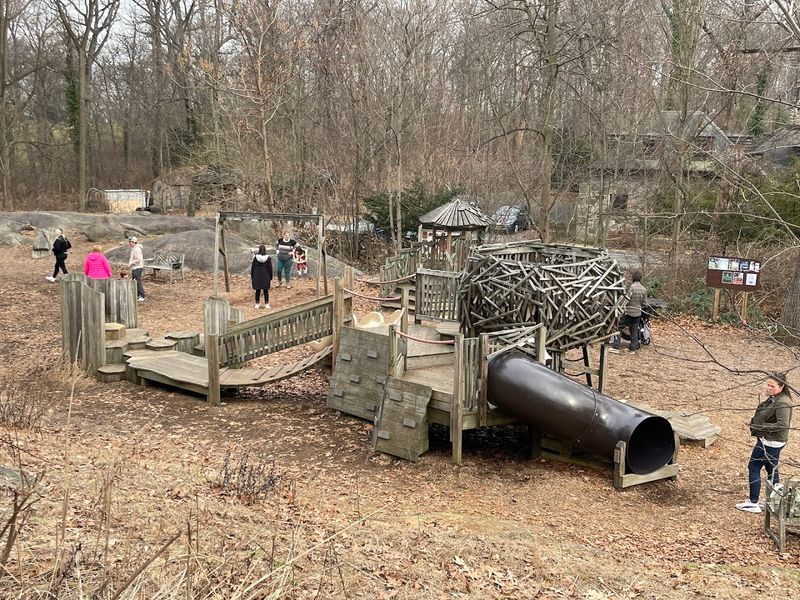
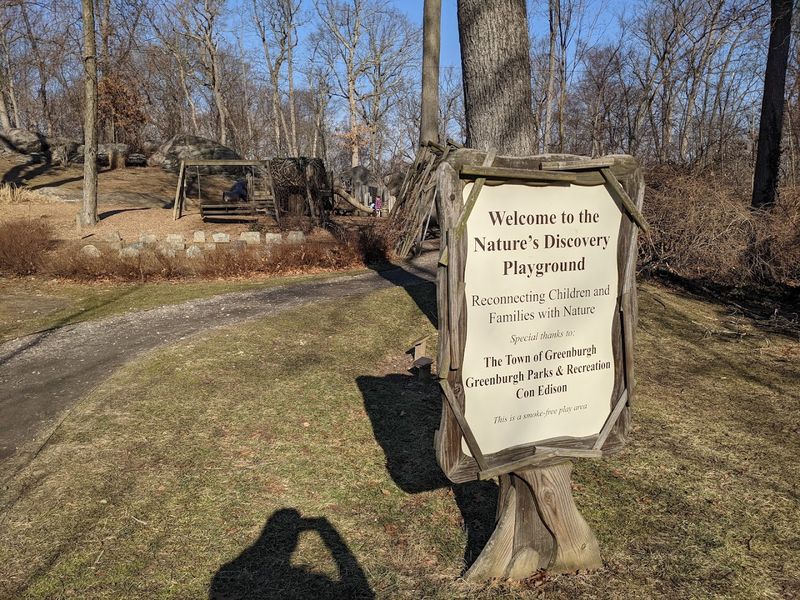
Pull up to 99 Dromore Road and the first thing that registers is how quietly this place announces itself. There are no towering plastic slides visible from the parking lot, no blinding primary colors competing for attention.
Instead, a canopy of mature trees frames the entrance, and the sound of kids laughing drifts through the leaves before the playground even comes into view.
Nature’s Discovery Playground sits within the Greenburgh Nature Center, and that setting shapes everything about the experience. The grounds feel less like a municipal park and more like a stretch of protected woodland that someone thoughtfully equipped for children.
Wooden structures blend into the treeline so naturally that you almost have to look twice to spot where the forest ends and the playground begins.
The entrance area adds a charming detail right away: a little free book library where kids can grab a story before or after play.
It is a small touch, but it signals the kind of intentional, community-minded design that runs through the whole space. Parents tend to linger here, flipping through titles while their kids race ahead toward the climbing structures.
On dry days, the paths and play areas can get a little dusty, so sturdy outdoor shoes are a smart call before arriving. The ground underfoot is natural rather than rubberized, which means the sensory experience starts the moment kids step off the path.
That earthy, slightly uneven terrain is part of the point. This playground was never designed to be perfectly smooth or predictable.
The slight unpredictability is exactly what makes kids slow down, pay attention, and start actually exploring rather than just burning through a fixed circuit of equipment.
Solid Wood Structures Built to Match the Surroundings
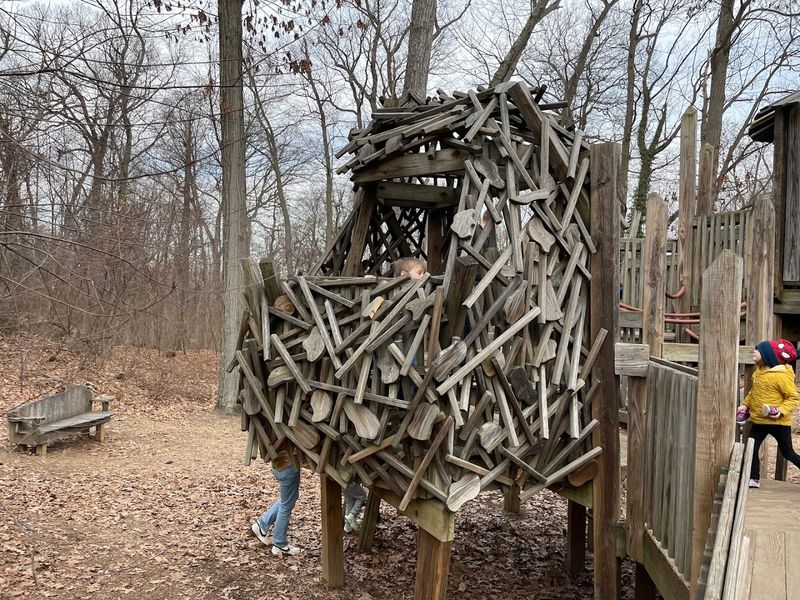
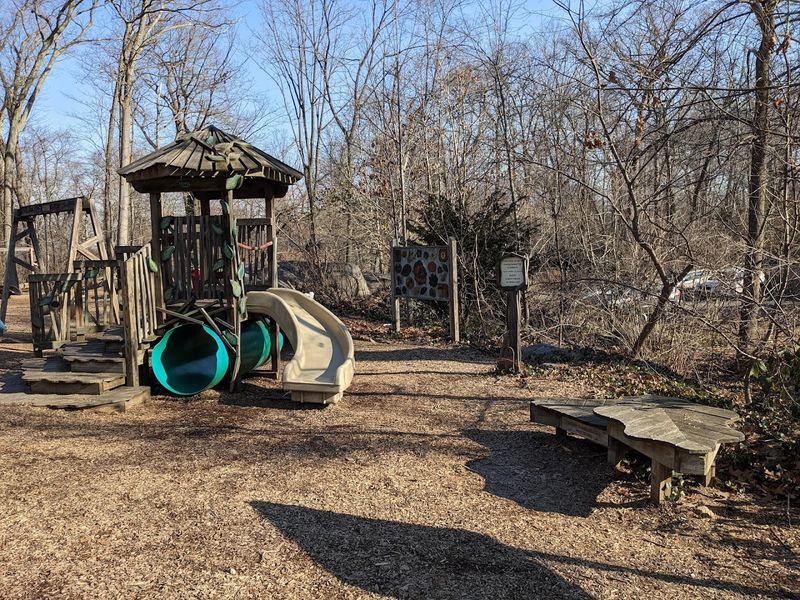
Most playgrounds are built to be seen from a distance. The brighter and more elaborate, the better. Nature’s Discovery Playground took a different direction entirely, constructing its main structures from solid, heavy-duty wood that ages and weathers into the landscape rather than fighting against it.
The effect feels grounded and surprisingly natural. The wooden frames feel sturdy underfoot and underhand. Kids who are used to hollow plastic tubes and synthetic climbing walls will notice the difference immediately.
Wood has texture, weight, and warmth that plastic simply cannot replicate. Gripping a wooden rung, balancing on a wide timber beam, or crawling through a wood-framed tunnel engages the body differently, and that matters for developing coordination and confidence.
The structures are designed with age ranges in mind. Separate sections cater to younger children and older ones, which keeps the play zones from turning into a chaotic free-for-all.
Toddlers get their own scaled-down areas where the risk level matches their abilities, while bigger kids have room to push themselves on more challenging equipment. Parents with children at different developmental stages can actually relax a little instead of constantly redirecting.
Swings are part of the mix too, including bench swings that seat more than one child at a time. Those bench-style swings tend to become social hubs, with kids negotiating who sits where and parents occasionally claiming a spot for themselves.
The overall layout encourages movement between zones, so children naturally flow from one activity to the next without getting stuck in a queue at a single popular piece of equipment. The wooden construction is not just an aesthetic choice.
It is a deliberate philosophy about how outdoor play should connect children to natural materials and the environment around them.
Boulders, Rocks, and the Thrill of Unscripted Climbing
Scattered around the playground, large natural rocks draw kids in like magnets. No instructions needed, no demonstration required.
Children spot a boulder and immediately start calculating the best route up. That instinct to climb something real and uneven kicks in immediately, and this playground feeds it without apology.
The rocks range in size and difficulty, which means a three-year-old and a ten-year-old can both find a challenge suited to them.
Younger kids might conquer a low flat-topped stone and declare it a castle, while older ones test their balance on steeper, more uneven surfaces.
The variety keeps things interesting across multiple visits because the rocks do not change, but the children do. A boulder that felt impossibly tall last summer becomes a warm-up obstacle by the following spring.
Parents should keep a close eye near the larger rocks, especially on busier days when the space fills up and children are moving in every direction at once. The natural setting means there are no padded edges or rubber mats beneath every surface.
That is part of what makes it genuinely adventurous, but it does call for attentive supervision rather than a hands-off approach on a crowded afternoon.
The combination of wooden structures and natural rock creates a layered play environment that feels more like a wilderness challenge course than a standard neighborhood playground. Kids who spend time here develop a different relationship with outdoor spaces.
They learn to read terrain, test their own limits, and make judgment calls about what they can handle. Those are skills that no plastic slide or prefabricated climbing wall can really teach.
The rocks are not a design feature added for aesthetics. They are the main event for a significant portion of the kids who visit.
Color-Coded Trails Through New York Woodland
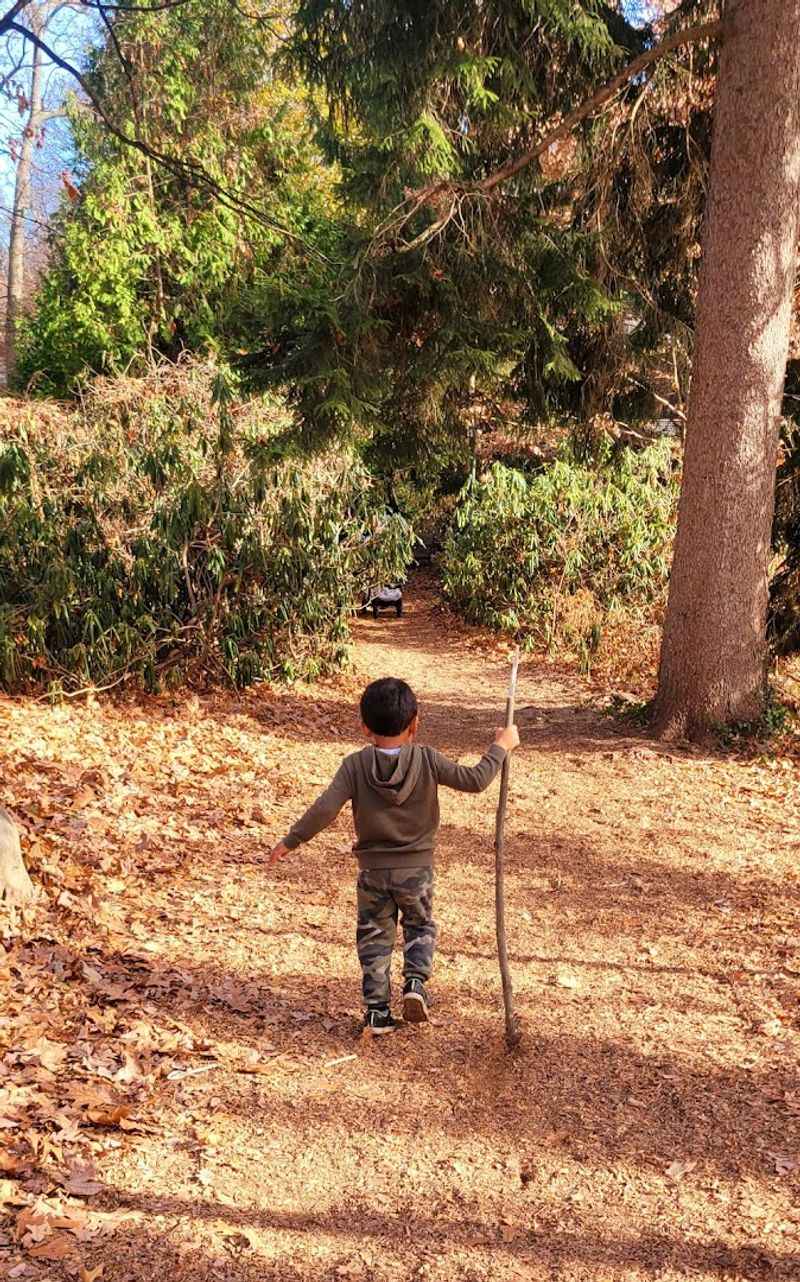
Beyond the playground structures and rocks, a network of nature trails extends through the Greenburgh Nature Center property.
These paths are color-coded, making navigation straightforward even for families without any hiking experience. Following a colored trail becomes its own game for younger kids, who treat each new marker sighting as a small victory.
The trails wind through genuine New York woodland, not a manicured garden path with decorative plantings on either side. Trees crowd in close, roots cross the ground, and the light shifts as the canopy thickens and thins.
On a hot summer day, the shade those trees provide makes a noticeable difference, turning a potentially sweaty slog into a genuinely comfortable walk.
The trails stay approachable even for families without much hiking experience, which matters when younger children are setting the pace. Seasonal changes transform the trails throughout the year. Spring brings new growth and birdsong.
Summer offers deep green shade and the occasional glimpse of wildlife. Fall turns the whole property into something out of a postcard, with leaf color building week by week.
Even winter visits have their appeal, with bare branches opening up views that the summer canopy hides completely.
Picnic areas are available near the trail network, so families can pack lunch and make a half-day of it without needing to leave the property for food.
The combination of active trail walking and a proper sit-down picnic gives the visit a natural rhythm, with energy spent and then restored before the kids head back to the playground for one more round.
For families who want more than a quick thirty-minute stop, the trails are what elevate this destination from a playground visit into a full outdoor outing worth planning around.
The Nature Center Animals and Miniature Trains Next Door

One of the most underappreciated parts of visiting Nature’s Discovery Playground is what sits right next door. The Greenburgh Nature Center is not just a backdrop.
It is an active facility with live animals on display and miniature trains that tend to stop children mid-stride the moment they come into view.
For families who arrive expecting only a playground, the adjacent Nature Center frequently becomes the highlight of the day.
The animals housed at the Nature Center give children a chance to observe real wildlife up close in a way that feels educational without being forced. Depending on when the center is open, kids can spend extended time watching and learning before or after their playground session.
The combination of unstructured outdoor play and a more structured nature education experience covers a lot of developmental ground in a single outing. The miniature trains carry a particular kind of charm that crosses age groups. Younger children are simply dazzled by them.
Even older kids tend to linger longer than expected, watching the trains complete their routes with surprising focus. It is the kind of detail that turns a good family outing into a memorable one.
One practical note: the Nature Center visitor building operates on its own schedule and has been closed on select national holidays in the past. Checking ahead before a visit saves the disappointment of arriving to find the center locked.
The trails and playground remain accessible regardless, but the animal exhibits and train displays are tied to the center’s operating hours.
Planning the visit for a regular weekday or weekend when the center is fully staffed means the whole experience is available rather than just part of it. That extra layer of planning pays off considerably for first-time visitors.
Free Entry, Open Hours, and What to Bring
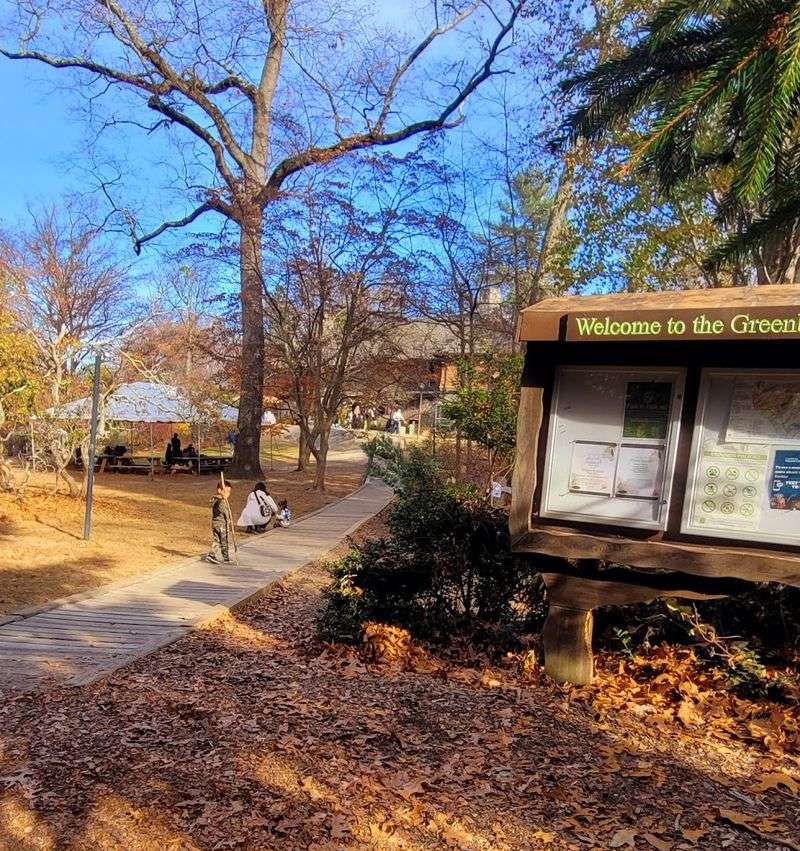
Few things are more welcome in the greater New York area than a quality outdoor destination that does not charge admission.
Nature’s Discovery Playground at the Greenburgh Nature Center offers free entry and free parking, which removes one of the biggest friction points for spontaneous family outings.
No tickets to book in advance, no entry fees to calculate against the family budget, no time pressure from paid parking meters.
The playground remains accessible throughout the day, every day of the week. That kind of access makes early morning visits entirely viable for families who want to arrive before the crowds build up.
Weekend mornings in particular offer a quieter window before the space fills up with other families. Weekday visits during school hours are naturally less crowded, though the playground draws visitors across the week.
A few practical items make the visit more comfortable. Outdoor shoes with some grip handle the natural, sometimes dusty terrain far better than sandals or clean sneakers.
Layers are worth considering since the tree canopy can make shaded areas noticeably cooler than open spots, especially in spring and fall. Sunscreen matters on sunny days when kids are running between shaded trail sections and open playground areas.
Packing snacks and water is always a good call since there are no concessions on the playground grounds. The picnic areas nearby give families a proper place to sit and refuel.
A bag with a change of clothes for younger children is smart insurance given the mix of climbing, trail walking, and rock scrambling that tends to happen. Families who arrive prepared for a two to three hour outdoor session get the most out of everything the property offers, from the first book at the entrance library to the last loop around the trail.
Why This Scarsdale Spot Keeps Drawing Families Back
There is a specific kind of outdoor space that children return to not because it is the flashiest option available, but because it gives them room to actually play. Nature’s Discovery Playground lands firmly in that category.
The absence of plastic equipment and electronic features is not a limitation here. It is the whole point, and families who visit once tend to put it on regular rotation.
The age range the playground serves is notably broad. Sections designed for toddlers and sections that challenge kids up to thirteen years old mean that siblings with a significant age gap can both find something engaging at the same time.
That practical reality matters enormously for parents who are tired of splitting trips between a toddler-appropriate park and a bigger-kid space on the same afternoon.
The Nature Center adds another layer of warmth to the experience, and seasonal programming throughout the year gives repeat visitors something new to look forward to beyond the permanent structures. The trails stay clean and well-maintained, which keeps the experience consistent across seasons and weather conditions.
What genuinely distinguishes this place from dozens of other suburban playgrounds in the New York area is the layering of experiences available in one location.
A child can go from the book library at the entrance, to the wooden climbing structures, to the boulder field, to a trail loop, to the animal exhibits, and back to the playground all in a single visit.
Each of those experiences is different in pace, intensity, and sensory character. That variety is what makes the time feel full rather than rushed.
Scarsdale is not typically the first destination that comes to mind for outdoor adventure, but Nature’s Discovery Playground makes a strong case for putting this corner of Westchester County on the family outing list.