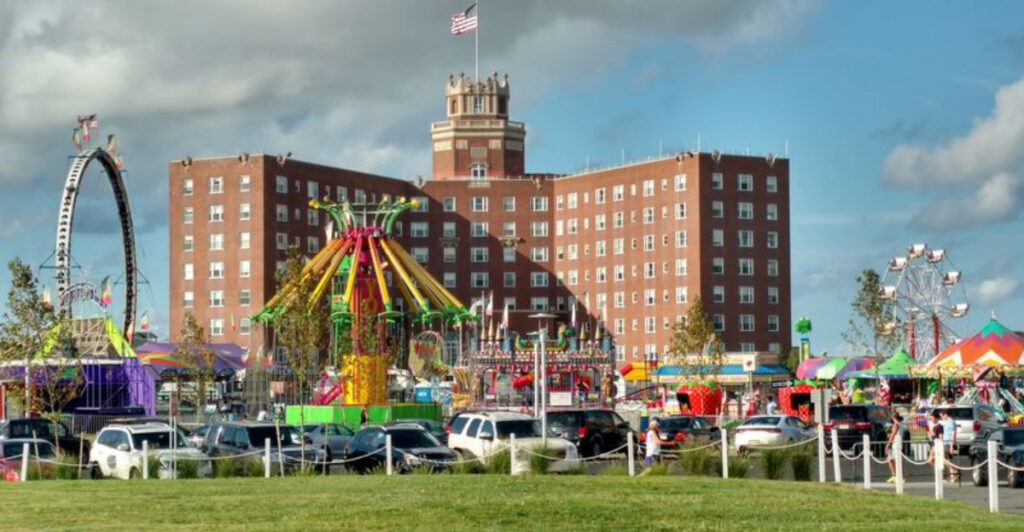
Tillie still grins like he knows something the rest of us are only just catching up to. That wide-eyed face, once part of the old Palace Amusements building, has become Asbury Park’s unofficial smirk: a little creepy, a little charming, impossible to ignore.
For years, this Shore town looked caught between a postcard and a warning sign. Grand old buildings stood beside empty lots.
The boardwalk had ghosts. The music scene kept roaring even when much of the town around it went quiet. And somehow, that mix became the point. Asbury Park did not come back polished and predictable.
It came back louder, stranger, more colorful, and more itself. The town that once seemed like it might be swallowed by its own ruins turned those ruins into part of the show, and that is exactly why it still feels different from every other stop on the Jersey Shore.
Asbury Park was once the Shore town everyone wanted to reach
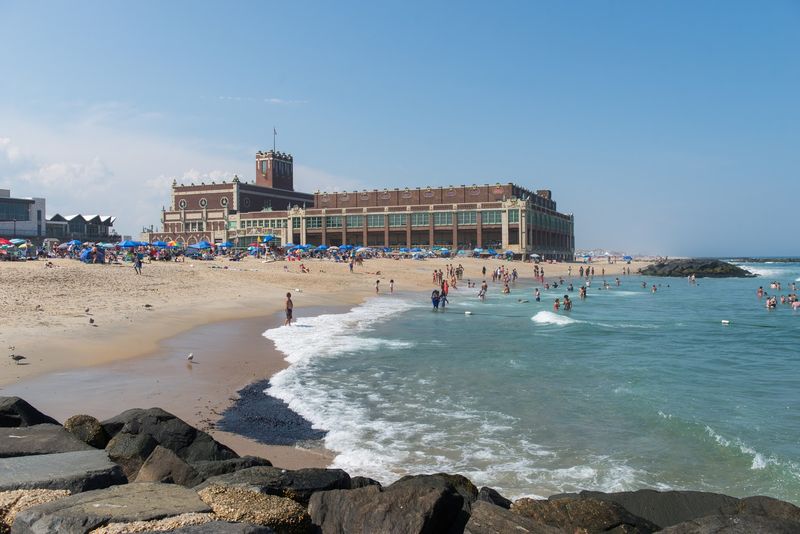
Long before Asbury Park became shorthand for rock clubs, murals, and boardwalk weirdness, it was built with a very tidy idea in mind. In 1871, developer James A.
Bradley bought roughly 500 acres between Deal Lake and Wesley Lake and named the resort for Methodist Bishop Francis Asbury. By the mid-1870s, the railroad made it easier for visitors from New York and North Jersey to reach town without turning the trip into a major expedition.
That mattered, because a Shore town is only as glamorous as the number of people who can actually get there. Asbury Park quickly learned how to put on a show.
Hotels went up. Auditoriums opened.
The boardwalk became the front porch. The place had the wholesome ambitions of a planned seaside resort, but it also had a talent for spectacle that refused to stay buttoned up for very long.
By the late Victorian era and into the early 20th century, Asbury Park was one of the heavy hitters of the northern Jersey Shore. Amusements, shops, theaters, and grand public buildings helped turn Ocean Avenue into a summer stage.
George C. Tilyou, the Coney Island showman behind the famous grinning “Tillie” face, brought amusement culture to town, and the Palace Merry-Go-Round became part of the city’s seaside mythology.
Then came the architectural flex: Convention Hall, the Paramount Theatre, and the Casino complex gave Asbury Park the kind of boardwalk presence that made other beach towns look like they had shown up underdressed. You can still feel that original swagger when you stand near the boardwalk and look at those buildings.
They do not whisper “beach day.” They announce themselves like a brass band.
The boardwalk lights dimmed as the city slipped into decline
The fall was not one clean collapse. It was messier than that, and more human.
Asbury Park’s decline had roots in segregation, economic neglect, racial tension, changing vacation habits, suburban competition, and political decisions that did not serve the whole city equally. The glossy resort image always had another side, especially west of the railroad tracks.
Springwood Avenue, once the main commercial strip of the city’s Black West Side, had its own businesses, clubs, churches, restaurants, and social life. It was not a footnote to Asbury Park’s story.
It was one of the engines. Then July 1970 changed the town in a way people still talk about carefully.
The uprising that summer left deep scars, especially along Springwood Avenue, where many Black-owned businesses were damaged or destroyed. The unrest did not appear out of nowhere.
It grew out of years of frustration over jobs, housing, policing, education, and the way opportunity was distributed in a city that sold itself as a resort paradise. Afterward, recovery came unevenly.
Buildings came down. Promised redevelopment dragged on. Residents were displaced. Empty lots lingered. The boardwalk, once a polished symbol of summer, began to feel like a set left behind after the actors went home.
Through the 1970s, 1980s, and 1990s, Asbury Park developed a reputation that scared off plenty of casual beachgoers.
The grand architecture remained, but the shine was gone. The Casino sat wounded. Palace Amusements eventually closed. Empty spaces became part of the scenery. But here is the thing about Asbury Park: even at its lowest, it never became boring. That may have saved it.
The music never really left even when the crowds did
A lot of Shore towns have cover bands. Asbury Park has mythology.
The music scene is not just decoration here; it is load-bearing. Before the rock-and-roll pilgrims arrived, Asbury Park already had serious musical roots.
The city’s history runs from marching bands and big-band performances to the jazz and soul clubs of Springwood Avenue, where Black musicians helped shape the sound and spirit of the city long before the Stone Pony became a landmark. That matters because it keeps the Bruce Springsteen story in its proper place.
Springsteen is absolutely part of Asbury Park’s identity, but he did not invent the town’s sound. He walked into a room that was already humming.
The Stone Pony opened in 1974 at 913 Ocean Avenue, right when Asbury Park was not exactly winning popularity contests with nervous suburban parents. That timing is part of the legend.
The venue became the anchor of the local music scene, with Springsteen, Southside Johnny, Steve Van Zandt, and countless other musicians helping put it on the map. There is something beautifully Jersey about that.
The town was struggling, the boardwalk was battered, and somehow a club with a horse on the sign became one of the most famous rooms in American rock. The Pony still feels less like a museum than a working machine.
One night it might be a touring act. Another night it might be a local band grinding through a set with the confidence of people who grew up knowing they were standing on loud ground.
And the music did not stay trapped inside one venue. Wonder Bar, Asbury Lanes, House of Independents, the Saint, and smaller rooms and bar corners kept the city’s identity from flattening into a single nostalgia act.
Asbury Park’s comeback did not begin with a ribbon-cutting. It began with amps, sweat, cheap beer, and the stubborn belief that a half-empty town could still make a full-volume sound.
Artists, outsiders, and locals gave the town its strange new pulse
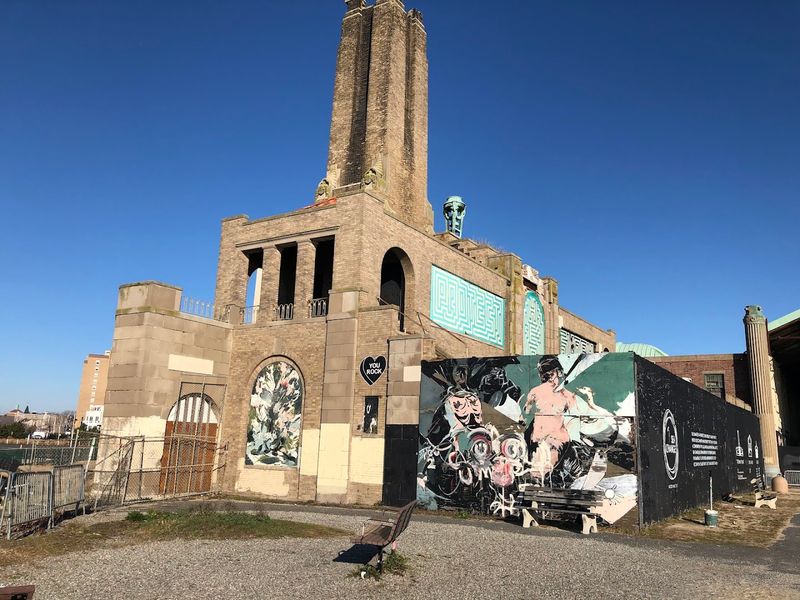
Look closely at Asbury Park’s comeback and you will notice it was not led only by developers with renderings and hard hats.
Before the boutique hotels and polished restaurant patios, there were artists, musicians, LGBTQ residents, small-business owners, longtime locals, weekend weirdos, and people who looked at half-forgotten buildings and saw possibility instead of failure.
That is why the town’s revival feels different from a simple “nice beach town gets nicer” story. Asbury Park attracted people who were not looking for perfect.
They were looking for space. Space to paint, perform, open a shop, throw a party, start over, or just exist without being the strangest person in the room.
For a long time, the town’s rough edges made that possible. Rent was cheaper than in glossier Shore towns.
The ruins gave everything a cinematic backdrop. The boardwalk looked half-haunted in the best possible way.
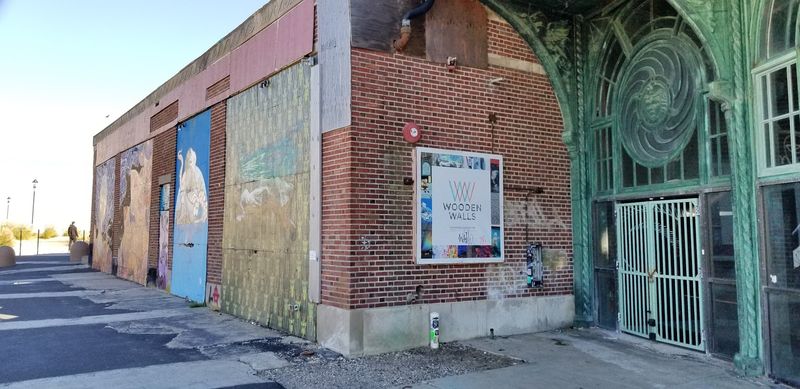
Public art became one of the clearest signs that something new was happening. Murals spread across walls and boardwalk structures, turning blank surfaces into an outdoor gallery.
The old Carousel building became a perfect symbol of the city’s new personality. In another town, it might have been treated like an embarrassment or sealed off as dead space.
In Asbury Park, it became part ruin, part art house, part cathedral for people who like their beach days with a little grit on the side. None of this means the comeback has been painless.
Rising prices, redevelopment fights, and worries about displacement are real. A town this interesting rarely changes without bruises.
Still, the people who gave Asbury Park its new pulse did something remarkable. They made the unfinished parts feel alive.
The comeback brought murals, venues, restaurants, and a different kind of beach scene
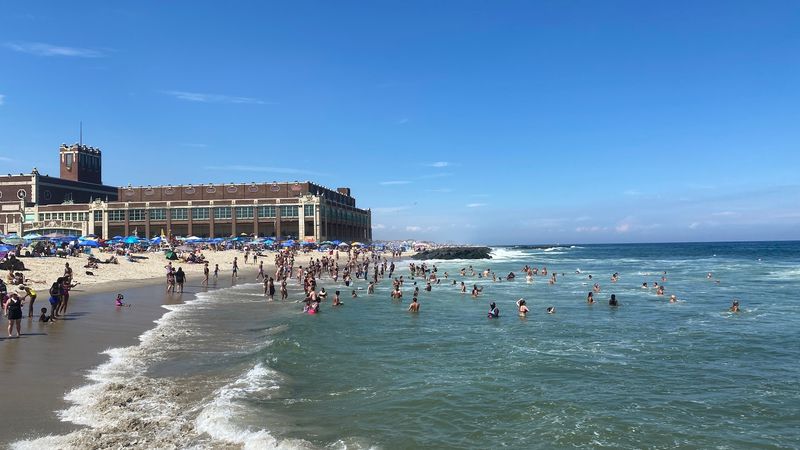
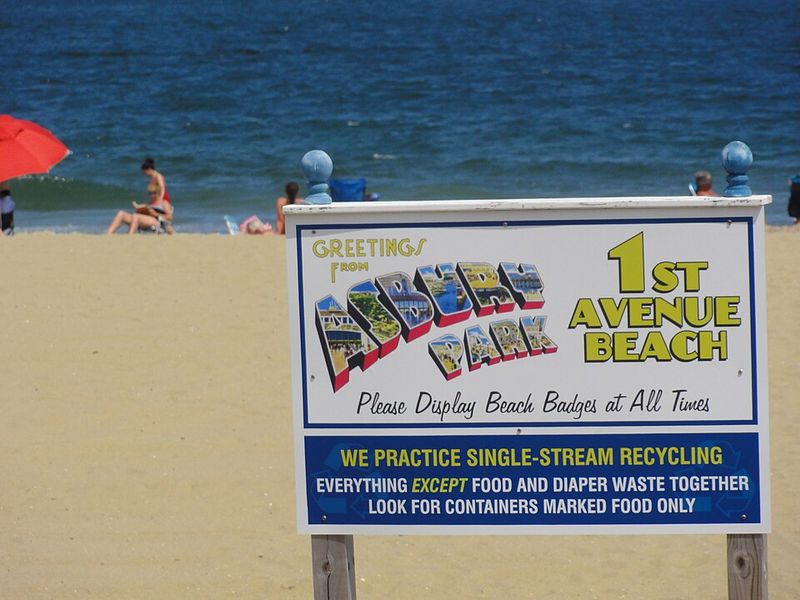
Today’s Asbury Park is the rare Shore stop where you can have a beach day, a pinball session, Korean tacos, a rooftop drink, a punk show, and a minor emotional moment staring at old architecture before dinner. The beach itself is still the anchor, with about a mile of sand, surf, and boardwalk.
But the day can swerve quickly here, which is the fun of it. You can start near Convention Hall, wander past murals, peek into shops, and end up at Silverball Retro Arcade playing old pinball machines like someone gave your childhood a roll of quarters.
Families do it. Dates do it. Fully grown adults who claim they are “just looking” absolutely do it too. Food is where the new Asbury Park really shows off.
Porta made thin-crust pizza and long communal tables feel like a Shore ritual. MOGO turned Korean fusion tacos into one of those boardwalk foods people start craving before they even park.
Talula’s brought sourdough, seasonal pies, and downtown cool without making things feel precious. Pascal & Sabine gives Cookman Avenue its French-brasserie moment.
Frank’s Deli, away from the boardwalk buzz, still reminds everyone that pork roll, egg, and cheese does not need a rebrand. Then there are the hotels and hangouts: The Asbury, The Empress, the Asbury Ocean Club, Wonder Bar’s famously dog-friendly scene, Asbury Festhalle & Biergarten, Asbury Lanes, and the old-school pull of the Stone Pony.
The result is not one neat beach personality. It is five or six of them arguing happily on the same block. That is the difference. Asbury Park did not come back as a tidy resort. It came back as a full-day mood swing with better food.
Why Asbury Park feels louder and stranger than the Shore towns around it
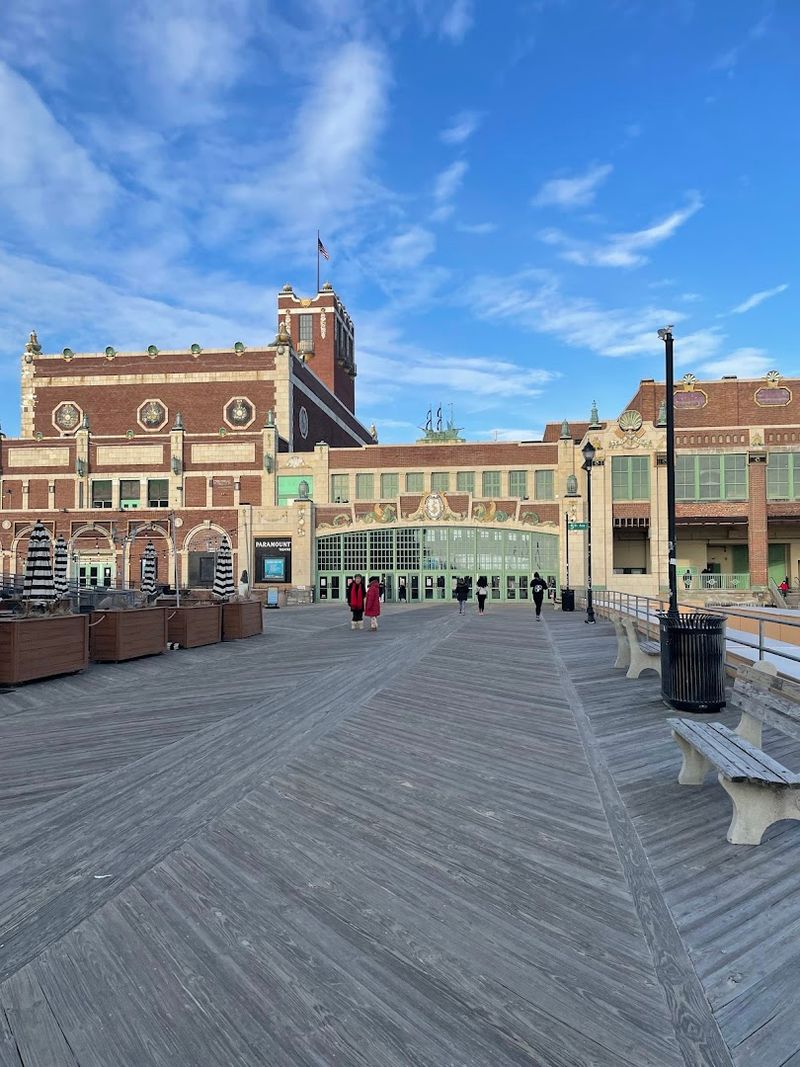
Plenty of Jersey Shore towns are beautiful. Some are quieter.
Some are richer. Some are better for people who want their beach trip to come with white linen, early bedtime, and no surprises whatsoever.
Asbury Park has never been that town. Its difference comes from the layers.
The Methodist resort plan is still there if you know where to look. So is the grand old boardwalk ambition of Convention Hall and the Casino.
So is the painful history of segregation and the 1970 uprising. So is the West Side’s musical legacy.
So is the Springsteen pilgrimage. So is the queer nightlife, the restaurant boom, the murals, the half-preserved ruins, the beach badges, the ghost signs, the dog bars, the festival crowds, and the locals who can tell immediately whether someone has parallel-parked here before.
That mix gives Asbury Park a texture other Shore towns cannot fake. It also keeps the comeback from becoming too tidy.
The city is not just a redemption story with a fresh coat of paint. It is still negotiating what revival should mean, who gets to benefit from it, and how much of the old weirdness can survive once everyone realizes weirdness has market value.
Walk the boardwalk on a summer evening and the whole thing makes sense. Music leaks out of one doorway.
Somebody is taking engagement photos near a mural. A kid is sticky from ice cream.
A guy in black jeans is clearly headed to a show. The ocean is doing its usual ancient thing, completely unimpressed by all of us.
Then you pass Tillie’s grin, or what remains of the myth around it, and it feels like the town is in on its own joke. Asbury Park collapsed, yes.
But it did not come back as a cleaned-up imitation of what it used to be. It came back patched together, louder than necessary, a little haunted, proudly odd, and better because of all the pieces it refused to hide.