
Pennsylvania rewards anyone who looks beyond the obvious, because tucked between famous skylines, wooded ridges, college towns, and old industrial corridors are buildings and structures that feel like clues to the state’s deepest character. As you move from Philadelphia to Pittsburgh and into the rolling countryside in between, you find grand civic landmarks, daring modernist homes, spiritual spaces, museums, bridges, and quirky hilltop icons that reveal how ambition, artistry, and local identity shaped this Commonwealth in unforgettable ways.
What makes this journey especially exciting is how each place offers more than a pretty facade – it tells a story about immigration, industry, design, faith, preservation, and the constant reinvention that defines Pennsylvania. If you are ready to see the state through its most fascinating walls, towers, mosaics, glass roofs, and stone terraces, these sixteen architectural treasures will give you a richer, more personal way to experience Pennsylvania.
1. Philadelphia City Hall
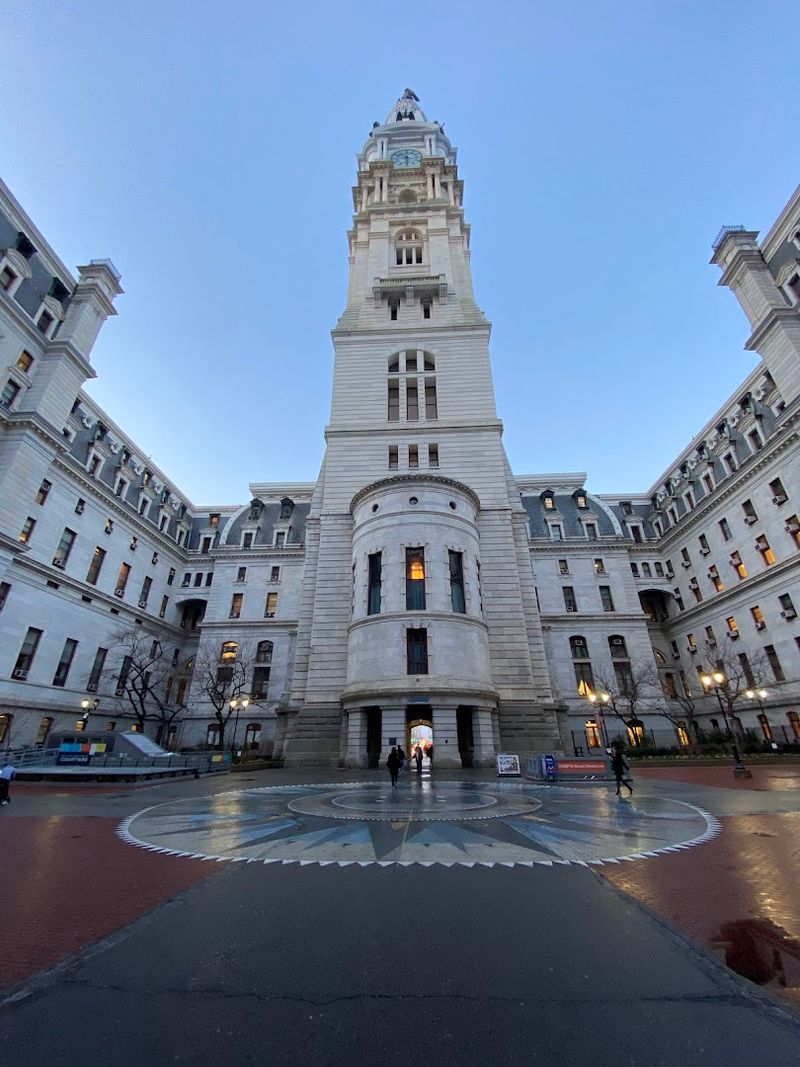
Standing in the center of one of Pennsylvania’s most storied cities, this monumental civic landmark feels less like a government building and more like a carved stone declaration of confidence.
You can sense the ambition in every arch, cornice, and sculpture, especially when sunlight catches the pale masonry and turns the entire facade into a gallery of details.
Even before stepping inside, the scale makes you slow down and look up.
Completed after decades of work, Philadelphia City Hall remains one of the great achievements of American municipal architecture.
Its Second Empire design, elaborate ornamentation, and famously commanding tower reflect a period when public buildings were expected to inspire awe as much as serve a function.
The statue of William Penn at the top anchors the skyline, giving the structure a symbolic presence that still defines central Philadelphia.
What I find most compelling is how the building balances grandeur with texture.
The courtyards, portals, and sculptural programs reward close attention, so your visit never feels like a quick glance at a famous landmark.
There is always another face, frieze, or decorative flourish to discover, and that richness makes the building feel alive rather than frozen in history.
In a state filled with impressive architecture, this one stands apart because it captures Pennsylvania’s civic pride so completely.
It connects politics, design, craftsmanship, and urban identity in a way that still feels relevant today.
Whether you admire it from the street, photograph it from afar, or explore its interior spaces, Philadelphia City Hall leaves you with the feeling that public architecture can still be bold, theatrical, and deeply human.
2. Longwood Gardens Conservatory
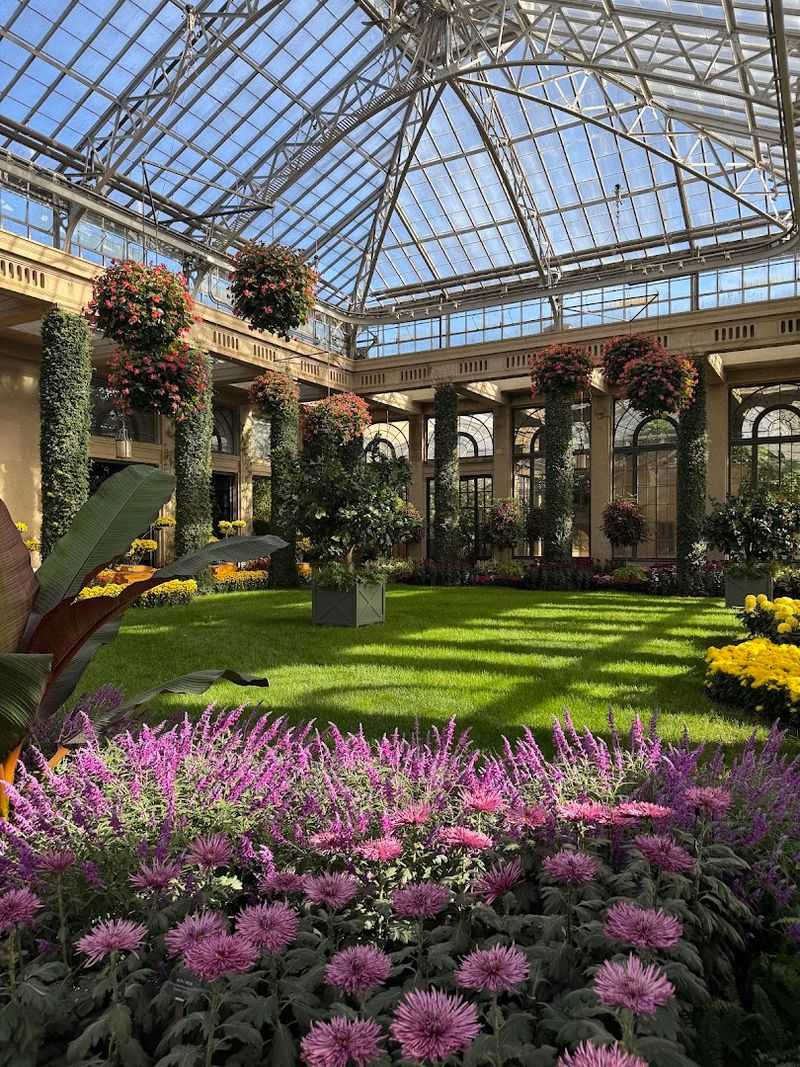
Glass, iron, water, and living color come together here in a way that feels almost unreal, especially when you step from the Pennsylvania air into a world of humid fragrance and filtered light.
The experience is architectural as much as botanical, because every pathway, fountain, and soaring pane has been designed to frame beauty with precision.
You do not just visit a greenhouse here – you move through a carefully staged environment.
The Longwood Gardens Conservatory shows how architecture can heighten our relationship with nature instead of competing with it.
Expansive glass roofs invite the sky inside, while elegant structural lines keep the vast interior orderly and serene.
Seasonal displays transform the atmosphere again and again, yet the framework always remains graceful, disciplined, and unmistakably grand.
What makes this place so memorable is the way scale and intimacy coexist.
One moment you are taking in the sweep of a formal room filled with symmetry and light, and the next you are pausing near a quiet corner where a single bloom or leaf seems to hold the whole scene together.
That rhythm gives the conservatory a personal feel, even though it is one of Pennsylvania’s most celebrated destinations.
There is also a timeless optimism built into the design.
The conservatory suggests that art, engineering, and horticulture belong in conversation, and that beauty can be cultivated with generosity rather than restraint.
In Pennsylvania, where landscapes and industry have often defined the story, Longwood Gardens offers a softer but equally powerful vision of ambition – one made of transparency, patience, and the quiet thrill of seeing architecture filled with life.
3. Beth Sholom Synagogue
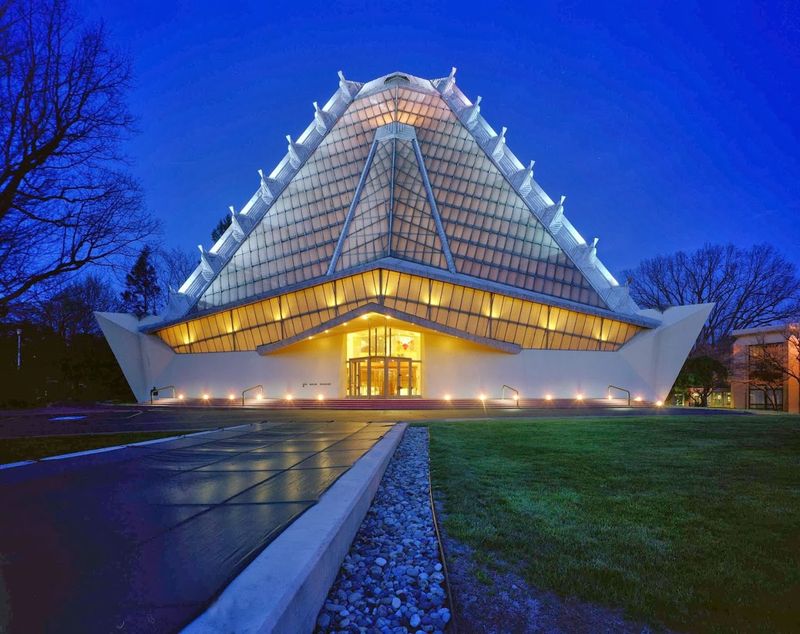
Few religious spaces in Pennsylvania feel as visionary from the first glance as this remarkable sanctuary, where light appears to become a building material of its own.
The rising geometry draws your eyes upward immediately, creating a sense of movement and elevation before you even register the details.
Instead of relying on heavy monumentality, the design creates wonder through transparency, pattern, and carefully shaped form.
Beth Sholom Synagogue is especially significant because it is the only synagogue designed by Frank Lloyd Wright.
That fact alone makes it important, but the building earns admiration on experience rather than reputation.
Its faceted surfaces and luminous structure blur the line between shelter and symbol, allowing the architecture to express both spiritual aspiration and modern confidence.
Inside, the atmosphere feels contemplative without becoming severe.
Light shifts across the interior in ways that make the space feel active and responsive, almost as if the building itself participates in worship through changing color and brightness.
You do not have to share the faith tradition to appreciate how thoughtfully the architecture supports reflection, gathering, and emotional presence.
In Pennsylvania’s architectural landscape, Beth Sholom stands out because it proves sacred design can be experimental while remaining welcoming.
It carries the state’s long history of religious diversity into the language of twentieth century modernism, showing how old purposes can be served by bold new forms.
If you are drawn to places where architecture speaks quietly but powerfully, this synagogue offers one of the most distinctive and moving encounters you will find anywhere in the Commonwealth.
4. The Kinzua Bridge
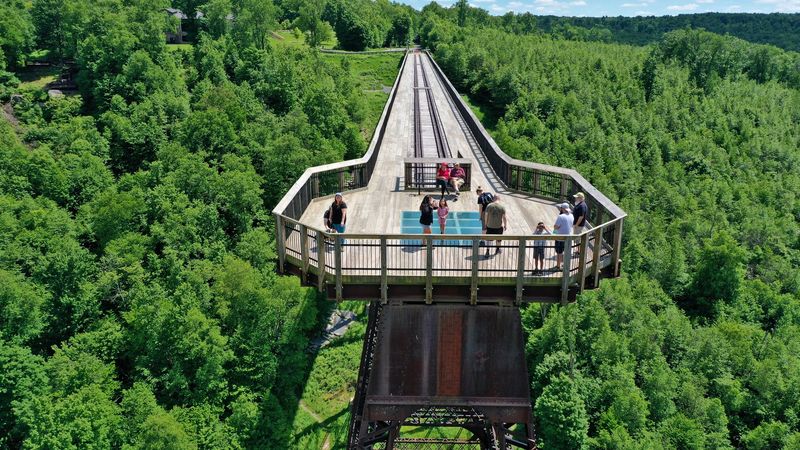
High above a Pennsylvania gorge, this extraordinary structure tells a story of ambition, catastrophe, and reinvention all at once.
Even in its altered state, the immense steelwork still creates a powerful impression, because the remaining towers march across the landscape with a kind of stubborn dignity.
When you stand near it, the scale makes human effort feel both impressive and fragile.
The Kinzua Bridge began as a railroad viaduct and quickly became one of the engineering marvels of its era.
Built to conquer distance and terrain, it represented the industrial confidence that once transformed the region.
After a tornado destroyed part of the bridge in 2003, the site evolved rather than disappearing, turning loss into a new kind of architectural experience.
Today, the skywalk and overlook allow you to engage with the bridge as both artifact and destination.
There is drama in the abrupt ending, where the deck extends toward open air and directs your attention to the fallen steel below.
That combination of preserved structure and visible damage gives the place unusual emotional force, reminding you that architecture is never fully separate from weather, time, and change.
Among Pennsylvania’s treasures, this one stands apart because it is not polished, enclosed, or traditionally beautiful.
Its appeal comes from raw scale, industrial history, and the honesty of what remains.
The Kinzua Bridge invites you to think about progress, vulnerability, and the afterlife of infrastructure in a landscape that has seen both extraction and renewal, and that makes the visit feel larger than a simple stop at a scenic overlook.
5. The Eastern State Penitentiary
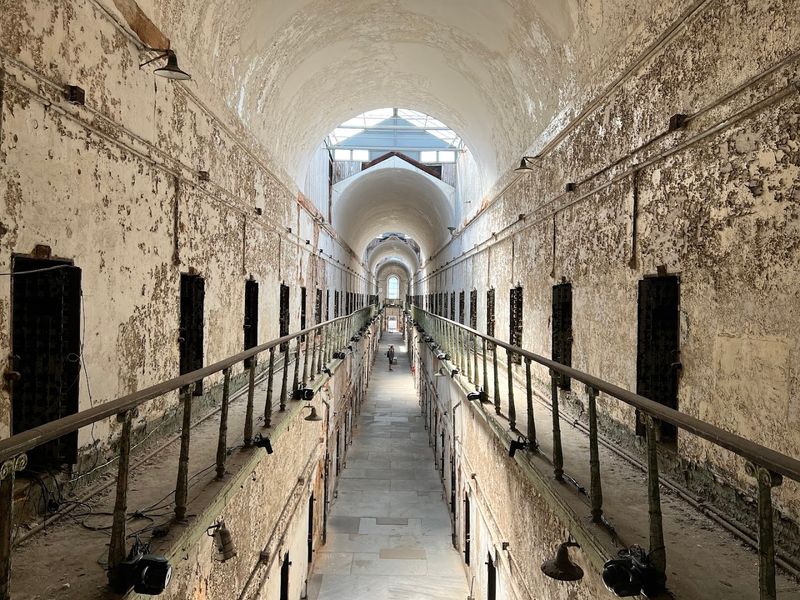
Massive walls, shadowed corridors, and stark geometry give this landmark a haunting presence that stays with you long after you leave.
It feels imposing from the outside, but the deeper impact comes when you realize how deliberately every passage, cellblock, and sightline was designed.
Architecture here was meant to shape behavior, and that intention is impossible to ignore.
The Eastern State Penitentiary is one of Pennsylvania’s most compelling examples of institutional design with a philosophical agenda.
Its radial plan was innovative for its time, organizing cellblocks from a central hub in a way that made surveillance and control highly efficient.
The Gothic exterior added moral seriousness, turning the prison into a visual statement about punishment, reform, and authority.
What makes the site unforgettable today is the tension between design and decay.
Crumbling plaster, broken skylights, and invasive vegetation soften the hardness just enough to reveal the building as both ruin and artifact.
That layered atmosphere allows you to think not only about incarceration, but also about how spaces retain the values and contradictions of the societies that built them.
In Pennsylvania, where historic landmarks often celebrate achievement or beauty, this one asks more difficult questions.
It shows how architecture can embody power, discipline, and reformist ideals while also exposing their limits.
Visiting Eastern State Penitentiary is not simply about seeing an old prison in Philadelphia – it is about confronting a carefully engineered environment that still provokes debate, reflection, and an uneasy kind of admiration for the force of design.
6. The State Museum of Pennsylvania

Set in the capital city, this museum presents a more restrained architectural personality than some of Pennsylvania’s flashier landmarks, yet that calm confidence is part of its appeal.
The building feels grounded, civic, and purposeful, inviting you to focus on what it holds as much as how it looks.
There is a quiet dignity here that suits a place devoted to the Commonwealth’s layered story.
The State Museum of Pennsylvania reflects the practical side of public architecture, where clarity and accessibility matter as much as visual drama.
Its design supports movement between exhibits while maintaining an institutional presence appropriate to Harrisburg’s government center.
Rather than overwhelming you with ornament, it relies on proportion, order, and a straightforward sense of permanence.
What I appreciate most is how the museum functions as an architectural container for Pennsylvania itself.
Inside, you encounter art, archaeology, natural history, and industrial heritage, and the building becomes a frame that connects those narratives.
That role gives it special significance, because its design reinforces the idea that a state can understand itself through spaces built for learning and collective memory.
As an architectural treasure, it may not always top the typical travel list, but that is exactly why it deserves attention.
Pennsylvania is not only defined by spectacular mansions, towers, and experimental houses – it is also shaped by civic institutions that preserve and interpret public identity.
The State Museum of Pennsylvania embodies that mission with steadiness and grace, making it a meaningful stop for anyone who wants to see how architecture can serve knowledge, heritage, and everyday democratic life.
7. The Andy Warhol Museum
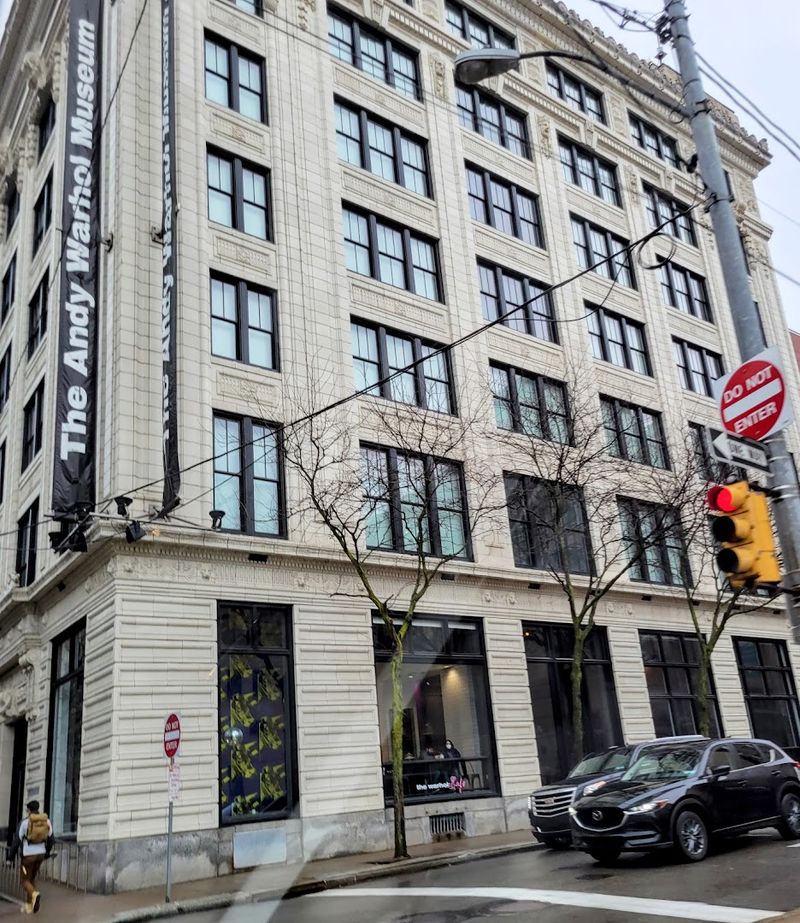
In Pittsburgh, this museum proves that architecture does not need to shout to leave a lasting impression.
Its power comes from adaptation, scale, and the way an urban building can be reimagined to suit an artist whose influence reached far beyond the canvas.
The setting feels right for Pennsylvania, where industry and creativity have long overlapped in unexpected ways.
The Andy Warhol Museum occupies a former industrial structure, and that history gives the place a grounded authenticity.
Rather than erasing the building’s original character, the museum uses it to support the experience of moving through Warhol’s life and work.
Spacious galleries, vertical circulation, and a sturdy architectural framework create a rhythm that feels both functional and fitting for an artist fascinated by repetition, image, and mass culture.
What stands out is how effectively the architecture handles contrast.
The rawness of the structure meets vibrant contemporary exhibition design, and the result mirrors Pittsburgh itself – resilient, evolving, and comfortable with reinvention.
You sense that the building belongs to the city rather than floating above it, which gives the museum a lived-in credibility that many art spaces never achieve.
Among Pennsylvania’s architectural treasures, this one matters because it shows the value of transformation.
A former industrial building becomes a cultural landmark without losing the memory of its earlier life, and that layered identity feels deeply local.
If you are drawn to places where architecture and biography enrich each other, The Andy Warhol Museum offers a memorable reminder that Pennsylvania’s built environment often tells stories not just of what a place was, but of what it chooses to become.
8. Fallingwater
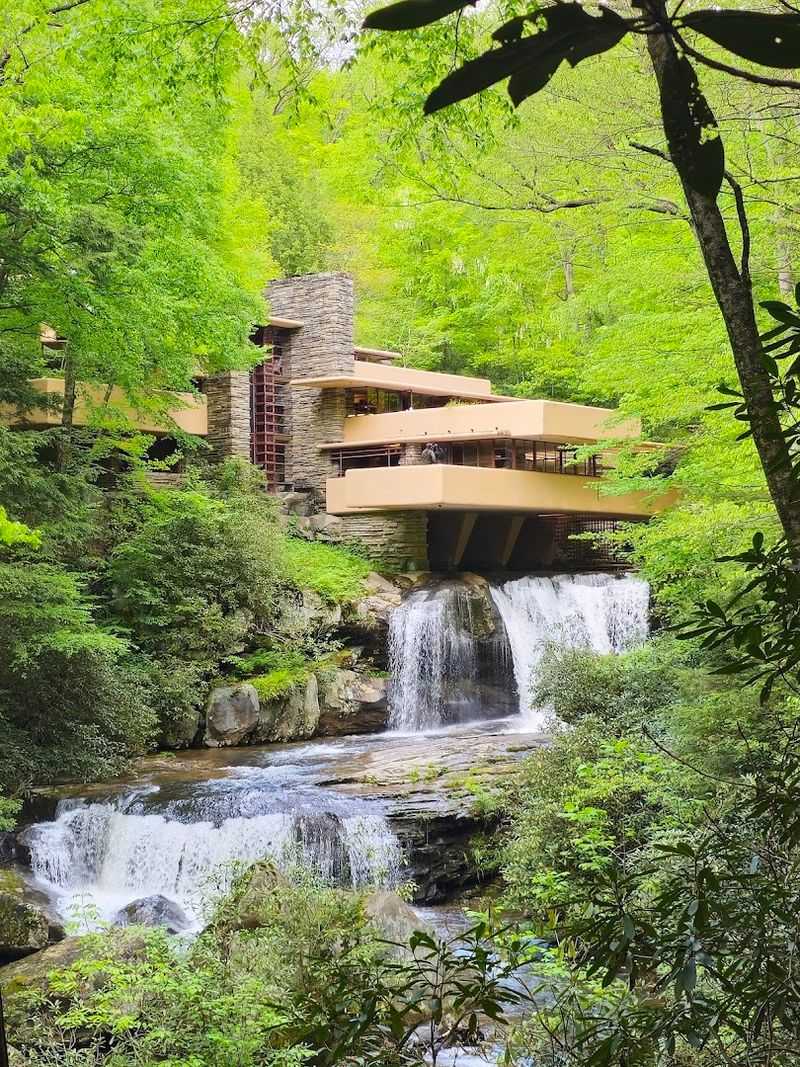
Nothing prepares you for the first view of this house in the woods, where horizontal terraces seem to hover above rushing water with impossible calm.
The setting is beautiful on its own, but the genius lies in how the architecture refuses to treat nature as background.
Instead, the house and landscape become inseparable, and that relationship makes the experience feel almost cinematic.
Fallingwater is one of Pennsylvania’s most celebrated architectural landmarks for good reason.
Frank Lloyd Wright designed it to extend from the rocky site rather than merely occupy it, using cantilevered forms, local stone, and bold spatial ideas to create a home that feels both radical and deeply rooted.
The sound of the stream below is not incidental – it is part of the architecture’s emotional structure.
What you notice more and more is the precision behind the poetry.
Terraces frame the forest, windows dissolve boundaries, and interior materials echo the colors and textures outside.
Even the movement through the rooms feels choreographed to heighten your awareness of gravity, shelter, and the surrounding landscape, making the house feel intimate despite its worldwide fame.
In Pennsylvania, Fallingwater represents a rare moment when architecture, site, and imagination align so perfectly that the result transcends style.
It is modern, but never cold; iconic, but still personal; daring, but also serene.
If you want to understand how architecture can change the way you perceive a place, this house offers one of the clearest and most moving lessons anywhere in the Commonwealth.
9. Nemacolin Woodlands Resort
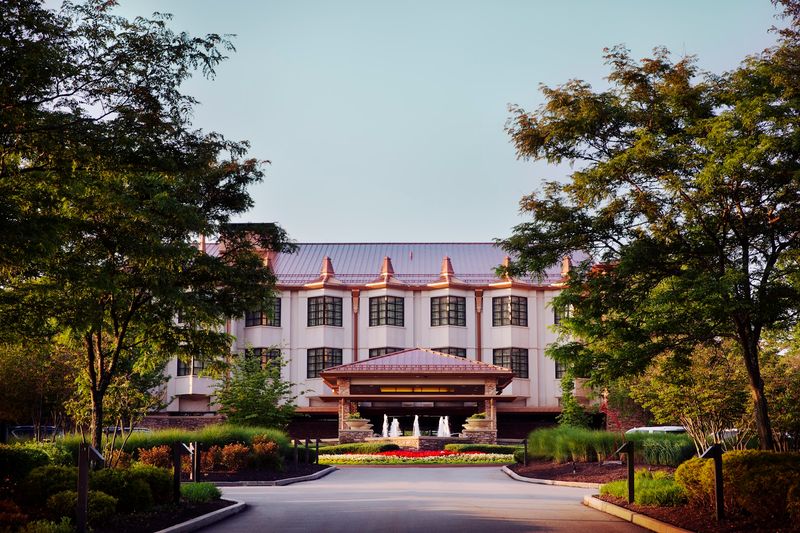
Tucked into Pennsylvania’s scenic southwest, this resort brings together luxury, theatricality, and landscape in a way that feels intentionally transportive.
The architecture is part of the escape, using grand facades, decorative details, and sweeping views to create the sense that you have entered a world apart from ordinary routines.
It is the kind of place that wants you to notice the setting and the staging equally.
Nemacolin Woodlands Resort is interesting because it is not defined by a single historic masterpiece, but by an ensemble of buildings and experiences shaped around hospitality.
Its architectural language blends European-inspired elegance with regional materials and mountain surroundings, producing spaces that feel polished without losing all connection to Pennsylvania’s terrain.
The result is immersive rather than strictly academic, but that does not make it less worthy of attention.
What gives the resort architectural value is the choreography of arrival, movement, and leisure.
Driveways, terraces, interior public rooms, and landscaped edges all work together to heighten anticipation and comfort.
You can feel how carefully the environment has been composed to encourage lingering, which is exactly what good resort architecture should do.
As a hidden treasure, Nemacolin shows another side of Pennsylvania’s built identity.
Not every important space in the state is a capitol, museum, or modernist icon – some reveal how architecture can create delight, fantasy, and retreat while still responding to place.
If you appreciate environments where design shapes mood as much as function, this resort offers a memorable example of how Pennsylvania can surprise you with elegance tucked into its wooded hills.
10. The Union Trust Building
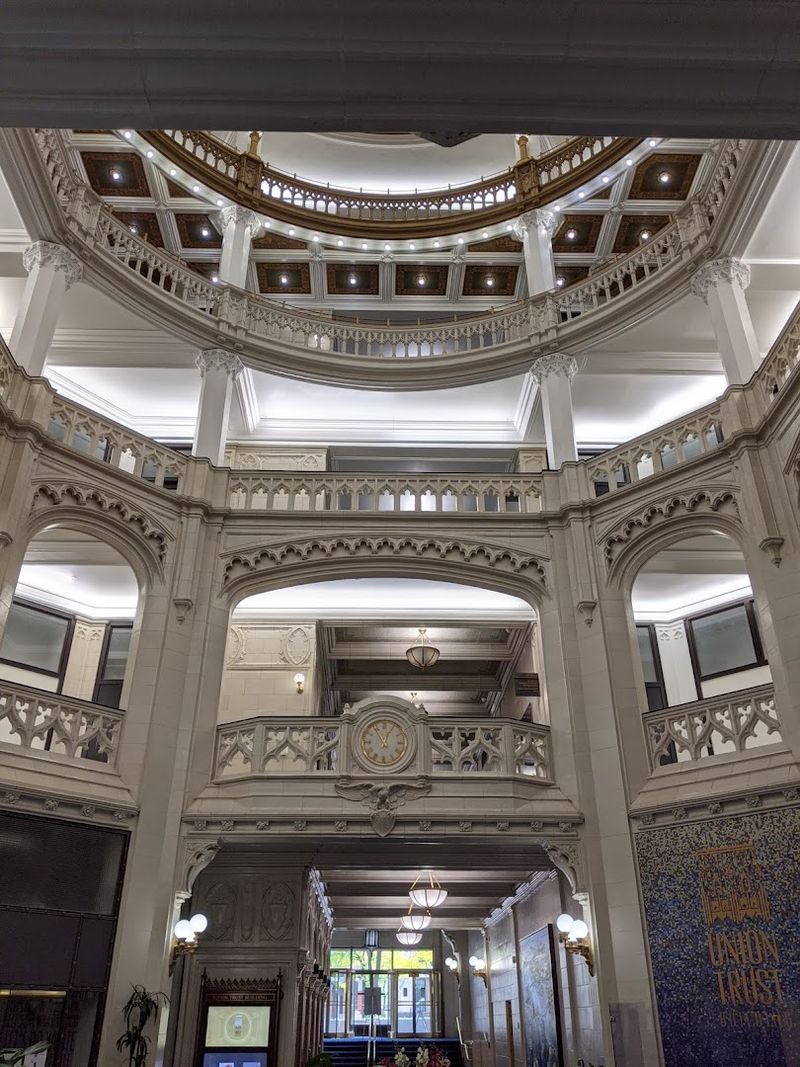
Right in downtown Pittsburgh, this landmark captures the confidence of a city that once translated industrial power into architectural splendor.
From the street, its richly detailed exterior announces permanence and prestige, while the interior reveals an even more dramatic sense of ornament and spatial ambition.
It is a building that was clearly designed to impress, and it still succeeds.
The Union Trust Building is one of those Pennsylvania treasures that rewards both quick admiration and close study.
Its Beaux-Arts character, sculptural detailing, and monumental scale reflect an era when commercial architecture carried civic meaning as well as financial purpose.
Banking halls and business spaces were expected to convey trust, prosperity, and order, and this building turns those ideals into visible form.
What makes it especially compelling is the contrast between urban bustle outside and ceremonial grandeur within.
The soaring spaces, decorative finishes, and strong axial organization create a feeling of occasion that exceeds everyday use.
Even if you know nothing about architectural history, you can sense that this was built at a time when Pittsburgh wanted its downtown structures to embody seriousness and aspiration.
In a state full of famous public buildings and homes, the Union Trust Building deserves attention because it reflects Pennsylvania’s commercial heritage with unusual richness.
It speaks to the era of capital, craftsmanship, and metropolitan identity that shaped much of the Commonwealth’s growth.
If you enjoy architecture that turns practical business functions into something almost theatrical, this Pittsburgh landmark offers a vivid reminder that commerce once built spaces with beauty, ceremony, and lasting urban presence.
11. Reading Pagoda

Perched high above the city, this unexpected landmark feels delightfully out of place in the best possible way.
Its silhouette immediately catches your attention, and the hilltop setting gives it a theatrical presence that would be memorable anywhere in Pennsylvania.
The view alone is reason enough to visit, but the building itself is what turns the overlook into something iconic.
The Reading Pagoda reflects an era when American cities embraced whimsical, globally inspired architecture as civic spectacle.
Built in the early twentieth century, it borrows East Asian visual forms while functioning as a local symbol for Reading.
That mix of fantasy, boosterism, and regional pride gives the structure a personality unlike anything else on this list.
What I love about it is the way it combines novelty with belonging.
Although the design feels surprising, the pagoda has become inseparable from the city’s identity over time, proving that unusual architecture can still become deeply local.
From below, it serves as a beacon on the hillside, and from above, it frames the surrounding landscape with a sense of playful confidence.
Among Pennsylvania’s treasures, the Reading Pagoda stands out because it reminds you that architecture is not always about purity, seriousness, or textbook importance.
Sometimes a building matters because people adopt it, remember it, and see themselves in it despite its eccentricity.
If you are drawn to places with strong character and a little drama, this hilltop landmark offers one of the Commonwealth’s most charming examples of how architecture can become a beloved civic emblem.
12. The Barnes Foundation
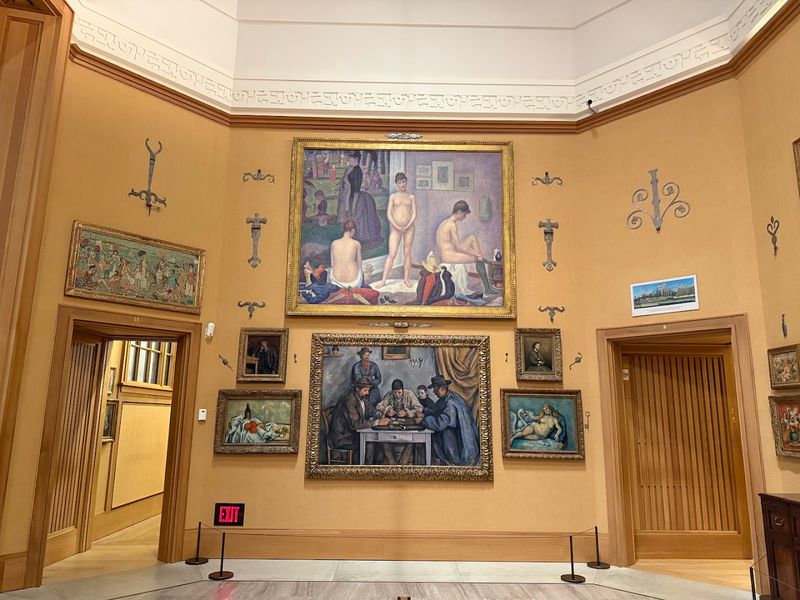
Art museums often ask you to focus entirely on the collection, but this Philadelphia destination reminds you that the building itself shapes how beauty is understood.
Its architecture feels calm, ordered, and quietly luxurious, setting a thoughtful tone before you ever encounter a single painting.
There is a sense of control here that never becomes cold, which is harder to achieve than it looks.
The Barnes Foundation combines contemporary museum design with an atmosphere of measured intimacy.
Proportion, materials, and natural light all work together to support concentration, while gardens and exterior spaces soften the transition from city to gallery.
The result is a Pennsylvania institution that feels both carefully composed and surprisingly humane.
What makes the architecture especially effective is that it does not compete with the collection’s famously distinctive installation philosophy.
Instead, the building supports a close, attentive way of looking by creating spaces that are elegant but not distracting.
You can feel the discipline in the layout, yet there is also warmth in the textures and movement through the complex.
As an architectural treasure, The Barnes Foundation matters because it shows how contemporary design can honor intellectual purpose without becoming austere.
In a state known for historic landmarks, it represents Pennsylvania’s ongoing investment in spaces for art, scholarship, and public engagement.
If you appreciate architecture that guides your pace, sharpens your attention, and deepens the encounter between visitor and collection, this museum offers a beautifully controlled experience that proves restraint can be every bit as memorable as spectacle.
13. Frank Lloyd Wright’s Kentuck Knob
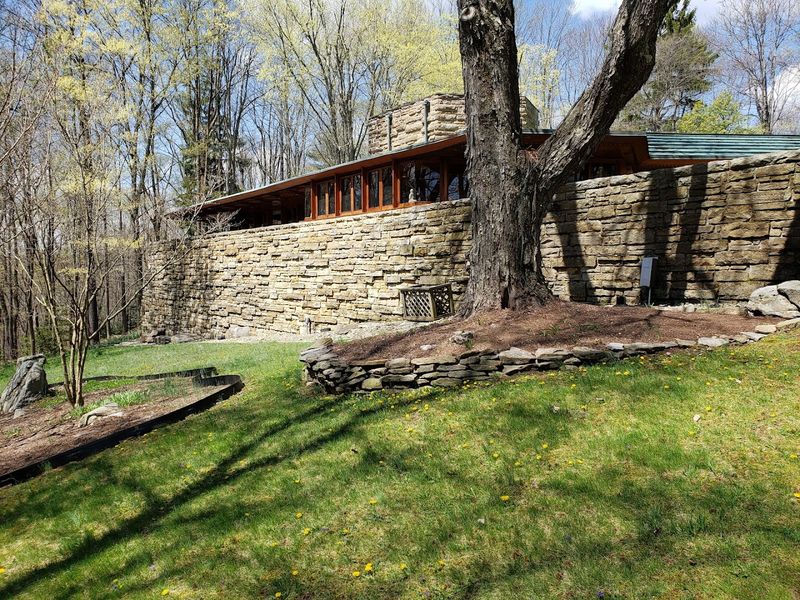
Hidden in the Laurel Highlands, this house offers a quieter kind of revelation than Pennsylvania’s most photographed architectural icons.
Rather than overwhelming you with drama, it draws you in through proportion, siting, and a remarkable sense of ease with the land.
The effect is subtle at first, but the more time you spend with it, the more sophisticated it feels.
Kentuck Knob was designed by Frank Lloyd Wright late in his career, and its Usonian principles are expressed with elegance and restraint.
The low rooflines, natural materials, and careful orientation allow the house to settle into the hillside instead of dominating it.
That integration gives the building a lived-in serenity that makes it especially appealing if you prefer architecture that whispers rather than shouts.
What stands out is the intimacy of the design.
Rooms, windows, and terraces feel calibrated to daily life, yet the composition never loses its artistic rigor.
You notice how the house frames woodland views, controls light, and creates a sequence of spaces that keeps you aware of both shelter and openness at the same time.
In Pennsylvania, Kentuck Knob offers an important counterpoint to larger landmarks and more theatrical estates.
It reminds you that architectural greatness can reside in balance, comfort, and a deep respect for setting.
If Fallingwater shows Wright at his most daringly iconic, Kentuck Knob reveals another side of his genius – one rooted in domestic calm, intelligent scale, and the conviction that a house should belong to its landscape as naturally as the trees around it.
14. The Cathedral of Learning
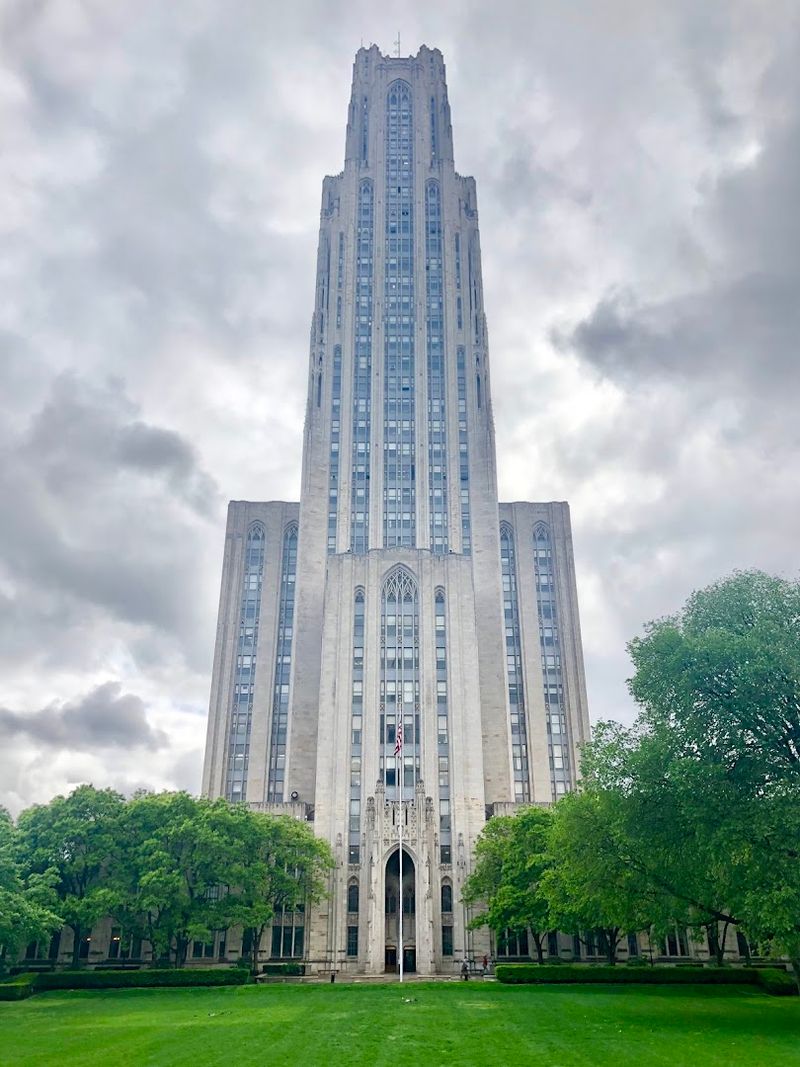
Rising above the University of Pittsburgh campus, this landmark looks like a medieval dream translated into vertical urban form.
Its height alone is striking, but what makes it unforgettable is the way collegiate Gothic architecture has been expanded into something almost fantastical.
You see scholarship, aspiration, and civic pride fused into a single commanding silhouette.
The Cathedral of Learning is one of Pennsylvania’s most distinctive academic buildings because it treats education as something worthy of monumental expression.
The tower’s Gothic detailing, vaulted interior spaces, and famous nationality rooms create an environment where architecture becomes part of the educational experience.
Rather than serving as a neutral classroom container, the building communicates the grandeur of intellectual life.
Inside, the scale can feel almost cinematic, especially in the Commons Room, where stone, height, and filtered light produce a sense of ceremony.
Yet the building is not merely symbolic.
Students still inhabit it, which gives the architecture an everyday vitality that many grand landmarks lose over time.
That combination of use and awe is a big part of its enduring charm.
Among Pennsylvania’s treasures, the Cathedral of Learning stands apart because it transforms a university building into a cultural emblem.
It reflects Pittsburgh’s ambition, the state’s educational heritage, and a belief that architecture can elevate ordinary routines into something memorable.
If you are drawn to places where learning is given a monumental home, this tower offers one of the Commonwealth’s most powerful reminders that design can shape not only cities and skylines, but also the way knowledge feels.
15. The Pennsylvania State Capitol

Grandeur arrives quickly when you approach this Harrisburg landmark, where the dome, formal massing, and richly detailed exterior make clear that Pennsylvania intended to build with confidence.
It feels ceremonial without becoming distant, and that balance gives the capitol unusual warmth for a seat of government.
You can admire it as a work of art even before considering its political role.
The Pennsylvania State Capitol is one of the Commonwealth’s greatest expressions of Beaux-Arts civic architecture.
Monumental in scale and refined in detail, it draws together sculpture, murals, marble, and decorative craftsmanship to create an environment meant to embody democratic seriousness.
The famous dome gives the skyline a commanding focal point, while the interior extends the experience with lavish public spaces that never feel accidental.
What makes the building especially memorable is the intensity of its artistic integration.
Architecture, painting, and ornament work together so seamlessly that the whole structure feels curated rather than merely constructed.
You sense that every stair, corridor, and chamber was designed to communicate ideals about public life, dignity, and permanence.
In Pennsylvania, this capitol matters because it transforms governance into visible civic theater without losing integrity.
It is not simply beautiful – it is persuasive, asking visitors to believe that public institutions deserve architectural excellence.
If you want a place that captures the Commonwealth’s ambition, history, and sense of itself in one extraordinary package, the Pennsylvania State Capitol delivers with the kind of richness that rewards every upward glance and every slow walk through its halls.
16. Philadelphia’s Magic Gardens

Color, texture, and imagination explode across every surface in this unforgettable Philadelphia environment, where architecture and mosaic art become inseparable.
It is less a building in the traditional sense than a world built from persistence, vision, and salvaged fragments.
The moment you enter, you realize Pennsylvania’s architectural story includes places that refuse to fit ordinary categories.
Philadelphia’s Magic Gardens transforms walls, tunnels, courtyards, and passages into a fully immersive artistic landscape.
Created through intricate assemblage using tiles, bottles, mirrors, and found objects, the site turns decoration into structure and structure into storytelling.
The result feels intimate and exuberant at once, inviting you to wander slowly and notice how every inch contributes to the whole.
What makes the place so compelling is its directness.
There is no polished distance between maker and visitor, only a dense visual conversation that keeps unfolding as you move.
In a city rich with monumental architecture, this site offers a different kind of significance – handmade, improvisational, and deeply urban in its energy and reuse of materials.
As one of Pennsylvania’s hidden treasures, Philadelphia’s Magic Gardens proves that architectural wonder can emerge from collage as powerfully as from marble or steel.
It celebrates creativity, resilience, and the beauty of transforming everyday remnants into something immersive and communal.
If you enjoy spaces that surprise you, challenge conventional definitions, and make you feel as though you have stepped inside someone else’s imagination, this mosaic landmark is one of the most joyful and original experiences you can have anywhere in the Commonwealth.