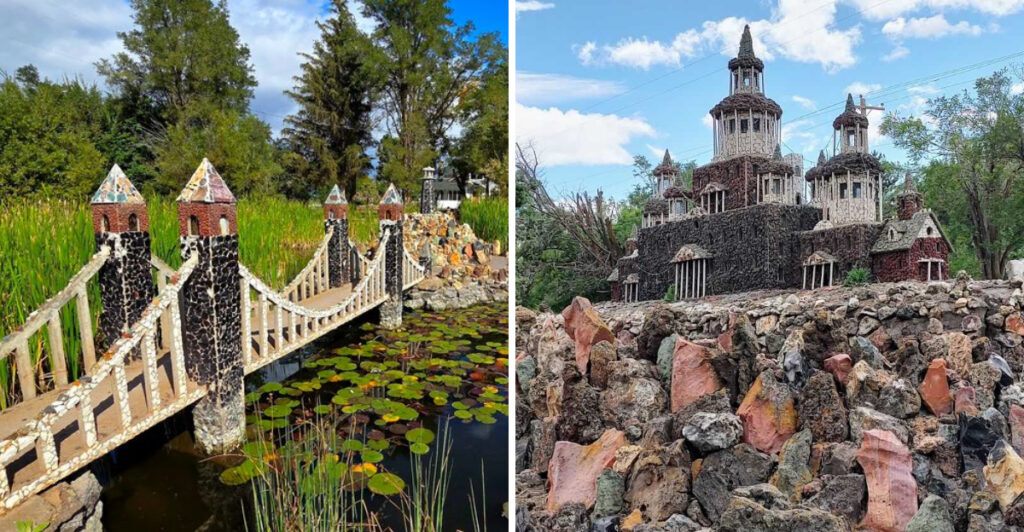
Oregon is full of unusual roadside attractions and artistic hidden gems, but Petersen Rock Garden & Museum stands in a category entirely its own. Located just outside Redmond, this historic Oregon destination feels less like something discovered and more like something imagined into existence. Combining folk art, geology, handmade structures, animals, and high-desert charm, the attraction creates an experience that feels both whimsical and deeply personal from the moment you arrive.
Every winding path reveals another carefully crafted surprise, from miniature stone buildings and detailed landscapes to sparkling mineral displays that catch the light in unexpected ways. The creativity behind the garden is impossible to ignore, and the handmade nature of the attraction gives it a warmth that larger tourist destinations often lack. Visitors quickly realize this is not just a roadside stop, but a place built with patience, imagination, and genuine passion.
What makes Petersen Rock Garden & Museum especially memorable is the feeling that there is always something new waiting around the next corner. Whether you are fascinated by folk art, curious about unusual Oregon attractions, or simply searching for a place with real personality, this hidden gem leaves a lasting impression. Long after visitors leave the high desert landscape behind, the creativity and charm of Petersen Rock Garden tend to stay firmly in their memory.
1. A Folk Art Vision Built by Hand
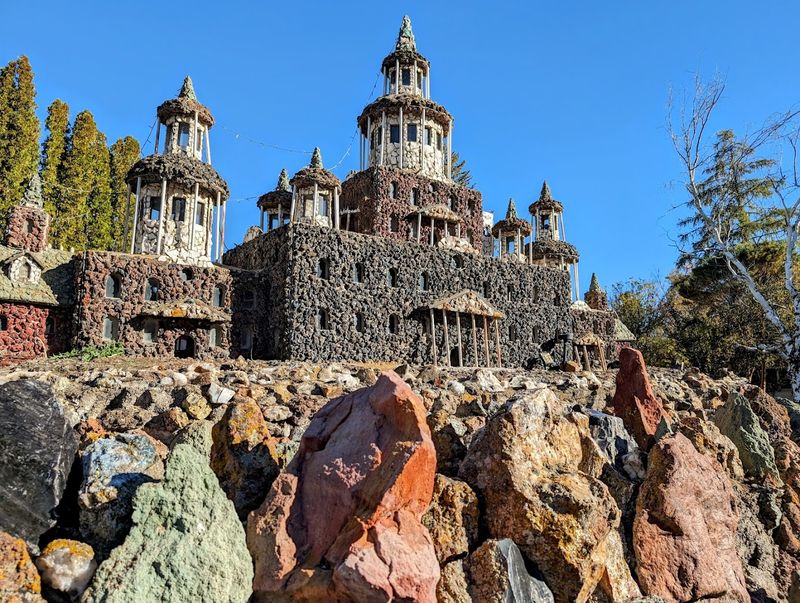
The first thing that struck me at Petersen Rock Garden & Museum was the sheer devotion embedded in every stone.
This was not a polished theme park or a modern installation designed for quick photos.
It felt personal, patient, and wonderfully eccentric, the kind of place only one determined imagination could bring into being.
Rasmus Petersen began building the garden in 1935, and that history matters when you walk the grounds.
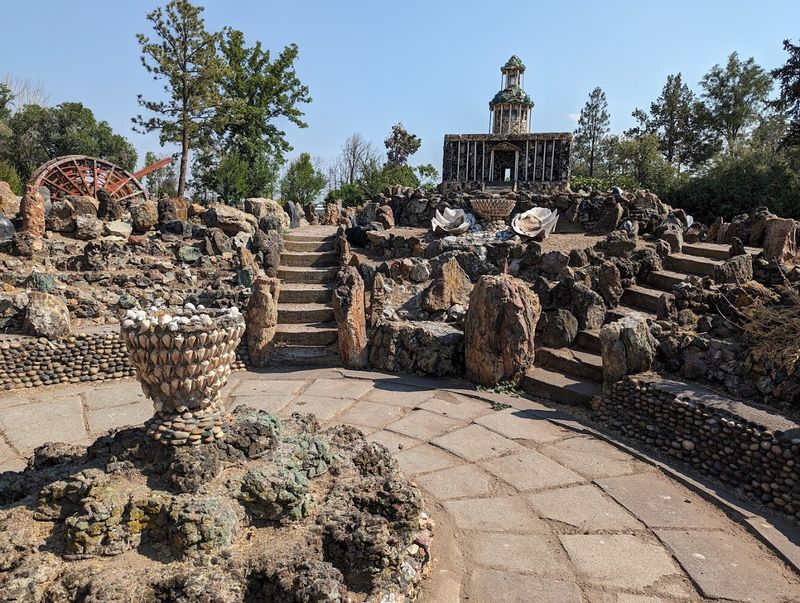
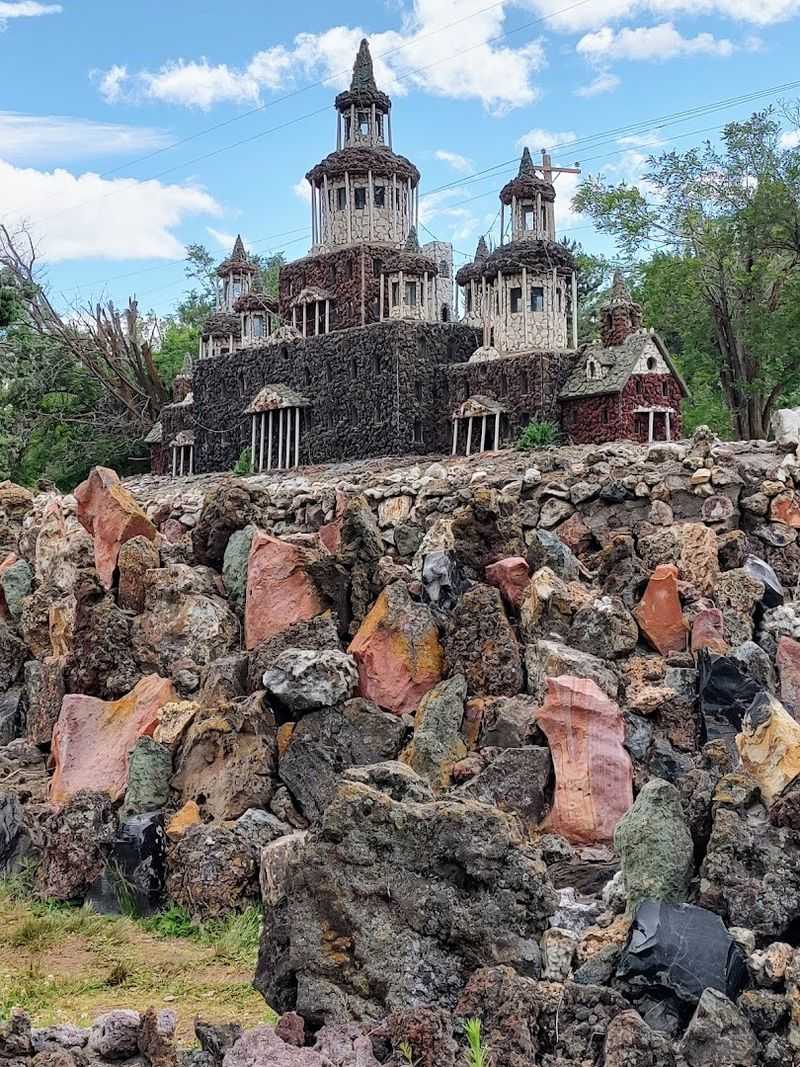
You can see the hand-built character in the miniature cities, patriotic scenes, bridges, and towers shaped from lava rock, petrified wood, and other local treasures.
Nothing feels mass-produced, and that is exactly why the place has so much soul.
As you move from structure to structure, the creativity almost sneaks up on you.
One moment you are admiring a tiny castle, and the next you are noticing careful details, surprising textures, and the way the desert light catches the stones.
Even if some areas show their age, the charm never fades.
What makes it magical is not perfection but persistence.
You are seeing a deeply human work of art that has endured decades, weather, and changing tastes while still inspiring curiosity.
That handmade spirit gives the garden its emotional pull, and it is the reason a simple walk here feels so unexpectedly moving.
2. Miniature Stone Worlds Around Every Corner
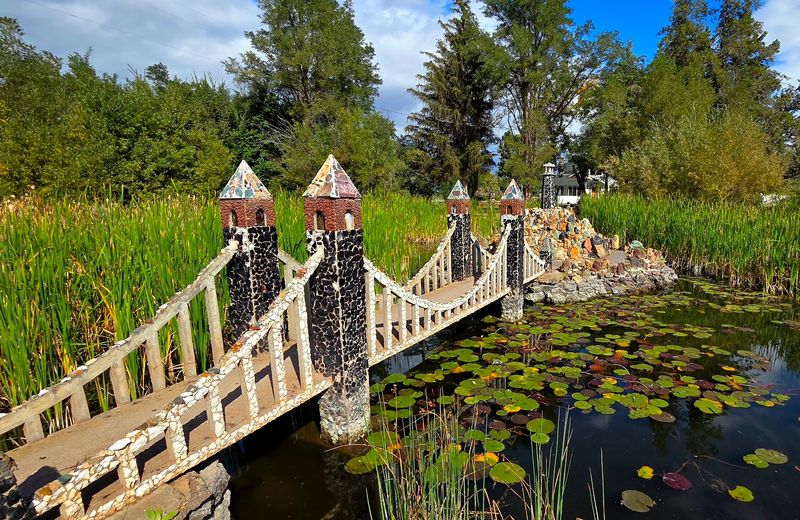
One of the best parts of visiting Petersen Rock Garden & Museum is how often it makes you stop and look twice.
The grounds are filled with miniature stone worlds that seem to appear out of nowhere, each one packed with tiny details.
It feels like wandering through a storybook that was rebuilt in rock and glass.
Some structures resemble castles, churches, bridges, or little civic buildings, while others are harder to define in the best possible way.
That ambiguity adds to the wonder because you are not just observing, you are interpreting.
Your eye keeps hopping from one shape to another, noticing color, texture, and scale all at once.
What I liked most is that the garden rewards slow looking.
From a distance, the displays are charming and unusual, but up close they become even more impressive.
Bits of petrified wood, obsidian, shells, and polished stones turn each scene into a mosaic of materials that feels both rugged and delicate.
There is also something joyful about how unapologetically imaginative the place is.
It does not ask you to understand every reference before you enjoy it.
You just walk, pause, smile, and let the craftsmanship pull you in.
By the time you round another corner, you are ready for the next tiny marvel waiting in plain sight.
3. The Museum’s Surprising Mineral Treasures
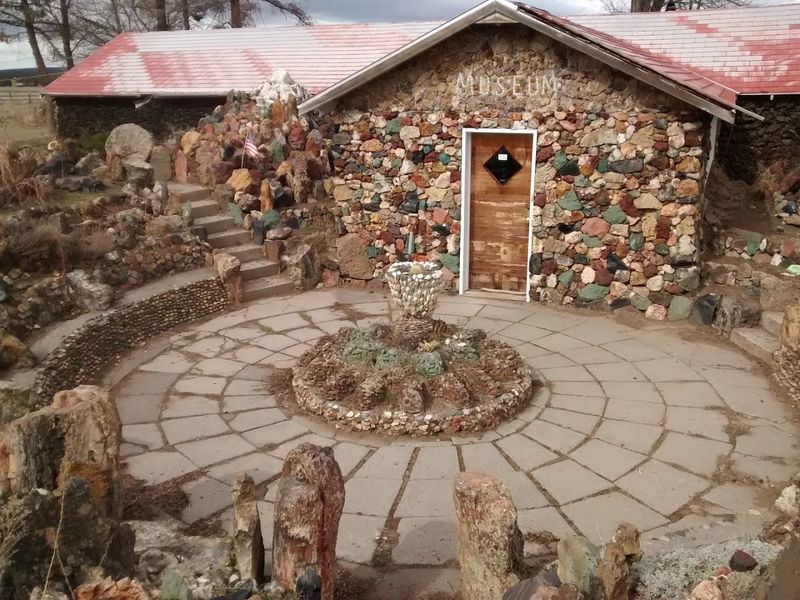
If you think the outdoor garden is the whole experience, the museum quickly proves otherwise.
Inside, Petersen Rock Garden & Museum becomes a compact but fascinating showcase of minerals, stones, and regional history.
The collection adds depth to the visit and helps you understand why this place means so much to rock lovers.
Display cases hold agates, thunder eggs, petrified wood, obsidian, crystals, and other specimens that range from subtle to dazzling.
Some pieces feel earthy and local, while others flash with colors that seem almost unreal under the light.
I loved how the museum balances curiosity with education without ever feeling stiff or overly formal.
Visitors often mention the black light display, and it truly adds a memorable twist.
Seeing certain stones glow transforms the collection from interesting to mesmerizing in a matter of seconds.
It is one of those simple experiences that makes both kids and adults lean in closer.
The museum also broadens the story of the property beyond the garden paths outside.
You leave with a better sense of the materials, the collector’s eye behind them, and the deep connection between Central Oregon geology and the art on display.
That combination of wonder and context makes the museum feel like an essential part of the stop, not just an extra room.
4. Why the Setting Feels So Dreamlike
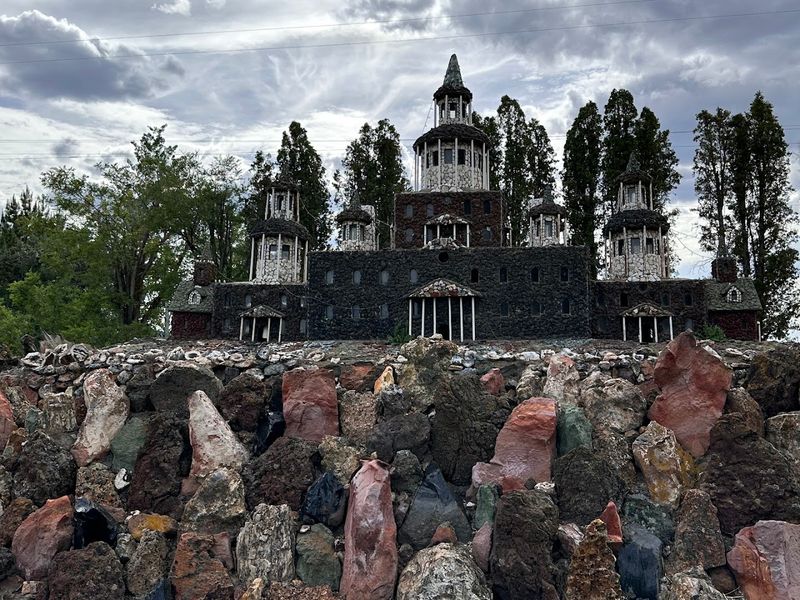
Part of what makes Petersen Rock Garden & Museum feel almost unreal is its setting in the Central Oregon high desert.
You arrive expecting a quirky roadside stop, but the landscape gives it a strange serenity that elevates the whole experience.
Open skies, distant views, and quiet surroundings make the stone creations feel even more improbable.
There is a beautiful contrast at work here.
The garden is intricate, crowded with handmade detail, while the land around it feels broad, spare, and expansive.
That contrast creates a dreamlike tension, as if a miniature fantasy city somehow settled into a wide rural horizon and decided to stay.
On the right day, the light does half the storytelling for you.
Sun across lava rock, shadows around the structures, and flashes of color from minerals or glass can make the place feel soft and cinematic.
Visitors often describe it as peaceful, and that word fits better than you might expect for somewhere so visually busy.
I also think the slight weathering adds to the mood instead of taking away from it.
This is not a flawless attraction behind ropes and fresh paint.
It is a living historic site with age, texture, and atmosphere, which makes every view feel more earned.
The result is less like entering a museum exhibit and more like wandering into a beautiful local legend.
5. Peacocks, Chickens, and Unexpected Life
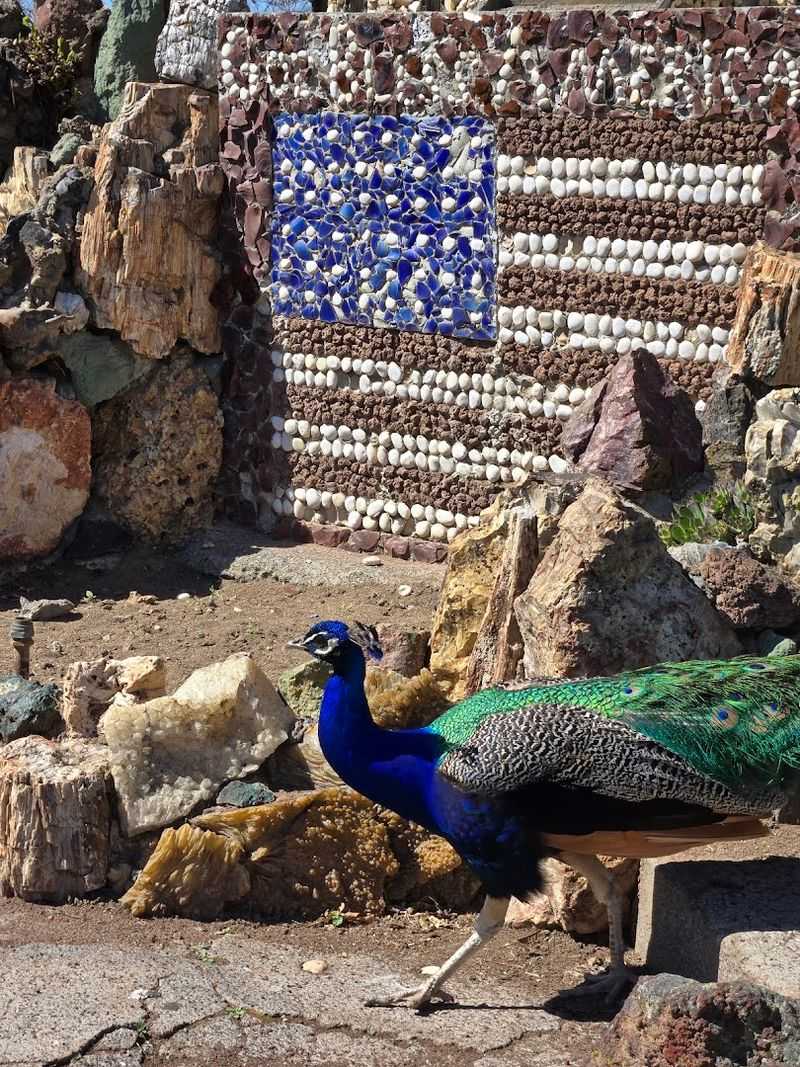
Just when the rock art alone would be enough, Petersen Rock Garden & Museum adds another layer of delight with its free-roaming birds.
Peacocks and chickens wander the property, giving the garden a lively, slightly surreal energy.
Their presence turns an already memorable visit into something that feels playful and completely distinctive.
There is something funny and enchanting about seeing a peacock strut past a handmade stone tower as if it owns the place.
The birds bring movement, color, and sound to the grounds, and they often become an instant highlight for families.
Several visitors mention feeding them, which adds a simple interactive moment to the walk.
What I appreciated is that the animals do not feel like a staged attraction.
They seem woven into the personality of the site, part rustic homestead and part artistic wonderland.
That combination keeps the garden from feeling static, because every turn might come with a flash of feathers or a dramatic peacock call.
For kids, the birds can make the visit especially memorable, but adults tend to be just as charmed.
They soften the museum atmosphere and make the place feel welcoming rather than precious.
In a setting already packed with imagination, the peacocks somehow make everything seem even more theatrical, more whimsical, and more alive than you expected when you first pulled in.
6. A Great Stop for Families and Curious Kids
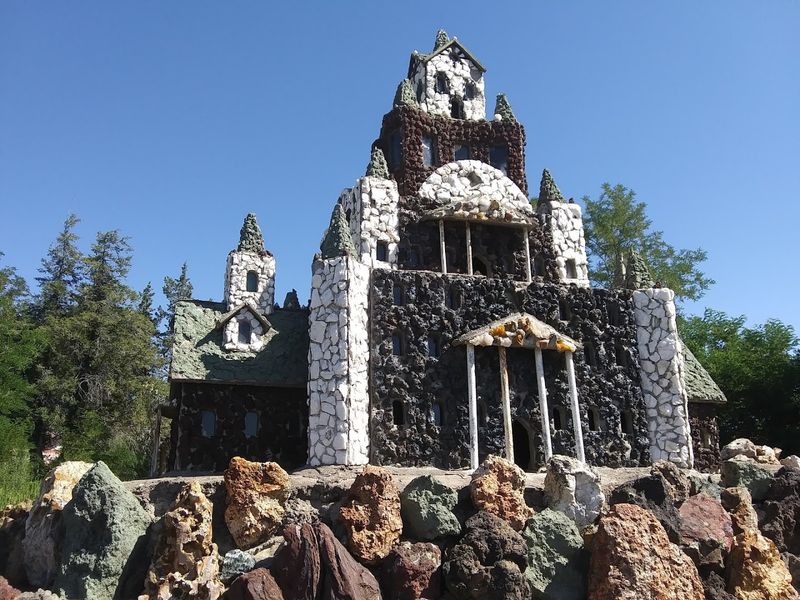
Petersen Rock Garden & Museum works especially well for families because it gives kids plenty to notice without turning the visit into hard work for adults.
There are unusual structures, bright minerals, roaming birds, and enough variety to keep curiosity alive from one area to the next.
It feels educational, but never in a forced or overly scripted way.
Parents should know this is a place for looking rather than climbing, especially around the historic creations.
Even so, younger visitors often seem captivated by the tiny buildings and the treasure hunt feeling of spotting new details.
The museum adds another layer, with glowing stones, rock specimens, and displays that invite questions.
I like that the experience can stretch or shrink depending on your pace.
Some families may wander through in under an hour, while others linger for two hours or more, feeding peacocks, browsing the gift area, and revisiting favorite spots.
That flexibility makes it an easy stop to fit into a day around Redmond, Bend, or the Painted Hills.
There is also a wholesome, old-fashioned quality here that feels refreshing.
Instead of screens and loud attractions, the excitement comes from discovery, conversation, and close observation.
If you want a place where kids can be genuinely intrigued by art, animals, and geology all at once, this garden delivers a memorable mix that feels both gentle and wonderfully strange.
7. A Work in Progress With Real Heart
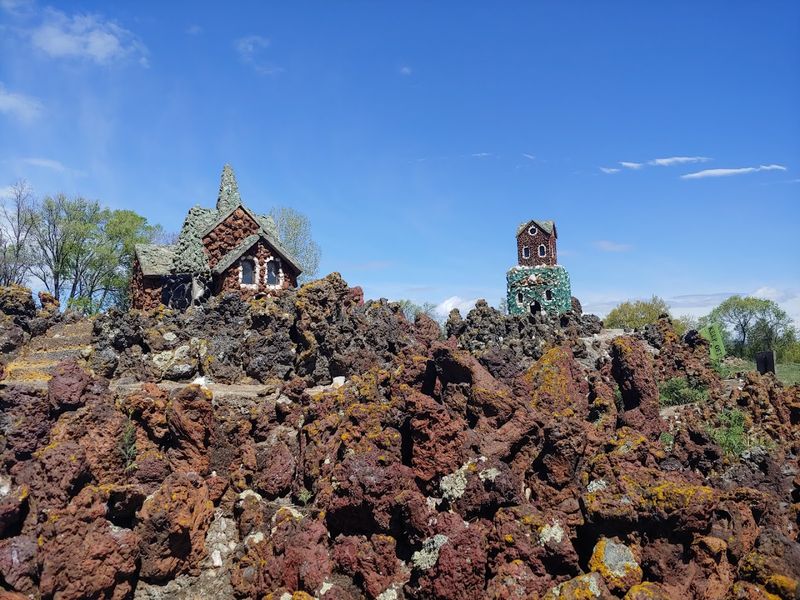
One thing you notice quickly at Petersen Rock Garden & Museum is that it is not frozen in time or fully polished for easy consumption.
Parts of the property show age, wear, and the realities of preserving a handmade historic attraction in the elements.
Rather than hiding that, the place seems to invite you into its ongoing story.
Many visitors mention restoration efforts, and that context matters.
You are not just looking at whimsical rock structures; you are seeing a community trying to protect an unusual piece of Oregon folk art history.
That makes the suggested donation feel less like an admission fee and more like a practical act of support.
I actually found the work in progress feeling part of the appeal.
It gives the visit honesty and reminds you that memorable places are often fragile, especially when they were built by one person’s vision decades ago.
You can sense both the legacy of the original creator and the care of those trying to keep that legacy standing.
That does mean you should arrive with the right expectations.
This is not a sleek museum campus with perfect signage and manicured symmetry.
It is more heartfelt than polished, more character-rich than pristine, and all the more affecting because of it.
When you leave, you are not just carrying photos of a strange and beautiful place; you are carrying a sense that it deserves to endure.
8. Planning Your Visit the Smart Way
If you are thinking about visiting Petersen Rock Garden & Museum, a little planning goes a long way.
The museum is located at 7930 SW 77th Street in Redmond, and the current schedule is limited, with hours typically running from 10 AM to 4 PM on Monday, Friday, Saturday, and Sunday.
Because visitors have noted occasional inconsistency, checking the website before you go is a smart move.
The setting is easy to reach if you are exploring Central Oregon, especially from Redmond or Bend.
There is parking on site, and the visit fits nicely into a leisurely day of scenic drives and unusual stops.
Since much of the experience is outdoors, comfortable walking shoes, water, and sun protection are all worth bringing.
The property operates with a suggested donation, often around ten dollars per adult, which many guests say is well worth it.
Some reviews mention mobile payment options, but carrying a backup form of payment is still a good idea.
If you want the full experience, allow enough time for both the garden and the museum instead of rushing through.
I would also keep your expectations flexible and your curiosity high.
This is the kind of place that rewards wandering, noticing, and asking questions.
Show up ready for a quirky, heartfelt attraction rather than a perfectly polished destination, and you are far more likely to leave feeling like you found one of Oregon’s most memorable hidden gems.
9. What Makes It Worth the Detour
What ultimately makes Petersen Rock Garden & Museum worth seeking out is how completely it resists sameness.
In an era when so many attractions feel optimized for quick consumption, this one remains gloriously specific.
It is odd, heartfelt, historical, creative, and just weathered enough to feel deeply authentic.
You come for the rock art, but you leave talking about much more than that.
The miniature structures, the mineral museum, the black light display, the peacocks, the quiet desert backdrop, and the handmade spirit all blend into one experience that is hard to compare to anything else.
That layered strangeness is exactly what gives the place its lasting power.
I think the garden also taps into a kind of nostalgia that is increasingly rare.
It recalls the roadside attractions people used to discover by chance and remember for years, not because they were perfect, but because they had personality.
Every corner carries evidence of one person’s vision and many people’s continued care.
If you are the kind of traveler who loves polished luxury, this may not be your favorite stop.
But if you are drawn to places with soul, texture, and a little unpredictability, Petersen Rock Garden & Museum can feel almost enchanted.
It is the sort of detour that starts as curiosity and ends as affection, which is probably the best compliment any truly memorable destination can earn.