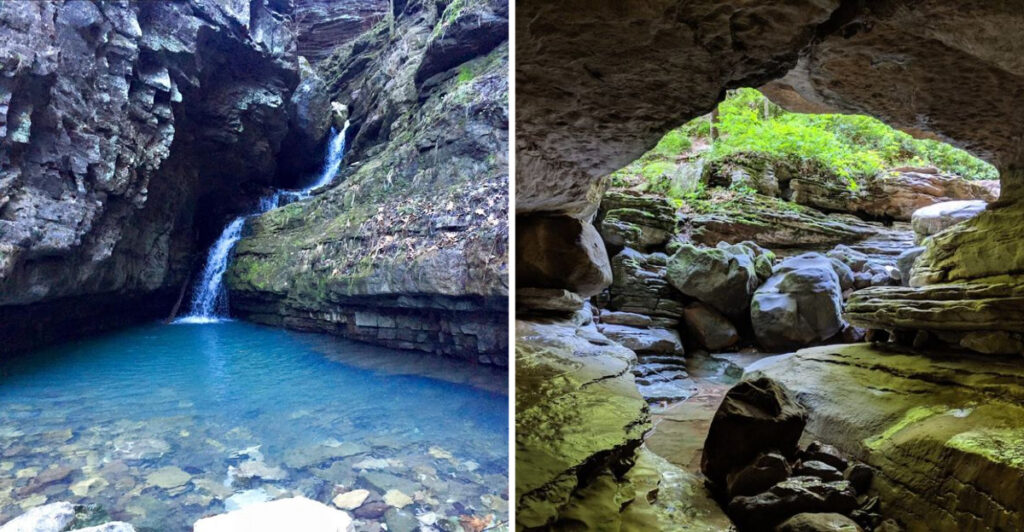
Lost Valley Trail in Arkansas begins as a calm, easy Ozark walk and then keeps unfolding into something far more dramatic with every turn. In less than a few miles, hikers pass through a mossy canyon lined with bluff walls, follow a creek through dense forest, reach a waterfall, and eventually arrive at a cave where water disappears into the darkness.
The scenery changes so quickly that the trail never feels repetitive, which is part of what makes it so memorable. Every section brings a different texture, sound, or view to slow you down. If you want a short Arkansas hike with a surprisingly huge payoff, Lost Valley Trail absolutely delivers.
A Canyon Entrance That Escalates Fast
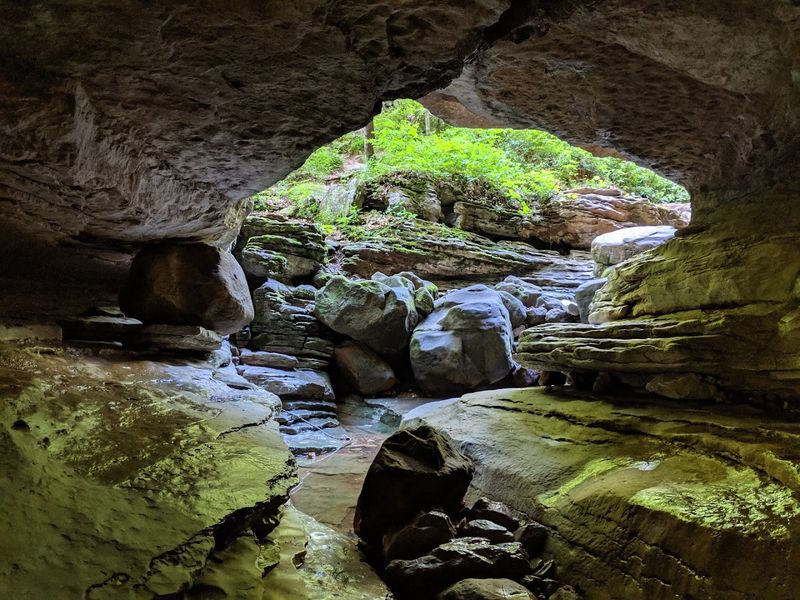
Lost Valley Trail does not waste time with a long warmup. Within the opening stretch, you are already moving through a narrow Ozark canyon where the ground stays cool, the rocks wear thick moss, and the creek keeps slipping in and out of view beside the path.
It has that rare setup where every few minutes the terrain changes enough to keep your eyes busy. The trail itself is approachable at first, which is part of its charm. Families, casual walkers, and people chasing a bigger payoff later on can all settle into the route without feeling punished from the start.
That easier beginning also makes the surroundings stand out more, because attention stays on the bluff walls, tree roots, and wet stone instead of on heavy exertion.
One of the smartest things about this place is the way it builds anticipation. You notice little side details early, like rock ledges darkened by moisture, shallow pools reflecting leaves, and patches of ferns tucked into cracks in the canyon.
None of those features are the headline, yet they keep hinting that the trail has more in store than a standard out-and-back through the woods.
That sense of progression matters here. Lost Valley Trail is short enough to feel accessible, but visually it stacks scenes in a way that makes the distance feel richer than the map suggests.
Instead of one big reveal after a plain approach, the route keeps handing you smaller moments first, then gradually tightens the canyon and raises the drama.
By the time the major attractions come into view, the setting has already done a lot of work. You are not arriving at a waterfall from a forgettable path.
You are arriving through a corridor of stone, water, and shade that makes the payoff land harder and gives this Arkansas hike its unusually cinematic start.
The Waterfall Reveal at Eden Falls
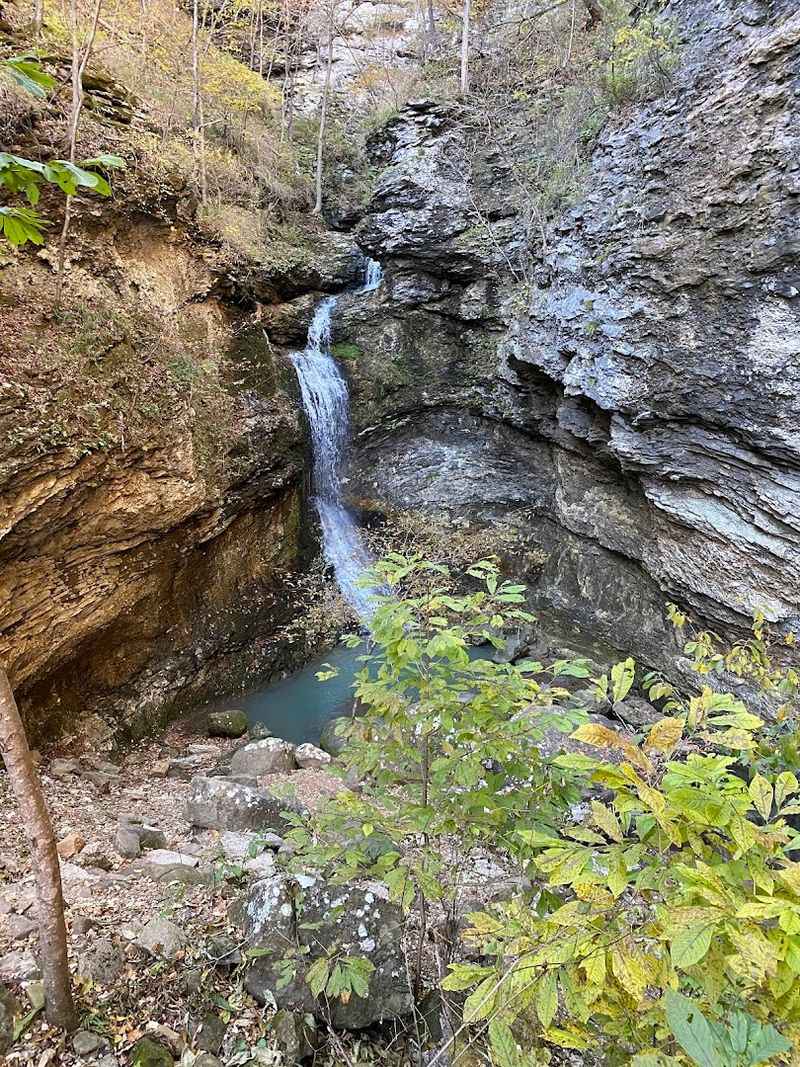
The trail’s signature outdoor moment is Eden Falls, and it earns the buildup. After the gentler opening, the route starts asking for more attention as stairs appear, the path narrows, and the terrain becomes slicker around the damp rock.
That shift helps the waterfall arrive with extra force, because the approach suddenly feels more adventurous without becoming wildly technical.
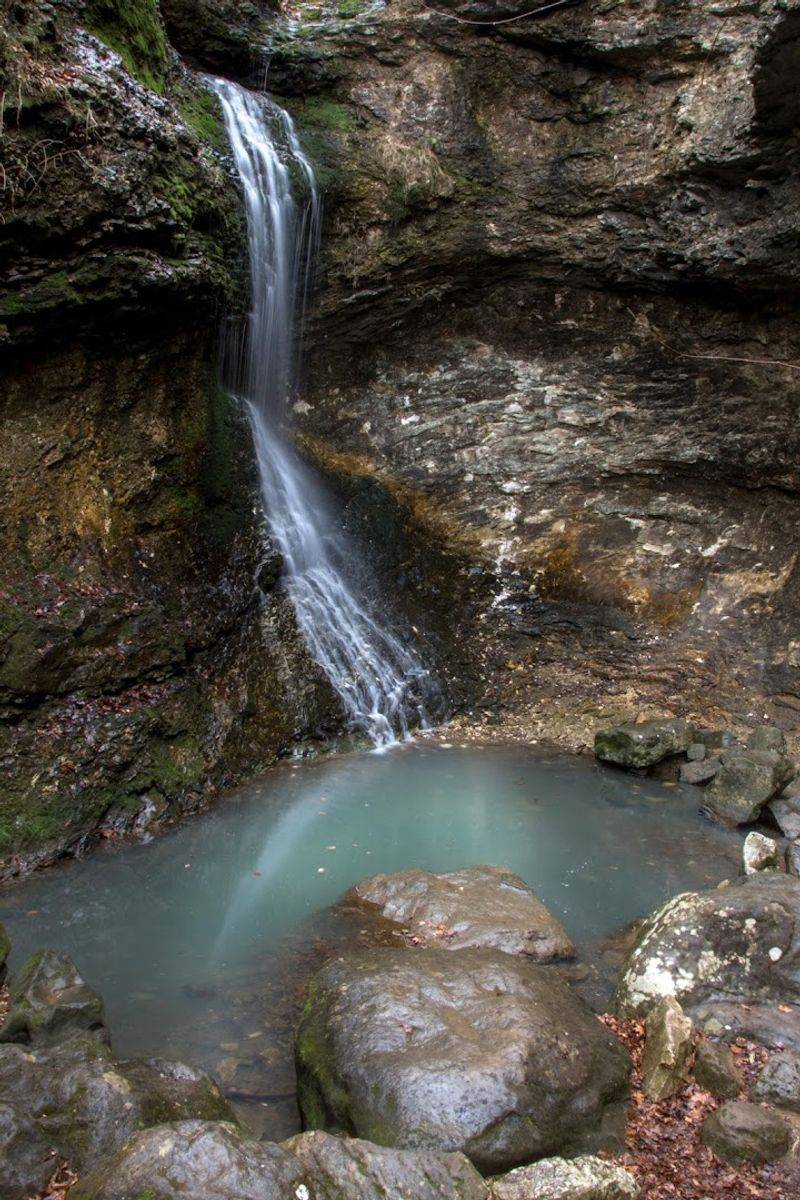
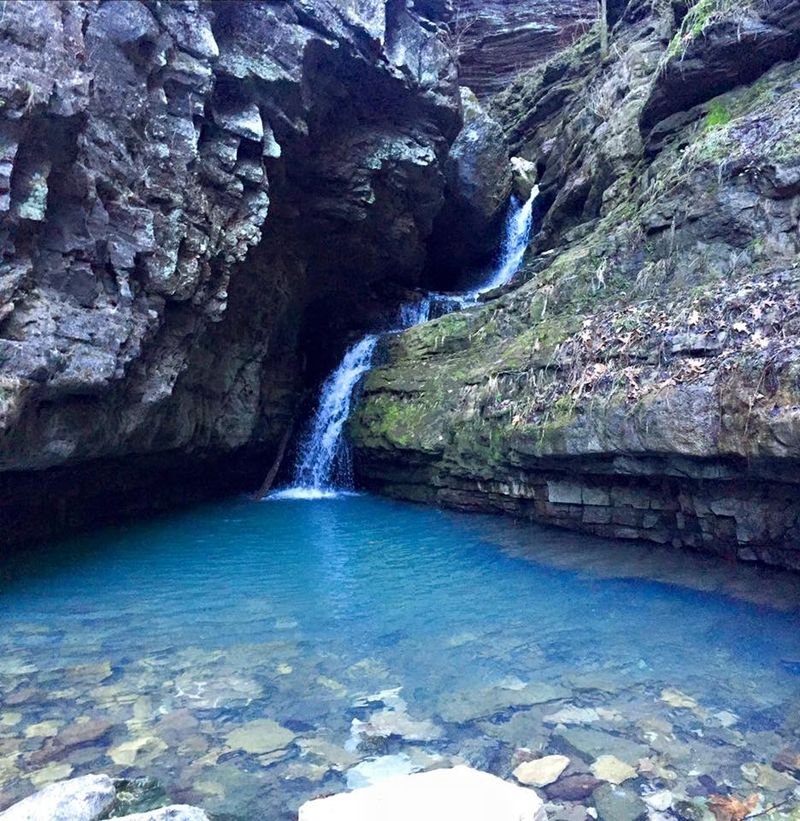
Eden Falls is appealing for more than simple height. Water slides over rock shelves and disappears into pockets and channels, so the scene has texture instead of looking like one clean drop pasted onto a cliff.
After rain, the flow can look dramatically fuller, which lines up with visitors who mention timing their trip for wetter conditions.
The bluff around the falls matters almost as much as the water. The stone creates a sheltered, echoing backdrop that amplifies every splash, and the canyon funnels your attention straight to the center.
You can pick out streaks of mineral color, darker wet bands on the rock, and bits of greenery hanging from ledges where moisture lingers.
This is also where many hikers realize the trail is more layered than expected. The waterfall alone would make for a satisfying destination, especially for families or anyone wanting a scenic turn-around point.
But Lost Valley Trail keeps going, and that knowledge changes the energy around the falls from finale to midpoint.
Even so, Eden Falls deserves time. It is the kind of place where people pause longer than planned, adjusting footing on the rocks, listening to the water, and scanning the bluff for details missed on arrival.
In Arkansas, plenty of trails offer a pretty waterfall. Far fewer pair one with a cave adventure waiting just beyond it.
Past the Stairs, the Trail Gets Wilder
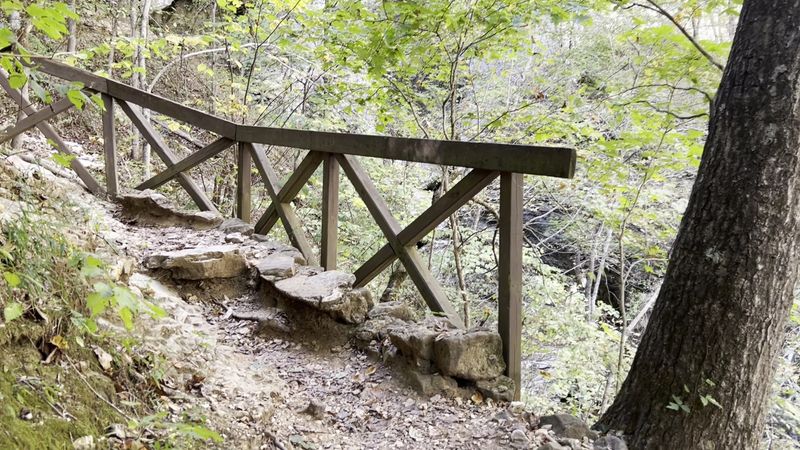
A noticeable gear change happens beyond the easiest stretch of Lost Valley Trail. The path becomes less like a relaxed woodland walk and more like a route that asks you to watch each foot placement, especially where damp rock, roots, and uneven surfaces bunch together near the falls and cave approach.
That contrast is part of why the hike sticks in your memory. Nothing about this section suggests a massive backcountry expedition, but it does reward focus.
A few visitor notes mention slippery areas, and that tracks with the terrain here, where moisture and shade can keep surfaces slick longer than expected. Shoes with traction make a bigger difference than people assume on a short trail like this.
The stairs are a key transition point. They physically lift you into a new part of the route, but they also shift the tone, moving the experience from scenic to exploratory.
You start noticing narrower passages, steeper lines, and places where the landscape looks more folded and rugged than it did at the trailhead.
That rougher character is exactly what gives the trail its edge. Without it, Lost Valley would still be pretty, but it would not have the same sense of escalation.
The route creates a small adventure out of modest mileage, letting you sample canyon hiking, waterfall terrain, and cave access in one compact outing.
If you are bringing kids or less experienced hikers, this is the section where pacing matters most. Taking it slowly keeps the outing enjoyable and lets you pay attention to the scenery instead of rushing through it.
The payoff ahead is stronger when you treat this final approach as part of the attraction rather than just the obstacle before it.
Inside the Cave, Water Steals the Show
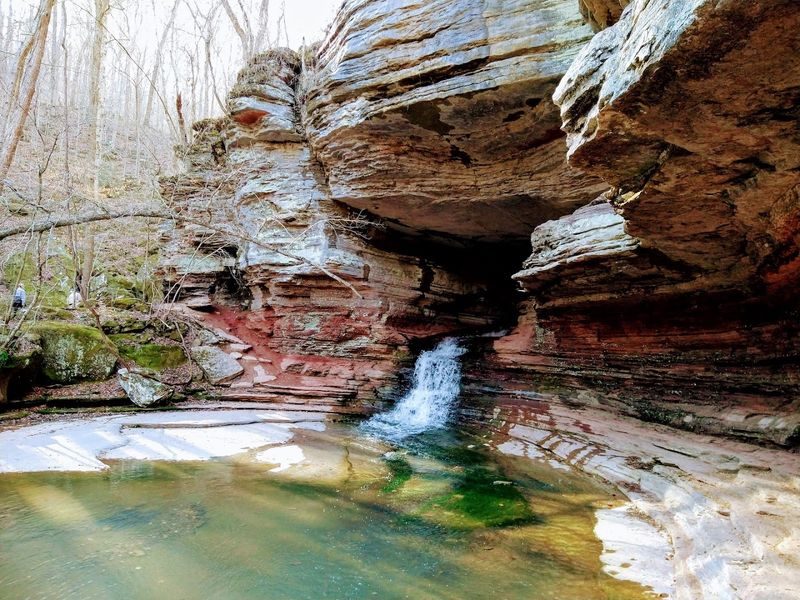
The cave is what transforms Lost Valley Trail from a scenic Ozark walk into something that feels far more adventurous. After passing through the canyon and stopping at Eden Falls, the route suddenly narrows into a darker environment where the rock walls close in and the sound of water becomes sharper and more concentrated.
That transition from open forest to underground space is the moment many hikers remember most clearly. A flashlight is more than a helpful extra here.
Once you move beyond the entrance, natural light fades quickly, and the uneven ground demands more attention than the earlier sections of the trail. Several visitors specifically recommend bringing a headlamp or flashlight, and the advice makes immediate sense once the cave begins absorbing the daylight behind you.
The underground waterfall is the feature that gives this section its identity. Water moving through a cave feels completely different than seeing it spill down an exposed cliff.
The sound echoes through the chamber, the air cools noticeably, and every drop seems amplified by the stone around it. Instead of one wide scenic view, your attention narrows toward dripping rock, shadowed crevices, and the focused ribbon of water disappearing deeper underground.
The atmosphere naturally changes your pace. People slow down, step more carefully, and start paying closer attention to small details like wet limestone textures, cool air, and the shifting shadows along the walls.
The cave turns the hike from simple sightseeing into something more immersive and memorable. That underground waterfall is what separates Lost Valley Trail from many short Arkansas hikes.
Plenty of trails end at a scenic overlook or a single cascade. Far fewer finish with a cave experience that feels this atmospheric and unexpected.
By the time you step back into daylight, the trail already feels much bigger and more adventurous than its modest distance suggests.
Why This Arkansas Trail Works for Different Kinds of Hikers
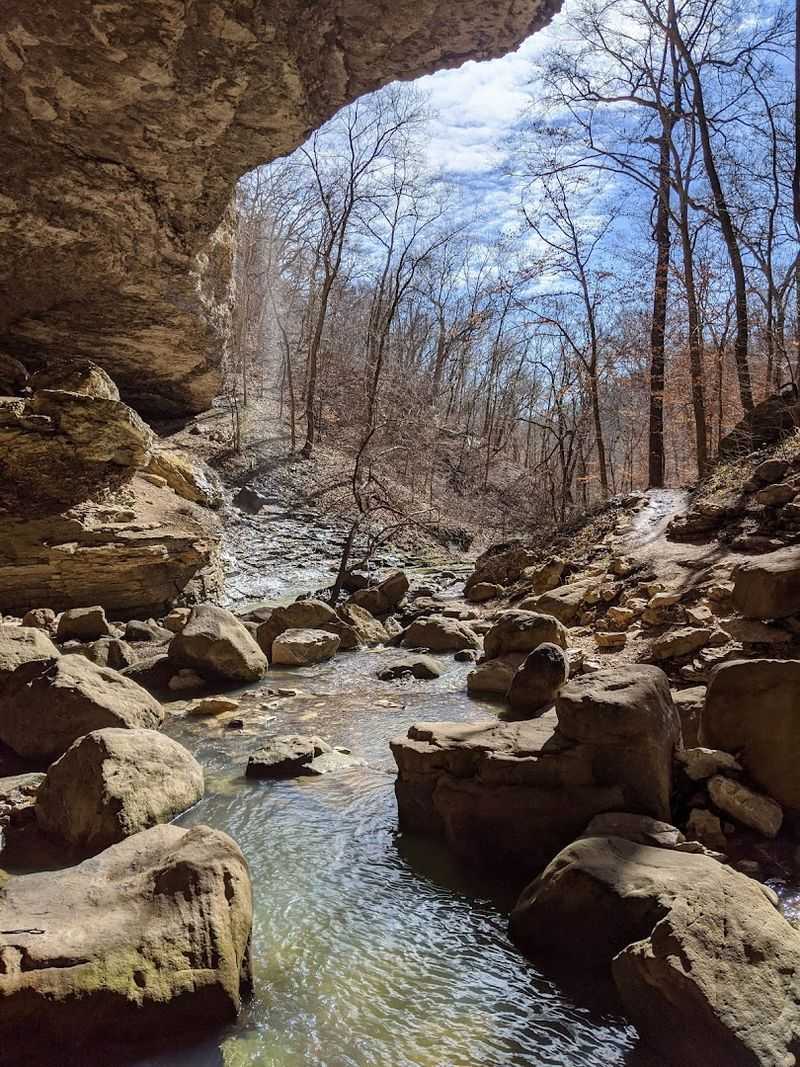
One reason Lost Valley Trail has such a strong reputation is that it serves multiple kinds of hikers in a single outing. If you want an easy nature walk, the lower sections deliver that.
If you want a compact adventure with a cave and some careful scrambling, the upper section supplies that too, which is a clever mix for a relatively short route.
Families often connect with the trail because the beginning is welcoming and visually rewarding right away. You are not forcing kids through miles of monotony before anything interesting appears.
There are rocks, water, bluff walls, and enough variation in the setting to keep attention locked in, even before the waterfall and cave become part of the day.
More experienced hikers may not come here for sheer difficulty, but that is not really the point. The appeal is density, the way the trail packs multiple landscape features into a small footprint.
You can move at a casual pace, spend time examining the geology, and still leave feeling like the route offered more than a basic stroll.
There is also flexibility in how far people go. Some hikers stop at the falls, others continue toward the cave, and both choices can make sense depending on comfort level, weather, and available daylight.
That built-in range makes Lost Valley easier to recommend than trails that demand the same level of commitment from everyone.
In practical terms, this adaptability is part of the trail’s brilliance. It can be a peaceful morning walk, a family outing, or a more hands-on mini adventure with lights and caution on slick rock.
Arkansas has bigger hikes and harder hikes, but few places balance accessibility and surprise quite this smoothly in one concentrated experience.
Timing Your Visit for Water, Light, and Quiet
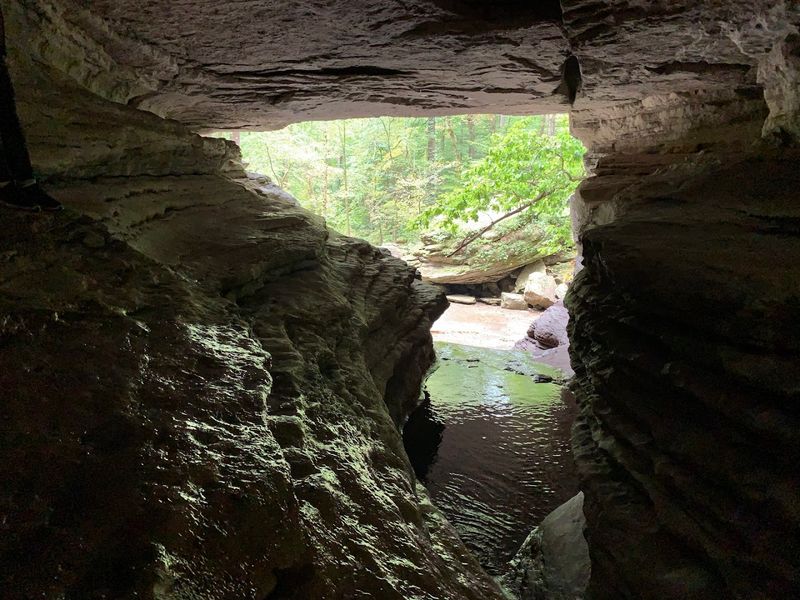
Timing changes this trail more than many people expect. Water flow, light in the canyon, and crowd levels all shape the experience, so the same route can read differently from one visit to the next.
If you are trying to catch Lost Valley at its most dramatic, recent rain is often the detail that matters most. People regularly point out that wetter conditions improve the waterfalls, and that makes intuitive sense here.
More water gives the creek extra movement, livens up Eden Falls, and adds energy to every slick rock edge and shaded runoff line along the route. The canyon looks better when moisture is actively working on it instead of just leaving traces behind.
Early arrival also has clear advantages. One visitor described getting there first in the morning and noticing how loud the quiet seemed, which is a perfect way to explain this kind of enclosed natural space.
Before foot traffic builds, you hear water, birds, and the soft scrape of shoes on gravel with far more clarity.
Daylight deserves real attention too, especially if the cave is on your agenda. Because the canyon walls and surrounding terrain can shorten usable light, late starts are less forgiving than the mileage might suggest. A short trail can still feel abruptly dim near a cave entrance, which is why flashlights are not overkill here.
Autumn color and fresh spring green both suit Lost Valley well, but season matters less than conditions. The trail’s strongest version usually combines moving water, cooler air, and enough time to linger without rushing back.
If you can choose, aim for a morning after rain, when the canyon looks rinsed clean and every feature speaks a little louder.
Smart Prep Before You Head Into Lost Valley
Lost Valley Trail is accessible for most hikers, but it becomes much more enjoyable when you arrive prepared for the terrain instead of assuming it is a completely effortless walk. The route includes damp rock, uneven footing, stairs, and a cave section where lighting matters, so a few simple choices can make the experience smoother from start to finish.
Footwear is the biggest one. Shoes with reliable grip help immediately once the trail becomes wetter near Eden Falls and the cave approach.
After rain, the stone and packed dirt sections can stay slick longer than expected, especially in shaded areas where moisture lingers throughout the day. The trail is short, but careless footing can still turn a relaxed outing into a frustrating one quickly.
A flashlight or headlamp is also worth bringing if you plan to continue into the cave. Natural light fades fast once the rock walls begin closing around the entrance, and extra illumination makes both navigation and scenery much easier to appreciate.
The underground waterfall becomes far more impressive when you can actually see the textures of the cave walls and the movement of water deeper inside. It is also smart to bring water, even though the mileage is modest.
Lost Valley has a way of slowing people down. Between photo stops, exploring around the falls, and carefully moving through the cave section, the outing often lasts longer than expected.
A small bottle of water and a little patience go much further here than heavy gear or overplanning. One final tip is simply to stay aware of the trail’s progression.
Some hikers assume the first waterfall is the ending point and almost miss the cave entirely. The best approach is to keep enough time, energy, and curiosity in reserve for the final section, because the underground waterfall is what makes this Arkansas hike truly unforgettable.
The Short Hike That Delivers an Uncommonly Big Finish
Lost Valley Trail stands out because the experience keeps evolving long after most short hikes would have already peaked. What begins as a peaceful forest walk gradually turns into something much more dramatic, with canyon walls, creek crossings, waterfalls, stone staircases, and finally a cave hiding an underground waterfall.
The trail never depends on one attraction alone, and that constant progression makes the hike feel much larger than its actual distance. That structure is part of what gives the route such broad appeal.
Families can enjoy the easier lower sections without feeling overwhelmed, while more adventurous hikers can continue deeper toward the cave and rougher terrain. The trail adapts naturally to different energy levels and expectations, which is surprisingly rare for a hike this compact.
The scenery also sticks in your memory because it feels specific instead of generic. You remember the mossy limestone, the cool air near Eden Falls, the narrowing canyon walls, and the sudden dimness inside the cave.
Even smaller details linger afterward, including dripping rock surfaces, slick stone underfoot, and the echo of water underground. Those sensory moments give the trail more personality than a typical overlook hike built around one quick photo stop.
Another advantage is how immersive the route feels without requiring a massive time commitment. You are not hiking miles of repetitive terrain waiting for one payoff at the end.
The creek, canyon, waterfall, and cave all contribute something different, so the trail keeps your attention from beginning to end. If you want one compact Arkansas hike that offers far more than expected, Lost Valley makes a strong case.
It delivers scenery, movement, geology, and a memorable cave finale in a route that stays short without ever feeling small.