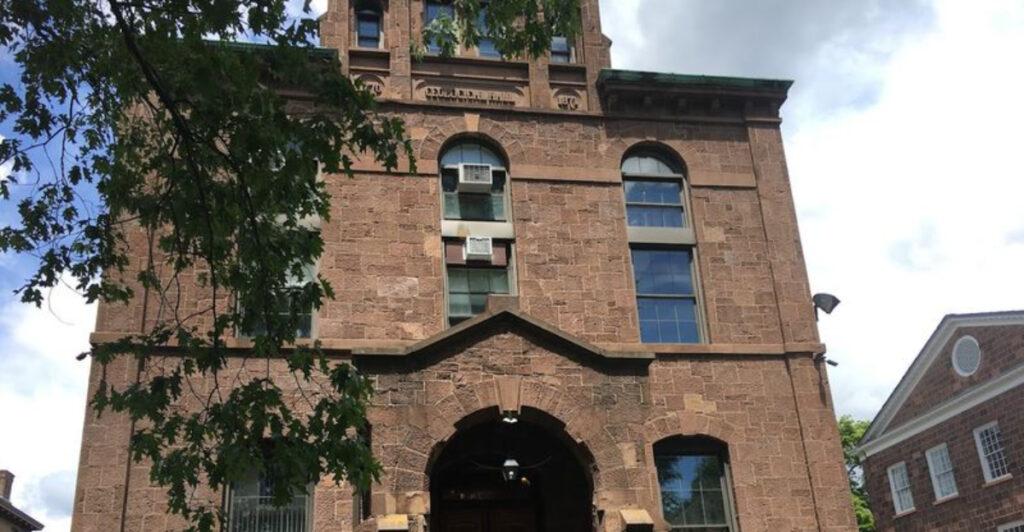
A mastodon skeleton stands on the second floor of a Rutgers building like it has been waiting patiently for New Jersey to look up. Not in a grand marble hall.
Not behind a dramatic museum entrance. Just inside Geology Hall, a campus building at 85 Somerset Street in New Brunswick, where students and visitors pass by on their way to class, lunch, or the train without realizing what is upstairs.
The Rutgers Geology Museum is one of those places that feels almost too good to be hidden in plain sight. It was founded in 1872, and its collections reach back even further, to the early scientific collecting days of the 1830s.
Inside, you’ll find Ice Age bones, glowing minerals, dinosaur tracks, ancient Egyptian artifacts, and a very local reminder that New Jersey’s past is much older and stranger than most people realize.
A quiet Rutgers building with a much bigger story inside
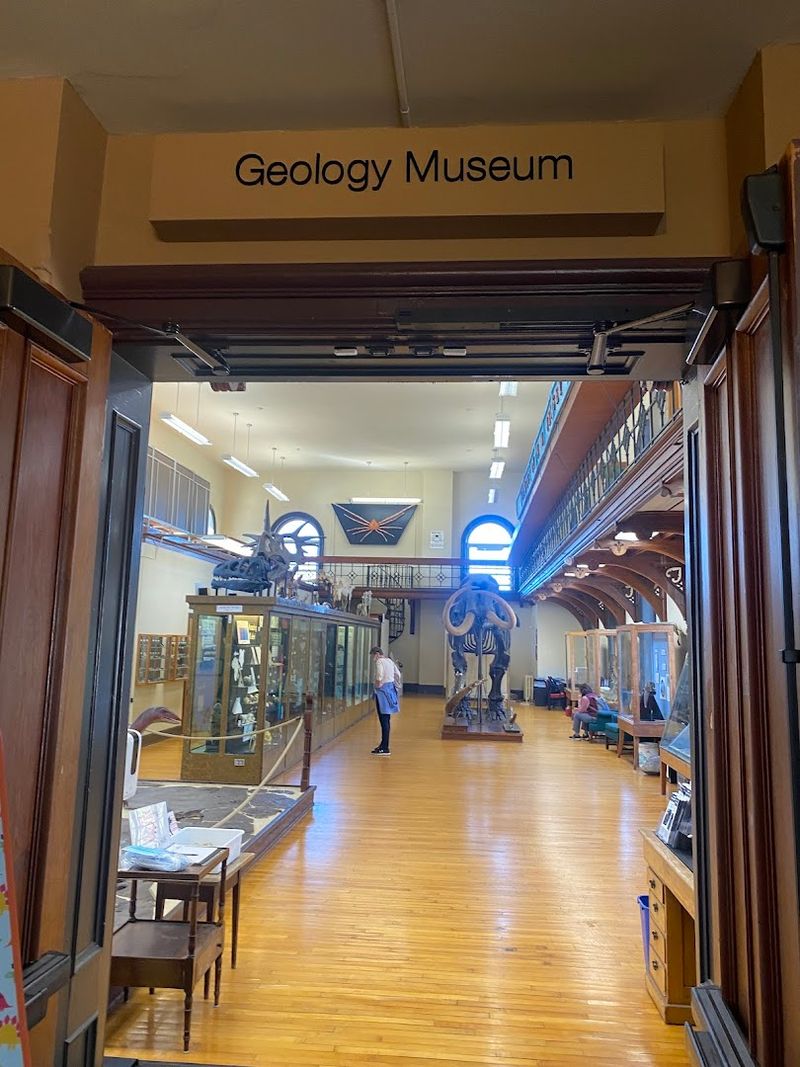
Geology Hall does not announce itself like a major museum, which is exactly why it catches people off guard. It sits on Rutgers’ historic Old Queens Campus in New Brunswick, close to the everyday movement of George Street, Somerset Street, campus buses, coffee runs, and students cutting across paths with headphones in.
From the outside, it looks like the kind of old academic building you admire for three seconds before moving on. But climb to the second floor, and the whole mood changes.
Suddenly, you are standing among fossils, minerals, skeletons, and display cases that turn a regular campus stop into a quick trip through deep time. The museum entrance is near the corner of Somerset and George, through the black iron gates, which gives the visit the feel of finding a Rutgers shortcut with a secret attached.
This is not a sprawling museum with escalators, timed tickets, and a café selling twelve-dollar sandwiches. It is compact, free, and wonderfully direct.
You can come in for half an hour and leave with a mastodon, a mummy, and New Jersey mining history all lodged in your brain. During the academic year, the museum is generally open Tuesday through Friday from 10 a.m. to 4 p.m., with some Saturday openings on the calendar.
Summer hours are more limited, and the museum is closed Sundays and Mondays, so checking the schedule before heading over is the smart local move. What makes the place memorable is the contrast.
Outside, New Brunswick keeps moving at full speed. Upstairs, New Jersey slows down by thousands, millions, and sometimes billions of years.
How Geology Hall became America’s oldest geology museum
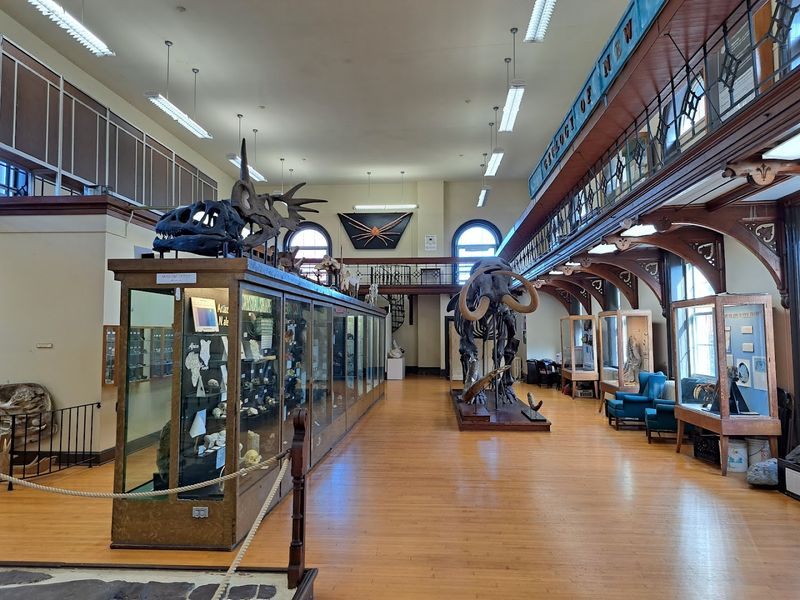
The Rutgers Geology Museum traces its official beginning to 1872, when George Hammell Cook founded it as a place to preserve and display scientific specimens connected to geology, paleontology, and natural history. Cook was not just a professor with a cabinet of rocks.
He was a Rutgers professor, the New Jersey State Geologist, and one of the people who helped shape Rutgers into a serious center for scientific study. His work with the New Jersey Geological Survey gave the museum a practical purpose from the start.
These were not decorative curiosities collected for show. They were teaching tools, evidence, and pieces of the state’s natural story.
The collection’s roots go even deeper, back to specimens gathered around 1836 by Lewis Caleb Beck, a Rutgers professor whose interests stretched across chemistry, botany, geology, entomology, and medicine.
Beck collected minerals, fossils, and other natural history materials, many connected to New Jersey, and those early holdings helped build the foundation for what visitors see today.
Geology Hall itself adds another layer of historical flavor. The building was designed by Henry Janeway Hardenbergh, a Rutgers graduate who later became famous for designing New York City landmarks including The Dakota and The Plaza Hotel.
That means this modest New Brunswick building shares architectural DNA with some of the most famous addresses in Manhattan, which is a very Rutgers kind of flex: understated until you read the fine print. The museum has been serving students and the public for more than 150 years, and that longevity matters.
It is not a replica of an old museum or a modern attraction dressed up to feel historic. It is the real thing, still doing what it was created to do: using fossils, minerals, and specimens to help people understand the world under their feet.
The New Jersey mastodon that still steals the show
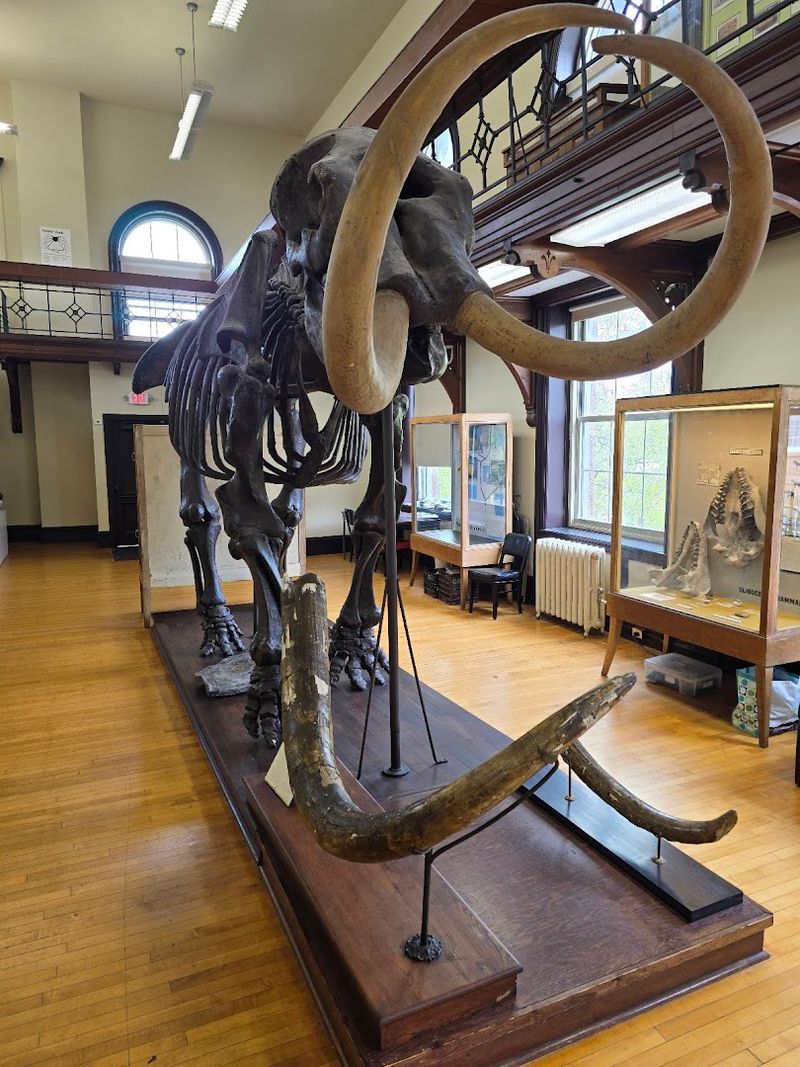
The star of the museum is hard to miss, partly because he is about 12 feet tall and partly because few things can make adults stop mid-sentence faster than a nearly complete mastodon skeleton.
Known affectionately as Manny, the American mastodon on display at Rutgers was discovered in Salem County in 1869 and purchased by George Hammell Cook in 1870 for $300.
That may sound like a quirky old receipt now, but it gave Rutgers one of its most unforgettable natural history treasures. The skeleton was mounted in 1896 and later remounted in 1932, and it still anchors the museum with the kind of quiet authority only an Ice Age animal can pull off.
What makes Manny especially satisfying is that he is not some borrowed spectacle from a faraway place. He is tied directly to New Jersey.
Mastodons once lived in landscapes that included this region, during a time when the climate, plants, animals, and coastlines were dramatically different from what we know today. Standing in front of him makes that history feel physical instead of abstract.
You are not just reading about prehistoric New Jersey. You are looking at the bones of an animal that actually belonged to this part of the world.
There is something almost funny about the setting, too. A creature that once roamed an Ice Age landscape now stands upstairs in a Rutgers building while modern New Brunswick hums below.
No dramatic soundtrack is needed. No overdone lighting tricks are required.
Manny works because he is simply there, huge and real, reminding visitors that New Jersey’s past includes far more than colonial roads, shore towns, and diners. Long before Turnpike exits and campus maps, there were mastodons.
Why an Egyptian mummy ended up on a New Brunswick campus
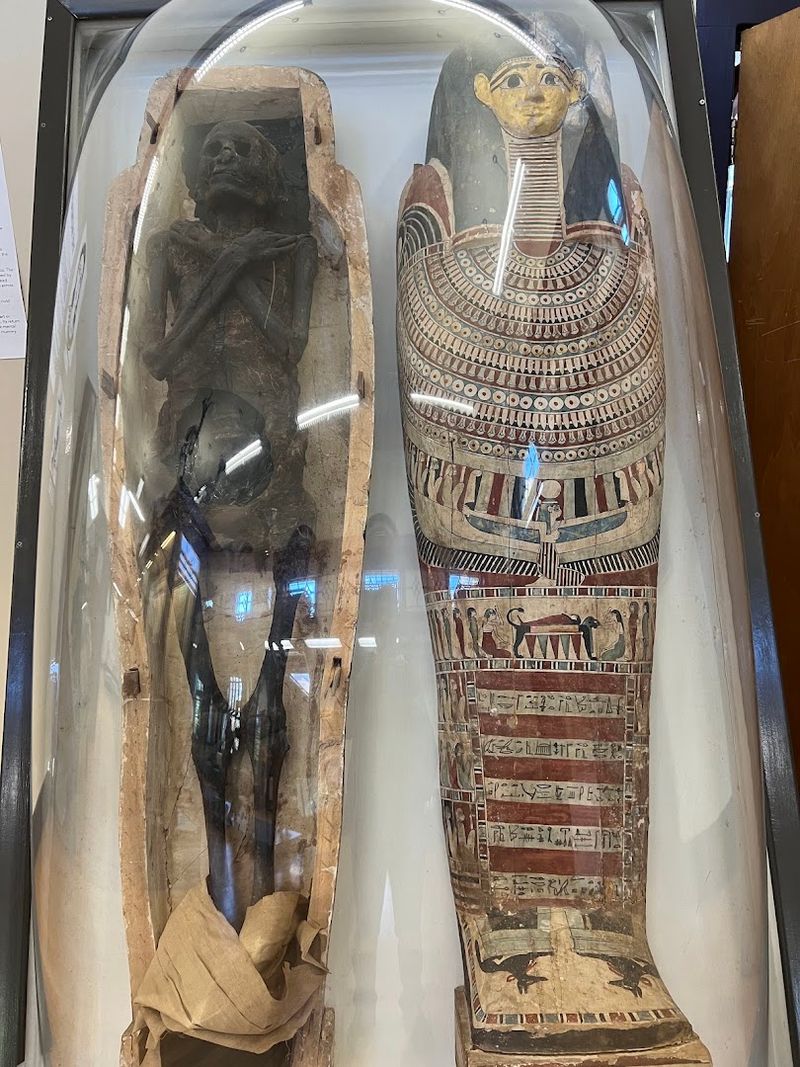
Just when the museum seems like it will be all fossils, rocks, and ancient New Jersey, an Egyptian mummy changes the whole conversation. The Rutgers Geology Museum’s collection includes a Ptolemaic-era mummy often identified as Iset-Ha, believed to be roughly 2,400 years old.
She came to Rutgers through a very New Brunswick path: the mummy and related artifacts were originally associated with the New Brunswick Theological Seminary and are now on permanent loan to the museum.
That journey may feel unexpected, but it fits the older style of natural history collecting, when geology, archaeology, anthropology, and world history often shared the same cabinets and classrooms.
Based on hieroglyphics on the coffin, Iset-Ha was likely a priestess and the daughter of a religious official from an upper-class family, though many details about her life remain uncertain. That uncertainty is important.
It keeps the exhibit from becoming a simple “look at this strange object” display. There was a person at the center of this story, and the museum’s handling of the exhibit asks visitors to consider both the ancient world and the complicated collecting practices that brought artifacts like this to American institutions.
The last scholarly examination took place decades ago, and there has not been extensive modern scientific testing, so there is still much that is not known. In a larger museum, an exhibit like this might be swallowed by crowds and noise.
Here, it feels more intimate. You are close enough to pause, read, and think about how an individual from ancient Egypt ended up in a quiet campus building in New Jersey. It is one of the museum’s strangest turns, but also one of its most human.
The glowing minerals that reveal New Jersey’s hidden geology
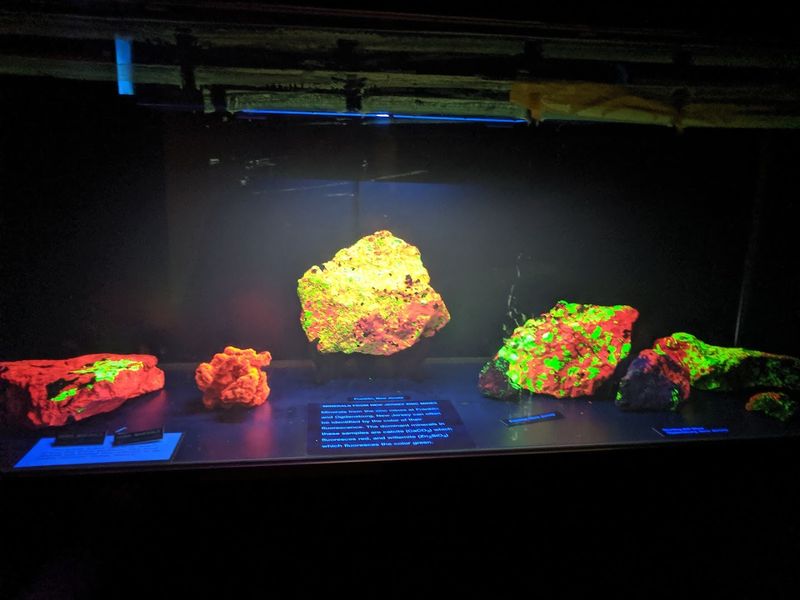
New Jersey’s rocks are not always content to sit quietly in a case. Some of them glow.
One of the museum’s most memorable displays focuses on fluorescent minerals, many connected to the famous zinc mining region around Franklin and Ogdensburg in Sussex County. Under ultraviolet light, these minerals can shine in vivid reds, greens, oranges, and other colors that look almost too electric to be natural.
It is the kind of exhibit that makes geology feel instantly understandable. You do not need to know the chemical formula for a mineral to appreciate the fact that it looks like it came with its own nightclub setting.
But the display is more than a visual trick. Franklin and Ogdensburg are legendary among mineral collectors because the area produced an extraordinary variety of minerals, including many fluorescent specimens.
Rutgers’ collections help connect that scientific reputation back to the state itself. The museum’s Rowe Collection is especially important.
George Rowe, a mine captain with the New Jersey Zinc Company in Franklin, donated a large mineral collection to Rutgers in the early 1940s.
His collection includes thousands of specimens, with a major portion coming from New Jersey, and it helps preserve the story of a mining region that shaped both local communities and the study of minerals.
The museum also features fluorescent minerals from the Anne and Milton Hershhorn collection, another reminder that serious collectors have long understood something casual visitors may not: New Jersey geology is genuinely impressive.
This section of the museum tends to surprise people because it pushes against the state’s usual stereotypes.
We are used to hearing about beaches, highways, diners, and stubborn opinions about pizza. Glowing rocks from Sussex County rarely make the postcard. Inside Geology Hall, they get their moment.
Why this free campus museum is still one of New Jersey’s best surprises
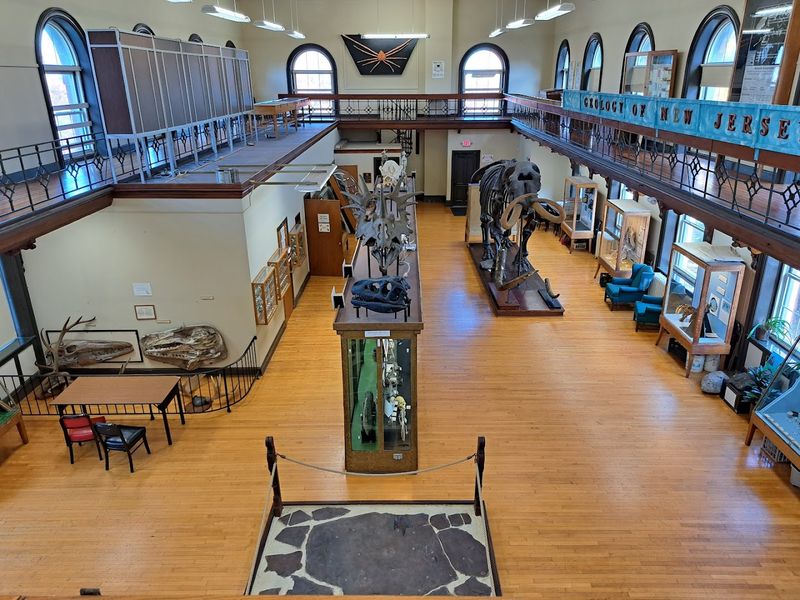
The beauty of the Rutgers Geology Museum is that it does not make you work too hard to enjoy it. Admission is free, the address is easy to remember, and the museum is close enough to downtown New Brunswick that it can fit naturally into a day that includes lunch, a campus walk, or a train ride on NJ Transit.
It is located at 85 Somerset Street, on the second floor of Geology Hall, just a short distance from the New Brunswick station and the restaurants, shops, and busy sidewalks around George Street.
Parking in New Brunswick can require the usual mix of patience, meters, garages, and Rutgers visitor rules, but the museum itself is refreshingly simple once you arrive.
You walk in, head upstairs, and there it is: a mastodon from Salem County, dinosaur tracks from Towaco, a Ptolemaic-era mummy, rare New Jersey minerals, fluorescent specimens, and historic collections tied to some of the state’s earliest scientific work.
The museum also has a strong public-facing side, with school visits, scavenger hunts, group tours, and special programs that keep it from feeling like a locked-away academic collection.
That matters because this is exactly the kind of place that can make a kid suddenly care about fossils or make an adult realize they have been underestimating New Jersey’s natural history for years. It is small enough to feel personal and old enough to feel significant.
It does not need gimmicks because the objects do the work. Geology Hall is easy to pass without thinking twice, especially on a busy Rutgers day.
Upstairs, though, New Jersey keeps a mastodon, a mummy, glowing stones, and nearly two centuries of scientific curiosity quietly waiting behind the door.