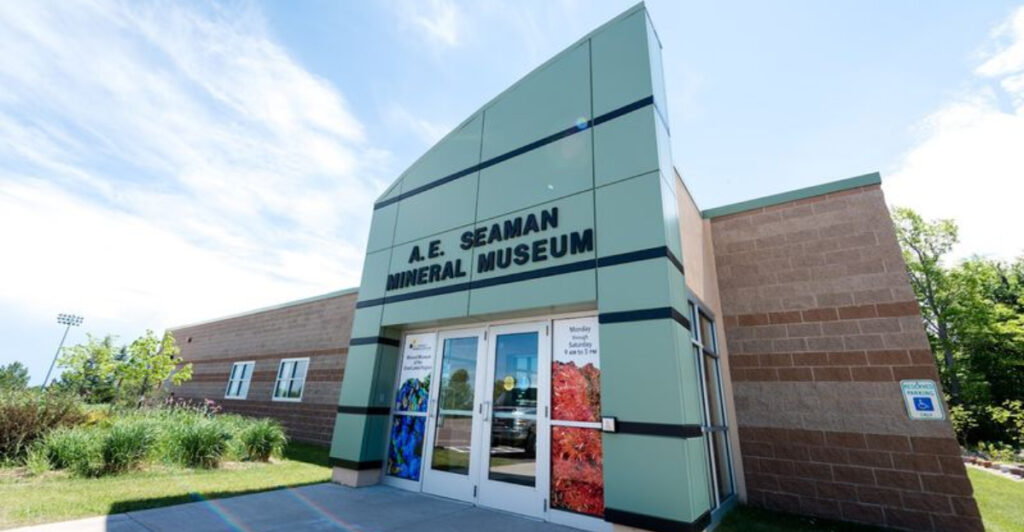
Tucked inside Michigan Tech’s campus in Houghton, the A.E. Seaman Mineral Museum holds one of the most jaw-dropping mineral collections in the entire country.
With more than 30,000 specimens ranging from glowing fluorescent rocks to massive copper nuggets pulled straight from Upper Peninsula mines, this place punches way above its weight. Most people driving through Houghton have no idea what’s waiting behind those doors.
Rock enthusiasts, curious families, and casual visitors all walk out saying the same thing — they had no idea it would be that good.
A Collection So Large It Needs Two Days to Absorb
Walking through the front entrance of the A.E. Seaman Mineral Museum, the sheer scale of what’s inside takes a moment to register.
The building looks modest from the outside — compact, campus-style, easy to underestimate. But once you’re in, display case after display case stretches across multiple rooms, each one packed with specimens that demand attention.
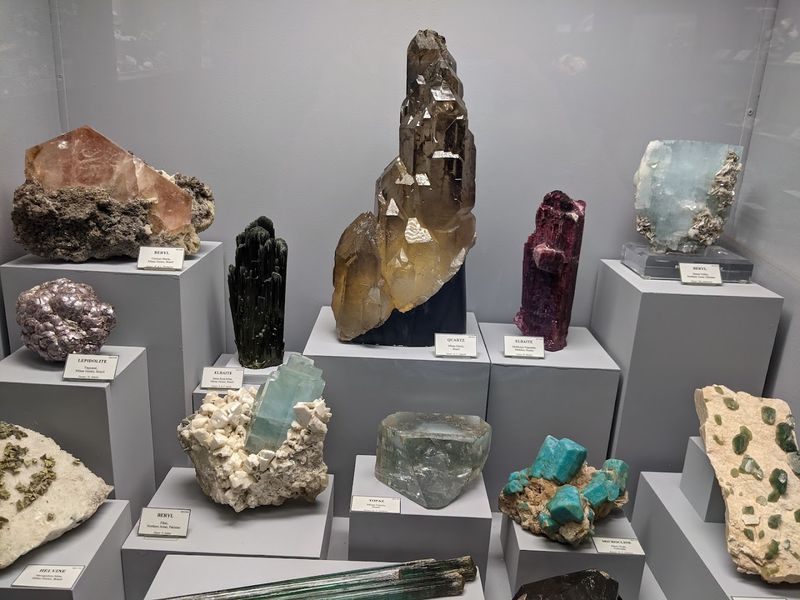
The museum holds over 30,000 minerals in its full collection, with thousands on active display at any given time. Crystals the size of fists sit beside paper-thin mineral sheets that look almost too delicate to be real.
Color ranges wildly — deep purple amethyst clusters, electric-blue azurite, rust-orange realgar, and translucent selenite that almost seems to glow under the lights without any help.
Each exhibit is clearly labeled with the mineral name, chemical composition, and origin location. For anyone who enjoys reading the details, a single visit can easily stretch to three hours.
The entrance ticket is valid for two consecutive days, which is genuinely useful — there’s more here than most people can comfortably absorb in one afternoon.
Families with younger kids tend to move faster through the informational sections and focus on the visual spectacle, which is completely valid. There’s plenty to keep a nine-year-old’s attention without needing to read a single placard.
The layout flows naturally from one category to the next, so even first-time visitors don’t feel lost or overwhelmed by the volume of material on display.
Parking is available directly in front of the entrance, making it easy to arrive and get inside without any hassle. The museum is part of Michigan Technological University, giving the whole experience a research-backed credibility that casual rock shops simply can’t match.
The Fluorescent Room — Where Rocks Come Alive Under UV Light
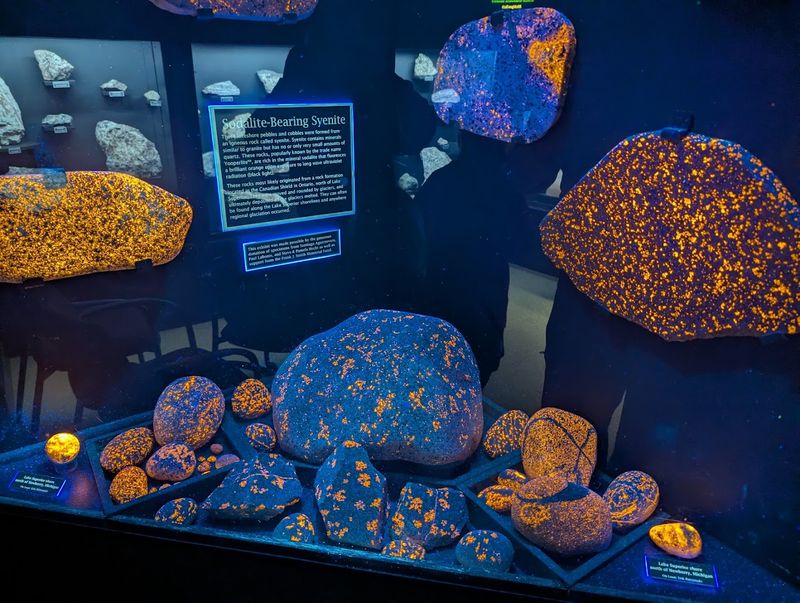
One room inside the A.E. Seaman Mineral Museum stops nearly every visitor cold.
The fluorescent mineral gallery operates differently from the rest of the museum — the lights dim, a video begins, and then UV light sweeps across the specimens in a choreographed sequence that reveals colors completely invisible under normal conditions.
Rocks that looked gray or beige suddenly erupt in electric green, hot pink, deep orange, and vivid red. Calcite glows.
Willemite blazes. Specimens that seemed unremarkable in daylight transform into something that looks more like a light installation than a geological sample.
The effect is genuinely startling the first time you see it, regardless of age or prior interest in mineralogy.
The video component adds context to the display, explaining why certain minerals fluoresce and what causes the chemical reactions that produce those colors. It’s one of the more memorable educational moments in the museum because the visual payoff is so immediate and dramatic.
Kids tend to go completely quiet during this part, which says a lot.
Fluorescent minerals are not rare in the world of geology, but seeing a curated collection of them displayed with this level of care and presentation is less common. The museum’s approach here — pairing the science with a visual experience — makes the information stick in a way that simply reading a label wouldn’t achieve.
People who visit specifically for the fluorescent room often say it was the highlight of their trip to Houghton. The room is self-contained, so you can linger as long as you like without disrupting the flow of other visitors moving through the main gallery.
Plan to spend at least fifteen to twenty minutes here — the video cycles, and catching the full sequence is worth the wait.
Michigan’s Copper Country Legacy on Full Display
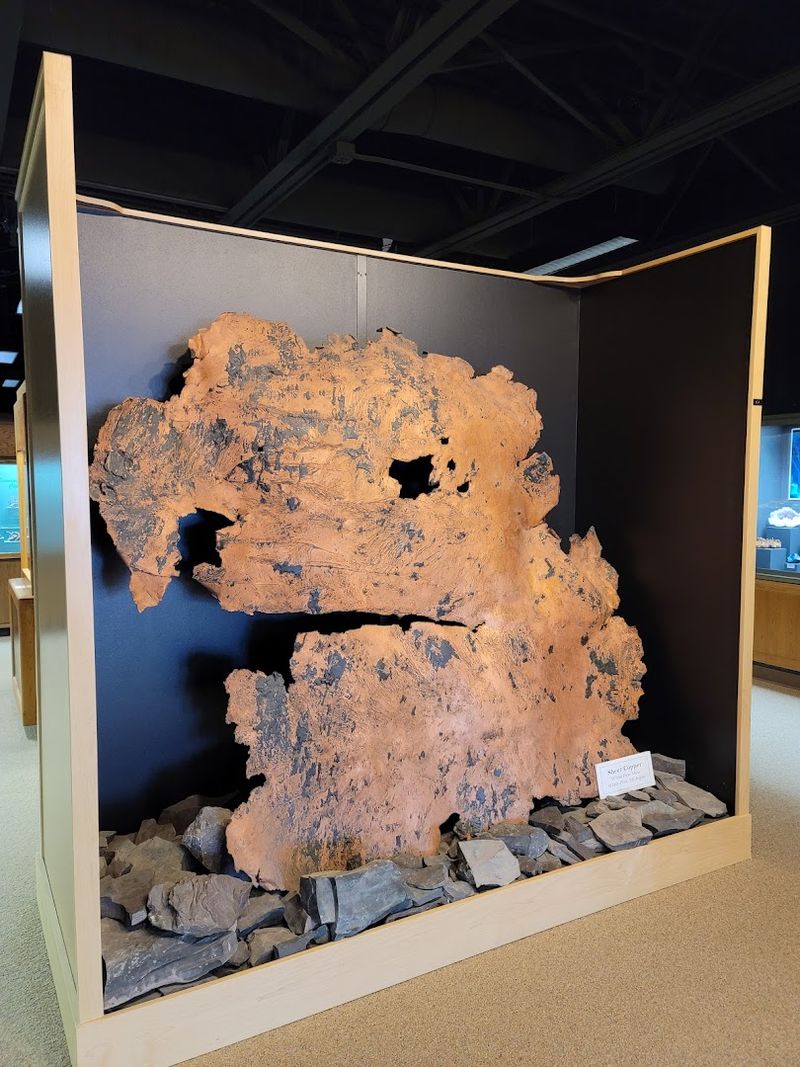
The Keweenaw Peninsula has one of the richest copper mining histories in North America, and the A.E. Seaman Mineral Museum treats that legacy with the seriousness it deserves.
An entire section of the museum is dedicated to the iron and copper minerals native to this corner of Michigan, tracing the geological story of how those deposits formed and how they shaped the region’s identity over centuries.
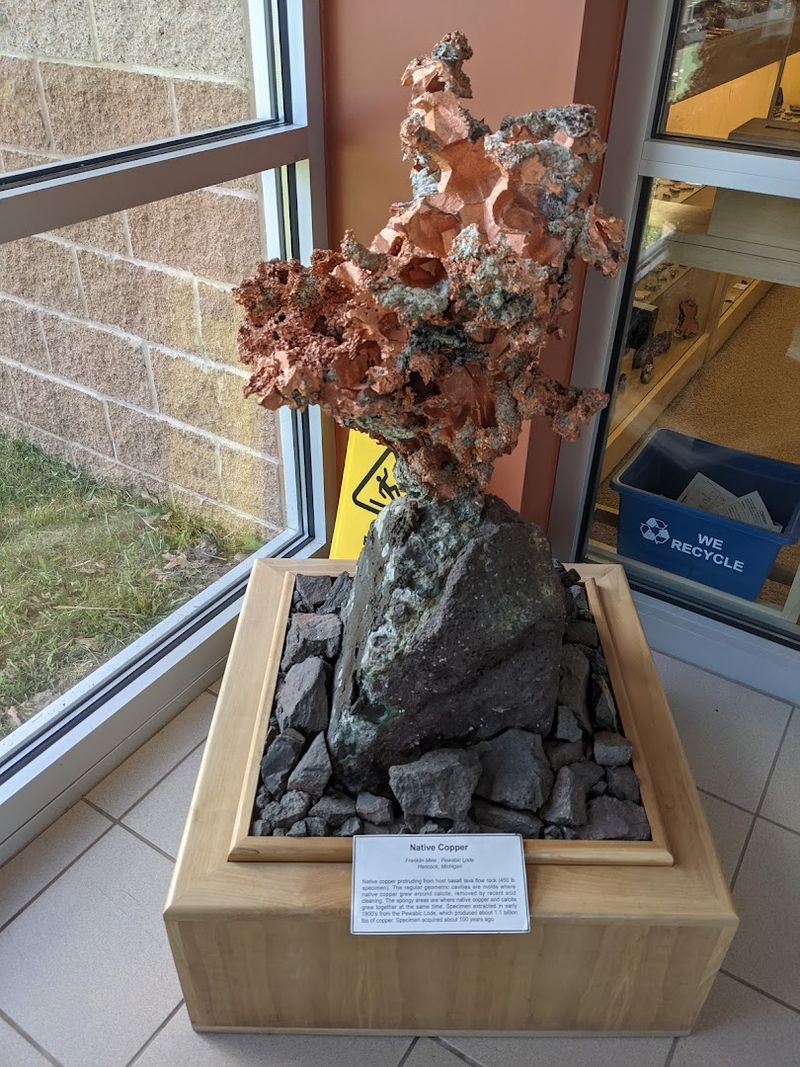
Native copper specimens here are remarkable. Some pieces are enormous — thick, branching masses of pure metallic copper that look almost sculptural.
The museum’s gift shop also stocks raw copper pieces for purchase, ranging from small collectible chunks to larger statement pieces that serious collectors tend to gravitate toward. The area’s copper mining heritage makes these locally sourced pieces particularly meaningful as souvenirs.
Beyond copper, the exhibit covers the broader mineral wealth of Michigan’s Upper Peninsula, including iron ore formations, silver, and a variety of silicate minerals found in the region’s ancient volcanic rock. The geological timeline presented here gives visitors a clearer picture of why this specific stretch of land produced such an unusual concentration of valuable minerals.
Mining history panels are woven throughout this section, connecting the raw specimens to the human story of the communities that formed around extraction industries. It’s not a dry industrial history — the museum presents it with enough context to make the economic and cultural impact of mining feel tangible and relevant, even to visitors with no prior knowledge of the region.
For anyone who grew up in Michigan or has family ties to the Upper Peninsula, this section carries an added layer of personal resonance. The museum does a strong job of honoring local identity without turning the exhibit into simple nostalgia — the science and the story are equally present throughout.
Fossils, Meteorites, and Specimens That Traveled Millions of Miles
Not everything in the A.E. Seaman Mineral Museum came from Earth’s crust.
The meteorite display is one of the more quietly spectacular sections of the building — pieces of space rock, some with visible crystalline structure from the Widmanstätten pattern that only forms during extremely slow cooling over millions of years. Holding your gaze on something that traveled through interstellar space before landing on this planet has a particular kind of weight to it.
Fossil specimens add another dimension to the collection, broadening the museum’s scope beyond strictly mineralogical material. Prehistoric marine creatures, plant impressions, and ancient shell formations appear alongside the mineral displays, giving the museum a natural history flavor that complements the geological focus without pulling the experience in a completely different direction.
The meteorite display in particular draws repeat visitors. People who have been to the museum before specifically mention coming back to see it again.
The specimens are well-lit and positioned at eye level, making it easy to study the surface texture and internal structure without straining or squinting through thick glass.
What makes this section land so effectively is the scale contrast. A tiny meteorite fragment next to a geological timeline of Earth’s formation creates an almost cinematic sense of perspective.
The museum uses these juxtapositions deliberately, helping visitors connect abstract scientific concepts to physical objects they can actually stand in front of and examine.
Children tend to respond especially well to the meteorite section — the idea that a rock fell from space and ended up in a display case in Houghton, Michigan is the kind of concrete, slightly mind-bending fact that sticks with kids long after the visit ends. It’s one of those moments where curiosity and science meet in a way that feels effortless and completely unforced.
How the Museum Is Organized — and Why the Layout Actually Works
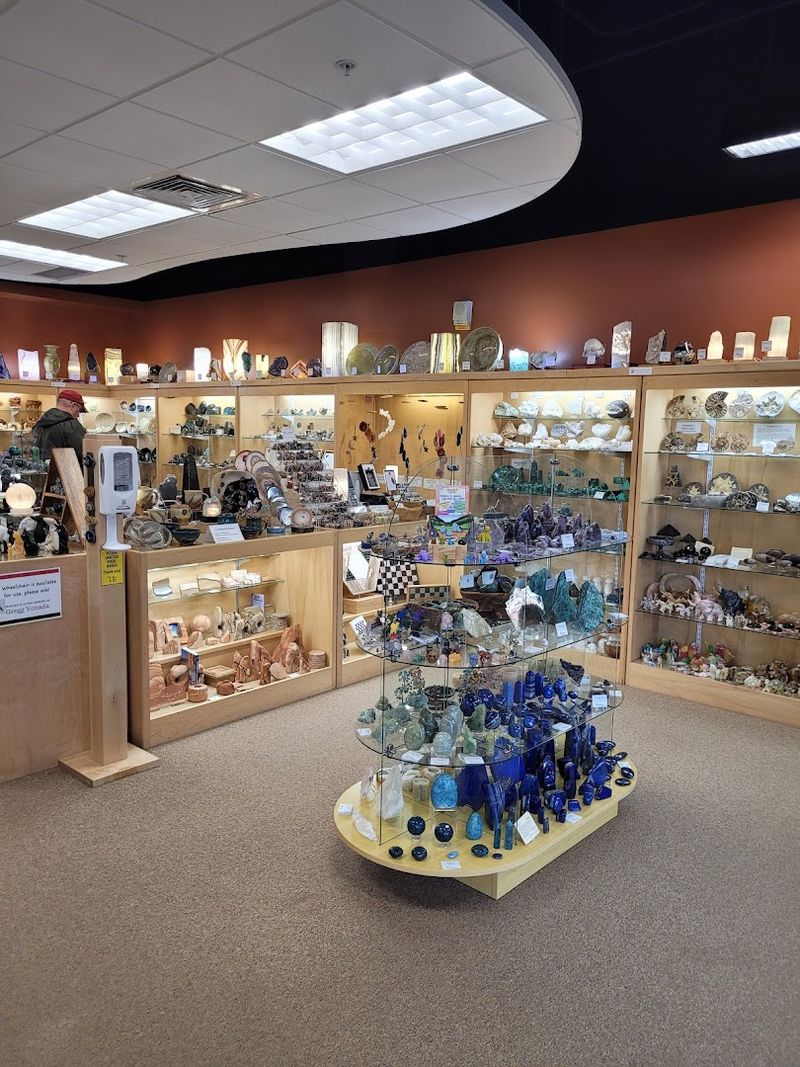
A collection this large could easily become overwhelming, but the A.E. Seaman Mineral Museum is laid out with enough logic that even first-time visitors find their footing quickly.
The exhibits move through mineral categories in a way that builds understanding gradually — starting with formation basics before moving into specific mineral families, regional collections, and specialty displays like the fluorescent room.
Self-guided tours are the standard format here, and the museum is set up to support independent exploration without needing a staff member at your elbow. Informational panels are thorough without being exhausting, and the specimen labels are clear enough that someone with zero geology background can follow along comfortably.
The layout rewards curiosity — there’s always something just around the next corner that pulls you forward.
The museum is larger inside than the exterior suggests, which surprises most first-time visitors. Multiple connected rooms mean the experience unfolds gradually rather than all at once, giving the collection room to breathe.
You’re never staring at fifty specimens crammed into a single case — the pacing is deliberate and the displays have visual breathing room.
Staff members are present and approachable without being intrusive. Questions get answered with genuine enthusiasm, which reflects the museum’s academic roots at Michigan Technological University.
The team clearly knows the collection well and can point visitors toward specific highlights based on individual interests.
Restrooms are clean and easily accessible, parking is straightforward, and the building is climate-controlled — practical details that matter more than they’re usually given credit for during a long museum visit. The two-day ticket policy is particularly thoughtful, acknowledging that the collection is genuinely too large to rush through.
Returning the next morning to finish what you started is a perfectly reasonable plan, and the museum’s hours accommodate exactly that kind of paced exploration.
The Gift Shop Stocks Things You Won’t Find at a Rest Stop
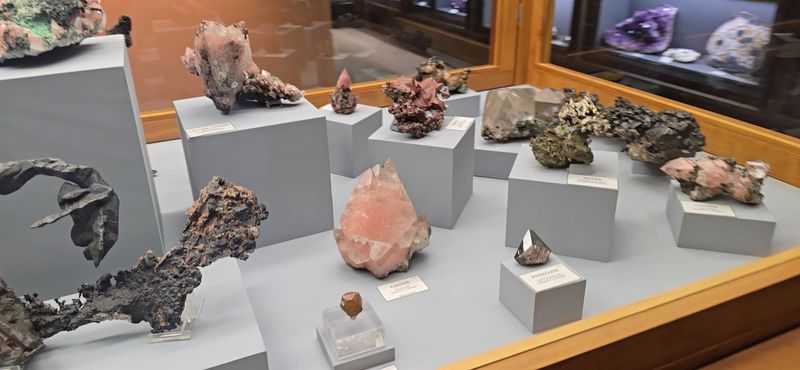
Museum gift shops can be hit or miss, but the one at the A.E. Seaman Mineral Museum is genuinely worth browsing.
The selection leans heavily into the museum’s strengths — raw mineral specimens, locally sourced copper pieces, gemstone samples, and geology-focused books make up the bulk of the inventory. These aren’t mass-produced trinkets; many of the items are the kind of thing you’d hunt for at a specialty rock show.
Raw copper is the standout product category. Because the Keweenaw Peninsula is historically one of the most significant copper-producing regions in the world, the museum stocks pieces that carry real local provenance.
Sizes range from small, affordable chunks perfect for a desk or windowsill to larger statement pieces that serious collectors will recognize as exceptional finds. The museum ships purchases, so there’s no need to stress about fitting a two-pound copper specimen into a carry-on bag.
Beyond copper, the shop carries crystals, polished stones, fossils, mineral identification guides, and a selection of items aimed specifically at younger visitors. Prices across the board are described by repeat visitors as reasonable, especially given the quality and specificity of the inventory.
This isn’t a place where everything costs twice what it should because of the museum label.
Books and field guides are well-curated for both beginners and more experienced rockhounds. Whether someone is just getting started with mineral identification or already knows the difference between a pyromorphite and a vanadinite, there’s something on the shelves worth picking up.
The gift shop also carries unique items sourced from around the world, meaning the selection extends well beyond purely local material.
Loyal customers recommend setting aside at least fifteen minutes for the gift shop alone. Rushing through it on the way out means missing pieces that, like that one visitor’s large copper specimen, you might still be thinking about months later.
Planning Your Visit to Houghton — Timing, Tickets, and What to Expect
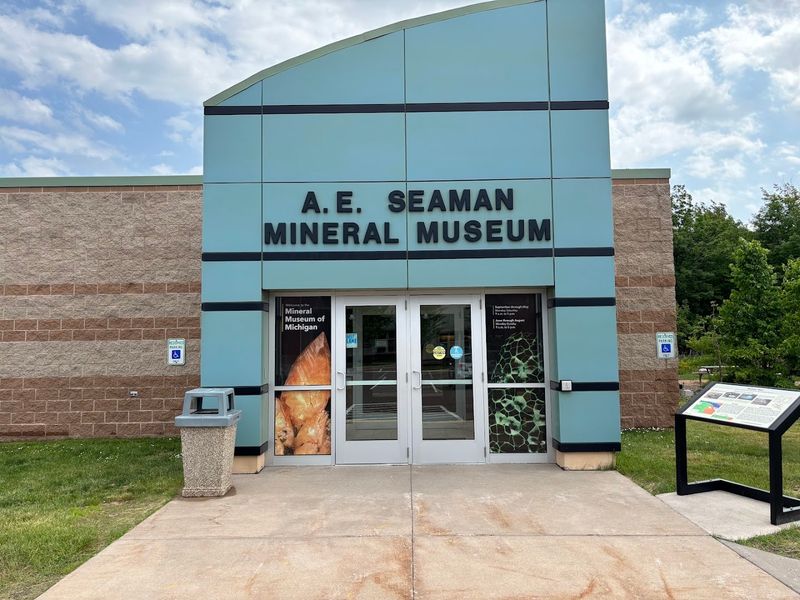
The A.E. Seaman Mineral Museum is located at 1404 Sharon Ave in Houghton, on the campus of Michigan Technological University.
The address is straightforward to navigate, and parking directly in front of the entrance means you’re not circling the block or feeding a meter before you even get inside. For a university campus location, the accessibility is genuinely convenient.
Hours run Tuesday through Saturday from 9 AM to 5 PM. The museum is closed on Sundays and Mondays, so planning around those days is essential — especially for visitors making a longer drive from elsewhere in Michigan or from out of state.
Arriving closer to opening time on a weekday tends to mean fewer crowds and more space to move through the exhibits at your own pace.
Admission pricing is considered reasonable by most visitors, and the two-day ticket policy is one of the museum’s most practical features. A single admission covers entry for two consecutive days, which takes the pressure off trying to see everything in one sitting.
For families or anyone who wants to read every label and really absorb the collection, splitting the visit across two mornings is a smart approach.
Budget at minimum two hours for a focused visit, and closer to three if reading exhibit text is part of the plan. The fluorescent room, the copper exhibit, and the meteorite display each deserve unhurried attention.
Trying to sprint through the whole museum in under an hour means missing most of what makes it worth the trip.
The museum sits within easy reach of other Houghton-area attractions, making it a natural anchor for a broader Upper Peninsula itinerary. Whether the visit is part of a Michigan Tech campus tour, a road trip through the Keweenaw, or a dedicated geology excursion, the museum delivers a level of depth and quality that justifies the stop entirely on its own terms.