Michigan is packed with grand old mansions that have stood the test of time, each one holding stories that feel almost too wild to believe. From lumber barons to judges, from Gilded Age socialites to industrial tycoons, these homes were built by people who shaped the state we know today.
Wandering through their halls is like flipping through a history book, except the rooms are real and the details are jaw-dropping. Whether you are a history buff or just love stunning architecture, these 11 remarkable Michigan mansions deserve a spot on your radar.
1. Gordon Hall / Judge Samuel W. Dexter House

Long before Michigan was even a state, Judge Samuel W. Dexter was already laying the groundwork for one of the most striking homes in the entire region.
Gordon Hall, completed around 1843 in the town of Dexter — a town Dexter himself founded — is a breathtaking example of Greek Revival architecture that still turns heads nearly two centuries later. The massive white columns out front feel more like something you would spot in the American South than in a small Michigan town.
Dexter was no ordinary guy. He was a judge, a politician, an agriculturalist, and a serious visionary who believed that building beautifully was a form of civic pride.
The house reflects that ambition at every turn, from its grand proportions to the carefully designed interior spaces that once hosted some of the most influential figures in early Michigan society. It was a gathering place, a working farm headquarters, and a personal statement all rolled into one.
Today, Gordon Hall is listed on the National Register of Historic Places, and it has been the subject of significant preservation efforts. The University of Michigan has been connected to its stewardship over the years, adding another layer of academic prestige to its legacy.
Visitors who make the trip to Dexter get to see a piece of Michigan history that predates statehood itself.
What makes Gordon Hall especially compelling is how it connects the personal and the political. Dexter shaped the land around the house just as deliberately as he shaped the house itself, planting trees and designing the grounds with real intention.
Standing on that front lawn today, with those columns rising above you, it is genuinely hard not to feel the weight of all that history pressing down in the best possible way.
2. Henderson Castle
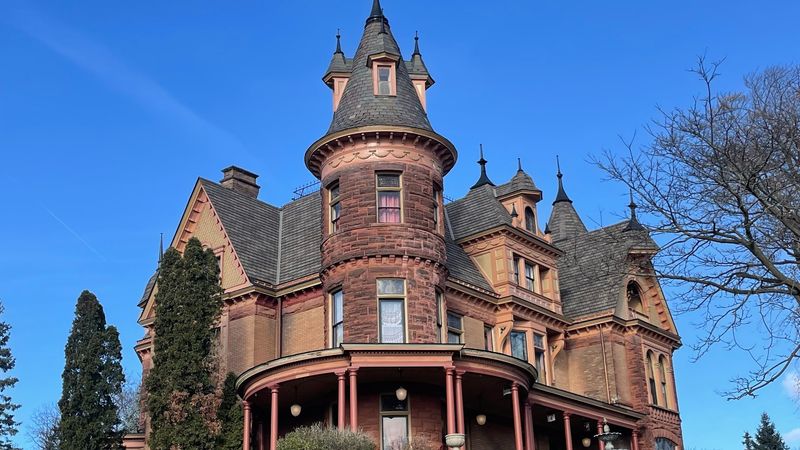
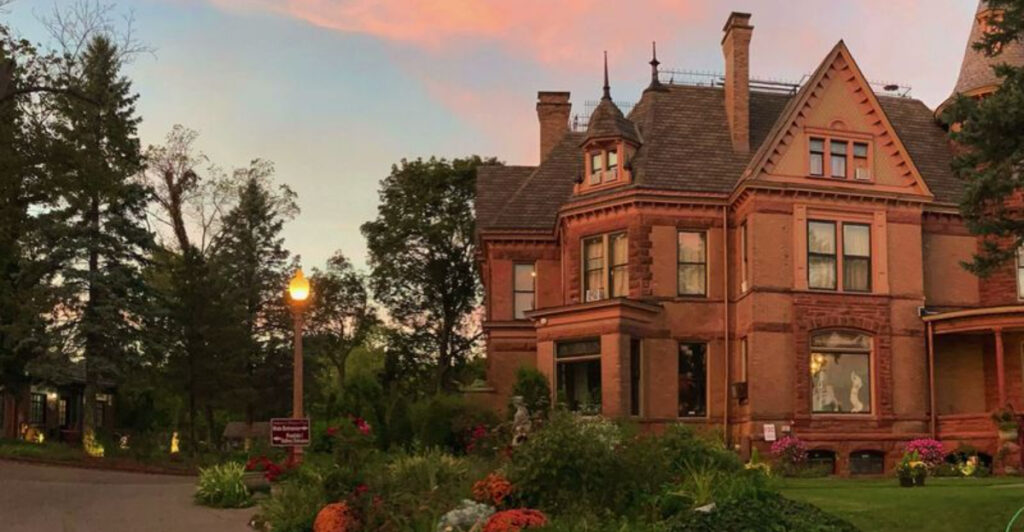
There is exactly one castle in Kalamazoo, and it goes by the name Henderson Castle. Built in 1895 for Frank Henderson, a wealthy soap manufacturer, this Queen Anne-style showstopper sits on a hill overlooking the city like it owns the place — which, honestly, it kind of does.
With its turrets, wraparound porches, and richly detailed brickwork, the building looks like it was pulled straight from a European fairy tale and dropped into southwest Michigan.
Frank Henderson clearly had a taste for the dramatic, and the interior of the castle matches the exterior at every step. Original woodwork, stained glass windows, and ornate fireplaces fill the rooms with the kind of craftsmanship that simply does not exist in modern construction.
The scale of the whole thing is almost theatrical, which makes it incredibly fun to explore even if you are not particularly into Victorian architecture.
Henderson Castle has had quite a few lives over the years. It operated as a bed and breakfast for a long stretch, making it one of those rare historic properties where guests could actually sleep inside a piece of history.
That combination of accessibility and grandeur gave it a devoted following among travelers who wanted something far more memorable than a standard hotel stay.
Kalamazoo locals have a genuine affection for this place, and it is easy to understand why. The castle anchors the neighborhood visually and emotionally, serving as a reminder of the city’s prosperous industrial past.
Preservation efforts have kept the structure in remarkably good shape, which means the turrets and towers that made it famous back in 1895 are still very much intact today. Few buildings in Michigan carry this much personality packed into a single address.
3. The Whitney / David Whitney House
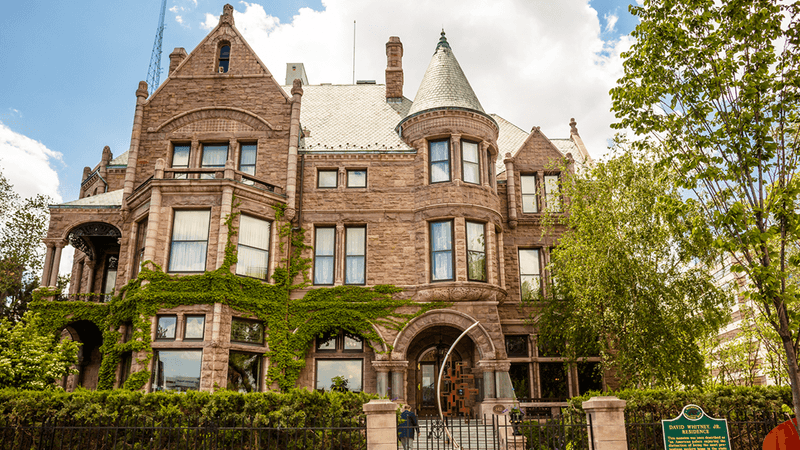
Walk up to The Whitney on Woodward Avenue in Detroit and your jaw will drop before you even reach the front door. Built in 1894 for David Whitney Jr., one of the wealthiest lumber barons in Michigan history, this 52-room Romanesque Revival mansion cost roughly $400,000 to construct at a time when that sum was almost incomprehensible.
Every inch of the South Wayside granite exterior signals serious, unapologetic wealth.
David Whitney Jr. knew exactly what he was doing when he commissioned this home. He wanted a residence that would announce his status to every person who passed by on Woodward, and he succeeded spectacularly.
The interior is equally staggering — hand-carved woodwork, a stunning stained glass dome, marble fireplaces, and an elevator that was considered cutting-edge technology for its era. It is the kind of home that makes you stop mid-sentence just to look up at the ceiling.
After the Whitney family era ended, the mansion went through various uses before becoming the beloved restaurant it is today. The Whitney restaurant has been serving upscale dining in those grand rooms since 1986, making it one of the most atmospheric places to eat in all of Detroit.
Sitting down for a meal inside a 19th-century lumber baron’s dining room is an experience that is genuinely hard to top.
Ghost tours have also become a popular draw at The Whitney, adding a deliciously spooky layer to an already fascinating property. Rumor has it that David Whitney himself never fully left the building, though that is very much up to personal interpretation.
Whether you come for the food, the history, or the ghost stories, The Whitney delivers one of the richest experiences any Michigan mansion has to offer.
4. Hackley House
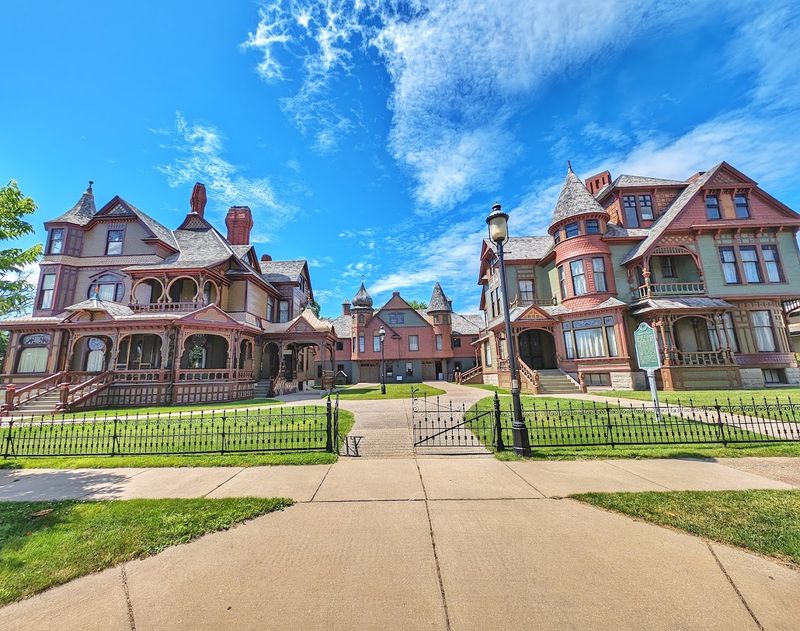
Muskegon’s Hackley House is the kind of building that makes you slow your car down just to stare at it. Completed in 1889 for lumber baron Charles Hackley, this Queen Anne masterpiece is so loaded with ornamental detail that it almost looks like the house is wearing jewelry.
Carved woodwork, decorative shingles, stained glass, and a color palette that would make a peacock jealous — every surface has something to say.
Charles Hackley was one of the most philanthropic figures in Michigan’s lumber era, and the house reflects the prosperity that allowed him to give so generously to his community. He donated millions to Muskegon in the form of parks, schools, and public buildings, but the Hackley House stands as perhaps the most personal expression of what his success looked like at its peak.
Walking through the rooms, you get a very clear sense of how a top-tier lumber magnate lived during the Gilded Age.
The house operates today as part of the Hackley and Hume Historic Site, which pairs it with the nearby Hume House for a double dose of Victorian splendor. Together, the two properties give visitors a remarkably complete picture of upper-class life in late 19th-century Michigan.
The site is managed with genuine care, and the guided tours are packed with the kind of specific detail that history fans absolutely love.
One of the most talked-about features inside is the intricate hand-painted decorative work on the walls and ceilings, which has been carefully preserved and restored over the years. It adds a warmth and artistry to the space that photographs honestly cannot do justice.
Hackley House is not just a pretty building — it is a full-on sensory experience that rewards every curious visitor who walks through its doors.
5. Kimball House Museum
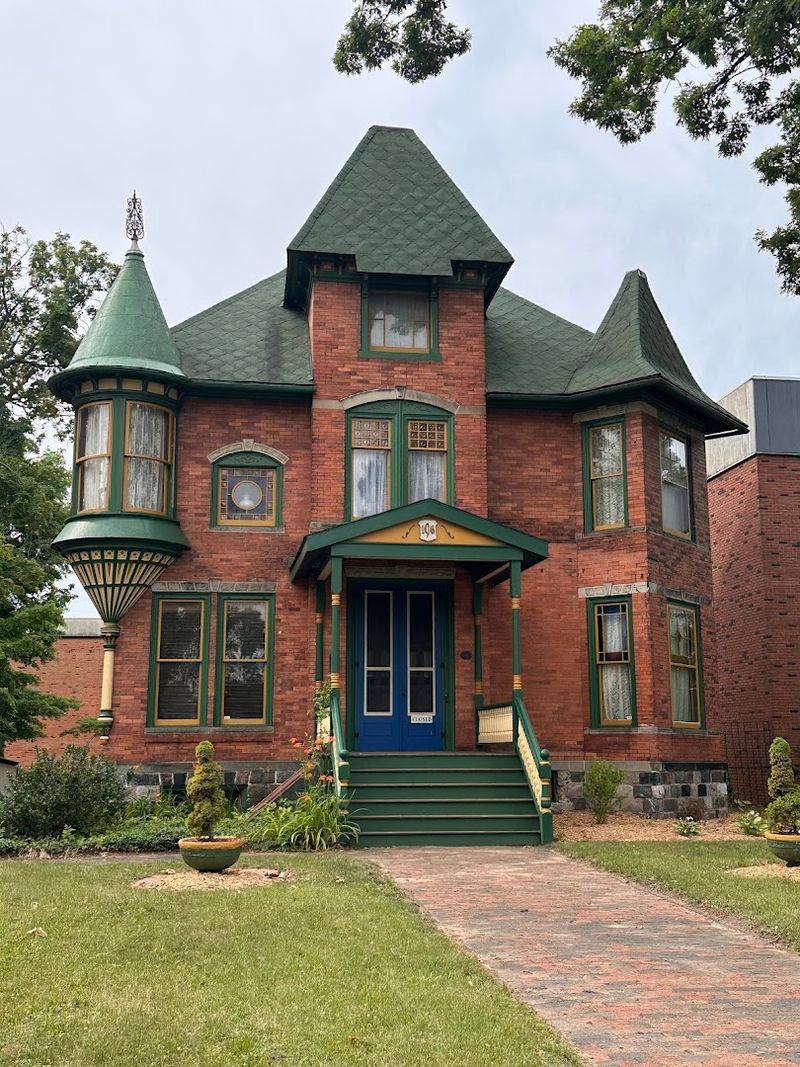
Battle Creek might be best known for cereal, but the Kimball House Museum offers a completely different kind of morning treat. Built around 1886 for Jabez Bowen Kimball, a local businessman and entrepreneur, this Italianate-style home has been lovingly preserved as a window into upper-middle-class Victorian life in a mid-sized Michigan city.
It is intimate in a way that some of the larger mansions are not, which gives it a warmth that is easy to connect with.
The Kimball House is run by the Battle Creek Historical Society, and the volunteers and staff who guide visitors through the property clearly have a deep affection for the place. The rooms are furnished with period-appropriate pieces that help tell the story of how a prosperous family actually lived, worked, and entertained in the 1880s and 1890s.
Nothing feels sterile or museum-stiff here — it feels lived in, in the best possible way.
What makes this mansion particularly interesting is its role as a community anchor. The Battle Creek Historical Society uses the space not just for tours but for events, educational programs, and community gatherings that keep the building active and relevant.
A historic house that stays connected to its neighborhood tends to survive a lot longer than one that gets locked behind velvet ropes, and the Kimball House is proof of that principle.
Architecture enthusiasts will appreciate the Italianate details throughout — the tall, narrow windows, the decorative bracketing under the eaves, and the overall verticality that defines the style. It is a quieter kind of elegance compared to some of Michigan’s flashier Gilded Age estates, but that restraint is part of its charm.
Sometimes the most compelling stories come from houses that whisper rather than shout.
6. Meadow Brook Hall
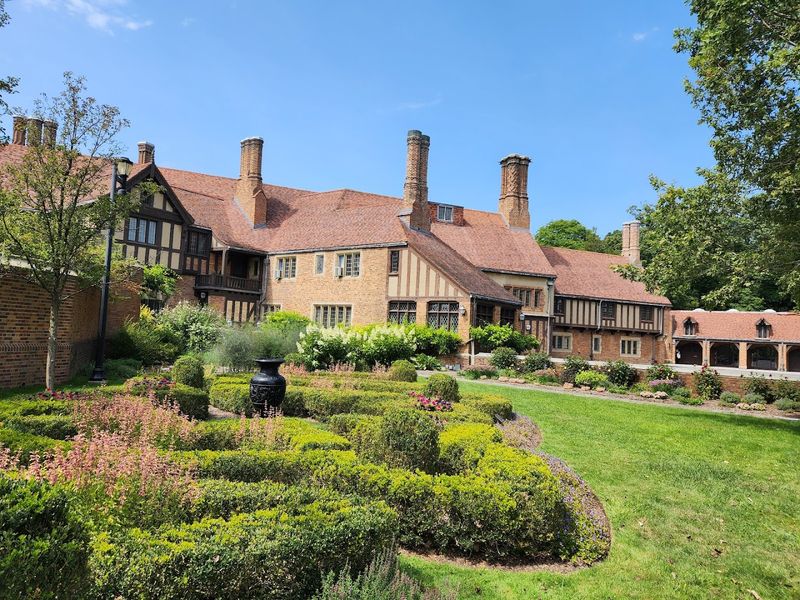
Meadow Brook Hall is straight-up one of the greatest historic estates in the entire United States, and the fact that it sits on the campus of Oakland University in Rochester, Michigan, makes it one of the state’s best-kept open secrets. Built between 1926 and 1929 for Matilda Dodge Wilson — widow of auto pioneer John Dodge — and her second husband Alfred Wilson, this 88,000-square-foot Tudor Revival mansion was designed to be a year-round family home, not just a showpiece.
The fact that it functioned as a genuine home makes it all the more extraordinary.
The sheer scale of Meadow Brook Hall is difficult to process until you are actually standing inside it. One hundred ten rooms, 39 fireplaces, and enough hand-carved woodwork to fill a small forest — and yet the design never feels cold or overwhelming.
Architect William Kapp pulled off the remarkable trick of making an enormous mansion feel genuinely livable, which is a testament to both his skill and the vision of the Wilson family.
Matilda Dodge Wilson was a fascinating figure in her own right, and the house reflects her personality in countless ways. She was deeply involved in every design decision, from the layout of the formal gardens to the placement of individual furnishings.
The result is a home that feels curated rather than just constructed, with each room telling a slightly different chapter of a very rich family story.
Today, Meadow Brook Hall hosts tours, seasonal events, and one of Michigan’s most beloved holiday experiences during the winter months. The combination of architectural grandeur, landscape beauty, and genuine historical depth makes it a must-visit destination.
If you have only one Michigan mansion on your list this year, make it this one — it earns every bit of the hype.
7. Perry Hannah House
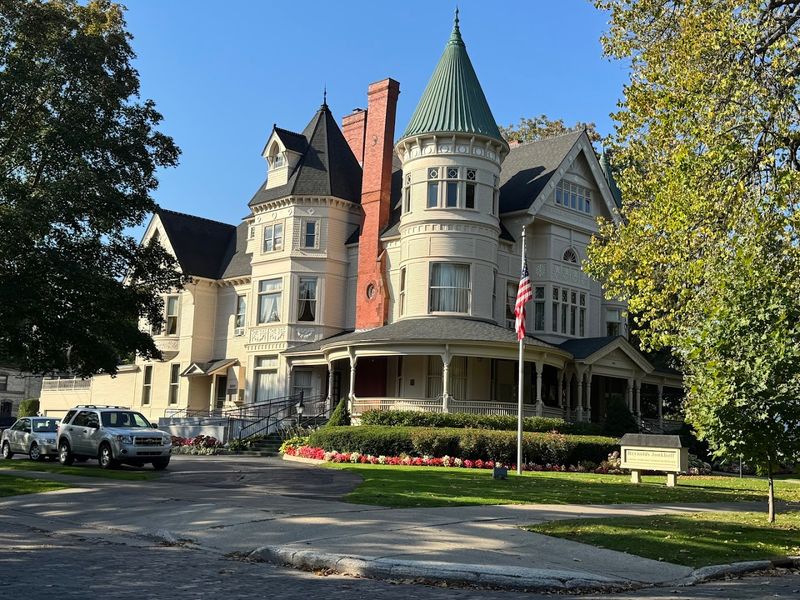
Traverse City owes a great deal of its early identity to Perry Hannah, and the grand house he built there stands as a permanent thank-you note from the past. Hannah arrived in the region in the 1850s and became the dominant force behind Traverse City’s growth as a lumber town, eventually helping to transform it into a real community with schools, churches, and civic institutions.
His home, built in the latter half of the 19th century, reflects the ambitions of a man who was building more than just a personal fortune.
The Perry Hannah House is a Victorian-era gem that carries the kind of confident craftsmanship you would expect from a man of his standing. The architectural details speak to an era when builders took real pride in decorative elements — the trim work, the proportions, and the overall composition all point to someone who wanted quality that would last.
And it has, which is a credit to both the original construction and the preservation efforts that followed.
What gives the house its extra layer of meaning is the context of the town around it. Walking through Traverse City today and knowing that Perry Hannah helped shape its earliest streets and institutions makes the house feel less like an isolated artifact and more like a chapter in a larger story.
The building and the city are in conversation with each other across more than 150 years of shared history.
Traverse City has grown enormously since Hannah’s day, transforming from a lumber hub into a thriving tourism and culinary destination. But the Perry Hannah House remains a grounding presence — a reminder that the charming, prosperous city visitors enjoy today was built on the ambitions and hard work of people like Perry Hannah, who showed up early and stayed committed for the long haul.
8. Whaley Historic House Museum
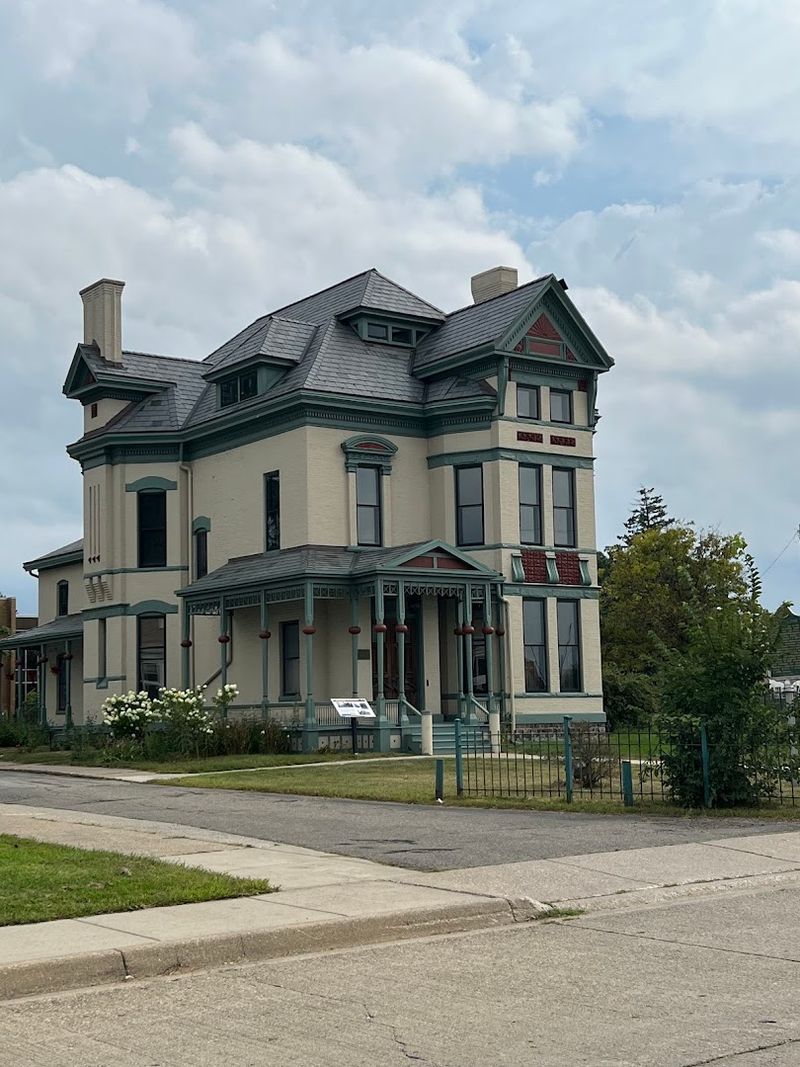
Flint has a complicated history, and the Whaley Historic House Museum stands as one of the city’s most determined acts of preservation and pride. Built in 1885 for Ezra Rust, a prominent local businessman, the house later became associated with the Whaley family and has since been transformed into a community-run museum that keeps Flint’s pre-automotive history alive and accessible.
In a city that has faced serious challenges, a place like this matters more than most people realize.
The architecture is solidly Victorian, with the kind of detailed brickwork and interior woodwork that defined upper-class residential construction in the 1880s. Period furnishings fill the rooms, creating an immersive experience that transports visitors back to a time when Flint’s economy was built on carriage manufacturing rather than automobiles.
That pre-auto chapter of the city’s story is often overlooked, which makes the Whaley House’s mission feel especially important.
Community engagement is a big part of what makes this museum tick. The volunteers and staff who run the property are genuinely passionate about Flint’s history, and that enthusiasm comes through clearly in the tours and programming they offer.
It is the kind of place where you might end up staying twice as long as you planned because the stories keep pulling you in.
There is something quietly powerful about visiting a beautifully preserved Victorian home in the middle of a city that has worked so hard to rebuild itself. The Whaley Historic House Museum does not pretend that Flint’s past was perfect, but it does insist that the city’s story is worth telling in full — the prosperous chapters alongside the difficult ones.
That honest, community-rooted approach makes this mansion one of Michigan’s most meaningful historic sites, full stop.
9. Carl G. A. Voigt House
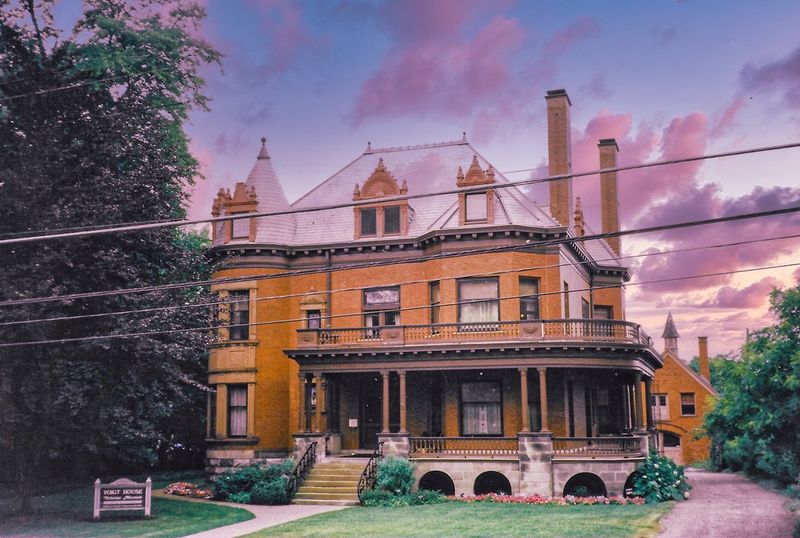
Grand Rapids has a well-earned reputation for furniture manufacturing, and the Carl G. A.
Voigt House is essentially the physical embodiment of that legacy. Built in 1895 for Carl Voigt, a prosperous wholesale grocer whose family had deep ties to the furniture industry, this Romanesque Revival mansion on College Avenue SE is one of the best-preserved examples of upper-class domestic architecture in the entire city.
The house has barely changed since the family last lived in it, which is either a miracle or a testament to very good luck — probably both.
The interior is where the Voigt House truly earns its reputation. Because the family retained ownership for decades and the house transitioned directly into museum use, an extraordinary amount of original furnishings, decorative objects, and personal belongings survived intact.
Visitors essentially walk into a time capsule, seeing rooms that look almost exactly as they did in the late 19th and early 20th centuries. That level of authenticity is genuinely rare in the world of historic house museums.
The house is managed by the Grand Rapids Public Museum, which brings professional curatorial resources to the property and ensures that the interpretation keeps up with current historical scholarship. Tours are thoughtful and detailed, connecting the Voigt family’s story to the broader economic and social history of Grand Rapids in ways that feel relevant rather than dusty.
Architecture lovers will zero in on the Romanesque Revival details — the rounded arches, the heavy stonework, the sense of solidity and permanence that defines the style. But even visitors who could not care less about architectural vocabulary tend to leave the Voigt House impressed.
When a home this complete and this well-preserved survives into the 21st century, it feels less like history and more like a gift.
10. Stockton House Museum
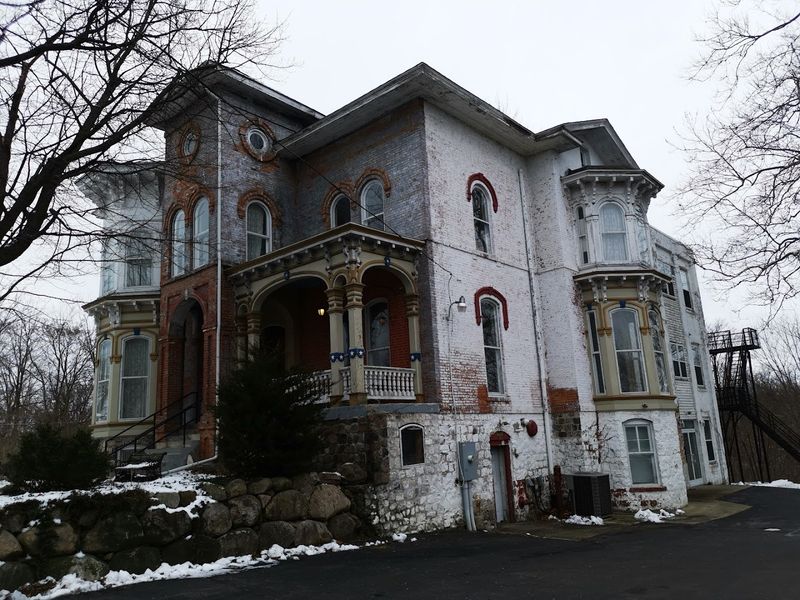
Not every remarkable Michigan mansion sits in a major city, and the Stockton House Museum in White Pigeon is proof that small towns can hold just as much history as their bigger neighbors. The house dates to the mid-19th century and is associated with the Stockton family, who were prominent figures in the development of St. Joseph County.
It represents a style of prosperous rural life that defined much of Michigan’s interior landscape during the 1800s, and it does so with quiet confidence.
The Italianate architectural details on the exterior give the house a refined elegance that still reads clearly today. Tall windows, bracketed eaves, and the overall vertical emphasis of the style communicate aspiration and taste — this was a family that wanted their home to reflect their standing in the community.
The interior carries that same sensibility, with period furnishings and decorative elements that paint a vivid picture of 19th-century domestic life in rural Michigan.
What the Stockton House does particularly well is situate its story within the context of southwest Michigan’s development. The region was an important agricultural hub and a crossroads for early settlers moving west, and the Stockton family was deeply embedded in that world.
Understanding the house means understanding something about the rhythms and ambitions of an entire era of Michigan history.
Local historical societies have worked hard to maintain and interpret the property, and their dedication shows. The Stockton House is the kind of place that rewards a slow, curious visit — the kind where you ask follow-up questions and end up learning something you never expected to know.
Michigan has plenty of grand urban mansions, but the Stockton House is a reminder that the state’s story was also written in smaller towns by families whose names deserve to be remembered.
11. Hume House
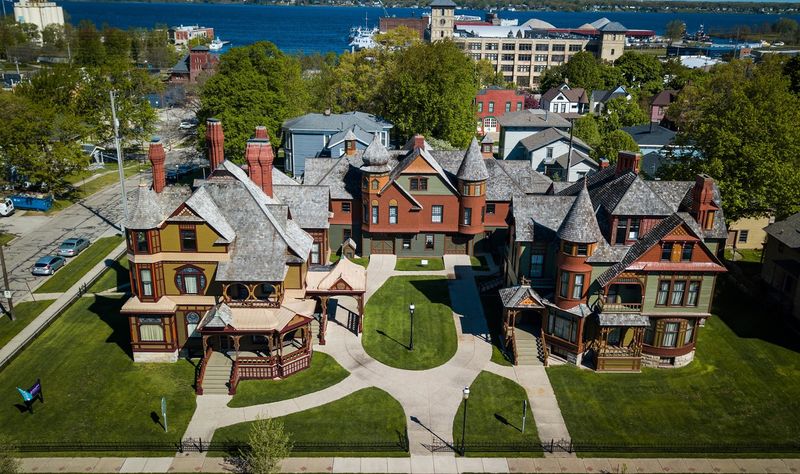
Right next door to the Hackley House in Muskegon stands its equally impressive neighbor, the Hume House, and together the two properties form one of the most visually spectacular historic house pairings anywhere in Michigan. Built in 1888 for Thomas Hume, Charles Hackley’s business partner in the lumber trade, the Hume House shares the same Queen Anne exuberance as its neighbor but expresses it in its own distinctive way.
Two mansions, two families, one extraordinary block of Victorian history.
Thomas Hume and Charles Hackley built their empires together, and the proximity of their homes was no accident. Living side by side made practical sense for two men whose professional lives were so deeply intertwined, and the houses reflect a kind of friendly architectural competition that ultimately elevated both properties.
Each one pushed the other to be more detailed, more expressive, more boldly Victorian — and Muskegon is richer for it.
The Hume House interior is filled with the kind of craftsmanship that defines the best residential construction of the Gilded Age. Intricate woodwork, decorative tile, period wallpapers, and carefully selected furnishings all contribute to an atmosphere that feels genuinely transporting.
The house does not feel like a museum exhibit so much as a suspended moment in time, which is exactly what the best historic preservation achieves.
Visiting the Hackley and Hume Historic Site as a combined experience is strongly recommended, because the two houses in conversation with each other tell a story that neither one can tell alone. The partnership between Hackley and Hume shaped Muskegon’s lumber economy and its civic landscape, and standing between their two homes makes that partnership feel tangible and real.
It is one of those Michigan experiences that sticks with you long after you have driven home.